质量因子

Search documents
新发基金,频频提前结募!普遍看好后市
证券时报· 2025-10-26 02:38
Core Viewpoint - The recent trend of mutual funds in China shows a strong demand for newly launched products, with several funds completing their fundraising targets in record time, indicating a positive market sentiment and investor confidence in the capital market [1][4][5]. Fundraising Trends - On October 24, 2023, the Jiashi Growth Sharing Mixed Fund announced the early closure of its fundraising, achieving a target size of approximately 30 billion yuan in just about 5 days [1][4]. - The China Europe Value Navigator Fund also completed its fundraising of 20 billion yuan in just one day [2][4]. - The trend of early fundraising closures is not isolated, as multiple new products, including FOF, ETF, and QDII funds, have also been reported to close early due to high demand [4][5]. Performance of Floating Rate Funds - The initial performance of the first batch of floating rate funds has been strong, with an average increase of 12.47% since their inception, and some funds reporting gains exceeding 40% within three months [2][6]. - The successful performance of these funds is expected to positively influence the fundraising and operation of subsequent batches of floating rate funds [6][7]. Market Outlook - Several public fund companies express optimism about the market outlook, citing factors such as the expansion of profit-making effects, accelerated capital inflow, and improvements in macroeconomic conditions as potential drivers for a mid-term upward trend in the market [9][10]. - The overall market valuation is considered reasonable, and there is an expectation for more investment opportunities driven by fundamentals, particularly in growth sectors like new energy and technology [9][10].


港股四季度策略展望:寻找港股新路标
Huaxin Securities· 2025-10-09 07:03
Group 1: Southbound Capital - Southbound capital has significantly flowed into the Hong Kong stock market in 2025, with a cumulative net purchase of 979 billion HKD from January to August, surpassing the total of 807.9 billion HKD for the entire year of 2024 [2][24]. - Despite the increasing transaction share of southbound capital, its net purchases have shown little predictive power for the future movements of the Hang Seng Index, with a negative correlation observed between daily net purchases and index fluctuations [2][24]. - The top 10% of stocks by net purchase amount from southbound capital yielded an annualized return of 12.08%, significantly higher than the average of 2.61% and the bottom 10% group which saw a return of -2.94% [3][29]. Group 2: Industry Rotation - The analysis of industry rotation indicates that the southbound net purchase amount has a poor monotonicity across industries, but after adjusting for transaction amounts, the excess returns for bullish positions significantly improve, with the top three industries showing an annualized return of 11.64% [4][32]. - The retail sector, particularly represented by Alibaba, has been the most favored by southbound capital, with a net purchase scale significantly outperforming other sectors [4][32]. - The report highlights the effectiveness of style factors in guiding industry allocation, with growth and long-term momentum factors showing particularly strong performance in the Hong Kong market [6][65]. Group 3: IPO Trends - The Hong Kong stock market has experienced a surge in IPO activity in 2025, with 43 companies listed by June 30, raising a total of 106.71 billion HKD, which is significantly higher than the 88.15 billion HKD raised in 2024 [7][38]. - Notable IPOs include Heng Rui Pharmaceutical and Ningde Times, which raised 11.3 billion HKD and 41 billion HKD respectively, indicating a strong market interest and improved liquidity [7][38]. - The new IPO regulations implemented in August 2025 aim to enhance the attractiveness of the Hong Kong market by reducing public shareholding requirements and shortening the listing review process [7][38]. Group 4: Real Estate Market - The Hong Kong real estate market is showing signs of stabilization following the government's removal of property control measures, which has significantly reduced transaction costs for residential properties [11][12]. - High-frequency data indicates a rebound in private residential price indices since March 2025, suggesting a recovery in market sentiment and price stabilization [12][11]. - The low-interest environment and financial wealth effects are contributing to the improved outlook for the real estate sector, with transaction volumes increasing significantly [11][12].
华商基金陈夏琼:重点关注成长、质量与底部反转资产
Zhong Zheng Wang· 2025-09-22 12:47
Group 1 - The A-share market is expected to maintain a volatile upward trend, with a focus on three types of assets: growth, quality, and bottom reversal [1][2] - The first type of asset involves capturing industrial trends and investing in high-growth sectors, particularly in AI-related fields such as upstream materials, AI power equipment, and downstream applications like robotics and autonomous driving [1] - The second type emphasizes quality factors, targeting individual stocks with global competitiveness, high earnings certainty, and cost-effective valuations, including companies in the automotive sector with product cycles and autonomous driving capabilities [1] Group 2 - The third type focuses on identifying bottom reversal opportunities in industries and companies, as some asset prices remain significantly below previous highs, indicating potential for reversal [2] - There is optimism regarding domestic and international energy storage demand, driven by the increasing share of renewable energy in the energy structure, with energy storage becoming a crucial resource in the power system [2] - The wind power sector is also expected to see demand exceed expectations, particularly in offshore wind components and turbines, alongside a growing need for power forecasting in a market-oriented electricity environment [2]
量化选股因子跟踪月报:上月预期、成长和质量因子表现较优-20250901
NORTHEAST SECURITIES· 2025-09-01 09:24
- The report tracks the performance of 48 representative factors across 12 major styles, including scale, Beta, volatility, value, liquidity, momentum & reversal, technical, profitability, growth, quality, dividend, and consensus expectations. These factors were selected based on their relative performance over a 10-year backtest period[19][20] - Factor data preprocessing includes outlier removal, industry and market capitalization neutralization, and z-score standardization. For industry neutralization, OLS regression with industry dummy variables is used, while market capitalization neutralization involves regression with logarithmic market capitalization. The residuals from these regressions represent the neutralized factor values[199][202][203] - IC analysis measures the correlation between factor exposure and future stock returns using Spearman rank correlation coefficients. Positive IC values indicate logical and expected factor performance. Factors are also tested through layered backtesting and regression analysis to evaluate their effectiveness[204][205][206] - Layered backtesting involves sorting stocks by factor scores, dividing them into layers, and observing the cumulative returns of each layer. This method evaluates the linear and non-linear relationships between factors and stock returns[206][207] - Regression analysis controls for industry and market capitalization effects, using a linear model to assess the relationship between factor exposure and stock returns. The regression coefficients reflect the factor's predictive power, with significant t-values indicating robust factor performance[207][208] - The report highlights the monthly performance of factors across different stock pools (Wind All A, CSI 300, CSI 500, CSI 1000). Factors such as growth, quality, and consensus expectations showed strong performance, while volatility and liquidity factors experienced significant drawdowns[2][3][21] - Specific factors like turnover rate standard deviation (1-month), reversal (1-month), and turnover rate-price correlation (1-month) performed well among volume-price factors. Financial factors such as quarterly revenue growth and return on invested capital (ROIC) also showed notable performance[4] - In the Wind All A stock pool, the expectation factor achieved an IC of 5.19%, a long-short return of 1.37%, and a long-only excess return of 0.32%. The reversal factor had an IC of 4.83%, a long-short return of -0.65%, and a long-only excess return of 0.37%[2][21] - In the CSI 300 stock pool, the expectation factor achieved an IC of 25.94%, a long-short return of 11.07%, and a long-only excess return of 3.44%. The quality factor had an IC of 18.24%, a long-short return of 4.64%, and a long-only excess return of 1.73%[2][21] - In the CSI 500 stock pool, the growth factor achieved an IC of 0.70%, a long-short return of 2.90%, and a long-only excess return of 1.24%. The expectation factor had an IC of 0.50%, a long-short return of 2.01%, and a long-only excess return of 0.93%[2][21] - In the CSI 1000 stock pool, the technical factor achieved an IC of 2.02%, a long-short return of -1.27%, and a long-only excess return of 0.02%. The growth factor had an IC of 0.88%, a long-short return of 1.68%, and a long-only excess return of 1.13%[3][21] - Factors such as Beta, small-cap, and volatility showed negative performance overall, with significant drawdowns in specific stock pools. Dividend and value factors also underperformed across all stock pools during the month[3][46][97][174] - The expectation factor demonstrated strong performance in large-cap stock pools, particularly in the CSI 300 pool, with positive excess returns and long-short returns. Growth factors showed consistent positive performance across all stock pools, with more pronounced results in large-cap pools[3][143][186]
聚焦高质量、低拥挤赛道,“红利+质量”策略有效性凸显
Sou Hu Cai Jing· 2025-08-26 02:19
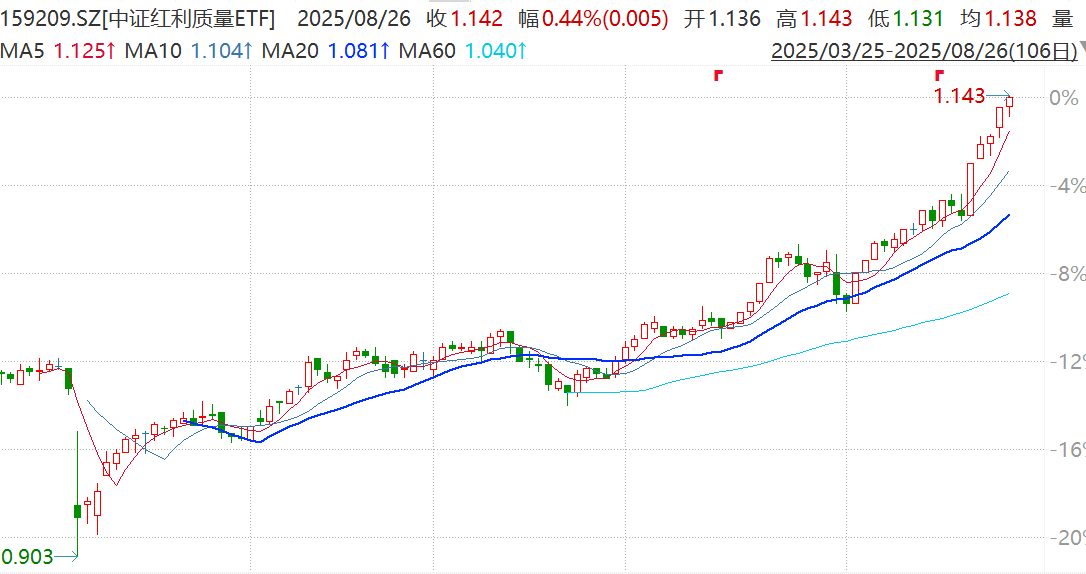
Core Viewpoint - The new "National Nine Articles" policy emphasizes the importance of dividends for listed companies, leading to a transformation in the evaluation system of corporate profitability, where dividend capability becomes a key indicator of corporate governance and profitability [2] Group 1: Dividend Investment Strategy - The dividend investment strategy is gaining recognition among investors as an important path for long-term and value investing, with high dividend assets becoming a new consensus in the market [2] - From a medium to long-term perspective, dividend assets still represent a high cost-performance ratio in the current market [2] - Traditional dividend sectors such as banking, coal, and electricity are experiencing trading congestion due to significant prior gains and limited growth expectations, making stock prices more sensitive to marginal changes [2] Group 2: Quality Factor and Index Performance - The "dividend + quality" strategy focuses on high-quality, low-congestion sectors, with the effectiveness of quality factors becoming more pronounced as market risk appetite gradually recovers [2] - The CSI Dividend Quality Index shows a more balanced allocation, with a single industry weight cap of 20%, and the top three industries being food and beverage, non-ferrous metals, and automobiles, contrasting with traditional dividend indices where banking stocks exceed 50% weight [2][4] - The CSI Dividend Quality Index has demonstrated superior profitability quality, with an average ROE of 4.13% at the end of Q1, significantly higher than the CSI Dividend Index (2.36%) and the low-volatility dividend index (2.40%) [5] Group 3: Performance Comparison - Despite the significant contribution of the banking sector to traditional dividend indices, the CSI Dividend Quality Index has outperformed major broad-based dividend indices even without banking stocks, showcasing stronger aggressiveness [5] - Over a longer period, the CSI Dividend Quality Index has significantly outperformed both the CSI Dividend Index and the low-volatility dividend index, validating the effectiveness of the quality factor [5] - Year-to-date performance shows the CSI Dividend Quality Index at 4.68%, the CSI Dividend Index at 8.50%, and the low-volatility dividend index at 16.75% [6]
各现金流指数差异在哪?哪种指数与传统资产相关性更低?——A股自由现金流指数比较
申万宏源金工· 2025-08-08 08:03
Group 1 - The core viewpoint of the article emphasizes that free cash flow has become a high-potential investment direction in the domestic ETF market, with significant growth observed in overseas markets [1] - The development of cash flow ETFs in overseas markets is mature, with the largest US free cash flow ETF, COWZ, exceeding $20 billion in size as of April 25, 2025 [1][5] - Various index compilation schemes for overseas free cash flow products exist, with a focus on selecting stocks with the highest free cash flow yield [3][4] Group 2 - Domestic cash flow strategies are expected to be effective in the long term, as companies shift from growth-oriented to cash flow-focused management strategies [7] - The performance of large-cap stocks has outperformed small-cap stocks in the US cash flow products, with COWZ showing a widening lead over CALF since 2024 [6] - The domestic cash flow index has seen steady growth since 2014, with a focus on companies with high cash flow returns, leading to significant excess returns compared to broad market indices [7] Group 3 - The FTSE China A-Share Free Cash Flow Focus Index has a larger average market capitalization compared to other domestic cash flow indices, indicating a focus on large and mid-cap stocks [19][21] - The FTSE cash flow index has a higher dividend yield and lower valuation compared to its peers, making it an attractive investment option [33] - The FTSE cash flow index has shown a strong risk-return profile, outperforming traditional dividend indices since 2014 [36][37] Group 4 - The FTSE cash flow index benefits from a dual filtering approach that includes quality and low volatility factors, enhancing its risk management and long-term value [50][55] - The index's composition is heavily weighted towards consumer and cyclical sectors, with significant allocations in household appliances, non-ferrous metals, and food and beverage industries [26][27] - The index has a high overlap with major broad-based indices, which positions it well to benefit from future market management policies [31][32]
中证1000质量指数报3143.35点,前十大权重包含数据港等
Jin Rong Jie· 2025-08-05 12:52
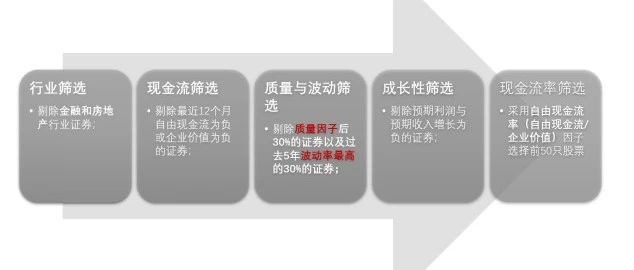
Group 1 - The core index, the CSI 1000 Quality Index, has shown a significant increase, with a rise of 5.05% over the past month, 10.02% over the past three months, and 10.53% year-to-date [2] - The CSI 1000 Quality Index is composed of 100 listed companies selected from the CSI 1000 Index based on their stability in operations, profitability, and quality of earnings [2] - The index was established on December 31, 2010, with a base value of 1000.0 points [2] Group 2 - The top ten weighted companies in the CSI 1000 Quality Index include Tonghua Golden Horse (3.49%), Longxin General (2.22%), and Jibite (2.18%) among others [2] - The market capitalization distribution shows that 53.29% of the holdings are from the Shenzhen Stock Exchange, while 46.71% are from the Shanghai Stock Exchange [2] Group 3 - The industry composition of the CSI 1000 Quality Index includes 22.74% in healthcare, 20.10% in industrials, and 14.29% in information technology, among others [3] - The index samples are adjusted biannually, with changes implemented on the next trading day following the second Friday of June and December [3] - Adjustments to the index may occur under special circumstances, such as delisting or corporate actions like mergers and acquisitions [3]

中证A100稳定指数报4591.97点,前十大权重包含长江电力等
Jin Rong Jie· 2025-07-15 16:09
Group 1 - The core index, the China Securities A100 Stable Index, closed at 4591.97 points, with a one-month increase of 2.45%, a three-month increase of 5.37%, and a year-to-date increase of 3.32% [1] - The index is constructed based on volatility and quality factors, selecting securities with high risk exposure to macroeconomic changes for the dynamic index and those with lower risk exposure for the stable index [1] - The top ten holdings of the China Securities A100 Stable Index include Kweichow Moutai (11.53%), CATL (9.21%), China Merchants Bank (7.28%), and others, indicating a concentration in specific large-cap stocks [1] Group 2 - The industry composition of the index shows that industrials account for 23.09%, financials for 16.13%, and major consumer goods for 13.13%, among others, reflecting a diverse sector representation [2] - The index samples are adjusted biannually, with changes implemented on the next trading day after the second Friday of June and December, typically not exceeding 10% of the sample [2] - Special adjustments can occur under certain circumstances, such as delisting or corporate actions like mergers and acquisitions [2]






中证200动态指数报2697.01点,前十大权重包含沪电股份等
Jin Rong Jie· 2025-06-19 15:09
Group 1 - The core viewpoint of the news is that the CSI 200 Dynamic Index has shown a mixed performance, with a recent increase of 1.34% over the past month but a decline of 7.88% over the last three months and a year-to-date drop of 3.86% [1] - The CSI 200 Dynamic Index is constructed based on volatility and quality factors, selecting securities with high risk exposure to macroeconomic changes for the dynamic index and those with lower risk exposure for the stable index [1] - The index is benchmarked to December 31, 2004, with a base point of 1000.0 points, providing diversified risk-return characteristics for investors [1] Group 2 - The top ten holdings of the CSI 200 Dynamic Index include companies such as Xinyi Technology (3.34%), iFlytek (3.23%), and Zhongke Shuguang (2.94%) [1] - The market capitalization distribution of the CSI 200 Dynamic Index shows that the Shenzhen Stock Exchange accounts for 50.69% and the Shanghai Stock Exchange accounts for 49.31% [1] - In terms of industry composition, the CSI 200 Dynamic Index has a significant allocation to Information Technology (33.46%), followed by Industrial (15.89%) and Financial (13.96%) sectors [2] Group 3 - The index sample is adjusted semi-annually, with adjustments occurring on the next trading day after the second Friday of June and December, with a sample adjustment ratio generally not exceeding 10% [2] - Temporary adjustments to the index may occur under special circumstances, such as delisting of sample companies or corporate actions like mergers and acquisitions [2]

瑞银六月投资提醒:市场看似盘整,这些因子轮换机会别错过!黄金七月会起飞!
Sou Hu Cai Jing· 2025-06-18 09:31
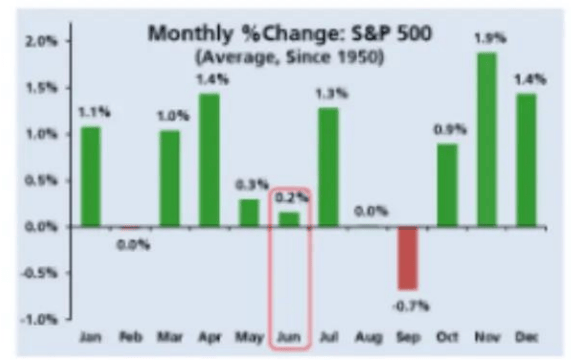
Group 1 - June is typically a month of consolidation across various asset classes, including currencies, commodities, and stocks [1] - Historically, the S&P 500 index shows a slight increase of 0.2% in June since 1950 [2] - The first week of June tends to perform strongly, stabilizing in the middle of the month, and then declining towards the end [4] Group 2 - June has been identified as a month with significant factor rotation, with quality, momentum, and size factors performing well, while value factors lag [8] - If seasonal patterns hold, June is expected to favor high-quality large-cap growth stocks, which are positioned at the intersection of all factor tilts [10] Group 3 - The European quality factor may rebound in June, as seasonal factors support long/short quality factor strategies [11] - The healthcare sector has historically performed well in June, with an average increase of 0.8% relative to the S&P 500 index [13] Group 4 - The biotechnology sector is particularly strong seasonally, suggesting that going long on the biotechnology index (XBI) may be the best strategy for the healthcare sector in June [15] - Historically, gold performs poorly in June but marks the end of a seasonal downturn, with significant improvement expected in July [15][17]