
资本主义

Search documents
资本贩卖 “觉醒”,你买单?
虎嗅APP· 2025-12-02 10:44
Core Viewpoint - The article discusses the concept of "subjectivity" and "awakening culture" in contemporary society, particularly in the context of social media and individual identity formation [4][10]. Group 1: Subjectivity in Social Media - The term "subjectivity" has gained popularity in social media, often associated with self-assertion and personal boundaries [4][7]. - Common perceptions of strong subjectivity include prioritizing personal feelings over others' opinions and rejecting the need to please others [7][8]. - The article critiques the superficial understanding of subjectivity, suggesting that it often serves to justify personal choices rather than reflect true self-awareness [10]. Group 2: Historical Context and Philosophical Underpinnings - The concept of subjectivity is linked to China's historical experiences of colonial oppression, emphasizing the importance of self-determination and national identity [10][11]. - The evolution of the idea of the subject has shifted from a divine authority to the individual as the central figure post-Enlightenment, leading to a perception of individuals as controllers of their environment [11][12]. - The article argues that modern interpretations of subjectivity often reduce interpersonal relationships to mere tools for achieving personal goals, reflecting a capitalist ideology [12][13]. Group 3: Critique of Contemporary Theories - The article highlights the tension between the idea of a constructed subject and the need for agency in enacting social change, questioning who can initiate transformation if individuals are merely products of their social structures [15][16]. - It discusses the challenges of denying subjectivity, which can lead to cynicism and a lack of actionable change, as seen in some contemporary philosophical movements [15][16]. - The article references Marxist critiques of capitalism, suggesting that true subjectivity arises from collective struggle and historical movements rather than individualistic pursuits [21][24]. Group 4: Practical Implications and Future Directions - The article emphasizes the need for sustainable mechanisms for social reproduction and collective action, moving away from performative gestures towards meaningful engagement [28][29]. - It advocates for breaking down personal boundaries to foster deeper connections and commitment to collective goals, rather than isolating oneself in pursuit of individual subjectivity [28][29].


叶翰、陈赟对谈儒家、制度与超越
Xin Lang Cai Jing· 2025-11-15 02:47
Group 1 - The discussion revolves around Max Weber's analysis of China and its impact on Western sinology, highlighting both appreciation and criticism of his views [3][4][5] - Weber's characterization of China as a "Confucian state" is debated, with emphasis on the relationship between Confucianism and modern Chinese identity [5][7] - The transformation of Chinese society from traditional to modern is a central theme, with Confucian values influencing contemporary social dynamics [5][9] Group 2 - The relationship between Confucian scholars and the state during the Han dynasty is explored, suggesting a complex interaction rather than a straightforward dominance of Confucianism [11][12][13] - The importance of legal knowledge among scholars is emphasized, indicating that not all scholars were strictly Confucian [13][14] - The portrayal of Confucius in historical texts is analyzed, questioning the traditional view of his sanctification and its implications for understanding Confucianism [14][15] Group 3 - The concept of "狂" (madness) in Confucian thought is discussed, suggesting that those who challenge societal norms can hold significant value [20][27] - The idea of "德" (virtue) is examined, with a focus on its evolution from a collective quality to an individual characteristic in Confucian philosophy [29][31][32] - The discussion touches on the adaptability of Confucianism in modern contexts, highlighting its potential to influence contemporary Chinese society [34][43]

“民主社会主义者”当选“资本主义首都”市长,美国民主党何去何从?
Huan Qiu Shi Bao· 2025-11-05 23:53
Core Points - The election of Mamdani, a self-identified "democratic socialist," as mayor of New York City has significant implications for the Democratic Party and reflects a growing distrust in capitalism among Americans [1][2][3] - Mamdani's victory is seen as a potential blueprint for the Democratic Party to regain support among working-class voters, but it also raises concerns about further polarization within the party and the country [5][6][10] Group 1: Election Results and Context - Mamdani won the mayoral election with 50.4% of the vote, defeating former Governor Cuomo [2] - His rise is linked to a broader leftist movement within the Democratic Party, particularly the Democratic Socialists of America (DSA), which has gained traction since the 2008 financial crisis [3][4] Group 2: Public Sentiment and Economic Concerns - A Gallup poll indicated that while 54% of Americans view capitalism positively, this figure has decreased by about 7 percentage points over the past 15 years, with only 42% of Democrats holding a favorable view of capitalism [4] - The wealth disparity highlighted by figures such as the top 1% owning as much wealth as the bottom 93% has contributed to a growing discontent with the current economic system [3][4] Group 3: Implications for the Democratic Party - Mamdani's election has sparked debates about the future direction of the Democratic Party, with many voters feeling disconnected from the party's establishment [5][6] - His policies, which include tax increases on the wealthy and rent freezes, resonate with working-class voters but may alienate moderate Democrats and business interests [6][10] Group 4: Challenges Ahead - Mamdani faces significant challenges in governing New York City, including managing powerful unions and various stakeholders, which may test his political agenda [9][10] - The potential for increased division within the Democratic Party is a concern, as many establishment figures remain cautious about embracing Mamdani's leftist approach [8][9]
【环时深度】“民主社会主义者”当选“资本主义首都”市长,美国民主党何去何从?
Huan Qiu Shi Bao· 2025-11-05 22:57
Core Points - The election of Mamdani, a self-identified "democratic socialist," as the mayor of New York City has significant implications for the Democratic Party and reflects a growing distrust in capitalism among Americans [1][3][4] - Mamdani's victory is seen as a potential blueprint for the Democratic Party to regain support among working-class voters, but it also raises concerns about further polarization within the party [7][8][10] Group 1: Election Results and Context - Mamdani won the election with 50.4% of the votes, defeating former Governor Cuomo, marking a significant shift in New York City's political landscape [3][4] - The Democratic Socialists of America (DSA) have gained prominence since the 2008 financial crisis, advocating for policies that limit the influence of capital and promote wealth redistribution [4][6] Group 2: Public Sentiment and Political Implications - A Gallup poll indicates that while 54% of Americans view capitalism positively, this figure has decreased by 7 percentage points over the past 15 years, with only 42% of Democrats holding a favorable view of capitalism [5][6] - The rise of leftist sentiments among younger voters, with 62% of 18-29-year-olds expressing favorable views of socialism, highlights a generational shift in political ideology [5][6] Group 3: Future of the Democratic Party - Mamdani's election has sparked debates about the future direction of the Democratic Party, with many questioning whether his leftist approach can unify the party or exacerbate divisions [7][10] - Some Democratic leaders express concern that Mamdani's radical policies may alienate moderate voters and hinder the party's chances in upcoming elections [10][11] Group 4: Socioeconomic Issues - Mamdani's campaign focused on addressing socioeconomic issues, such as homelessness and economic inequality, resonating with voters who feel neglected by traditional political structures [4][8] - The election results reflect a broader trend of increasing political polarization in the U.S., with Mamdani's victory seen as both a potential solution and a source of further division [12]
资本主义病了,得治
Hu Xiu· 2025-09-29 08:09
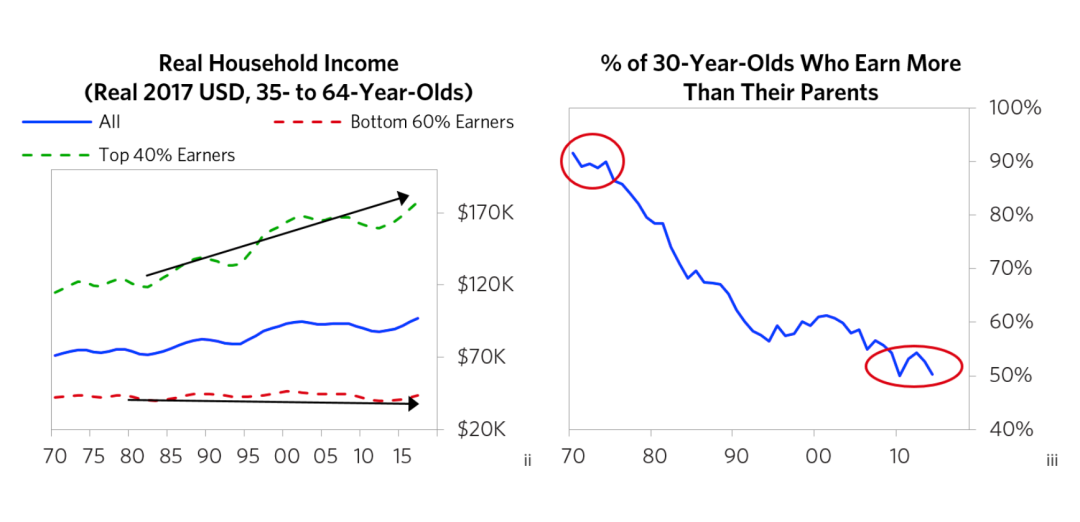
Core Insights - The article discusses the failures of capitalism in the United States, particularly highlighting the widening income and wealth gaps that have accelerated during the pandemic and post-pandemic era [1][2][5][15]. Economic Disparities - The article presents data showing that the real income of the bottom 60% of workers has stagnated since 1980, while the top 10% and 1% have seen their incomes double [19][21][28]. - The wealth gap is at its highest level since the late 1930s, with the top 1% holding more wealth than the bottom 90% combined [25][31]. - The likelihood of children earning more than their parents has dropped from 90% in 1970 to 50% today, indicating reduced economic mobility [23][38]. Education and Opportunity - The article emphasizes the importance of equal educational opportunities, noting that children from low-income families face significant disadvantages, including higher rates of poverty and food insecurity [44][45][46]. - The U.S. education system ranks poorly in standardized tests compared to other developed countries, particularly affecting students from high-poverty schools [48][49][52]. - There is a significant disparity in funding between public schools in wealthy and poor communities, exacerbating educational inequalities [68][70]. Social and Economic Consequences - The article argues that the widening income and wealth gaps lead to social unrest and political polarization, with rising populism on both the left and right [97][104][105]. - The increasing incarceration rates and their correlation with educational attainment highlight the systemic issues affecting low-income families [82][84][85]. - Health outcomes are also negatively impacted, with lower-income individuals experiencing higher rates of premature death and poorer health [88][89][91]. Recommendations for Reform - The article suggests that reforms are necessary to address the failures of capitalism, including the need for strong leadership to tackle income and wealth disparities [136][137]. - It advocates for bipartisan cooperation to redesign the economic system, focusing on equitable resource distribution and improving productivity [138][139]. - The establishment of clear metrics for success and accountability in addressing these issues is emphasized as crucial for effective reform [140][141].
Concha: This was a 'LAST STRAW MOMENT' for Disney
Youtube· 2025-09-19 00:30
Group 1 - The First Amendment does not protect employees' speech at work, allowing companies to terminate employees if their public persona harms the brand [2][4][6] - Jimmy Kimmel's recent controversies have led to significant financial losses for Disney, prompting the company to reconsider his position as a late-night host [3][4] - The demand for Kimmel's show has diminished due to negative public perception, making it a business decision for Disney to part ways with him [4][5] Group 2 - The media's reaction to Kimmel's cancellation highlights a perceived hypocrisy, as they previously supported censorship efforts while now framing the issue as a free speech violation [8][11] - Turning Point USA, founded by Charlie Kirk, is experiencing growth with 54,000 new chapter requests in American schools, indicating a rising interest in conservative activism [9][10]

谁打败了法西斯?西方在撒谎,我们必须揭示真相
Hu Xiu· 2025-09-03 01:50
Core Argument - The article argues that the true victors of World War II were the Soviet Union and the Chinese people, who made significant sacrifices, contrary to the narrative that emphasizes the contributions of Western powers like the United States and the United Kingdom [2][8]. Group 1: Historical Context - The article asserts that the real beginning of World War II was marked by Japan's invasion of Northeast China in 1931, rather than Germany's invasion of Poland in 1939 [3][4]. - It highlights that while the Western powers were calculating their economic interests, the Soviet Union and China were engaged in a fierce struggle against fascism, with the Soviet Union rapidly industrializing in preparation for war [2][3][4]. Group 2: Economic and Military Contributions - The article presents data showing that in 1941, the United States controlled approximately 22% to 24% of global GDP, while the Soviet Union and China together accounted for only about 8% [21][23]. - It emphasizes that the Soviet Union allocated 28% of its GNP to military spending by 1941, while the United States maintained a relatively low military expenditure until the attack on Pearl Harbor [21][23][27]. Group 3: Casualties and Sacrifices - The article states that the total death toll from the war was approximately 82.62 million, with 62% of the casualties coming from socialist countries and colonies, while only 1% were from the United States and the United Kingdom [45][46][75]. - It details the staggering losses suffered by the Soviet Union, with around 27 million deaths, and China, which experienced at least 36 million deaths during the war [48][50][51]. Group 4: Misrepresentation of Contributions - The article argues that the narrative surrounding the war has often downplayed the contributions of the Soviet Union and China while exaggerating the roles of Western powers [2][8][82]. - It criticizes the Western powers for their delayed military engagement and prioritization of imperial interests over genuine anti-fascist efforts [21][22][27].

当马克思回答稳定币:我们有了创造天堂的技术,却用它来建造一个更精致的地狱
3 6 Ke· 2025-07-23 03:26
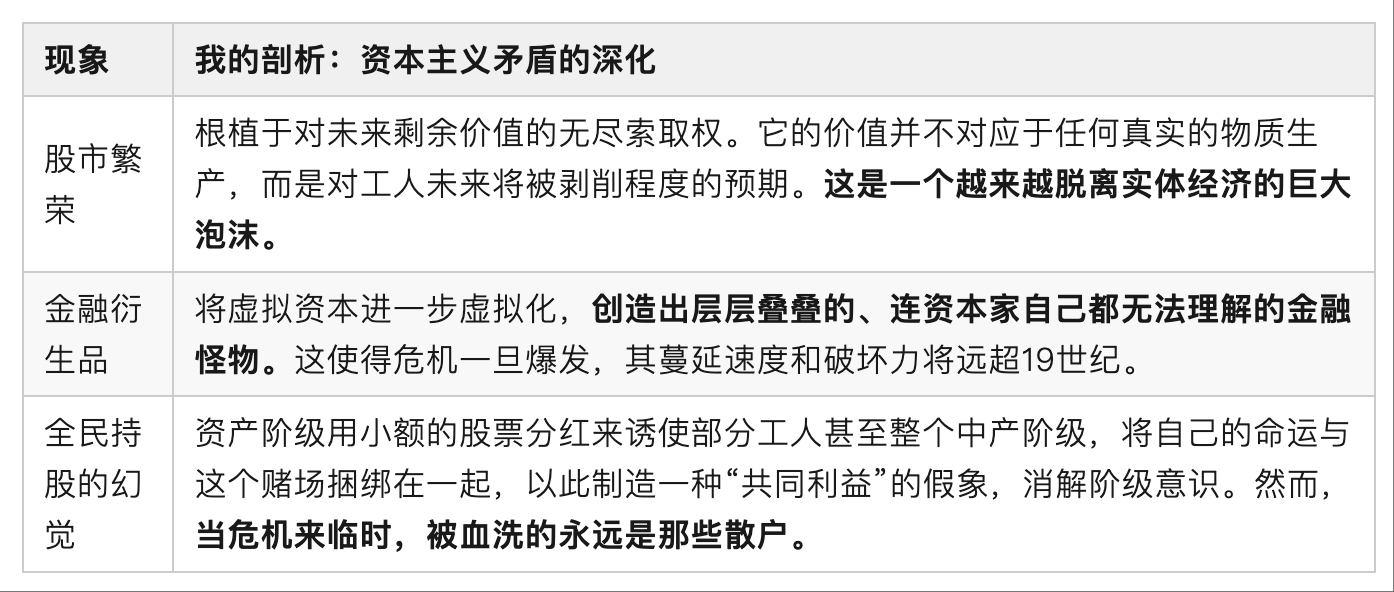
Group 1: Core Argument - The essence of capitalism's self-regulation is a misinterpretation; it is a product of class struggle rather than benevolence from the ruling class [2][3] - The welfare state and labor rights are not improvements from capitalism but rather concessions made under pressure from the working class [2][3] - The current state of capitalism is more cunning and financialized than in the 19th century, with unresolved contradictions accumulating globally [4][5] Group 2: Analysis of Financial Systems - The U.S. stock market is characterized as a casino of virtual capital, reflecting the deepening contradictions of capitalism [3][4] - The U.S. national debt is described as the largest form of virtual capital, relying on the exploitation of global labor [6][7] - The proposed "dollar stablecoin" is seen as a misguided attempt to salvage a hollow financial system, leading to further instability [7][8] Group 3: Implications of Dollar Stablecoin - The dollar stablecoin represents a new form of financial colonization, creating a dependency on U.S. financial systems in the digital realm [12][14] - It perpetuates a hidden global seigniorage, extracting value from global users while offering little in return [18][19] - The stablecoin system enhances financial surveillance and control, undermining the autonomy of individuals and nations [20][21] Group 4: Global Economic Dynamics - The dollar stablecoin threatens the monetary sovereignty of developing countries, exacerbating financial instability and inequality [21][22] - A call for international solidarity among the working class is emphasized as a necessary response to the challenges posed by the dollar stablecoin [22][23] - The ultimate solution lies in the abolition of capitalism itself, as monetary systems will always serve as tools of class oppression under capitalism [24][25]
沃尔夫冈·施特雷克:当下美欧政策变化是出于绝望的盲动,切勿赋予其过高的战略意义
Sou Hu Cai Jing· 2025-07-06 07:14
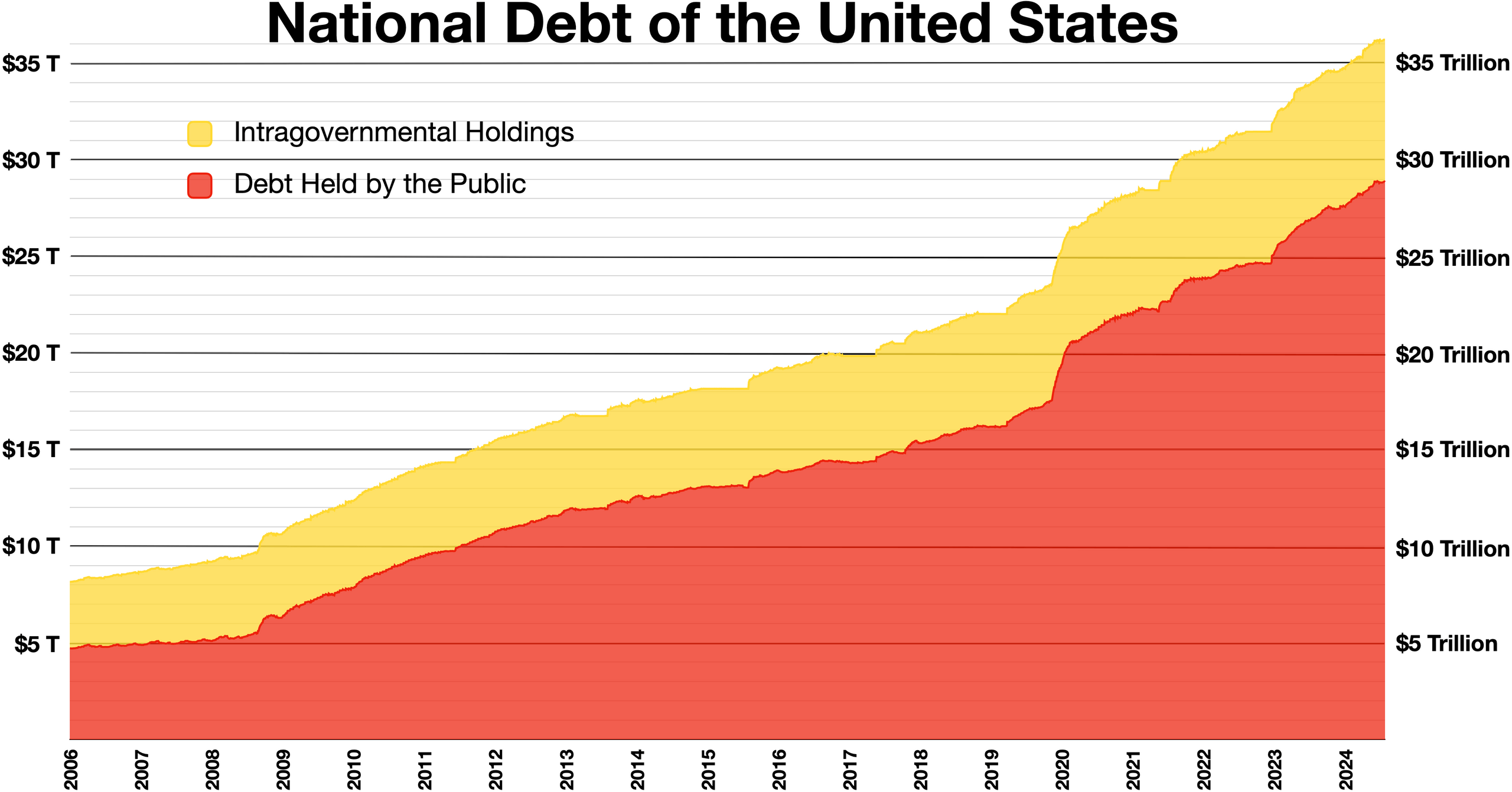
Group 1 - The article discusses the critical point of capitalism, indicating that the "buying time" strategy is nearing its limits due to the disconnection between debt repayment capacity and economic growth potential [1] - The U.S. national debt has surpassed $37 trillion since the 2008 financial crisis, with ongoing debates about the debt ceiling becoming a political tool, suggesting that the "myth of American economic invincibility" is at risk of collapse [2] - The trend of de-globalization has been ongoing since the 2008 financial crisis, indicating a shift in governance that reflects a desperate response to systemic failures of neoliberalism [5][6] Group 2 - The article highlights the transformation of the "tax state" into a "debt state," where the burden of public spending is shifted to lower-income groups, leading to increased wealth inequality [7] - The ongoing rise in public debt and the inability of Western democracies to maintain legitimacy is illustrated by the rise of right-wing populism, particularly in countries that have ceded some sovereignty to the EU [10] - The EU's tightening policies have stripped member states of their economic sovereignty, revealing a governance vacuum in the face of cross-border capital flows [9]
比尔·盖茨谈退休计划:在教育医疗领域未来20年投入超两千亿美元,AI将有巨大潜力
3 6 Ke· 2025-05-22 00:15
Group 1: Philanthropic Commitment - Bill Gates commits to investing over $200 billion from his personal wealth and the Gates Foundation into global health and education over the next 20 years, focusing on saving millions of lives [1][13]. Group 2: Global Health and Vaccines - Over the past 25 years, annual child mortality has decreased from 10 million to 5 million, yet 5 million children still die each year, with concerns about cuts to vaccine and HIV drug aid in the U.S. and Europe [2][16]. - Gates emphasizes that governments should allocate at least 1% of their budgets to aid impoverished populations [2][17]. Group 3: Focused Investment and Succession Planning - The strategy involves concentrated investment over 20 years rather than perpetual funding to enhance efficiency, with plans to cultivate successors in philanthropy [3][14]. Group 4: Global Cooperation and U.S. Responsibility - Criticism is directed at the U.S. for reducing global health budgets, urging the maintenance of HIV and malaria programs established during the Bush administration, noting that U.S. global health spending is four times that of the Gates Foundation [4][21]. Group 5: Strategic Philanthropy - Philanthropy is viewed not only as a means to save lives but also as an investment in global economic and strategic stability, with a small budget allocation capable of significantly reducing child mortality [5][17]. Group 6: Technology and Education - AI is expected to transform education and improve global learning quality, while also addressing physician shortages in healthcare. The foundation funds research on HIV, tuberculosis, and Alzheimer's disease [6][36]. Group 7: Values and Responsibility - Gates upholds the belief that "all lives have equal value," ensuring efficient use of funds and acknowledging the extraordinary nature of his wealth, viewing donations as a social responsibility [7][15]. Group 8: Optimism for the Future - Despite challenges in global health funding and political issues, there is optimism about reducing child mortality to below 3 million in the next 20 years [8][16]. Group 9: Capitalism and U.S. Contributions - Gates expresses pride in the U.S. contributions to medical research, knowledge sharing, and philanthropic models, asserting that capitalism, while imperfect, has significantly improved human lifespan and welfare [9][32]. Group 10: Religious Views and Values - Gates does not adhere to a specific religious belief but aligns with universal values such as "do unto others as you would have them do unto you," which guide his philanthropic work [10][43].