车辆购置税减免

Search documents
【行业政策】一周要闻回顾(2025年10月6日-10月12日)
乘联分会· 2025-10-14 08:43
Core Viewpoint - The article discusses the public announcement regarding the 400th batch of the "Announcement on Road Motor Vehicle Production Enterprises and Products" and the 79th batch of the "Directory of Energy-Saving and New Energy Vehicle Models Enjoying Tax Reductions" by the Ministry of Industry and Information Technology, highlighting the approval process and technical requirements for new energy vehicles [1][3]. Group 1: New Product Approvals - A total of 569 vehicle production enterprises applied for new product approvals, including 430 automobile manufacturers, 138 motorcycle manufacturers, and 1 three-wheeled vehicle manufacturer, with a total of 1,800 new products submitted [2]. - Among the new products, 234 enterprises submitted 668 models of new energy vehicles, including 545 pure electric models, 87 plug-in hybrid models, and 36 fuel cell models [2]. Group 2: Product Changes and Rectifications - There are 836 vehicle production enterprises that applied for product changes, with 7262 products submitted for changes, including 6634 automobile products and 622 motorcycle products [4]. - 33 automobile manufacturers submitted 41 automobile products for rectification [4]. Group 3: Technical Requirements for Tax Exemptions - The announcement outlines the technical requirements for new energy vehicles to qualify for vehicle purchase tax exemptions for 2026-2027, including specific energy consumption limits for pure electric and plug-in hybrid vehicles [13][14][15]. - Vehicles listed in the new tax exemption directory must meet the updated technical requirements starting January 1, 2026, with non-compliant models being removed from the directory [16]. Group 4: Carbon Footprint Standards - The article mentions the solicitation of opinions on three national standards related to the carbon footprint of electric vehicles, including methods for quantifying greenhouse gas emissions [7][8]. - These standards aim to provide a framework for managing carbon emissions in the automotive industry, supporting low-carbon development and compliance with national regulations [9][10][11]. Group 5: Adjustments to Tax Policies - The Ministry of Industry and Information Technology announced adjustments to the technical requirements for energy-saving and new energy vehicles to align with industry developments and standards [21][22]. - The new requirements will take effect on January 1, 2026, and will replace previous regulations, ensuring that vehicles meet updated standards for tax benefits [22].

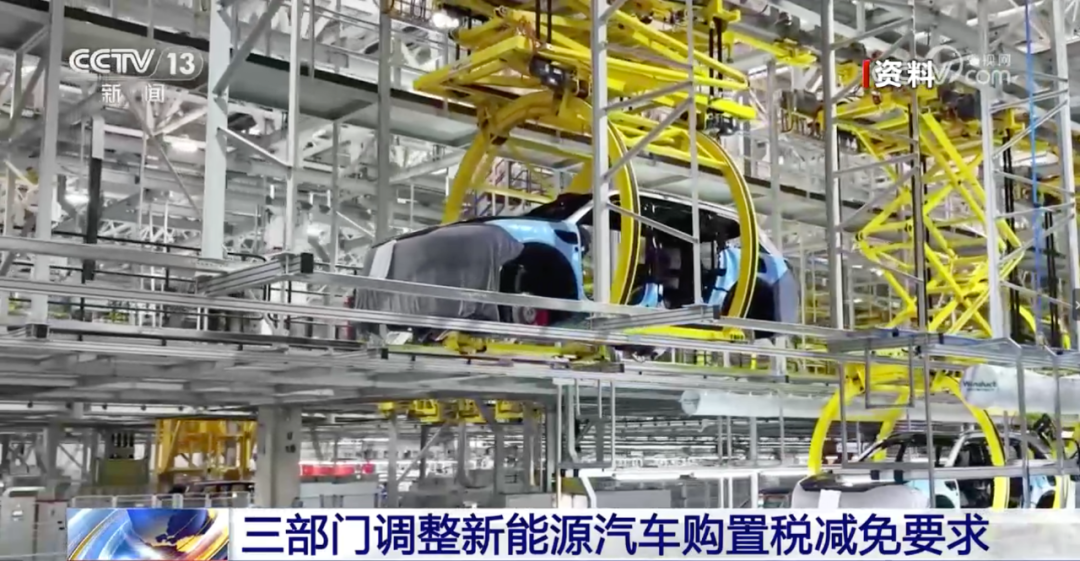
三部门:新能源车购置税减免技术门槛提高
Zheng Quan Shi Bao· 2025-10-11 01:53
Core Viewpoint - The announcement by the Ministry of Industry and Information Technology, Ministry of Finance, and State Taxation Administration regarding the adjustment of technical requirements for new energy vehicles (NEVs) aims to enhance the standards for electric and plug-in hybrid vehicles, promoting higher quality development in the industry [1][2][3] Group 1: Policy Changes - Starting from January 1, 2026, vehicles listed in the "Directory of New Energy Vehicles Eligible for Vehicle Purchase Tax Exemption" must meet the new technical requirements outlined in the announcement [1] - The pure electric driving range requirement for plug-in hybrid vehicles has been significantly increased from a minimum of 43 kilometers to 100 kilometers, representing a 132.6% increase [1][2] Group 2: Technical Requirements - New technical requirements for plug-in hybrid vehicles are categorized based on vehicle curb weight, with specific fuel consumption and energy consumption limits set for vehicles under and over 2510 kg [2] - For vehicles under 2510 kg, the fuel consumption must be less than 70% of the limit, while for those over 2510 kg, it must be less than 75% [2] Group 3: Market Insights - In the first half of this year, pure electric vehicles held approximately 60.9% of the domestic NEV market share, while plug-in hybrids accounted for about 29.3%, and range-extended vehicles made up around 9.8% [2] - The chairman of SAIC Group predicts that by 2030, the penetration rate of NEVs in China will rise to 70%, establishing a market development structure of 4:3:3 among hybrid, pure electric, and fuel vehicles [2] Group 4: Industry Implications - The adjustments are intended to align with rapid advancements in NEV range and engine technology, ensuring that policy development keeps pace with technological progress [3] - By raising technical barriers, the policy aims to encourage companies to increase R&D investment, phase out outdated products, and shift the industry focus from scale expansion to high-quality development [3]
事关新能源车!重磅公告发布
Ke Ji Ri Bao· 2025-10-10 07:03
Core Viewpoint - The Ministry of Industry and Information Technology, the Ministry of Finance, and the State Taxation Administration have jointly announced adjustments to the technical requirements for electric vehicles and plug-in hybrid vehicles eligible for vehicle purchase tax exemptions from 2026 to 2027, aiming to enhance the overall quality and performance of new energy vehicles in the market [1]. Summary by Category Adjustments to Technical Requirements - For pure electric vehicles, the new regulations stipulate that the energy consumption for traveling 100 kilometers must not exceed the national standard for similar vehicles. Heavier vehicles (over 3.5 tons) will be held to stricter energy consumption standards based on the 3.5-ton model [3]. - For plug-in hybrid vehicles, including those that can be charged and fueled, the new rules require that: - The effective electric range must be at least 100 kilometers when running solely on electricity. - The fuel and electricity consumption must be lower than the national standards when running on fuel alone. - Similar to pure electric vehicles, heavier models must adhere to the standards set for 3.5-ton vehicles [4]. Implementation Timeline - Starting January 1, 2026, vehicles listed in the "Directory of New Energy Vehicles Eligible for Vehicle Purchase Tax Exemption" must comply with the new requirements. Vehicles already listed before December 31, 2025, that meet the new standards will automatically transition to the 2026 first period directory, while those that do not will be removed [6]. - Vehicles that do not meet the new requirements but wish to be included in the 2026 first period directory must complete their application by December 12, 2025. Removed vehicles can reapply for inclusion [7]. Impact on Consumers and Industry - Consumers may face changes in purchase costs as models that do not meet the new technical requirements will no longer qualify for tax exemptions. This could lead to a temporary reduction in available models, but in the long term, it is expected to encourage the market to offer higher-quality products [9]. - Industry experts believe that the new regulations will drive technological upgrades in battery capacity and hybrid systems, enhancing driving experience and safety. Stricter standards are anticipated to promote the introduction of higher-performance models, meeting consumer demands for longer range and lower energy consumption, thus supporting both industrial and consumer upgrades [9].
事关价格竞争、股票投资、买车等,重磅利好来了!
Sou Hu Cai Jing· 2025-10-10 03:46
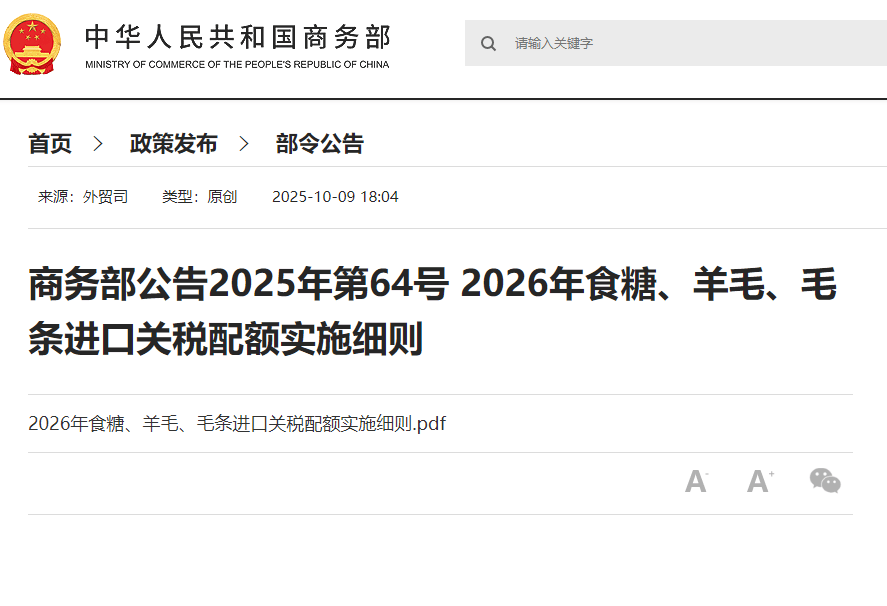
Group 1 - The announcement by the National Development and Reform Commission and the State Administration for Market Regulation aims to address disorderly price competition and maintain a healthy market price order, emphasizing the importance of fair and legal market competition [1] - The announcement highlights that disorderly competition negatively impacts industry development, product innovation, and quality safety, which is detrimental to the healthy development of the national economy [1] - Businesses are encouraged to set prices based on production costs and market supply and demand, adhering to principles of fairness, legality, and good faith [1] Group 2 - The Ministry of Industry and Information Technology, the Ministry of Finance, and the State Taxation Administration have jointly announced new technical requirements for the exemption of vehicle purchase tax for new energy vehicles, effective from January 1, 2026 [2] - The announcement specifies that only models listed in the "Directory of New Energy Vehicles Eligible for Tax Exemption" that meet the new technical requirements will qualify for the tax exemption [2] Group 3 - The State Council has issued the "Electronic Seal Management Measures," which standardize the management and application of electronic seals across various organizations [3] - The measures state that electronic seals, based on cryptographic technology, hold the same legal effect as physical seals when used for electronic document signatures [3] Group 4 - Starting from October 9, the Beijing Stock Exchange has implemented a significant reform by switching all 277 stocks to a new code beginning with "920," which does not affect trading rules or methods [4] - This change aims to unify the stock coding system and enhance the trading experience for investors [4] Group 5 - The Ministry of Commerce has announced the implementation details for the import tariff quotas for sugar, wool, and wool tops for 2026, with a total sugar import quota of 1.945 million tons, 70% of which is for state-owned trade [5] - The import quotas for wool and wool tops are set at 287,000 tons and 80,000 tons, respectively [5] Group 6 - The National Development and Reform Commission has released the application and arrangement details for the import tariff quotas for grain and cotton for 2026, with specific quotas for wheat, corn, rice, and cotton [6] - The total import quota for wheat is set at 9.636 million tons, with 90% allocated for state-owned trade, while corn and rice quotas are 7.2 million tons and 5.32 million tons, respectively [6] Group 7 - The Ministry of Commerce and the General Administration of Customs have announced export control measures for certain materials, including superhard materials and rare earths, effective from November 8 [7] - These measures are intended to protect national security and interests while ensuring compliance with international obligations [7] Group 8 - The National Food and Strategic Reserves Administration has issued a notice to enhance post-harvest services and procurement for autumn grain, focusing on quality monitoring and market coordination [9] - The notice emphasizes the importance of providing drying and storage services to farmers and ensuring effective grain quality safety measures [10]
事关车辆购置税减免!三部门,重大调整!
Zheng Quan Shi Bao Wang· 2025-10-10 00:34
Core Points - The Ministry of Industry and Information Technology, the Ministry of Finance, and the State Taxation Administration announced adjustments to the technical requirements for the exemption of vehicle purchase tax for new energy vehicles from 2026 to 2027 [1] Group 1: Technical Requirements for Pure Electric Vehicles - The energy consumption per 100 kilometers for pure electric passenger vehicles must not exceed the limits specified in GB 36980.1-2025 [2] - For passenger vehicles with a maximum design total mass exceeding 3500 kg, the energy consumption limits will refer to those for vehicles with a maximum design total mass of 3500 kg in GB 36980.1-2025 [2] Group 2: Technical Requirements for Plug-in Hybrid Vehicles - Plug-in hybrid vehicles (including range-extended) must have an electric driving range of no less than 100 kilometers under conditional equivalent all-electric range [3] - The fuel consumption in electric mode for plug-in hybrid vehicles must be less than 70% for vehicles with a curb weight below 2510 kg and less than 75% for those above 2510 kg, compared to the limits in GB 19578-2024 [3] - For plug-in hybrid vehicles, the energy consumption in electric mode must be less than 140% for vehicles with a curb weight below 2510 kg and less than 145% for those above 2510 kg, compared to the limits in GB 36980.1-2025 [4] Group 3: Implementation Timeline and Directory - From January 1, 2026, vehicles listed in the "Directory of New Energy Vehicles Eligible for Vehicle Purchase Tax Exemption" must comply with the new technical requirements [5] - Vehicles listed before December 31, 2025, that meet the new requirements will automatically transition to the first issue of the 2026 directory; non-compliant vehicles will be removed [4][5] - Vehicles that do not meet the requirements and wish to be included in the 2026 directory must complete their application by December 12, 2025 [4]
每日债市速递 | 央行公开市场单日净回笼1.45万亿
Wind万得· 2025-10-09 22:39
Group 1: Open Market Operations - The central bank announced a 7-day reverse repurchase operation on October 9, with a fixed rate and quantity tendering of 612 billion yuan at an interest rate of 1.40%, with the same amount being the bid and awarded [1] - On the same day, 2,063.3 billion yuan of reverse repos matured, resulting in a net withdrawal of 1,451.3 billion yuan [1] Group 2: Funding Conditions - The interbank market showed a relatively loose funding condition on the first trading day after the holiday, with overnight repo rates for deposit-taking institutions dropping about 6 basis points to around 1.32% [3] - The overnight quotes for non-bank institutions borrowing against credit bonds also decreased but remained above 1.5%, not returning to the particularly loose liquidity levels seen previously [3] - The central bank's operation of over 1 trillion yuan in reverse repos alleviated the pressure from the large amount of reverse repos maturing [3] Group 3: Interbank Certificates of Deposit - The latest transaction for one-year interbank certificates of deposit among major banks was around 1.66%, down more than 1 basis point from the previous day [8] Group 4: Government Bond Futures - The closing prices for government bond futures showed an increase, with the 30-year main contract rising by 0.46%, the 10-year by 0.15%, the 5-year by 0.07%, and the 2-year by 0.02% [14] Group 5: Key News - The Ministry of Commerce announced export controls on specific rare earth items, requiring exporters to obtain licenses for exports to countries outside China, particularly for military users and certain semiconductor manufacturing applications [15] - The Ministry of Industry and Information Technology announced adjustments to the technical requirements for new energy vehicles eligible for vehicle purchase tax exemptions starting January 1, 2026 [15] - During the recent holiday, domestic travel reached 888 million person-times, an increase of 123 million compared to the previous year, with total spending of 809 billion yuan, up 108.2 billion yuan [16]

车辆购置税减免门槛提高,插混车型纯电续航至少100公里
Bei Ke Cai Jing· 2025-10-09 13:59
Core Insights - The Ministry of Industry and Information Technology, along with two other departments, announced new technical requirements for electric vehicles and plug-in hybrid vehicles, effective January 1, 2026, which include stricter energy consumption standards and an increase in the pure electric range requirement for plug-in hybrids from 43 kilometers to 100 kilometers [1][2][4] Group 1: Technical Requirements - The new announcement specifies that pure electric passenger vehicles must meet the energy consumption limits set by the national standard GB 36980.1-2025, which will be implemented starting January 1, 2026 [2][3] - The requirement for plug-in hybrid vehicles now mandates a minimum pure electric range of 100 kilometers, significantly up from the previous threshold of 43 kilometers [2][3] Group 2: Industry Impact - The new technical requirements are expected to drive technological upgrades in the industry, prompting companies to increase R&D investments to enhance battery technology and energy management efficiency [4][5] - The changes may lead to the elimination of outdated models from the market, optimizing competition and concentrating resources among companies with stronger technological capabilities [4][5] Group 3: Consumer Impact - Consumers will see changes in vehicle purchase costs, as only models meeting the new technical requirements will qualify for tax exemptions, potentially reducing the range of available models in the short term [5] - In the long term, the market is expected to offer more high-quality products, encouraging consumers to pay closer attention to vehicle technical specifications when making purchasing decisions [5]
事关车辆购置税减免!三部门,重大调整!
证券时报· 2025-10-09 11:52
Core Viewpoint - The announcement by the Ministry of Industry and Information Technology, the Ministry of Finance, and the State Taxation Administration outlines the technical requirements for the exemption of vehicle purchase tax for new energy vehicles (NEVs) from 2026 to 2027, emphasizing the need for compliance with updated standards for electric and hybrid vehicles [1][2][5]. Group 1: Technical Requirements for Pure Electric Vehicles - The energy consumption limit for pure electric passenger vehicles should not exceed the specified limits in the standard GB 36980.1—2025 [2]. - For passenger vehicles with a maximum design total mass exceeding 3500 kg, the energy consumption limit will follow the same standards as those for vehicles weighing 3500 kg or less [2]. Group 2: Technical Requirements for Plug-in Hybrid Vehicles - Plug-in hybrid vehicles must have an equivalent all-electric range of no less than 100 km [3]. - The fuel consumption limit for plug-in hybrid vehicles in electric mode must be less than 70% for vehicles with a curb weight below 2510 kg and less than 75% for those above [3]. - The energy consumption limit for plug-in hybrid vehicles in electric mode should be less than 140% for vehicles with a curb weight below 2510 kg and less than 145% for those above [4]. Group 3: Implementation and Compliance - From January 1, 2026, vehicles listed in the "Exemption Directory for Vehicle Purchase Tax on New Energy Vehicles" must comply with the new technical requirements [5]. - Vehicles that were already listed before December 31, 2025, and meet the new requirements will automatically transition to the updated directory [5]. - Non-compliant vehicles will be removed from the directory, but can reapply for inclusion [5].

工信部等三部门调整2026—2027年减免车辆购置税新能源汽车产品技术要求
中国基金报· 2025-10-09 09:05
Core Viewpoint - The announcement by the Ministry of Industry and Information Technology, Ministry of Finance, and State Taxation Administration outlines the technical requirements for new energy vehicles (NEVs) eligible for vehicle purchase tax exemptions from 2026 to 2027, emphasizing the need for compliance with updated standards for electric and hybrid vehicles [2][3]. Group 1: Technical Requirements for Pure Electric Vehicles - The energy consumption limit for pure electric passenger vehicles should not exceed the specified limits in the standard GB 36980.1-2025 [3]. - For passenger vehicles with a maximum design total mass exceeding 3500 kg, the energy consumption limit will follow the same standards as those for vehicles weighing 3500 kg or less [3]. Group 2: Technical Requirements for Plug-in Hybrid Vehicles - Plug-in hybrid vehicles must have an all-electric range of at least 100 km under certain conditions [5]. - The fuel consumption limit for plug-in hybrid vehicles in electric mode must be less than 70% for vehicles weighing under 2510 kg and less than 75% for those weighing 2510 kg or more [5]. - The energy consumption limit for plug-in hybrid vehicles must be less than 140% for vehicles under 2510 kg and less than 145% for those over 2510 kg [6]. Group 3: Compliance and Implementation - From January 1, 2026, vehicles listed in the "Directory of New Energy Vehicles Eligible for Vehicle Purchase Tax Exemption" must comply with the new technical requirements [7]. - Vehicles that were already listed before December 31, 2025, and meet the new requirements will automatically be included in the 2026 directory, while those that do not comply will be removed [7]. - Tax reduction procedures will be based on the new directory and necessary documentation starting from January 1, 2026 [7].

我的车上个月报废了,交的车船税还能退吗?
蓝色柳林财税室· 2025-09-21 00:50
Group 1 - Vehicle and vessel owners or managers in China are required to declare and pay vehicle and vessel tax according to the Vehicle and Vessel Tax Law and the attached tax tables [2] - Taxpayers can either declare and pay the tax themselves or have insurance companies collect and pay it when handling mandatory traffic accident liability insurance [3] - Certain situations require self-declaration, including for vessels and taxable vehicles that do not require mandatory insurance [3] Group 2 - New energy vehicles and vessels are exempt from vehicle and vessel tax, including pure electric commercial vehicles, plug-in hybrid vehicles, and fuel cell commercial vehicles [4][23] - Exempt new energy vessels must have a main propulsion power system powered by pure natural gas engines [5] Group 3 - Energy-saving vehicles are subject to a 50% reduction in vehicle and vessel tax, with eligible models announced periodically by relevant authorities [7] - Taxpayers can apply for a refund of vehicle and vessel tax if their vehicle is stolen, scrapped, or lost within the same tax year [9] - Taxpayers cannot receive a refund for vehicle and vessel tax if the vehicle is sold within the same tax year [10] - Taxpayers can apply for a refund if a newly purchased vehicle is returned to the dealer due to quality issues [11] Group 4 - New energy vehicles purchased between January 1, 2024, and December 31, 2025, are exempt from vehicle purchase tax, with a maximum exemption of 30,000 yuan per vehicle [19] - New energy vehicles purchased between January 1, 2026, and December 31, 2027, will have a 50% reduction in vehicle purchase tax, with a maximum reduction of 15,000 yuan per vehicle [19]