量子计算

Search documents
算电协同为AI和能源数智化注入攻守兼备增长极
Guotou Securities· 2026-03-22 11:19
Investment Rating - The industry investment rating is "Outperform the Market - A" and the rating is maintained [5] Core Insights - The concept of "computing and electricity collaboration" has been elevated to a national strategic deployment for the first time during this year's Two Sessions, indicating a significant policy shift [11][12] - The collaboration aims to achieve deep synergy between computing infrastructure and the power system through technological innovation and industry integration, forming a closed-loop system that includes green electricity, virtual power plants, power trading, energy storage, and data centers [12][13] - The investment value of the computing and electricity collaboration is characterized by its dual focus on AI computing power and green electricity, providing both offensive and defensive investment attributes [13] Summary by Sections Policy Developments - The government work report for 2026 emphasizes the implementation of large-scale intelligent computing clusters and the support for public cloud development, marking a clear policy trajectory for computing and electricity collaboration [11] - By the end of 2025, a dual collaboration mechanism for computing and electricity is expected to be initially formed, with over 80% of new data centers using green electricity [11][12] Industry Dynamics - The collaboration is expected to drive explosive demand for AI computing power, enhancing the investment appeal of the energy sector by introducing new growth drivers [13] - The integration of AI computing with green electricity is anticipated to lower operational costs and promote sustainable development in the digital economy [13] Investment Opportunities - Recommended sectors to focus on include energy digitization, IDC-related companies, and AI power-related firms, such as Guoneng Rixin, Nanfang Technology, and others [14]
“量子计算的ChatGPT时刻,可能比人们预期来得更早”
投中网· 2026-03-22 07:00
Core Viewpoint - The quantum technology sector is rapidly evolving from a pioneering phase to one focused on enterprise applications, with significant investment activity indicating a shift towards commercialization [4][6][24]. Group 1: Industry Overview - There are currently over 237 companies involved in quantum technology across various subfields, including quantum computing, communication, materials, and security [8]. - Among these, 42 companies specialize in quantum computing, with a notable increase in investment activity in recent years [14][19]. - The investment landscape has changed dramatically, with 36 investments recorded in 2025, marking a historical high, and 13 investments already completed in the first three months of 2026 [12][10]. Group 2: Investment Trends - In 2024, global investment in quantum technology surpassed $1 billion, reflecting a growing interest in the sector [6][27]. - Notable investments include a €1 billion Series B round for French quantum computing company Alice & Bob and a total of $450 million in Series E funding for SandboxAQ [28]. - The emergence of dedicated funds, such as Quantonation Ventures, highlights the increasing recognition of quantum technology's potential for commercialization [26][27]. Group 3: Regional Insights - Beijing leads in the number of quantum technology companies with 50, followed by Guangdong (39), Jiangsu (28), and others [9]. - Hefei, a non-first-tier city, has the highest concentration of quantum computing companies, attributed to the influence of the University of Science and Technology of China [17]. Group 4: Company Highlights - Turing Quantum has raised over $1 billion across seven funding rounds, achieving a valuation of approximately $7 billion [19]. - Logic Bit, incubated from Zhejiang University's superconducting quantum computing team, has recently completed significant funding rounds, showcasing the high technical and talent requirements in the quantum computing startup landscape [22][23].


Here’s How Rigetti (RGTI)’s Shares Behaved After Jim Cramer Said “It’s A Quantum GameStop” In January 2025
Yahoo Finance· 2026-03-19 16:06
Core Insights - Rigetti Computing Inc. (NASDAQ:RGTI) is a quantum computing processor company that has seen its stock price increase by 57% over the past year, but it has decreased by 16% since Jim Cramer's comments [1] - The stock experienced a significant drop of 53% from January 3rd to January 10th after NVIDIA CEO Jensen Huang expressed skepticism about the practical applications of quantum computing being decades away [1] - Following this, Rigetti's stock surged by 419% from January 10th to October 17th, driven by key announcements including purchase orders for two Novera quantum computers and the availability of its 36-qubit system, Cepheus-1-36Q, on its cloud platform [1] - Despite the recent surge, the stock has been on a downward trend since November, with Cramer expressing concerns about Rigetti being a money-losing company with only $11.9 million in revenues over the last 12 months [1] Company Performance - Rigetti Computing's stock price has fluctuated significantly, with a notable increase of 419% in a specific timeframe, indicating volatility in investor sentiment and market perception [1] - The company reported revenues of $11.9 million in the last 12 months, highlighting its status as a multiple-year money loser [1] Market Context - The comments from NVIDIA's CEO have influenced market perceptions of quantum computing, suggesting that the industry may face skepticism regarding its near-term viability [1] - The overall market for quantum computing is still developing, with companies like Rigetti attempting to establish themselves as leaders despite financial challenges [1]

证券研究报告、晨会聚焦:计算机苏仪:OpenClaw辨析:再次强调其安全应用-20260319
ZHONGTAI SECURITIES· 2026-03-19 13:05
Core Insights - The report emphasizes the renewed interest in AI capabilities sparked by OpenClaw, highlighting its potential applications and the need for further exploration in the tech community [3][4] - OpenClaw's current application is not yet mature, with limited commercial products available in both ToC and ToB sectors, raising concerns about security and privacy [3] Group 1: Industry Opportunities - OpenClaw is expected to create new AI task execution methods, leading to increased demand for computing power, particularly in inference computing [3] - Investment opportunities are identified in local and cloud deployment related to the increased computing power requirements driven by OpenClaw [3] - The emphasis on security, privacy, and compliance has become a critical focus area due to OpenClaw's implications [3] Group 2: Application Potential - OpenClaw demonstrates significant potential in office collaboration ecosystems through its ability to handle complex task planning and execution [3]
建议中短期关注专用量子计算进展,长期布局通用量子计算
ZHONGTAI SECURITIES· 2026-03-18 10:30
Investment Rating - The industry investment rating is "Overweight" [4][7] Core Insights - The report emphasizes the importance of focusing on specialized quantum computing advancements in the short to medium term while planning for general quantum computing in the long term [6] - Quantum computing is recognized as a key pillar of quantum technology, transitioning from "technological breakthroughs" to "scale commercialization" [6] - The report highlights the differentiation between specialized and general quantum computers, with specialized quantum computing expected to enter early industrial practical applications sooner [6] Summary by Sections Industry Overview - The industry comprises 359 listed companies with a total market value of 48,569.40 billion yuan and a circulating market value of 42,836.87 billion yuan [2] - The Chinese government has consistently included quantum technology in its strategic plans, indicating its core importance in national development [6] Market Trends - Specialized quantum computing is advancing rapidly, with companies like D-Wave and domestic firms achieving significant milestones in specific applications such as drug development and financial modeling [6] - General quantum computing faces challenges due to the "quantum error correction" bottleneck, limiting its immediate impact on classical computing architectures [6] Investment Recommendations - The report suggests focusing on specialized quantum hardware and algorithm suppliers with established use cases in high-value sectors like biopharmaceuticals and financial risk management in the short to medium term [6] - In the long term, attention should shift to major players in general quantum computing, such as IBM, Google, and Nvidia, as well as leading domestic companies like Zhongke Shuguang [6]
景顺长城科技军团:于科技深处,坚守人才赋能与产业深耕
聪明投资者· 2026-03-18 07:04
Core Viewpoint - The future of software will be fully "agentic," combining self-tuned open-source models with existing closed-source models to drive automation in operations [2]. Group 1: AI Development and Investment Opportunities - The rapid advancement of technology, including AI, quantum computing, and other fields, is reshaping the global tech ecosystem and its underlying logic [2]. - There is significant demand for computing power globally, indicating that the AI industry still has ample room for growth despite perceptions of a bubble [2]. - Historical comparisons, such as the investment in railroads in the 1980s, suggest that current investments in computing power are low relative to GDP, indicating substantial future investment potential [2]. Group 2: Insights from Fund Managers - Fund managers from 景顺长城 have conducted over 600 offline research sessions in the past three years, emphasizing the importance of deep investment research [4]. - The 景顺长城 technology team manages 39 technology-themed funds with a total scale of 68.96 billion [4]. - The team is characterized by a diverse set of investment styles, with members focusing on different sectors and strategies, allowing for a comprehensive approach to technology investments [10][12]. Group 3: Investment Philosophy and Culture - The investment philosophy emphasizes a long-term perspective, focusing on fundamental analysis and industry trends to capture growth opportunities in sectors like AI and semiconductors [14]. - The company promotes a culture of inclusivity and diversity, allowing fund managers to operate within their decision-making frameworks while maintaining a focus on long-term performance [15]. - The team’s approach is to avoid short-term market fluctuations and instead focus on capturing long-term trends, as evidenced by their continuous publication of insightful reports on emerging technologies [12]. Group 4: Performance and Future Outlook - The 景顺长城 technology team has demonstrated strong performance across multiple products, attributed to their focus on fundamental analysis and industry trends [14]. - The team aims to provide investors with a solid and diverse research capability, positioning them well for future investment opportunities in technology [17].

华尔街重估AI前景:英伟达(NVDA.US)万亿美元预期抬高增长天花板
Zhi Tong Cai Jing· 2026-03-17 12:44
Core Insights - Nvidia's CEO Jensen Huang announced a revenue opportunity of up to $1 trillion by 2027 during the annual GTC conference, which has garnered positive reactions from analysts [1] - Analysts from Wedbush highlighted the "stunning" $1 trillion order reserve, emphasizing Nvidia's strong position in AI infrastructure and demand [1] - The company is experiencing accelerated demand for AI, with a significant increase in expected revenue from the Blackwell/Rubin platform, rising from $500 billion announced last year to over $1 trillion [1][3] Group 1: AI Infrastructure and Market Position - Nvidia's ambition extends beyond chips, with the launch of NemoClaw, an open-source enterprise-level AI agent platform aimed at capturing a 100-fold increase in inference demand [2] - The Omniverse Blueprint physical engine supports large-scale digital twins and robotic simulations, potentially expanding into vertical markets worth hundreds of billions over the next decade [2] - Analysts estimate that for every dollar spent on Nvidia chips, there is an economic multiplier effect of $8 to $10 across the ecosystem, benefiting sectors like data centers, software, and cybersecurity [2] Group 2: Demand and Revenue Projections - Analysts believe that Nvidia's vertically integrated platform, covering seven types of chips and five rack systems, is difficult to replicate, supporting a more sustained demand cycle than currently anticipated by the market [3] - The visibility of demand for Blackwell and Vera Rubin shipments is expected to exceed $1 trillion by 2027, indicating a potential upside of $50 billion to $70 billion compared to market expectations for data center revenue [3] - The significance of CUDA-X libraries in accelerating traditional enterprise workloads was noted as an important but underappreciated aspect of the keynote speech [3] Group 3: Product Developments - The integration of Nvidia's Groq3 language processing unit with Vera Rubin is highlighted as a crucial architectural product release, enabling effective service in the low-latency inference market [4]

IBM公布量子芯片路线图
半导体行业观察· 2026-03-17 02:27
Core Insights - The article discusses the integration of quantum computing with classical high-performance computing (HPC) systems, emphasizing that this integration will be crucial for the future of computing [2][3][7]. Group 1: Quantum Computing Integration - Quantum computing is expected to be integrated as a cloud service alongside classical supercomputers, functioning as an accelerator for workloads that are too demanding for classical systems [2]. - Companies like Nvidia are already developing technologies to connect HPC with quantum computing, such as NVQLink for high-speed interconnects [2]. - Startups like Quantum Elements are leveraging AI and digital twin technologies to accelerate the commercialization of fault-tolerant quantum computing [3]. Group 2: Industry Developments - IBM has released a reference architecture that combines quantum and classical computing, which is seen as a roadmap for future workloads in quantum-centric supercomputing (QCSC) [3][10]. - The architecture consists of multiple layers, including a quantum system with classical runtime and interconnected quantum processing units (QPU), and a programmable layer with CPU and GPU systems [7][8]. - The integration of quantum computing into existing supercomputing frameworks is becoming a national security issue, with the U.S. needing to maintain its technological edge [3]. Group 3: Future Trends - IBM has outlined a timeline for the development of quantum and classical computing integration, highlighting key milestones such as the release of the Heron and Nighthawk quantum chips [10][12]. - The architecture aims to demonstrate various use cases that require tight temporal or spatial coupling, guiding the evolution of resource integration [9]. - The article emphasizes that quantum processors will not replace all traditional infrastructure but will become a vital component of the overall architecture [12].


山西证券研究早观点-20260317
Shanxi Securities· 2026-03-17 00:59
Market Overview - The domestic market indices showed mixed performance, with the Shanghai Composite Index closing at 4,084.79, down 0.26%, while the ChiNext Index rose by 1.41% to 3,357.02 [4] Industry Insights - The computer industry is experiencing a significant breakthrough in domestic computing power, with expectations of an explosion in AI applications. The computer sector saw a notable increase in revenue and net profit in 2025, driven by AI trends and a resurgence in investment enthusiasm [6][8] - The demand for AI computing power remains high, with major internet companies expected to continue increasing capital expenditures in 2026. Domestic chip manufacturers are rapidly improving their performance and ecosystem to compete with Nvidia [6][7] - The C-end AI applications are dominated by major internet companies, while B-end applications are anticipated to experience significant growth, particularly in sectors like industrial manufacturing and healthcare [6][7] Company Analysis: TCL Smart Home - TCL Smart Home is expected to achieve stable revenue growth in FY2026, despite external challenges. The brand's down jacket business is projected to grow in the mid-single digits, showcasing operational resilience [13][14] - The company reported a revenue of 185.31 billion yuan for 2025, with a year-on-year increase of 0.93%, and a net profit of 11.23 billion yuan, up 10.22% year-on-year [15][17] - The company is focusing on enhancing its brand image and ESG strategy, with notable initiatives such as the launch of a high-end product line in Paris [14][15] Investment Recommendations - The report maintains a positive outlook on the AI industry chain for 2026, recommending investments in domestic AI computing chip manufacturers and application developers. Key companies to watch include Haiguang Information and Kingsoft Office [6][7][8] - For TCL Smart Home, the forecasted net profits for 2026-2028 are 11.65 billion, 12.91 billion, and 14.1 billion yuan, respectively, with a recommendation to "increase holdings" based on the company's stable performance and attractive valuation [15][17]
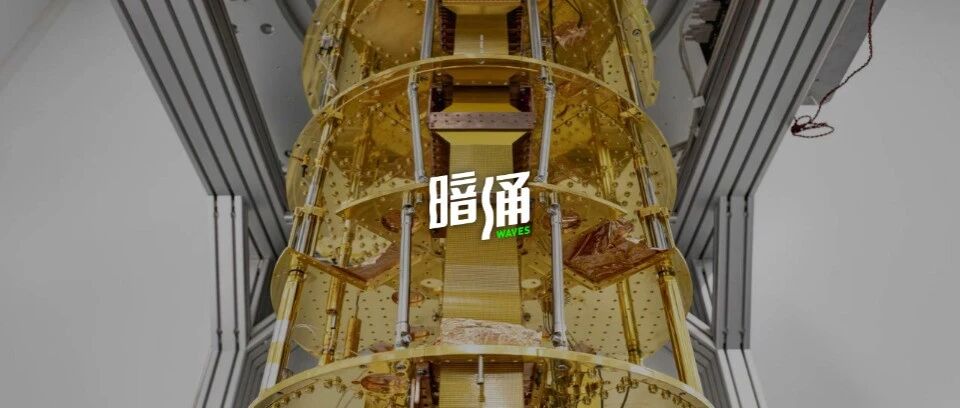
逻辑比特完成两轮数亿元融资,量子计算进入主流VC射程
暗涌Waves· 2026-03-17 00:58
Core Viewpoint - The article discusses the recent financing rounds of Logical Qubit, a superconducting quantum computing company, highlighting the growing interest and investment in quantum computing as a disruptive narrative in the market [2][3]. Financing and Investment Landscape - Logical Qubit recently completed pre-A+ and pre-A++ financing rounds totaling several hundred million yuan, marking its first foray into market-oriented fundraising outside Zhejiang province [2][3]. - The global quantum computing market is projected to exceed $800 billion by 2035, with China expected to capture over 15% of this market share [4]. - In 2023, global quantum computing financing faced challenges but showed signs of recovery in 2024, with total funding rebounding to $2.015 billion, particularly in the hardware sector [4]. Company Overview and Competitive Edge - Founded in 2022, Logical Qubit is one of the earliest teams in China to conduct multi-qubit superconducting quantum computing research, with a core team originating from Zhejiang University [3][5]. - The company has achieved significant technical milestones, including setting world records for the number of globally entangled qubits and developing advanced quantum chips [5]. - Logical Qubit's revenue is projected to reach several tens of millions by 2025, primarily from research institutions and universities [8]. Market Position and Future Outlook - The company aims to leverage its proprietary superconducting quantum chips and measurement control systems to maintain cost efficiency and drive revenue growth [10][11]. - The CEO emphasizes the importance of balancing technical innovation with commercialization, indicating a strong focus on practical applications of quantum computing [9][10]. - The company does not view itself as merely a domestic alternative but as a competitor aiming to surpass international players in technology and application [16][20]. Technological Path and Vision - Logical Qubit is committed to the superconducting route for quantum computing, citing its advantages in integration and speed compared to other methods [13][15]. - The company believes that achieving general-purpose quantum computing will take until around 2032-2035, while specialized quantum computers will begin to outperform classical supercomputers in specific applications within the next 3-5 years [8][9]. - The founder's vision is to transform quantum computing from a laboratory concept into a commercially viable product that can significantly impact society [18][20].