零售转型

Search documents
悬崖上的永辉
凤凰网财经· 2026-02-05 13:07
Core Viewpoint - Yonghui Supermarket has reported a projected net loss of 2.14 billion yuan for 2025, marking a 45.6% year-on-year increase, and has faced losses for five consecutive years, raising concerns about its future amidst significant operational strategy adjustments [2][7]. Group 1: Company Background and Growth - Yonghui Supermarket was founded in 1995 by Zhang Xuansong and Zhang Xuanning, starting with a micro-profit model and officially launching the Yonghui brand in 1998 [3]. - The company gained momentum in 2000 by capitalizing on the "Agricultural Reform Supermarket" policy, leading to rapid growth and recognition as a pioneer in the sector [3]. - By 2010, Yonghui became the first fresh food stock listed on the Shanghai Stock Exchange, and by 2020, it achieved a record revenue of 93.2 billion yuan, marking its entry into the "thousand-store era" [6]. Group 2: Recent Challenges and Strategic Shifts - Despite its past successes, Yonghui has entered a prolonged period of losses, with figures of 3.944 billion yuan in 2021, 2.763 billion yuan in 2022, and projected losses of 2.14 billion yuan for 2025 [6][7]. - The company initiated a comprehensive transformation called "Fat Reform" in 2024, aiming to revamp its business model by learning from competitors, but this has led to significant financial strain, including a direct loss of 1.2 billion yuan from store adjustments [6][10]. - As of 2025, Yonghui has deeply adjusted 315 stores and closed 381, indicating a significant restructuring effort [9]. Group 3: Market Dynamics and Competitive Landscape - The retail landscape has shifted dramatically, with the rise of e-commerce and community group buying, which has eroded Yonghui's traditional advantages in fresh food retail [10][11]. - The company is caught in a "middle ground," unable to compete on price like discount stores or offer unique experiences like premium retailers, leading to a decline in customer traffic [12]. - The competitive environment has seen traditional players like Walmart and Hema rise, while Yonghui has slipped in market rankings, highlighting the challenges faced by conventional supermarket models [18]. Group 4: Future Directions and Strategic Imperatives - Yonghui's transformation should focus on establishing itself as an indispensable shopping destination rather than merely imitating successful models [17][20]. - The company must identify unique value propositions that resonate with consumers, such as emotional connections, localized offerings, or enhanced shopping experiences, to regain market relevance [20]. - The path forward requires a deep understanding of consumer behavior and market changes, as traditional retail continues to evolve [20].


牛市中掉队的邮储银行,或迎来逆袭
虎嗅APP· 2026-02-05 10:17
Core Viewpoint - The article discusses the underperformance of Postal Savings Bank compared to other major banks in a generally bullish market for bank stocks in 2025, highlighting the challenges it faces in terms of valuation and business structure [2][3][4]. Group 1: Performance Comparison - In 2025, Agricultural Bank of China saw a stock price increase of 52.66%, while Postal Savings Bank only increased by 0.67%, slightly outperforming Bank of Communications at 0.37% [2][3]. - As of January 2026, Postal Savings Bank's price-to-book (PB) ratio was 0.6, significantly lower than Agricultural Bank's 0.86 [4]. Group 2: Financial Metrics - For the first three quarters of 2025, Postal Savings Bank reported a revenue growth of 1.82% and a net profit growth of 0.98%, placing it in the middle tier among state-owned banks [5]. - The bank led the six major banks in asset expansion speed during the same period, indicating competitive project acquisition capabilities [9]. Group 3: Risk and Asset Quality - Despite a relatively low non-performing loan (NPL) ratio, Postal Savings Bank has seen a rising trend in NPLs, with the ratio increasing from 0.9% at the beginning of the year to 0.94% by Q3 2025 [14][13]. - The bank's reliance on retail loans, which constitute over 50% of its credit portfolio, has exposed it to risks as retail loan demand declines [12][11]. Group 4: Strategic Changes and Leadership - The recent appointment of Lu Wei as the new president is expected to bring a shift in strategy, focusing on corporate banking to complement the bank's retail strengths [28][19]. - The article suggests that the transition to a more balanced business model will take time and may not yield immediate results [34][33]. Group 5: Wealth Management and Corporate Banking - Postal Savings Bank's wealth management capabilities are limited, with a significant portion of its assets under management (AUM) still in low-risk products, which restricts income potential [21][23]. - The bank's corporate loan growth has been strong, but it still lags behind major competitors in absolute scale and business capability [27][26]. Group 6: Future Outlook - The article posits that while the new leadership may bring hope for improvement, the bank's structural challenges will require gradual adjustments rather than quick fixes [34][30]. - The expectation is for a gradual enhancement in performance, focusing on corporate banking and wealth management, while addressing the risks associated with retail loans [36][34].

步步高预计2025年盈利超1亿元
Zheng Quan Ri Bao Wang· 2026-01-29 13:44
Core Viewpoint - The company, Bubu Gao, anticipates a significant reduction in net profit loss for 2025, projecting a net profit attributable to shareholders of 100 million to 150 million yuan, with a year-on-year decrease in net profit loss of 80.67% to 87.11% [1] Group 1: Financial Performance - For 2025, Bubu Gao expects a net profit attributable to the parent company of 100 million to 150 million yuan, with basic earnings per share projected at 0.04 to 0.06 yuan [1] - The company aims to achieve a substantial reduction in net profit loss due to transformative measures and support from industry peers, focusing on enhancing operational efficiency and store performance [1] Group 2: Business Strategy - Bubu Gao is implementing a dual business model of "supermarket + shopping center" to optimize its structure and meet diverse consumer needs, enhancing its competitive edge through tailored strategies for each store [2] - The company is conducting market research to align with consumer trends, introducing relevant brands, and improving store aesthetics and service processes to strengthen its market position [2] Group 3: Brand Development - The launch of the private label brand BL (Better Life Better Love) in March 2025 has gained traction, with over 70 products introduced across various categories, emphasizing high cost-performance and differentiation [3] - The company is enhancing employee satisfaction and customer trust by implementing profit-sharing plans and improving service standards, leading to increased customer loyalty in shopping centers [3] Group 4: Experience and Supply Chain - Bubu Gao is upgrading its stores to enhance customer experience, with initiatives like creating community spaces and implementing smart retail concepts, resulting in a 28% increase in average transaction value [4] - The company has established strategic partnerships with over 200 suppliers to improve product pricing and freshness, contributing to overall sales growth across categories [4]

沃尔玛的新实验:在超市里逛出“种草感”
36氪未来消费· 2026-01-22 11:08
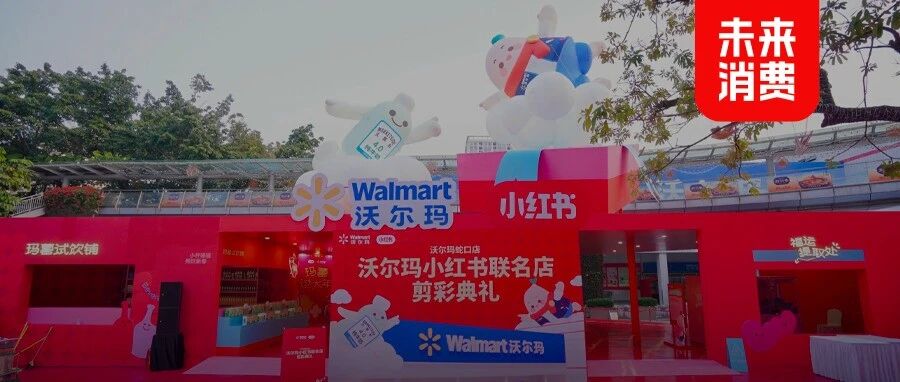
Core Insights - The article discusses Walmart's transformation into a customer-centric retail model, emphasizing a shift from a traditional big-box store to a more personalized shopping experience [4][6][17] - The collaboration with Xiaohongshu (Little Red Book) is highlighted as a significant step in this transformation, showcasing Walmart's commitment to understanding and catering to the needs of urban middle-class families and single individuals [4][6][17] Group 1: Strategic Focus - Walmart's strategy has shifted from trying to satisfy all customers to focusing on urban middle-class families and single individuals, who have specific needs and preferences [6][7] - This target demographic is characterized by their urban lifestyle, fast-paced living, and desire for quality products at reasonable prices [6][7] Group 2: Customer Understanding - To better understand its target customers, Walmart has implemented an efficient user feedback mechanism, including monitoring social media platforms like Xiaohongshu for consumer insights [8][16] - The development of products, such as a 10L beer inspired by Xiaohongshu users, demonstrates Walmart's responsiveness to customer preferences and trends [8][9] Group 3: Product Development - Walmart's private label "Wojuxian" reflects a commitment to simplicity and quality, aligning with the target customers' demand for fresh and transparent products [9][10] - Over the past year, Walmart has launched over 1,000 new products based on customer feedback, creating a responsive product development cycle [9][10] Group 4: Omnichannel Strategy - Walmart's omnichannel approach integrates online and offline experiences, positioning physical stores as essential experience centers rather than just sales points [11][12] - The community store model focuses on convenience and accessibility, addressing the daily needs of local residents [12][14] Group 5: Trust Building - Trust is identified as a critical component of Walmart's transformation, with a focus on addressing negative feedback and improving customer experiences [16][17] - The collaboration with Xiaohongshu enhances trust by providing a platform for genuine customer feedback, fostering a deeper connection between Walmart and its customers [16][17] Group 6: Industry Implications - Walmart's transformation serves as a case study for traditional retailers, demonstrating that proactive adaptation and customer engagement can create new growth opportunities in a competitive market [17] - The emphasis on understanding everyday consumer needs rather than chasing trends positions Walmart favorably for future competition [17]

学习胖东来的第二年,永辉超市又亏了21亿
Guan Cha Zhe Wang· 2026-01-21 12:05
Core Viewpoint - Yonghui Supermarket is expected to report a net loss of 2.14 billion yuan for 2025, marking a significant increase in losses compared to previous years, indicating the challenges of its ongoing transformation [1][4] Financial Performance - Yonghui Supermarket has experienced continuous losses for five consecutive years, with total losses exceeding 10 billion yuan over this period [4] - The projected net profit for 2025 is -2.14 billion yuan, with a net profit excluding non-recurring items of -2.94 billion yuan, compared to -1.47 billion yuan in the previous year [1][4] Strategic Transformation - The core reason for the anticipated losses is the major operational strategic transformation initiated in 2025, shifting from "scale expansion" to "quality growth" [4][6] - The company has adjusted 315 stores and closed 381 underperforming stores, which has intensified short-term profit pressures [4][6] Impact of Store Adjustments - The financial impact of store adjustments includes asset write-off losses and one-time expenses totaling 910 million yuan, with an estimated gross profit loss of approximately 300 million yuan during store renovations [4][7] - The closure of 381 stores has led to additional costs, including asset write-offs and employee compensation [4][7] Learning from Industry Models - Yonghui Supermarket is adopting the "Fat Donglai" model as a transformation strategy, focusing on enhancing product categories with strong profitability [5][6] - The first store to implement this model opened in June 2024, marking a significant step in the transformation process [6] Supply Chain Reforms - The company is reforming its supply chain to address traditional pain points, which has temporarily led to stock shortages and declining gross margins [7] - The company has also faced losses from its overseas equity investments, with a fair value loss of 236 million yuan expected [7] Future Outlook - Despite the current challenges, there are positive signs from the adjusted stores, with increased customer traffic and sales in some locations [7] - The transformation represents a shift from scale-oriented to value-oriented retailing, which will require time and patience to fully realize [8]

抄了还亏?不敌胖东来,永辉超市算漏了什么?
Jin Shi Shu Ju· 2026-01-13 12:48
Core Viewpoint - Yonghui Supermarket's attempt to replicate the "Pang Donglai model" has not yielded positive results, as it continues to face significant losses, with projected negative net profit for 2025 [1] Group 1: Imitation of the Pang Donglai Model - Yonghui has adopted superficial aspects of the Pang Donglai model, such as store design and service processes, but failed to grasp the underlying value distribution system and regional focus [2] - Initial changes attracted customers, with some stores seeing foot traffic increase by over 80%, but issues like price hikes and inadequate service led to customer dissatisfaction [2] - The disparity in employee compensation is stark, with Pang Donglai distributing over 90% of profits to employees, while Yonghui's employee incentives have been minimal, leading to dissatisfaction among staff [2] Group 2: Operational Challenges - Yonghui's strategy of closing stores to emulate Pang Donglai's "less is more" approach has resulted in significant one-time costs, amounting to tens of billions [3] - The company's nationwide expansion strategy has created a burden of high rental costs, contrasting with Pang Donglai's debt-free, self-owned property model [2][3] Group 3: Supply Chain and Market Position - Yonghui's supply chain reforms have been rushed, leading to inconsistent product quality and a lack of deep supplier relationships, which has negatively impacted customer experience [4] - The company faces external pressures from community group buying, fresh e-commerce, and warehouse membership stores, with over 60% of consumers shifting to online shopping [5] Group 4: Employee Value and Corporate Philosophy - Yonghui's underestimation of the importance of employees in retail has hindered its transformation efforts, as successful models prioritize employee welfare to enhance customer service [5][6] - Despite overall losses, some adjusted stores have become profitable, indicating that the direction is not entirely wrong, but the approach needs refinement [6] - The challenges faced by Yonghui highlight the need for a balance between capital logic and humanistic care, as well as between short-term financial results and long-term value [6]
Carter’s(CRI) - 2026 FY - Earnings Call Transcript
2026-01-12 17:32
Financial Data and Key Metrics Changes - The company has experienced three consecutive quarters of comparable store growth, maintaining higher average unit retail prices (AUR) without the typical unit degradation associated with price increases [11][12] - The wholesale business in the U.S. represents approximately $1 billion of the company's $3 billion in revenue, with a significant portion attributed to exclusive brands [35] Business Line Data and Key Metrics Changes - The direct-to-consumer (DTC) business showed strong performance, with the wholesale business exceeding expectations during the holiday period [11] - The company has identified around 150 stores for closure, primarily those that are lower margin, which collectively represent about $110 million in revenue [22][26] Market Data and Key Metrics Changes - The company has diversified its market approach, performing well across wholesale, international, and retail channels, with all age categories exceeding expectations [11] - The shift in consumer behavior towards online shopping has been significant, with e-commerce now accounting for about one-third of U.S. retail revenue [29] Company Strategy and Development Direction - The company aims to invest in product design and demand creation to resonate with today's young consumers, particularly Gen Z parents [6][8] - There is a focus on enhancing brand identity for each product line, allowing brands like Oshkosh and Carter's to develop their unique identities [41] Management's Comments on Operating Environment and Future Outlook - Management acknowledges the need for reinvestment in marketing and product quality to attract new consumers and regain the trust of lapsed customers [6][16] - The expectation for growth in sales and earnings remains for 2026, with a focus on sustainable and profitable growth rather than growth driven by discounts [39][40] Other Important Information - The company is transitioning its Amazon business from a private label to core flagship brands, which is expected to drive future growth [36] - The supply chain team has successfully diversified sourcing to mitigate tariff impacts, resulting in meaningful cost savings [20] Q&A Session Summary Question: What are the biggest challenges faced since the new CEO took over? - The CEO highlighted the need for investment in product design and demand creation to align with consumer expectations [6] Question: Can you elaborate on the holiday performance? - The CEO noted strong performance across all channels, with the ability to maintain higher prices without losing unit sales [11] Question: What is the strategy for store closures? - The company plans to close 150 stores identified as lower margin, with expectations that some revenue will transfer to nearby locations [22][26] Question: How does e-commerce fit into the overall strategy? - E-commerce is a significant part of the business, expected to grow as physical store closures occur, with a focus on omnichannel capabilities [29] Question: What is the outlook for the wholesale business? - The wholesale business is expected to evolve, focusing on exclusive brands and adapting to changes in retail environments [36][37]

芦苇出任行长8个月跳槽,中信银行董事长“一肩挑”
Xin Lang Cai Jing· 2025-12-31 10:18
Core Viewpoint - The resignation of Lu Wei as the president of CITIC Bank after less than a year in office highlights the bank's ongoing operational challenges, including declining revenues and pressure on net interest margins [1][2][3]. Group 1: Leadership Changes - Lu Wei resigned from his positions at CITIC Bank, including executive director and president, due to work adjustments, and was appointed as the president of Postal Savings Bank [1][2]. - Lu Wei had a 26-year career at CITIC Bank, having held various key positions before becoming president in April 2025, with his term originally set to end in April 2028 [1][2][3]. - Chairman Fang Heying will temporarily assume the role of president, bringing extensive experience from his previous leadership roles within CITIC Bank [7][28]. Group 2: Financial Performance - For the first three quarters of 2025, CITIC Bank reported operating income of CNY 156.6 billion, a decrease of 3.46% year-on-year, while net profit attributable to shareholders increased by 3.02% to CNY 53.4 billion [11][32]. - The bank's operating expenses fell to CNY 91.2 billion, down 8.57% year-on-year, indicating effective cost control measures [23][32]. - Credit impairment losses decreased by 12.91% to CNY 44.7 billion, contributing to a rise in operating profit despite declining revenues [12][33]. Group 3: Business Challenges - CITIC Bank faces multiple challenges, including pressure on net interest margins, declining non-interest income, and difficulties in retail banking [2][12][35]. - The bank's net interest income fell by 2.06% to CNY 107.7 billion, with a net interest margin of 1.63%, the largest decline among nine A-share listed banks [12][35]. - Non-interest income decreased by 6.4% to CNY 48.9 billion, with a significant drop in investment income and fair value changes [35][40]. Group 4: Retail Banking Issues - CITIC Bank's retail banking transformation has faced setbacks, with retail banking income stagnating and pre-tax profits declining significantly from 2021 to 2024 [38][39]. - The bank's credit card business has seen a reduction in loan balances and transaction volumes, leading to a 5.91% decline in credit card income for 2024 [19][40]. - Complaints regarding credit card practices, including high fees and aggressive collection methods, have increased, indicating potential reputational risks [19][40].


Telsey Advisory Group CEO Dana Telsey on Lululemon's proxy fight
Youtube· 2025-12-29 17:03
分组1 - The core issue at Lululemon is the need for change due to a significant decline in stock price after years of success [2][4] - There is a discussion about the potential appointment of Jane Neielson as CEO, who has a strong background in brand management and finance [5][6] - The competitive landscape for Lululemon is challenging, with new brands emerging, making it essential to attract younger consumers [8][9] 分组2 - The retail industry is focusing on themes such as affordability, assortment, advertising, AI, and adaptability for the upcoming year [11] - Companies like Victoria's Secret, Urban Outfitters, and Gap are making changes that could lead to positive momentum in the market [12] - Bath & Body Works is facing challenges, with 2026 not being projected as a growth year, but there is potential for stabilization in the second half of the year [13][14]

中信银行再添关键“拼图”,百亿AIC落地广州
Hua Er Jie Jian Wen· 2025-12-23 01:57
Group 1 - The core point of the article is the establishment of Xinyin Financial Asset Investment (信银金投), a key subsidiary of CITIC Bank, which aims to enhance the bank's comprehensive financial services and support its strategic transformation towards a "light and strong" model [1][10][20] - Xinyin Financial Asset Investment will leverage CITIC Group's full financial license resources and integrate into the "CITIC Equity Investment Alliance" ecosystem, enhancing its capabilities in fundraising, investment, management, and exit [1][4] - The establishment of the AIC (Asset Investment Company) is seen as a critical step in CITIC Bank's "Five Leading" strategy, which focuses on wealth management, comprehensive financing, transaction settlement, foreign exchange services, and digitalization [5][16] Group 2 - The AIC's business scope has expanded from pure debt-to-equity swaps to include core debt-to-equity swaps, direct equity investments, private equity management, and financial advisory services [2][3] - The market demands more long-term capital operations that focus on early, small, and hard technology investments, prompting banks to transition from traditional funding intermediaries to comprehensive financial service providers [3][6] - Xinyin Financial Asset Investment will focus on two core functions: market-oriented debt-to-equity swaps to reduce corporate debt ratios and enhance equity financing, and utilizing equity investment licenses to support high-level technological self-reliance [4][10] Group 3 - The establishment of the AIC is expected to support CITIC Bank's comprehensive financing business, filling gaps in credit solutions for technology and startup enterprises [7][8] - The AIC will also contribute to achieving CITIC Bank's wealth management goals by providing equity investment products for private banking and high-net-worth clients [9][10] - The bank's comprehensive financing balance increased by 4.35% to 14.91 trillion yuan by the end of the third quarter, indicating a focus on quality and efficiency rather than just scale [8][17] Group 4 - The new management team at CITIC Bank, including the appointment of younger executives, aims to foster a more dynamic and capable leadership structure [19] - The bank's transformation towards a "light and strong" model is still in progress, with mixed results in terms of profitability and asset quality [18][20] - The AIC's role in the bank's strategy is to enhance the overall ecosystem and support the transition to a more efficient and value-driven banking model [10][16]