
AI超级周期

Search documents
在结构性机遇中迎接新年新篇章
Sou Hu Cai Jing· 2025-12-29 07:02
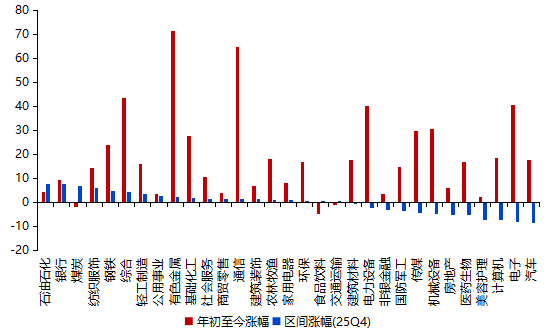
Core Insights - The capital market in 2025 experienced structural fluctuations, with non-ferrous metals, TMT, and power equipment being market highlights, while dividend sectors and real estate faced pressure. As 2026 approaches, structural opportunities are emerging supported by policy stabilization, corporate profit recovery, and liquidity influx [4] Group 1: Global Liquidity Improvement - The global macro environment in 2026 is expected to release positive signals, with the U.S. fiscal and monetary policies likely to trend towards easing. The "Great Beautiful Act" could lead to a long-term tax cut, potentially increasing the federal deficit by approximately $3.4 trillion over the next decade, and the debt ceiling may rise by $5 trillion (a 12% increase) [5] - A low-interest-rate environment is expected to ease global liquidity constraints, alleviating capital outflow pressures in emerging markets and creating a relatively stable external environment for A-shares [5] Group 2: Domestic Economic Recovery - Domestic policies are aligning with micro signals to create a warming effect. The Central Economic Work Conference at the end of 2025 and the 2026 Two Sessions will emphasize "seeking progress while maintaining stability and improving quality and efficiency" [6] - Industrial enterprises are currently at the bottom of the inventory cycle, with a narrowing decline in PPI indicating an approaching replenishment cycle. The cumulative year-on-year growth of net profit excluding non-recurring gains for all A-shares in Q3 2025 was 3.2%, and asset turnover rates are stabilizing [6] - The "anti-involution" policy is expected to drive price recovery, leading to a positive cycle in corporate profits. Institutional investors such as insurance funds and bank wealth management are anticipated to become significant sources of incremental funds in 2026, further solidifying market liquidity [6] Group 3: Key Investment Areas for 2026 - Focus on the AI supercycle, with continued prosperity in domestic and international computing power chains. Attention should be given to new technology iterations and inflation-related sectors, particularly the gaming industry and the gradual development of smart terminals and AI applications [7] - High-end manufacturing going overseas should be monitored, especially in sectors like energy storage-lithium batteries and AI-related high-demand segments. Sustainable growth potential exists in domestic and overseas markets for heavy trucks, passenger vehicles, and construction machinery [8] - Long-term attention should be given to the revaluation of strategic resources, including precious and industrial metals. Energy and lithium carbonate show signs of bottoming out, while the chemical sector's resource products and significantly rebounding blue-chip varieties are also worth investing in [8] - Continuous monitoring of breakthroughs in frontier technologies such as robotics, solid-state batteries, controlled nuclear fusion, aerospace, and quantum computing is recommended [9] - New consumption trends and innovative pharmaceuticals are areas of interest, with solid fundamentals in emotional, service, and technology consumption. The innovative drug sector remains a long-term trend, with improved cost-effectiveness following recent declines [9] Conclusion - The equity market outlook for 2026, while facing challenges, is supported by a "triple support" system of policy stabilization, profit recovery, and liquidity influx, which may solidify the foundation for structural market trends. Investors are encouraged to align with industry trends and core logic while capturing opportunities from a long-term perspective [10]


2026年权益市场展望:结构性机遇凸显,多主线值得关注
Zheng Quan Shi Bao Wang· 2025-12-26 04:42
Core Viewpoint - The market is increasingly focused on investment opportunities for 2026 as the A-share market approaches the end of 2025, with sectors like metals, TMT, and power equipment performing well, while dividend stocks and real estate are under pressure [1] Group 1: Global Economic Environment - The global macroeconomic landscape is expected to show positive changes in 2026, with the U.S. likely to adopt more accommodative fiscal and monetary policies, potentially increasing the federal deficit by approximately $3.4 trillion over the next decade [4] - The anticipated fiscal expansion in the U.S. may require a low-interest-rate environment, which could improve global liquidity and stabilize the external environment for the A-share market [4] Group 2: Domestic Economic Policies - The Central Economic Work Conference at the end of 2025 has set a policy direction of "seeking progress while maintaining stability," indicating a focus on quality and efficiency improvements [5] - Industrial enterprises are at the bottom of the inventory cycle, with a narrowing decline in PPI suggesting an approaching recovery phase for corporate profits, as evidenced by a 3.2% year-on-year growth in net profit for all A-shares in Q3 2025 [5] Group 3: Investment Opportunities for 2026 - The A-share market is expected to remain structurally driven, with five key areas for investors to focus on: 1. AI Super Cycle: Continued growth in domestic and international computing power chains, with a focus on new technology iterations and the gaming industry [9] 2. High-end Manufacturing Overseas: Attention on sectors like energy storage and lithium batteries, as well as heavy-duty vehicles and engineering machinery that offer growth potential [11] 3. Strategic Resource Revaluation: Long-term focus on precious and industrial metals, with particular attention to energy and lithium carbonate showing signs of stabilization [11] 4. Frontier Technology Breakthroughs: Ongoing interest in industries such as robotics, solid-state batteries, and quantum computing [11] 5. New Consumption and Innovative Pharmaceuticals: Focus on sectors with solid fundamentals in consumer and technology spending, as well as innovative medical devices [11] Group 4: Market Liquidity - The degree of asset allocation migration towards equity markets is still in its early stages, with significant room for growth as indicators remain at historical lows [10] - Institutional investors, including insurance funds and bank wealth management products, are expected to become important sources of marginal capital in 2026, further enhancing market liquidity [10]
Marko Papic万字访谈:委内瑞拉救不了油价 特朗普或在2026年“压榨”美联储 股市迎来“YOLO时刻”
智通财经网· 2025-12-25 13:45
Group 1 - Marko Papic analyzes Trump's recent "no-fly zone" threat against Venezuela, suggesting it is a negotiation tactic rather than a prelude to war, part of Trump's "maximum pressure" strategy [1][8] - Venezuela's vast oil reserves are unlikely to provide a quick solution to U.S. inflation, as production capacity has been severely damaged, making the idea of easily alleviating oil prices a short-term fantasy [1][12] - Papic predicts that by 2026, the energy market will face significant pressures, necessitating a major shift in global policies [1][12] Group 2 - Papic defends Kevin Hassett as a serious economic strategist rather than a mere "Trump puppet," indicating that his appointment would continue a dovish monetary policy trend in the U.S. [2][35] - The U.S. may need to prepare for oil prices around $80 to address inflation, requiring supply-side reforms beyond just energy [4][18] - Papic emphasizes the importance of housing affordability and lowering borrowing rates as key issues for the upcoming elections, suggesting a renewed focus on stimulating the housing market [26][29] Group 3 - The geopolitical landscape, particularly the relationship with Saudi Arabia, is critical, as they may not continue to support U.S. oil needs indefinitely, impacting future oil prices [12][18] - Papic warns that if the U.S. were to replace Maduro, the immediate increase in oil supply is unrealistic due to Venezuela's deteriorated production capabilities [13][14] - The potential for a peace agreement in Ukraine could lead to a return of Russian oil to the market, which may affect global oil prices [19][20] Group 4 - Papic suggests that the U.S. political landscape will dominate market dynamics in 2026, with Trump likely to pursue monetary easing to secure electoral success [23][25] - The current economic environment indicates that consumer participation is crucial for GDP growth, and without it, the economy may face challenges [25][29] - Papic believes that weakening the independence of the Federal Reserve could create a favorable environment for the stock market, despite potential long-term consequences [30][32]
百度沈抖:AI“超级周期”启动,10万亿产业从里到外被彻底重塑
混沌学园· 2025-12-10 11:58
"AI超级周期启动,智能经济机会无限。" 正当我们讨论 AI浪潮时,一个被忽视的宏大背景正在展开:AI不仅是一个独立的技术赛道,它正站在一个高达10万亿的基础产业之上。这意味着,我们今 天所见的AI趋势,将是下一轮对现有工种和组织形态进行 "彻底改变"的巨大力量。 百度集团执行副总裁、百度智能云事业群总裁沈抖博士在江阴飞马水城带来了《智能,生成无限可能》的分享,从趋势、原理、场景、基建、变革五方面 带领我们透视智能经济的整个面貌,包括 深入浅出的技术解析与 丰富生动 落地实践分享。 此次分享是一份面向未来的生存指南,帮助创业者抓住这波以大模型为核心的技术浪潮,实现企业的高效、变革与增长。 本文仅为部分内容,打开混沌APP,观看完整版课程《智能,生成无限可能》。 AI 的价值会远超互联网 我们正在 AI超级周期的起点,智能经济带来的机会是无限的。 等 AI进一步发展的时候,不但会使得自身的规模变得更大,而且会把整个产业做得更大。所以,尽管今天AI可触达的市场虽然只有200 亿,但它实际上改 造的会是10万亿的市场。——从注册护士、软件开发师到销售、教师,今天的人工智能会彻底地改变每一个工种,包括为其赋能,或者帮 ...


摩根大通眼中的2026:经济分化、政策分化、AI采用率飙升
Hua Er Jie Jian Wen· 2025-12-08 07:25
Group 1: Core Insights - Morgan Stanley's annual outlook report predicts that by 2026, global markets will be profoundly reshaped by three core forces: uneven monetary policy, a surge in AI adoption, and increasing multidimensional market and economic divergence [1] - Despite a complex macro environment, Morgan Stanley maintains a positive outlook on global equity markets, setting a target price of 7,500 points for the S&P 500 index by the end of 2026, with potential for it to exceed 8,000 points if the Federal Reserve eases policies due to improved inflation [1][3] Group 2: Monetary Policy - Morgan Stanley forecasts that the Federal Reserve will lower interest rates by 25 basis points in December this year and January next year, pausing thereafter while maintaining this "asymmetric bias" in the first half of 2026 [3] - This policy path is expected to create significant divergence among developed market central banks, with the Fed and the Bank of England anticipated to cut rates, while others like the Eurozone and Australia are expected to remain unchanged [3][5] Group 3: AI Supercycle and Economic Divergence - The report identifies 2026 as a pivotal year for AI adoption, driving a global capital expenditure boom, with investments expanding across various sectors including banking, healthcare, and logistics [4] - Morgan Stanley describes a "K-shaped economy," where corporate capital expenditure remains strong while household consumption shows significant divergence, indicating a split economic recovery [4] Group 4: Economic Growth Projections - Global GDP growth is projected at 2.5% for 2026, slightly down from 2.7% in 2025, with the U.S. GDP growth expected to hold at 2.0% and the Eurozone declining to 1.3% [4] - The report emphasizes that the global growth outlook remains resilient, supported by loose monetary and fiscal policies and reduced market concerns regarding U.S. policies [4] Group 5: Cross-Asset Strategy - Morgan Stanley has a clear stance on cross-asset allocation, recommending a bearish outlook on oil due to supply-demand imbalances, while maintaining a bullish view on gold, setting a target price of $5,000 per ounce by Q4 2026 [6][8] - The firm anticipates U.S. 10-year Treasury yields to experience a dip followed by a rise, with a mid-year target of 4.25% and an end-of-year target of 4.35% [6] Group 6: Currency Outlook - The firm maintains a bearish outlook on the U.S. dollar, expecting the Federal Reserve's asymmetric policy bias in the first half of 2026 to suppress dollar strength [8] - In emerging markets, Morgan Stanley is optimistic about high-yield currencies such as the Brazilian real, Mexican peso, and South African rand [8]

降息升温,黄金强势控盘!
Jin Tou Wang· 2025-11-27 10:23
Group 1 - Gold prices surged, reaching a high of $4,173.31, closing at $4,163.78, with a 0.8% increase [1] - The U.S. stock market experienced a four-day rally, with the Dow Jones up 0.67%, S&P 500 up 0.69%, and Nasdaq up 0.82% [1] - Initial jobless claims in the U.S. fell to a seven-month low of 216,000, down by 6,000 from the previous week, but continued claims rose to 1.96 million, the highest since November 2021 [1][3] Group 2 - The Federal Reserve's Beige Book indicated a further decline in overall consumer spending, although high-end spending remains resilient [3] - Market expectations for a 25 basis point rate cut in December have risen to 85%, with JPMorgan changing its stance to predict a rate cut in December [5] - The U.S. extended the exemption period for certain tariffs on China until November 10, 2026, related to technology transfer and intellectual property issues [5] Group 3 - Several Wall Street institutions are optimistic about the U.S. stock market outlook, with Deutsche Bank predicting the S&P 500 could reach 8,000 by the end of 2026, indicating an 18% upside [7] - JPMorgan highlighted the resilience of the U.S. economy and the ongoing AI supercycle as strong fundamental support for the stock market [7] Group 4 - The White House was placed on lockdown following a shooting incident near its vicinity, with President Trump emphasizing that the assailant will face severe consequences [9] - Tensions in the Caribbean region remain high, with Trump indicating a potential dialogue with Venezuelan President Maduro amid concerns of U.S. military action [10] Group 5 - The EU reiterated its commitment to Ukraine's sovereignty and financial needs, proposing a plan to utilize frozen Russian assets to support Ukraine [12]

12月降息概率猛升至85%!褐皮书曝美联储双重困境
Sou Hu Cai Jing· 2025-11-27 04:14
Core Viewpoint - The latest Federal Reserve Beige Book indicates a stagnating U.S. economy characterized by a weak job market and persistent inflationary pressures [2][12]. Economic Activity - Overall economic activity has shown little change in recent weeks, with most Federal Reserve districts reporting stability, while two districts noted slight declines and one reported slight growth [5]. - Consumer spending has further declined, primarily due to the government shutdown affecting consumer decision-making [3][6]. Employment Market - The job market remains weak, with a slight decrease in employment numbers reported, and about half of the districts indicating soft labor demand [7]. - Many employers are opting for hiring freezes and only replacing departing employees rather than outright layoffs, with some adjusting work hours instead of workforce size [7]. Inflation and Pricing - Tariffs continue to be a major concern, with many companies reporting tightened profit margins and increased financial pressure due to tariffs [7]. - Some businesses have noted price declines due to decreased demand or postponed tariffs, while there is a general expectation of ongoing cost pressures in the future [7]. Interest Rate Expectations - Market expectations for a Federal Reserve rate cut in December have increased, with an 84.7% probability of a 25 basis point cut [9]. - The probability of cumulative rate cuts by January is 64.7%, with a 24.4% chance of a total cut of 50 basis points [10]. Market Outlook - Wall Street's optimism for the stock market is growing, with Goldman Sachs predicting a third consecutive rate cut in December, supported by easing inflation and a cooling labor market [12]. - Deutsche Bank strategists forecast the S&P 500 index could exceed 8000 points by the end of 2026, indicating an 18% upside potential driven by strong earnings and increasing stock buybacks [16].

华尔街“最乐观多头”摩根大通:AI超级周期驱动,标普500指数2026年有望冲破8000点
美股IPO· 2025-11-27 00:21
Group 1: Market Predictions - Morgan Stanley predicts the S&P 500 index could reach a base target of 7500 points by the end of 2026, with potential to exceed 8000 points under further Federal Reserve easing conditions, driven by an AI supercycle and a resilient U.S. economy [1] - The Nifty 50 index in India is expected to rise to 30,000 points by the end of 2026, approximately a 15% increase from current levels, supported by tax cuts and interest rate reductions [5] Group 2: Economic Drivers - Recent tax cuts and anticipated interest rate cuts by the Reserve Bank of India are expected to boost domestic demand, with a 25 basis point rate cut likely in December [7] - The Indian stock market's valuation has fallen below long-term averages after a period of underperformance, providing a supportive backdrop for recovery [7] Group 3: Trade Relations - The likelihood of a U.S.-India trade agreement is high, which could lead to a short-term revaluation of the stock market, particularly benefiting sectors like IT and pharmaceuticals [8][9] - The potential removal of a 25% punitive tariff on imports from India could enhance investor confidence and attract foreign capital inflows [8] Group 4: Sector Preferences - Morgan Stanley maintains an "overweight" rating on sectors such as materials, financials, consumer goods, healthcare, real estate, defense, and power, while holding a "underweight" stance on IT and pharmaceuticals [10] - Industries benefiting from domestic consumption growth and infrastructure development are expected to perform better, with financials poised to gain from the interest rate cycle and increased corporate debt demand [10]


深夜,直线拉升!人工智能,突传重磅!
券商中国· 2025-11-26 23:23
Core Viewpoint - The article highlights the ongoing bullish trend in the US stock market, particularly driven by AI-related stocks, with optimistic projections for future growth in both the market and specific companies like OpenAI and Nvidia [2][4][8]. Market Performance - US stock indices opened slightly higher, with the Dow Jones up 0.53%, S&P 500 up 0.47%, and Nasdaq up 0.53% [3]. - Nvidia's stock saw a near 3% increase initially, reflecting positive sentiment in the tech sector [4]. AI Sector Insights - OpenAI's recent announcement predicts that by 2028, the number of paid subscribers for ChatGPT will exceed 220 million, generating nearly $200 billion in annual subscription revenue [2][5]. - CoreWeave and Oracle, both associated with OpenAI, experienced significant stock price increases, with CoreWeave rising over 7% and Oracle over 6% [2][5]. Economic Outlook - Morgan Stanley's report expresses optimism about the US economy's resilience and the ongoing AI supercycle, suggesting that the S&P 500 could surpass 8000 points by 2026 under certain conditions [2][8]. - The report anticipates a 34% increase in capital expenditure for 30 major AI stocks next year, driven by a "fear of becoming obsolete" mentality among businesses and governments [9]. Federal Reserve Expectations - Market expectations for a 25 basis point rate cut by the Federal Reserve in December are around 85% [6]. - Recent labor market data shows a decrease in initial jobless claims, indicating a resilient job market despite concerns about employment prospects [6][7]. Investment Strategy - Morgan Stanley maintains a bullish stance on technology, media, telecommunications, utilities, and defense sectors, while expecting the banking and pharmaceutical sectors to outperform the market [9]. - The report emphasizes that the potential for profit growth related to deregulation and AI productivity gains remains underestimated by investors [9].




科技巨头疯狂发债,下一个是OpenAI?
Hua Er Jie Jian Wen· 2025-11-25 03:34
Core Insights - The AI arms race is driving capital consumption to unprecedented levels, with OpenAI facing a staggering funding gap of $207 billion by 2030 due to high operational costs and commitments [1][2]. Financial Analysis - OpenAI is projected to incur a total data center rental cost of $792 billion from the second half of 2025 to 2030, with total computing costs expected to reach $1.4 trillion over the next eight years [2]. - Despite an anticipated annual revenue growth to $213.6 billion by 2030, OpenAI's cloud infrastructure rental costs are expected to consume nearly all of its revenue, leading to a projected funding gap of $207 billion [2]. - The financial model indicates that OpenAI's total costs will consistently exceed its total revenue until 2030, with costs accounting for 96.8% of revenue [2]. Competitive Landscape - OpenAI's significant funding needs stem from an escalating AI computing arms race, highlighted by recent agreements with Microsoft for $250 billion in incremental computing capacity and a $38 billion cloud computing contract with Amazon [3]. - Competitors like Anthropic are also making substantial investments in AI infrastructure, indicating a broader trend of massive capital expenditures within the industry [3]. Funding Strategies - OpenAI must explore various funding solutions to address its funding gap, including increasing revenue through a higher percentage of paid users, optimizing computing efficiency, securing additional capital from existing shareholders, adjusting computing commitments, and potentially resorting to external debt financing [4][5]. - Debt financing is becoming a crucial tool for tech giants in the capital-intensive AI race, and OpenAI may have to consider this option to bridge its funding gap [5]. Market Outlook - The current investment and financial risks are viewed as part of an AI-driven "megacycle," with significant productivity gains already observed since the launch of generative AI models like ChatGPT [6]. - Research indicates that generative AI may have increased U.S. labor productivity by up to 1.3%, suggesting that even modest productivity improvements could justify the substantial capital expenditures in the AI sector [6]. - The success or failure of OpenAI will have direct implications for its partners, including Oracle, Microsoft, Amazon, Nvidia, AMD, and major shareholders like SoftBank [6].