
IP衍生品

Search documents
2025上半年:爱优腾芒,谁赚到钱了?
3 6 Ke· 2025-09-02 23:27
Core Insights - The long video platforms are facing challenges with revenue growth slowing down and profitability becoming more difficult, prompting a shift towards optimizing content costs and exploring new revenue sources like micro-short dramas, AIGC, IP derivatives, and content globalization [37] Industry Overview - Long video platforms are entering a new phase of project reduction and AI efficiency improvements due to stagnation in membership growth and weak advertising revenue [1][5] - The rise of short videos has significantly impacted the user base of long video platforms, with monthly active users (MAU) for Tencent Video, iQIYI, and Youku projected to drop from 5.3 billion, 5.65 billion, and 4.7 billion in August 2018 to 3.63 billion, 3.56 billion, and 2.01 billion by June 2025, respectively [3] Company-Specific Insights iQIYI - iQIYI reported a decline in revenue and net profit in the first two quarters, with major business segments like membership services and online advertising also experiencing downturns, although other income streams showed growth [7] - The platform is focusing on a balanced approach between long and short content, emphasizing high-quality productions to enhance user engagement and attract advertisers [15] - iQIYI's international membership revenue grew by 35% year-on-year, and the company is leveraging AI to reduce costs and enhance efficiency [13] Youku - Youku's strategy centers on content quality, series development, and cross-industry integration, with successful shows like "藏海传" achieving significant viewership and advertising revenue [16][19] - The platform is expanding its talent pool by recruiting notable industry figures to enhance content creation capabilities [19] Tencent Video - Tencent Video reported a paid membership count of 111.4 million, the only platform to disclose such figures, and is focusing on high-quality content to improve viewer retention [22] - The platform is shifting its strategy to prioritize A+ and S+ level projects, aiming to enhance the return on investment and avoid resource wastage [25] Mango TV - Mango TV's revenue for the first half of 2025 was 5.964 billion yuan, a decline of 14.31%, with significant drops in its content e-commerce segment [29][32] - The platform is increasing its investment in content, particularly in short dramas, with a reported 1179 micro-short dramas set to launch, marking a nearly sevenfold increase from the previous year [36]


2025暑期档报告:观影人次同比增长 平均票价创五年次低
Xin Lang Ke Ji· 2025-09-01 05:19
Core Insights - The summer box office for 2025 reached a total of 11.966 billion, marking a year-on-year increase of 2.76% [1] - Total audience attendance was 321 million, up 12.75% year-on-year, representing the second-highest attendance in the last five years [1] - The average ticket price dropped significantly to 37.2 yuan, the second-lowest in five years, while the average occupancy rate was the second highest in the same period [1] Group 1 - The first half of the summer box office was relatively slow, but the second half saw a surge in audience enthusiasm, driven by well-received films like "Nanjing Photo Studio" [1] - Despite a lack of blockbuster films, several mid-tier films found success, indicating a shift towards niche audiences and content [1][2] - The popularity of IP derivatives has expanded the growth potential for "non-ticket revenue" in the film industry [1] Group 2 - Two films surpassed 1 billion in box office revenue, maintaining the same number as last year, while the number of films grossing over 100 million decreased [2] - The contribution rate of domestic films slightly exceeded that of last year, while imported films showed stable performance for two consecutive years [2] - Notable highlights included strong performances from animated films and the growth potential in "silver-haired" audiences, as well as the deep development and derivative value extraction of IPs [2]
暑期档即将结束:115亿票房背后的资本暗战 谁在操控暑期档“票房神话”?
Quan Jing Wang· 2025-08-29 13:27
Core Insights - The total box office for the summer film season in 2025 has exceeded 11.5 billion yuan, with over 300 million viewers, indicating a strong performance in the domestic film market [1] - "Nanjing Photo Studio" has emerged as the biggest winner, grossing over 2.8 billion yuan, setting a record for historical films in China's summer box office [1] - Domestic films accounted for 91.2% of the box office in the first half of 2025, showcasing the rising influence of local productions [1] Group 1: Box Office Performance - The summer box office reached approximately 8.74 billion yuan by August 11, 2025, nearly matching the previous year's figure of 9.22 billion yuan, but still showing a gap compared to 2023 and 2019 [1] - Recent releases have primarily featured domestic films, with diverse genres and themes contributing to the sustained interest and box office growth [1] - Upcoming films like "Nanjing Photo Studio" and "Wang Wang Mountain Little Monster" are expected to further boost box office performance [1] Group 2: Company Strategies and Responses - Wanda Film is focusing on enhancing its core business while exploring innovative business models, aiming to reduce reliance on box office revenue by increasing non-ticket income [1] - The company has upgraded its "Super Entertainment Space" strategy to a "1+2+5" framework, integrating domestic and international markets along with five business segments [1] - Companies like Jiecheng Co. have secured IP rights for "Wang Wang Mountain Little Monster" and are actively developing merchandise, indicating a strategic focus on IP derivatives [2] Group 3: Investment and Collaboration - Happiness Blue Sea is a co-producer of "Nanjing Photo Studio," but its investment share is low, suggesting minimal impact on its financial performance [4] - Beijing Culture, also involved in "East Extreme Island," anticipates that its investment will not significantly affect its earnings due to a low investment ratio [5] - Zhongxin Publishing is leveraging its book rights to expand the IP matrix, enhancing the cultural narrative through various media [3]





阅文营收下滑23.9%,短剧与IP衍生能救场吗?
Xin Lang Cai Jing· 2025-08-29 11:52
Core Viewpoint - The recent financial report from the company indicates a significant decline in revenue, primarily driven by a sharp drop in IP operation income, while net profit has shown substantial growth, raising questions about future growth drivers amidst a challenging market environment [1][5][10]. Group 1: Financial Performance - The company reported a revenue of 3.191 billion yuan for the first half of 2025, a decrease of 23.9% compared to 4.191 billion yuan in the same period last year [1]. - The net profit attributable to the parent company was 850 million yuan, reflecting a year-on-year increase of 68.5% [1]. - Online business revenue reached 1.985 billion yuan, a slight increase of 2.3% year-on-year, while IP operation and other income fell to 1.205 billion yuan, down 46.4% [1][5]. Group 2: Challenges in IP Operations - The decline in revenue is largely attributed to a nearly 50% drop in copyright operation income, influenced by cyclical fluctuations in licensing models and reduced market demand [5]. - The average monthly active users for the company's self-owned platform and Tencent's self-operated channels decreased by 19.7% year-on-year, from 176 million to 141 million [5]. - The average monthly revenue per paying user in the paid reading business fell by 1.3% to 31.3 yuan, primarily due to lower contributions from newly acquired members [5][6]. Group 3: Short Drama Business Potential - The micro-drama market in China is experiencing significant growth, with a projected market size of 100.68 billion yuan by 2027, up from 37.39 billion yuan in 2023 [9]. - The company has actively engaged in the short drama sector, achieving a high success rate with over 60% of its short dramas becoming hits, and one project generating over 80 million yuan in revenue [9][10]. - The company has upgraded its short drama business, opening over 2,000 web novel IPs for high-quality short drama production [10]. Group 4: IP Derivative Products Development - The global IP derivative market is expected to grow to 14.056 trillion yuan in 2024, with a compound annual growth rate of 4.1% from 2024 to 2029 [13]. - The company's IP derivative business generated a GMV of 480 million yuan in the first half of the year, nearing the total for the previous year [13]. - The company plans to develop derivative products for mid-tier IPs and explore AI-driven adaptations to enhance efficiency and reduce costs [13][14].

广博股份: 2025年半年度报告
Zheng Quan Zhi Xing· 2025-08-22 16:12
Core Viewpoint - Guangbo Group Co., Ltd. reported a slight increase in revenue but a decline in net profit for the first half of 2025, highlighting challenges in the educational and office supplies industry due to external market pressures and internal strategic shifts [3][4][12]. Financial Performance - Revenue for the first half of 2025 reached approximately 1.171 billion yuan, a 2.38% increase compared to the same period last year [3]. - Net profit attributable to shareholders decreased by 11.38% to approximately 60.87 million yuan [3]. - The company reported a significant decline in net cash flow from operating activities, down 148.53% to -68.75 million yuan [3]. - Basic and diluted earnings per share increased by 5.40% to 0.1444 yuan [3]. Business Overview - The company focuses on manufacturing and selling educational and office supplies, with a growing emphasis on cross-border e-commerce [4][5]. - The educational and office supplies manufacturing industry in China saw a revenue increase of about 6% in the first half of 2025, but profit margins declined by over 24% due to external competition and rising costs [4][12]. Strategic Initiatives - Guangbo Group aims to develop its IP derivative product business as a core strategy, focusing on product research and design to enhance product quality and value [5][7]. - The company has established a dual-driven business model combining traditional stationery with cultural and creative products [5][6]. Market Position and Competitive Advantages - As a leading player in the domestic stationery market, Guangbo Group has built a strong brand presence and extensive distribution network, including overseas production bases in Vietnam, Cambodia, and Malaysia [6][22]. - The company has developed a diverse range of sub-brands targeting different consumer needs, including "kinbor" and "Fizz," which cater to the creative and office supply markets respectively [6][17][18]. IP Resource Development - The company has a robust IP resource portfolio, including both external licensed IP and self-developed IP, which enhances its product offerings and market appeal [8][21]. - The IP derivative market in China is projected to reach 202.8 billion yuan by 2025, presenting significant growth opportunities for the company [7][8]. Challenges and Market Dynamics - The company faces challenges from external factors such as trade tensions, fluctuating demand in key markets, and increased competition in the educational and office supplies sector [12][13]. - The global market for educational and office supplies is undergoing a transformation, shifting from reliance on a few markets to a more diversified approach [12][13].

情绪消费风口下,IP 衍生品如何将流量做成长期生意?
Sou Hu Cai Jing· 2025-08-21 18:30
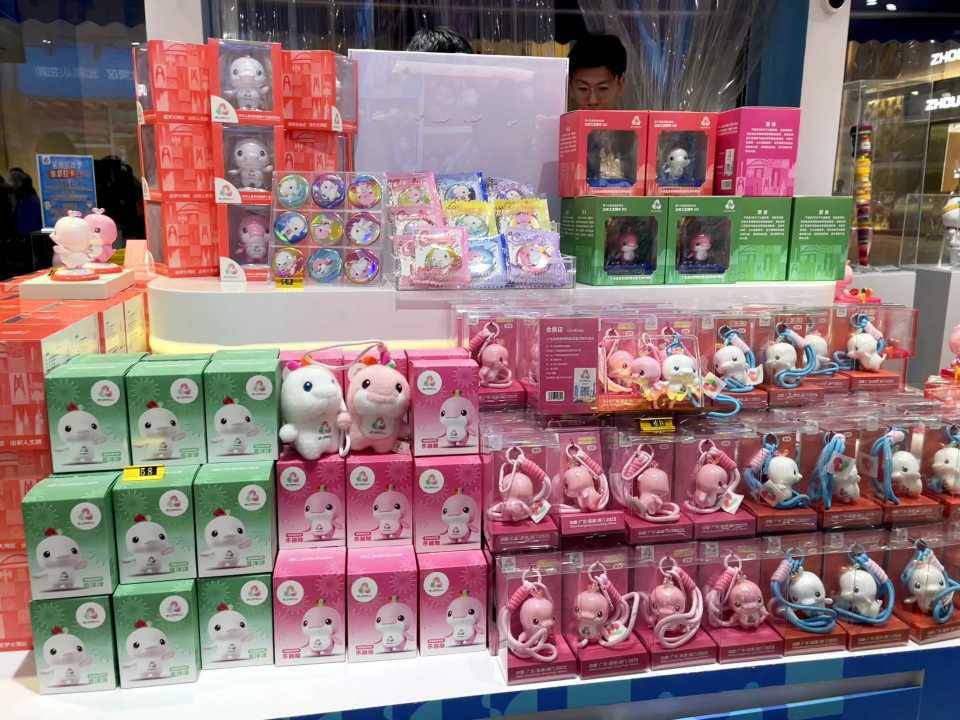
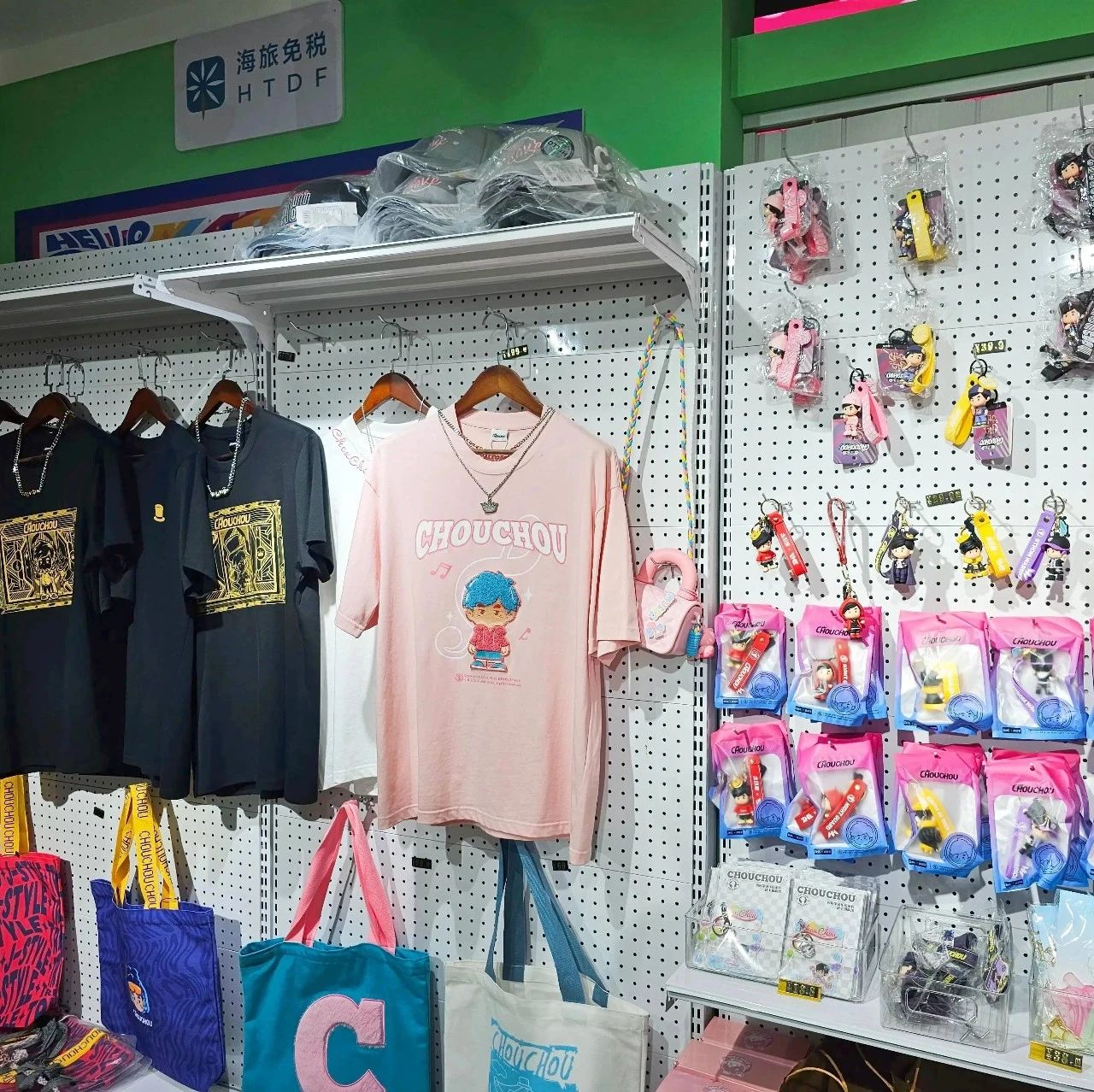
Core Insights - The article discusses the growing significance of IP derivatives as a medium for cultural content dissemination, unique experiences, and audience engagement in both online and offline settings [1][3] - The rise of IP derivatives is driven by emotional consumption demands, particularly among the younger generation, leading to a surge in event-driven consumption peaks [5][6] Group 1: Market Trends and Developments - The Fifteenth National Games and the Special Olympics have opened over 200 official retail stores across major cities, primarily located in landmarks and transportation hubs to maximize audience reach [3][4] - The IP derivatives market is transitioning from rapid growth to structural differentiation, influenced by frequent cultural and sports events and the emotional value preferences of Generation Z [5][6] - The market is characterized by a "high heat, low barrier, weak sustainability" contradiction, with many companies treating IP derivatives as short-term profit tools, leading to product homogenization [6][7] Group 2: Strategic Opportunities - IP derivatives are seen as potential strategic touchpoints, connecting offline experiences with online interactions, thus enhancing user engagement and social sharing [8][11] - Companies are encouraged to develop unique and narrative-driven products that integrate traditional culture and innovative technology, moving away from generic gift items [15] - The integration of policies supporting IP derivative design, production, and sales is accelerating, with various regions implementing measures to promote original IP brands and cultural products [12][13] Group 3: Case Studies and Examples - The company Giant Legend has successfully leveraged its IP "Zhou Classmate" through pop-up stores at concert venues, enhancing brand exposure and fan engagement [8][11] - Guangdong Ha Yi Dai Toy Co., Ltd. has established itself as a key player in the IP derivatives market, having serviced 27 major international events and developed a robust design and operational team [4][5] - The collaboration between Giant Legend and Yu Shu Technology aims to create consumer-grade robotic products with strong IP attributes, showcasing the potential for cross-industry partnerships [16]
情绪消费风口下,IP衍生品如何将流量做成长期生意
第一财经· 2025-08-21 13:12
Core Viewpoint - The article discusses the growing significance of IP derivatives as a medium for cultural content dissemination, unique experiences, and audience engagement, particularly in the context of recent sports events and the influence of AI and social culture on sales trends [3][5]. Summary by Sections IP Derivative Market Development - Over 200 official retail stores for the 15th National Games and the Special Olympics have been established across various cities, primarily located in commercial landmarks and transportation hubs to maximize audience reach [6]. - The retail model has been successfully applied in various cultural and sports events, with companies like Guangdong Ha Yi Dai Toy Co., Ltd. serving as licensed producers and retailers for these events [6][7]. Consumer Demographics and Trends - The target demographic for IP derivative products includes young adults aged 18 to 35, who are characterized by their individuality and social sharing tendencies [8]. - The market is currently experiencing a transition from rapid growth to structural differentiation, driven by the emotional value preferences of Generation Z, leading to peaks in event-driven consumption [8][10]. Challenges and Opportunities - The supply side of the derivative market faces challenges such as high demand but low barriers to entry, leading to product homogenization and supply chain rigidity [10]. - Long-term success in the IP derivative market requires a shift from reliance on traffic to value creation, with companies needing to establish a closed-loop ecosystem that integrates content, derivatives, experiences, and user engagement [10][12]. Strategic Importance of IP Derivatives - IP derivatives are evolving from mere ancillary products to strategic touchpoints that connect offline experiences with online interactions, enhancing user engagement and community building [14]. - The integration of innovative technologies and cultural elements into product design is essential for differentiation and sustained consumer interest [18]. Policy Support and Industry Growth - National and local policies are increasingly supporting the design, production, and sales of IP derivatives, promoting the integration of traditional culture into product development [16][17]. - Initiatives in provinces like Shandong and Hubei are encouraging independent development and cross-industry collaboration in cultural creative product development [16][17]. Future Directions - Companies are advised to innovate in product design by incorporating narrative experiences and local cultural elements, while also leveraging technology for enhanced consumer interaction [18]. - Strategic partnerships, such as the collaboration between Giant Star Legend and Yushu Technology, aim to develop consumer-grade robotic products with strong IP attributes [18].
情绪消费风口下,IP衍生品如何将流量做成长期生意?
Di Yi Cai Jing Zi Xun· 2025-08-21 12:17
Core Insights - IP derivatives have become important carriers for cultural content dissemination, unique experiences, and audience engagement both online and offline [1] - The retail stores for the 15th National Games and the Special Olympics have opened over 200 locations across major cities, strategically placed in high-traffic areas [3] - The market for IP derivatives is transitioning from rapid growth to structural differentiation, driven by large cultural and sports events and the emotional value preferences of Generation Z [6][7] Group 1 - The flagship stores for the 15th National Games and the Special Olympics are located in commercial landmarks and transportation hubs to maximize audience reach [1][3] - The IP derivative market is characterized by a "high heat, low barrier, weak sustainability" contradiction, with many companies treating it as a short-term monetization tool [7] - The "Bencao Gangmu" IP series has collaborated with various institutions to create immersive experiences, highlighting the integration of traditional culture [4][6] Group 2 - The "Zhou Classmate" IP from Juxing Legend has shown strong growth and commercial performance, with pop-up stores following Jay Chou's concert tour [10][12] - The development of IP derivatives is supported by national and local policies aimed at enhancing consumer quality and promoting original IP brands [14][15] - Future strategies for IP derivative development include breaking away from homogenization, enhancing design with narrative experiences, and leveraging technology for interactive experiences [18]
阅文与王者荣耀联动,关注IP衍生品行业势能
Shanghai Securities· 2025-08-20 13:49
Investment Rating - The report suggests a positive outlook for the light industry and textile apparel sectors, indicating a potential "Overweight" rating for these industries based on their fundamentals and expected performance relative to market benchmarks [18]. Core Insights - The light industry is experiencing rapid growth driven by new consumer trends led by Generation Z, with products like blind boxes tapping into deep emotional values. The integration of AI technologies is expected to enhance manufacturing processes, and domestic demand is anticipated to stabilize, leading to valuation recovery [2][3]. - The textile and apparel sector is projected to benefit from increased gold demand and favorable policies aimed at boosting consumer confidence. The outdoor economy is expected to drive sales in sportswear, supported by digital upgrades in the industry [9][10]. Summary by Sections Market Review - During the week of August 11-15, 2025, the A-share SW textile and apparel industry index fell by 1.37%, while the light industry manufacturing sector rose by 1.56%. The Shanghai Composite Index increased by 1.70% [1]. Light Industry - The demand for trendy toys is rapidly increasing, with companies like Pop Mart and Guogu focusing on global expansion. The collaboration between Reading Group and Honor of Kings marks a significant step in the IP derivative market, with Reading Group reporting a net profit of 850 million yuan, a 68.5% increase year-on-year [2]. - The export chain for light industry products such as thermos cups and office furniture is stable, with a 3% increase in furniture import and export value in July. The total import and export value for the first seven months of 2025 reached 3.58 trillion USD, a 2.4% increase [3]. Home Furnishing Sector - Retail sales of furniture grew by 20.6% in July, with a total retail value of 115.9 billion yuan for the first seven months, reflecting a 22.6% year-on-year increase. The ongoing policy to encourage the replacement of old consumer goods is a key driver of this growth [4]. Paper & Packaging - The price of corrugated paper has been rising, with a 0.69% increase noted recently. The market is experiencing a strong upward trend in prices due to increased demand from downstream packaging companies [9]. Textile & Apparel - The domestic gold jewelry market is expected to see improved sales and performance due to rising gold demand. The sportswear segment is also anticipated to thrive, supported by government policies and the ongoing digital transformation of the industry [10][11]. - Retail sales in the textile and apparel sector showed a steady growth of 2.9% year-on-year for the first seven months of 2025, with July sales reaching 961 billion yuan, a 1.8% increase [13]. Investment Recommendations - Suggested companies to watch include: - Textile and Apparel: Weixing Co., Huali Group, Baoxing Bird, Hailan Home, and others [14]. - Light Industry: Nine Company, Oppein Home, Zhijia Home, and others [14]. - Hong Kong Stocks: Pop Mart, Laopu Gold, and others [14].
上市公司竞逐“IP经济”浪潮
Shang Hai Zheng Quan Bao· 2025-08-15 18:18
Core Viewpoint - The "IP economy" is rapidly developing, driven by consumer demand and cultural consumption trends, with significant growth in the market for IP derivatives in China expected to reach 1.742 trillion yuan by 2024, reflecting a compound annual growth rate of 15.1% from 2020 to 2024, which is notably higher than the global average growth rate [2][8]. Group 1: IP Economy Development - The release of the animated film "浪浪山小妖怪" based on the "中国奇谭" IP is anticipated to perform well at the box office due to its humorous style and relatable themes [3]. - The IP economy is characterized by strong emotional connections between IPs and consumers, leading to successful cross-industry collaborations and merchandise sales [3][5]. - The trend of "谷子经济" is emerging, indicating a shift towards more specialized and diversified IP products [2][8]. Group 2: Market Trends and Opportunities - The IP derivatives industry is structured into three segments: upstream IP creation and licensing, midstream product development, and downstream sales through various channels [5]. - Companies are increasingly focusing on building their own IP ecosystems, moving from third-party IP creators to self-owned IP developers, as seen with companies like 四维传媒 [7]. - Recent policies from central and local governments are creating a favorable environment for the growth of the IP economy, emphasizing support for original IP brands and derivative products [8]. Group 3: Company Strategies and Performance - Companies like 光线传媒 are transitioning from high-end content providers to IP creators and operators, aiming to maximize the long-term value of their IPs [6][7]. - The success of IPs like "罗小黑战记2" is attributed to their appealing character designs and the emotional value they provide to consumers, extending the IP's lifecycle [5]. - New cultural brands and IP operators are emerging, with significant funding rounds indicating strong investor interest in the IP derivatives market [7].