MaaS

Search documents
阿里云 2026 年目标:拿下中国 AI 云市场增量的 80%
晚点LatePost· 2026-01-14 03:42
Core Viewpoint - The article emphasizes that AI infrastructure is fundamentally about cloud computing itself, suggesting that the integration of AI into business processes will drive significant productivity improvements, similar to the historical impact of electricity on industrial production [2][3]. Group 1: AI Integration in Business - Companies are not just looking for single AI models or cloud capabilities; they seek a comprehensive experience that allows for lower-cost access to more powerful models integrated into their business processes [2]. - The first batch of AI users will categorize their applications into different tiers, utilizing internal data for fine-tuning or even training models from scratch [3]. - A survey of 146 industry clients revealed that the quality of AI tokens is more important than quantity, as businesses prioritize efficiency and impactful decision-making over casual use [4]. Group 2: Industry-Specific Applications - Traditional industries are leveraging AI to enhance efficiency by utilizing accumulated data for specific applications, such as automotive diagnostics and investment strategies [5]. - Companies in agriculture are using AI to monitor livestock health and behavior, while lighting companies are developing AI to interpret user commands more naturally [5]. - The recruitment industry is increasingly adopting AI for resume screening and interview automation, leading to new workflows that integrate AI into daily operations [5]. Group 3: Market Growth and Future Potential - The enterprise market for AI is expected to grow continuously, with many applications yet to be unlocked, indicating a transformative potential for various sectors [6]. - The Chinese AI cloud market is projected to reach 22.3 billion yuan by mid-2025, with Alibaba Cloud holding a 35.8% market share, surpassing the combined share of its closest competitors [8][9]. - Alibaba plans to invest over 380 billion yuan in cloud and AI infrastructure over the next three years, significantly increasing its capital expenditure compared to the previous decade [9]. Group 4: Infrastructure and Service Models - Alibaba Cloud aims to build a comprehensive AI infrastructure that goes beyond merely providing API services, focusing on enhancing efficiency and offering tailored solutions for different industries [8]. - The company categorizes its services into MaaS (Model as a Service), PaaS (Platform as a Service), and IaaS (Infrastructure as a Service), allowing businesses to access AI capabilities in a flexible manner [10]. - The infrastructure being developed is designed to support a wide range of AI applications, ensuring that companies can effectively utilize AI in their operations [11]. Group 5: Competitive Landscape - The competition in the AI cloud market is shifting towards a "soft and hard integration" capability, where hardware and software work together to optimize AI model performance and deployment [13]. - Alibaba Cloud's goal is to capture 80% of the incremental growth in the Chinese AI cloud market by 2026, indicating a strong ambition to lead in this rapidly evolving sector [13].



智谱与MiniMax上市:AI大模型“告别草莽”
Sou Hu Cai Jing· 2026-01-13 13:13
Core Insights - The article discusses the transition of the AI large model industry from a phase of intense competition to a period focused on commercial validation, highlighting the distinct paths taken by two companies, Zhiyu and MiniMax, as they went public in the Hong Kong market [2][17]. Group 1: Business Models and Strategies - Zhiyu adopts a "MaaS" (Model as a Service) approach, focusing on becoming a foundational infrastructure for various industries, emphasizing stability and long-term value [3][5]. - MiniMax, on the other hand, pursues a global C-end strategy, leveraging product innovation and market speed to establish a competitive edge, with a significant portion of its revenue coming from overseas markets [3][5][27]. - Both companies' paths reflect their strategic judgments regarding different stages of AI commercialization, with no absolute superiority between the two approaches [4][6]. Group 2: Financial Performance - Zhiyu's revenue grew from 57.4 million yuan in 2022 to 312.4 million yuan in 2024, with a compound annual growth rate of 130%, and a projected revenue of 738 million yuan in 2025 [7][8]. - MiniMax's revenue surged from 3.5 million USD in 2023 to 30.5 million USD in 2024, marking a year-on-year growth rate of 782.2% [8]. - Both companies face significant losses, with Zhiyu accumulating over 6.2 billion yuan in losses from 2022 to mid-2025, and MiniMax's losses reaching approximately 9.3 billion yuan during the same period [9][10]. Group 3: Industry Trends and Market Dynamics - The successful IPOs of Zhiyu and MiniMax signify a shift in the AI large model industry, moving away from the "parameter competition" era towards a more rational investment landscape [17][21]. - The market is witnessing a clear differentiation among AI companies, with some exiting direct competition in favor of niche markets, while others, like Zhiyu and MiniMax, demonstrate viable business models and growth potential [18][22]. - Major internet companies are entering the AI space, altering the competitive landscape with their resources and strategies, which creates a disparity in competition between established giants and startups [23][24]. Group 4: Future Outlook - The article concludes that the paths of Zhiyu and MiniMax illustrate the diverse possibilities within the AI industry, with both companies facing similar challenges of high operational costs and the need for sustainable profitability [29][30]. - The successful listings of these companies mark a new beginning in the AI competition, emphasizing the importance of technological assets and ecosystem potential in valuation [30][31].

智谱与MiniMax上市:从“讲故事”到“交报表” | AI系列
Sou Hu Cai Jing· 2026-01-12 12:41
Core Insights - The article discusses the transition of the AI large model industry from a phase of intense competition to a period focused on commercial validation, marked by the recent IPOs of two major players, Zhiyu and MiniMax [2][17]. Group 1: Business Models and Strategies - Zhiyu adopts a "MaaS" (Model as a Service) approach, focusing on becoming a foundational infrastructure for various industries, emphasizing stability and long-term value [3][5]. - MiniMax, on the other hand, pursues a global C-end strategy, leveraging its innovative product offerings and aiming for rapid market penetration [3][5]. - Both companies' paths reflect their foundational philosophies and strategic judgments regarding the commercialization of AI [4]. Group 2: Financial Performance - Zhiyu's revenue is projected to grow from 57.4 million yuan in 2022 to 312.4 million yuan in 2024, with a compound annual growth rate of 130% [7]. - MiniMax's revenue is expected to surge from 3.5 million USD in 2023 to 30.5 million USD in 2024, reflecting a staggering growth rate of 782.2% [8]. - Despite high revenue growth, both companies face significant losses, with Zhiyu accumulating over 6.2 billion yuan in losses from 2022 to mid-2025, and MiniMax around 9.3 billion yuan during the same period [9][10]. Group 3: Industry Dynamics - The successful IPOs of Zhiyu and MiniMax signify a shift in the AI large model industry, moving away from the "parameter competition" era towards a more structured commercial phase [17][22]. - The competitive landscape is evolving, with major internet companies like ByteDance, Alibaba, and Tencent entering the market, leveraging their resources and ecosystems [23][25]. - The article highlights a growing recognition among investors regarding the importance of clear business models and growth potential in the AI sector [21][22]. Group 4: Future Outlook - The article concludes that the paths taken by Zhiyu and MiniMax illustrate the diverse possibilities within the AI industry, with both companies facing similar challenges of high operational costs and the need for sustainable profitability [26][27]. - The successful listings of these companies mark a new beginning in the competition for AI development, emphasizing the importance of continuous iteration and adaptation in the industry [27].

700亿“全球大模型第一股”,IPO破局
Sou Hu Cai Jing· 2026-01-12 00:37
Core Viewpoint - The AI industry has entered a realization phase, with the competition among large model companies intensifying as they shift focus from scale to profitability [1] Company Overview - Zhiyu, established in 2019, specializes in foundational model development and has created a comprehensive model matrix covering language, code, multimodal, and intelligent agents, adapting to over 40 domestic chip types [3] - Zhiyu aims for AGI from its inception, distinguishing itself from competitors, and ranks first among independent general-purpose large model developers in China and second among all general-purpose large model developers globally based on projected 2024 revenue [4] Financial Performance - Zhiyu has begun to focus on profitability, launching a MaaS strategy in 2021, with nine of the top ten internet companies in China using its GLM model, making it the only startup with significant revenue from MaaS [5] - Revenue projections show significant growth, with expected revenues of 57.4 million yuan, 124.5 million yuan, and 312.4 million yuan from 2022 to 2024, reflecting a compound annual growth rate of 130%. In the first half of 2025, revenue reached 190 million yuan, a year-on-year increase of 325% [5] Losses and Margins - Despite rapid growth, Zhiyu's losses have also increased, with net losses of 143 million yuan, 788 million yuan, and 2.956 billion yuan from 2022 to 2024, and a net loss of 2.351 billion yuan in the first half of 2025 [7] - Gross margins have shown a declining trend, with rates of 54.6%, 64.6%, and 56.3% from 2022 to 2024, and a gross margin of 50% in the first half of 2025 [7] Investment and Market Outlook - Prior to its IPO, Zhiyu completed eight funding rounds, raising over 8.3 billion yuan from notable investors including Meituan, Ant Group, Alibaba, Tencent, Sequoia China, and Hillhouse [7] - According to CITIC Securities, Zhiyu's revenue has consistently doubled over the past two years, with expectations to exceed 1 billion USD in 2025. The domestic large language model market is projected to grow 20-fold over the next six years, with enterprise demand driving a trillion yuan opportunity [7] - The IPO of Zhiyu is seen as a valuation anchor for the industry, indicating a shift from explosive growth to stability, with capital focusing more on revenue than scale [8]
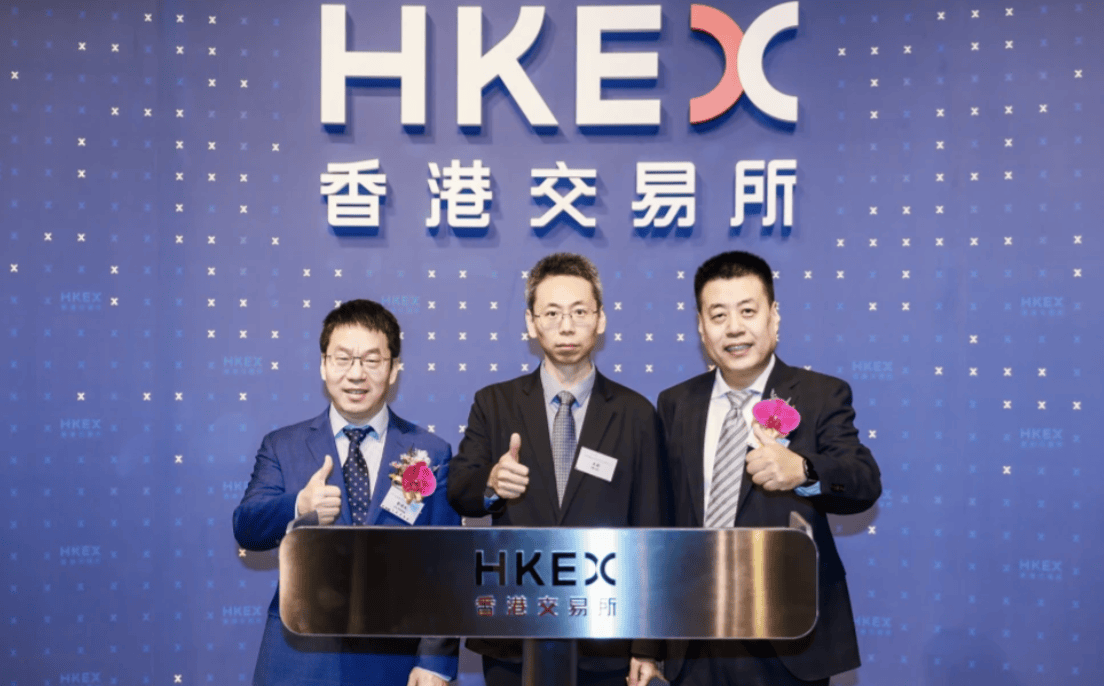
智谱MaaS ARR突破5亿,10个月增长25倍,重新校准“中国版OpenAI”估值锚点
Ge Long Hui· 2026-01-08 10:37
Core Insights - The article highlights the significant valuation shifts in the AI sector, particularly with the debut of Zhiyu, which opened at HKD 120 per share and peaked at HKD 135, achieving a market capitalization of nearly HKD 60 billion [1][2] - The rapid valuation increase of AI companies, exemplified by Manus's valuation skyrocketing from USD 14 million to USD 5 billion within nine months, indicates a departure from traditional valuation models in the AI hardware space [1][4][6] - Zhiyu is positioned as China's equivalent to OpenAI, with a focus on foundational technology rather than just application-level innovations [7][9] Company Valuation and Market Position - Zhiyu's market valuation of approximately USD 6.6 billion is modest compared to Manus's USD 5 billion and OpenAI's USD 500 billion, suggesting a potential undervaluation given its technological capabilities [4][6] - Both Zhiyu and Manus are among the few companies with successful pre-trained frameworks, with Zhiyu launching China's first pre-trained model framework, GLM, in 2021 [9] - Zhiyu's business model emphasizes a B2B approach, with over 8,000 enterprise clients, primarily in the internet sector, and less than 20% of revenue from government projects [11] Revenue Growth and Business Model - Zhiyu's revenue from its MaaS platform has seen a significant increase, with annual recurring revenue (ARR) growing from RMB 20 million to over RMB 500 million in just ten months, indicating a robust growth trajectory [12] - The company aims to increase the proportion of MaaS revenue to 50%, leveraging a flywheel effect that attracts developers and enhances model performance through increased usage [19] - Zhiyu's overseas revenue is also growing, accounting for 9.8% of total revenue in the first half of 2025, with significant usage of its models on global platforms [20] Future Outlook and Competitive Landscape - The article suggests that the long-term potential of Zhiyu is validated by the high valuation of Manus, indicating a strong demand for AI applications [26] - Zhiyu's foundational model capabilities position it favorably in the global AI ecosystem, allowing it to benefit from both domestic and international market trends [26] - The valuation disparity between Zhiyu and its competitors like OpenAI and Anthropic highlights its unique position as one of the few companies with self-developed general foundational models [26]
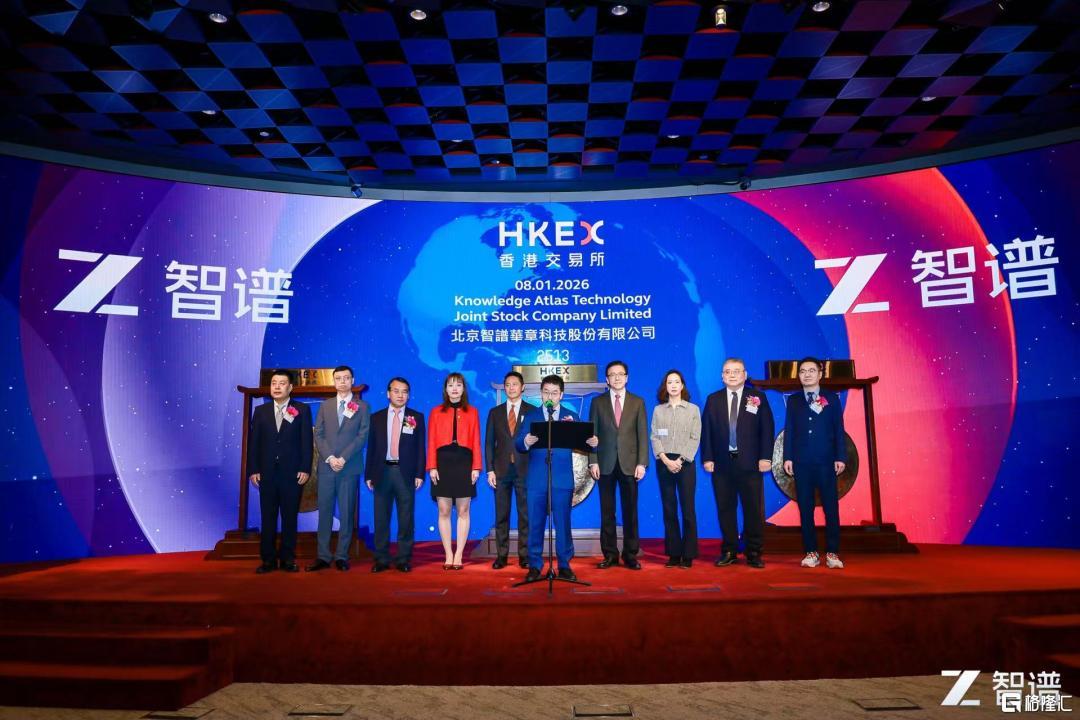
全球大模型第一股智谱上市!雷军、徐新押中暴赚
Xin Lang Cai Jing· 2026-01-08 10:17
Core Viewpoint - The company Zhiyuan Huazhang has become the first publicly listed company in the global large model sector, achieving a market capitalization of HKD 57.9 billion, with significant returns for early investors, but faces challenges due to rising costs and increasing losses [1][2]. Group 1: IPO and Market Performance - Zhiyuan Huazhang's IPO was priced at HKD 116.2 per share, raising a total of HKD 4.348 billion, ranking fourth in terms of fundraising scale among Hong Kong IPOs in 2026 [2]. - The company's market valuation post-IPO was approximately HKD 579 billion, reflecting a 2.1 times increase from its last funding round valuation of HKD 244 billion [2][3]. - The stock price rose by 13.17% on its first trading day, indicating strong market interest despite initial fluctuations [1]. Group 2: Financial Performance and Growth - Revenue for Zhiyuan Huazhang grew from HKD 57.4 million in 2022 to HKD 312 million in 2024, with a projected revenue of HKD 1.33 billion for 2025 [15][17]. - The company has a significant number of institutional clients, increasing from 48 in 2022 to over 12,000 by mid-2025, driven by its cloud deployment services [18][19]. - The revenue from localized deployment, which serves B2B clients, has maintained a gross margin above 50%, while cloud deployment revenue has rapidly increased, contributing to overall growth [17][18]. Group 3: Investment and Valuation - The company has attracted substantial investment, with 11 cornerstone investors subscribing to nearly 70% of the new shares, resulting in an overall floating profit of 3.4 times for 57 external investors [3][4]. - The valuation of Zhiyuan Huazhang corresponds to a price-to-sales ratio of approximately 147 times based on 2024 revenue, which is higher than some competitors [3][4]. - The company has completed 14 rounds of financing, raising over HKD 8.36 billion, with a valuation increase of 60 times since its inception [31][32]. Group 4: Research and Development - Zhiyuan Huazhang's R&D expenditure significantly exceeds its revenue, with R&D costs reaching HKD 21.95 billion in 2024, which is seven times its revenue for that year [22][23]. - The company employs a large R&D team, comprising 74.4% of its total workforce, emphasizing its commitment to innovation [23]. - The company holds numerous patents and has a strong technical foundation, collaborating closely with Tsinghua University's research teams [20][21]. Group 5: Challenges and Risks - Despite rapid revenue growth, the company faces challenges with rising operational costs, particularly in computing services, which have surged to over HKD 15 billion [24][25]. - The gross margin for cloud deployment has declined significantly, indicating potential profitability issues in a competitive market [18][24]. - The company's total liabilities reached HKD 112.52 billion, with a net asset value of -HKD 61.51 billion, raising concerns about its financial sustainability [1].

东吴证券:智谱(02513)从清华实验室到港股AI新贵 关注模型迭代与生态飞轮
智通财经网· 2026-01-08 08:35
Core Viewpoint - Dongwu Securities expresses optimism about Zhipu AI's strengths in local model technology, open-source ecosystem, and local deployment capabilities, anticipating stable growth in local business and cloud services becoming the main driver, benefiting from the long-term trend of transitioning from local deployment to cloud services in China's large model industry [1] Company Overview - Zhipu AI, established in 2019, is a leading independent general large model developer in China, originating from Tsinghua University's Knowledge Engineering Laboratory. The company has developed its own GLM (General Language Model) pre-training framework, which differs from mainstream GPT architectures by employing an autoregressive fill-in-the-blank design, excelling in long text understanding, logical reasoning, and low hallucination rates [2] Market Position and Performance - According to Frost & Sullivan data, Zhipu AI ranks first among independent general large model developers in China and second overall, with a market share of 6.6%. By mid-2025, the company had served over 8,000 institutional clients, with 9 out of the top 10 internet companies in China using GLM models. The global download count for open-source models exceeds 45 million, with over 2.7 million registered developers on the MaaS platform, and daily token consumption rapidly increasing, reaching 4.2 trillion by November 2025. Paid API revenue surpasses the total of all domestic models [3] Business Model - The business model centers on a MaaS (Model as a Service) platform, driven by both localized and cloud deployments. Localized deployment targets government and enterprise clients, offering privatized operation and customization services, with a high customer price and stable gross margin, accounting for 84.8% of revenue in the first half of 2025, with a gross margin of 59%. Cloud deployment, through API calls and subscription services, has a low entry barrier and strong scalability, accounting for 15.2% of revenue, with rapid growth in revenue share. The company aims to increase the proportion of API revenue in the long term [4] Financial Performance - Historical financial performance shows high revenue growth, with revenues of 57 million yuan, 125 million yuan, and 312 million yuan for 2022-2024, reflecting a compound annual growth rate of over 130%. In the first half of 2025, revenue reached 191 million yuan, a year-on-year increase of 325%, surpassing the total revenue for 2023 [4] IPO Details - The IPO price is set at 116.20 HKD per share, with a global offering of 37.42 million H shares, raising approximately 4.3 billion HKD, leading to a post-fundraising market capitalization of about 51.1 billion HKD. The funds will primarily enhance general large model research (about 70%), optimize the MaaS platform infrastructure (about 10%), expand ecosystem cooperation and strategic investments (about 10%), and supplement working capital. Key investors include prominent institutions such as Shanghai Gao Yi, GF Fund, and Taikang Life, with subscription amounts accounting for about 70% of the offering size [5] Competitive Advantages - The company's core competitive advantages lie in its comprehensive self-research technology system, leading model performance, open-source ecosystem, and deep adaptation to domestic computing power. With 74% of its workforce in R&D, the core team has a strong academic background in natural language processing from Tsinghua KEG Laboratory. The rapid iteration of the GLM series, particularly GLM4.7, shows outstanding performance in programming scenarios, while AutoGLM enables AI to autonomously operate smartphones and computer GUIs, marking a new paradigm for agents. Multi-modal capabilities cover text-to-image, text-to-video, and visual understanding, with CogView-4 and CogVideoX ranking highly in open-source evaluations, translating these technological advantages into widespread applications across various industries [6] Revenue Forecast - Revenue projections for 2025-2027 are estimated at 790 million yuan (up 151% year-on-year), 1.55 billion yuan (up 97% year-on-year), and 3.22 billion yuan (up 108% year-on-year), with a gradual shift in revenue structure from localized to cloud-dominated. The overall gross margin is expected to reach 50% in 2025, stabilizing around 51% in 2026-2027, while cloud gross margins are anticipated to improve from low levels to 40%. The path to profitability is becoming clearer [7]

专访智谱CEO张鹏:实现AGI是终极目标
Di Yi Cai Jing Zi Xun· 2026-01-08 07:29
Core Viewpoint - The listing of Zhihua Technology on the Hong Kong Stock Exchange marks the first public company focused on General Artificial Intelligence (AGI) in China, highlighting the growing significance of AGI in the global market [1][3]. Company Overview - Zhihua Technology officially listed on January 8, 2026, with an opening price of HKD 120 per share, reaching a peak of HKD 135, resulting in a market capitalization of nearly HKD 60 billion [1][3]. - The company has experienced significant revenue growth, with projected revenues of CNY 0.6 billion, CNY 1.2 billion, and CNY 3.1 billion from 2022 to 2024, reflecting a CAGR of 130% [4]. Business Strategy - CEO Zhang Peng emphasizes the commitment to AGI, stating that abandoning the foundational model for immediate commercialization would undermine the company's purpose [3][5]. - The company has adopted a Model as a Service (MaaS) framework, which has seen explosive growth, with annual recurring revenue (ARR) increasing from CNY 20 million to over CNY 500 million, marking a 25-fold increase [9]. Market Position - The competitive landscape is characterized by a survival of the fittest scenario, with startups either rushing to go public or focusing on niche markets, while larger companies leverage their resources to dominate the market [4][10]. - Zhihua Technology has established a significant presence in the domestic market, serving over 8,000 institutional clients across various sectors, with internet companies contributing over 50% of revenue in 2024 [14]. Industry Trends - The global AI market is projected to grow from USD 189 billion in 2023 to USD 4.8 trillion by 2033, indicating a 25-fold increase over ten years, supported by mature domestic policies [12]. - The industry is witnessing a shift towards application deployment and direct model invocation, with major players adjusting their strategies accordingly [6][10]. Technological Development - The company has undergone significant technological adjustments, including a shift from dense models to a Mixture of Experts (MoE) architecture, culminating in the release of the GLM-4.5 model [8]. - The focus on AGI involves integrating various capabilities such as multi-modal processing, coding, and reasoning, which are essential for achieving comprehensive intelligence [7]. Future Outlook - The industry anticipates the emergence of new paradigms in 2026, driven by ongoing discussions about foundational innovations and breakthroughs in AI technology [11]. - As the market matures, there is potential for new business models and valuation systems to emerge, reflecting the evolving landscape of the AI sector [14].
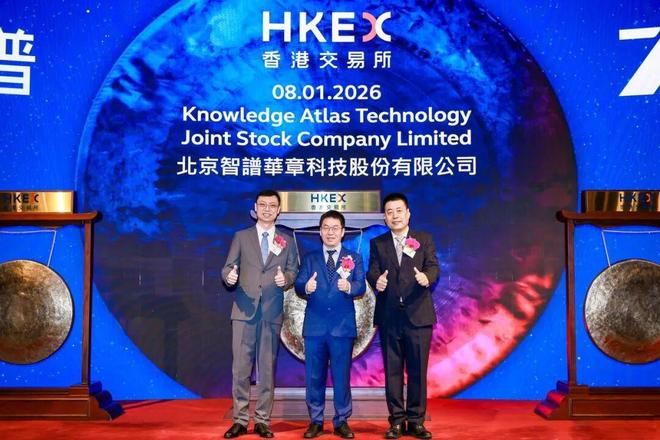
市值超570亿,“全球大模型第一股”盘中涨约12%
财联社· 2026-01-08 06:25
Core Viewpoint - The listing of Zhiyuan Huazhang Technology Co., Ltd. marks the establishment of a new valuation system for large model companies, distinct from traditional enterprises, as it becomes the world's first publicly traded company focused on general artificial intelligence (AGI) [1][3][6]. Group 1: Company Overview and Market Response - Zhiyuan's stock opened at HKD 120 per share and rose approximately 12% to HKD 130 by midday, achieving a market capitalization exceeding HKD 57 billion [1]. - The IPO was highly subscribed, with a 1159.46 times oversubscription in the public offering and 15.28 times in the international offering, indicating strong market recognition [1]. - As a "Chinese version of OpenAI," Zhiyuan has garnered significant attention due to its unique position as the "first stock of global large models" [2]. Group 2: Financial Performance and Growth Projections - Zhiyuan's revenue is projected to grow significantly, with estimates of CNY 738 million, CNY 1.604 billion, and CNY 2.686 billion for the years 2025, 2026, and 2027 respectively [2]. - The company's revenue increased from CNY 57.4 million in 2022 to CNY 312.4 million in 2024, with a compound annual growth rate of 130% [8]. - The annual recurring revenue (ARR) from its MaaS (Model as a Service) business has surged from CNY 20 million to over CNY 500 million, reflecting a 25-fold increase in just 10 months [2]. Group 3: New Valuation Paradigm - Traditional valuation metrics like PE and PB are ineffective for Zhiyuan due to its strategic losses from high R&D investments, necessitating a new valuation framework based on technological barriers, commercialization potential, and narrative value [3][4]. - The market is increasingly valuing companies like Zhiyuan based on their technological advantages and ecosystem scale rather than short-term profits [4][5]. Group 4: Business Model and Market Position - Zhiyuan has established a standardized product system centered around MaaS, offering API access, subscriptions, and localized deployments to enterprises and developers [8]. - The company has attracted over 2.7 million enterprises and developers to its MaaS platform, empowering more than 12,000 enterprise clients globally [5][10]. - The average daily token consumption has skyrocketed from 500 million in 2022 to 4.6 trillion in the first half of 2025, indicating robust demand for its services [10]. Group 5: Industry Context and Future Outlook - The global AI market is expected to grow from USD 189 billion in 2023 to USD 4.8 trillion by 2033, with a projected 25-fold increase over the next decade [11]. - The successful IPO of Zhiyuan signifies a pivotal moment for China's AGI sector, highlighting the country's growing maturity in AI foundational models and its readiness to compete on the global stage [11].

阿里为什么非要打千问这场仗?
Tai Mei Ti A P P· 2026-01-08 04:45
Core Insights - Alibaba's Qianwen App achieved over 30 million monthly active users (MAU) within 23 days of its launch, setting a global record for AI application growth, reflecting the company's urgency to secure its future in the AI landscape [1] - The C-end market for AI technology has fully penetrated, with 515 million users in China by June 2025, and over one-third of internet users having engaged with AI applications, showing a preference for domestic models [2] - Alibaba's CEO emphasized the dual focus on AI to B and AI to C strategies, aiming to create an "AI-native super application" [3] Group 1: Competitive Landscape - Alibaba's obsession with maintaining its "entry point" stems from past experiences of being challenged in the internet space, particularly during the rise of third-party platforms that impacted its e-commerce ecosystem [4][5] - The shift to mobile internet intensified Alibaba's need for high-frequency entry points, leading to strategic failures in social media attempts, which resulted in costly and passive user acquisition [6] - Competitors like ByteDance and Tencent have successfully captured significant user engagement, with ByteDance's AI assistant surpassing 100 million daily active users (DAU) and Tencent's product ranking among the top three in the domestic market [6] Group 2: Strategic Initiatives - In December, Alibaba established the Qianwen C-end business group to consolidate its AI efforts, with a clear mandate to position Qianwen as the "super app" of the AI era [7] - The company is shifting its focus from a tool-based approach to an AI-native strategy, as evidenced by the appointment of a young technical expert to lead product development [8] - Alibaba is rebranding its "Tongyi" app to "Qianwen" to unify its technology and product branding, aiming to create a strong association between Alibaba AI and Qianwen in users' minds [9] Group 3: Ecosystem Integration - Qianwen is positioned as a core component of Alibaba's AI capabilities, integrating various services like food delivery, ticket booking, and shopping to become a daily life super entry point [12] - The app's integration with Gaode Map is just the beginning, with plans for deeper collaboration with platforms like Taobao and Alipay to streamline user experiences across services [17] - The complexity of integrating these systems poses challenges, especially in a tightening cash flow environment, but successful implementation is crucial for Alibaba's strategic objectives [17] Group 4: Market Dynamics - Alibaba's cash reserves have been surpassed by Pinduoduo for the first time, highlighting a significant shift in the competitive landscape and the urgency for Alibaba to focus its resources on AI [8] - The public cloud market for large models is rapidly evolving, with a projected 400% growth in model usage in the first half of 2025, emphasizing the need for cloud providers to control their models to avoid becoming mere service providers [20] - Alibaba's strategy involves using the C-end entry point to drive B-end growth, showcasing its AI capabilities to attract enterprise clients and maintain pricing power in the cloud market [18][21]