
一带一路倡议

Search documents
破防的美财长,公然侮辱中方谈判代表,我商务部当场怼了回去
Sou Hu Cai Jing· 2025-10-20 06:15
Group 1 - The core issue revolves around the diplomatic tensions between China and the U.S., triggered by U.S. Treasury Secretary Besant's accusations against Chinese trade representative Li Chenggang during a press conference [1][4][8] - Li Chenggang's visit to the U.S. aimed to advance the implementation of agreements made by the leaders of both countries and address the U.S. Section 301 investigation into China's shipbuilding industry [2][4] - The U.S. mischaracterized Li's diplomatic visit as provocative, leading to strong rebuttals from China, which emphasized that the visit was in line with previously established consensus [4][12] Group 2 - China's response to U.S. accusations included countermeasures against the U.S. Section 301 investigation, such as imposing special port fees on U.S. vessels, which could increase operational costs at U.S. ports by 12% to 15% [4][12] - In agricultural trade, China demonstrated supply chain resilience by utilizing satellite technology to monitor soybean cultivation in Argentina, ensuring quality and transparency in its procurement processes [6][14] - The U.S. agricultural exports to China significantly declined from January to August 2025, leading to increased unemployment rates in agricultural states, highlighting the negative impact of U.S. trade policies [8][10] Group 3 - The U.S. court ruling against tariffs on steel and aluminum products during Li Chenggang's visit further supported China's position and exposed contradictions in U.S. trade policy [10][12] - China's strategic approach includes diversifying import sources and leveraging technology for supply chain security, which has weakened U.S. bargaining power in agricultural trade [12][16] - The evolving global trade landscape, influenced by China's Belt and Road Initiative and cooperation with emerging agricultural nations, is reshaping trade dynamics, with projected agricultural trade between China and Argentina expected to exceed $50 billion by 2030 [14][16][17]


专访丨长远规划在推动中国各领域发展方面发挥重要作用——访埃及《消息报》副总编辑阿米尔·塔马姆
Xin Hua Wang· 2025-10-18 09:02
Core Insights - Long-term planning in China has been a crucial tool for addressing challenges and promoting development across various sectors [1][2] - The focus of China's development has shifted towards high-quality growth, enhancing the reputation of its export products, such as electric vehicles [1] - Despite facing challenges, China has maintained an economic growth rate of around 5%, demonstrating strategic foresight and resilience [1] Group 1 - China's contribution to global economic growth is approximately 30%, positioning it as a stabilizing force in an uncertain world [1] - The "Belt and Road" initiative has provided tangible benefits in infrastructure, trade, and investment for participating countries, with Egypt exemplifying successful cooperation in green economy and infrastructure projects [2] - The next five years are expected to prioritize technological innovation, artificial intelligence, digital economy, and climate change response [2] Group 2 - China's development is driven by its people and aims to serve them, transforming human capital into a growth engine [2] - Developing countries can easily draw lessons from China's experiences due to shared characteristics and political consensus among global South nations [2]
中国学,也是世界的(环球热点)
Ren Min Ri Bao Hai Wai Ban· 2025-10-17 22:57
Core Insights - The second World Sinology Conference was held in Shanghai, attracting around 500 experts and scholars from over 50 countries to discuss the theme of "Historical and Contemporary China from a Global Perspective" [4] - The conference emphasized the increasing global attention on China amid significant changes in the world, advocating for a comprehensive understanding of Chinese practices and contributions to global knowledge systems [4][5] Group 1: Importance of Sinology - Sinology is described as a discipline that connects historical and contemporary studies of China, emphasizing the need for a deeper understanding of China's past to inform its future [5] - Experts noted that as China becomes a global power, the study of Sinology is increasingly recognized as essential across various academic disciplines [5][6] Group 2: Global Perspectives on China - Scholars highlighted the significance of understanding China's development dynamics, particularly in relation to Africa, where insights into China's modernization are crucial for regional growth [6] - The conference featured discussions on how traditional Chinese cultural resources can inform contemporary global issues, such as environmental harmony and social cohesion [7][8] Group 3: Collaborative Efforts and Future Directions - The conference released the "Shanghai Initiative," which calls for integrating China's development into the broader context of human civilization, aiming to share wisdom and address global challenges [9] - Participants emphasized the need for strategic cooperation between Europe and China in areas like climate change and global supply chain stability, reflecting a shared interest in creating a prosperous future [9][10]
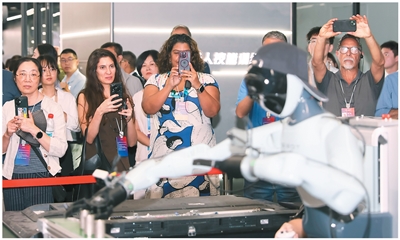
《人与社会全面发展》报告发布:应利用大数据精准识别易返贫群体
Xin Jing Bao· 2025-10-17 12:55
Core Insights - The "People and Society Comprehensive Development" concept aims to integrate fairness, effective governance, ecological sustainability, and cultural prosperity into development goals, promoting systematic and coordinated development across economic, political, social, cultural, and ecological dimensions [1][2]. Group 1: Key Areas of Focus - The report outlines specific action paths and policy recommendations in eight areas: poverty alleviation and rural revitalization, food security and agricultural modernization, industrial development and economic diversification, digital economy and artificial intelligence construction, green transformation and climate change response, global public health and health cooperation, education cooperation and human resource development, and financial support and development financing [1][2]. Group 2: Specific Recommendations - In poverty alleviation and rural revitalization, countries should establish dynamic poverty identification and monitoring mechanisms using big data and grassroots governance networks to accurately identify vulnerable groups and provide differentiated support [2]. - For digital economy and AI development, the report encourages the growth of local digital platforms and applications, supporting small and medium enterprises and startups in entering the AI sector, and fostering a self-controlled digital and intelligent industry ecosystem to avoid "digital colonialism" [2]. - In global public health cooperation, there is a call to strengthen vaccine and drug research and production capabilities, promote equitable distribution, and avoid "health gaps" [2]. - The report emphasizes the need for developing vocational education and lifelong learning systems to adapt to industrial transformation and technological changes, thereby enhancing employability [2]. Group 3: Forum Structure - The Tongzhou Global Development Forum, founded by Renmin University in 2023, serves as a high-level dialogue platform for global leaders from politics, academia, and business to discuss global development strategies [2]. - This year's forum features a structure of "1 main forum + 15 sub-forums + 1 roundtable dialogue," focusing on topics such as the Belt and Road Initiative, digital finance, energy security, global governance, human health, cross-cultural communication, and youth responsibility [2].
美国防战略会发生根本性调整吗?(环球热点)
Ren Min Ri Bao· 2025-10-15 21:21
Core Viewpoint - The upcoming 2025 U.S. Defense Strategy report indicates a significant shift in focus, prioritizing domestic and Western Hemisphere security over great power competition, suggesting a potential fundamental adjustment in U.S. defense strategy [1][4]. Group 1: Historical Context - The discussion around the adjustment of U.S. strategic focus has intensified since the 2008 financial crisis and China's rise as the world's second-largest economy in 2010, leading to increased U.S. vigilance towards China [2]. - The Obama administration's "Pivot to Asia" and subsequent strategies aimed to counter China's rise, with the Trump administration explicitly identifying China and Russia as primary strategic competitors [2][3]. - The Biden administration has continued this trend, labeling China as the "largest strategic competitor" and committing to "win" against China over the next decade [2]. Group 2: Current Strategic Focus - The draft of the new U.S. National Security Strategy and Defense Strategy emphasizes a shift towards prioritizing U.S. domestic issues and Western Hemisphere security, reflecting a broader global strategic adjustment [3][4]. - The U.S. has faced challenges in its Asia-Pacific strategy due to China's growing influence, prompting a reevaluation of its military and strategic resources in the region [3][4]. Group 3: Military Strategy in the Asia-Pacific - The current U.S. strategy in the Asia-Pacific is characterized by a focus on "remote deterrence" rather than traditional forward military presence, allowing for a more flexible and diversified approach to countering China [5][6]. - The U.S. is enhancing its capabilities in long-range deterrence, including strategic nuclear submarines and missile defense systems, while also increasing investments in non-traditional warfare areas such as cyber and space [6]. Group 4: Domestic Political Influences - Domestic political dynamics, including increasing polarization and calls for prioritizing internal issues, are influencing the U.S. strategic shift, with factions advocating for reduced foreign intervention [2][4]. - The "America First" policy under Trump emphasizes domestic governance and regional security, particularly in the Western Hemisphere, indicating a potential resurgence of Monroe Doctrine principles [10][11]. Group 5: Global Implications - The U.S. strategic adjustments are likely to reshape global security and economic environments, with a shift from unilateral dominance to a more multipolar competition [11][12]. - In the Asia-Pacific, the U.S. will continue to focus on countering China's rise through enhanced cooperation with regional allies, while in Europe, it may push for greater European defense autonomy [12].
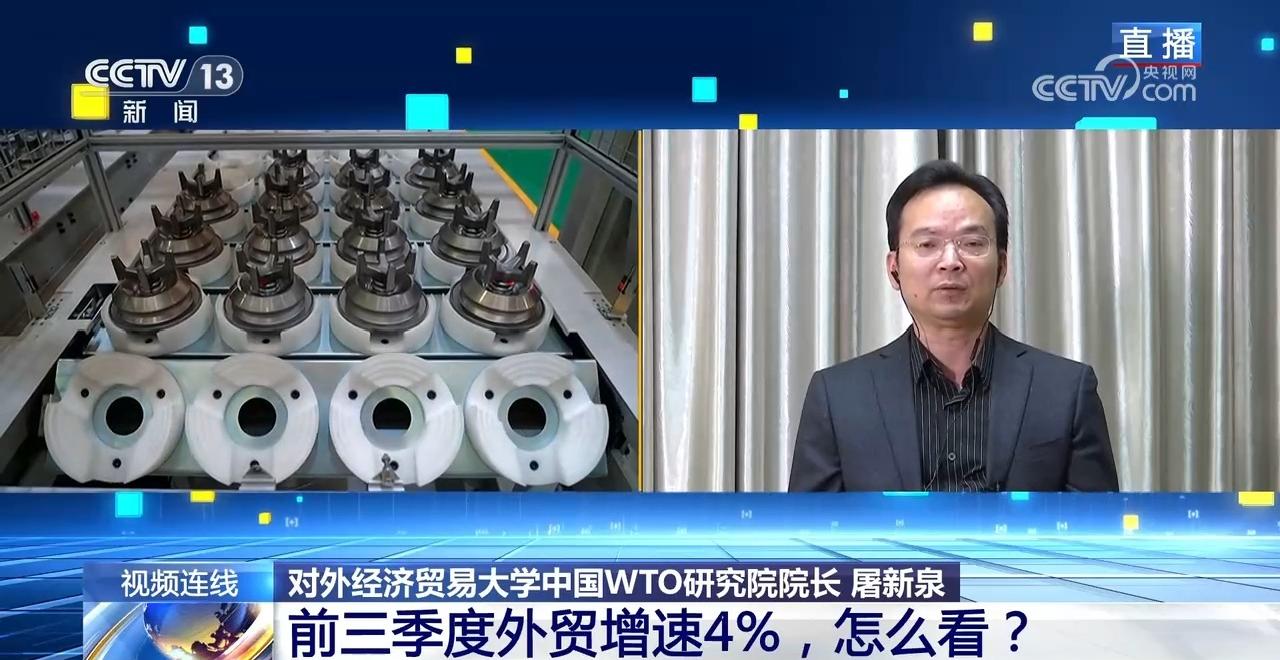
新闻1+1|前三季度外贸增速4%,怎么看?
Yang Shi Wang· 2025-10-15 02:36
Core Viewpoint - China's foreign trade performance in the first three quarters of 2023 showed a 4% year-on-year increase, reaching 33.61 trillion yuan, with the third quarter experiencing a growth of 6% and September alone seeing an 8% increase, indicating resilience in a challenging external environment [1][3]. Group 1: Factors Contributing to Foreign Trade Growth - The growth in foreign trade is attributed to multiple factors, including government efforts to create a stable trade policy environment amidst uncertain trade policies, particularly between China and the U.S. [3]. - Local governments provided substantial support to enterprises facing various challenges, contributing to the positive trade outcomes [3]. - The improvement in the competitiveness and technological capabilities of Chinese industries, developed over decades, has played a crucial role in maintaining stable foreign trade performance [3]. Group 2: Expansion of Trade Partnerships - China's trade partnerships are expanding, with significant growth in imports and exports to Africa (19.5%) and Central Asia (16.7%), as well as to ASEAN and Latin America, driven by the Belt and Road Initiative [6]. - Despite slower growth with APEC economies (2%), the importance of these partnerships remains high, as they represent significant trade opportunities for China [6]. Group 3: Future Outlook for Foreign Trade - To stabilize and enhance exports, China aims to optimize the structure of its export products, focusing on increasing technological content and adapting to market demands for personalized and customized products [9]. - The fourth quarter is expected to be a critical period for foreign trade, with confidence in maintaining growth due to strong manufacturing and service sectors, a stable policy environment, and increased market demand [11].
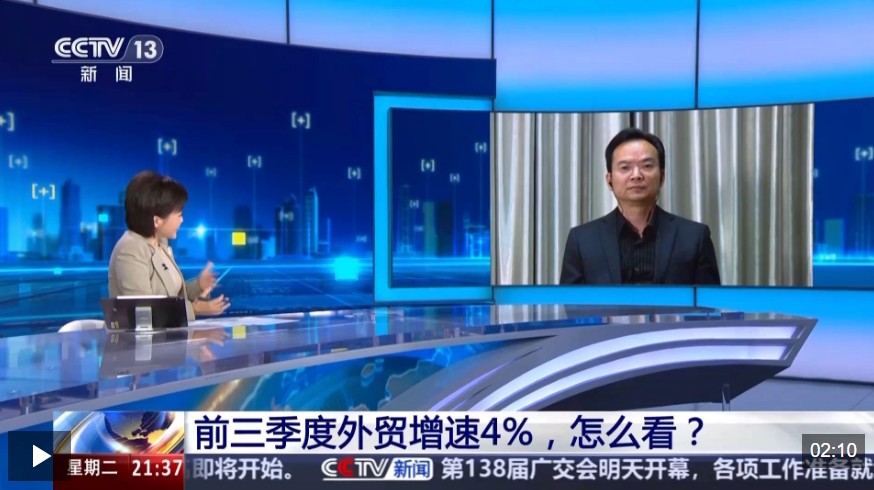
新闻1+1丨前三季度外贸增速4%,怎么看?
Yang Shi Xin Wen· 2025-10-15 01:54
Core Viewpoint - China's foreign trade performance in the first three quarters of the year showed a 4% year-on-year growth, reaching 33.61 trillion yuan, with a notable increase of 6% in the third quarter and 8% in September, indicating resilience amid external pressures [1][3]. Group 1: Factors Contributing to Trade Growth - The growth in foreign trade is attributed to a stable trade policy environment created by the government, particularly in light of negotiations between China and the U.S. [3]. - Support from various levels of government has been crucial for enterprises facing challenges [3]. - The improvement in the competitiveness and technological capabilities of Chinese industries, developed over decades, has played a significant role in maintaining stable trade performance [3]. Group 2: Expansion of Trade Partnerships - China's trade relationships are diversifying, with significant growth in imports and exports to Africa (19.5%) and Central Asia (16.7%), as well as to ASEAN and Latin America [4]. - The Asia-Pacific region remains a key focus, with ASEAN being China's largest trading partner and trade growth continuing at an above-average rate [5]. Group 3: Future Trade Strategies - To stabilize exports, China aims to optimize the structure of its export products, focusing on enhancing technical levels and international competitiveness [6]. - There is a need to adapt to changing market demands for personalized and customized products, which can reflect technological capabilities and command higher prices [6]. Group 4: Outlook for Fourth Quarter - The third quarter was identified as particularly challenging due to significant trade policy changes, yet strong performance was achieved, providing confidence for the fourth quarter [7]. - The manufacturing and service sectors are noted for their strong international competitiveness, and a stable policy environment is expected to support continued growth [7]. - The fourth quarter is anticipated to see robust market demand, presenting favorable conditions for exports [7]. Group 5: Long-term Trade Development - China's foreign trade is entering a phase focused on internal capabilities, relying on industrial upgrades, broad market layouts, and supportive policy frameworks to enhance openness [8].
世界中国学大会推动文明互鉴,中外嘉宾:要践行全球文明倡议,做融通中外文明的使者
Huan Qiu Shi Bao· 2025-10-14 23:19
Core Insights - The Second World Sinology Conference in Shanghai gathered around 500 scholars to discuss "Historical China and Contemporary China from a Global Perspective," highlighting the increasing global interest in Chinese studies [1][2] - The conference emphasized the importance of understanding Chinese civilization as a unified entity and the need for deeper academic exchanges to explain China's development and governance models to the world [2][5] Group 1: Global Interest in Chinese Studies - The global focus on China is intensifying, with the conference serving as a platform for promoting academic dialogue and cultural exchange [2][5] - Scholars noted that the study of Chinese civilization is becoming one of the most significant academic fields globally, reflecting China's growing role in the international landscape [5][6] Group 2: China's Development Model - The conference discussions highlighted how China's development path and governance philosophy offer valuable lessons for Global South countries, challenging the dominance of Western models [8][9] - Scholars from various regions emphasized that China's approach to modernization, which integrates cultural confidence with development, provides an alternative perspective for developing nations [8][9] Group 3: Civilizational Dialogue - The concept of "civilizational dialogue" was underscored as a traditional aspect of Chinese civilization and a contemporary principle, aiming to foster mutual understanding among different cultures [1][2] - The conference's Shanghai Initiative called for a broader understanding of China's development within the context of human civilization, promoting cooperation and knowledge sharing [9]

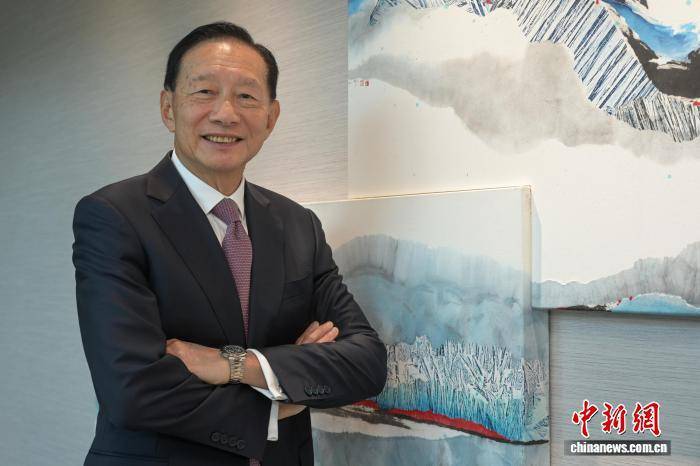
汇丰银行主席王冬胜:香港可从三方面贡献共建“一带一路”倡议
Sou Hu Cai Jing· 2025-10-14 14:18
Core Viewpoint - HSBC, as one of the largest financial institutions globally, is committed to supporting the Belt and Road Initiative (BRI) through business expansion, trade, and investment [1][3]. Group 1: HSBC's Role in the Belt and Road Initiative - HSBC aims to leverage its global presence to support enterprises involved in the BRI, emphasizing its cross-border service advantages for financing related projects [3][4]. - The bank operates "Overseas Service Departments for Chinese Enterprises" in 26 markets, covering regions such as ASEAN, the Middle East, and Europe, viewing the BRI as a significant opportunity [3][4]. Group 2: Hong Kong's Financial Position - Hong Kong is positioned as the world's largest offshore RMB center, playing a crucial role in the internationalization of the RMB as trade and investment with BRI countries increase [4]. - Currently, 76.21% of global RMB-denominated transactions occur in Hong Kong, highlighting its importance in facilitating trade financing [4]. Group 3: Green Finance Initiatives - In 2022, Hong Kong issued over $43.1 billion in green, social, and sustainable bonds, marking a 43% year-on-year increase and accounting for 45% of the international bond market in Asia [6]. - The Hong Kong government issued approximately HKD 27 billion in green and infrastructure bonds in June 2023, receiving strong support from international investors, showcasing Hong Kong's potential as a green financing platform for the BRI [6].

Agricultural Hi-Tech Fair to be Held in Northwest China's Yangling to Promote Agri-Tech Cooperation
Globenewswire· 2025-10-14 07:53
Core Insights - The 32nd China Yangling Agricultural Hi-Tech Fair will be held from October 25 to 29, 2025, focusing on "New Quality Productive Forces for a New Agricultural Future" [1] - The event is expected to attract participants from over 50 countries, covering a total exhibition area of 140,000 square meters [2] - The fair will feature a combination of offline and online events, showcasing advancements in agricultural technology, including core germplasm, farm machinery, water-saving tech, smart agriculture, and digital agriculture [3] Event Significance - Launched in 1994, the fair has become one of China's largest agricultural tech expos, facilitating over 500 international exchange activities and attracting nearly 2,000 overseas agri-related enterprises [4] - The establishment of the SCO Demonstration Base for Agricultural Technology Exchange and Training in 2019 has enhanced the fair's role as a key platform for agricultural cooperation among SCO member countries [5] - The 2024 fair saw participation from all 26 SCO member countries, showcasing diverse products such as handicrafts, chocolates, beverages, and art [5] Parallel Initiatives - This year's fair will coincide with the SCO Agricultural Expo, featuring zones for product displays, tech training, and various workshops aimed at agricultural development and poverty alleviation [7] - The event will also include the launch of SCO ecological origin standards and agricultural product supply-demand matchmaking sessions, promoting global enterprise expansion [7] Global Impact - The China Yangling Agricultural Hi-Tech Fair serves as a bridge linking Chinese agriculture to the global market, enhancing international agricultural cooperation [8]