智慧农业

Search documents
努力让农田“高产”又“绿色”(迈向“十五五”的创新图景)
Ren Min Ri Bao· 2025-12-28 22:15
Core Viewpoint - The article emphasizes the importance of food security in China and the need to enhance agricultural production capacity and quality while ensuring efficient resource utilization and environmental protection [1]. Group 1: Agricultural Innovations - The "Green Ton Half Grain" initiative aims to increase the annual yield of grain crops to over 1.5 tons per acre without increasing resource costs [1]. - In Quzhou, the annual grain yield was around 700 kilograms in the early 2000s, with traditional farming methods leading to soil salinization and compaction [1]. - The research team focuses on soil-crop systems, aiming for "uniform, robust, and synchronized" seedlings through comprehensive technological innovations in soil, fertilizer, water, seeds, and management [1]. Group 2: Integrated Production Techniques - The "Winter Wheat - Summer Corn" integrated green production technology significantly reduces irrigation water usage and ensures balanced nutrient supply, laying the foundation for increased yield and soil restoration [2]. - In the Quzhou demonstration area, the annual yield of wheat and corn reached 1,522 kilograms, achieving water savings of 30%, fertilizer savings of 20%, and a 46% reduction in nitrogen loss [2]. - The "Green Ton Half Grain" model has been implemented in 18 demonstration sites across 7 provinces, showing adaptability and replicability, with yields reaching 1.82 tons in Qixian and 1.84 tons in Linzhi [2]. Group 3: Sustainable Agricultural Development - Soil health is crucial for sustainable agricultural development, as improper soil use can lead to decreased yields and a vicious cycle of increasing inputs with declining soil fertility [2]. - The introduction of the "plant-soil feedback" theory aims to maintain soil health and enhance plant growth, complemented by variety breeding and management innovations [2]. Group 4: Future Outlook - The "Green Ton Half Grain" model will continue to be promoted, focusing on creating a food production pattern that integrates different regional cropping systems [3]. - The integration of modern technologies such as artificial intelligence, big data, and the Internet of Things with agricultural practices aims to achieve precise management of farmland [3].
从“会思考的鱼塘”到“AI蚕保姆”,智慧农业让你大开眼界!
Xin Lang Cai Jing· 2025-12-28 07:01
Core Viewpoint - The article highlights the transformative impact of AI technology on agriculture, particularly in aquaculture and sericulture, showcasing how AI enhances efficiency, productivity, and product quality in these sectors [2][31]. Group 1: Aquaculture Innovations - In Guangxi's modern fishery innovation center, AI enables real-time monitoring and management of fish ponds, allowing for remote control via mobile devices [4][10]. - A precision feeding system has been implemented, resulting in a 15% increase in protein content and improved fish quality [9]. - The integration of ecological practices allows for the recycling of water from fish farming to irrigate crops, promoting a dual-use system that benefits both fish and agriculture [12][31]. - Advanced freezing technology at the processing plant ensures fish freshness, with a complete traceability system in place [14]. Group 2: Sericulture Advancements - AI technology has revitalized traditional silk farming in Guangxi, acting as a "cyber caretaker" for silkworms and providing real-time monitoring through smart devices [18][20]. - Automated inspection robots continuously monitor the health of silkworms, ensuring optimal conditions for growth [22]. - A data-driven approach has been adopted, utilizing decades of sericulture experience to train AI for disease recognition and management, enhancing the overall health and productivity of silkworms [27]. Group 3: Overall Impact of AI in Agriculture - AI is portrayed as a warm and productive tool rather than a cold technology, lowering barriers for new farmers and enabling them to replicate expert knowledge [31]. - The article emphasizes that technology is now deeply rooted in agricultural practices, contributing to increased income and improved product quality [31].



数览中国脉动|科技赋能!“汗水农业”向“智慧农业”加速迈进
Xin Lang Cai Jing· 2025-12-28 06:02
Group 1 - The core viewpoint emphasizes the importance of agricultural mechanization and intelligence as crucial supports for agricultural modernization [1] - China is accelerating the development of new agricultural productivity, leveraging technology to empower the entire chain of grain production, storage, and processing, transitioning from "labor-intensive agriculture" to "smart agriculture" [2] - Current data indicates that China has over 200 million agricultural machinery units, with over 2.2 million units of Beidou terminal equipment, total agricultural power exceeding 1.1 billion kilowatts, and a mechanization rate of over 75% [3] Group 2 - The application of advanced technologies such as AI, IoT, and big data in agriculture is increasing, reflecting the growth of the digital economy [6] - Significant achievements have been made in reducing food waste during processing, with the grain processing loss rate reduced to 0.8% and transportation loss rate to 0.08% [8] - Since the 14th Five-Year Plan, China's agricultural technology innovation has reached a leading position globally, with substantial improvements in the overall effectiveness of the agricultural technology innovation system and rapid breakthroughs in key core technologies [9]
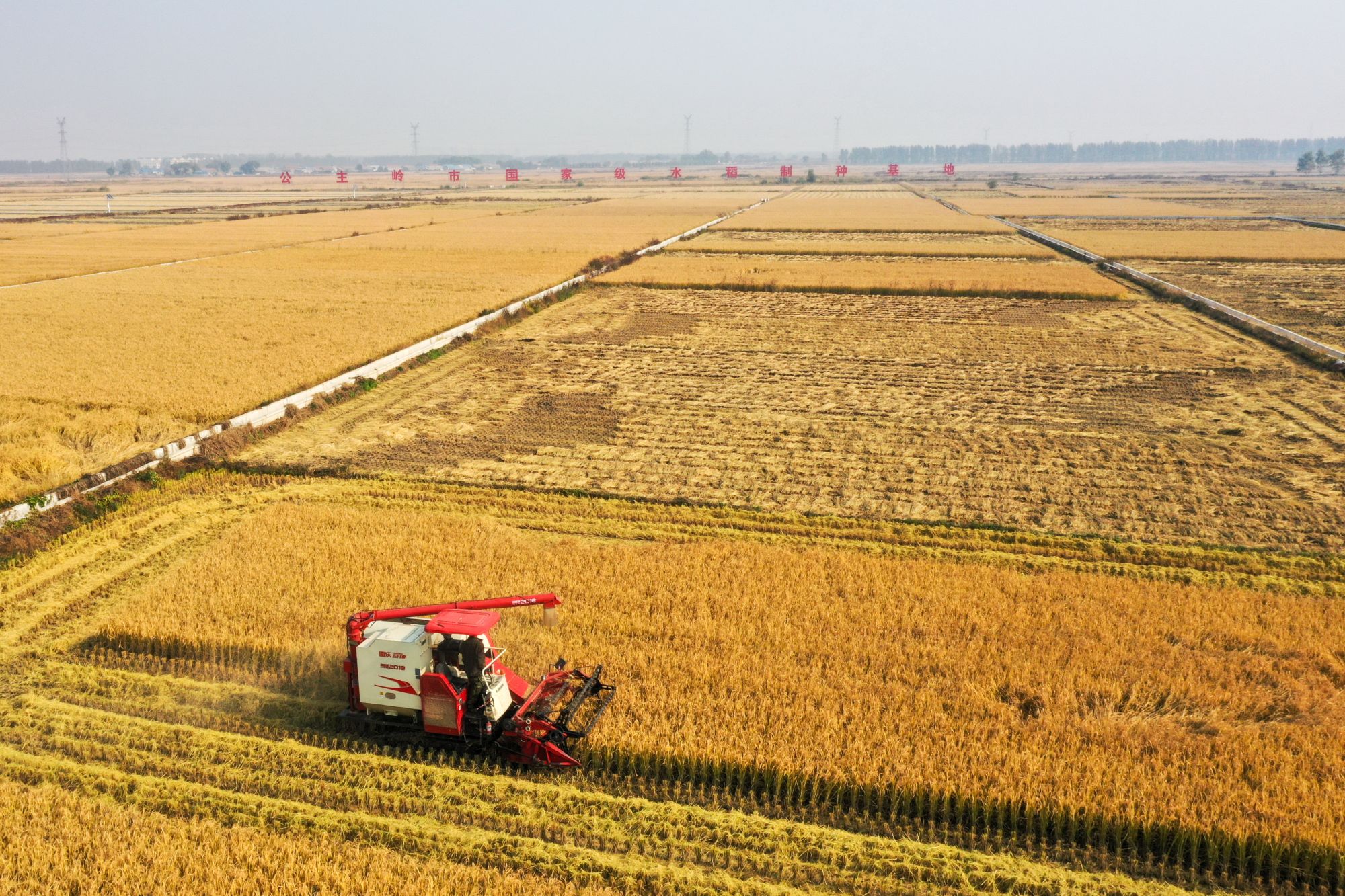
数览中国脉动丨科技赋能!“汗水农业”向“智慧农业”加速迈进
Xin Hua She· 2025-12-28 05:40
Group 1 - The core viewpoint emphasizes the importance of agricultural mechanization and intelligence as crucial supports for agricultural modernization, with a focus on accelerating the transition from "labor-intensive agriculture" to "smart agriculture" through technological empowerment in the entire food production chain [1] Group 2 - Current data indicates that China's agricultural machinery ownership exceeds 200 million units, with over 2.2 million units of Beidou terminal devices applied, total agricultural power exceeding 11 billion kilowatts, and a mechanization rate of over 75%, demonstrating the efficient service of agricultural machinery to production [2] Group 3 - The application of advanced technologies such as AI, IoT, and big data is increasingly prevalent in the agricultural sector, reflecting the robust development of the digital economy [4] Group 4 - Significant achievements have been made in reducing food waste during processing, with the grain processing loss rate reduced to 0.8% and transportation loss rate to 0.8‰, showcasing effective efforts in the food circulation sector [6] Group 5 - Since the 14th Five-Year Plan, China's agricultural technology innovation has reached a leading position globally, with significant improvements in the overall effectiveness of the agricultural technology innovation system and rapid breakthroughs in key core technologies [8]
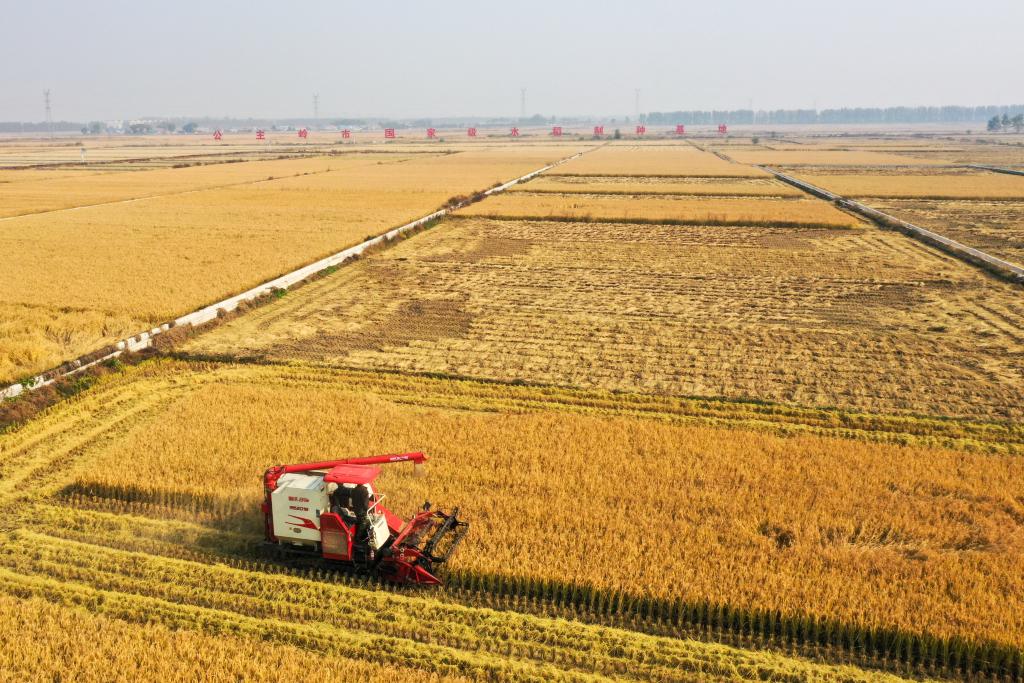
科技赋能!“汗水农业”向“智慧农业”加速迈进
Xin Hua She· 2025-12-28 03:08
Group 1 - The core viewpoint emphasizes the importance of agricultural mechanization and intelligence as crucial support for agricultural modernization, with a focus on developing new productive forces in agriculture through technology [1] - The current agricultural machinery ownership in China exceeds 200 million units, with over 2.2 million units of Beidou terminal devices applied, total agricultural power exceeding 11 billion kilowatts, and a mechanization rate of over 75% [2] - The application of advanced technologies such as AI, IoT, and big data is increasingly prevalent in the agricultural sector, contributing to the transformation towards "smart agriculture" [4] Group 2 - Significant achievements have been made in reducing food waste during processing, with the grain processing loss rate reduced to 0.8% and transportation loss rate to 0.8‰ [6] - Since the 14th Five-Year Plan, China's agricultural technology innovation has reached a leading position globally, with substantial improvements in the overall effectiveness of the agricultural technology innovation system and rapid breakthroughs in key core technologies [8]
大咖面对面 战旗村里话振兴
Xin Lang Cai Jing· 2025-12-27 17:39
Core Insights - The article highlights the successful practices of Zhanqi Village in Chengdu, which serves as a model for rural revitalization through party-led collective economic development [1][2] - Professor Wen Tiejun emphasizes the importance of activating key elements such as "people, land, and money" for rural revitalization, with strong grassroots party organizations being essential [2] Group 1: Zhanqi Village Practices - Zhanqi Village is recognized as a "testbed" for rural reform, achieving significant collective asset activation and generating over 40,000 yuan in per capita disposable income for villagers [1] - The village has successfully integrated "party leadership + three-industry integration + ecological priority" to enhance its collective economy, attracting over one million tourists annually [1] Group 2: Recommendations for Chengdu's Agricultural Development - Chengdu should deepen urban-rural integration to create a rural revitalization path characteristic of a mega-city, addressing systemic barriers to the free flow of resources [3] - The city is advised to focus on three agricultural characteristics: urban agriculture, ecological agriculture, and smart agriculture, aligning with market demands and promoting sustainable practices [3][4] - Chengdu should leverage its regional hub function to enhance the export of local agricultural products, creating a public brand for "Chuan goods" and facilitating better market access for high-quality agricultural products [4]
中国农业发展向“新”而行 科技助力提质增收
Yang Shi Xin Wen· 2025-12-27 06:21
Core Viewpoint - In 2025, the integration of new productive forces in agriculture is transforming traditional farming practices through advanced technologies such as remote sensing satellites and big data analytics, leading to significant improvements in productivity and efficiency [1]. Group 1: Technological Advancements - The year saw the rapid development and application of major crop varieties, including high-yield rice, drought-resistant wheat, and high-oil soybeans, with over 95% of crop varieties being independently bred in China [4]. - Smart agricultural equipment is being accelerated to fill gaps, with advancements in high-end intelligent machinery and the introduction of new energy agricultural equipment [6]. - Innovations in smart agriculture are continuously improving, with 62 new intelligent equipment breakthroughs, including automated driving in fields and precision feeding devices for livestock [8]. Group 2: Talent Development - The workforce in smart agriculture is expanding, with nearly 40 million people trained in digital skills related to agriculture and rural e-commerce throughout the year [10]. Group 3: Case Study - Dragon Fruit Production - In Guangxi's Long'an County, the application of new productive forces has transformed traditional dragon fruit farming into a smart agricultural model, enhancing production efficiency and product quality [11]. - The use of artificial lighting technology has shortened the production cycle of dragon fruit by over 15 days, increasing yield by approximately 1,000 kg per acre and improving fruit quality [17]. - A comprehensive digital agricultural management system has been established, utilizing IoT sensors to collect real-time data on soil conditions, which is analyzed to provide actionable farming recommendations [21]. - The implementation of standardized processes across the entire supply chain for dragon fruit, including automated sorting and tracking systems, ensures quality control and transparency from farm to table [25][27].
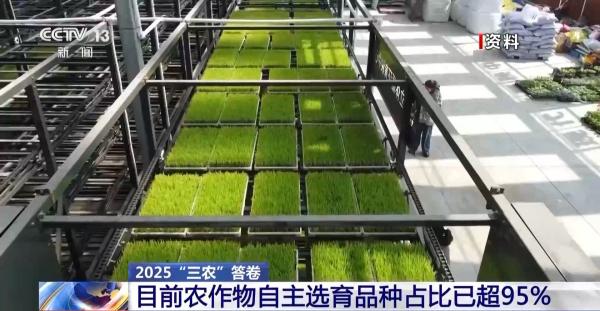
2025“三农”答卷 | 卫星“看”庄稼、大数据“算”收成 农业发展向“新”而行
Yang Shi Wang· 2025-12-27 03:59
Core Viewpoint - The article discusses the transformative impact of new productive forces on agriculture in 2025, highlighting advancements in technology and practices that enhance productivity and efficiency in farming [1]. Group 1: Technological Advancements - Remote sensing satellites and big data are revolutionizing traditional agricultural practices, enabling smarter decision-making in crop management [1][4]. - The development and application of major crop varieties, such as high-yield rice and disease-resistant wheat, are accelerating, with over 95% of crop varieties being independently bred in China [6]. - The integration of high-end intelligent agricultural machinery is narrowing the gap in agricultural equipment, promoting green transformation in farming operations [8]. Group 2: Smart Agriculture Innovations - The implementation of automated driving and crop information collection platforms, along with precision feeding equipment and underwater inspection robots, marks significant advancements in smart agricultural tools [10]. - Training programs for farmers in digital skills have reached nearly 40 million participants, enhancing the workforce's capability in smart agriculture [10]. Group 3: Case Study - Dragon Fruit Production - In Nanning, Guangxi, the application of new productive forces has transformed traditional dragon fruit farming into a smart agricultural model, improving production efficiency and product quality [11]. - The use of LED lighting for night-time flowering and supplementary light has shortened the production cycle by over 15 days, increasing yield by approximately 2000 pounds per acre [15]. - The establishment of a digital agricultural management system allows for real-time data collection and analysis, enabling precise irrigation and fertilization, thus enhancing operational efficiency [19]. Group 4: Standardization and Traceability - The dragon fruit farm has achieved full-chain standardization, implementing automated sorting and grading processes, and providing traceability for consumers through a "digital ID" for each fruit [21]. - The shift from labor-intensive practices to data and technology reliance signifies a major evolution in agricultural productivity, with smart tools replacing traditional methods [23].
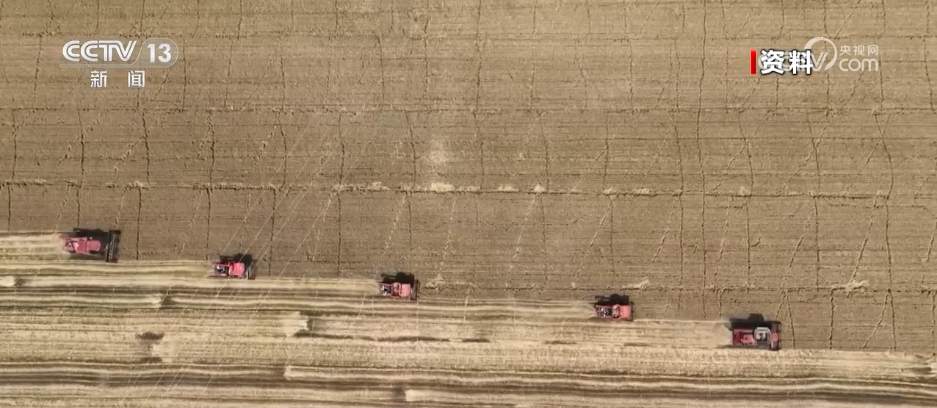
2025“三农”答卷:农业发展向“新”而行
Yang Shi Wang· 2025-12-27 03:58
Core Insights - In 2025, new productive forces will empower various industries, with remote sensing satellites monitoring crops and big data calculating harvests, leading to a transformation in traditional agriculture [1] Group 1: Agricultural Innovation - The year saw significant advancements in agricultural technology, with sensors capturing subtle changes in the land and algorithms generating comprehensive production plans, enhancing agricultural efficiency [2] - Major crop varieties such as high-yield rice, drought-resistant wheat, and high-oil soybeans are being rapidly developed and applied, with over 95% of crop varieties being independently bred in China [3] Group 2: Agricultural Equipment - The acceleration of high-end intelligent agricultural equipment is narrowing the gap in technology, while small agricultural machinery is being deployed in hilly areas to fill existing gaps [4] Group 3: Smart Agriculture - Continuous improvement in smart agriculture innovation capabilities is evident, with new equipment such as autonomous driving in fields and precision feeding devices being implemented in production [5] - A total of 62 new intelligent agricultural equipment breakthroughs have been achieved, enhancing operational efficiency [5] Group 4: Talent Development - The smart agriculture talent pool is expanding, with training programs for large-scale agricultural producers and nearly 40 million people trained in mobile application skills throughout the year [6]
【企业风采】甘肃民营企业100强特辑——甘肃蓝天马铃薯产业发展有限公司
Sou Hu Cai Jing· 2025-12-26 15:13
Core Viewpoint - Gansu Lantian Potato Industry Development Co., Ltd. is a leading enterprise in the potato industry, focusing on innovation and digital transformation to enhance productivity and market reach [4][6][11]. Company Overview - Gansu Lantian Potato Industry Development Co., Ltd. is located in the core area of "China's Potato Capital" in Dingxi City, Gansu Province, and is recognized as a key enterprise in the national potato industry brand creation demonstration zone [4]. - The company has received multiple accolades, including being named a national key leading enterprise in agricultural industrialization and a leader in the Chinese potato starch industry, and holds 20 independent patents [4][6]. Business Model and Strategy - The company adheres to a development philosophy of "leading industrial upgrades with technology and establishing quality benchmarks with brands," focusing on a comprehensive approach that integrates "new agriculture, new industry, and new finance" [6]. - It has successfully driven the potato industry in Dingxi, benefiting over 100,000 farming households and positioning itself as a national leader in potato starch production [6][10]. Digital Transformation - The company is actively pursuing digital transformation by enhancing efficiency through technology iteration, platform development, service innovation, and data management [8][10]. - Key initiatives include an online appointment system for raw material procurement, full-process digital control in production, and data-driven marketing strategies to improve sales cycles and inventory turnover [10]. Collaborative Ecosystem - The establishment of the "Fujingtang Modern Agricultural Industry Chain Platform" fosters collaboration among government, enterprises, cooperatives (farmers), and banks, creating a synergistic industry ecosystem [10]. - This platform enables information sharing and resource complementarity, enhancing overall industry cooperation [10]. Social Impact - The company constructs 150,000 acres of standardized planting bases annually, connecting small farmers to larger markets through various models, including price protection and profit-sharing [10]. - It provides daily job opportunities at an average wage of 120 yuan, significantly contributing to the income of over 500,000 farmers in Dingxi and surrounding areas [10]. International Expansion - In 2022, the company established an international trade department in Shanghai, signing export orders worth $60 million and reaching markets in the USA, Mexico, Germany, and Japan [11]. - It aims to continue enhancing its digital transformation and expand its international presence while focusing on product quality and customer satisfaction [11].