
智能网联汽车

Search documents
首块L3级自动驾驶专用号牌落地 从技术验证加速迈向量产应用
Jing Ji Ri Bao· 2025-12-23 22:34
Core Insights - The first L3 conditional autonomous driving license "渝AD0001Z" has been issued in Chongqing, granted to Changan Automobile, marking a significant step towards the commercialization of autonomous vehicles in China [1][4] - The L3 level, defined as "conditional automation," allows vehicles to perform all dynamic driving tasks under specific conditions, although the driver must remain attentive and ready to take control when prompted [1][2] Group 1: Industry Developments - The Ministry of Industry and Information Technology has conditionally approved two automotive companies to submit applications for L3 autonomous vehicle products, indicating a shift from technology validation to mass production applications in China's autonomous driving industry [1][2] - The approval of L3 autonomous vehicles is seen as a critical step towards industrialization, with pilot programs aimed at validating technology and establishing a foundation for large-scale applications [2][3] Group 2: Regulatory Framework - The licenses for the two models are not a blanket approval; they come with specific regulations regarding operational scenarios, road types, urban areas, and speed limits [2][3] - The Changan SC7000AAARBEV model can operate in congested traffic at a maximum speed of 50 km/h on designated roads in Chongqing, while the Extreme Fox BJ7001A61NBEV model can achieve L3 automation at speeds up to 80 km/h on certain highways in Beijing [3] Group 3: Operational Aspects - The two models will not be available for private users initially; instead, they will be operated by affiliated ride-hailing service companies to manage the deployment of L3 autonomous driving [3] - The operational management aims to reduce uncertainties associated with the initial rollout of L3 autonomous driving, allowing consumers to experience the technology through ride-hailing services [3] Group 4: Government Support and Future Outlook - The approval of autonomous vehicle products reflects the government's commitment to fostering innovation while ensuring safety through prudent regulation [4] - The ongoing pilot programs for smart connected vehicles are expected to inject strong momentum into technological innovation and upgrades within the automotive industry in China [4]

首块L3级自动驾驶专用号牌落地——从技术验证加速迈向量产应用
Jing Ji Ri Bao· 2025-12-23 22:09
Core Insights - The first L3 conditional autonomous driving license "渝AD0001Z" has been issued in Chongqing, granted to Changan Automobile, marking a significant step towards the commercialization of autonomous vehicles in China [1][4] - The L3 level, defined as "conditional automation," allows vehicles to perform all dynamic driving tasks under specific conditions, although the driver must remain attentive and ready to take control when prompted [1][2] Industry Developments - The Ministry of Industry and Information Technology has conditionally approved two automotive companies to submit applications for L3 autonomous driving vehicles, indicating a shift from technology validation to mass production applications in the autonomous driving sector [1][2] - The automotive industry is increasingly focusing on smart technology, with China and the U.S. leading in intelligent driving, while Europe is intensifying its efforts to catch up [2] Regulatory Framework - The approval for the two models is not a blanket release; it includes specific regulations regarding operational scenarios, road types, urban areas, and speed limits [2][3] - The Changan SC7000AAARBEV can operate in congested traffic at a maximum speed of 50 km/h on designated roads in Chongqing, while the Extreme Fox BJ7001A61NBEV can achieve up to 80 km/h on certain highways in Beijing [3] Operational Aspects - The two models are not available for private users but will be operated by affiliated ride-hailing service companies, which aims to reduce uncertainties in the initial rollout of L3 autonomous driving [3] - As the pilot progresses and the industry gains a better understanding of safety risks, restrictions may be eased, allowing autonomous driving to become more integrated into daily life [3] Government Support - The issuance of autonomous vehicle licenses reflects the government's commitment to fostering innovation while ensuring safety through prudent regulation [4] - This initiative is expected to stimulate technological innovation and upgrades within the automotive sector, aligning with the overall strategy of "system first, pilot breakthroughs, and gradual promotion" [4]
从技术验证加速迈向量产应用
Jing Ji Ri Bao· 2025-12-23 22:06
Core Insights - The first L3 conditional autonomous driving license "渝AD0001Z" has been issued in Chongqing, granted to Changan Automobile, marking a significant step towards the commercialization of autonomous vehicles in China [1][4] - The L3 level, defined as "conditional automation," allows vehicles to perform all dynamic driving tasks under specific conditions, although the driver must remain attentive and ready to take control when prompted [1][2] Industry Developments - The Ministry of Industry and Information Technology has conditionally approved two automotive companies to submit applications for L3 autonomous vehicles, indicating a shift from technology validation to mass production applications in China's autonomous driving industry [1][2] - The automotive industry is increasingly focusing on smart technology, with China and the U.S. leading in intelligent driving, while Europe is making significant efforts to catch up [2] Regulatory Framework - The approval for the two models is not a blanket release; it includes specific regulations regarding operational scenarios, road types, urban areas, and speed limits [2][3] - The Changan SC7000AAARBEV can operate in congested traffic at a maximum speed of 50 km/h on designated roads in Chongqing, while the Extreme Fox BJ7001A61NBEV can achieve L3 automation at up to 80 km/h on certain highways in Beijing [3] Operational Aspects - The two models are not available for private users but will be operated by affiliated ride-hailing service companies, which helps mitigate uncertainties during the initial rollout of L3 autonomous driving [3] - As the pilot programs progress and the industry gains a better understanding of safety risks, restrictions on these vehicles are expected to be relaxed, allowing for broader public access to autonomous driving technology [3][4] Government Support - The issuance of autonomous vehicle licenses reflects the government's commitment to fostering innovation while ensuring safety through prudent regulation [4] - This initiative is expected to stimulate technological innovation and upgrades within the automotive sector, aligning with the overall strategy of "institutional primacy, pilot breakthroughs, and gradual promotion" [4]
国内专用车领域领军企业 华东总部基地落地合肥
Xin Lang Cai Jing· 2025-12-23 17:03
Core Viewpoint - Chengli Automobile Group, a leading company in the specialized vehicle sector, has signed an agreement to establish its East China headquarters in Shushan District, Hefei [1] Group 1: Project Overview - The headquarters will be built in three phases, featuring an intelligent R&D center, an intelligent manufacturing center, a global sales center, and an industrial cluster base, aimed at becoming a significant smart automotive industry base and innovation source for Chengli Group in East China and nationwide [1] - The project has initiated collaborations with local research teams and enterprises, including partnerships with academic teams in the environmental field to develop specialized vehicles such as mobile environmental monitoring platforms [1] Group 2: Regional Development - Shushan District is focusing on key industrial sectors and has introduced several landmark industrial projects and new economy initiatives this year [1] - The gathering of over 40 new productive service industry projects is enhancing the regional industrial ecosystem [1] Group 3: Future Industry Strategy - Shushan District will emphasize systematic integration of the industrial chain for the smart connected vehicle sector, supporting upstream R&D for complex environmental perception and intelligent decision-making technologies [1] - The district aims to attract and cultivate high-quality component enterprises with core competitiveness in the midstream and develop aftermarket services downstream, creating a vibrant "industrial rainforest" where enterprises thrive together [1]
京AA0001Z!全国首批L3级自动驾驶专用正式号牌花落北汽!
Zhong Guo Qi Che Bao Wang· 2025-12-23 08:43
Core Insights - The first batch of L3-level autonomous driving special license plates was issued in Beijing, marking a significant milestone for the company in transitioning from "technical validation" to "legal operation" [1][3] Group 1: Regulatory Approvals - The BAIC Group's Arcfox Alpha S (L3 version) received approval from the Ministry of Industry and Information Technology for autonomous vehicle product access [3] - The efficient connection between product access and road operation was achieved within just seven days [3] Group 2: Symbolic Significance - The license plate "京AA0001Z" symbolizes the first official license for autonomous driving that is not restricted by highway congestion, representing the highest technical level of domestic autonomous vehicle products [5] - The license plate "京AA0733Z" cleverly references BAIC New Energy's stock code "600733," reinforcing investor confidence in the company's growth [5] Group 3: Safety and Testing - The Arcfox Alpha S (L3 version) is the only model in the first batch equipped with LiDAR, providing essential hardware support for its perception system's safety and reliability [7] - Prior to licensing, the vehicle underwent extensive testing and safety evaluations, including compliance tests with traffic regulations and emergency drills in collaboration with public security departments [7] Group 4: Technological Advancements - BAIC's long-term technological accumulation in intelligent networking, new energy, and safety has enabled the successful licensing of the Arcfox Alpha S [8] - The proprietary "BAIC Yuanzhi Intelligent" technology system covers levels L2 to L4, establishing a comprehensive safety development framework [8] Group 5: Market Performance - From January to November, BAIC Arcfox sold 136,600 units, a year-on-year increase of 97.99% [10] - The new Arcfox Alpha T5, featuring the Snapdragon 8775 integrated chip, has made urban NOA accessible below 150,000, leading to strong sales upon launch [10] - The company aims to set a benchmark for the intelligent connected vehicle industry in Beijing-Tianjin-Hebei, contributing to the commercialization of autonomous driving with replicable "Chinese solutions" [10]


北交所科技成长产业跟踪第五十六期(20251221):工信部放行长安和极狐两款L3级自动驾驶车型,关注北交所智能驾驶产业标的
Hua Yuan Zheng Quan· 2025-12-23 02:27
Group 1 - The Ministry of Industry and Information Technology has conditionally approved two L3 autonomous driving models from Changan and Jikrypton, marking a transition from "technical validation" to "mass production application" in China's autonomous vehicle industry [1][6] - China's autonomous driving market is projected to reach nearly 450 billion yuan by 2025, with a current market size of 330.1 billion yuan in 2023, reflecting a year-on-year growth of 14.1% [2][34] - The penetration rate of L2 level assisted driving in China's electric vehicles has exceeded 50%, indicating a shift towards L3 level commercial applications [1][29] Group 2 - The median price-to-earnings (P/E) ratio for the information technology sector on the Beijing Stock Exchange has increased by 3.14% to 68.6X, while the median P/E ratio for electronic device companies has risen from 56.2X to 57.9X [2][57] - The total market capitalization of electronic device companies on the Beijing Stock Exchange has increased from 1399.4 billion yuan to 1417.7 billion yuan, with a median market capitalization rising from 23.1 billion yuan to 24.9 billion yuan [2][58] - The median P/E ratio for mechanical equipment companies has decreased from 46.3X to 44.0X, indicating a shift in valuation within the sector [2][61] Group 3 - There are 11 companies listed on the Beijing Stock Exchange that belong to the intelligent driving industry chain, including Audiwei, KAIT, and Huaxin Technology, which are involved in various aspects of autonomous driving technology [2][48] - The autonomous driving market is experiencing rapid development, with significant investments from major tech companies like BAT, which are entering the market and increasing their R&D efforts [1][34] - The market for automotive chips in China is expected to grow significantly, reaching 95.07 billion yuan by 2025, driven by the increasing demand for electric and autonomous vehicles [12][15]
易华录:目前已涉足多个试点城市及其他相关城市的车路云系统项目建设
Mei Ri Jing Ji Xin Wen· 2025-12-23 01:15
每经AI快讯,有投资者在投资者互动平台提问:请问易华录有没有参与在自动驾驶其中的相关建设? 如果有,请展开说说目前的进展。 易华录(300212.SZ)12月23日在投资者互动平台表示,公司自2015年起即前瞻性布局自动驾驶与智能 网联汽车领域,并陆续承接多个项目如2020年成功中标中德智能网联汽车试验场地建设项目,目前多数 项目已顺利进入验收或运营阶段。近年来,公司积极响应国家政策导向,参与工业和信息化部等五部委 联合推动的"车路云一体化"应用试点工作,目前已涉足多个试点城市及其他相关城市的车路云系统项目 建设。在技术能力方面,公司具备从外场硬件到中心软件平台的全链条自主研发与一体化交付能力。公 司持续推动智能网联汽车产业生态的构建与发展。 (记者 胡玲) ...

利好加持!这一板块强势上涨,多股飙升!
Zheng Quan Ri Bao Zhi Sheng· 2025-12-22 05:04
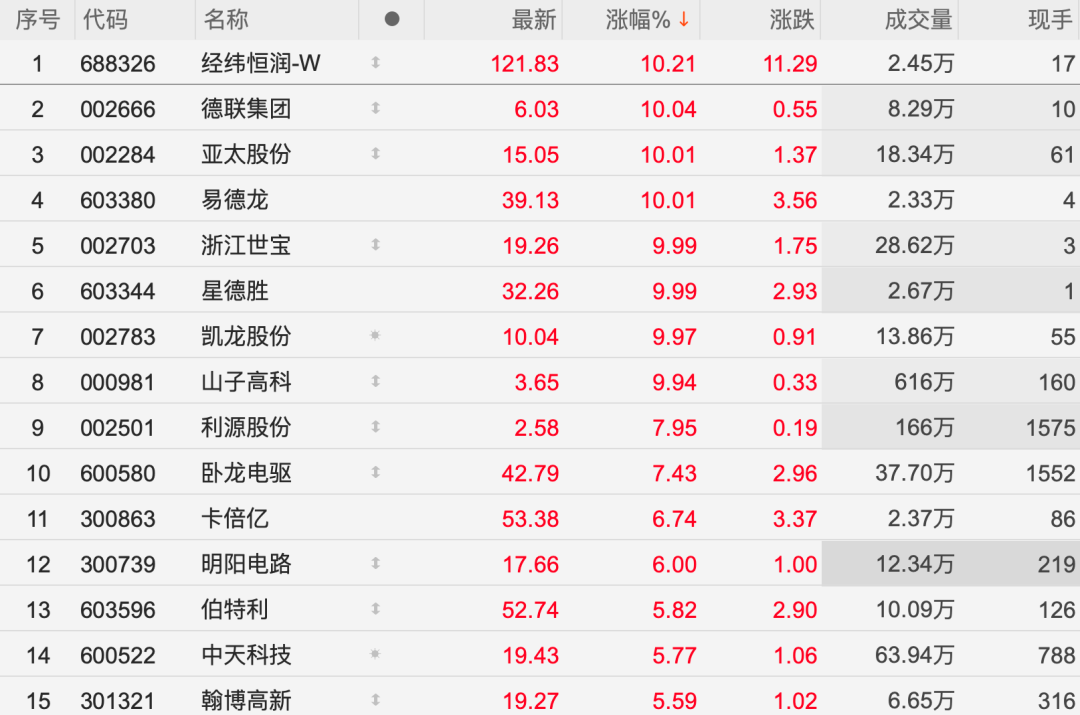
Core Viewpoint - The new energy vehicle (NEV) sector is experiencing a strong rebound driven by favorable national policies, leading to a surge in stock prices and a wave of limit-up stocks [1] Group 1: Market Performance - NEV concept stocks have shown significant gains, with Zhejiang Shibao achieving five consecutive limit-ups, and other stocks like Delian Group and Asia-Pacific Shares also hitting the limit-up [1] - Key stocks with notable price increases include Jingwei Hengrun, which rose by 10.21% to 121.83, and Delian Group, which increased by 10.04% to 6.03 [2] Group 2: Policy and Technological Developments - The core driver for the NEV sector's growth is strong policy support, highlighted by the approval of L3-level conditional autonomous driving vehicles, marking a significant milestone in the industry [3] - The first L3-level autonomous driving license plate was issued in Chongqing, indicating the formal entry of China into the L3 autonomous driving era [3] - Technological innovations in the NEV industry are accelerating, with breakthroughs in lithium battery technology and the imminent mass production of solid-state batteries, enhancing vehicle performance and reducing production costs [3] Group 3: Market Trends and Future Outlook - The NEV industry is transitioning from "policy support" to "market maturity," with significant growth in production and sales, reaching 1,490.7 million units produced and 1,478 million units sold in the first 11 months of the year, representing a year-on-year increase of 31.4% and 31.2% respectively [5] - The penetration rate of new energy vehicles in total vehicle sales reached 47.5%, with November figures showing a further increase to 53.2% [5] - The commercialization of L3 autonomous driving technology signifies a new development stage, requiring collaboration between government and enterprises to establish standards and regulations [5][6]


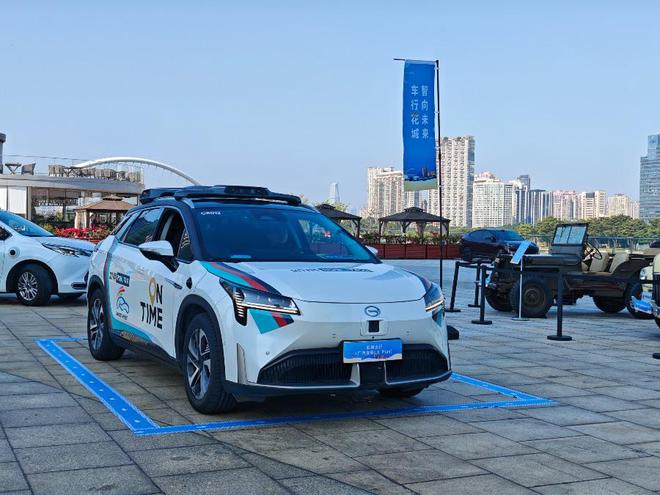
广州智驾环游记:千年商都点燃产业新引擎
2 1 Shi Ji Jing Ji Bao Dao· 2025-12-22 03:21
Core Insights - Guangzhou is hosting the 2025 Marathon and showcasing its advancements in smart connected vehicles and the automotive industry through a parade featuring over 50 vehicles, including smart and classic models [1][2] - The city has achieved full-scale open demonstration operations for autonomous driving and produced 2.25 million smart connected new energy vehicles during the 14th Five-Year Plan period [2][7] - Guangzhou is recognized as a leading city in the autonomous driving sector, being one of the first in China to implement commercial operations of Robotaxi and Robobus [7][10] Industry Development - The automotive industry in Guangzhou has developed a substantial ecosystem, comprising 10 vehicle manufacturing companies and over 1,200 automotive parts and trade enterprises [1][6] - The city has established itself as a hub for autonomous driving technology, with companies like WeRide and Pony.ai listed on both US and Hong Kong stock exchanges, marking them as the only two autonomous driving firms to achieve this [7][10] - Guangzhou's automotive sector benefits from a rich history in traditional manufacturing, a strong innovation capacity, and a concentration of top universities, which provide a skilled workforce for the autonomous driving and AI sectors [10][11] Technological Advancements - The parade showcased vehicles equipped with advanced autonomous driving systems, including the WeRide Robotaxi GXR, which features a self-developed L4-level autonomous driving system and innovative sensor technology [3][4] - The event highlighted the integration of autonomous vehicles into public life, with a focus on enhancing urban mobility and showcasing the capabilities of local companies [6][9] - Various applications of autonomous driving technology were demonstrated during recent major events, including the use of autonomous vehicles for logistics and sanitation services, achieving significant efficiency improvements [10][11] Policy and Ecosystem - Guangzhou has implemented supportive policies for autonomous driving, including road testing and demonstration applications, which have facilitated the growth of the industry [11] - The city has developed a comprehensive ecosystem for smart vehicles, including a complete chain of disciplines, innovation, industry, talent, and funding, fostering collaboration between universities and enterprises [11] - The ongoing development of the policy framework and industry ecosystem is accelerating the transition of autonomous driving from testing to everyday public use, promising a more intelligent and efficient urban transportation system [11]
第三届AI苏州年度大会举办
Su Zhou Ri Bao· 2025-12-22 01:53
Core Insights - The third AI Suzhou Annual Conference and the Huanxiu Lake Artificial Intelligence OPC Conference was held in Suzhou, showcasing the city's achievements in the "Artificial Intelligence+" sector [1] - The conference released the top ten keywords for AI development in Suzhou, innovative application scenarios in the non-manufacturing sector, and key industry standards to guide the development of the AI industry [1] - Leading scholars, industry leaders, and investment experts gathered to discuss technology development, application integration, and industry governance [1] Group 1 - Suzhou High-speed New City aims to become a preferred location for OPC startups, with a goal to establish 15 OPC communities by 2028, providing around 1,000 workstations and over 10,000 square meters of space [2] - The focus will be on seven innovative fields including "AI+Embodied Intelligence," "AI+Intelligent Connected Vehicles," and "AI+Finance," optimizing layout through industrial clustering, application scenarios, and ecological cultivation [2] - New OPC characteristic communities and ecological platforms were unveiled, along with the launch of the Huanxiu Lake OPC competition [2]