
降息周期

Search documents
中信证券:港股上行动能延续,把握四大中长期方向
Xin Lang Cai Jing· 2025-10-09 01:02
Core Viewpoint - The report from CITIC Securities indicates that abundant liquidity and ongoing investments in AI are the two main drivers behind the sustained rise of Hong Kong stocks since early September [1] Group 1: Market Dynamics - The "wealth effect" in Hong Kong stocks is expected to continue attracting southbound capital inflows [1] - The potential election of a new Japanese Prime Minister, if successful, could lead to arbitrage trading by Japanese investors benefiting Hong Kong stocks [1] - The ongoing capital expenditure by domestic and international companies in the AI sector, along with continuous iterations and innovations in large models and applications, may lead to performance realization in Hong Kong's complete AI and technology industry chain [1] Group 2: Valuation and Future Outlook - After six months of valuation expansion, the current absolute valuation of Hong Kong stocks is considered not cheap [1] - However, with fundamentals expected to bottom out and a significant increase in earnings projected for 2026, Hong Kong stocks still hold considerable attractiveness on a global scale [1] - The report predicts that the long bull market for Hong Kong stocks since early 2024 will continue, driven by liquidity spillover effects and sustained AI narratives [1] Group 3: Investment Recommendations - Investors are advised to focus on four key long-term directions: 1) Technology sector, including AI-related sub-sectors and consumer electronics [1] 2) Healthcare sector, particularly biotechnology [1] 3) Non-ferrous metals benefiting from rising overseas inflation expectations and de-dollarization [1] 4) Consumer sector, which is expected to see valuation recovery amid further domestic economic recovery [1]

中信证券:港股2024年初以来的长牛行情将延续
Xin Lang Cai Jing· 2025-10-09 00:21
Core Viewpoint - The continuous rise of Hong Kong stocks since early September is driven by abundant liquidity and ongoing investments and innovations in AI [1] Group 1: Market Dynamics - Southbound capital is expected to continue flowing into Hong Kong stocks due to the "wealth effect" [1] - The potential election of a new Japanese Prime Minister, if successful, may lead to arbitrage trading by Japanese investors benefiting Hong Kong stocks [1] Group 2: Sector Analysis - Increased capital expenditure in the AI sector by domestic and international companies is anticipated to lead to performance realization in Hong Kong's complete AI and technology industry chain [1] - Despite a six-month valuation expansion, the current absolute valuation of Hong Kong stocks is not cheap, but the fundamentals are expected to rebound [1] Group 3: Investment Recommendations - Investors are advised to focus on four long-term directions: 1) Technology sector, including AI-related sub-sectors and consumer electronics [1] 2) Healthcare sector, particularly biotechnology [1] 3) Non-ferrous metals benefiting from rising overseas inflation expectations and de-dollarization [1] 4) Consumer sector, which may see valuation recovery with further domestic economic recovery [1]
黄金创纪录涨势碾压比特币 但分析师仍看好后市
Sou Hu Cai Jing· 2025-10-08 14:14
在黄金史上首次突破每盎司4000美元大关之际,比特币价格反而有所回落。此番回调源于加密市场在不 到一周内大涨7.7%后出现的获利了结,同时巨鲸账户的账面收益也已相当可观。此外,美元指数正攀 升至两个月高位。不过机构对比特币的兴趣并未消退:上周美国现货比特币ETF净流入逾30亿美元,推 动总净流入突破600亿大关;据SoSoValue统计,本周再获20亿美元资金注入。XS.com市场分析师Linh Tran表示,"短期内比特币基本面依然向好,货币宽松预期、持续不断的ETF流入以及不散的避险需求 构成三重支撑。若美联储在后续会议中释放更明确的降息周期启动信号,比特币有望在四季度拓展新的 价格空间。"下一个关键考验或将来自美联储——交易员已开始押注降息,若官方确认政策转向,黄金 与比特币或能重获上涨动能。 来源:滚动播报 ...
浙商国际10月港股策略:港股市场资金面环境进一步改善 看好相对景气的创新药等行业
Zhi Tong Cai Jing· 2025-10-07 09:42
Core Viewpoint - The Hong Kong stock market has shown a strong upward trend, with a continuous rise for five months, despite underlying economic weaknesses [1][2]. Market Performance Review - In September, the Hong Kong stock market experienced a slight decline at the beginning, followed by a sustained rebound due to favorable factors such as the U.S. interest rate cut and significant inflows from the south. The Hang Seng Index reached a peak of over 27,000 points [2]. - The monthly performance of major indices as of the end of September was as follows: Hang Seng Composite Index +8.11%, Hang Seng Index +7.09%, and Hang Seng Tech Index +13.95% [2]. Macro Environment Analysis - **Fundamentals**: Economic data in August showed further weakening, indicating that the domestic economy is still in a bottoming phase [3]. - **Policy**: The policy stance has become more proactive to support economic stability and growth [3]. - **Capital**: There has been a significant acceleration of southbound capital inflows, and the external funding environment has improved, leading to increased investment in Hong Kong stocks [3]. - **Sentiment**: The strong market performance has driven bullish sentiment, although concerns about the fundamentals remain [3]. Market Outlook and Strategy - The Hong Kong stock market's fundamentals remain weak, but the capital environment is improving, and there is strong short-term bullish sentiment. The market trend has entered a right-side phase, and a cautious optimism is maintained for the short to medium term [4]. - Preferred sectors for investment include automobiles, new consumption, innovative pharmaceuticals, and technology, which are relatively prosperous and benefit from policy support [4]. - Additionally, low-valuation state-owned enterprises with stable performance and dividends, as well as local Hong Kong banks, telecommunications, and utility stocks that benefit from the interest rate cut cycle, are also favored [4]. - Attention should be paid to potential impacts from the U.S.-China trade disputes, with a recommendation to avoid sectors and companies with significant exposure to U.S. business [4].
台风“麦德姆”预计5日登陆我国沿海;美政府停摆持续|南财早新闻
2 1 Shi Ji Jing Ji Bao Dao· 2025-10-03 23:29
Macro Economy - The National Healthcare Security Administration reported that there are over 230 types of anti-cancer drugs in the current national medical insurance catalog, covering more than 20 common cancers such as lung cancer, breast cancer, and stomach cancer [4] - The Ministry of Emergency Management announced a nationwide crackdown on illegal mining activities, deploying efforts to inspect and seal off abandoned mines [4] - As of October 3, the total box office for the 2025 National Day holiday film season has exceeded 900 million yuan, including pre-sales [5] - The Ministry of Finance disclosed that over 3.8 trillion yuan of new local government bonds have been issued in the first eight months of this year [6] - The Ministry of Natural Resources reported that the "Jiaolong" manned submersible successfully completed over ten manned deep dives in the Arctic Ocean during the first segment of the 92nd ocean expedition [6] - According to the China Passenger Car Association, in August 2025, the local sales of Chinese self-owned car brands in overseas markets reached 286,000 units, a year-on-year increase of 16% [6] Investment News - Major offshore stock indices related to China, including the MSCI China Index, continued to rise during the National Day holiday, reaching multi-year highs on October 2, with Wall Street financial institutions indicating that emerging markets may provide more economic growth momentum as the Federal Reserve begins a rate-cutting cycle [9] - On October 3, the Hong Kong Hang Seng Index fell by 0.54%, while the Hang Seng Tech Index dropped by 0.9%. Notable declines were seen in the new energy vehicle sector, with BYD down 3.95% and Li Auto down 2.35% [9] - According to Morgan Stanley's latest report, foreign capital inflow into the Chinese stock market rebounded to 4.6 billion USD (approximately 32.7 billion yuan) in September, marking the highest monthly inflow since November 2024 [9] - Multiple public funds have released strategies for the fourth quarter of 2025, expressing optimism about the A-share and Hong Kong stock markets, anticipating a continued upward trend supported by policy measures [10] Company Movements - Xiaomi responded to a viral video of a car allegedly driving itself, stating that the vehicle's backend data and operation logs matched, ruling out quality issues [12] - Hesai Technology announced that it has officially produced its 1 millionth lidar unit by the end of September 2025, becoming the first company globally to achieve an annual production of over one million lidar units [13] - OpenAI addressed recent harassment claims from Elon Musk, asserting that it does not require or desire anyone's trade secrets and will protect its employees from intimidation [13]

黄金台积电同涨
小熊跑的快· 2025-10-02 02:37
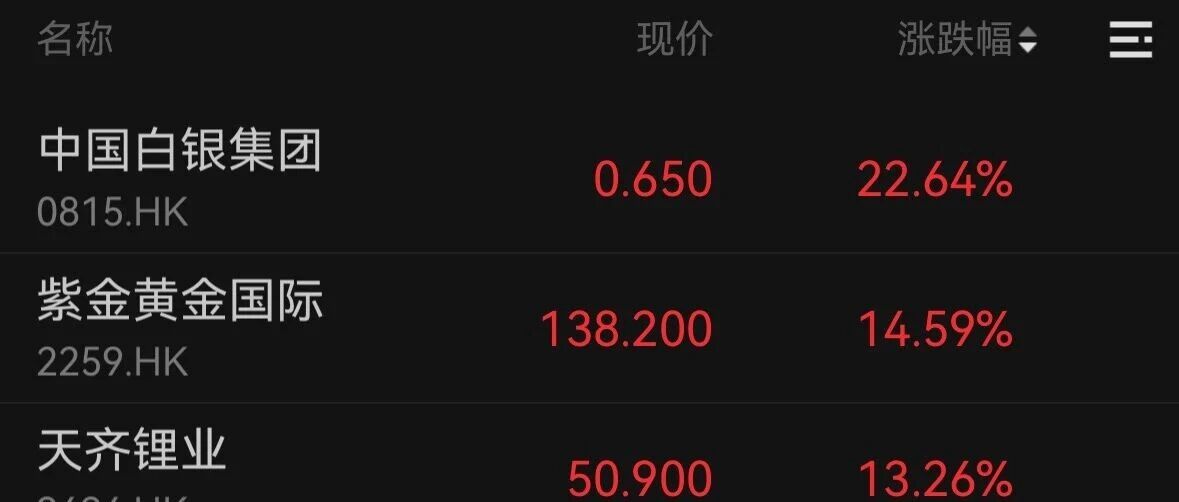
Group 1 - The article emphasizes the dominance of TSMC in the semiconductor industry, particularly in the context of GPU and ASIC production, suggesting that TSMC is the best in this field [3] - There is a mention of a potential shift towards cyclical commodities, with a public fund director indicating that the fourth quarter may enter a cyclical phase, highlighting the importance of capital market trends [9] - The article lists several companies in the cyclical commodities sector that have shown significant price increases, including China Silver Group with a rise of 22.64%, Zijin Mining International at 14.59%, and Tianqi Lithium at 13.26% [10]
百利好晚盘分析:多头大狂欢 金价再新高
Sou Hu Cai Jing· 2025-09-30 09:48
Group 1: Gold Market - The meeting between Trump and congressional leaders on September 29 raises concerns about a potential government shutdown, with over 60% probability if no agreement is reached by September 30, which could lead to a data vacuum and increased investment in gold as a safe haven [2] - The PCE price index released on the previous Friday met market expectations, reinforcing the likelihood of a Fed rate cut in October, which is a key driver for the continuous rise in gold prices [2] - Analyst Mai Dong from Bailihao believes that the rate cut cycle supports the ongoing increase in gold prices, alongside heightened risk aversion due to the potential government shutdown, leading to new historical highs for gold [2] Group 2: Oil Market - OPEC+ confirmed an increase in production by at least 137,000 barrels per day starting in November, although current production is nearly 500,000 barrels per day below targets, indicating a risk of oversupply in the market [2] - The IEA warns of a potential oversupply in global oil markets before 2026, with OPEC+ focusing on market share rather than price management due to ongoing production increases [3] - The resumption of oil exports from northern Iraq after a two-year pause may further ease supply constraints, contributing to a more pronounced short-term volatility in the oil market [3] Group 3: Economic Indicators - The U.S. Federal funds are set to run out on October 1, raising the risk of a government shutdown [5] - The European Central Bank may need to adjust its policy stance due to weak economic growth, as indicated by comments from ECB President Lagarde [3] - Upcoming key economic data includes the Chicago PMI and JOLTs job openings, which could influence market sentiment [10]
政府停摆风险下 贵金属多头格局明确
Jin Tou Wang· 2025-09-30 08:07
Market Overview - The US dollar index experienced fluctuations and fell below the 98 mark, closing down 0.24% at 97.94 due to concerns over a potential government shutdown [1][2] - Spot gold surged past the $3800 mark during Asian trading and reached a new historical high above $3830 during US trading, ultimately closing up 1.95% at $3833.76 per ounce [1][2] - Spot silver also saw an increase during Asian trading but entered a range-bound phase, closing up 1.84% at $46.91 per ounce [1][2] Economic Indicators - The National Association of Realtors reported that the existing home sales index rose by 4% in August, reaching 74.7, significantly exceeding market expectations and marking the highest level in five months [3] - Cleveland Fed President Loretta Mester indicated inflationary pressures, particularly in the service sector [3] - European Central Bank Governing Council member Gabriel Makhlouf stated that the ECB's rate-cutting cycle is nearing its end, emphasizing the need for vigilance regarding the full impact of US tariffs on EU imports [3] - Bank of Japan Policy Board member Asahi Noguchi noted that Japan is steadily moving towards its 2% inflation target, increasing the necessity for policy rate adjustments [3] Trading Strategies - The imminent risk of a US government shutdown has heightened market risk aversion, while the long-term outlook remains bullish for gold due to expected Fed rate cuts, expanding global government debt cycles, and a weakening dollar [4] - The bullish sentiment for silver is reinforced by its commodity and financial attributes, with tightening liquidity leading to potential short squeeze risks in COMEX silver contracts [4] - The Shanghai silver VIX index surged to a new high since May, indicating increased volatility in the silver market [4]
散户狂热再起,市场逼近“阶段性顶部”?
Xin Lang Cai Jing· 2025-09-29 13:08
Group 1 - The market is showing strong performance as it approaches the second-to-last trading day of the quarter, with investors ignoring a slight pullback from historical highs [1] - The Chicago Board Options Exchange Volatility Index (VIX) remains below 16, indicating a bullish sentiment among traders despite potential market catalysts in the coming days [1] - Analyst Seth Basham from Wedbush notes that investor sentiment is optimistic, supported by expectations of AI monetization and a potential interest rate cut cycle [1] Group 2 - The real estate market is showing signs of vitality, with a significant increase in refinancing activity due to declining mortgage rates, leading to a 20% rise in new home sales in August [1] - The implementation of the "One Big Beautiful Bill" tax reduction policy is expected to improve consumer spending, potentially increasing tax refund levels by at least 5% by 2026 [2] - Many sectors in the U.S. stock market, including healthcare, consumer staples, real estate, and materials, are currently valued below historical levels [2] Group 3 - Concerns about the current market resembling the internet bubble era are addressed, with Basham noting that the proportion of loss-making IPOs is below 50%, unlike the 75% seen in 1999 [2] - There have not been significant merger deals comparable to the $350 billion merger between AOL and Time Warner, which could raise concerns about value destruction [2] - The Federal Reserve's policy shift has amplified speculative behavior in the market, with a tendency towards liquidity expectations rather than fundamentals [2] Group 4 - A notable increase in high short-interest stocks has been observed, which is seen as a classic catalyst for speculative behavior, although it may not be sustainable [2] - The strong performance of high-momentum stocks reflects retail investor enthusiasm, but there are signs that this speculative surge may indicate a potential market top [2] - The acceleration of speculative bets has increased as the Federal Reserve begins to cut interest rates, although the momentum has shown signs of weakening in recent days [2]
有色钢铁行业周观点(2025年第39周):迎接金铜非线性变化的新时代-20250929
Orient Securities· 2025-09-29 08:57
Investment Rating - The report maintains a "Positive" outlook on the non-ferrous and steel industries, suggesting potential investment opportunities in these sectors [8]. Core Viewpoints - The report anticipates a new era of non-linear changes in copper and gold prices, with expectations for sustained price increases [14]. - The Grasberg mine incident is expected to significantly disrupt copper supply, enhancing the certainty of rising copper prices in the medium term [14][15]. - The report highlights that the copper smelting capacity growth is likely to slow down, which may improve smelting fees and profitability for copper smelting companies [15]. - For gold, the report emphasizes that the core pricing logic is tied to the deterioration of dollar credit in the medium term, rather than short-term interest rate expectations [16][17]. Summary by Sections 1. Non-Ferrous Metals - The report discusses the potential for copper prices to rise due to supply shortages exacerbated by the Grasberg mine incident, which could reduce copper concentrate supply by 200,000 tons in 2025 and 270,000 tons in 2026 [14]. - It notes that global demand for copper is expected to grow rapidly due to factors such as electric vehicle adoption and data center expansion [14]. - The report also mentions that the copper smelting industry is facing a "de-involution" trend, which may lead to improved smelting fees in the future [15]. 2. Steel Industry - The report indicates that steel prices are expected to find support at the bottom due to cost factors, with a potential recovery in profitability in the fourth quarter [18]. - It highlights a seasonal shift in demand, with an increase in rebar consumption by 4.96% week-on-week, although it remains down 13.71% year-on-year [24]. - The report notes that the overall steel price index has slightly decreased by 0.28%, with specific products like hot-rolled steel showing a decline of 0.65% [39]. 3. New Energy Metals - The report states that lithium production in China saw a significant year-on-year increase of 46.54% in August 2025, indicating strong supply growth in the new energy sector [43]. - It also mentions that the production and sales of new energy vehicles in China have maintained high growth rates, with August 2025 figures showing a 26.00% increase in production [47]. - The prices of lithium, cobalt, and nickel have shown an overall upward trend, reflecting strong demand in the energy metal market [54].




