AI浪潮

Search documents
最像英伟达的中国公司,要上市了
3 6 Ke· 2025-10-12 23:57
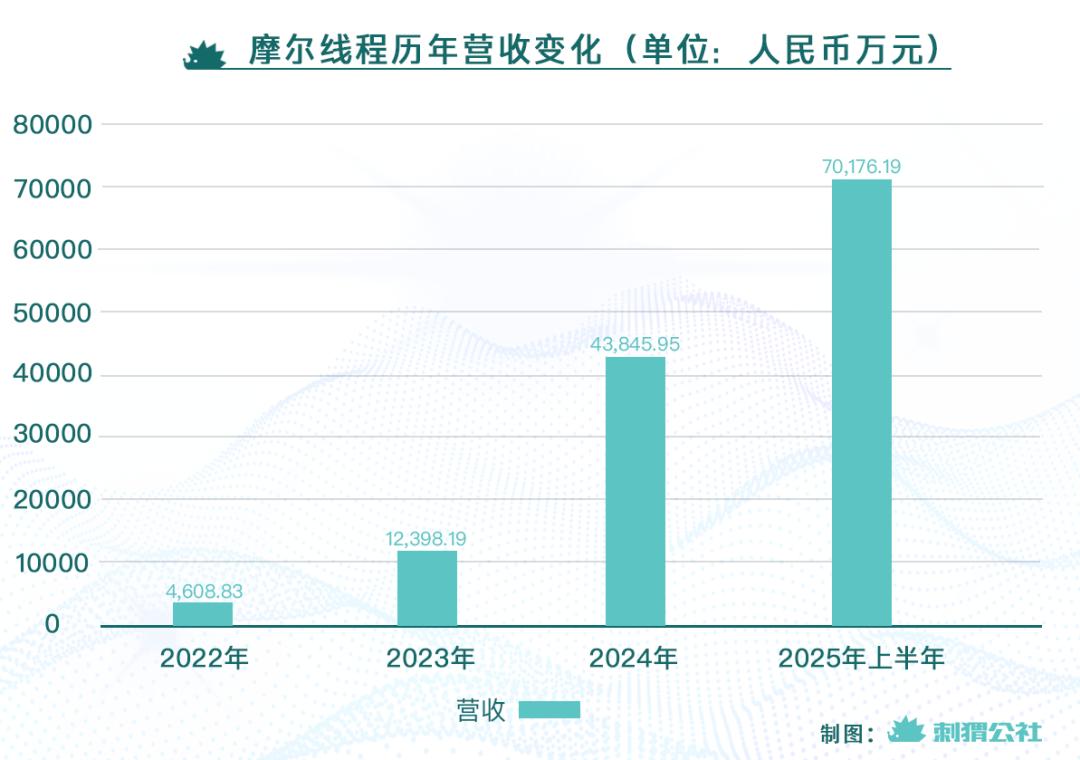
Core Insights - The article discusses the challenges and opportunities faced by the Chinese GPU company Moole Technology in the context of the domestic gaming and AI markets, particularly following the anticipated release of the game "Black Myth: Wukong" in summer 2024 [1][19]. Company Overview - Moole Technology has emerged as a key player in the Chinese GPU market, often compared to Nvidia due to its leadership team, which includes several former Nvidia executives [4][5]. - The company was founded in 2020 and has been recognized for its potential as a GPU unicorn, leveraging its team's background to gain market attention [4][5]. Financial Performance - In the first half of 2025, Moole Technology reported revenue of 702 million yuan, surpassing the total revenue from 2022 to 2024 [4]. - The company has faced significant losses, with cumulative losses exceeding 5 billion yuan, primarily due to high R&D costs and a negative cash flow situation [11][13]. Product Development - Moole Technology has been iterating its GPU architecture annually from 2021 to 2024, with product names reflecting Chinese cultural themes [5]. - The company initially focused on desktop graphics acceleration, which accounted for 71.44% of its revenue in 2022, but has since shifted towards AI computing, with AI revenue rising to 77.63% in 2024 [6][8]. Market Position and Competition - Moole Technology's market share remains below 1%, indicating a need for stronger product performance and market presence [16]. - The company faces competition not only from Nvidia but also from other domestic players like Huawei and Cambrian, which have similar technological capabilities [17][18]. Strategic Challenges - The company is experiencing a significant gap in ecosystem development compared to Nvidia, particularly in the area of parallel computing frameworks, which hampers its competitive edge [10][11]. - Moole Technology's customer base is highly concentrated, with over 98% of revenue coming from its top five clients in the first half of 2025, raising concerns about revenue stability [13]. Future Outlook - The company has set an optimistic target for profitability by 2027, although this may rely on non-recurring income and subsidies [13]. - The ongoing trend of domestic substitution in the tech industry presents opportunities for Moole Technology, but success will depend on its ability to deliver unique technological and product advantages [18][19].


管制≠禁止,锂电出口新规意味着什么?
高工锂电· 2025-10-11 10:57
Core Viewpoint - The recent export control measures on lithium battery technology and equipment by the Chinese government aim to protect core technologies and prevent disorderly overseas expansion by small enterprises, while still allowing for regulated exports through licensing [3][4][10]. Summary by Sections Export Control Measures - The announcement from the Ministry of Commerce and the General Administration of Customs includes lithium batteries, high-end anode and cathode materials, and core manufacturing equipment in the export control list for the first time [2]. - The export control does not equate to a ban; companies can still export by applying for permits, focusing on high-end technology and core equipment regulation [3][5]. Impact on the Industry - The controlled range primarily affects lithium batteries with an energy density of ≥ 300Wh/kg, which are used in high-end applications like new energy vehicles and military equipment, while conventional consumer electronics batteries are not impacted [5][6]. - Most companies currently capable of mass production at this energy density are few, meaning the short-term impact on the majority of enterprises is limited [6]. Long-term Industry Dynamics - The policy is expected to elevate compliance costs in the short term but will drive the industry towards healthier, more localized operations with greater strategic control in the long run [9][23]. - Leading companies with global operational experience may gain more stable overseas market shares and better profitability under the new regulatory framework [4][15]. Market Trends and Opportunities - China's lithium-ion battery exports reached 3 billion units with a 18.66% year-on-year increase, and export value reached $48.296 billion, up 25.79% year-on-year from January to August 2025 [11]. - The demand for energy storage in data centers is projected to grow significantly, with a forecasted market size increase of 12 times from 2024 to 2030, indicating a robust future for the battery industry [13]. Strategic Importance of Lithium Technology - Lithium technology has transitioned from an industrial advantage to a strategic national resource, reflecting its growing significance in global competition [22]. - The recent policy signals a commitment to maintaining technological advantages and extending China's lead in the lithium battery sector [12][24]. Compliance and Localization - The new regulations raise compliance thresholds, emphasizing the value of localized operations, as companies like CATL and others have established production capacities in Europe and North America [15][17]. - Companies with overseas production capabilities are better positioned to navigate the new regulatory landscape, as seen with Li Yuanheng's successful global operations [19][20]. Conclusion - The export control measures indicate a shift in the perception of lithium technology as a strategic resource, with implications for compliance costs and market dynamics [22][23]. - Companies that invest in high-end technology breakthroughs and localized operations are likely to benefit the most in the evolving landscape [25].


照明龙头跨界“押宝”芯片!时空科技拟收购存储大厂嘉合劲威控股权
Xin Lang Cai Jing· 2025-10-09 16:57
Core Viewpoint - The acquisition of Shenzhen Jiahe Jingwei Electronics Technology Co., Ltd. by Shikong Technology marks a significant strategic transformation for the company, aiming to establish a "second growth curve" in the booming semiconductor storage sector after years of poor performance in its main business of smart lighting engineering [1][2]. Group 1: Company Overview - Shikong Technology (605178.SH) is primarily engaged in smart lighting engineering and has faced continuous losses from 2021 to 2024, with a reported loss of 66.27 million yuan in the first half of 2025 [2]. - The company is seeking to acquire a controlling stake in Jiahe Jingwei through a combination of share issuance and cash payment, which is expected to constitute a major asset restructuring [1][2]. Group 2: Acquisition Details - Jiahe Jingwei, established in 2012, is recognized as one of the largest memory module manufacturers in China and has achieved significant milestones, including the mass production of the first "Chinese chip" memory bar in 2020 and DDR5 memory modules in 2021 [1][2]. - The acquisition is anticipated to provide Shikong Technology with a mature business entity that possesses comprehensive capabilities across research, production, and sales, allowing the company to enter the high-demand storage chip market [2]. Group 3: Market Context - The demand for storage is expected to surge due to the ongoing AI wave, with analysts predicting a structural supply-demand imbalance in the DRAM and NAND markets that could last for up to 10 years, potentially leading to multiple double-digit price increases in the coming quarters [2]. - Jiahe Jingwei is actively expanding, with a recent investment of 300 million yuan in a technology park project, which may enhance the future value of the acquisition [2].

先进封装玻璃基板实现技术突破 | 投研报告
Zhong Guo Neng Yuan Wang· 2025-10-09 08:28
Group 1 - The core viewpoint of the news highlights the advancements in the glass substrate sector, particularly by Hon Hai Group's subsidiary, Zhengda, which has achieved breakthroughs in CoWoS advanced packaging glass substrates and is expected to begin product deliveries in the coming years [1][2] - The SW electronic industry index increased by 2.78% during the week of September 29 to October 3, 2025, outperforming the CSI 300 index, which rose by 1.99% [2] - The top three sectors within the electronic industry index were integrated circuit manufacturing (+6.93%), integrated circuit packaging and testing (+4.50%), and digital chip design (+4.14%) [2] Group 2 - The global glass substrate market is projected to grow from $7.01 billion in 2024 to $12.33 billion by 2032, with a compound annual growth rate (CAGR) of 7.3% [4] - In China, the glass substrate market is expected to increase from 25.2 billion yuan to 36.1 billion yuan from 2020 to 2024, with a CAGR of 9.4% [4] - The market is highly concentrated, with the top three companies (Corning, Asahi Glass, and Nippon Electric Glass) holding a combined market share of 88% in 2023 [4] Group 3 - The demand for glass substrates is expected to rise due to increasing energy costs and production cuts by international giants like Corning and AGC, which will limit supply [5] - Woge Optoelectronics, a key Chinese glass substrate manufacturer, has seen its revenue grow from 604 million yuan in 2020 to 2.221 billion yuan in 2024, achieving a CAGR of 38.48% [5] - The company maintains a stable gross margin of around 20% from 2020 to the first half of 2025, driven by its focus on R&D and market-oriented business expansion [5]
一级市场变形记:各方都在“渡劫”
母基金研究中心· 2025-10-05 09:03
Core Insights - The article discusses the systemic challenges faced by the venture capital industry in China, highlighting the paradox of a seemingly recovering macro environment contrasted with the harsh realities experienced by individual entrepreneurs and investors [12][22]. Group 1: Industry Challenges - The case of an entrepreneur, referred to as Mr. Li, illustrates the personal and professional consequences of unfavorable investment agreements, particularly the "redemption rights" clause that imposes personal liability [8][21]. - There is a significant shift in the operational model of General Partners (GPs) from "raising, investing, managing, and exiting" to "raising, investing, managing, returning," indicating a focus on returning capital rather than generating returns [14][20]. - The management fees for funds have drastically decreased, with some funds now charging between 0.5% to 1.5%, reflecting a challenging fundraising environment [16][18]. Group 2: Structural Issues - The dominance of government-led funds, which account for 81.2% of total Limited Partner (LP) commitments, has fundamentally altered the investment landscape, shifting GPs' focus from maximizing returns for LPs to ensuring the preservation of state assets [20][21]. - The requirement for personal guarantees from founders has become commonplace, with over 80% of domestic venture capital agreements including such clauses, which undermines the principle of shared risk in venture capital [21][22]. - The investment decision-making process has shifted from market-driven logic to government-influenced criteria, emphasizing return on investment in specific regions rather than the inherent value of projects [26][27]. Group 3: Market Adaptation - Dollar funds are struggling to adapt to the new environment, facing challenges in fundraising and communication with local LPs due to language barriers and differing expectations [24]. - Renminbi funds have shifted their focus from traditional investment questions to those centered around return on investment and project viability in specific locations, reflecting a broader change in investment logic [26][27]. - State-owned investment institutions face unique pressures, including mandatory co-investment requirements and the burden of accountability for both losses and gains, complicating their operational landscape [28][29]. Group 4: Systemic Deficiencies - The reliance on management fees rather than performance-based compensation has created a misalignment of incentives, leading GPs to prioritize fundraising over effective investment [30][31]. - The risk-sharing model is skewed, with GPs benefiting from successful investments while founders bear the brunt of failures, creating a high-risk environment for entrepreneurs [31][32]. - The contradiction between the need for certainty in government policies and the inherent uncertainty of innovation hampers the growth of truly innovative enterprises [35][36]. Group 5: Opportunities for Transformation - The current challenges may present opportunities for capable participants to emerge, as the industry shifts back to its core purpose of value creation and supporting innovative companies [38][39]. - The trend of Chinese companies expanding overseas is gaining momentum, with a 25% year-on-year increase in the number of companies going abroad in the first half of 2025, offering new investment avenues [40]. - The rise of AI and other technological advancements presents structural investment opportunities, requiring GPs to possess strong technical and industry insights to identify valuable projects [41][42]. Group 6: Future Directions - The article emphasizes the need for a shift from a focus on financial returns to a commitment to fostering innovation and supporting the growth of promising enterprises [45][46]. - The narrative suggests that the future of the venture capital market will belong to those who can create genuine value and adapt to the evolving landscape, moving away from purely financial motivations [49].

新易盛 公告!
Zhong Guo Ji Jin Bao· 2025-10-01 08:13
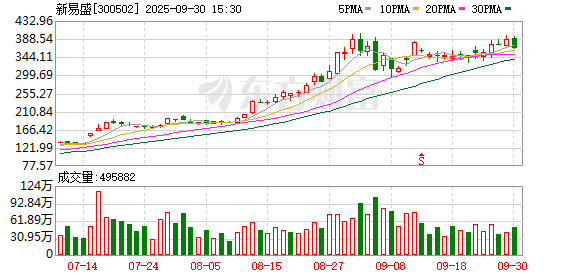
Core Viewpoint - The controlling shareholder of Xinyi Technology, Gao Guangrong, plans to transfer 1.15% of the company's shares through a pricing inquiry due to personal funding needs, primarily to support investments in cutting-edge technology related to new productivity [2][3]. Shareholder Information - Gao Guangrong currently holds 73,445,383 shares, representing 7.39% of the total share capital of Xinyi Technology [3]. - The planned transfer involves 11,430,682 shares, which is 1.15% of the total share capital and 15.56% of Gao's holdings [4]. - Gao has committed not to reduce his shareholding through the secondary market for 12 months following the completion of the transfer [5]. Transfer Pricing and Conditions - The minimum transfer price is set at 70% of the average stock trading price over the 20 trading days prior to sending the subscription invitation [6]. - The transferee must be an institutional investor with appropriate pricing capabilities and risk tolerance [6]. Company Performance - Xinyi Technology has shown remarkable performance, with projected revenue of 8.647 billion in 2024, a year-on-year increase of 179.15% [9]. - Net profit for 2024 is expected to increase by 312.26%, with a further increase of 355.68% anticipated in the first half of 2025 [9]. - The stock price has surged from 11.62 yuan at the end of 2022 to a peak of 401.1 yuan by September 2, 2025, representing a maximum increase of over 30 times in less than three years, with a rise of over 300% this year [9]. Market Drivers - The growth in Xinyi Technology's performance is primarily driven by the surge in demand for optical modules due to the AI wave, with significant capital expenditures from global cloud providers and increased demand for NVIDIA GPU chips [9].

高频高速树脂:AI浪潮推动高频高速树脂国产替代、量价齐升
2025-09-28 14:57
Summary of Key Points from Conference Call on High-Frequency and High-Speed Resins Industry Overview - The high-frequency and high-speed resin industry is driven by the demand for high-frequency copper-clad laminates (CCL) due to advancements in 5G, automotive intelligence, and cloud computing [1][2][13] - High-frequency and high-speed resins include materials such as PPO, bismaleimide resin, PTFE, hydrocarbon resins, and benzoxazine, which are designed to improve dielectric performance [1][4] Core Insights and Arguments - High-frequency CCLs are becoming mainstream, replacing traditional CCLs due to their superior signal transmission capabilities and lower dielectric loss [2][5] - The Panasonic M series PCB substrates are highlighted as industry-leading products, with the latest M8 generation achieving a DF value as low as 0.012, suitable for routers, switches, and AI servers [1][5] - Domestic suppliers like Dongcai Technology and Shengquan Group are actively expanding their production capacities for high-frequency and high-speed resins [3][10][11] Key Product Features - High-frequency resins are characterized by their low dielectric constant and loss, making them suitable for applications in base stations, satellite communication antennas, and automotive radar systems [2][4] - The main types of high-frequency and high-speed resins include PPO, PTFE, and hydrocarbon resins, which have been specially designed to minimize polar groups and enhance dielectric performance [4][8] Market Dynamics - The market for high-frequency and high-speed CCLs is expected to grow significantly, driven by the increasing requirements for signal integrity and transmission speed in electronic products [2][13] - Major international suppliers of electronic-grade hydrocarbon resins include Arkema, Koden, and Asahi Kasei, while domestic suppliers include Shimin Technology and Dongcai Technology [9] Company Developments - Dongcai Technology is investing in the development of specialty resins and electronic resin materials for high-speed communication substrates, with production expected to start in 2026 [3][10] - Shengquan Group is expanding its production capacity for various electronic chemicals, including hydrocarbon resins, with plans for new facilities [3][11] - Meiyuan New Materials is focusing on high-frequency applications through acquisitions and product development, particularly in the production of olefin monomers for CCLs [12] Future Trends - The AI wave is expected to drive the development of the high-frequency and high-speed industry, providing opportunities for domestic companies with strategic positioning, such as Dongcai Technology and Shengquan Group [13]
聚辰股份(688123):VPD驱动新增长
China Post Securities· 2025-09-26 07:39
Investment Rating - The report maintains a "Buy" rating for the company [1] Core Insights - The demand for VPD chips is driven by the upgrade of SSD interfaces and technological iterations, with a shift from SATA to PCIe and NVMe standards enhancing SSD performance [4] - The AI wave is creating incremental demand in the DDR5 SPD market, as AI servers require significantly more memory modules compared to traditional servers, thus injecting new growth momentum [5] - The company has rapidly increased its market share in the automotive-grade EEPROM sector, successfully introducing products to major global automotive electronics suppliers [7] Company Overview - Latest closing price: 131.96 CNY - Total shares: 1.58 billion; Total market value: 20.9 billion CNY - 52-week high/low: 131.96 CNY / 47.23 CNY - Debt-to-asset ratio: 6.2% - Price-to-earnings ratio: 71.72 [3] Financial Projections - Expected revenues for 2025-2027 are 1.38 billion, 1.80 billion, and 2.32 billion CNY respectively, with net profits of 0.45 billion, 0.63 billion, and 0.86 billion CNY [8] - Revenue growth rates are projected at 34.22%, 30.52%, and 28.86% for the years 2025, 2026, and 2027 respectively [10] - The company is expected to maintain a gross margin of approximately 57.5% to 57.8% over the forecast period [13]

深夜暴涨,芯片重大利好
Zheng Quan Shi Bao· 2025-09-23 23:19
Group 1 - Major semiconductor companies, including TSMC, Samsung, Micron, and SanDisk, have announced price increases for their products, reflecting the strong demand driven by the AI wave and data center construction [1][3] - TSMC plans to raise prices for its 3nm and 2nm process nodes, with the 2nm process expected to see a price increase of at least 50% compared to the 3nm process, significantly exceeding market expectations [2][3] - The price hikes in memory chips include a 30% increase for DRAM products and a 5% to 10% increase for NAND flash products from Samsung, driven by supply constraints and surging demand from cloud enterprises [3] Group 2 - TSMC's strong pricing strategy highlights its dominant position in the supply chain, with major clients like Apple and Nvidia relying on its advanced process technologies for their next-generation chips [3] - The stock prices of major memory chip manufacturers, including Samsung and SK Hynix, have risen in response to the price increases, indicating a positive market reaction [3] - The overall performance of the US stock market remains mixed, with major tech stocks experiencing declines, while semiconductor stocks show strength due to the price increase announcements [3]

深夜,暴涨!芯片重大利好!
券商中国· 2025-09-23 15:06
Core Viewpoint - The recent price increase in the semiconductor industry, led by TSMC, reflects the deep impact of the AI wave on the semiconductor supply chain, with rising demand for data center construction driving up memory procurement and enhancing the bargaining power of chip suppliers [1][6]. Group 1: TSMC's Price Increase - TSMC plans to raise prices for its 3nm and 2nm process nodes, with the 2nm process expected to see a price increase of at least 50% compared to the 3nm process, significantly exceeding market expectations [3][4]. - TSMC's strong pricing strategy indicates its dominant position in the supply chain, as it faces high R&D costs and superior yield rates compared to competitors [4]. Group 2: Impact on Other Chip Manufacturers - Major memory chip manufacturers, including Samsung and Micron Technology, have also announced price hikes, with DRAM prices increasing by up to 30% and NAND flash prices rising by 5% to 10% due to supply constraints and surging demand from cloud enterprises [6][7]. - Micron Technology has reported price increases of 20% to 30% for its storage chip products and has paused accepting new orders [6]. Group 3: Market Reactions - Following the price increase announcements, TSMC's ADR surged nearly 5% at one point, reaching a historical high, while other semiconductor stocks like Intel and Micron also saw significant gains [2][3]. - In the Asian trading session, shares of major memory chip companies like Samsung and SK Hynix rose, reflecting positive market sentiment [7].