
公平竞争

Search documents
民营经济促进法公布三个月 多地启动配套地方性法规立修工作
Di Yi Cai Jing· 2025-07-30 14:22
Core Viewpoint - The implementation of the Private Economy Promotion Law has prompted various provinces and regions in China to advance local legislative efforts to support private economic development, emphasizing fair competition and the protection of private enterprises' rights [1][2][10]. Group 1: Legislative Developments - Multiple provinces, including Jiangsu, Henan, Shandong, and Fujian, are actively drafting or revising local regulations to align with the Private Economy Promotion Law [1]. - The draft regulations from Jiangsu and Fujian were submitted for review on July 28, while Henan and Shandong have released drafts for public consultation [1]. - Zhuhai Special Economic Zone is revising its existing regulations from 2016 to enhance support for the private economy [1]. Group 2: Fair Competition Principles - Local regulations emphasize the principles of "equal treatment" and "fair competition," reiterating the importance of a unified market access negative list and fair competition review systems [2]. - The draft from Shandong includes specific provisions for fair competition, addressing areas such as equal access, government procurement, and anti-monopoly measures [2]. - The Fujian draft also mandates equal rights for private enterprises in accessing resources and financing, prohibiting discriminatory practices by financial institutions [3]. Group 3: Rights Protection Mechanisms - The drafts aim to enhance the implementation of rights protection mechanisms for private enterprises, particularly regarding accounts receivable [4]. - Shandong's draft specifies that state-owned enterprises must not impose non-cash payment methods on private enterprises, while Henan's draft sets a payment deadline of 30 days for government entities [4][5]. - The regulations also include provisions to protect small and medium-sized enterprises from unfair payment terms [5]. Group 4: Administrative and Legal Oversight - The law prohibits the misuse of administrative or criminal measures to interfere with economic disputes and establishes guidelines for cross-regional law enforcement [6][7]. - Local drafts detail the requirements for cross-regional enforcement, including prior written notice to local authorities and adherence to legal procedures [7]. - The Shandong draft outlines responsibilities for compensating damages caused by improper handling of seized assets [7]. Group 5: Legal Responsibilities and Supervision - Local regulations clarify legal responsibilities regarding illegal fees and fines imposed on private enterprises, with provisions for corrective actions and compensation for losses [8]. - Jiangsu's draft includes measures for enhancing oversight of local government actions related to private economic development [9]. - The ongoing legislative efforts across various provinces indicate a commitment to strengthening the legal framework supporting private enterprises [10].
民营经济促进法公布三个月,多地启动配套地方性法规立修工作
Di Yi Cai Jing· 2025-07-30 10:52
Core Viewpoint - Local regulations are being developed to complement and refine the recently implemented Private Economy Promotion Law (民促法), with various provinces and regions actively working on legislative initiatives to support the private sector [1][10]. Group 1: Legislative Developments - Provinces such as Jiangsu, Henan, Shandong, and Fujian are advancing local regulations that align with the principles of the Private Economy Promotion Law [1][10]. - Drafts for local regulations have been submitted for review, with public consultations ongoing in Henan and Shandong [1][2]. - The Zhuhai Special Economic Zone is revising its existing regulations to enhance support for the private economy [1]. Group 2: Fair Competition Principles - Local regulations emphasize the principles of "equal treatment" and "fair competition" as outlined in the Private Economy Promotion Law [2]. - Specific provisions for fair competition have been included in the drafts, addressing market access, public procurement, and financing services [2][3]. Group 3: Rights Protection - Local drafts aim to enhance the implementation of rights protection mechanisms for private enterprises, particularly regarding payment collection [4][5]. - Regulations specify that government entities must pay private enterprises promptly and cannot impose unreasonable payment conditions [4][5]. Group 4: Legal Responsibilities and Oversight - Local regulations are clarifying legal responsibilities related to fees and penalties imposed on private enterprises, ensuring accountability for violations [8][9]. - Oversight mechanisms are being strengthened, allowing local people's congresses to monitor the implementation of laws promoting the private economy [9]. Group 5: Ongoing Legislative Efforts - Additional provinces like Shaanxi, Anhui, and Tianjin are also initiating local legislative efforts to align with the Private Economy Promotion Law [10].
金十期货整理 | “反内卷”预期推动大宗商品价格反弹,最近进展如何?(7月30日)
news flash· 2025-07-30 06:40
Group 1 - The Ministry of Industry and Information Technology (MIIT) proposed to strengthen the regulation of "involution" competition in the automotive industry to maintain a fair and orderly market environment [1] - The revised Anti-Unfair Competition Law will take effect on October 15, 2025, aiming to address issues of unfair competition [1] - The Central Economic Committee emphasized the need to govern low-price and disorderly competition in enterprises [1] Group 2 - The MIIT plans to introduce a growth stabilization plan for ten key industries, including steel, non-ferrous metals, petrochemicals, and building materials, focusing on structural adjustments and eliminating outdated production capacity [2] - A meeting was held to further regulate the competitive order in the new energy vehicle industry [2] - The National Energy Administration announced a verification of coal mine production due to disruptions caused by some companies exceeding announced production capacities [2] Group 3 - The Guangdong Paper Industry Association issued an initiative to resist low-price disorderly competition and maintain market fairness [3] - A national meeting emphasized the need to strengthen governance in key industries like photovoltaics and to enhance the national standard system in the industrial and information sectors [3] - The Political Bureau of the Central Committee highlighted the importance of promoting a unified national market and optimizing market competition order [3]
江苏就促进民营经济专门立法让竞争更公平准入更平等,涉企检查执法更规范
Xin Hua Ri Bao· 2025-07-28 23:01
Group 1 - The core viewpoint of the news is the legislative effort in Jiangsu Province to promote the development of the private economy through the draft of the "Jiangsu Province Private Economy Promotion Regulations," which aims to create a favorable environment for growth by protecting fair competition and optimizing resource allocation [1][2] - The draft regulations respond to challenges faced by the private economy in Jiangsu, emphasizing the need for institutional guidance to stimulate market vitality and high-quality development [1] - The regulations include provisions to eliminate entry barriers in various industries, addressing local protectionism and hidden barriers to ensure a unified national market [1][2] Group 2 - The draft encourages equal treatment of private capital in participating in mixed-ownership reforms of state-owned enterprises and ensures that private economic organizations can access public services and resources on an equal basis [2] - It outlines mechanisms for optimizing resource allocation, including standardized industrial land supply, financing support from local governments, and collaboration with educational institutions for talent development [2] - The draft emphasizes the protection of the legal rights of private economic organizations, requiring local governments to enhance oversight of payment issues and prevent unlawful interference in economic disputes [3]
五粮液“守护名酒价值·倡导公平竞争” 主题沙龙在蓉成功举办
Zhong Jin Zai Xian· 2025-07-27 01:40
Core Viewpoint - The event organized by Wuliangye focuses on intellectual property protection and fair competition in the Chinese liquor industry, responding to the new Anti-Unfair Competition Law and addressing challenges in the sector [1][3]. Group 1: Event Overview - The intellectual property protection seminar was held on July 25 at the Chengdu Taihe Tai Legal Service Center, gathering experts from the judiciary, academia, legal profession, and the liquor industry [1]. - The seminar aimed to discuss key issues related to intellectual property protection and fair competition in the context of the new Anti-Unfair Competition Law [1][3]. Group 2: Legislative Context - The revised Anti-Unfair Competition Law, effective in 2025, introduces a three-dimensional protection system comprising "mark protection + behavior regulation + ecological maintenance" [3]. - Companies are encouraged to enhance intellectual property management through identification rights, technical prevention, and compliance review, while also being aware of legal risks in new scenarios such as algorithm recommendations and cross-border competition [3]. Group 3: Industry Challenges - Experts discussed legal boundaries of "involution-style" low-price competition and paths for protecting against imitation packaging and decoration [3]. - The new law is expected to help companies more effectively combat infringement behaviors that exploit brand reputation, thereby maintaining a healthy industry development ecosystem [3]. Group 4: Future Initiatives - Wuliangye plans to continue strengthening intellectual property protection efforts and collaborate with various stakeholders to build a fair market environment [5]. - The company will hold a series of legal seminars in cities like Shanghai and Henan to demonstrate its commitment to leading the healthy development of the industry [6].



强化法治保障 治理低价无序竞争
Jing Ji Ri Bao· 2025-07-24 22:27
Group 1 - The revision of the Price Law is necessary and urgent to respond to the increasing demands for fairness, transparency, and justice in market activities, particularly in the context of unfair pricing behaviors like low-price dumping [2][3] - The government plays a crucial role in regulating pricing behaviors, especially in cases of market failure, such as low-price dumping, which disrupts normal business operations and harms the interests of other operators [3][4] - Strengthening the legal framework of the Price Law is essential for promoting high-quality economic development and ensuring that market prices accurately reflect supply and demand signals [4][5] Group 2 - Establishing a robust price regulation system is vital to curb unfair pricing practices, ensuring that pricing reflects market conditions and production costs [5][6] - The revision of the Price Law includes clearer definitions of unfair pricing behaviors, particularly low-price dumping, which is now explicitly categorized as an unfair pricing practice [5][6] - Promoting self-discipline and integrity among operators is crucial for maintaining fair competition, with the Price Law emphasizing the importance of honesty and trustworthiness in pricing activities [6][7]
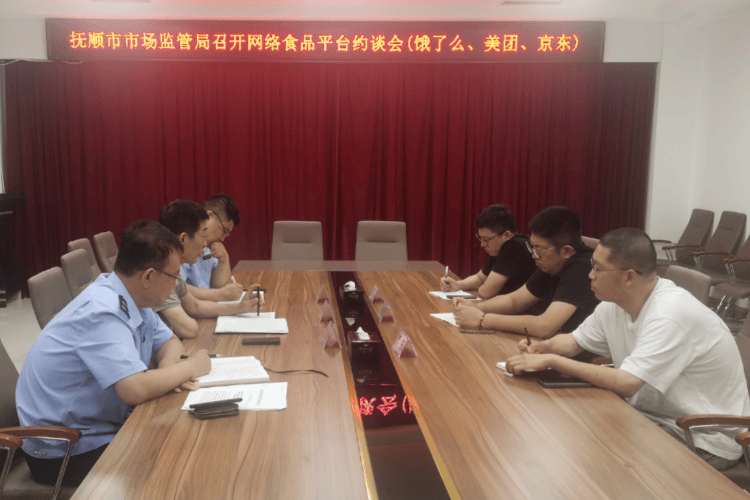
多地市场监管部门约谈外卖平台,要求停止恶性竞争行为
Sou Hu Cai Jing· 2025-07-23 14:33
Group 1 - The State Administration for Market Regulation (SAMR) has conducted administrative talks with major food delivery platforms including Ele.me, Meituan, and JD.com, urging them to standardize promotional activities and engage in rational competition [2][3] - Local market regulation departments, such as Zhengzhou and Fushun, have echoed SAMR's calls, focusing on compliance in various aspects including merchant qualification audits, food safety management, and consumer rights protection [2][3] - Zhengzhou's market regulation bureau has specifically prohibited deceptive pricing practices, requiring clear labeling of product specifications and pricing, as well as transparency in platform fees [2] Group 2 - Fushun's market regulation bureau emphasized the importance of fair competition, urging platforms to cease price wars and focus on service quality and food safety [3] - The Shanghai market regulation department has also intervened, leading to the suspension of "zero-yuan purchase" promotions and a reduction in free meal marketing, while platforms have committed to enhancing monitoring and price control [4] - Platforms are required to adhere strictly to regulations during promotions to ensure transaction authenticity and commercial reasonableness [4]


新修订的反不正当竞争法回应“内卷式”竞争、网络不正当竞争行为等新问题——保护公平竞争激发市场活力(坚持和完善人民代表大会制度)
Ren Min Ri Bao· 2025-07-21 22:01
Core Viewpoint - The newly revised Anti-Unfair Competition Law of the People's Republic of China aims to enhance fair competition and regulate market order, particularly addressing new issues arising from the digital economy and internet industry [1][2] Group 1: Key Highlights of the Revised Law - The law has been amended three times since its initial implementation in 1993, with the latest revision set to take effect on October 15, 2023 [1] - The revision specifically targets online unfair competition behaviors, such as false reviews and malicious returns, which have become prevalent in e-commerce [3][4] - The law now includes provisions against data rights infringement and malicious transactions, detailing various forms of unfair competition [4][5] Group 2: Addressing "Involution" in Competition - The law recognizes "involution" as a harmful competitive practice where businesses engage in excessive competition without overall profit growth, leading to resource misallocation [7][8] - It establishes a fair competition review system to ensure equal access to production factors and market participation for all businesses [8][9] - The law aims to shift the focus from low-cost, low-quality competition to innovation and high-quality development [8][9] Group 3: Regulation of Price Wars - The law addresses the issue of price wars initiated by platforms, which can lead to unsustainable business practices and harm consumer rights [10][11] - It prohibits platform operators from forcing or indirectly compelling businesses to sell products below cost, thereby disrupting market order [11] - The law encourages platforms to adopt long-term strategies that prioritize innovation and fair competition rather than short-term gains through aggressive pricing [11]
聚焦一体化与高质量 长三角三省一市共建全国统一大市场先行区
Zhong Guo Chan Ye Jing Ji Xin Xi Wang· 2025-07-18 23:05
Core Viewpoint - The meeting held on July 11, 2025, in Nanjing focused on the collaborative efforts of the Yangtze River Delta region to enhance market regulation and build a unified national market, showcasing significant progress in cross-regional cooperation and regulatory mechanisms [1][2]. Group 1: Achievements and Initiatives - The Yangtze River Delta region has implemented over 170 high-frequency government services and applications for cross-province "one-stop" services, with 40 types of high-frequency electronic certificates recognized across provinces [2]. - A total of 6.98 billion data entries have been collected in the regional business entity database, with data update cycles reduced from monthly to daily [2]. - Six new cooperation agreements were signed, including those focused on platform economy innovation and integrated risk warning in credit regulation, indicating a commitment to further regulatory integration [5][6]. Group 2: Future Plans - The region aims to deepen fair competition reforms, enhance anti-monopoly enforcement collaboration, and promote a unified regulatory framework across the four areas [3][4]. - There is a focus on standardizing quality support and leading standards in key industries such as biomedicine and artificial intelligence, as well as developing green and low-carbon standards [3]. - The initiative includes enhancing digital collaboration and data sharing to improve regulatory efficiency and create impactful application scenarios [3][4]. Group 3: Consumer Environment and Safety - The Yangtze River Delta region plans to enhance consumer protection by implementing a three-year action plan to optimize the consumer environment, including the establishment of "trustworthy" stores and markets [7][8]. - Strengthening food safety regulations through cross-regional inspections and monitoring is a priority, ensuring consumer health and safety [7][8].
上半年经济数据出炉,哪些趋势值得关注?
Zhong Guo Fa Zhan Wang· 2025-07-16 08:50
Economic Performance - China's GDP for the first half of 2025 reached 66,053.6 billion yuan, showing a year-on-year growth of 5.3% at constant prices [1] Consumer Trends - There is a growing demand for higher quality green and low-carbon products, as well as active consumption in entertainment, sports, and tourism [2] - Retail sales of consumer goods increased by 5.0% year-on-year, while service retail sales grew by 5.3% [2] - Service consumption expenditure accounted for approximately 45% of residents' disposable income, indicating an ongoing optimization of consumption structure [2] Trade and Supply Chain - China's economic momentum is strengthening, driven by industrial structure upgrades and the development of the digital economy, creating new opportunities [3] - China's export growth is supported by supply stability and resilience, indicating potential for continued stable growth in foreign trade [3] Financial Support - The cost of funds has been decreasing, with the weighted average interest rate for interbank RMB market lending dropping from 1.86% in January to 1.46% in June [4] - The weighted average interest rate for pledged repos fell from 2.16% in January to 1.5% in June, supporting the stability of the real economy [4] Real Estate Market - The decline in nominal mortgage rates has led to a recovery in real estate sales and prices, with a positive outlook for major cities [5] - Policies aimed at stabilizing expectations and activating demand in the real estate sector are being effectively implemented [5] Competition and Market Dynamics - It is crucial to distinguish between fair competition and "involutionary competition," as the latter distorts market price signals and leads to unfavorable outcomes [6] - The role of industry associations is emphasized in regulating unfair competition and enhancing effective demand [6] Economic Outlook - The long-term positive fundamentals of the economy remain unchanged, with confidence in achieving annual economic growth targets [7] - The second half of the year is expected to show stronger trade performance due to consumer promotions and significant holidays [7] - If GDP growth maintains around 5% in the second half, the annual growth rate could exceed 5%, slightly above the government's initial target [7]