
绿水青山就是金山银山

Search documents
“绿水青山就是金山银山”
Bei Jing Ri Bao Ke Hu Duan· 2025-10-19 21:17
Core Concept - The article emphasizes the importance of the concept "Lucid waters and lush mountains are invaluable assets," which integrates economic development with ecological protection, advocating for a harmonious coexistence between humans and nature [2][5][11]. Group 1: Principles of Ecological Civilization - The principle of "Lucid waters and lush mountains are invaluable assets" is a major guideline for socialist modernization, highlighting the need to balance development with ecological protection [3][5]. - Xi Jinping's ecological civilization thought provides direction and fundamental adherence for promoting beautiful China and achieving modernity in harmony with nature [4][11]. Group 2: Historical Context and Development - Since the 18th National Congress, Xi Jinping has repeatedly stressed the significance of ecological protection, stating that ecological prosperity leads to civilizational prosperity [3][5]. - The "Thousand Villages Demonstration, Ten Thousand Villages Renovation" project initiated in 2003 has achieved significant results, recognized internationally for its sustainable development approach [10][11]. Group 3: Implementation and Practice - The implementation of the "Lucid waters and lush mountains" principle has led to the establishment of numerous ecological civilization demonstration cities and innovation bases across the country, providing valuable experiences for other regions [11]. - Xi Jinping's emphasis on afforestation and ecological restoration reflects a commitment to enhancing the ecological environment as a foundation for sustainable development [6][7].

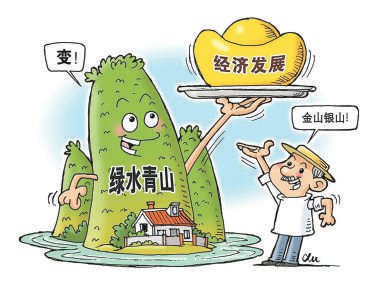
驻华使节浙江行:绿水青山间看发展新篇
Xin Hua She· 2025-10-18 23:24
10月14日至18日,来自19个国家和国际组织的22位驻华使节、外交官及代表,应外交部邀请在浙江杭州、绍兴、宁波三地参访,领略"绿水青山就 是金山银山"理念的发展新篇。 十月的杭州西湖,垂柳拂堤,梧桐掩映。沿湖西行,群山环抱中的外桐坞村桐坞书院,是此行目的地之一。 10月15日,驻华使节在杭州外桐坞村向村民学习中国画。新华社记者 翁忻旸 摄 "画法有聚散、有浓淡。"村民厉萍手把手带领格林纳达驻华使馆一等秘书特里西娅体验绘制国画牡丹。 白墙黛瓦依傍茶山,木质雕花建筑错落而立,移步间可见墙面题字彩绘作品……这里是传统西湖龙井茶主产区,也是依托美院高校资源、与村民 共建的新兴文化旅游艺术村。 步入茶山凉亭品茗休憩,走进村中美术馆欣赏展陈,津巴布韦驻华大使馆公使衔参赞潘迪赛·马耶拉对茶香古韵与艺术产业之美印象深刻:"这座 百年古村既保留传统韵味,又焕发着现代和艺术气息,让我看到中国乡村发展古今交融。" "新建楼房是否都加装电梯?""光储一体化电力驿站对村民有什么好处?""村里小学这么好,对外招生吗?"宁波下应街道湾底村把村庄整治与发 展经济结合,去年村集体经济收入超5000万元。农商旅特色产业并进的亮眼实践成果,令使 ...

省委常委会召开会议 传达学习习近平总书记重要讲话精神 研究林长制和林草工作等事项
Da Zhong Ri Bao· 2025-10-18 00:35
Core Points - The meeting emphasized the importance of implementing Xi Jinping's speeches and writings on women's and children's issues, family education, and family values, aiming to enhance the role of women and promote high-quality development in women's affairs in the province [2] - The meeting also focused on deepening international cooperation in technology, industry, and trade, while exploring effective paths for participating in global governance to contribute to building a community with a shared future for mankind [2] - The meeting reviewed the first volume of Xi Jinping's Ecological Civilization writings, stressing the need to uphold the concept that "lucid waters and lush mountains are invaluable assets" and to enhance the protection of forest and grassland resources [2] Summary by Categories Women's Affairs - The meeting called for the promotion of women's roles and the protection of their legal rights, alongside the reform and innovation of women's federations [2] - It highlighted the need to carry forward the spirit of the Beijing World Conference on Women and to enhance family education and values [2] International Cooperation - The meeting underscored the importance of implementing major decisions from the central government regarding foreign affairs and international collaboration [2] - It aimed to strengthen cultural exchanges and local friendly relations while exploring new avenues for high-level openness [2] Ecological Development - The meeting reviewed Xi Jinping's ecological civilization thoughts, emphasizing the importance of resource protection and sustainable development in forestry and grassland industries [2] - It called for the implementation of collective forest rights reform and accountability in ecological work [2]
让冷资源“热”起来
Ren Min Ri Bao· 2025-10-17 04:35
Core Insights - Qinghai Province is transforming its agricultural landscape by leveraging its cold climate to develop a thriving "cold economy," particularly in the production of cold-resistant vegetables and fish exports, with a projected export value exceeding 300 million yuan in 2024, marking a nearly 12-fold increase year-on-year [1] Group 1: Agricultural Development - The cold climate in Qinghai, characterized by an average temperature of only 3.4 degrees Celsius, is conducive to the growth of cold-resistant vegetables, which thrive in high-altitude regions between 2000 to 2800 meters [1] - The region's unique climatic conditions, including ample sunlight and significant temperature fluctuations, enhance the quality of agricultural products by reducing pest occurrences and minimizing pesticide use [1][2] - The establishment of a "Huangzhong Cold Vegetable" brand in Xining's Huangzhong District has benefited over 20,000 farmers, showcasing the potential of localized agricultural branding and industry development [2] Group 2: Economic Transformation - The development of the cold economy in Qinghai exemplifies the effective utilization of natural resources through innovative agricultural practices and technology, such as breeding new vegetable varieties suited for high-altitude conditions [2] - The success of cold-resistant vegetable production in Qinghai serves as a model for other regions, demonstrating how to convert ecological advantages into economic benefits while maintaining environmental integrity [2][3] - The emphasis on ecological protection and sustainable development in Qinghai highlights the strategic importance of balancing economic growth with environmental stewardship, reinforcing the principle that "green mountains and clear waters are as valuable as mountains of gold and silver" [2]
淅川石漠化综合治理案例入选北大县域治理创新优秀案例
Zhong Guo Jing Ji Wang· 2025-10-17 03:03
Core Insights - The article highlights the recognition of Xichuan County's innovative governance model in ecological management, specifically its comprehensive approach to combating stoniness and promoting green development, which has been selected as one of the top 50 innovative governance cases in China [1][2]. Group 1: Governance and Strategy - Xichuan County has implemented the "Ecological County" strategy, focusing on water quality protection and green development, which aligns with the philosophy that "lucid waters and lush mountains are invaluable assets" [2]. - The governance model emphasizes collaboration among government, departments, society, and technology, creating a comprehensive management framework for ecological protection [2]. Group 2: Achievements and Progress - Over the past decade, Xichuan County has completed over 600,000 acres of artificial afforestation, successfully addressing all stoniness issues within the county [2]. - The forest coverage rate around the reservoir has increased from 45.7% at the end of the 12th Five-Year Plan to 61.7%, showcasing significant ecological improvement [2]. Group 3: Future Plans - Xichuan County aims to further advance land greening efforts and integrate comprehensive management of mountains, waters, forests, fields, lakes, grasslands, and deserts to enhance ecological safety [2].
集体林权制度改革|福建:“三多”妙笔写活山林文章
Zhong Guo Zi Ran Zi Yuan Bao· 2025-10-17 02:46
Core Viewpoint - The collective forest rights system reform is a significant initiative personally planned and promoted by General Secretary Xi Jinping, aiming to enhance ecological product value realization and improve the livelihoods of rural residents through innovative forest rights systems [1][4]. Group 1: Reform Implementation - Fujian, Jiangxi, and Chongqing are leading regions in the collective forest rights system reform, focusing on the implementation of the "Deepening Collective Forest Rights System Reform Plan" [1]. - The reform aims to achieve a balance between ecological protection and economic development, with Fujian province showcasing successful experiences and outcomes [4][6]. Group 2: Economic Impact - In 2024, the total output value of the forestry industry in Fujian reached 812.1 billion, marking a 6.1% year-on-year increase, positioning it among the top in the country [8]. - The province has the largest bamboo forest area and annual bamboo shoot production in the nation, with over 180 million people engaged in the under-forest economy [8]. Group 3: Innovative Practices - The introduction of the "forest ticket" system in Sanming City allows residents to earn income without cutting down trees, effectively addressing financing and resource realization challenges in forestry [10][11]. - Fujian has initiated a "three-multiple" reform pilot program to enhance benefits, operations, and services in the collective forest rights system, resulting in significant reform achievements [13]. Group 4: Environmental and Social Benefits - Since 2002, Fujian has completed afforestation of over 42.7 million acres, increasing forest coverage by 4.6 percentage points to 65.12%, maintaining the highest rate in the country for 46 consecutive years [17]. - The income of farmers in Fujian reached an average of 28,500 yuan in 2024, with forestry-related income accounting for about one-fifth of total income for farmers in key forest areas [17].
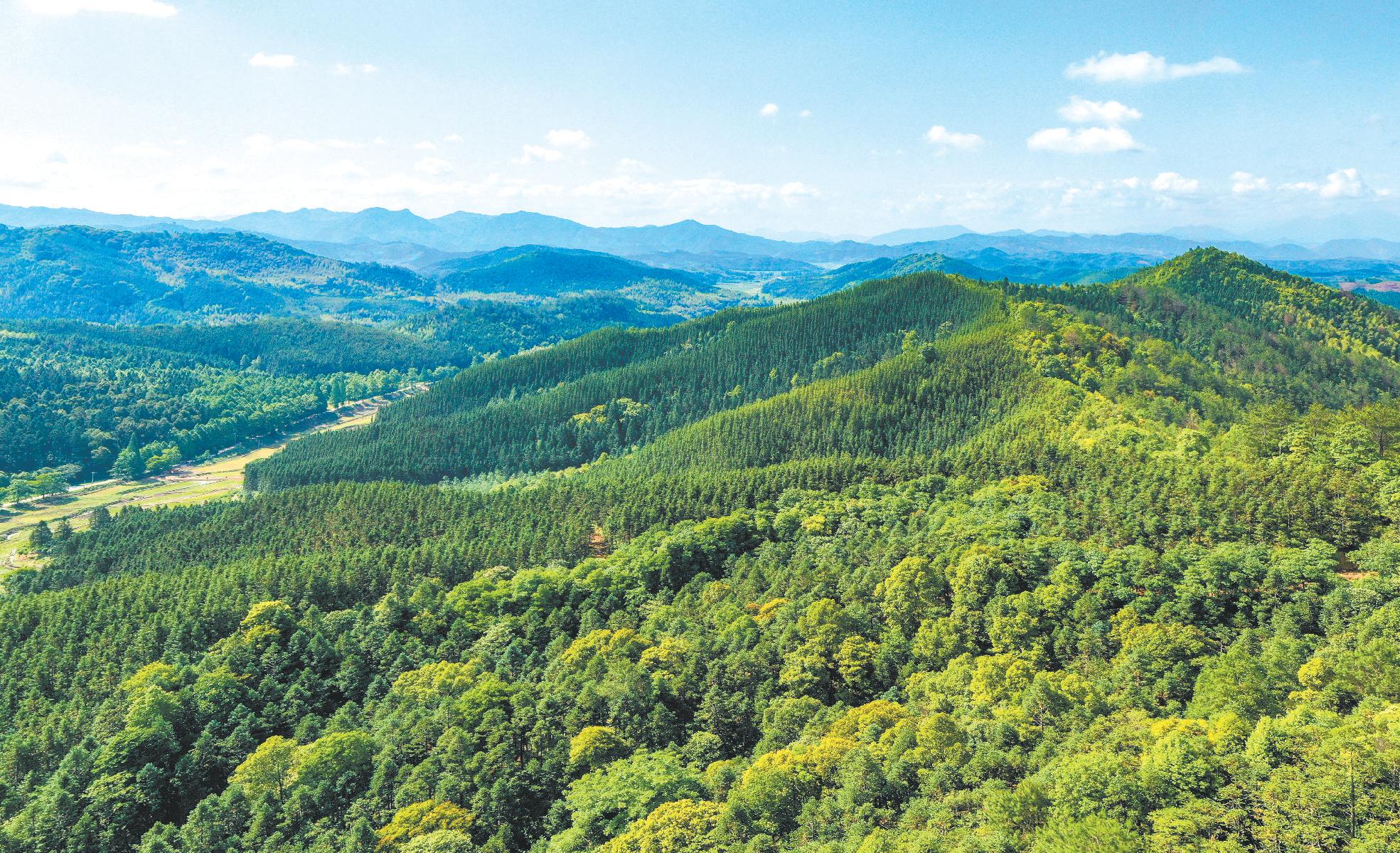
小草峪何以“碧如玉”(新发展理念引领高质量发展·一线故事)
Ren Min Ri Bao· 2025-10-16 22:20
Core Viewpoint - The article emphasizes the importance of the South-to-North Water Diversion Project, highlighting the ecological and economic transformations in Xichuan County, Henan Province, as it balances water conservation with local development [3][9]. Group 1: Ecological Transformation - The South-to-North Water Diversion Project is crucial for the strategic development and welfare of the people in the Beijing-Tianjin-Hebei region [3]. - Xichuan County has implemented a "three greens" strategy (expanding, thriving, and protecting greenery) to enhance ecological sustainability and economic growth [3][5]. - The forest coverage rate in Xichuan has increased from 45.7% at the end of the 12th Five-Year Plan to 61.7%, and the number of bird species in the Danjiang Wetland National Nature Reserve has risen from over 100 to 510 [5]. Group 2: Economic Development - The "thriving green" initiative aims to convert ecological advantages into economic benefits, aligning with the principle that "lucid waters and lush mountains are invaluable assets" [6]. - The establishment of a pomegranate base in Suzhuang Village has created new income opportunities for locals, with over 100 people employed during peak seasons [7]. - The signing of a carbon credit transaction worth 2.16 million yuan in Xichuan marks a significant step in monetizing ecological benefits [7]. Group 3: Community Involvement - The article highlights the role of local communities in ecological protection, with a growing number of volunteers and professionals engaged in conservation efforts [8]. - The establishment of a multi-faceted management model combining human, technological, and regulatory measures has enhanced proactive environmental protection [8]. - The narrative of Xichuan County illustrates a collective commitment to ecological stewardship, reflecting a broader trend of harmonizing human and natural systems [9].
滋养“新疆好地方”
Ren Min Ri Bao· 2025-10-16 06:45
Group 1 - The core idea emphasizes the transformation of ecological systems into economic opportunities, showcasing the success of sustainable ecological governance in Xinjiang [1] - The implementation of various measures, including the prohibition of grazing and the restoration of vegetation, has led to a significant increase in tourism, with over 7 million visitors to the scenic area this year [1] - The concept of "green mountains and clear waters are as valuable as mountains of gold and silver" is highlighted as a guiding principle for sustainable development in the region [1] Group 2 - Systematic thinking and innovation in governance, supported by technology, are crucial for effective ecological management, with the establishment of long-term ecological water supply mechanisms in the Tarim River Basin being a notable example [2] - The application of advanced technologies, such as remote sensing and smart planting robots, has significantly improved the precision of ecological governance [2] - The involvement of local communities as beneficiaries and contributors to ecological governance is emphasized, with mechanisms in place to ensure that local herders benefit from ecological protection efforts [2] Group 3 - The unity among different ethnic groups in Xinjiang is identified as a fundamental source of the successful ecological governance efforts, fostering collaboration in environmental protection initiatives [3] - Joint actions among various ethnic communities, such as discussions on tourism development and collaborative environmental projects, have strengthened mutual understanding and respect [3] - The narrative of "protecting the green together" reflects a collective commitment to sustainable development, reinforcing the idea that unity is essential for achieving success in ecological and economic endeavors [3]
高悬法治利剑 守护绿水青山
Ren Min Ri Bao· 2025-10-16 02:06
Core Viewpoint - The Supreme People's Court has addressed the legality of extracting soil from permanent basic farmland for profit, emphasizing strict enforcement of farmland protection laws and the principle of "whoever damages, whoever restores" [1][2]. Group 1: Legal Implications - The case involved individuals illegally extracting soil from 29.4 acres of farmland, resulting in loss of agricultural functionality, leading to criminal charges and penalties [1]. - The ruling reinforces the judicial concept that environmental damage incurs responsibility and highlights the government's commitment to stringent farmland protection [1][2]. Group 2: Environmental Protection Measures - The article advocates for a comprehensive legal approach to combat environmental crimes, utilizing criminal, civil, and administrative laws to ensure effective punishment and deterrence [2]. - It emphasizes the importance of addressing regulatory blind spots and improving administrative collaboration to prevent environmental violations at their source [2]. Group 3: Public Awareness and Education - There is a call for enhancing public legal awareness and ecological protection consciousness to reduce environmental crimes stemming from ignorance of the law [3]. - Initiatives such as holding trials in affected areas aim to educate the public about legal consequences and promote a culture of environmental stewardship [3]. Group 4: Long-term Goals - The article stresses that ecological protection is a fundamental obligation, not an option, and calls for a robust legal framework to support sustainable development and environmental conservation [3].
滋养“新疆好地方”(现场评论·天山南北气象新)
Ren Min Wang· 2025-10-15 22:22
Core Viewpoint - The transformation of ecological systems in Xinjiang, particularly around Sayram Lake, showcases the successful implementation of sustainable ecological governance, leading to both environmental recovery and economic growth through tourism [1][2]. Group 1: Ecological Restoration and Economic Development - Sayram Lake has seen a significant recovery in its ecosystem, with over 140 species of animals and more than 630 species of plants thriving due to measures such as banning grazing and restoring vegetation [1]. - The area has welcomed over 7 million tourists this year, turning the lake into a significant economic asset, illustrating the concept of "green mountains and clear waters are invaluable assets" [1]. - The integration of ecological protection with economic development is emphasized as a pathway to sustainable growth, with a focus on high-quality development [1][2]. Group 2: Systematic Governance and Technological Innovation - The implementation of a comprehensive forest management system and the establishment of long-term ecological water supply mechanisms in the Tarim River basin are highlighted as essential for effective ecological governance [2]. - The use of advanced technologies such as remote sensing and smart planting robots has significantly improved the precision of ecological restoration efforts [2]. - The transformation of institutional advantages and advanced technologies into effective governance is crucial for enhancing both ecological and economic outcomes [2]. Group 3: Community Involvement and Ethnic Unity - Local communities are both beneficiaries and active participants in ecological governance, with mechanisms in place to compensate herders and encourage their transition to roles in ecological management and tourism [2][3]. - The collaboration between different ethnic groups in ecological projects fosters unity and strengthens community bonds, contributing to the overall success of ecological initiatives [3]. - The shared understanding that protecting the environment leads to economic benefits has motivated local populations to actively engage in conservation efforts [2][3].