耐心资本

Search documents
37万亿保险资金“耐心”护航科技创新
Xin Hua Cai Jing· 2025-12-19 05:43
Core Viewpoint - The insurance asset management industry is increasingly supporting technological innovation through optimized regulatory policies and leveraging its advantages of large scale and long-term funding [1][2]. Group 1: Investment Characteristics - Insurance funds are characterized as "patient capital" due to their large scale and stable sources, making them suitable for the long development cycles of technology innovation [2][3]. - As of the end of Q3 2025, the balance of funds utilized by insurance companies reached 37.46 trillion yuan, indicating significant capital availability for investment [2]. - Insurance asset management companies are enhancing their investment in technology innovation through equity investments, debt plans, and industrial funds [2][3]. Group 2: Investment Strategies - Insurance funds are increasingly involved in technology sectors by establishing specialized investment plans, such as the "China Life-Hu Fa No. 1 Equity Investment Plan" with an investment scale of approximately 11.8 billion yuan [2]. - The "P&C Asset-Zhongguancun Technology Leasing No. 1 Asset Support Plan" was launched to support small and medium-sized tech enterprises, covering various sectors including AI and lithium-ion battery manufacturing [2][3]. - The investment strategies include a combination of equity financing, debt financing, government subsidies, and innovative models like intellectual property pledges to meet diverse funding needs [3][6]. Group 3: Challenges and Solutions - Challenges such as risk mismatch and insufficient research capabilities are present in the insurance sector's technology investment [4][5]. - The inherent high-risk nature of technology innovation poses structural contradictions with the cautious investment principles of insurance funds [4]. - To address these challenges, insurance asset management companies are focusing on enhancing their research capabilities and developing a comprehensive investment management system tailored to the characteristics of technology innovation [6][7]. Group 4: Future Directions - Insurance asset management firms are encouraged to diversify their investment across various technology sectors, including chips, communication technology, robotics, AI, and innovative pharmaceuticals, to mitigate risks [8]. - There is a call for a shift in the traditional risk-return matching framework to accommodate the long-term nature of technology innovation, emphasizing the need for a flexible and multi-faceted investment ecosystem [7][8].
吴清挂帅!资本市场最强大脑集结,29位专家献策高质量发展
2 1 Shi Ji Jing Ji Bao Dao· 2025-12-19 02:48
Core Viewpoint - The establishment of the Academic Committee of the China Capital Market Society marks a significant advancement in the theoretical research and intellectual support for the high-quality development of China's capital market, with 29 authoritative experts forming a "super think tank" [1][2][3]. Group 1: Establishment and Structure - The Academic Committee consists of 29 experts from various fields related to capital market research, with a clear mission to enhance academic research, promote exchanges, and encourage innovation [2][4]. - The committee is led by Li Yang, a prominent figure in financial theory and policy research, with a diverse membership that includes scholars from top universities and experts from government and international financial institutions [4][5]. Group 2: Objectives and Functions - The committee aims to serve as a think tank for theoretical research and a consulting body for policy-making, focusing on issues such as market inclusivity, pricing efficiency, and the application of financial technology [2][3][6]. - The establishment of the committee is seen as a crucial step in forming a systematic and professional theoretical framework for the capital market, transitioning from fragmented research to a more cohesive approach [1][6]. Group 3: Expert Insights and Recommendations - During the meeting, experts emphasized the importance of enhancing the inclusivity and adaptability of listing and trading systems to attract high-quality enterprises, particularly in emerging sectors [7][8]. - Recommendations included increasing the supply of patient, long-term, and strategic capital, as well as improving governance and regulation in the application of artificial intelligence in the capital market [7][8]. Group 4: Future Developments - The China Capital Market Society plans to launch an official academic journal, "Capital Market Research," which will serve as a top-tier publication in the field, facilitating connections between academia, regulatory bodies, and practitioners [9]. - The ongoing development of the think tank and the establishment of the Academic Committee signify a new phase in the systematic, professional, and international advancement of capital market theory in China [9].
做强做优“耐心资本” 加快向“有为资本”转型升级 为推进中国式现代化提供高质量金融服务
Jin Rong Shi Bao· 2025-12-19 02:15
党的二十届四中全会擘画了以中国式现代化全面推进强国建设、民族复兴伟业的宏伟蓝图,对金融工作 服务国家大局提出了根本遵循和行动纲领。近日召开的中共中央政治局会议分析研究了2026年经济工 作,明确明年经济工作要坚持稳中求进、提质增效,为实现"十五五"良好开局提供了有力指引。 作为中国再保旗下的专业资产管理机构,中再资产管理股份有限公司(以下简称"中再资产")把学习贯 彻党的二十届四中全会精神作为当前和今后一个时期的首要政治任务,自觉把全会提出的新部署、新要 求全面贯彻到公司"十五五"战略规划之中抓好落实。公司将持续发挥专业优势,着力做强做优"耐心资 本",并加快推动向"有为资本"转型升级,为接续推进中国式现代化提供高质量金融服务。 一、提高政治站位、融入国家大局,深刻把握"十五五"时期发展"耐心资本"的重大意义 "十五五"规划建议强调,坚持把发展经济的着力点放在实体经济上,坚持智能化、绿色化、融合化方 向,为金融服务实体经济提出了更高要求。当前,我国经济正处于转变发展方式、优化经济结构、转换 增长动能的关键时期,传统增长模式面临转型,而科技创新、先进制造、绿色低碳等代表新质生产力的 领域,往往伴随着长周期、高投 ...
白春礼院士:发展耐心资本,健全风险补偿机制
Zhong Guo Zheng Quan Bao· 2025-12-18 11:51
Core Viewpoint - The integration of science and technology is accelerating, leading to shorter industry iteration cycles and rapid evolution of technological routes, making fundamental research a key factor in industrial competition and national competitiveness [1][2] Group 1: Role of Enterprises - Enterprises are becoming the main body of technological innovation decision-making, R&D investment, achievement transformation, and industrial application [1] - Companies are increasingly close to real demands, scenarios, and cost boundaries, indicating their growing strength in the innovation ecosystem [1] - In some cutting-edge fields, enterprises are surpassing the scientific community in terms of funding, computing power, data, engineering platforms, and talent aggregation capabilities [1] Group 2: Recommendations for Promoting Basic Research - It is suggested to improve incentive and risk-sharing mechanisms to ensure long-term investments yield long-term returns [2] - Optimizing fiscal and tax incentive policies is essential to enhance support for basic research investments [2] - Developing patient capital and establishing risk compensation mechanisms can provide stable funding sources and institutional guarantees for long-cycle research [2] - Incorporating enterprise basic research into national strategic task systems can create stable traction and long-term arrangements [2] - A collaborative platform system between research institutions and enterprises should be established to effectively combine the capabilities of both [2] - Reforming talent supply and evaluation systems is necessary to support enterprises in conducting basic research, emphasizing originality, breakthrough, and systemic contributions [2]
中国社会科学院经济研究所二级教授杨虎涛:“科技—产业—金融”未来要走向良性循环|专访
Sou Hu Cai Jing· 2025-12-18 10:18
Core Insights - The article emphasizes the importance of a symbiotic relationship between technology, industry, and finance in driving high-quality economic development in China [1][3][9] Group 1: Symbiotic Relationship - The relationship between technology, industry, and finance is described as a symbiotic system where each element supports the others, and none can thrive without the others [3][6] - Financial support is crucial for the transformation of technological innovations into industrial applications; without it, technologies may remain in the research phase [3][4] - The rapid iteration and diffusion of AI technology are attributed to significant improvements in financial resource allocation efficiency [3][10] Group 2: Role of Financial Institutions - Financial institutions are evolving beyond simple resource allocation, incorporating advanced algorithms and data-driven models into their operations [4][6] - There is a need for better integration between technical experts and decision-makers within financial institutions to effectively identify and support promising technology projects [7][10] - The concept of "patient capital" is highlighted as essential for supporting high-risk, high-growth technological innovations, contrasting with short-term capital that may withdraw in uncertain conditions [6][10] Group 3: Industrial Upgrading - The ultimate goal of the technology-finance relationship is to facilitate industrial upgrading, which is necessary for overcoming structural challenges in the economy [9][10] - China's trade surplus reached a historic high of $1.076 trillion, indicating strong export competitiveness supported by numerous specialized small and medium enterprises [10] Group 4: Green and Intelligent Development - The article discusses the interdependence of "green" and "intelligent" technologies, emphasizing that advancements in one area require progress in the other [11][12] - The transition to a green energy system is essential for sustainable technological development, and financial practices need to better integrate green and intelligent criteria in project evaluations [13][14] Group 5: Challenges and Future Directions - There is a lack of standardized metrics and cross-disciplinary knowledge that hampers the effective integration of technology, industry, and finance [16][17] - The article calls for a transformation in financial services to better support technological innovation and to cultivate cross-disciplinary talent [17][18]

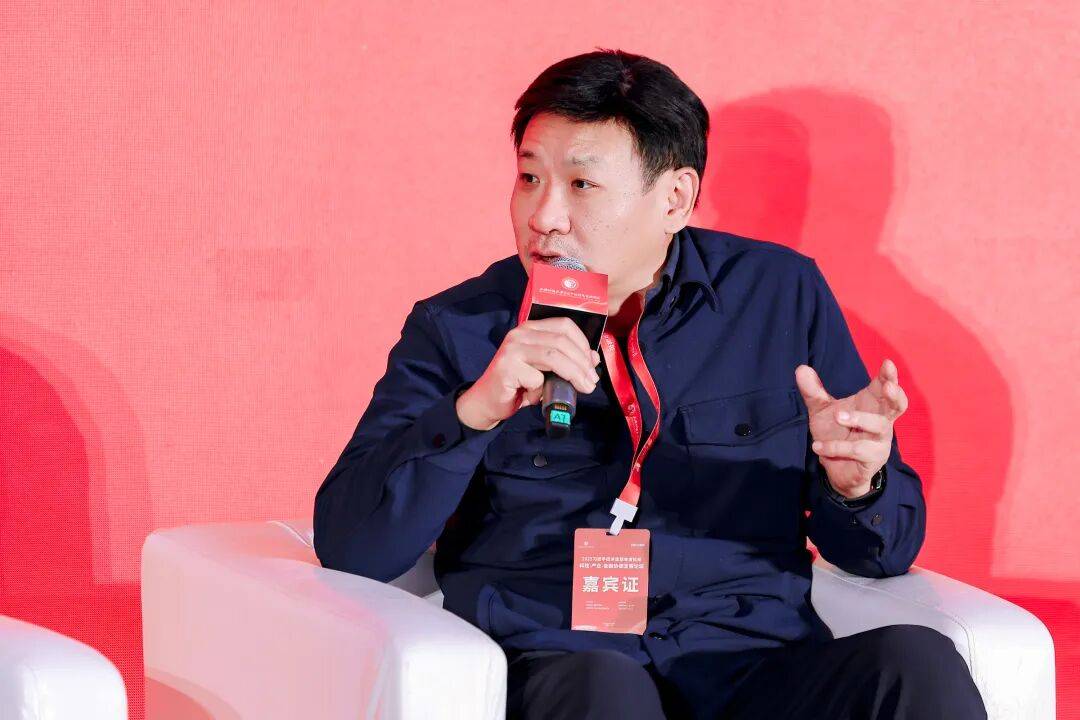
中国科学院原院长白春礼:优化财税激励政策,提高基础研究投入支持力度
Zheng Quan Shi Bao Wang· 2025-12-18 07:58
Group 1 - The core viewpoint emphasizes that enterprise basic research should become a key pillar of the national innovation system, requiring stronger synergy in investment structure optimization, risk-sharing mechanisms, evaluation orientation adjustments, and platform support systems [1] - It is suggested to improve cashable incentives and risk-sharing mechanisms to ensure long-term investments yield long-term returns [1] - The proposal includes optimizing fiscal and tax incentive policies to enhance support for basic research investments, exploring post-subsidy rewards and continuous incentives for significant breakthroughs [1] Group 2 - The development of patient capital is encouraged, along with the establishment of risk compensation mechanisms to promote the complementary advantages of state-owned and social capital, ensuring risk-sharing and profit-sharing [1] - This approach aims to provide stable funding sources and institutional guarantees for enterprises to conduct long-cycle research [1]
新财观|强化“十五五”资本市场枢纽,赋能高水平科技自立自强
Xin Hua Cai Jing· 2025-12-18 05:34
作者:国开证券研究与发展部总经理李友军 二、资本市场在支持科技自立自强中仍存不足 科技创新内在的高风险、长周期与高度不确定性,要求金融体系在风险收益结构与资本定价机制上实现 精准适配。然而,我国长期存在的深层次结构性矛盾导致金融供给与创新需求错配,尤其是资本市场核 心功能未能充分发挥,制约了创新生态的良性发展。主要体现在以下几个方面:一是融资功能结构性失 衡。我国金融体系以风险偏好较低的间接融资为主,根据中国人民银行数据,从存量看,2025年10月末 非金融企业境内股票融资占社会融资规模的比重仅为2.77%,缺乏能够承担风险、愿意长期陪伴企业成 长的耐心资本,导致科创企业的资本金需求无法得到充分满足。二是价格发现功能部分失灵。由于对科 创企业的专业评估体系尚不成熟,尤其是对人力资本、知识产权等核心无形资产的估值定价体系尚不健 全,导致市场对科创企业真实价值的判断偏离,进而引发价值低估及融资困局。三是资源配置功能存在 失调。资本的短期逐利性与创新的长期战略性之间存在深层矛盾,在金融机构短期业绩考核机制助推 下,市场投机倾向被进一步强化,导致资本过度追逐商业模式创新等短期赛道,而对需要长期投入的基 础研究及关键核 ...
国产GPU双雄上市受捧 背后“耐心资本”缘何坚定下注?
Zheng Quan Ri Bao· 2025-12-17 23:47
Core Insights - The domestic GPU sector is experiencing significant investor enthusiasm, highlighted by the successful IPOs of two major players, Moore Threads and Muxi Co., which have both shown remarkable market performance despite ongoing financial losses [1][2] Group 1: Company Performance - Muxi Co. achieved a market valuation exceeding 330 billion yuan on its first trading day, with stock prices soaring close to 900 yuan per share, while Moore Threads reached a peak of 941.08 yuan per share shortly after its IPO [1][2] - Both companies are currently facing substantial financial challenges, with Muxi Co.'s revenue projected to rise from 426,400 yuan in 2022 to 743 million yuan in 2024, yet net losses are expected to increase from 776 million yuan to 1.403 billion yuan during the same period [1][2] - Moore Threads anticipates a cumulative net loss exceeding 5.2 billion yuan from 2022 to 2024, with R&D expenses amounting to 3.809 billion yuan, which is 6.25 times its projected revenue [1][2] Group 2: Market Expectations - The high valuations of both companies stem from a consensus on the vast potential of the domestic GPU market, with IDC predicting that China's accelerated server market will exceed 100 billion USD by 2029 [2] - Research from Jiangyin International suggests that the domestic computing chip industry is expected to flourish, benefiting from advancements across various segments, including wafer foundry and semiconductor equipment [2] Group 3: Investment Landscape - Both companies have attracted significant "patient capital," with Muxi Co. having over 120 shareholders and Moore Threads more than 80, including top-tier venture capital firms and state-owned funds [3][4] - Notable investors include major insurance funds and prominent venture capital firms, indicating a strong belief in the long-term potential of these companies [4][5] Group 4: Technological Development - The transition from R&D to commercial application in the GPU sector typically requires extensive investment over many years, with both companies demonstrating rapid growth in product development [6] - Moore Threads has launched several GPU architectures since its first chip in 2021, while Muxi Co. has begun mass production of its main product, the Xiyun C500, which is expected to contribute significantly to its revenue [6] Group 5: Future Outlook - Analysts predict that domestic companies like Moore Threads and Muxi Co. will accelerate their development in the computing chip sector, supported by strong policy guidance [7] - Despite the promising outlook, challenges remain, including the high R&D costs and the need for rigorous technical validation to enter key industry markets [7]
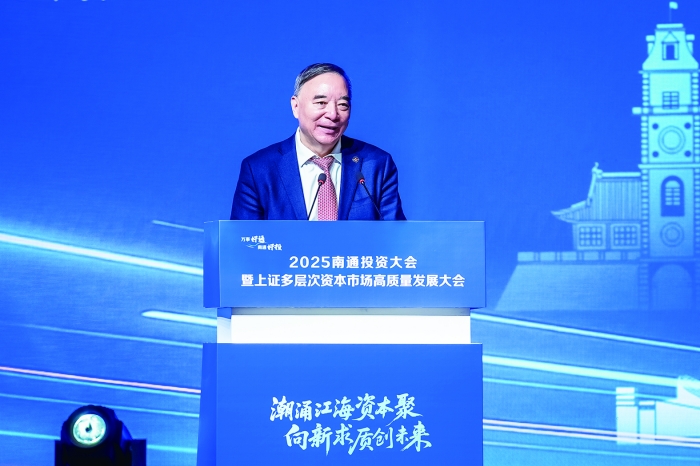
壮大耐心资本 培育未来产业
Shang Hai Zheng Quan Bao· 2025-12-17 19:19
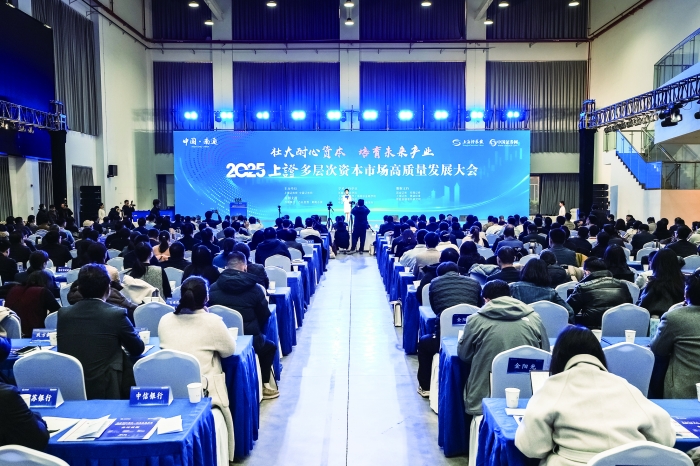
2025上证多层次资本市场高质量发展大会现场。会场图片均为 许泽宇 摄 构建高质量发展的资本市场离不开高质量发展的上市公司,而高质量发展的上市公司需要愿意长期陪伴 企业成长的耐心资本作为重要支撑;创业投资和股权投资作为科技强国的重要资本和耐心资本,已成为 我国推进现代化产业体系建设及发展新质生产力的一揽子工具箱中的重要组成部分;谈及"十五五"期间 股权投资机遇时,多位投资人不约而同地将目光锁定在"十五五"规划建议中提到的新兴产业与未来产业 ...
中国上市公司协会会长宋志平:壮大“耐心资本”是资本市场高质量发展的重要支撑
Shang Hai Zheng Quan Bao· 2025-12-17 19:19
Group 1 - The core viewpoint emphasizes that high-quality development of the capital market relies on high-quality listed companies, which in turn need "patient capital" as a crucial support for long-term growth [2][3] - "Patient capital" has become a necessary product and urgent demand in China's economic and financial development, with over 600 billion yuan of net inflow from long-term funds into A-shares this year, enhancing market resilience [2][3] - The insurance funds' investment in the equity market reached 5.6 trillion yuan, marking a recent high, while public fund management scale approached 37 trillion yuan, continuously setting historical records [3] Group 2 - The strategic shift from an "industrial" to an "innovation" model in China's capital market is necessary, as the country must upgrade its competitive advantage from a single "manufacturing + market" to an "innovation + capital + manufacturing + market" development model [4] - Notable companies like CATL, United Imaging, Hikvision, and Wanhua Chemical exemplify the characteristics of pursuing technological leadership, meticulous management, and quality manufacturing while effectively utilizing capital market tools [4][5] - Over half of the listed companies in the A-share market are from strategic emerging industries, with total R&D investment reaching 1.16 trillion yuan in the first three quarters of 2025, maintaining a scale of over 1 trillion yuan for three consecutive years [5] Group 3 - Improving the quality of listed companies is essential for enhancing investment value, as higher quality serves as the foundation for investment value and market capitalization management [6] - The China Securities Regulatory Commission's guidelines on market capitalization management emphasize the importance of investor protection and return, urging companies to enhance management and profitability [7] - Companies are encouraged to utilize tools such as mergers and acquisitions, stock incentives, and share buybacks to enhance investment value, with a noticeable increase in share repurchases in the domestic stock market [8]