
通胀风险

Search documents
“黑天鹅”来袭,全线下跌
Zheng Quan Shi Bao· 2025-08-02 00:23
Core Viewpoint - The announcement of "reciprocal tariffs" by the U.S. has triggered global market turmoil, leading to declines in both U.S. and European stock markets [1][6]. Market Performance - U.S. stock indices closed lower, with the Dow Jones Industrial Average down 1.23% at 43,588.58, the S&P 500 down 1.60% at 6,238.01, and the Nasdaq down 2.24% at 20,650.13 [2]. - For the week, the Dow Jones fell 2.92%, the S&P 500 dropped 2.36%, and the Nasdaq decreased by 2.17% [2]. - European markets also experienced declines, with Germany's DAX down 2.66%, France's CAC40 down 2.91%, and the UK's FTSE 100 down 0.70% [2][3]. Economic Indicators - Recent U.S. labor market data shows a significant slowdown, with non-farm payrolls adding only 73,000 jobs in July, below expectations, and the unemployment rate rising to 4.2% [6]. - Revisions to previous months' data revealed a sharp downward adjustment, with May's job additions revised from 144,000 to just 19,000 and June's from 147,000 to 14,000 [6]. - This data suggests a rapid deceleration in the labor market, raising concerns about a potential recession [6]. Federal Reserve Response - The weak labor market data has increased pressure on the Federal Reserve to consider interest rate cuts, especially in light of the new tariffs [7]. - Fed Chair Jerome Powell emphasized the need to remain vigilant about inflation risks, particularly with the backdrop of new tariffs imposed by President Trump [6][7]. Tariff Details - President Trump signed an executive order to raise tariffs on Canada from 25% to 35%, effective August 1, with new reciprocal tariff rates ranging from 10% to 41% for various countries [7][8]. Oil Market Impact - International oil prices fell sharply, with U.S. crude down 2.89% to $67.26 per barrel and Brent crude down 3.00% to $69.55 per barrel, driven by concerns over the labor market and OPEC+ production increases [9][10]. - OPEC+ has increased production significantly, with a total increase of 1.8 million barrels per day since May, contributing to downward pressure on oil prices [10]. Precious Metals and Bonds - On August 1, international precious metals futures saw gains, with COMEX gold up 2.01% to $3,416.00 per ounce and silver up 1.07% to $37.11 per ounce [11]. - U.S. Treasury yields fell across the board, with the 2-year yield down 25.49 basis points to 3.698% and the 10-year yield down 14.62 basis points to 4.220% [11].


“黑天鹅”来袭!全线下跌!
Zheng Quan Shi Bao· 2025-08-02 00:10
Core Viewpoint - The introduction of "reciprocal tariffs" by the U.S. has triggered global market turmoil, leading to declines in both U.S. and European stock markets [1][6]. Market Performance - U.S. stock indices closed lower, with the Dow Jones Industrial Average down 1.23% at 43,588.58, the S&P 500 down 1.60% at 6,238.01, and the Nasdaq down 2.24% at 20,650.13 [2][3]. - For the week, the Dow Jones fell 2.92%, the S&P 500 dropped 2.36%, and the Nasdaq decreased by 2.17% [2]. - European markets also experienced declines, with Germany's DAX down 2.66%, France's CAC40 down 2.91%, and the UK's FTSE 100 down 0.70% [2][3]. Economic Indicators - Recent data indicates a significant slowdown in the U.S. labor market, with non-farm payrolls adding only 73,000 jobs in July, below expectations, and the unemployment rate rising to 4.2% [6][7]. - Revisions to previous months' employment data showed a drastic reduction, with May's job additions revised down from 144,000 to 19,000 and June's from 147,000 to 14,000 [6]. - The labor market's rapid deterioration raises concerns about a potential recession, as indicated by the market's heightened risk aversion [6][7]. Tariff Developments - President Trump signed an executive order to increase tariffs on Canada from 25% to 35%, effective August 1, and indicated adjustments to "reciprocal tariffs" for other countries, with rates ranging from 10% to 41% [7][8]. - This move has intensified market fears and contributed to the overall decline in stock prices [6][7]. Oil Market Impact - International oil prices fell sharply, with U.S. crude down 2.89% to $67.26 per barrel and Brent crude down 3.00% to $69.55 per barrel [9][10]. - The decline in oil prices is attributed to disappointing U.S. employment data and ongoing production increases by OPEC+, which has raised concerns about a potential oversupply in the market [10]. Precious Metals and Bonds - On August 1, international precious metals futures saw gains, with COMEX gold futures rising 2.01% to $3,416.00 per ounce and silver futures up 1.07% to $37.11 per ounce [11]. - U.S. Treasury yields fell across the board, with the 2-year yield down 25.49 basis points to 3.698% and the 10-year yield down 14.62 basis points to 4.220% [11].

美联储博斯蒂克:通胀风险远大于就业风险
Guo Ji Jin Rong Bao· 2025-08-01 14:42
Core Viewpoint - The Federal Reserve's Bostic indicates that inflation risks are significantly greater than employment risks, suggesting a shift in focus towards managing inflation [1] Group 1: Inflation Risks - Inflation risks are currently viewed as more pressing compared to employment risks, indicating a potential policy shift by the Federal Reserve [1] - The balance between employment and inflation risks is evolving, with employment risks potentially stabilizing [1] Group 2: Employment Risks - Employment risks are becoming more aligned with inflation risks, suggesting that the labor market may not be as precarious as previously thought [1]
美联储博斯蒂克:通胀风险远大于就业风险。
news flash· 2025-08-01 14:42
Core Viewpoint - The Federal Reserve's Bostic emphasizes that inflation risks are significantly greater than employment risks [1] Group 1 - Bostic's comments suggest a prioritization of controlling inflation over concerns about job market stability [1] - The statement indicates a potential shift in monetary policy focus towards combating inflation [1] - Bostic's perspective aligns with broader Federal Reserve strategies aimed at stabilizing prices [1]
美联储博斯蒂克:就业方面的风险可能正在与通胀风险趋于平衡。
news flash· 2025-08-01 14:42
Core Viewpoint - The risks associated with employment may be balancing out with inflation risks according to the Federal Reserve's Bostic [1] Group 1 - Employment risks are potentially stabilizing in relation to inflation risks, indicating a shift in economic dynamics [1]
特朗普敲定“大萧条”以来最严厉关税,全球经济或迎严重需求冲击!
Jin Shi Shu Ju· 2025-08-01 12:17
Core Points - The recent tariff modifications announced by President Trump have resulted in an average tariff rate of 15%, which is significantly higher than the rates prior to his administration, indicating a shift in U.S. trade policy [2][4] - The new tariffs are expected to create uncertainty for manufacturers and could lead to increased costs for U.S. consumers, as the tariffs are broadly applied and may affect various sectors [4][8] - The potential economic impact includes a projected reduction of 1.8% in U.S. GDP over the next two to three years and a 1.1% increase in core prices due to the tariff adjustments [4][5] Tariff Details - The new tariffs include a minimum base rate of 10% and higher rates of 15% or more for countries with which the U.S. has a trade surplus [2][3] - Specific punitive tariffs include a 39% rate on Swiss imports and a 35% increase on certain Canadian goods, highlighting the targeted nature of these tariffs [3][4] - The average tariff rate is projected to rise from 13.3% to 15.2% if the new tariffs are implemented as planned [4] Economic Reactions - Economists predict that the tariffs will lead to a demand shock globally, with many central banks considering interest rate cuts in response to the economic slowdown [3][5] - The tariffs are expected to create a significant burden on U.S. households, depending on how exporters and importers share the cost [7][8] - The uncertainty surrounding the tariffs may lead companies to adopt a cautious approach to investment and planning [6][7] Federal Reserve Implications - The widespread nature of the tariffs complicates the Federal Reserve's position, as there may be a direct impact on consumer prices, which could influence monetary policy decisions [8] - Fed Chairman Jerome Powell has emphasized the need to remain vigilant regarding inflation risks, indicating that the tariffs could have both short-term and potentially lasting effects on price levels [8]
历史重演?高盛警告:一大关键指标已回到金融危机前水平!
Jin Shi Shu Ju· 2025-08-01 10:03
Group 1 - Goldman Sachs credit strategists are urging clients to hedge risks as the yield premium on global corporate notes has narrowed to its lowest level since 2007 [2][3] - The narrowing yield premium on global investment-grade notes has reached 79 basis points, the lowest since July 2007, just before the global financial crisis [3] - Despite the significant narrowing of credit spreads and the S&P 500 reaching a record high, Federal Reserve officials have avoided signaling imminent rate cuts, indicating a need for more data to assess inflation risks [3] Group 2 - Goldman Sachs economists still expect the Federal Reserve to cut rates by 25 basis points in September, October, and December, with two additional cuts anticipated in 2026 [3] - The report highlights that trade policy has become more predictable compared to March and April, allowing the market to significantly lower the pricing of recession risks [3] - As investors begin to digest the differentiated impacts across the supply chain, the effects will become increasingly important through industry-specific variations [3]

市场太乐观了?高盛警告:关键指标已回到2007年金融危机前夜!
美股IPO· 2025-08-01 08:50
Group 1 - The current trade policy has become more predictable, allowing the market to significantly lower the pricing of recession risks, which has eased investment sentiment [1][2] - As of Thursday, the global investment-grade corporate bond yield spread has narrowed to 79 basis points, the lowest level since July 2007, just before the global financial crisis [2][4] - Despite the improved market sentiment and the S&P 500 index reaching a historical high, the Federal Reserve has not signaled an imminent rate cut, indicating that more data is needed to ensure inflation risks do not persist [3][5] Group 2 - Goldman Sachs warns that market participants should not overlook potential risk factors due to current optimism, including the possibility of economic growth falling below expectations and concerns regarding the independence of the Federal Reserve [3][5] - The narrowing of credit spreads and the overall market optimism may mask underlying risks, prompting Goldman Sachs to advise clients to maintain certain hedging positions in their portfolios [3][4] - Although negative news related to tariffs is no longer the main driver of risk sentiment, the impact of tariffs on different segments of the supply chain will lead to performance differentiation among companies, becoming a new source of market risk [5]
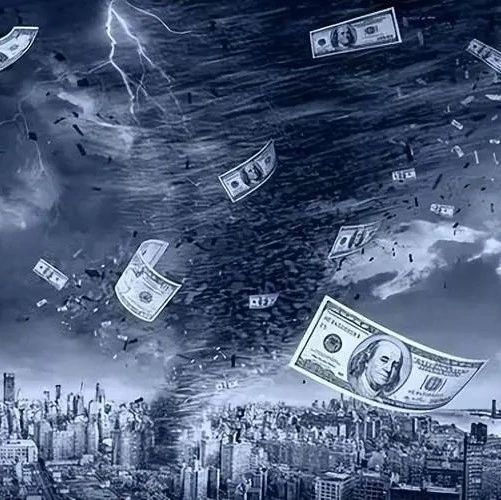
全球信用债利差触及2007年以来低点,高盛提示客户保持谨慎
Sou Hu Cai Jing· 2025-08-01 03:58
Core Insights - Goldman Sachs credit strategists urge clients to hedge risks as global corporate bond yield spreads have tightened to the lowest level since 2007 [1] - Recent trade agreements between the US and several trading partners provide clarity on tariff issues, leading investors to overlook short-term economic growth weakness as long as recession risks are controlled [1] - Bloomberg index indicates that global investment-grade bond yield spreads narrowed to 79 basis points, the lowest level since July 2007, prior to the global financial crisis [1] Economic Context - The S&P 500 index reached a historical high this week, reflecting investor confidence despite tightening credit spreads [1] - Federal Reserve policymakers have not indicated an imminent rate cut, suggesting that more data is needed to ensure inflation risks do not persist [1]
摩通CEO戴蒙再度警告:市场可能低估通胀风险,高估降息的可能性
Sou Hu Cai Jing· 2025-08-01 01:46
摩根大通首席执行官戴蒙表示,美联储在做出利率决策时需要更为谨慎。他警告,市场可能低估通胀风 险,同时高估美联储降息的可能性。至于谈到与其他国家的关税谈判,戴蒙称到目前为止,一切都很 好。 ...