
RCEP

Search documents
建设中国-东盟蓝色经济共同大市场
Shang Hai Zheng Quan Bao· 2025-08-24 17:47
Core Viewpoint - The acceleration of maritime economic connectivity and cooperation between China and ASEAN is expected to significantly impact sustainable economic development and promote a new regional maritime cooperation framework led by collaboration [1][2]. Group 1: Blue Economy as a Common Market - The construction of a China-ASEAN blue economy common market is seen as a "blue engine" for economic growth and regional economic integration [2][3]. - Currently, approximately 30% of ASEAN countries' GDP comes from the maritime economy, while China's maritime economy contributes about 8% to its GDP. By 2024, China's marine production value is projected to exceed 10 trillion yuan, growing by 5.9% year-on-year [4]. - Investment in blue economy sectors between 2020 and 2050 could yield net returns of $8.2 trillion to $22.8 trillion, with an investment return rate of 450% to 615% [4]. Group 2: Economic and Trade Cooperation - Since the signing of the China-ASEAN Free Trade Area 1.0 in 2010, trade cooperation has deepened, with China maintaining its position as ASEAN's largest trading partner for 16 consecutive years [5]. - In 2023, the trade volume between China and ASEAN increased 16.8 times over 20 years, but cooperation in the maritime sector remains fragmented [5]. - The share of marine product trade in total bilateral trade is only 0.6%, indicating significant potential for growth [5]. Group 3: Industry Transformation - Both China and ASEAN face the challenge of industry transformation, particularly in fisheries, where they account for 80% of global aquaculture and 60% of global fish catch [7]. - The demand for renewable energy in ASEAN is expected to increase by 3 to 4 times by 2050, with an average annual growth rate of 6% in renewable power installations from 2021 to 2023 [7]. Group 4: Promoting Marine Tourism - Developing marine tourism is a significant initiative to meet market demand and promote connectivity in the maritime sector [8][9]. - The global cruise tourism market is expected to recover to a growth rate of around 5% by 2028, with China's cruise tourism market projected to reach 14 million passengers by 2030 [9]. Group 5: Renewable Energy Cooperation - From 2000 to 2020, China's public investment in renewable energy projects in ASEAN accounted for about 60% of total foreign public investment received by ASEAN [12]. - In 2023, China's offshore wind power capacity represented 47% of the global total, highlighting the potential for collaborative development in renewable energy [12]. Group 6: Emerging Fields and New Markets - The global marine emerging industries are expected to grow by up to 107% over the next decade, with over 1,000 marine species in the South China Sea identified for medicinal use [15]. - Establishing marine innovation laboratories and public platforms for marine biological resources is recommended to facilitate resource sharing and research [15]. Group 7: Infrastructure and Governance - The development of maritime infrastructure, particularly ports, is crucial as ASEAN countries lag in infrastructure to meet growing trade demands [17]. - The Regional Comprehensive Economic Partnership (RCEP) is seen as a foundational framework for integrating maritime economic rules and standards [18]. Group 8: Hainan as a Hub - Hainan is positioned as a strategic hub for China-ASEAN maritime economic connectivity due to its location and policy advantages [21]. - Initiatives include establishing offshore warehouses and hosting trade expos to enhance trade and cultural exchanges between China and ASEAN [21].
前七月陕西外贸进出口势头良好进出口总额同比增长9.6%
Shang Wu Bu Wang Zhan· 2025-08-22 07:17
Core Viewpoint - In the first seven months of this year, Shaanxi's total import and export value reached 289.48 billion yuan, representing a year-on-year growth of 9.6%, which is 6.1 percentage points higher than the national average, ranking tenth in the country [1] Trade Structure - Processing trade imports and exports amounted to 129.28 billion yuan, growing by 2.5% year-on-year, accounting for 44.7% of the province's total import and export value [1] - General trade imports and exports reached 113.41 billion yuan, with a year-on-year increase of 15.3%, making up 39.2% of the total [1] - Bonded logistics imports and exports were 34.63 billion yuan, increasing by 1% year-on-year, representing 12% of the total [1] Trade Partners - Shaanxi's imports and exports with the European Union totaled 36.3 billion yuan, a year-on-year increase of 40.9% [1] - Trade with ASEAN reached 46.99 billion yuan, growing by 20.4% year-on-year [1] - Trade with Taiwan amounted to 36.63 billion yuan, with a significant year-on-year growth of 73.9% [1] - Trade with Hong Kong was 16.2 billion yuan, increasing by 10.9% year-on-year [1] - Trade with the United States reached 16.14 billion yuan [1] - Trade with countries involved in the "Belt and Road" initiative totaled 156.6 billion yuan [1] - Trade with other RCEP countries was 108.24 billion yuan [1] Enterprises and Products - Foreign-invested enterprises accounted for 168.16 billion yuan in imports and exports, a year-on-year increase of 16.2%, representing 58.1% of the total [1] - Exports of electromechanical products reached 173.04 billion yuan, growing by 14.8% year-on-year, making up 85.9% of the province's total exports [1] - Electromechanical product imports were 61.08 billion yuan, with a year-on-year increase of 3.5%, accounting for 69.3% of total imports [1] - Imports of semiconductor manufacturing equipment surged to 5.38 billion yuan, reflecting a remarkable year-on-year growth of 204.6% [1]
中国建材出海东南亚的第一站,应该选哪个国家?
3 6 Ke· 2025-08-22 02:15
Core Insights - The article emphasizes the importance of selecting the right initial market for Chinese companies venturing abroad, highlighting Malaysia as an ideal entry point for construction material enterprises targeting Southeast Asia [1] - Malaysia's strategic position as a hub in Southeast Asia, combined with its membership in RCEP, allows for zero tariffs on products entering multiple countries, making it a competitive choice for Chinese businesses [2] Market Opportunities - The Malaysian government has launched the "13th Malaysia Plan," committing to an investment of 611 billion ringgit (approximately 140 billion USD) from 2026 to 2030, focusing on infrastructure, housing, and green energy, which creates a favorable environment for foreign investment [3] - The establishment of "special tourism investment zones" aims to boost demand for construction materials, decorations, and sanitary products [5] Market Environment - Malaysia's open market environment, characterized by a significant Chinese community (approximately 23% of the population), facilitates business interactions and reduces barriers for Chinese enterprises [5] - The country is experiencing a golden period of infrastructure upgrades, with an annual growth rate of 18% in infrastructure investment, driving demand for tiles, sanitary ware, and other construction materials [6] Market Growth Data - The construction materials market in Malaysia is projected to grow at an annual rate of 6% to 10%, with residential construction accounting for 40% of material consumption [7] - China's exports of construction materials to ASEAN countries are expected to increase from 38 billion RMB in 2020 to 127 billion RMB by 2024, reflecting a compound annual growth rate of 35.6% [6] Product Demand - There is a strong demand for high-quality steel and cement in Malaysia, with local production unable to meet the needs for specialty cement and high-end applications [9] - The smart home market in Malaysia is projected to grow at a compound annual growth rate of 21% from 2021 to 2026, driven by the "smart city" initiative [10] - The Malaysian government aims to reduce greenhouse gas emissions intensity by 45% by 2030, creating a demand for low-carbon construction materials [11] - The multicultural environment in Malaysia has led to a rising demand for customized decorative materials, such as tiles with Chinese patterns and personalized lighting products [12]

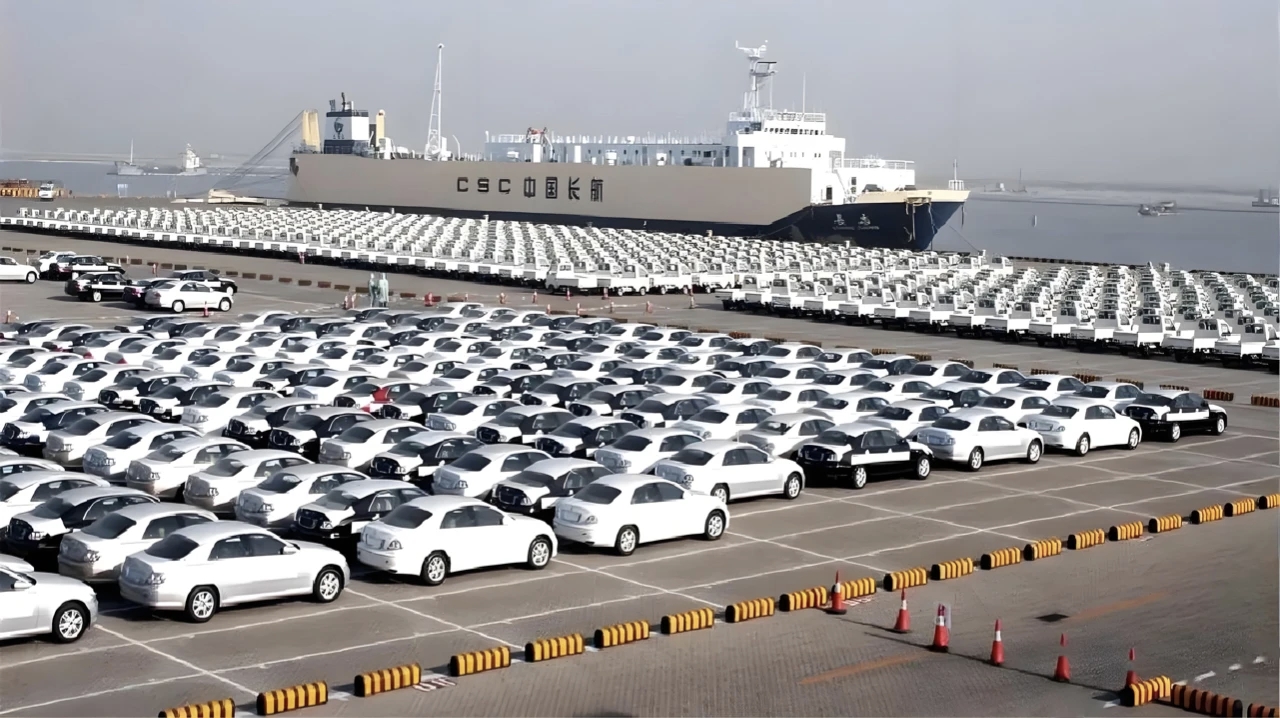
青岛港新能源汽车出口增长16倍!新枢纽撬动山东万亿工业品出海
Qi Lu Wan Bao· 2025-08-21 10:39
Core Insights - Qingdao has emerged as a key node in China's automotive globalization strategy, particularly in the context of the booming electric vehicle (EV) market, with a significant increase in exports of new energy vehicles (NEVs) [1][6] - The acceleration of automotive exports from China is evident, with NEV exports showing a remarkable growth of 1617% year-on-year in the first seven months of 2023 [6][7] - The integration of logistics and manufacturing in Qingdao is enhancing the efficiency of vehicle exports, with a focus on multi-modal transport solutions [4][5] Automotive Export Acceleration - The China Association of Automobile Manufacturers reported that NEV exports reached 1.06 million units in the first half of 2025, marking an 84.6% increase year-on-year, while traditional fuel vehicle exports declined [2] - Major companies like Chery and BYD have significantly contributed to this growth, with Chery exporting 548,000 units and BYD exporting 472,000 units [2] Logistics and Infrastructure Development - Qingdao is developing an international automotive roll-on/roll-off (RoRo) transit center, utilizing a combination of rail, road, and sea transport to reduce logistics costs [4][5] - The Huangdao Station has become one of the busiest freight stations in China, facilitating the rapid transport of vehicles to Qingdao Port, with an average of a train arriving or departing every 10 minutes [5] Regional Economic Impact - The rise of Qingdao as a global automotive hub is expected to significantly boost the regional economy, with projections indicating that Shandong's industrial exports could reach a trillion yuan [1] - The port's capabilities are expanding, with new shipping routes to emerging markets in Africa, North America, and Southeast Asia being established [8][9] Supply Chain Integration - The trend of KD (knock-down) exports is gaining traction, allowing companies to export vehicle parts for local assembly, which reduces transportation costs and benefits from tariff exemptions [5][6] - Qingdao's logistics network is facilitating the export of automotive parts to countries like Egypt and Tunisia, further embedding Chinese automotive supply chains in global markets [6][9] Future Growth Projections - The global demand for NEVs is expected to continue growing, with predictions suggesting that China's automotive exports could reach 7 million units by the end of 2025, potentially approaching 10 million by 2030 [12] - Qingdao's special economic zones are playing a crucial role in this growth, with significant increases in export licenses and trade values reported [12][13]

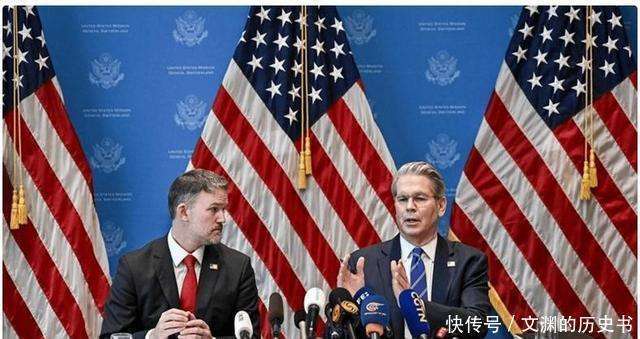
特朗普对全球亮出底牌,中方躲过一劫?美前财长:中国成唯一赢家
Sou Hu Cai Jing· 2025-08-19 11:02
Group 1 - The Trump administration has introduced a significant tax increase list that impacts various countries globally, including traditional allies and emerging nations like Brazil and India, demonstrating a clear "America First" approach [1][3] - Notably, China is absent from this tax list, raising questions about the strategic reasoning behind this omission, especially given Trump's previous threats against China during his campaign [3][6] - Former U.S. Treasury Secretary Larry Summers stated that this move inadvertently positions China as the "only winner" in this scenario, highlighting the complexities of the trade dynamics at play [5][12] Group 2 - The underlying strategy of Trump's tariffs is to revitalize the U.S. manufacturing sector and address domestic economic issues, but the decision to spare China suggests a recognition of the potential backlash from a full-scale trade war [6][8] - The absence of tariffs on China may be a tactical choice to avoid severe repercussions on the U.S. economy, as China is a critical player in global manufacturing and a significant market for U.S. goods [8][9] - Trump's isolationist policies have inadvertently provided opportunities for China to strengthen its global partnerships and advance its economic strategies, such as the Belt and Road Initiative and RCEP [10][14] Group 3 - The long-term implications of Trump's tariff strategy could harm the U.S. economy and its international reputation, as rising prices from tariffs directly affect American consumers [8][9] - The approach taken by the Trump administration may lead to a shift in global economic dynamics, with countries increasingly seeking self-reliance and forming new alliances outside of U.S. influence [12][14] - The evolving landscape suggests a move towards a multipolar world, where countries that resist U.S. pressure, like Brazil and India, may emerge as significant players in a redefined global order [12][14]
西安前七个月进出口总值逾两千亿元 对东盟进出口同比增29%
Zhong Guo Xin Wen Wang· 2025-08-19 01:27
Core Insights - Xi'an's total import and export value reached 272.17 billion yuan in the first seven months of 2025, marking a 14.4% increase compared to the same period last year [1] - Exports to ASEAN countries totaled 44.35 billion yuan, growing by 29%, accounting for 16.3% of the city's total import and export value [1] Trade Growth and Policy Support - Xi'an has leveraged its geographical advantages and innovation platforms under the Belt and Road Initiative to enhance both the scale and quality of foreign trade [1] - The local government has introduced policies to support foreign trade development and promote the integration of domestic and foreign trade [1] Market Dynamics - From January to July 2025, 588 new foreign trade market entities were established in Xi'an [1] - Foreign-invested enterprises had an import and export value of 166.27 billion yuan, a year-on-year increase of 17.8% [1] - Private enterprises' import and export value reached 90.71 billion yuan, growing by 3.5% [1] - State-owned enterprises saw a significant increase in import and export value, reaching 14.36 billion yuan, up by 74.7% [1] Export Composition - In the first seven months of 2025, electromechanical products accounted for 88.5% of Xi'an's total export value, amounting to 167.62 billion yuan [2] - The export value of automobiles (including chassis) was 34.39 billion yuan, reflecting a growth of 40.2% [2] Cost Reduction Initiatives - The customs authority plans to enhance the implementation of free trade agreements like RCEP to help reduce trade costs for exporting companies [1] - From January to June, 9,744 various certificates of origin were issued, a 12% increase year-on-year, assisting companies in enjoying tariff reductions of approximately 250 million yuan [1]
芜宣机场成功开通“空空中转”与“空陆海联运”服务
Zhong Guo Min Hang Wang· 2025-08-19 01:07
8月12日,从孟加拉国达卡飞往芜湖的I98856航班平稳降落在芜宣机场,机上载有2700公斤货物。据 悉,达卡是东南亚纺织业和轻工业的重要枢纽。借助芜宣机场新开通的芜湖—达卡国际货运航线,部分 货物到达中国后无缝对接上海外高桥港,搭乘美森快船直抵洛杉矶,另一部分"一单到底"货物经由芜湖 —郑州全货机航线,"空空中转"至郑州新郑国际机场,一次实现"空运+陆运+海运"及"国际转国内"两种 联运模式。据企业实际测试,相较于达卡直飞或海运至美国西海岸,"空空中转"联运显著降低了物流成 本,且"空陆海联运"节省了约12天的物流时间,进一步凸显芜宣机场在国际货运网络中的节点地位和区 位优势。 《中国民航报》、中国民航网 记者胡夕姮 通讯员冯仕滨、沈家明 报道:近日,芜宣机场与芜湖海关、 郑州新郑国际机场、上海外高桥港紧密合作,依托智慧化通关和一体化运营,成功开通"空空中 转"和"空陆海联运"两种联运模式。 (芜宣机场供图) 随着RCEP(《区域全面经济伙伴关系协定》)的深入实施和共建"一带一路"倡议的持续推进,芜湖将 加速构建国际货运航线网络、保税物流中心和数字化通关体系,强化其"全球供应链节点"功能。(编 辑:许浩存 ...
前7个月河南外贸进出口增长22.3% 创历史同期新高
Zhong Guo Chan Ye Jing Ji Xin Xi Wang· 2025-08-19 00:01
Core Insights - Henan Province's foreign trade import and export reached 483.38 billion yuan in the first seven months, growing by 22.3% year-on-year, significantly outpacing the national growth rate of 3.5% by 18.8 percentage points, marking a historical high for the same period [1] - Exports totaled 324.31 billion yuan, an increase of 32.8%, while imports were 159.07 billion yuan, growing by 5.4% [1] Group 1: Trade Dynamics - The vitality of foreign trade entities has increased, with private enterprises becoming the main engine for trade growth, and foreign-invested enterprises showing the fastest growth rate [1] - The number of foreign trade enterprises in Henan reached 12,200, an increase of 1,200 year-on-year, with 636 enterprises having an import and export value exceeding 50 million yuan, accounting for 88.1% of the province's total foreign trade [1] - Private enterprises' import and export value was 356.06 billion yuan, up 17.7%, representing 73.7% of the total foreign trade value; foreign-invested enterprises had an import and export value of 96.36 billion yuan, growing by 64.4% [1] Group 2: Export Markets - Henan's export markets have diversified, with significant growth in trade with the EU, South Korea, and Japan [2] - Exports to the EU reached 65.76 billion yuan, growing by 28.7%; exports to ASEAN were 64.8 billion yuan, up 8.4%; exports to South Korea were 31.86 billion yuan, increasing by 16.6%; and exports to Japan surged by 133.4% to 31.65 billion yuan [2] - Trade with Belt and Road countries amounted to 236.44 billion yuan, growing by 16.1%, while trade with RCEP member countries reached 144.54 billion yuan, increasing by 26% [2] Group 3: Export Products - The "new" and "green" content of Henan's foreign trade has further improved, with high-tech product exports reaching 114.4 billion yuan, growing by 33.4%, contributing 35.8% to the overall export growth [2] - Exports of electric vehicles, lithium batteries, and photovoltaic products, representing green low-carbon products, totaled 16.09 billion yuan, a remarkable increase of 158.1% [2] - Exports of agricultural products and silver also maintained rapid growth, reaching 9.84 billion yuan and 7.78 billion yuan, with growth rates of 28.9% and 20.7%, respectively [2] Group 4: Import Products - Certain key raw materials and agricultural products saw rapid growth in imports, with imports of electromechanical products totaling 87.71 billion yuan, growing by 10.2% [3] - Integrated circuits accounted for 34.24 billion yuan in imports, increasing by 8.8%, while automatic data processing equipment and parts surged by 642.5% to 4.69 billion yuan [3] - Agricultural product imports reached 9.53 billion yuan, growing by 28.4%, and imports of unrefined copper and copper materials totaled 5.76 billion yuan, increasing by 81% [3]
新疆前7个月外贸进出口总值3210.2亿元 同比增长27.3%
Yang Shi Xin Wen· 2025-08-18 11:12
Core Insights - Xinjiang's foreign trade import and export value reached 321.02 billion RMB in the first seven months of the year, marking a year-on-year increase of 27.3% [1] - In July alone, the foreign trade value was 40.39 billion RMB, reflecting a growth of 23.5% [1] Trade Characteristics - General trade increased by 88.9%, accounting for 52.7% of total trade, driven by cross-border e-commerce exports which surged by 334.7% [1] - Border trade imports also saw significant growth, increasing by 78.4% [1] Market Expansion - Xinjiang engaged in trade with 223 countries and regions, an increase of 8.3% compared to the previous year [1] - The Central Asian market dominated, representing 52.2% of Xinjiang's total foreign trade [1] - Notable growth was observed in emerging markets, with imports and exports to RCEP member countries, ASEAN, and Africa increasing by 98.5%, 99.5%, and 121.6% respectively, contributing to a rise in market share by 5.7, 4.9, and 2.1 percentage points [1] - Trade with Belt and Road Initiative countries grew by 17.5%, accounting for 85.3% of total trade [1]
推动豫企“出海” 提升国际竞争力
Sou Hu Cai Jing· 2025-08-17 23:14
Core Viewpoint - The article emphasizes the importance of enhancing international cooperation and investment strategies for companies in the context of global economic changes, advocating for a shift from individual overseas ventures to a more collaborative and resilient approach in international markets [1][2]. Group 1: Trends in Overseas Investment - Companies are transitioning from "single-point overseas" strategies to systematic "group overseas" approaches, focusing on both efficiency and safety [1]. - There is a growing emphasis on localizing operations rather than merely establishing overseas points, aiming for deeper integration in foreign markets [1]. Group 2: Industry Focus and Development - The province is a significant industrial and agricultural hub, with key industries including food, equipment manufacturing, and electronic information, which are encouraged to develop into multinational corporations [1]. - Companies in energy and raw materials are supported to enhance overseas resource development and technical capabilities [1]. Group 3: International Market Network Enhancement - Companies are urged to establish a robust international market operation network, focusing on compliance, precision, and specialization [2]. - The strategy includes identifying key regions for investment, particularly in the context of the Belt and Road Initiative and RCEP [2]. Group 4: Innovative Outbound Strategies - The development of overseas industrial parks and trade cooperation zones is encouraged to facilitate cultural integration and brand building [3][4]. - Companies are advised to leverage e-commerce and digital platforms to expand their export capabilities, particularly in emerging industries like new energy vehicles and smart technology [3]. Group 5: Policy Support and Ecosystem Development - A comprehensive support system is proposed to address challenges faced by companies in international markets, including financial services and legal assistance [5]. - The establishment of a "Henan Enterprises Going Global" alliance is suggested to pool resources and provide integrated services for companies venturing abroad [5].