
贸易逆差

Search documents
列国鉴丨记者观察:被美国关税大棒“敲懵”后,瑞士苦觅良策
Xin Hua Wang· 2025-10-13 12:58
Core Points - Switzerland faced a significant increase in tariffs from the US, rising from 31% to 39%, which is the highest in Europe and among the top globally for US trade partners [1][3] - The Swiss government is struggling to negotiate lower tariffs, with the US administration's stance being influenced by President Trump's perception of trade imbalances [2][4] - The Swiss economy is heavily reliant on exports, particularly to the US, which has led to concerns about the impact of these tariffs on domestic industries and employment [5][8] Summary by Sections Tariff Increase - The US announced a tariff increase on Switzerland from 31% to 39%, effective August 7, which has caused significant discontent among the Swiss populace [1][3] - The Swiss government had previously negotiated a framework to reduce tariffs to 10%, but this was not honored by the US [2][3] Economic Impact - The US trade deficit with Switzerland was reported at $38.3 billion in 2024, expected to rise to $48 billion in the first half of 2025, primarily due to increased gold imports [4] - The Swiss economy is characterized by a high GDP per capita of approximately $92,000, ranking among the top globally, which contrasts with the US's $81,000 [4] Negotiation Challenges - The Swiss government plans to continue negotiations with the US, considering strategies used by Japan and the EU to secure better terms [8] - Despite efforts to negotiate, the Swiss economy has limited leverage due to its smaller size compared to the US [8][9] Public Sentiment - A recent poll indicated that nearly two-thirds of Swiss respondents believe the country should not concede to high tariffs imposed by the US [10]


被美国关税大棒“敲懵”后 瑞士苦觅良策
Sou Hu Cai Jing· 2025-10-13 10:15
Core Viewpoint - Switzerland faces significant challenges due to the recent increase in tariffs imposed by the United States, escalating from 31% to 39%, which has created a sense of humiliation and political division within the country [1][4][11] Group 1: Tariff Changes and Negotiations - The U.S. announced a 31% tariff on Switzerland in April, which was initially postponed, but negotiations in July led to a temporary agreement to reduce it to 10% [3] - On July 31, a conversation between Swiss President Karin Keller-Sutter and President Trump resulted in the unexpected increase to 39%, attributed to Trump's anger rather than rational decision-making [3][6] - Following the tariff increase, Swiss leaders attempted to negotiate a revised agreement but were met with refusal from the U.S. [4][9] Group 2: Economic Implications - The U.S. claims a trade deficit with Switzerland, citing it as a reason for the tariffs, with the deficit projected to reach $48 billion in the first half of 2025 [6] - Switzerland's economy is heavily reliant on exports, with a significant trade surplus with the U.S., which includes a service trade surplus of $29.7 billion in 2024 [6][10] - The Swiss government has committed to zero tariffs on all industrial products starting January 1, 2024, allowing 99% of U.S. goods to enter Switzerland duty-free [7] Group 3: Public Sentiment and Future Strategies - A recent poll indicates that nearly two-thirds of Swiss citizens believe the country should not concede to high tariffs imposed by the U.S. [11] - The Swiss government plans to continue negotiations, potentially offering reciprocal conditions similar to those made by Japan and the EU [9] - Despite the challenges, some Swiss officials express optimism about the country's strong economic foundation, which may help mitigate the impact of the tariffs [10]

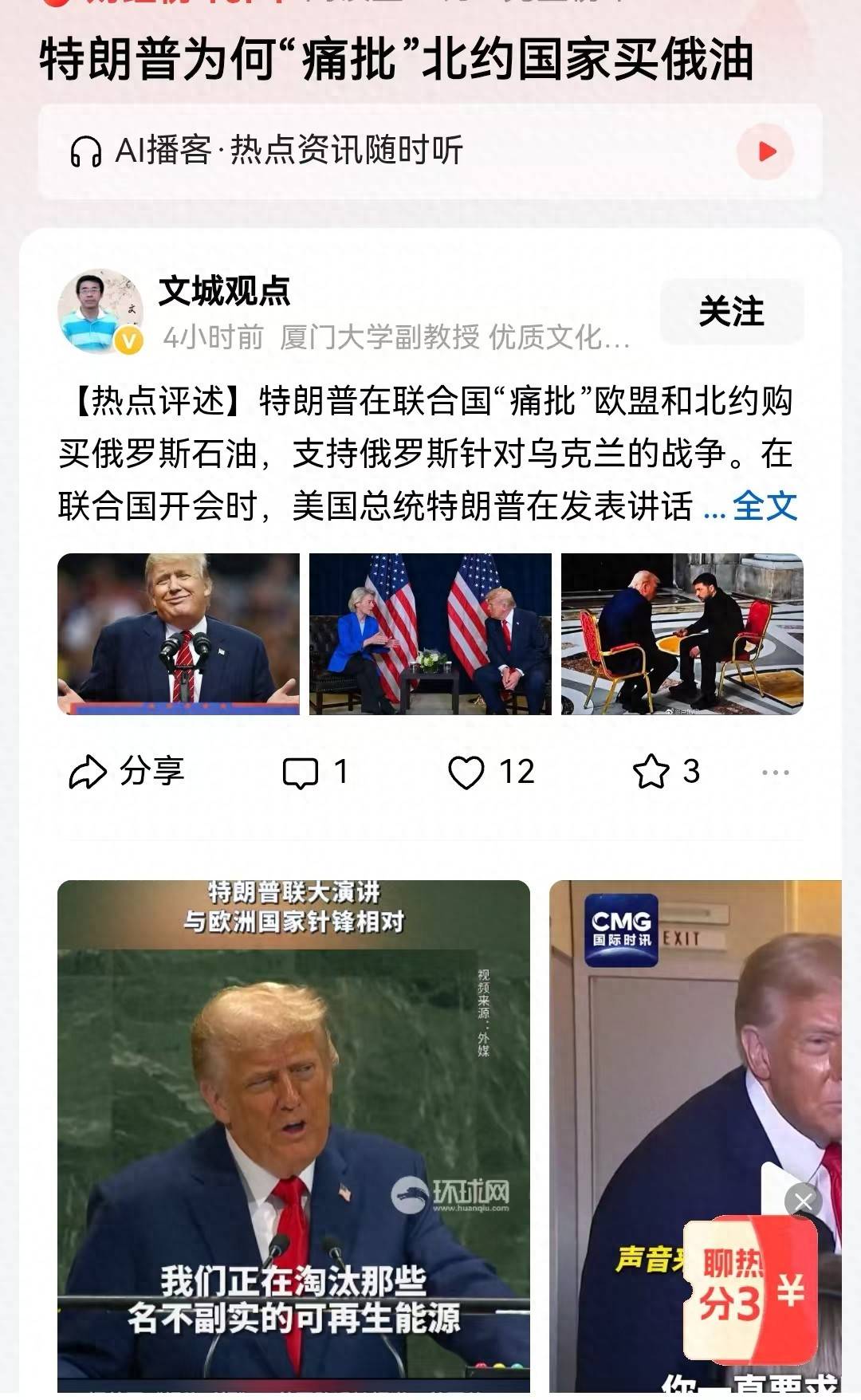
特朗普痛批欧盟背叛,为何还在买俄油?印度对欧出口暴涨137%
Sou Hu Cai Jing· 2025-10-12 06:14
Core Points - Trump criticized NATO countries for purchasing Russian oil while expecting the U.S. to bear the costs of sanctions, highlighting a perceived hypocrisy among European allies [1] - The EU and NATO denied significant imports of Russian oil and gas, but some indirect purchases still occur through third-party intermediaries [6] - India has significantly increased its imports of Russian oil, reaching 2.08 million barrels per day by June 2025, which constitutes 44% of its total imports, benefiting from lower prices compared to Middle Eastern oil [9][10] - India's advanced refining capabilities allow it to process Russian oil and export refined products to Europe, with a notable increase in diesel exports to the region [15] - Trump's push for Europe to purchase U.S. energy products faces challenges due to the higher costs of American oil and gas compared to cheaper Russian alternatives [17]
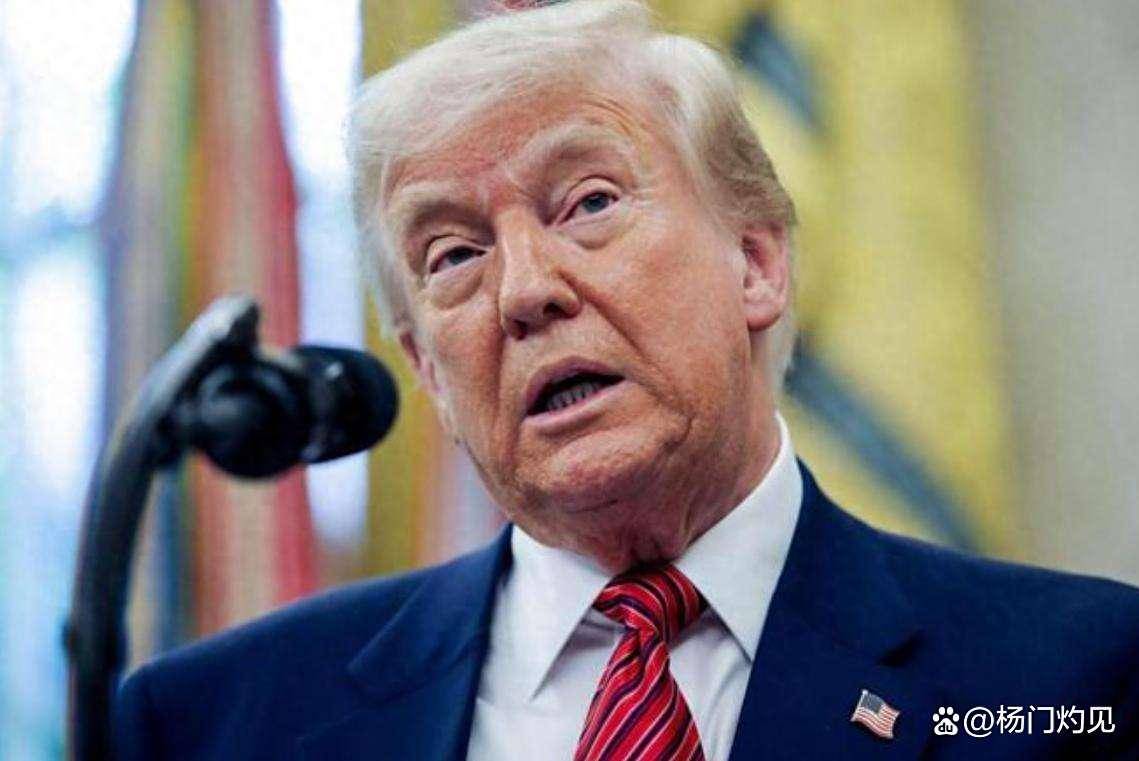
特朗普5天下达4道关税令,税率最高达100%,美国要将油门踩到底?
Sou Hu Cai Jing· 2025-10-10 19:12
Group 1: Tariff Policies - President Trump issued four tariff orders within five days, targeting imported patented drugs, cabinets and soft furniture, heavy trucks produced abroad, and foreign-made films, with the highest tax rate reaching 100% for patented drugs and films [1][3] - The tariffs are designed to protect domestic industries, with specific rates set at 100% for patented drugs, 50% for cabinets, and 30% for soft furniture, aiming to encourage manufacturing to return to the U.S. [3][5] - The 25% tariff on heavy trucks includes exemptions for products under the USMCA agreement, balancing regional trade cooperation with domestic industry protection [5] Group 2: Economic and Political Implications - The tariffs reflect a response to significant trade deficits and the outflow of manufacturing jobs, which are critical concerns for the Trump administration [8] - The targeted industries correspond to the needs of swing states, such as Michigan's auto manufacturing and North Carolina's furniture industry, aiming to secure support from blue-collar voters [8] - The classification of foreign film production as a "national security threat" indicates concerns over the erosion of American cultural influence, as Hollywood has been a key vehicle for U.S. values [8] Group 3: Global Trade Reactions - The U.S. tariffs have triggered a global backlash, with the EU considering trade countermeasures and China implementing targeted measures against U.S. entities [10] - Canada expressed dissatisfaction with the discriminatory exemptions for heavy trucks, indicating a refusal to concede on trade issues with the U.S. [10] - The unilateral approach of the U.S. may risk shrinking overseas markets for American companies and destabilizing global supply chains [10] Group 4: Societal Impact - The tariffs may lead to increased costs for American consumers, particularly in pharmaceuticals and other goods, raising concerns about the actual benefits of the policies [12] - The disconnect between the intended goals of the tariffs and their real-world effects is becoming evident, with ordinary citizens facing higher living costs [12] - The ongoing pressure from both domestic and international fronts may challenge the sustainability of Trump's aggressive tariff strategy [14]
爱沙尼亚8月份货物贸易进出口总额同比持平
Shang Wu Bu Wang Zhan· 2025-10-10 18:02
Core Insights - In August 2025, Estonia's total goods trade reached €3.12 billion, remaining flat year-on-year [1] - Exports amounted to €1.43 billion, a decrease of 2.2% year-on-year, while imports were €1.67 billion, an increase of 1.9% year-on-year, resulting in a trade deficit of approximately €260 million, which increased by €63 million compared to the same period last year [1] Trade Composition - The largest export category in August 2025 was electrical equipment, accounting for 15.4% of total exports, with a year-on-year decrease of 2% [1] - Agricultural products and food represented 12.2% of exports, showing a year-on-year growth of 5%, while transport equipment accounted for 10.3% with an 11% increase [1] - The most significant import category was also electrical equipment, making up 14.9% of total imports, with a year-on-year increase of 14% [1] - Agricultural products and food constituted 13.1% of imports, growing by 2% year-on-year, while transport equipment and minerals each accounted for 11% of imports, with declines of 3% and 9% respectively [1] Trade Partners - In August, Estonia exported €1.1 billion to EU member states, a 3% increase year-on-year, representing 77.2% of total exports [2] - Finland was the largest export partner, accounting for 16.4% of total exports with a 2% increase, followed by Latvia at 11.2% with a 15% decrease, and Sweden at 9.1% with a 4% increase [2] - Estonia's imports from EU member states totaled €1.41 billion, remaining flat year-on-year, making up 84% of total imports [2] - Latvia accounted for 12.2% of imports with a 21% increase, while imports from Finland decreased by 29% to 10.9%, and imports from Germany and Lithuania each represented 10.5% with a 3% decline [2] Cumulative Trade Data - From January to August 2025, Estonia's total goods trade reached €26.8 billion, reflecting an 8.1% year-on-year increase [2] - Cumulative exports were €12.14 billion, up 7.3% year-on-year, while imports totaled €14.66 billion, increasing by 8.7% year-on-year [2] - The cumulative trade deficit stood at €2.51 billion, which increased by €340 million compared to the same period last year [2]
特朗普关税施压,德国8月对美出口跌至四年新低
Feng Huang Wang· 2025-10-09 12:44
Core Insights - Germany's exports to the U.S. have declined for five consecutive months, reaching the lowest level in nearly four years due to U.S. tariff policies [1] - In August, German exports to the U.S. fell by 2.5% month-on-month to €10.9 billion, and year-on-year, there was a dramatic drop of 20% [1] - Conversely, imports from the U.S. increased by 3.4% month-on-month to €8 billion, with an annual growth of nearly 8% [1] Trade Balance - Overall, Germany's trade balance improved in August, with total exports amounting to €129.7 billion, a month-on-month decrease of 0.5% and a year-on-year decrease of 0.7% [3] - Imports totaled €112.5 billion, showing a month-on-month decline of 1.3% but a year-on-year increase of 3.5% [3] - The trade surplus for August expanded to €17.17 billion, marking the second consecutive month of increase, although it is down 21.6% compared to the same month last year [3] EU vs Non-EU Trade - The trade surplus is primarily driven by intra-EU trade, with exports to EU member states at €72.5 billion and imports at €58.8 billion, resulting in a significant intra-EU surplus [3] - Exports to the EU decreased by 2.5% month-on-month, while imports from the EU fell by 1.9% [3] - In contrast, trade with non-EU countries showed a deficit, with exports to non-EU countries at €57.1 billion and imports at €53.7 billion [3] UK Trade Impact - In the non-EU market, imports from the UK have significantly declined, with German exports to the UK dropping by 6.5% month-on-month to €6.5 billion [4]
【环球财经】法国8月贸易逆差连续第三个月收窄
Xin Hua Cai Jing· 2025-10-08 01:48
Core Insights - France's trade deficit narrowed for the third consecutive month in August, reaching €5.8 billion due to increased exports and stable imports [1] Trade Performance - In August, France's exports amounted to €51.8 billion, an increase of €0.3 billion from the previous month [1] - Imports remained stable at €57.6 billion [1] - The trade balance improved further with energy exports increasing and imports decreasing, leading to a reduction in the energy trade deficit by €0.2 billion, now at €3.5 billion [1] - The trade deficit for industrial products remained stable at €4.2 billion [1] - The agricultural products trade deficit has narrowed for the fourth consecutive month [1] Long-term Trends - Over the past 12 months, France's cumulative trade deficit stands at €78.5 billion, which is a decrease of €1.7 billion compared to the previous month [1] - The French customs noted a decline in the number of exporters to the U.S. in the second quarter after an increase in the first quarter, attributed to trade conflicts [1]
【环球财经】9月巴西对美出口继续大幅下降
Xin Hua Cai Jing· 2025-10-07 08:04
Core Insights - Brazil's exports to the U.S. fell by 20.3% year-on-year in September, amounting to $2.58 billion, while imports from the U.S. increased by 14.3% to $4.35 billion, resulting in a trade deficit of $1.77 billion with the U.S. [1] - Despite the pressure on exports to the U.S., Brazil's total trade in September reached $58.07 billion, a 12% year-on-year increase, with an overall surplus of $2.99 billion. Total exports were $30.53 billion, up 7.2%, and total imports were $27.54 billion, up 17.7% [1] - For the first nine months of the year, Brazil's cumulative exports reached $257.79 billion, a 1.1% increase, while cumulative imports were $212.31 billion, an 8.2% increase, resulting in a cumulative trade surplus of $45.5 billion. Exports to China and Argentina grew by 14.7% and 24.9%, respectively [1] - The Brazilian Ministry of Development, Industry, and Trade projects a trade surplus of $60.9 billion for the entire year of 2025, an increase from the previous forecast of $50.4 billion [1] - The September import figures included a $2.4 billion offshore oil platform, which significantly impacted the import data and reduced the trade surplus [1] - Since August, the U.S. has imposed a 40% tariff on Brazilian products, with most products facing tariffs as high as 50%. Exports to the U.S. fell by 18.5% in August [1]
巴西9月贸易顺差30亿美元 同比下降41%
Zhong Guo Xin Wen Wang· 2025-10-07 02:06
Core Points - Brazil's trade surplus in September was $3 billion, a year-on-year decline of 41%, marking the largest monthly drop of the year [1] - Exports to the U.S. have significantly decreased for the second consecutive month due to a 40% tariff imposed by the U.S. on Brazilian products [1] - The trade deficit with the U.S. reached $1.77 billion in September, the highest value for the year [1] Trade Data Summary - In September, Brazilian exports to the U.S. fell from $3.23 billion in the same month last year to $2.58 billion, while imports rose from $3.8 billion to $4.35 billion [1] - Despite the setback in U.S. trade, Brazil's exports to other markets remained strong, with a 14.7% increase to China, a 27.6% increase to Mercosur countries, and a 29% increase to Central America and the Caribbean [1] Government Response - Brazilian President Lula and U.S. President Trump discussed tariff issues in a 30-minute phone call, with optimism expressed regarding the potential removal of the 40% additional tax on Brazilian imports [1]
杀人诛心!前美财长锐评米兰:演讲“弱爆”,连本科生都不如
Jin Shi Shu Ju· 2025-10-02 04:39
萨默斯说,"米兰关于分析中性利率对连贯地思考货币政策至关重要的看法是正确的,不过,我必须 说,我对他的分析质量非常失望。" 美国前财政部长萨默斯猛烈抨击了米兰作为美联储理事的首次演讲,称其未能为大幅降息提供适当的分 析基础。 萨默斯在一档节目上说,"我想不起来在纽约经济俱乐部或由一位美联储理事发表过比这更弱的演讲 了,如果这就是特朗普总统一直倡导的激进降息的最佳理由,那么这个理由比我先前设想的还要弱。" 米兰在9月17日美联储做出利率决定前,曾是美国总统特朗普的白宫首席经济学家,后加入美联储。他 上周就所谓的中性利率发表了讲话。这是一个理论上的利率设定,即政策既不刺激通胀和就业市场,也 不起刹车作用。他认为,中性利率已被特朗普的政策推低,使得美联储当前的立场过于紧缩。 这位新任美联储理事在9月17日的会议上,曾持异议主张进行更大幅度的50个基点降息。他在演讲中得 出结论,政策基准利率现在"大约过高了2个百分点"。 作为哈佛大学教授的萨默斯赞扬了米兰对中性利率的重视,不过,现任美联储主席鲍威尔和其他决策者 长期以来一直淡化在实时决策中辩论中性利率的价值。 这位前财长指责米兰没有讨论联邦政府正在扩大的赤字,也没有 ...