
新型电力系统

Search documents
新浪财经资讯AI速递:昨夜今晨财经热点一览 丨2026年1月19日
Xin Lang Cai Jing· 2026-01-18 23:47
Group 1 - Bosch CEO confirmed that the company's sales for 2025 are expected to be around €91 billion, failing to meet targets, with actual revenue declining after excluding acquisition impacts [1] - The company's profit margin is significantly below 2%, far from the long-term target of 7%, attributed to tariffs and restructuring costs, with profitability goals expected to be achieved only after 2027 [1] Group 2 - Ten major brokerages have differing views on the A-share spring market outlook, but most believe there is still upward potential after short-term fluctuations [2] - The focus will shift to fundamental verification during the earnings disclosure period starting in late January, with attention on technology (AI hardware, applications, semiconductors) and cyclical sectors (non-ferrous metals, chemicals) [2] Group 3 - MSC continues its expansion strategy by acquiring at least 8 second-hand container ships in December, including a premium purchase from a Chinese shipowner [3] - This highlights MSC's strategy of exchanging capital for delivery certainty, while sellers successfully lock in substantial profit margins amid a tight second-hand ship market [3] Group 4 - The price of lithium carbonate has experienced significant volatility, yet upstream lithium battery companies remain confident in production expansion due to resource security and circular economy strategies [4][19] - Companies are optimistic about the future growth potential in energy storage and solid-state batteries, anticipating a balance in supply and demand by 2026 [19] Group 5 - The domestic pizza brand, Bige Catering, is pushing for an IPO with nearly ¥1.4 billion in revenue over the first three quarters of 2025, showing significant year-on-year growth [18] - The company, controlled by the founding couple, aims to open hundreds of new stores within three years to reach a target of 1,000 locations, although it faces challenges in southern market penetration [18] Group 6 - The National Energy Administration reported that China's total electricity consumption surpassed 10 trillion kilowatt-hours for the first time in 2025, reflecting a 5% year-on-year growth [21] - This growth is primarily driven by the tertiary industry and residential electricity use, indicating a robust economic performance and a shift towards high-tech and green low-carbon industries [21] Group 7 - SAIC Motor Corporation's profit forecast for 2025 indicates a staggering 438% to 558% increase in net profit attributable to shareholders, yet the stock price remains stagnant, highlighting a mismatch between market value and performance [22] - The company faces challenges in market perception and must enhance its core business profitability to improve its market valuation [22] Group 8 - The State Grid's investment plan of ¥4 trillion during the 14th Five-Year Plan focuses on building a smart green power system, expected to drive significant growth in the power equipment industry [24] - This initiative is anticipated to benefit leading companies in transformers, power automation, and energy storage, aligning with global energy transition trends [24]


四大外资的电力底牌:盯上一家64亿四川小巨头,电网独一份,已横盘半年,外资却越跌越买!
Sou Hu Cai Jing· 2026-01-18 18:25
Core Viewpoint - A lesser-known Sichuan company, Leshan Electric Power, with a market value of approximately 6.4 billion yuan, has attracted attention from four major international investment banks, indicating potential growth and investment interest in the company [1][3]. Group 1: Company Overview - Leshan Electric Power operates an independent power grid in Sichuan, covering the cities of Leshan and Meishan, and has a monopoly in its operational area [3]. - The company has 148 hydropower stations with a total installed capacity of 382,500 kilowatts as of the end of 2023 [3]. - Besides electricity, the company also provides natural gas and water supply services, operating under an integrated model known as "electricity, water, and gas" [3]. Group 2: Financial Performance - For the first three quarters of 2025, the company reported revenue of 2.399 billion yuan, a year-on-year increase of 3.27%, and a net profit of 72.832 million yuan, up 6.22% year-on-year [3]. - The company's stock price experienced significant volatility in 2025, starting around 6 yuan and peaking at approximately 18 yuan, reflecting a nearly 200% increase before stabilizing around 11 yuan [3][9]. - The company's asset-liability ratio is at a moderate level compared to industry peers, and its cash flow from operating activities was positive in the third quarter of 2025 [6]. Group 3: Market Position and Investment Interest - The company is seen as a small giant in the electric power sector, with a market capitalization significantly lower than larger firms like Yangtze Power and Huaneng Hydropower [6]. - Foreign investment institutions, including Goldman Sachs, UBS, Morgan Stanley, and JPMorgan Chase, have increased their holdings in the company, indicating confidence in its future prospects [1][4]. - The stock's trading volume has shown signs of fluctuation, with a consolidation pattern forming as the stock price stabilizes [8][11]. Group 4: Strategic Focus and Future Outlook - Leshan Electric Power is focusing on energy storage, being one of the largest operators in Sichuan, and is involved in projects that provide integrated solutions for commercial enterprises [6]. - The company is transitioning from a traditional utility provider to a comprehensive energy service provider, supported by provincial energy policies favoring new energy storage and green power consumption [6]. - The company has increased its R&D investments in smart grids, energy management, and energy storage technology integration [8].


帮主郑重:下周A股,紧盯这个关键点位!
Sou Hu Cai Jing· 2026-01-18 14:11
Core Viewpoint - The A-share market is experiencing a "slow bull" phase, with current fluctuations indicating a transition from a "general rise" to "structural differentiation" in investment opportunities [5] Market Analysis - The Shanghai Composite Index is engaged in a "tug-of-war" around the 4100-point mark, with recent regulatory measures aimed at cooling down an overheated market [3] - The average stock price across the A-share market has risen for six consecutive weeks, indicating that capital is not retreating but rather reallocating towards sectors with solid fundamentals [3] - Northbound capital recorded a net inflow of 8.6 billion, totaling over 50 billion for the year, primarily flowing into electronics (especially semiconductors) and power equipment [3] Sector Focus - The semiconductor sector is benefiting from global capital expenditure trends and accelerated domestic substitution, with specific attention on storage chips and advanced packaging [4] - The power equipment sector aligns with national policies on new power systems, focusing on high-voltage and energy storage technologies [4] - Commercial aerospace and industrial AI remain long-term investment themes, but investors should focus on companies with core technologies rather than those merely riding trends [4] Defensive Strategies - Investors are advised to consider undervalued "stabilizers" such as banks and insurance companies, which offer attractive dividend yields and stability during market fluctuations [4] - Leading companies in essential consumer goods, particularly in food and beverage, are also recommended as safe havens in a volatile market [4] Market Outlook - The market's ability to maintain support around the 4100-point level, particularly the 10-day moving average, will be crucial for future movements, with a warning of potential adjustments if it falls below 4020 points [3] - The current market environment is conducive to the emergence of high-quality companies' true value, benefiting rational investors [5]

国家电网“十五五”计划投资四万亿元建设新型电力系统
ZHONGTAI SECURITIES· 2026-01-18 11:46
Investment Rating - The report does not provide a specific investment rating for the industry [4] Core Insights - The State Grid Corporation of China plans to invest 4 trillion yuan during the 14th Five-Year Plan period, which represents a 40% increase compared to the previous plan, aimed at developing a new power system and enhancing the supply chain [21][22] - The global lithium-ion battery shipment is expected to reach 2,280.5 GWh in 2025, with a growth rate of 47.6% year-on-year, driven by demand in the energy storage sector [14] - The report highlights significant developments in the energy storage sector, including a 2.2 GW independent energy storage project in Hohhot and a 10 GWh energy storage system factory to be built by Sungrow in Egypt [18][19] Summary by Sections Lithium Battery Sector - Container Technology signed a major procurement agreement with CATL to supply 3.05 million tons of lithium iron phosphate materials from Q1 2026 to 2031, with a total sales value exceeding 120 billion yuan [12] - The report recommends focusing on companies like CATL and EVE Energy, as well as new technology directions such as solid-state batteries [6] Energy Storage Sector - Hohhot's independent energy storage project will have a construction scale of 2.2 GW, expected to be operational by the end of 2027 [18] - Sungrow will invest in a 10 GWh energy storage system factory in Egypt, marking a significant step in localizing battery storage system manufacturing [19][20] Power Equipment Sector - The State Grid's investment plan aims to support the construction of a new power system, with a focus on renewable energy integration and enhancing grid capabilities [21][22] - The report suggests monitoring companies involved in ultra-high voltage projects and power equipment exports [6] Photovoltaic Sector - The report notes stable prices for silicon materials and an increase in silicon wafer production, with expectations for a slight rise in production in January [24][25] - The demand for photovoltaic components remains under pressure due to high prices, but there is an anticipated upward trend in component prices [27][28] Wind Power Sector - The report highlights significant offshore wind projects in both domestic and international markets, with recommendations to focus on leading cable and turbine manufacturers [6]






中信证券:4万亿元投资夯实未来5年电网投资稳健偏强增长的预期 重点推荐两个方向
智通财经网· 2026-01-18 09:33
Core Viewpoint - The investment plan of 4 trillion yuan by the State Grid during the "14th Five-Year Plan" period solidifies the expectation of steady and strong growth in power grid investment over the next five years, with a focus on ultra-high voltage, direct current transmission, and digital intelligence development [1][2]. Group 1: Investment Plan - The State Grid's fixed asset investment is expected to reach 4 trillion yuan during the "14th Five-Year Plan," representing a 40% increase compared to the "13th Five-Year Plan" [2]. - The average annual investment is projected to be 800 billion yuan, with a compound annual growth rate (CAGR) approaching double digits, slightly exceeding the growth of electricity consumption [2]. Group 2: Green Transition and Carbon Neutrality - The State Grid aims to support national carbon peak goals, with an expected annual increase of around 200 million kilowatts in new wind and solar energy installations, pushing non-fossil energy consumption to 25% and electricity's share in final energy consumption to 35% [3]. - The development goals indicate a steady improvement in energy application greening and electrification levels, promoting the widespread application of intelligent devices and systems suitable for high renewable energy ratios [3]. Group 3: New Power System Construction - During the "14th Five-Year Plan," the State Grid plans to establish a new power grid platform characterized by collaborative main and distribution networks, enhancing cross-regional transmission capacity by over 30% compared to the end of the "13th Five-Year Plan" [4]. - The construction will focus on interconnectivity and digital intelligence, with significant investments in ultra-high voltage, direct current transmission, and intelligent microgrid systems expected to maintain high demand [4].

2026年1月15日18时财经热点资讯信息分享
Sou Hu Cai Jing· 2026-01-18 07:48
Group 1 - Xibei's CEO Jia Guolong admits that the company will close a large number of stores [2] - The Central Bank of China projects an increase of 16.27 trillion yuan in RMB loans for the year 2025 [2][4] - The State Grid plans to invest 4 trillion yuan in building a new power system during the 14th Five-Year Plan [2] Group 2 - The founder of the "Dead or Alive" app responds to its removal from app stores [4] - The Central Bank indicates there is still room for further cuts in reserve requirements and interest rates this year [4] - Han Shu has been reported for adding banned ingredients, leading to collective complaints [4]
10万亿度电“点亮”中国:单年用电首破全球纪录,新质生产力成增长主引擎
Sou Hu Cai Jing· 2026-01-18 00:15
Core Insights - China's total electricity consumption is projected to exceed 10 trillion kilowatt-hours by 2025, reaching 10.4 trillion kilowatt-hours, marking a 5% year-on-year increase, which is unprecedented for a single country globally [1][6] - This milestone reflects China's robust economic resilience and profound transformation, with the total electricity consumption doubling from 5 trillion kilowatt-hours in just over a decade [1][3] Economic and Structural Drivers - The growth in electricity consumption is supported by a stable macroeconomic foundation and increased demand due to high temperatures and the rising electrification of daily life, including household appliances and electric vehicles [1][3] - High-end manufacturing sectors, such as new energy vehicles and wind power equipment manufacturing, are expected to see electricity consumption growth rates exceeding 20% and 30%, respectively, becoming key drivers of this growth [3] Emerging Industries - The rapid development of the digital economy is evident, with the internet services and charging industries experiencing electricity consumption growth rates of over 30% and nearly 50%, respectively, indicating a shift towards high-tech and high-value-added economic activities [3][4] - The contrast between the rising electricity consumption in high-tech industries and the declining growth in high-energy-consuming sectors, such as black metal smelting, highlights China's structural adjustments and transformation efforts [4] Power Supply and Stability - Ensuring the safe and stable supply of 10 trillion kilowatt-hours is a significant achievement, supported by a modern power supply system that coordinates efforts across power generation, grid management, and demand-side management [3][4] - Coal power continues to play a stabilizing role, while renewable energy sources like wind and solar are becoming the main contributors to incremental growth, complemented by energy storage solutions [3] Conclusion - The unprecedented figure of 10.4 trillion kilowatt-hours not only demonstrates China's strength as a global manufacturing powerhouse but also showcases its progress towards high-quality development and the establishment of a new power system [6] - This data reflects the vigorous pace of industrial structure upgrades, the commitment to green and low-carbon transitions, and the strong resilience of the Chinese economy in a complex environment [6]
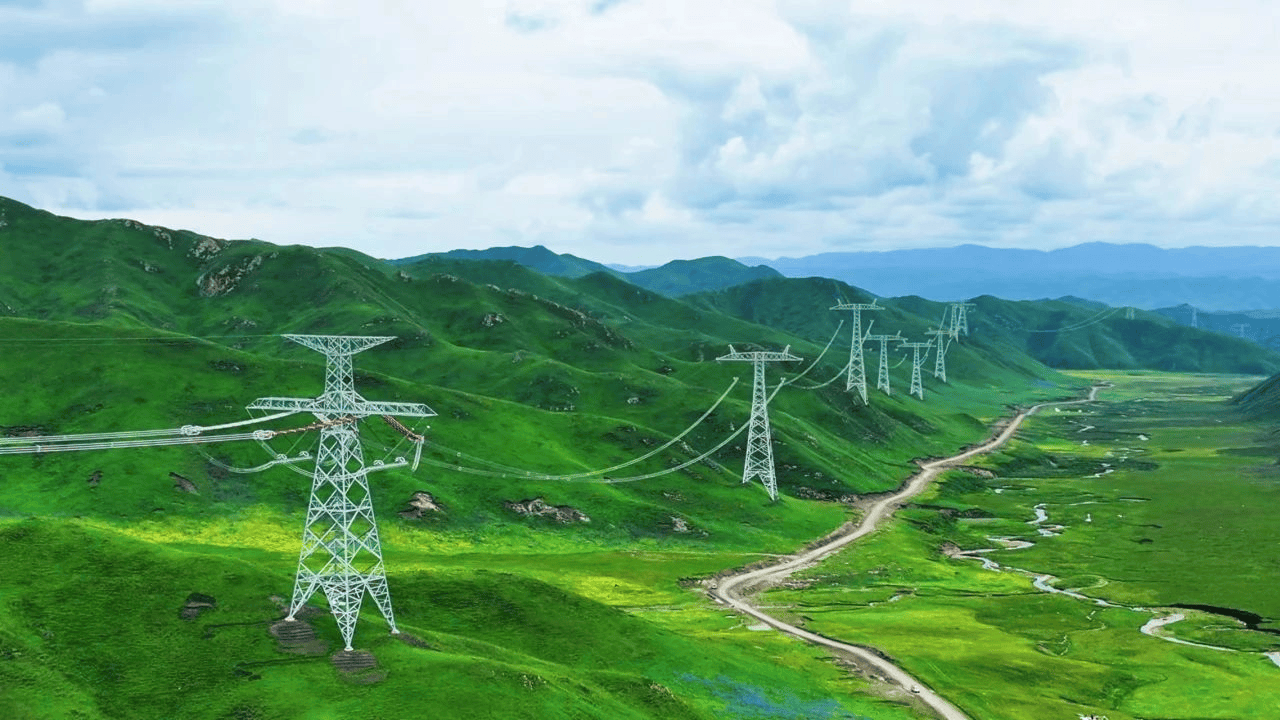
我国年用电量首破10万亿千瓦时
Xin Lang Cai Jing· 2026-01-17 21:49
Core Insights - China's total electricity consumption surpassed 10 trillion kilowatt-hours in July and August 2025, marking a historic global record for a single country, equivalent to more than double the annual electricity consumption of the United States and exceeding the combined annual consumption of the EU, Russia, India, and Japan [1][2][5] - The increase in electricity consumption from 5 trillion to 10 trillion kilowatt-hours occurred in just over a decade, highlighting China's unique growth rate among major economies and reflecting improvements in energy security [2][3] Group 1: Factors Driving Electricity Consumption - The growth in electricity consumption is driven by a stable macroeconomic environment and increased demand for residential electricity due to high temperatures and enhanced electrification [2][3] - High-end manufacturing has emerged as a core engine for electricity consumption growth, with electricity usage in the new energy vehicle and wind power equipment manufacturing sectors increasing by over 20% and 30%, respectively [3] - The rapid development of the digital economy and emerging technologies has created new electricity consumption points, with internet and related services seeing over 30% growth, and the charging and swapping industry approaching a 50% increase in electricity consumption [3] Group 2: Energy Supply and Infrastructure - China has established a collaborative supply system involving power sources, grids, and demand to support the 10 trillion kilowatt-hours achievement, ensuring stable and orderly operation of the electricity system [3] - On the supply side, coal power continues to provide a safety net, while hydropower, nuclear power, and thermal power work together to maintain a solid foundation, with renewable energy sources like wind and solar playing a significant role in increasing capacity [3] - The construction of a unified national electricity market is accelerating, with policies such as time-of-use pricing and peak-valley pricing being implemented to guide users in managing electricity demand dynamically [3] Group 3: Structural Changes in Energy Consumption - While electricity consumption in emerging industries is steadily increasing, the overall growth rate of high-energy-consuming industries is declining, with sectors like black metal smelting and non-metal mineral products experiencing a downward trend [4] - High-energy-consuming industries are undergoing structural adjustments and energy-saving transformations, leading to a gradual exit of outdated production capacity and the widespread application of advanced energy-saving technologies [4] - The continuous decline in energy consumption per unit of GDP indicates a shift towards a greener and more efficient economic model, enhancing the quality of GDP growth [4][5]
彰显超大规模经济体强劲韧性
Sou Hu Cai Jing· 2026-01-17 20:13
Group 1 - The core point of the article highlights that China's total electricity consumption is projected to exceed 10 trillion kilowatt-hours by 2025, marking a historic milestone and reflecting the resilience of its large-scale economy [1][2] - This electricity consumption figure is more than double that of the United States and surpasses the combined annual consumption of the EU, Russia, India, and Japan [1] - The growth in electricity consumption is driven by a stable macroeconomic environment and increased demand for electricity due to high temperatures and enhanced electrification levels [2] Group 2 - High-end manufacturing is identified as the main engine driving electricity consumption growth, with sectors like new energy vehicles and wind power equipment manufacturing expected to see consumption growth rates exceeding 20% and 30%, respectively [3] - The rapid development of the digital economy and emerging technologies has created new electricity consumption points, with internet-related services and charging infrastructure seeing growth rates over 30% and nearly 50% for charging and swapping industries [3] - The electricity supply system has been strengthened through a collaborative approach involving power sources, grids, and demand management, ensuring stable operation amid rising consumption [3] Group 3 - While emerging industries are experiencing steady growth in electricity consumption, high-energy-consuming sectors are seeing a slowdown, with declines noted in black metal smelting and non-metal mineral products [4] - The overall trend in high-energy-consuming industries is towards structural adjustment and energy-saving transformations, leading to a continuous decrease in energy consumption per unit of GDP [4] - The achievement of 10 trillion kilowatt-hours underscores the solid foundation of China's manufacturing sector and the steady improvement in electrification levels, reflecting the effectiveness of energy supply system upgrades and the construction of a new power system [4]
【新华解读】我国年用电量首超10万亿千瓦时,意味着什么?
Xin Hua Cai Jing· 2026-01-17 11:00
Core Insights - The total electricity consumption in China is projected to exceed 10 trillion kilowatt-hours for the first time in 2025, indicating significant economic growth and development [1] - The electricity consumption structure is shifting towards new and green energy, with substantial contributions from the tertiary industry and urban-rural residential sectors [2] - The supply side shows that 2025 will be the best year for energy supply security since the 14th Five-Year Plan, with effective measures taken to ensure stable electricity supply [3] Group 1: Electricity Consumption - In 2025, total electricity consumption is expected to reach 10,368.2 billion kilowatt-hours, a 5.0% increase year-on-year [1] - The first industry will consume 149.4 billion kilowatt-hours, growing by 9.9%; the second industry will consume 6,636.6 billion kilowatt-hours, growing by 3.7%; the third industry will consume 199.4 billion kilowatt-hours, growing by 8.2%; and urban-rural residential consumption will reach 158.8 billion kilowatt-hours, growing by 6.3% [2] - The contribution of the tertiary industry and urban-rural residential electricity consumption to overall growth will reach 50% in 2025 [2] Group 2: Energy Supply and Infrastructure - In 2025, the total installed power generation capacity in China is expected to exceed 3.8 billion kilowatts, a 14% increase [4] - The "West-to-East Power Transmission" project will reach a scale of 340 million kilowatts, accounting for about 23% of the national maximum electricity load [5] - The new power system is crucial for energy security and requires a balance between high-quality development and safety [4] Group 3: Future Outlook - By 2030, the proportion of renewable energy in total installed capacity is expected to exceed 50%, necessitating enhanced grid security [6] - The State Grid Corporation anticipates a fixed asset investment of 4 trillion yuan during the 15th Five-Year Plan, a 40% increase from the previous plan [6] - In 2026, the addition of over 200 million kilowatts of wind and solar power capacity is planned, along with the orderly advancement of major hydropower projects [7]