跨境电商

Search documents
图生视频工具在跨境电商中的应用与技术解析
Sou Hu Cai Jing· 2026-01-22 16:22
Core Insights - The article discusses the rise of generative video tools that utilize AI technology to convert static images into dynamic videos, which have become essential for enhancing product display in the rapidly growing cross-border e-commerce sector [1][6] - These tools help merchants reduce video production costs and improve content output efficiency, allowing them to meet diverse marketing needs across multiple platforms and regions [1][6] Group 1: Technology and Features - Generative video tools automate image processing to create smooth video content, employing technologies such as Generative Adversarial Networks (GAN), deep learning models, and natural language processing [1][6] - The tools can intelligently add motion effects, transition animations, and background music, and even support multilingual voiceovers, making videos more engaging and localized [1][6] - Most tools operate on cloud-based processing, enabling users to quickly output videos suitable for various scenarios by simply uploading images and making basic settings [1][6] Group 2: Key Players - Keevx focuses on providing efficient video generation services for cross-border e-commerce, enabling merchants to quickly create virtual model showcase videos for product detail pages, platform ads, and social media marketing [2] - Runway ML is another notable tool that allows users to convert static images into dynamic videos using advanced machine learning models, offering high-quality output and flexibility for users with technical backgrounds [2] - Canva integrates generative video functionality into its graphic design platform, allowing users to create videos easily through a user-friendly interface, making it particularly suitable for small to medium-sized cross-border e-commerce merchants [4] Group 3: Market Impact - Overall, generative video tools lower the barriers to video production for cross-border e-commerce, enhancing marketing efficiency and enabling merchants to vividly showcase products [6] - These tools foster user engagement through localized and personalized content, and as AI technology continues to advance, these tools are expected to become more intelligent and integrated, offering greater possibilities for the global e-commerce ecosystem [6]


2025年外贸十强城市出炉
Di Yi Cai Jing Zi Xun· 2026-01-22 12:47
Core Insights - The article highlights the competitive landscape of China's foreign trade cities in 2025, with established cities maintaining their positions while showing significant internal competition [2] - Shenzhen and Shanghai remain the only cities with foreign trade volumes exceeding 4.5 trillion yuan, collectively accounting for about 20% of the national total [2] - The article emphasizes the remarkable growth of Kinhua, which has become the eighth city to surpass the trillion yuan mark in foreign trade, showcasing a strong performance in exports to Africa and ASEAN [4][5] Group 1: Foreign Trade Rankings - The top ten cities for foreign trade in 2025 are Shenzhen, Shanghai, Beijing, Suzhou, Dongguan, Ningbo, Guangzhou, Kinhua, Xiamen, and Qingdao [2] - Dongguan regained its fifth position in the rankings, while Kinhua rose from tenth to eighth place, marking a significant achievement [2] - The Yangtze River Delta and the Pearl River Delta regions are well represented, with four and three cities respectively in the top ten [2] Group 2: Trade Performance Data - Shenzhen's total foreign trade volume reached 4.55 trillion yuan, with a slight increase of 1.4% [3] - Shanghai's foreign trade volume was 4.51 trillion yuan, showing a growth of 5.6% [3] - Kinhua's foreign trade volume surpassed 1 trillion yuan for the first time, with a growth rate of 19.5% [4] Group 3: Kinhua's Export Growth - Kinhua's exports to Africa reached over 151 billion yuan, growing by 27.9%, and accounted for 41.2% of Zhejiang's exports to Africa [4] - The city also saw significant growth in exports to ASEAN, with a rate of 38.0%, and to the EU, Middle East, and Latin America, with growth rates of 23.5%, 20.2%, and 16.8% respectively [4] - Kinhua's market procurement exports reached 599.17 billion yuan, marking a 27.0% increase and contributing significantly to the city's overall export growth [5] Group 4: Dongguan and Ningbo's Performance - Dongguan's high-tech product exports reached approximately 338.11 billion yuan, with a year-on-year growth of 17.2% [7] - Ningbo achieved a foreign trade total of 1.46 trillion yuan, marking a 2.6% increase, with notable growth in the export of "new three samples" products [6] - Dongguan's private enterprises accounted for over 60% of the city's total foreign trade, with a growth rate of 20.9% [7]

连连国际发布LianLian跨境商家信心指数2025年度回顾报告
Zheng Quan Ri Bao Wang· 2026-01-22 10:44
Core Insights - The LianLian Cross-Border Merchant Confidence Index for 2025 indicates that cross-border sellers are facing cost and competitive pressures while maintaining confidence in future operations [1][2] - The index, launched in January 2025, aims to provide valuable insights and decision support for the industry through monthly surveys tracking seller performance and expectations [1] Index Structure - The index consists of three components: the total index, the expectation index, and the current index. The current index reflects sellers' views on the present situation, while the expectation index reflects their outlook for the next three months [1] - A total index value above 100 indicates optimism, equal to 100 indicates neutrality, and below 100 indicates pessimism [1] Annual Review Findings - In 2025, the total index remained stable in a high range of 105 to 119, while the current index fluctuated between 84 and 93, indicating a cautious attitude and operational pressure among sellers [1] - The expectation index consistently operated in an optimistic range of 125 to 148, showing sellers' long-term confidence in future development [1] Industry Outlook - Despite facing challenges such as increased competition, cross-border merchants maintain a strong optimistic outlook for future sales performance and industry recovery [2] - LianLian International aims to leverage its resources to provide a referenceable "thermometer" and "barometer" for the industry, continuously optimizing the LianLian Cross-Border Merchant Confidence Index to offer valuable forward-looking insights [2]
解析连连国际跨境商家信心指数的技术“底座”:云原生×大数据×AI三层架构深度融合
Jin Rong Jie Zi Xun· 2026-01-22 10:19
Core Insights - LianLian International has officially announced the launch of the LianLian Cross-Border Merchant Confidence Index, aimed at providing a quantitative measure of seller expectations and industry confidence in the cross-border e-commerce sector [1] Group 1: Index Overview - The LianLian Cross-Border Merchant Confidence Index has been published monthly since its introduction in January 2025, assessing the current state and future expectations of the cross-border e-commerce industry across seven dimensions [1] - The index is designed to reflect seller performance expectations and industry confidence, providing a systematic way to track changes in the cross-border e-commerce environment [1] Group 2: Technological Infrastructure - The index operates on a cloud-native, big data, and AI-integrated intelligent platform, which includes a globally distributed infrastructure for real-time data collection and analysis [2] - This platform addresses the challenges of capturing critical market signals without being hindered by geographical or temporal barriers, ensuring comprehensive and timely insights [2] - The big data layer organizes vast amounts of heterogeneous data into structured assets, enabling effective analysis and understanding [2] Group 3: Practical Applications - Merchants have described the index as a "digital advisor," aiding in inventory planning, marketing strategy formulation, and risk assessment in new markets [4] - LianLian International emphasizes that the confidence index is not a final product but a mature application of their technology, with plans to develop a comprehensive intelligent infrastructure to reduce uncertainty for cross-border merchants [4] Group 4: Future Outlook - According to the World Trade Organization's 2025 World Trade Report, AI applications could drive global trade growth by nearly 40% by 2040 with appropriate policy support [4] - The cross-border industry is expected to face significant changes in trade policies, rules, and consumer habits as it approaches 2026, highlighting the need for technology-driven insights [4] - LianLian International aims to leverage advanced digital infrastructure to identify key signals that can change the competitive landscape, focusing on technological innovation as a core driver [4][5]

研报掘金丨开源证券:维持吉宏股份“买入”评级,预告2025年高增长
Ge Long Hui· 2026-01-22 06:18
Core Viewpoint - The report from Kaiyuan Securities indicates that Jihong Co., Ltd. is expected to achieve a net profit attributable to shareholders of 273-291 million yuan in 2025, representing a year-on-year increase of 50%-60% [1] Financial Performance - The net profit for Q4 2025 is projected to be between 57-75 million yuan, reflecting a growth of 21.3%-59.6% [1] - Overall performance is slightly above expectations [1] Business Strategy - The company is driving high growth through a dual approach of "packaging + cross-border social e-commerce" [1] - The cross-border e-commerce segment is leveraging AI technologies like GEO to expand into overseas markets with less commonly spoken languages [1] AI Technology Utilization - The company's AI system currently covers over 40 countries and regions, supporting intelligent processing in 28 languages [1] - In 2026, the company plans to focus on enhancing AI capabilities in Latin America, Central Europe, and Eastern Europe, as well as improving semantic understanding and cultural adaptation for languages such as Vietnamese, Thai, and Arabic dialects [1] Valuation - The current stock price corresponds to a price-to-earnings ratio of 30.7/24.4/19.9 times [1] - The rating is maintained as "Buy" [1]

铁陆联动提升物流效能
Jing Ji Ri Bao· 2026-01-22 00:02
Core Viewpoint - The article highlights the development of the SCO Demonstration Zone's logistics capabilities, focusing on the expansion of the China-Europe Railway Express and international road transport, aiming to enhance cross-border trade efficiency and connectivity [1][2][3][4]. Group 1: China-Europe Railway Express - Two trains of the "Japan-Korea Land-Sea Express" have departed from the SCO Demonstration Zone, with plans to increase the number of China-Europe Railway Express trains to 1,225 by 2025, achieving over 20% growth in both train frequency and cargo volume [1]. - The expected import and export cargo volume is projected to reach 840,000 tons by 2025, marking a historical high for the region [1]. - The SCO Demonstration Zone aims to integrate sea and rail transport schedules to provide comprehensive logistics solutions for businesses [2]. Group 2: International Road Transport - The TIR (International Road Transport) volume is expected to maintain its national leading position, with 435 shipments planned for the year, reflecting a 53.7% year-on-year increase [1]. - The region has established four international road transport routes since September 2023, creating a regional hub for international road transport [3]. - The introduction of a streamlined process for international road transport, including "one declaration, one certificate, and one vehicle direct delivery," enhances efficiency and flexibility, attracting more customers [3]. Group 3: Infrastructure Development - The construction of the China-Europe Railway Express (Jinan-Qingdao) National Gathering Center is expected to provide new opportunities for high-quality development in the SCO Demonstration Zone [3]. - The center has implemented an integrated model of "train transport + park warehousing + international trade," successfully handling over 38,000 tons of specific goods [3]. - The SCO Demonstration Zone is focused on enhancing operational efficiency and service quality while exploring new international road transport routes targeting SCO member states [4].
“中欧班列+”效应:一条铁路“链”起产业集群
Xin Lang Cai Jing· 2026-01-21 18:32
Core Insights - The introduction of the "smart railway port + local rapid customs clearance" model at the Horgos port in Xinjiang has significantly reduced the import and export processing times, enhancing the efficiency of logistics and trade across the Eurasian continent [2][3]. Group 1: Logistics and Transportation Efficiency - The Horgos port has reduced the import cargo transit time from 2-3 days to under 16 hours, while local export processing time has been cut down to 1 hour, showcasing a remarkable improvement in logistics efficiency [2][3]. - The application of technologies such as Beidou positioning, 5G, and electronic sealing has enabled full visibility tracking of goods throughout the transportation process, further enhancing operational efficiency [3]. Group 2: Industry Integration and Development - The "China-Europe Railway Express" has evolved from a simple cross-border logistics channel to a multifaceted ecosystem integrating "trains + hubs + industries + trade," fostering the development of distinct industrial clusters along the route [2]. - New business models such as "train + cross-border e-commerce," "train + order agriculture," and "train + green manufacturing" are emerging, expanding the boundaries of industrial integration [3][4]. Group 3: Economic Impact and Opportunities - The establishment of a green cross-border e-commerce train has reduced transportation costs to one-fifth of air freight, promoting the scaling of the cross-border e-commerce industry [4]. - The China-Europe Railway Express has become a new economic engine for regions like Ulanqab and Erenhot, driving growth in import-export trade and related services [4]. Group 4: International Collaboration - The China-Europe Railway Express is not only beneficial for China but also provides unique opportunities for countries along the route, such as Bulgaria, which plans to establish a regional distribution center to enhance market access for local businesses [4][5].

迪拜将举办第二届世界数字经济论坛
Shang Wu Bu Wang Zhan· 2026-01-21 15:42
Group 1 - The second Dubai World Digital Economy Forum will be held from February 12 to 14 [1] - The forum is co-hosted by the Dubai International Economic Development Bureau and the World Cross-Border E-Commerce Association (WORLDEF) [1] - The focus of the forum is on cross-border e-commerce and digital business, aiming to promote international cooperation and expand business opportunities [1] Group 2 - The event aims to drive sustainable development of the global digital economy [1]
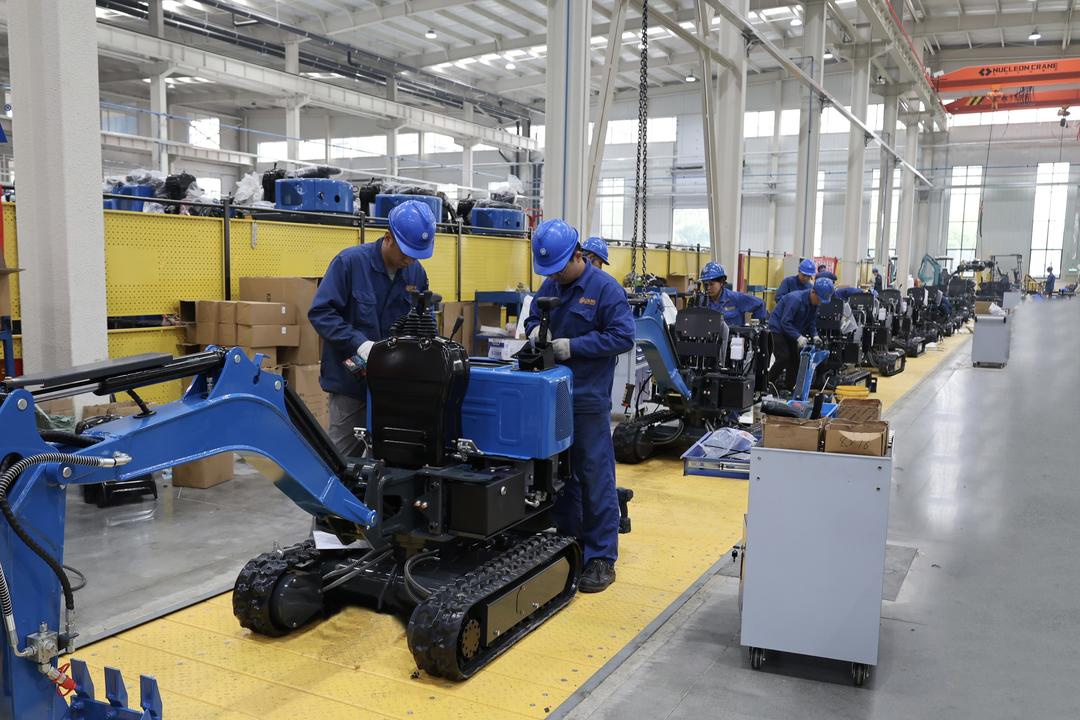
依托传统优势产业,济宁高新区打造海外“爆款”新业态
Qi Lu Wan Bao· 2026-01-21 12:41
Core Viewpoint - The small engineering machinery industry is experiencing significant growth in both domestic and international markets, with Jining High-tech Zone focusing on enhancing the business environment and supporting local enterprises for high-quality development [1][3]. Group 1: Industry Development - Jining High-tech Zone has established itself as a core area for the engineering machinery industry, achieving over 70% local supply chain integration and a comprehensive industrial structure covering various machine types [1]. - The region is actively promoting the development of small engineering machinery by combining traditional industry advantages with e-commerce, encouraging enterprises to focus on overseas niche markets and innovate new products [3]. Group 2: Export and Market Strategy - By 2025, Jining aims to achieve an export target of 7.56 billion yuan, representing a year-on-year growth of 92.6%, indicating strong growth potential and outward orientation [3]. - Jining's small excavators hold over 55% market share in the e-commerce markets of Europe and the United States, establishing a strong brand presence of "Small Machinery, Made in Jining" on major global e-commerce platforms [3]. Group 3: Support and Training Initiatives - The High-tech Zone plans to conduct 16 specialized training sessions on cross-border e-commerce by 2025, aiming to train over 5,000 individuals to support local enterprises in expanding their international reach [1][3]. - The region is fostering the growth of leading and supporting enterprises in the industry, such as Lipa Machinery and Luanqi Intelligent, to create a small engineering machinery industrial cluster driven by foreign trade [3].
破千亿美元!中国成中亚各国第一大贸易伙伴,当地“淘宝”创始人怎么看?
第一财经· 2026-01-21 12:08
Core Viewpoint - The article highlights the significant growth in trade between China and Central Asian countries, with a focus on the rise of e-commerce platforms like Uzum in Uzbekistan, which facilitate this trade and reflect the increasing demand for Chinese goods in the region [3][6]. Trade Growth - In 2025, the total import and export value between China and Central Asian countries exceeded $100 billion for the first time, marking five consecutive years of positive growth [3][6]. - China has become the largest trading partner for all Central Asian countries, with exports to the region reaching $71.2 billion in 2025, a year-on-year increase of 11% [6][7]. - Imports from Central Asia to China amounted to $35.1 billion in 2025, showing a 14% year-on-year growth, with a diverse range of products including energy and agricultural goods [7]. E-commerce Development - Uzum, Uzbekistan's largest e-commerce platform, has over 17 million monthly active users, nearly half of the adult population, and is seen as the "Taobao" of Uzbekistan [5]. - The platform has rapidly evolved from a sales platform to a service ecosystem, offering logistics, banking, and applications for small and medium enterprises [6]. - Chinese brands, both large and small, are increasingly using Uzum to enter the Uzbek market, with some achieving over 30% market share in specific categories during peak sales seasons [5][6]. Digital Economy and Infrastructure - Uzbekistan is experiencing a rapid transition in digital consumption infrastructure, with a high percentage of young people and increasing smartphone penetration [5]. - The country is positioned as a key player in the digital economy, with a growing middle class and modernized consumption patterns [5]. Regional Connectivity - Central Asia is becoming a crucial hub for trade and transportation, with initiatives like the C5+1 dialogue platform and the opening of new transport routes enhancing connectivity [8]. - The construction of the China-Kyrgyzstan-Uzbekistan railway is set to begin in 2025, further integrating Central Asia into global trade networks [8].