
辅助驾驶

Search documents
德赛西威上半年净利润同比增长45.82%,加强AI 技术作为核心支撑
Ju Chao Zi Xun· 2025-08-11 14:26
Core Insights - Desay SV's revenue for the first half of 2025 reached 14.64 billion yuan, a year-on-year increase of 25.2%, while net profit attributable to shareholders was 1.22 billion yuan, up 45.8% [1] - The company has successfully launched its fourth-generation intelligent cockpit in mass production for clients such as Li Auto, Xiaomi Auto, and Geely Auto, and continues to secure new project orders from various automakers [1][2] Financial Performance - The operating cash flow net amount was 1.638 billion yuan, reflecting a significant year-on-year growth of 166.2% [1] - In Q2 2025, the company reported revenue of 7.85 billion yuan, a 29.9% increase year-on-year, and a net profit of 640 million yuan, up 41.1% [1] Technological Advancements - The company is capitalizing on the trends of AI and 5G, focusing on the evolution from high-speed NOA in 2022 to urban NOA in 2024, and aiming for full-scene vehicle-to-vehicle (D2D) capabilities by 2025 [2] - Desay SV has developed an integrated cockpit solution that has been validated in real-world conditions, addressing key challenges in complex traffic scenarios [2] Strategic Initiatives - The company is actively exploring new business areas such as smart transportation, unmanned delivery, and robotics, aiming to create a new growth curve for sustainable development [2] - By leveraging existing automotive-grade supply chain resources and technological foundations, the company aims to enter new markets with lower costs and faster speeds [2]
油耗卷到2字头,续航超2100公里!吉利银河A7上市
Nan Fang Du Shi Bao· 2025-08-09 10:19
Core Insights - Geely Galaxy A7 has officially launched with seven variants, priced between 81,800 to 117,800 yuan, targeting the mid-range new energy vehicle market [1][4] - The vehicle is built on the GEA global intelligent new energy architecture, featuring advanced technologies such as the Thor AI hybrid 2.0 and a comprehensive range of over 2100 km [1][2] Performance and Efficiency - The Galaxy A7 boasts a fuel consumption of 2.67L per 100 km under CLTC conditions, utilizing a hybrid engine with a thermal efficiency of 47.26% [1][3] - It supports a maximum charging power of 37 kW, allowing for a 30% to 80% charge in just 18 minutes [1] Space and Comfort - With a wheelbase of 2845 mm and a total length of 4918 mm, the Galaxy A7 offers the largest interior space in its class, including a rear legroom of 950 mm [2] - The vehicle features unique luxury configurations such as a 10-layer cotton candy SPA seat and a 14-point SPA-level massage system [2] Safety Features - The GEA architecture includes a unique design for oil, electricity, and smoke separation, enhancing the vehicle's safety [3] - The Galaxy A7 is equipped with a comprehensive battery safety system and a high-strength "cage" body structure for maximum passenger protection [3] Intelligent Technology - The Galaxy A7 introduces the new Galaxy Flyme Auto intelligent cockpit, featuring a computing power of 23.5 EFLOPS and advanced navigation capabilities [3] - It includes the Qianli Haohan H3 assisted driving solution, with multiple sensors and high-capacity chips for superior driving assistance features [3] Market Positioning - The Galaxy A7 aims to compete directly with BYD in the mid-range new energy sedan market, leveraging its larger size and lower fuel consumption to challenge BYD's dominance [4]

今日新闻丨全新问界M7、深蓝L06、小鹏X9增程版、岚图追光L、新款极氪001等新车亮相工信部!
电动车公社· 2025-08-08 16:01
Core Viewpoint - The article discusses the latest electric vehicle models released by various manufacturers, highlighting their specifications and potential market impact. Group 1: New Vehicle Releases - The Ministry of Industry and Information Technology has released the 398th batch of new vehicles, including models such as ZEEKR 001, Aion i60, and others [2] - ZEEKR 001 features dimensions of 4977*1999*1545mm, with a maximum power of 680kW for the dual-motor version, and plans for updates in smart technology [6] - The new Aion i60 has dimensions of 4685*1854/1876*1660mm, with a power configuration similar to the Aion霸王龙, aiming to expand market reach [25] - The new问界 M7 has dimensions of 5080*1999*1780mm and offers both single and dual motor versions, expected to boost sales upon release [12] - The深蓝 L06, with dimensions of 4830*1905*1480mm, is the first model from新长安's independent brand, offering both pure electric and range-extended versions [29] Group 2: Market Positioning and Expectations - The昊铂 A8 is positioned as a mid-to-large range-extended sedan, with potential for significant sales growth upon launch [21] - The岚图追光 L is positioned as a high-end sedan, featuring advanced technology and design updates to meet luxury market demands [34] - The北汽极狐 T1, a new pure electric model, is expected to start pre-sales in late August, aiming to strengthen its market position [45]



科力装备:公司的主要客户为福耀玻璃、艾杰旭、板硝子、圣戈班等一级供应商
Mei Ri Jing Ji Xin Wen· 2025-08-06 08:48
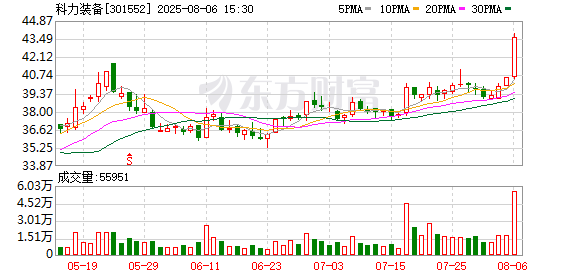
科力装备(301552.SZ)8月6日在投资者互动平台表示,您好!公司作为二级供应商有多种产品应用于 比亚迪,理想,蔚来,小鹏汽车,公司的主要客户为福耀玻璃、艾杰旭、板硝子、圣戈班等一级供应 商。随着新能源汽车渗透率增加,公司针对辅助驾驶领域的新技术将进一步普及,在新能源汽车配套零 部件领域市场前景广阔。 (文章来源:每日经济新闻) 每经AI快讯,有投资者在投资者互动平台提问:比亚迪,理想,蔚来,小鹏是否有资格使用公司产 品? ...
特斯拉欧洲销量崩了,4国销量之和不及中国市场零头
Xin Lang Ke Ji· 2025-08-06 07:36
8月6日,#特斯拉欧洲销量崩了#话题登上微博热搜。 另据乘联分会8月4日消息,7月特斯拉中国批发销量67886辆,环比下降5.2%。这也意味着,特斯拉7月 在英德法瑞4国的销量之和为3567辆,还不及中国市场零头。 近日,懂车帝选取市场上热门畅销、辅助驾驶功能完备的20多个品牌近40款车型,涵盖问界、智界、小 米、小鹏、蔚来、比亚迪、理想、阿维塔、特斯拉等,模拟城区、高速的15类辅助驾驶高危事故场景, 其中特斯拉表现最好。 7月25日,特斯拉CEO埃隆·马斯克转发了测评视频,并发文称:"由于法律禁止数据出境,特斯拉在没 有本地训练数据的情况下,在中国取得了最高成绩。" 英国汽车制造商和贸易商协会数据显示,特斯拉7月在英国注册量从去年同期的2462辆降至987辆,降幅 达到60%。 此外,特斯拉在法国7月注册量下降27%至1307辆,在瑞典暴跌86%至163辆,在比利时下降58%至460 辆。 特斯拉在意大利的1月至7月新车注册量较2024年同期下降34.74%。不过西班牙和挪威市场出现亮点, 注册量分别增长27%和83%。 据德国联邦机动车管理局KBA数据,特斯拉7月在德国仅售出1110辆汽车,同比下降55. ...

热搜!特斯拉欧洲销量崩了,4国销量之和不及中国市场零头
Xin Lang Ke Ji· 2025-08-06 05:35
Group 1 - Tesla's sales in Germany for July were only 1,110 vehicles, a year-on-year decline of 55.1% [1] - Cumulative sales for the first seven months in Germany totaled 10,000 vehicles, down 57.8% compared to the same period last year [1] - In the UK, Tesla's registrations fell from 2,462 vehicles in July last year to 987 vehicles this year, a drop of 60% [1] - In France, registrations decreased by 27% to 1,307 vehicles, while in Sweden, they plummeted by 86% to 163 vehicles [1] - Belgium saw a decline of 58% in registrations, totaling 460 vehicles [1] - In Italy, new car registrations from January to July dropped by 34.74% compared to the same period in 2024 [1] - However, Spain and Norway markets showed growth, with registrations increasing by 27% and 83% respectively [1] - In China, Tesla's wholesale sales in July were 67,886 vehicles, a month-on-month decrease of 5.2% [1] - The total sales in the four European countries (Germany, UK, France, Sweden) amounted to 3,567 vehicles, which is less than a fraction of the sales in China [1] Group 2 - Tesla CEO Elon Musk shared a video on July 25, stating that despite legal restrictions on data export, Tesla achieved the highest performance in China without local training data [2]

新华社评懂车帝科普节目:辅助驾驶不等于无人驾驶,必须守牢底线
Cai Fu Zai Xian· 2025-08-05 08:24
Group 1 - The article emphasizes that the confusion between assisted driving and autonomous driving is a major cause of accidents related to assisted driving [2] - It highlights that currently, there are no certified L3 autonomous driving products available in the domestic market, and all vehicles in use are L2 level, requiring constant driver supervision [2] - The article mentions that the responsibility for accidents lies with the driver unless it can be proven that a product defect caused the incident [2] Group 2 - The article discusses the increasing popularity of assisted driving among consumers, leading to some electric vehicle brands promoting intelligent driving as a core selling point, resulting in excessive marketing [2] - It notes that the Chinese automotive industry associations have called for strict adherence to the classification of automated driving to prevent false advertising and misleading statements [2] - The article stresses the importance of safety and responsible use of driving functions, urging consumers not to rely entirely on immature intelligent driving technologies [3] Group 3 - The article calls for automakers to take a responsible approach by educating the public on the correct use of assisted driving features and enhancing safety awareness [3] - It points out that the current assisted driving technology has not yet reached full autonomous driving levels and has limitations in usage scenarios [3] - The article urges automakers to clearly inform users about the capabilities and limitations of assisted driving systems to prevent dangerous situations caused by misleading promotions [3]
辅助驾驶的AI进化论 - 站在能力代际跃升的历史转折点
2025-08-05 03:15
Summary of Key Points from the Conference Call Industry Overview - The autonomous driving industry is at a pivotal point transitioning from L2 to L3 commercialization, with full-stack self-research manufacturers and third-party suppliers gaining a competitive edge [1][4] - Major players in the autonomous driving sector include Tesla, Xpeng, Li Auto, NIO, and third-party suppliers like Momenta and Yunrong Qixing [1][5] Core Insights and Arguments - The development of cloud-based intelligent computing centers and mass production of high-performance chips are crucial drivers for the industry [1] - Companies are investing heavily in R&D, with Tesla's HW5.0 featuring 4D millimeter-wave radar and Li Auto's L series equipped with laser radar [6][10] - Regulatory policies significantly impact the industry, with L2 standardization and multiple regions opening L4 commercialization pilot projects [8] Technological Developments - Xpeng is shifting to a pure vision solution to enhance visual perception and reduce hardware costs, while Huawei's ADS 4.0 supports high-speed L3 commercialization [3][12] - The VLA model integrates visual, language, and behavioral modules to optimize vehicle decision-making [3] - The industry is witnessing a shift towards data-driven development, with companies showcasing their cloud-based world models and parameter scales [29] Competitive Landscape - Leading companies in autonomous driving include Tesla, Xpeng, Li Auto, NIO, and Xiaomi, with significant contributions from domestic suppliers like SUTENG, Hesai Technology, and others [5][26] - Traditional manufacturers are increasingly opting for third-party solutions to shorten product cycles and reduce time costs [17] R&D and Investment Trends - Companies like NIO have invested over 10 billion yuan in R&D for three consecutive years, but face challenges in achieving commercial breakthroughs [14] - Xiaomi's growth in the autonomous driving sector is driven by its potential rather than current capabilities, with expectations for its models to feature laser radar [16] Consumer Perception and Market Trends - The development of intelligent driving technology includes advancements in features like high-speed NOA and parking functionalities [32] - Safety features are evolving, with the introduction of proactive avoidance systems to enhance driving experience [33] Investment Opportunities - Investors should focus on leading autonomous driving solution providers and full-stack self-research manufacturers, especially as regulatory frameworks evolve [36]


【快讯】每日快讯(2025年8月4日)
乘联分会· 2025-08-04 09:20
Domestic News - In July, China's manufacturing PMI dropped to 49.3%, influenced by seasonal production slowdowns and adverse weather conditions. However, industries like rail, shipping, aerospace, and electronics showed strong production and new order indices, indicating active demand [5] - Shandong province is promoting the application of assisted driving and smart city infrastructure, aiming to enhance vehicle-road collaboration and improve urban logistics systems [6] - Guangzhou is drafting guidelines for the application of autonomous driving equipment, with significant testing hours and mileage already achieved by local companies [7] - Guizhou province has launched a special action plan to boost consumption, focusing on investment in education, healthcare, and tourism sectors [8] - SAIC Zhiji has released the "Star" super-range extension system, featuring a 1.5T engine and a 66kWh battery, achieving over 450 km of pure electric range and over 1500 km of total range [9] - Hongmeng Zhixing has introduced a renewal plan for non-assisted driving vehicle owners, offering substantial purchase subsidies for upgrading to newer models [10] - Dongfeng's solid-state battery is set to be launched in 2026, boasting a density of 350Wh/kg and a range exceeding 1000 km [11] - NIO has partnered with Midea to enhance home-vehicle connectivity, integrating smart home technology with its vehicle systems [12] International News - Italy's new car sales fell by 5.11% in July, with Stellantis experiencing a more significant decline of approximately 13% [13] - The UK saw a 27% increase in electric vehicle charging points, adding 17,370 new chargers, while the government announced subsidies for new electric vehicles [14] - A new trade agreement between the US and South Korea has reduced tariffs on Korean car imports from 25% to 15%, potentially saving Hyundai and Kia over $3 billion, although they still face significant losses due to previous tariff exemptions [15] - Lyten has raised $200 million to acquire assets from the bankrupt battery manufacturer Northvolt, aiming to expand its presence in the European energy storage market [17] Commercial Vehicles - Isuzu and Volvo Group have signed a new strategic cooperation agreement to jointly develop medium and heavy-duty trucks for the Japanese and Asian markets [18] - Foton's Tuya and Xingchengyao have formed a strategic partnership to enhance the high-end RV experience in China [19] - SAIC Maxus is set to unveil its new "Star" platform for pickup trucks, which integrates advanced technologies for enhanced performance [20][21] - Weichai's new electric light truck, the Blue Whale X7, has begun mass delivery, showcasing strong market demand and advanced battery technology [22]

理想汽车盘前涨超2%,机构对理想i8和i6销量表现展望乐观,公司的辅助驾驶能力有望维持国内第一梯队水平
Ge Long Hui· 2025-08-04 08:39
摩根大通亦重申对理想正面观点及预期下半年表现强劲。该行表示,理想汽车推出其期待已久的电动 SUV i8,并公布售价32.18万至36.98万元。该行认为定价为正面惊喜,因较公布预售价低8%。i8入门车 款定价与其L8增桯电动车售价相同,但高端版本较L8高约1万元。(格隆汇) 【免责声明】本文仅代表作者本人观点,与和讯网无关。和讯网站对文中陈述、观点判断保持中立,不对所包含内容 的准确性、可靠性或完整性提供任何明示或暗示的保证。请读者仅作参考,并请自行承担全部责任。邮箱: news_center@staff.hexun.com 格隆汇8月4日|理想汽车(LI.US)盘前涨2.3%,报25.82美元。消息面上,理想汽车近日推出理想i8, 32.18万元起,8月20日正式开启交付。多家机构发研报表示看好,其中: 华泰证券(601688)指出,理想汽车i8正式上市,3款配置售价分别为32.18万、34.98万、36.98万元,Pro 版和Max版售价与L8同版本的指导价相同,Ultra版较L8 Ultra版便宜1万元。该行看好i8搭载VLA模型、 标配5C超充、宽敞舒适的座舱体验,对纯电车i8和i6(预计9月上市)上 ...