通货膨胀

Search documents
波黑食品价格涨幅失控,实际购买力遭通胀侵蚀
Shang Wu Bu Wang Zhan· 2026-01-17 17:50
Core Viewpoint - Bosnia and Herzegovina is experiencing a significant rise in food prices, leading to a situation where "prices are outpacing wages," resulting in a decline in residents' real purchasing power despite nominal wage increases [1] Group 1: Wage Growth and Inflation - In the first ten months of 2025, real net wages increased by 9.3% compared to the same period in 2024, according to data from the Bosnia and Herzegovina Statistical Office [1] - The wage growth is primarily driven by the minimum wage adjustment policy implemented by the Bosnian federal government starting January 1, 2025, which has particularly benefited labor-intensive service sectors like hospitality [1] - Despite the wage increases in certain sectors, the overall surge in prices, especially food prices, has made it difficult for ordinary residents to feel the benefits of real income growth [1] Group 2: Economic Impact on Households - The persistent inflationary pressure is continuously squeezing household disposable income, exacerbating the burden of living costs on society [1]
贷款买房时,房贷越短越好还是越长越好?银行员工:很多人选错贷款方式了
Sou Hu Cai Jing· 2026-01-17 06:44
Core Viewpoint - The choice of mortgage duration is complex and should be based on individual circumstances rather than general advice, balancing current financial pressure against future benefits [12]. Group 1: Mortgage Duration Considerations - Shorter loan terms result in higher monthly payments but lower total interest paid over the life of the loan [3][6]. - Longer loan terms lead to lower monthly payments, allowing for potential investment of the difference, which could yield higher returns over time [4][10]. - The time value of money suggests that money today is worth more than the same amount in the future, making longer terms potentially more advantageous if invested wisely [3][4]. Group 2: Inflation and Income Growth - Inflation diminishes the purchasing power of money over time, meaning that future payments may feel less burdensome in real terms [4][10]. - Income typically increases over time, which can reduce the relative burden of fixed mortgage payments as a percentage of income [4][10]. Group 3: Individual Circumstances - Personal investment capability and risk tolerance play a crucial role in deciding between short and long mortgage terms [6][11]. - Stability of employment and future income growth prospects should be considered when choosing a mortgage duration [10][11]. - Age and life stage are important factors; older individuals may prefer shorter terms to avoid long-term debt into retirement [7][10]. Group 4: Flexibility and Adaptability - Some mortgage products allow for adjustments in repayment terms, enabling borrowers to switch strategies as their financial situation changes [7][10]. - The purpose of buying a home (for living versus investment) can influence the choice of mortgage duration [8][10]. Group 5: Common Mistakes - Many individuals choose shorter terms without considering their financial capacity, leading to increased stress and reduced quality of life [10][11]. - It is essential to evaluate personal financial situations comprehensively rather than relying solely on external advice [11][12].


美联储降息25基点,特朗普很不满意,今年一定要换鲍威尔?
Sou Hu Cai Jing· 2026-01-17 05:01
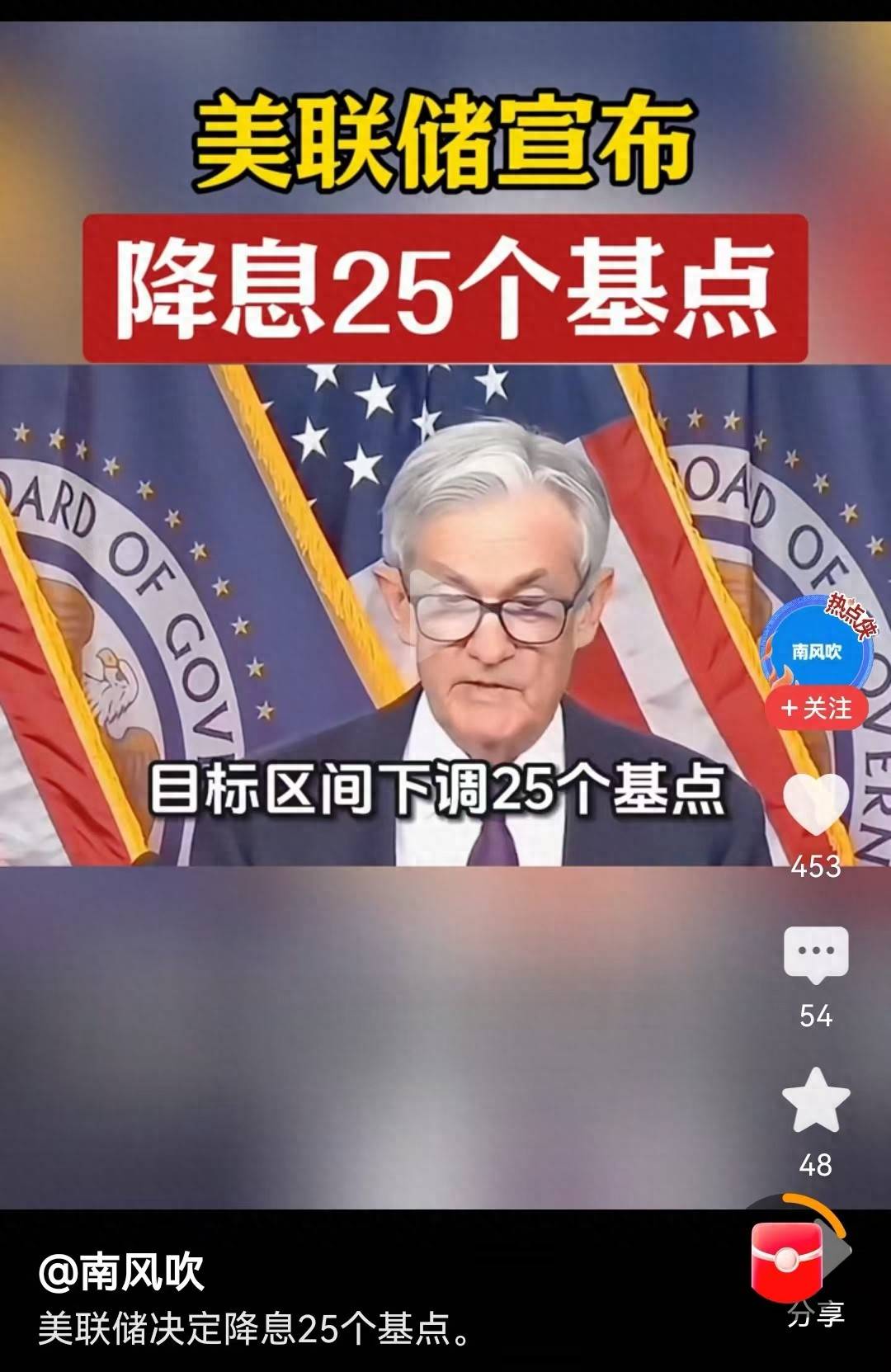
Group 1 - The Federal Reserve has concluded its interest rate cuts for the year, with a total of three rate cuts planned for 2025, all in the second half of the year, specifically in September, October, and December, each by 25 basis points [1] - After the last rate cut announcement, the target range for the federal funds rate will be between 3.5% and 3.75% [1] - There was significant dissent within the Federal Open Market Committee (FOMC) during the voting process, with three dissenting votes, indicating a division in opinions regarding the rate cut [3] Group 2 - Trump's influence on the Federal Reserve is evident, as he has expressed dissatisfaction with the 25 basis point cut, advocating for a larger cut of at least 50 basis points [6] - The urgency of Trump's economic policy is highlighted by rising inflation, prompting him to seek measures that would enhance corporate vitality and increase employment levels [6] - Trump's aggressive economic policy aims for substantial rate cuts to provide ample funding for U.S. businesses, thereby promoting expansion and job growth, although this could lead to inflationary pressures [6] Group 3 - The upcoming midterm elections create a time constraint for Trump to implement his economic policies, leading to increased criticism of Fed Chair Powell and a push for new appointments [9] - The ongoing debate reflects a struggle over the independence of the Federal Reserve, with concerns that it may be acting in the interests of the current administration rather than global financial stability [9] - The market has responded positively to the recent rate cut, with a notable rise in U.S. stock prices, indicating investor optimism despite the underlying tensions [9]
日元大跌倒逼央行提前加息?消息人士:下周或施放重要信号
Feng Huang Wang· 2026-01-16 05:21
Core Viewpoint - The Bank of Japan (BOJ) may consider raising interest rates earlier than market expectations, potentially as soon as April, due to the ongoing depreciation of the yen and rising inflation pressures [1][2]. Group 1: Interest Rate Decisions - BOJ officials are facing the challenge of increasing borrowing costs after years of ultra-low rates, with the current rate at 0.75%, the highest in 30 years [2]. - Many BOJ decision-makers believe there is room for further rate hikes, with some not ruling out action in April, which is earlier than the previously expected timeline of the second half of the year [2][3]. - A survey indicated that over 75% of analysts expected the next rate hike to occur in September, but internal discussions at the BOJ suggest a potential shift in this timeline [2]. Group 2: Yen Depreciation Concerns - The significant depreciation of the yen since October has raised concerns among BOJ officials regarding the stability of inflation, as it increases the cost of imports, including fuel and food [3]. - The yen's decline has led to warnings from government officials and has heightened uncertainty about whether price pressures will ease as predicted by the BOJ [3]. - There is a growing concern within the BOJ that companies may use the yen's depreciation as a reason to raise product prices, further complicating the inflation outlook [3]. Group 3: Future Projections - The BOJ is expected to revise its economic growth and inflation forecasts during the upcoming monetary policy meeting on January 23, which may signal the pace of future rate hikes [4]. - The BOJ's previous forecast from October projected a 0.7% growth in the economy and a core inflation rate of 1.8% for the fiscal year 2026 [4]. - Analysts suggest that the ongoing yen depreciation may force the BOJ to act sooner than anticipated in addressing inflation risks, with a significant likelihood of an April rate hike and potential further increases in July and October [4].
特朗普踢到钢板认怂,全球都在力挺其死对头,中方干了件大事
Sou Hu Cai Jing· 2026-01-16 03:43
Core Viewpoint - The article discusses the ongoing conflict between President Trump and Federal Reserve Chairman Jerome Powell, highlighting Trump's attempts to pressure Powell into adopting more aggressive monetary policies, which Powell has resisted due to concerns over inflation and long-term economic stability [1][3][6]. Group 1: Trump's Pressure Tactics - Trump has expressed dissatisfaction with Powell since taking office, primarily due to Powell's refusal to implement significant interest rate cuts as requested by Trump [3]. - Various tactics have been employed by Trump, including public humiliation and attempts to undermine Powell's authority within the Federal Reserve by nominating allies and attempting to dismiss other board members [5][6]. - Trump's aggressive strategies included threats of legal action against Powell and calls for investigations into his conduct, yet Powell has maintained his position and independence [6]. Group 2: Global Reactions and Implications - The independence of the Federal Reserve is crucial for global financial stability, and any turmoil within it could impact international markets, prompting support for Powell from other central banks [7]. - China has taken measures to reduce its holdings of U.S. Treasury bonds, now at $688.7 billion, to ensure the safety of its foreign reserves and gain strategic autonomy, aligning with Powell's stance on maintaining the Fed's independence [7]. - As a result of the mounting pressure and international support for Powell, Trump has softened his stance, indicating no current plans to remove Powell from his position [7].

野村资产管理预计日本日经225指数有望在2040年达到20万点
Xin Lang Cai Jing· 2026-01-15 05:10
Core Viewpoint - Nomura Asset Management predicts that the Nikkei 225 index could reach 200,000 points by 2040, assuming inflation stabilizes and nominal values are used to measure the Japanese economy and corporate earnings [1][2] Summary by Categories Economic Outlook - The report suggests that sustained inflation is expected to accelerate nominal GDP growth, which will support future corporate profit growth [1][2] Corporate Earnings - Chief Strategist Hideyuki Ishiguro forecasts an annual growth of approximately 10% in earnings per share, indicating that corporate profits could double approximately every seven years [1][2] Index Projections - The Nikkei 225 index is anticipated to reach around 100,000 points by 2033 and 200,000 points by 2040 [1][2]
机构:马来西亚央行2026年或将维持利率不变
Sou Hu Cai Jing· 2026-01-15 05:05
Core Viewpoint - The Bank Negara Malaysia is likely to maintain the policy interest rate at 2.75% throughout 2026 due to resilient domestic demand and controlled inflation [1] Economic Growth - Economic growth in Malaysia is expected to slow from an estimated 4.6% in 2025 to approximately 4.1% in 2026 [1] Inflation Expectations - The average inflation rate for 2026 is projected to be 1.9%, slightly higher than the previous expectation of 1.7%, but still within a controlled range [1] Interest Rate Projections - The terminal rate for the Federal Reserve is now expected to be adjusted down from 3.50% to 3.25% [1] Currency Exchange Rate - The exchange rate of the US dollar to the Malaysian ringgit is projected to reach 4.0 by the end of 2026, revised from a previous expectation of 4.10 [1]
CPF vs REITs: Which Builds a Stronger Retirement Income Stream in 2026?
The Smart Investor· 2026-01-15 03:30
Core Insights - The article discusses the role of Singapore's Central Provident Fund (CPF) and Real Estate Investment Trusts (REITs) as retirement income tools, highlighting the need for a combination of both to address rising living costs and inflation [1][14]. CPF as a Retirement Income Tool - CPF is a low-risk, government-backed scheme designed to provide predictable retirement income, with current interest rates of 2.5% for the Ordinary Account and 4% for the Special and Retirement Accounts [2][3]. - CPF savings are not subject to market volatility, making them suitable for risk-averse individuals, and upon retirement, savings can be converted into monthly payouts through the CPF Life scheme if a minimum balance is met [3][4]. - However, CPF funds are largely inaccessible until retirement age, and may not fully cover higher lifestyle expectations or inflation-driven expenses [4]. REITs as a Retirement Income Tool - REITs generate income by distributing rental income from properties to unitholders, with a regulatory requirement to distribute at least 90% of taxable income to qualify for tax benefits [5][6]. - Unlike CPF, REIT payouts are market-linked and can fluctuate based on various factors, offering higher income potential but with associated risks [6][8]. - For example, CapitaLand Integrated Commercial Trust has a trailing annual dividend yield of approximately 4.6%, which may help keep pace with inflation [8]. Income Stability vs Income Growth - CPF provides stable, risk-free growth but may not fully protect against inflation, while REITs offer potential for income growth through acquisitions and rental increases [7][8]. - The balance between stability and growth is crucial, as the best income stream is not necessarily the one with the highest yield but one that aligns with an investor's risk tolerance [9][11]. Integration of CPF and REITs - Combining CPF and REITs allows investors to leverage the stability of CPF with the growth potential of REITs, creating a diversified income stream [12][15]. - For long-term stability, focusing on blue-chip REITs with resilient balance sheets is recommended, while younger investors may allocate a higher percentage of their capital towards REITs for compounding benefits [12][14]. Conclusion - Sustainable income is increasingly important due to rising longevity, and while CPF remains a foundational element of retirement planning, supplementary income sources like REITs are becoming more relevant to combat inflation [14][15].
韩国央行维持利率不变 房价与汇率成政策焦点
Xin Hua Cai Jing· 2026-01-15 03:05
Group 1 - The Bank of Korea decided to maintain the benchmark interest rate at 2.50%, aligning with market expectations, and emphasized the need to balance economic recovery support with financial stability risks [1] - The central bank's statement removed previous language indicating a willingness to lower rates, signaling a more cautious policy stance [1] - The recent depreciation of the Korean won against the US dollar was attributed to factors such as a weakening yen, rising geopolitical risks, and increased overseas investment by residents, although the central bank believes this does not reflect the underlying economic fundamentals [1] Group 2 - The Bank of Korea projects that GDP growth in the fourth quarter will be below 0.2%, but the strong semiconductor industry is expected to support economic growth, with export conditions remaining favorable [2] - The central bank warned of ongoing housing price risks in Seoul and surrounding areas, stating that high interest rates are not an effective tool to curb housing prices and that structural measures are needed [2] - The monetary policy committee showed divided opinions, with five members favoring maintaining rates in the short term, while one member suggested that the possibility of rate cuts within three months should remain open [2] Group 3 - The Bank of Korea announced an extension of a special loan program for small and medium-sized enterprises for an additional six months, until the end of July 2026, to alleviate financing pressures [3]
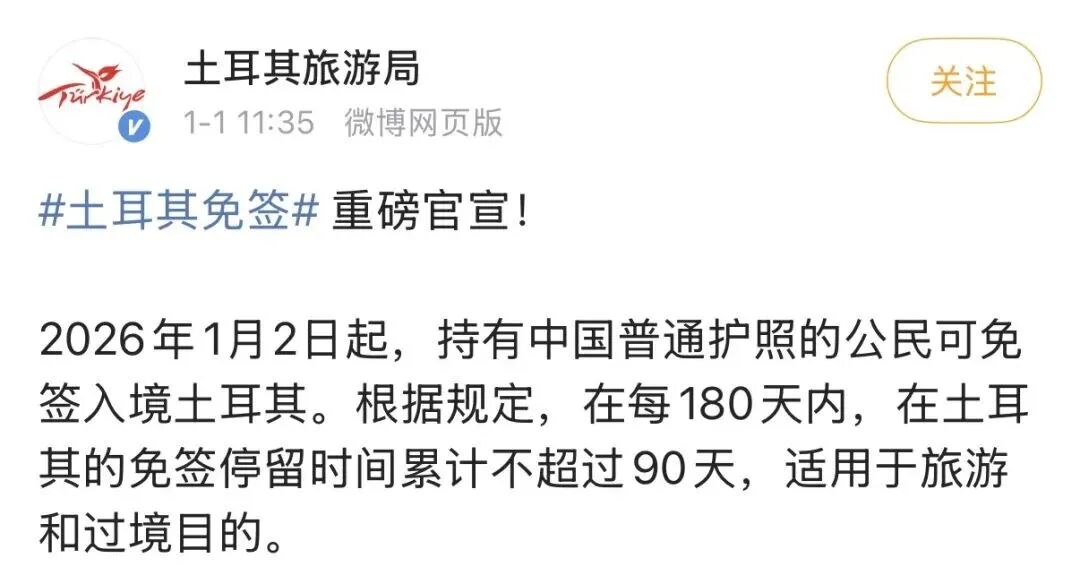
第一批免签去土耳其的中产,已经破产了
3 6 Ke· 2026-01-15 01:21
Core Insights - Turkey has seen a significant surge in tourism interest, with travel-related searches increasing dramatically on platforms like Qunar and Tongcheng, indicating a shift in travel plans for the upcoming Spring Festival [1][3] Price Increases - The cost of basic items in Turkey has skyrocketed, with a simple bottle of water priced at 85 lira (approximately 13.7 RMB) and a can of Coca-Cola at 210 lira (around 33.9 RMB) [4][6] - Dining costs are exorbitant, with meals such as a portion of vegetables costing 80 lira and a simple McDonald's meal reaching 210 lira [9][14] - The price of tourist attractions has also surged, with entrance fees for places like the Topkapi Palace increasing significantly over a short period [46][48] Currency and Inflation - Turkey's inflation rate has been extreme, with prices rising by 100% in less than six months, making it difficult for both locals and tourists to manage expenses [45][67] - The Turkish lira has depreciated dramatically against the dollar, leading to a situation where many services are priced in euros or dollars, further increasing costs for tourists [53][55] Tourism Dynamics - Despite the high costs, Turkey remains an attractive destination due to its unique cultural and natural offerings, such as hot air balloon rides in Cappadocia and historical sites in Istanbul [34][74] - The tourism sector is crucial for Turkey's economy, contributing significantly to GDP and employment, with projections indicating it will account for about 12% of GDP by 2025 [71][72] Visitor Experience - Tourists are experiencing a stark contrast between expected costs and actual expenses, leading to a perception of being overcharged, especially in tourist-heavy areas [53][76] - The chaotic currency system, where multiple currencies are accepted, complicates transactions and often results in higher costs for tourists [56][60]