先进封装

Search documents
尾盘飙升!002837,涨停!迈入“千亿俱乐部”
Zheng Quan Shi Bao· 2025-12-23 09:29
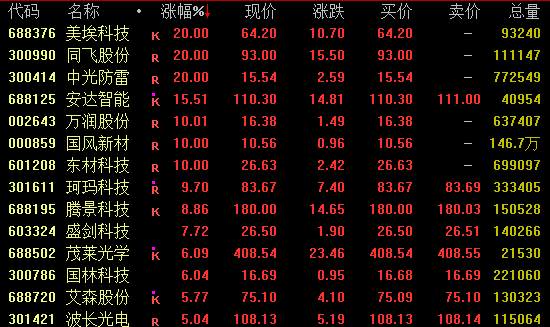
英维克(002837)(002837)市值突破千亿大关。 A股今日(12月23日)走势出现明显分化,以保险、银行为首的大市值个股拉升,小盘股走势疲弱;港股午后下探,恒生指数翻绿。 具体来看,三大股指盘中强势上扬,午后涨幅有所收窄。截至收盘,沪指微涨0.07%报3919.98点,深证成指涨0.27%,创业板指涨 0.41%,中证2000指数跌0.63%,沪深北三市合计成交19216亿元,较此前一日增加近400亿元。 A股市场超3800股飘绿,旅游餐饮、零售、食品饮料等消费板块集体下挫,曲江文旅(600706)跌停,近日4连板的庄园牧场 (002910)逼近跌停;商业航天概念跳水,顺灏股份(002565)跌停,中国卫通(601698)跌超9%;光刻机、先进封装等半导体产业 链股强势,美埃科技、同飞股份(300990)等涨停;液冷服务器等AI产业链股拉升,英维克(002837)尾盘涨停续创新高;锂电产业 链股崛起,奕东电子(301123)涨停续创新高,华盛锂电等涨超10%。 港股方面,地平线机器人跌约4%,快手跌超3%,腾讯控股、京东健康、药明康德(603259)等跌逾2%。 半导体产业链强势 光刻机、先进封装等半 ...


尾盘飙升!002837,涨停!迈入“千亿俱乐部”
证券时报· 2025-12-23 09:25
港股方面,地平线机器人跌约4%,快手跌超3%,腾讯控股、京东健康、药明康德等跌逾2%。 A股市场超3800股飘绿,旅游餐饮、零售、食品饮料等消费板块集体下挫,曲江文旅跌停,近日4连板的庄园牧场逼近跌 停;商业航天概念跳水,顺灏股份跌停,中国卫通跌超9%;光刻机、先进封装等半导体产业链股强势,美埃科技、同飞股 份等涨停;液冷服务器等AI产业链股拉升,英维克(002837)尾盘涨停续创新高;锂电产业链股崛起,奕东电子涨停续创 新高,华盛锂电等涨超10%。 此外,今日上市的三只新股——纳百川、锡华科技、天溯计量收盘分别上涨408.2%、264.5%、174.5%,盘中最高攀升至 180元/股、46元/股、150.99元/股,若以上述最高价计算,三股单签最高盈利分别达7.87万元、1.8万元、5.71万元。 半导体产业链强势 英维克( 002837 ) 市值突破千亿大关 。 A 股今日( 12 月 23 日 ) 走势 出 现明显分化,以保险、银行为首的大市值个股拉升,小盘股走势疲弱;港股午后下探, 恒生指数翻绿。 具体来看,三大股指盘中强势上扬,午后涨幅有所收窄。截至收盘,沪指微涨0.07%报3919.98点,深证成 ...

长江有色:宽松预期与假期情绪交织 23日锡价或下跌
Xin Lang Cai Jing· 2025-12-23 03:34
需求呈现结构性特征。长期增长极明确,AI服务器、先进封装、光伏及新能源汽车等新兴产业用锡需 求保持高速增长,构成价格长期中枢上移的核心动力。短期采购则偏谨慎,高锡价抑制下游补库意愿, 企业多维持低库存、按需采购策略,导致现货交投清淡,对价格进一步上涨形成抑制。 产业链与市场展望:利润分化,高位震荡 产业链利润显著向上游资源端集中,中下游加工企业成本压力较大。龙头企业凭借资源自给优势,业绩 弹性充分释放。短期市场预计维持高位震荡,地缘风险与低库存提供支撑,但高价位下的需求畏高情绪 与假期前资金动向可能引发技术性回调。中长期走势仍需关注地缘局势演变与新兴产业实际需求的匹配 度。 期货市场:海外圣诞节临近资金交投谨慎,隔夜伦锡收跌0.57%;最新收盘报42730美元/吨,下跌245美 元,跌幅为0.57%,成交量为835手,持仓量24617万手较前一交易量增加127手;国内方面,夜盘沪期 锡弱势震荡,尾盘小幅收跌,沪锡主力合约2602最新收报340650元/吨,跌2210元/吨,跌幅为0.64%; 伦敦金属交易所(LME)12月22日伦锡库存量报4625吨,较前一交易日库存量减少20吨。长江锡业网 讯:今日沪锡期货 ...

一家卖布的日本公司,卡了AI芯片脖子
半导体行业观察· 2025-12-23 01:18
公众号记得加星标⭐️,第一时间看推送不会错过。 成立于1923年的日东纺(Nittobo)最早可以追溯到1898成立的纺织公司。 作为日本历史最悠久的丝绸纺织公司之一,他们利用明治政府推动的朝香灌溉渠的剩余电力,他们开 始经营发电业务和纺织业务。直到1963年,他们都是生产的与纺织相关的产品,但进入1969年,为 了满足计算机和集成电路(IC)技术进步带来的日益增长的需求,我们开始生产印刷电路板用的玻璃 布。 1984年,该公司推出了具有高强度和低热膨胀系数特点的T-Glass。据介绍,该材料最初用于复合材 料,但后来,这个产品被逐渐现在用于高速处理和高可靠性服务器及智能手机的半导体封装基板。 历经后来四十年的发展,这家公司已经当前热门的AI核心材料供应商。 T-Gl a ss是什么? 要了解T-Glass在芯片中的作用,就首先要清楚什么是玻纤布。 据介绍,玻纤布是一种由玻璃纤维纱编织而成的制品,具备绝缘性、耐热性、高强度等特性。由于制 造铜箔基板(CCL)时,主要是用铜箔和非导电复合材料(如玻纤布、环氧树脂)热压而成,因此玻 纤布可说是铜箔基板的关键原料。 铜箔基板又是PCB的核心基材,负责建构 PCB的骨 ...
【点金互动易】人形机器人+类脑芯片,公司开发情感识别机器人和存算一体ReRAM,构建巡检运输等机器人矩阵
财联社· 2025-12-23 01:09
《电报解读》是一款主打时效性和专业性的即时资讯解读产品。侧重于挖掘重要事件的投资价值、分析 产业链公司以及解读重磅政策的要点。即时为用户提供快讯信息对市场影响的投资参考,将信息的价值 用专业的视角、朴素的语言、图文并茂的方式呈现给用户。 ①人形机器人+类脑芯片,开发情感识别机器人和存算一体ReRAM,构建巡检运输等机器人矩阵,这家公 司布局教育康复医疗全生命周期应用; ②存储芯片+先进封装,TGV AOI设备用于2.5D/3D封装检测,这 家公司与ADI合作推出高性能ATE解决方案,提升存储测试效率。 前言 ...

打不过台积电,怎么办?
半导体芯闻· 2025-12-22 10:17
Core Viewpoint - The global wafer foundry market is experiencing a clear structural shift, with TSMC solidifying its position as the dominant player, while competitors like Intel and Samsung are adjusting their strategies to find their niches in the market [2][3][43]. TSMC's Dominance - TSMC's revenue for Q3 2025 reached $33.063 billion, with a market share of 71%, reflecting its significant lead over competitors [2]. - The overall foundry market is projected to grow, but TSMC is capturing the majority of this growth, showcasing a "magnification effect" of its advantages in advanced processes and capital expenditures [2]. Competitors' Strategies - Other foundries, such as Samsung, are struggling to close the gap in market share, with Samsung's Q3 revenue at $3.184 billion and a market share decline to 6.8% [3]. - Intel is aggressively transforming its strategy, focusing on advanced technology and ecosystem restructuring to regain competitiveness in specific areas [4][43]. Intel's Advanced Process and Packaging - Intel's 14A process node is positioned as a competitive choice for external customers, utilizing High-NA EUV technology, which is expected to enhance power efficiency and chip density [5]. - Intel's EMIB technology is emerging as a viable alternative to TSMC's CoWoS packaging, with significant interest from major clients like Apple and Broadcom [7][9]. Samsung's 2nm Process - Samsung is betting heavily on its 2nm process, which is expected to turn its foundry division profitable by 2027, with a current yield improvement from 50% to a target of 70% [15][16][24]. - The company has secured significant contracts, including a $16.5 billion deal with Tesla for AI6 chips, indicating a strong market position in automotive semiconductors [17][19]. UMC's Differentiation Strategy - UMC is focusing on mature processes and high-value applications, avoiding the advanced process competition while establishing a foothold in advanced packaging and silicon photonics [25][27]. - The collaboration with Qualcomm on advanced packaging is expected to enhance UMC's position in high-performance computing markets [27]. GlobalFoundries' Focus on Specialty Processes - GlobalFoundries is concentrating on mature processes and specialty technologies, with a recent acquisition of AMF to strengthen its position in silicon photonics [34][36]. - The company is also enhancing its capabilities through the acquisition of MIPS, aiming to provide integrated solutions for clients in various high-growth markets [37]. Conclusion - The wafer foundry market is evolving, with companies like Intel, Samsung, UMC, and GlobalFoundries adopting differentiated strategies to navigate the competitive landscape, focusing on their unique strengths and market opportunities [43].


超2900只个股上涨
第一财经· 2025-12-22 07:29
2025.12. 22 作者 | 一财阿驴 12月22日,A股三大指数集体走强,截至收盘,沪指涨0.69%,深成指涨1.47%,创业板指涨 2.23%。 | 代码 | 名称 | | 两日图 | 现价 | 涨跌 | 涨跌幅 | | --- | --- | --- | --- | --- | --- | --- | | 000001 | 上证指数 | man | 1 | 3917.36c | 26.92 | 0.69% | | 399001 | 深证成指 | Jun | 3 | 13332.73c | 192.52 | 1.47% | | 399006 | 创业板指 | Vm | S | 3191.98c | 69.75 | 2.23% | 盘面上,海南自贸港概念股掀涨停潮;半导体产业链爆发,CPO、先进封装、硅片方向领涨;AI手 机、宇树机器人、智能驾驶题材活跃;医药商业指数回调明显。 具体来看,海南板块集体爆发,海南矿业、海南瑞泽、海南发展等超20股涨停。 | 代码 | 名称 | 涨幅4 | 现价 | | --- | --- | --- | --- | | 300189 | 神农种业 | +20.03% | ...





硕贝德涨2.11%,成交额5.57亿元,主力资金净流出5791.34万元
Xin Lang Cai Jing· 2025-12-22 03:15
12月22日,硕贝德盘中上涨2.11%,截至10:56,报24.18元/股,成交5.57亿元,换手率5.30%,总市值 111.24亿元。 资金流向方面,主力资金净流出5791.34万元,特大单买入1741.20万元,占比3.12%,卖出6702.80万 元,占比12.03%;大单买入1.24亿元,占比22.23%,卖出1.32亿元,占比23.72%。 硕贝德今年以来股价涨84.44%,近5个交易日涨5.59%,近20日涨15.69%,近60日跌1.87%。 今年以来硕贝德已经4次登上龙虎榜,最近一次登上龙虎榜为8月7日,当日龙虎榜净买入5.33亿元;买 入总计7.14亿元 ,占总成交额比18.47%;卖出总计1.81亿元 ,占总成交额比4.68%。 资料显示,惠州硕贝德无线科技股份有限公司位于广东省惠州市仲恺高新区东江高新科技产业园惠泽大 道138号,成立日期2004年2月17日,上市日期2012年6月8日,公司主营业务涉及无线通信终端天线的研 发、生产和销售。主营业务收入构成为:天线50.50%,线束及连接件26.34%,智能传感模组13.73%, 散热器件及模组8.86%,其他(补充)0.57%。 硕贝 ...

打不过台积电,怎么办?
半导体行业观察· 2025-12-21 03:58
Core Viewpoint - TSMC has solidified its position as the core pillar of the global foundry market, capturing over 70% market share and achieving a revenue of $33.063 billion in Q3 2025, reflecting a 9.3% quarter-on-quarter growth [1][2]. Group 1: TSMC's Market Position - TSMC's revenue growth is significantly higher than its competitors, with a market share increase to 71% [1]. - The overall foundry market is growing, but TSMC is capturing the most substantial portion of this growth [1][2]. - Other foundry players, such as Samsung and SMIC, are struggling to close the gap in market share despite their revenue increases [2]. Group 2: Intel's Strategic Shift - Intel is aggressively transforming its strategy, focusing on advanced technology and ecosystem restructuring to regain competitiveness in the foundry market [3][4]. - The 14A process node is central to Intel's strategy, utilizing High-NA EUV technology to enhance power efficiency and chip density [4][5]. - Intel's EMIB technology is emerging as a viable alternative to TSMC's CoWoS packaging, addressing the demand for advanced packaging solutions [6][7]. Group 3: Customer Acquisition and ASIC Business - Intel has made significant strides in securing major clients, including Apple, which is expected to utilize Intel's 18A-P process for its M-series chips [8][9]. - Intel is establishing a dedicated ASIC department to provide customized chip solutions, leveraging its manufacturing capabilities to attract clients [10][11]. Group 4: Samsung's 2nm Strategy - Samsung is betting heavily on its 2nm process technology, aiming to turn its foundry business profitable by 2027 [12][13]. - The yield rate for Samsung's 2nm process has improved from 50% to a target of 70%, which is crucial for attracting major clients [13][21]. - Samsung has secured contracts with Tesla and Qualcomm, indicating a successful shift in its client base [14][15]. Group 5: UMC's Differentiation Strategy - UMC is focusing on mature processes and high-value applications, avoiding the high-risk advanced process competition [22][23]. - UMC has made significant progress in advanced packaging, securing a partnership with Qualcomm for high-performance chips [24]. - UMC is also entering the silicon photonics market through collaboration with IMEC, aiming to capture the next-generation high-speed connectivity applications [25][26]. Group 6: GlobalFoundries' Focus on Specialty Processes - GlobalFoundries is concentrating on mature and specialty processes, with a clear strategy to establish a unique position in specific markets [29][30]. - The acquisition of Advanced Micro Foundry enhances GlobalFoundries' capabilities in silicon photonics, positioning it as a leader in this field [31][32]. - GlobalFoundries is also acquiring MIPS to strengthen its computing capabilities, providing clients with ready-to-use IP modules [33][34]. Group 7: European Expansion and Local Manufacturing - GlobalFoundries plans to invest €1.1 billion to expand its Dresden facility, aiming to meet the growing demand for secure and differentiated technology in Europe [35][36]. - The company is also exploring partnerships for local manufacturing in the U.S. to address the increasing demand in key industries [27][37]. Conclusion - The foundry market is evolving, with TSMC maintaining a dominant position while competitors like Intel, Samsung, UMC, and GlobalFoundries are carving out their niches through strategic adjustments and technological advancements [38].

半导体材料,不容忽视
半导体行业观察· 2025-12-20 02:22
Core Viewpoint - The semiconductor industry is undergoing a transformation towards 3D integration and larger substrates, fundamentally changing the role of materials in packaging. Materials that once served structural and electrical insulation purposes are now critical factors limiting device performance [1][15]. Group 1: Material Challenges - Modern packaging materials include a wide variety of polymers, adhesives, advanced dielectric materials, thermal interface materials, and composite laminates, which are more numerous than in previous generations [1]. - Many of these new materials lack sufficient long-term reliability data, leading to potential failure modes that may only become apparent after field cycling or PCB-level assembly [1][2]. - The transition to 3D architectures significantly expands the demand for advanced packaging materials, particularly for high-frequency AI applications that require specific dielectric constants and loss tangent values [1][2]. Group 2: Reliability Risks - Reliability risks often manifest after assembly, as polymers, adhesives, and bonding films continue to evolve, leading to issues such as loss of adhesion, relaxation after curing, swelling due to moisture absorption, and material migration within adhesive layers [2][5]. - The complexity of modern systems necessitates materials with precisely controlled dielectric properties, flow, and curing characteristics, as well as predictable thermomechanical stress behavior on large panels [2][5]. Group 3: Process Optimization - The industry is responding to these challenges through stricter process controls, system-level material specifications, and collaborative optimization strategies, treating films, interfaces, and deposition methods as unified reliability controls rather than independent variables [1][5]. - Early collaboration with stakeholders during material selection is crucial to ensure that materials possess the required chemical and physical properties [3][4]. Group 4: Mechanical Performance - As the number of materials increases, advanced packaging structures behave like composite materials, with each layer having distinct thermal expansion coefficients, viscoelastic responses, and curing characteristics [5][6]. - Mechanical stability is no longer a fixed attribute of layered structures but a dynamic target influenced by residual stresses generated during lamination and curing processes [5][6]. Group 5: Thermal Management - The rising power density in devices necessitates new thermal interface materials (TIMs) that can effectively manage heat dissipation while maintaining mechanical stability [9][10]. - The selection of TIMs is critical, as interface thermal resistance depends on wetting properties, void tendencies, and bonding layer thickness, which can significantly impact device reliability [9][11]. Group 6: Future Directions - The future of reliability in advanced packaging materials lies in viewing materials and processes as a unified system, with a focus on controlling variables at the nanoscale to enhance predictability and performance [12][15]. - The industry is encouraged to adopt a holistic approach to material selection, process conditions, and evolving stress fields to improve reliability and performance in larger panel sizes and higher stacking structures [15].