
原油供应过剩

Search documents
突发:俄罗斯再遭新制裁!金银钯铂集体大涨,国际油价大跌
Qi Huo Ri Bao· 2025-11-12 23:38
Group 1: Precious Metals - Gold price increased by 1.67% to $4195.46 per ounce, silver price rose by 3.99% to $53.23 per ounce, palladium price up by 2.22% to $1505.85 per ounce, and platinum price increased by 2.29% to $1634.93 per ounce [1] Group 2: Oil Market - WTI crude oil futures fell by 4.19% to $58.48 per barrel, while Brent crude oil futures dropped by 3.74% to $62.72 per barrel [3] - Concerns over oversupply in the oil market have resurfaced, leading to a decline in oil prices after a brief rebound [5] - Recent sanctions on Russian oil and India's cessation of Russian oil purchases have raised supply concerns, with India previously importing approximately 1.7 million barrels per day from Russia [5] - OPEC+ is expected to continue increasing production in December, which will exert further pressure on oil prices [7] - Despite recent price increases, the fundamental outlook for the oil market remains weak, with rising inventory pressures and a seasonal decline in demand expected [7][8]


原油震荡上行:原油日报-20251112
Guan Tong Qi Huo· 2025-11-12 11:14
Report Summary 1. Report Industry Investment Rating - Not provided 2. Core Viewpoint - The crude oil market remains in a supply - surplus situation, and it is expected that the crude oil price will fluctuate in the near term [1] 3. Summary by Related Catalogs 3.1 Market Analysis - On November 2nd, OPEC+ eight countries decided to increase production by 137,000 barrels per day in December, the same as the October and November plans, and suspend production increase in Q1 2026. The next OPEC+ eight - country meeting will be on November 30th. This will increase the supply pressure in Q4 2025 but unexpectedly relieve it in Q1 2026 [1] - Saudi Aramco has comprehensively lowered the official selling prices of crude oil sold to Asia in December, with the price of its flagship product, Arab Light crude oil, cut by $1.20 per barrel [1] - The peak season for crude oil demand has ended. EIA data shows that the gasoline inventory drawdown exceeded expectations, but the U.S. crude oil inventory build - up also exceeded expectations, with the overall refined product inventory slightly increasing [1][3] - The U.S. crude oil production continued to reach a new historical high [1][3] - The end of the consumption peak season, the decline of the U.S. ISM manufacturing index in October, and continued contraction for eight months have led to market concerns about crude oil demand [1] - The U.S. has changed its attitude towards Russia, sanctioning two major Russian oil companies and their subsidiaries. However, Trump said he hopes to meet Putin in Budapest. The military confrontation between the U.S. and Venezuela has escalated [1] - After the Russian crude oil discount widened, India continued to import Russian crude oil, but there is a possibility that it will gradually reduce imports due to a new tariff agreement with the U.S. Indian oil companies have different attitudes after the sanctions [1] - After the attacks on Russian refineries by Ukraine, European gasoline and diesel prices have continued to rise. Currently, the Russian crude oil export volume remains high [1] 3.2 Futures and Spot Market - Today, the main crude oil futures contract, the 2512 contract, rose 1.52% to 466.2 yuan/ton, with a minimum price of 461.7 yuan/ton, a maximum price of 470.4 yuan/ton, and the open interest decreased by 1,619 to 22,279 lots [2] 3.3 Fundamental Tracking - EIA expects global liquid fuel production to increase by 2.7 million barrels per day in 2025 and another 1.3 million barrels per day in 2026. It also raised the forecast of U.S. crude oil production in 2026 by 200,000 barrels per day to 13.5 million barrels per day [3] - On the evening of November 5th, U.S. EIA data showed that for the week ending October 31st, the U.S. crude oil inventory increased by 5.202 million barrels (expected: 603,000 barrels), 5.34% lower than the five - year average; gasoline inventory decreased by 4.729 million barrels (expected: 1.14 million barrels); refined oil inventory decreased by 643,000 barrels (expected: 1.969 million barrels). Cushing crude oil inventory increased by 30,000 barrels [3] - OPEC's latest monthly report shows that its August 2025 crude oil production was revised down by 32,000 barrels per day to 27.916 million barrels per day, and its September production increased by 524,000 barrels per day to 28.44 million barrels per day, mainly driven by production increases in Saudi Arabia and the UAE. U.S. crude oil production for the week ending October 31st increased by 700 barrels per day to 13.651 million barrels per day [3] 3.4 Demand Data - According to the latest data from the U.S. Energy Agency, the four - week average supply of U.S. crude oil products decreased to 20.344 million barrels per day, a 2.20% decrease compared to the same period last year, changing from being higher to lower than the same period last year [4] - The weekly gasoline demand decreased by 0.56% to 8.874 million barrels per day, with the four - week average demand at 8.677 million barrels per day, a 2.08% decrease compared to the same period last year [4] - The weekly diesel demand decreased by 3.63% to 3.71 million barrels per day, with the four - week average demand at 3.843 million barrels per day, a 1.66% decrease compared to the same period last year [4] - The decline in gasoline demand and larger drops in other refined products led to a 4.35% decrease in the single - week supply of U.S. crude oil products [4]
原油成品油早报-20251112
Yong An Qi Huo· 2025-11-12 04:21
Industry Investment Rating - No information provided Core Viewpoints - This week, oil prices remained volatile. OPEC+ decided to suspend production increases in Q1 next year. The US EIA commercial crude oil inventory increased by 5.202 million barrels due to increased imports and reduced refining activities, with the increase higher than market expectations. Western sanctions on Russia and Iran have led to a record high in on - board oil storage, and Russian oil in the Indian market has traded at the largest discount in nearly a year. This week, refining profits in European and American refineries rebounded, and Western sanctions and the extended maintenance of Dangote Refinery supported the gasoline and diesel cracking sentiment. The domestic fundamentals are neutral. The global fundamental surplus and sanctions factors support the Dubai market, and Brent crude oil maintains a volatile pattern, expected to fluctuate in the range of $55 - 65 in Q4 [7] Summary by Relevant Catalogs 1. Market Data - From November 5th to 11th, 2025, WTI increased by $0.91, BRENT by $1.10, and DUBAI by $0.59. Other indicators also showed corresponding changes [3] - From November 5th to 11th, 2025, SC decreased by 3.00, OMAN increased by 0.99. Domestic gasoline increased by 20.00, and domestic diesel increased by 5.00. Other related indicators also had corresponding changes [3] - From November 5th to 11th, 2025, Japanese naphtha - BRT decreased by 13.59, Singapore 380 - BRT decreased by 9.96. Other related indicators also showed corresponding changes [3] 2. Daily News - Germany requires SEFE to terminate the long - term natural gas import agreement with Russia. Canceling the contract may cost about 10 billion euros (11.6 billion US dollars), and the annual import volume is about 2.9 million tons with a contract term until 2040 [4] - The key indicator of the North Sea crude oil market has fallen to a low point in more than a year, reflecting concerns about future supply surplus. The international energy agency has predicted a record supply surplus of crude oil [4] - Russia is willing to discuss the preparation of a summit with the US if the US resumes the proposal. Russia is also willing to communicate regarding Trump's doubts about Russia's nuclear test, and Venezuela has not sought military support from Russia [5] - Russia's seaborne crude oil exports have reached a two - month low, and about 35% of the tankers' final destinations are unknown, with most likely heading to Asia [5] 3. Inventory - In the week ending October 31st, US crude oil exports increased by 0.6 barrels/day to 4.367 million barrels/day, domestic production increased by 0.7 barrels to 13.651 million barrels/day, commercial crude oil inventory (excluding strategic reserves) increased by 5.202 million barrels to 421 million barrels, and strategic petroleum reserve (SPR) inventory increased by 498,000 barrels to 409.6 million barrels [6] - From October 31st to November 6th, both gasoline and diesel inventories decreased. Gasoline was 10.5757 million tons, down 0.4%, and diesel was 12.8962 million tons, down 1.82% [7] 4. Weekly Viewpoints - This week, oil prices fluctuated. OPEC+ suspended production increases in Q1 next year. The US EIA commercial crude oil inventory increased. Western sanctions on Russia and Iran affected the market. European and American refinery profits rebounded, and the domestic fundamentals are neutral. Brent crude oil is expected to fluctuate between $55 - 65 in Q4 [7]
北海原油市场指标跌至一年多低点 反映未来供应过剩担忧
Ge Long Hui A P P· 2025-11-11 16:21
格隆汇11月11日|数据显示,关键的北海原油市场指标跌至一年多以来的最低点,表明随着供应持续增 长,未来几个月的价格前景正在黯淡。据交易员称,在S&P Global Commodity Insights旗下Platts运营的 定价窗口中,WTI Midland(六个供应布伦特原油的等级之一)周一的交易价格比全球基准高出40美分/ 桶——这是自2024年5月以来的最低溢价。与此同时,用于对冲北海货物的周度布伦特原油掉期(被称 为差价合约)也有所缓解。根据PVM Oil Associates的数据显示,第一周的差价合约交易价格比第六周 低41美分,这是一年多以来最大的看跌正价差结构。这种模式意味着近期价格比远期价格便宜,通常反 映了即期供应充足或需求疲软。北海市场的疲软并不令人意外,此前石油市场正为明年供应过剩做准 备。国际能源署已预测原油将出现创纪录的供应过剩,非欧佩克的产量增长加剧了这种过剩。 ...
原油日报:原油震荡运行-20251111
Guan Tong Qi Huo· 2025-11-11 10:40
Report Industry Investment Rating - No relevant content found Core Viewpoints - The OPEC+ eight - country decision to increase production by 137,000 barrels per day in December will intensify the crude oil supply pressure in the fourth quarter, but unexpectedly relieve the supply pressure in the first quarter of next year. Saudi Aramco has comprehensively lowered the official selling prices of crude oil sold to Asia in December. With the end of the peak demand season, the overall oil product inventory has slightly increased. The market is worried about crude oil demand. Although the crude oil market is in a supply - surplus pattern, factors such as US sanctions on Russian oil companies and the military confrontation between the US and Venezuela are at play. US - China relations have not fundamentally changed, and it is expected that crude oil prices will fluctuate in the near term [1] Summaries by Relevant Catalogs Market Analysis - On November 2nd, the OPEC+ eight - country decided to increase production by 137,000 barrels per day in December, the same as the production increase plans in October and November. The production increase will be suspended in the first quarter of next year, and the next OPEC+ eight - country meeting will be held on November 30th. The end of the crude oil demand peak season, the decline of the US ISM manufacturing index in October, and the acceleration of OPEC+ production increase have all contributed to the supply - surplus situation. The US has sanctioned Russian oil companies, and the military confrontation between the US and Venezuela has escalated. There is a possibility that India will gradually reduce its imports of Russian oil. The meeting between the leaders of China and the US is in line with market expectations, and it is expected that crude oil prices will fluctuate [1] Futures and Spot Market Quotes - Today, the main crude oil futures contract, the 2512 contract, fell 0.30% to 458.8 yuan per ton, with a minimum price of 457.0 yuan per ton and a maximum price of 462.1 yuan per ton. The open interest decreased by 1,784 to 23,898 lots [2] Fundamental Tracking - The EIA expects the global liquid fuel production to increase by 2.7 million barrels per day in 2025 and another 1.3 million barrels per day in 2026. It has also raised the forecast of US crude oil production in 2026 by 200,000 barrels per day to 13.5 million barrels per day. As of the week ending October 31st, US crude oil inventories increased by 5.202 million barrels, gasoline inventories decreased by 4.729 million barrels, and refined oil inventories decreased by 643,000 barrels. OPEC's August crude oil production was adjusted down by 32,000 barrels per day, while its September production increased by 524,000 barrels per day. US crude oil production reached a new high of 13.651 million barrels per day in the week ending October 31st [3] Demand Data - According to the latest data from the US Energy Agency, the four - week average supply of US crude oil products has decreased to 20.344 million barrels per day, a 2.20% decrease compared to the same period last year. Gasoline weekly demand decreased by 0.56% to 8.874 million barrels per day, and diesel weekly demand decreased by 3.63% to 3.71 million barrels per day. The single - week supply of US crude oil products decreased by 4.35% month - on - month [4]
成品油价年内第七涨 加满一箱将多花5元
Sou Hu Cai Jing· 2025-11-10 12:28
Core Viewpoint - The domestic fuel prices in China are set to increase for the seventh time this year, with gasoline and diesel prices rising by 125 yuan and 120 yuan per ton respectively, effective from November 10, 2023. This adjustment reflects the ongoing fluctuations in the global oil market and seasonal demand changes [1][3]. Group 1: Price Adjustments - The price of gasoline will increase by 5 yuan for a typical family car with a 50-liter fuel tank [1]. - This marks the 22nd adjustment of domestic oil prices this year, with a total of 7 increases, 9 decreases, and 6 instances of no change [1]. Group 2: Global Oil Market Dynamics - The international oil prices have shown narrow fluctuations during the recent adjustment period, with Brent crude oil futures oscillating between 63 to 65 USD per barrel [3]. - Factors such as the prolonged U.S. government shutdown, unexpected increases in U.S. crude oil inventories, and ongoing geopolitical tensions (e.g., the Russia-Ukraine conflict) are contributing to market concerns about economic outlook and oil supply surplus [3]. - Seasonal demand is anticipated to rise due to colder weather in the U.S., which may increase heating oil requirements, potentially supporting oil prices [3].
今晚,油价又要变!
Zhong Guo Ji Jin Bao· 2025-11-10 11:41
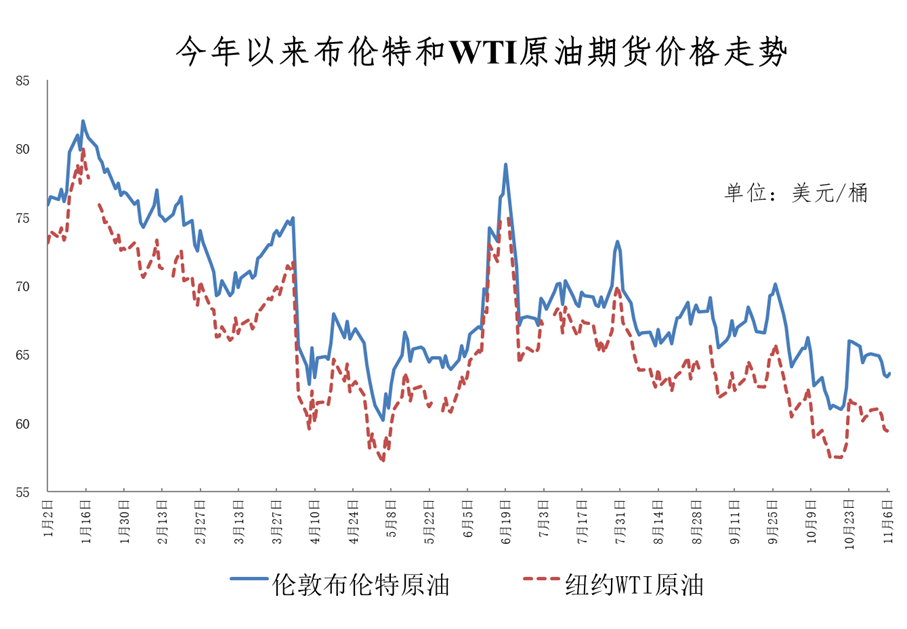
Core Viewpoint - Domestic gasoline and diesel prices have been raised for the seventh time this year, with increases of 125 yuan per ton for gasoline and 120 yuan per ton for diesel, effective from November 10, 2025 [1] Price Changes - The price increase translates to an additional 0.10 yuan per liter for 92 gasoline, 95 gasoline, and 0 diesel, resulting in an extra 5 yuan for filling a 50L tank [3] - For a vehicle running 2000 kilometers per month with an average fuel consumption of 8L per 100 kilometers, the fuel cost will increase by approximately 7 yuan before the next price adjustment [4] - For heavy trucks running 10,000 kilometers per month with a fuel consumption of 38L per 100 kilometers, the fuel cost will increase by about 177 yuan before the next price adjustment [4] Market Context - Since the beginning of the year, domestic refined oil prices have undergone 22 adjustments, resulting in a net decrease of 620 yuan per ton for gasoline and 595 yuan per ton for diesel compared to the beginning of the year [4] - The recent price adjustment comes after a four-month period of declining prices, with the last increase occurring on July 1 [4] - International oil prices have been under pressure due to increased production from major oil-producing countries and rising U.S. oil inventories, leading to a cumulative drop of about 2% in major benchmark oil contracts last week [5] Future Outlook - OPEC+ has confirmed a slight increase in production for December but has paused plans for further increases in the first quarter of next year due to concerns about oversupply [5] - The market is expected to focus on the oil inventory situation following the seasonal decline in U.S. oil demand, with projections indicating that the next pricing cycle may start with a negative change rate based on current oil prices [5]

重要通知!今晚,油价上调
Sou Hu Cai Jing· 2025-11-10 09:07
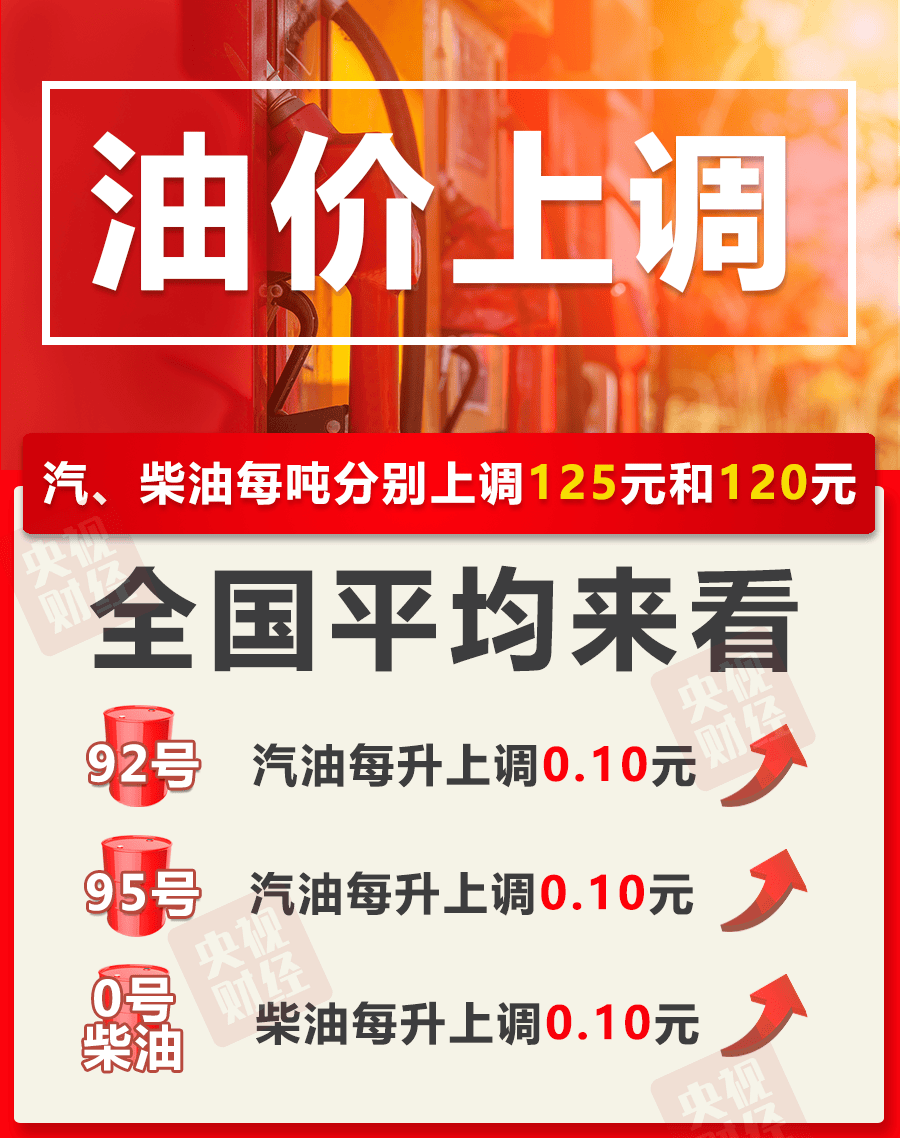
Core Viewpoint - A new round of domestic fuel price adjustments will take effect on November 10, with gasoline and diesel prices increasing slightly due to fluctuations in international oil prices [1][4]. Group 1: Price Adjustments - From November 10, the retail price of gasoline and diesel will be raised by 125 and 120 yuan per ton, respectively, leading to an increase of 0.10 yuan per liter for 92-octane gasoline, 95-octane gasoline, and 0-octane diesel on average nationwide [1]. - Filling a 50-liter tank with 92-octane gasoline will cost an additional 5 yuan [3]. Group 2: Market Conditions - The global crude oil market is currently characterized by an overall supply surplus [4]. - Geopolitical risks, particularly tensions between the U.S. and Venezuela, could escalate, potentially impacting Venezuelan oil supply [4]. - Seasonal demand for heating oil is expected to rise as winter approaches in the Northern Hemisphere, which may provide support for oil prices [4].
制裁与过剩背景下,油价收窄单周跌幅
Xin Lang Cai Jing· 2025-11-07 13:23
Group 1 - Oil prices have risen, narrowing the decline for the second consecutive week, as the market weighs the impact of sanctions on Russian oil production against the potential for an upcoming oversupply of crude oil [1] - U.S. crude futures have rebounded above $60 per barrel, but remain in a downward trend for the week, with stock market volatility contributing to concerns over oversupply [1] - The White House's measures to limit Russian oil purchases have led Gunvor Group to withdraw its proposal to acquire international assets from Lukoil PJSC, which include oil field stakes, refineries, and gas stations [1] Group 2 - The International Energy Agency (IEA) predicts a significant increase in oil supply from OPEC and non-OPEC countries by the end of this year through 2026, potentially leading to record oversupply [2] - Despite signs of oversupply from increased tanker transport, major oil storage hubs have not yet shown significant impact, with U.S. crude inventories decreasing at the end of October compared to the beginning of the month [2] - In Asia, China's crude oil imports have increased year-on-year in October, but the growth rate of China's oil reserves is expected to slow, which may weaken support for oil prices [2]
原油日报:原油震荡运行-20251107
Guan Tong Qi Huo· 2025-11-07 11:35
Report Industry Investment Rating - Not mentioned in the provided content Core View of the Report - The current situation of the crude oil market is one of supply surplus. Considering factors such as the increase in supply, the end of the consumption peak season, and geopolitical tensions, it is expected that crude oil prices will fluctuate in the near term [1] Summary by Relevant Catalogs Market Analysis - On November 2, OPEC+ eight countries decided to increase production by 137,000 barrels per day in December, and suspend production increases in Q1 2026. Saudi Aramco lowered the official selling prices of crude oil sold to Asia in December. The end of the crude oil demand peak season, combined with the increase in U.S. crude oil inventories and the decline in the ISM manufacturing index, has led to concerns about demand. However, due to the sanctions on Russian oil companies and the military stand - off between the U.S. and Venezuela, the export of Russian crude oil is expected to be restricted. The talks between Chinese and U.S. leaders were in line with market expectations, and the relationship between the two countries has not changed fundamentally [1] Futures and Spot Market Conditions - Today, the main crude oil futures contract 2512 rose 0.02% to 460.6 yuan/ton, with a minimum price of 452.9 yuan/ton, a maximum price of 461.5 yuan/ton, and the open interest decreased by 1,684 to 26,307 lots [2] Fundamental Tracking - EIA expects a global oil inventory increase of about 2.6 million barrels per day in Q4 2025, and has adjusted up the U.S. crude oil production in 2025 by 90,000 barrels per day to 13.53 million barrels per day. It has also adjusted up the average Brent crude oil price in 2025 from $67.80/barrel to $68.64/barrel, but expects the price to drop to $59/barrel in Q4 2025 and maintain the average price in 2026 at $51.43/barrel. OPEC has adjusted up the global oil demand growth rate in 2025 by 10,000 barrels per day to 1.3 million barrels per day and maintained the growth rate in 2026 at 1.38 million barrels per day. IEA has adjusted down the global oil demand growth rate in 2025 by 30,000 barrels per day to 710,000 barrels per day, maintained the growth rate in 2026 at 699,000 barrels per day, and adjusted up the global oil supply growth rate in 2025 by 300,000 barrels per day to 3 million barrels per day and in 2026 by 300,000 barrels per day to 2.4 million barrels per day, exacerbating the oil supply surplus [3] EIA Data - On the evening of November 5, U.S. EIA data showed that for the week ending October 31, U.S. crude oil inventories increased by 5.202 million barrels, gasoline inventories decreased by 4.729 million barrels, refined oil inventories decreased by 643,000 barrels, and Cushing crude oil inventories increased by 30,000 barrels. The EIA data indicated that the decline in gasoline inventories exceeded expectations, while the increase in U.S. crude oil inventories also exceeded expectations, resulting in a slight increase in overall oil product inventories [4] Supply and Demand Data - The OPEC latest monthly report showed that OPEC's crude oil production in August 2025 was adjusted down by 32,000 barrels per day to 27.916 million barrels per day, and its production in September increased by 524,000 barrels per day to 28.44 million barrels per day. U.S. crude oil production for the week ending October 31 increased by 7,000 barrels per day to 13.651 million barrels per day, reaching a new historical high. The four - week average supply of U.S. crude oil products decreased to 20.344 million barrels per day, a 2.20% decrease compared to the same period last year. Gasoline and diesel demand also decreased both weekly and on a four - week average basis [4][5]