新发展格局

Search documents
王文涛发表署名文章
财联社· 2025-12-07 23:39
Core Viewpoint - The article emphasizes the importance of expanding high-level opening-up as a strategic deployment by the Chinese government to promote reform and development, enhance international cooperation, and share opportunities with the world [1][3]. Group 1: Significance of Expanding High-Level Opening-Up - The "14th Five-Year Plan" period has seen significant achievements in China's opening-up strategy, with China maintaining the world's largest goods trade for eight consecutive years and a strong position in service trade and digital trade [4]. - Expanding high-level opening-up is crucial for driving high-quality development, as it enhances the synergy between domestic and international markets and resources, leading to effective qualitative and reasonable quantitative economic growth [5]. - It is an inherent requirement to meet the people's needs for a better life, with foreign trade and investment directly and indirectly supporting over 200 million jobs and contributing to industrial and consumption upgrades [6]. - The initiative is also a proactive measure to promote economic globalization, countering rising protectionism and unilateralism while maintaining multilateralism and free trade [6]. - Expanding high-level opening-up is essential for building a community with a shared future for mankind, facilitating global cooperation to address common challenges [7]. Group 2: Principles and Requirements for Expanding Opening-Up - The expansion of high-level opening-up must combine with deepening reforms, enhancing standards, and reducing barriers to factor flow [8]. - There should be a synergy between autonomous opening and agreement-based opening, with a focus on establishing free trade zones and signing high-standard trade agreements [9]. - The domestic and international circulations should promote each other, enhancing domestic consumption while expanding international connections [10]. - The needs of China and the expectations of the world must be balanced, ensuring mutual benefits and expanding opportunities for global cooperation [11]. - Development and security must be coordinated, enhancing national economic security while promoting high-quality development through openness [12]. Group 3: Main Tasks for Implementing High-Level Opening-Up - The focus should be on actively expanding autonomous opening, particularly in the service sector, and enhancing market access [14]. - Trade innovation should be promoted, optimizing goods trade and expanding service trade, while also enhancing the digital trade landscape [15]. - The dual investment cooperation space should be expanded, creating a favorable environment for foreign investment and enhancing the service system for foreign investors [16]. - High-quality construction of the "Belt and Road" initiative should be prioritized, strengthening cooperation with partner countries and expanding collaboration in various sectors [17].


扩大高水平对外开放(学习贯彻党的二十届四中全会精神)
Ren Min Ri Bao· 2025-12-07 22:02
党的二十届四中全会通过的《中共中央关于制定国民经济和社会发展第十五个五年规划的建议》(以下 简称《建议》),强调"扩大高水平对外开放,开创合作共赢新局面"。这是以习近平同志为核心的党中 央着眼以中国式现代化全面推进强国建设、民族复兴伟业,统筹国内国际两个大局作出的重大战略部 署,为"十五五"时期扩大高水平对外开放提供了根本遵循和行动指南。 "十四五"时期,在党中央坚强领导下,我们实行更加积极主动的开放战略,推动对外开放事业取得历史 性成就,为中国式现代化提供了更坚实的战略支撑。贸易强国建设取得积极成效,货物贸易规模连续八 年世界第一,服务贸易稳居世界前列,数字贸易快速发展;利用外资结构不断优化,"投资中国"金字招 牌持续擦亮;对外投资稳居世界前三,产业链供应链国际合作有序推进;多双边和区域经贸合作成果丰 硕。实践充分证明,中国越发展就越开放,开放是国家繁荣发展的必由之路。"十五五"时期是基本实现 社会主义现代化夯实基础、全面发力的关键时期,扩大高水平对外开放具有重大意义。 (一)扩大高水平对外开放,是全面推动高质量发展的强大动力。习近平总书记指出:"过去四十年中 国经济发展是在开放条件下取得的,未来中国经济实 ...
更好服务高水平对外开放(编辑手记)
Ren Min Ri Bao· 2025-12-07 22:02
Core Viewpoint - The continuous optimization of China's departure tax refund policy is significantly enhancing the shopping experience for foreign travelers, thereby stimulating inbound consumption and contributing to the construction of a robust domestic market and a new development pattern [1][2]. Group 1: Policy Optimization - Since 2015, China has implemented a comprehensive departure tax refund policy, with recent measures including lowering the minimum refund threshold from 500 yuan to 200 yuan and increasing the cash refund limit from 10,000 yuan to 20,000 yuan [1]. - The number of foreign travelers processing departure tax refunds increased by 229.8% year-on-year, while the total refund amount grew by 97.4% in the first nine months of this year, indicating the effectiveness of the optimized policy [1]. Group 2: Economic Impact - The optimization of the departure tax refund policy is expected to enhance the convenience of shopping for foreign travelers, thereby improving their satisfaction and overall experience in China [2]. - Compared to other major countries, there is still room for growth in the proportion of inbound consumption relative to China's GDP, indicating significant potential for further growth in inbound consumption [2]. Group 3: Future Developments - Future enhancements to the departure tax refund policy will focus on digitization, convenience, and service refinement, including initiatives like paperless refunds and multilingual intelligent service systems [3]. - The aim is to attract more foreign travelers and promote the international presence of high-quality Chinese products, making "China shopping" a prominent symbol of high-level openness [3].
话优势——习近平经济思想指引中国经济行稳致远
Ren Min Ri Bao· 2025-12-06 23:50
Group 1 - The article emphasizes the unique advantages of China's economic system, including the socialist system, large market size, complete industrial system, and rich talent resources, which are crucial for economic development [1][3][10] - The "Two Major" construction projects focus on urgent development needs that require central government support, showcasing the institutional advantage of concentrating efforts on significant tasks [2][3] - China's market is highlighted as a significant resource, with online retail sales ranking first globally for 12 consecutive years and a vast consumer market driven by over 1.4 billion people [3][4][5] Group 2 - The article discusses the importance of a modern industrial system as the material and technical foundation for a modernized nation, emphasizing the need to focus on the real economy [7][10] - Innovations in materials, such as ultra-thin electrical steel, are crucial for high-end equipment supply chains, demonstrating the potential for domestic production to overcome technological barriers [6][7] - The talent pool in China is vast, with over 250 million people having higher education and more than 220 million skilled workers, positioning the country as a major talent resource [9][10]
【好评中国】担当作为,激荡国内大循环新活力
Sou Hu Cai Jing· 2025-12-05 12:09
夯实发展根基。构建新发展格局是适应我国发展新阶段形势、塑造国际合作和竞争新优势的必然要求。 当前我国不断加快构建新发展格局,国内大循环主体地位不断巩固、空间布局逐步优化,国内国际双循 环质量稳步提升,经济发展根基更加坚实,安全性稳定性进一步增强,展现出强大的活力、韧性和潜 力。2021年至2024年内需对经济增长的平均贡献率达到86.4%;货物贸易规模稳居全球第一,货物进出 口总额从2020年的32.2万亿元增加到2024年的43.8万亿元,年均增长8.0%。展望未来,要以国内大循环 为主体,建设强大国内市场,要更好联通国内市场和国际市场,更好利用国内国际两个市场两种资源。 要更加注重供需两端同时发力、协调配合,从畅通循环出发,把扩大内需战略同深化供给侧结构性改革 有机结合起来,形成需求牵引供给、供给创造需求的更高水平动态平衡。 汇聚发展合力。强大国内市场,是中国式现代化的战略依托。各地各部门要全力落实加快构建新发展格 局的战略部署,抓好贯彻落实,着力拓展增量、提升效益、畅通循环。拓展增量方面,要坚持惠民生和 促消费、投资于物和投资于人紧密结合,深入实施提振消费专项行动,保持投资合理增长,全方位扩大 国内需求 ...
坚定不移推动高质量发展——五论学习贯彻省委十四届十次全会精神
Xin Hua Ri Bao· 2025-12-05 00:03
绿色发展是高质量发展的鲜明底色。"十四五"期间,我省在习近平生态文明思想指引下,各地深入 践行"绿水青山就是金山银山"理念,美丽江苏建设取得积极成效,一幅人与自然和谐共生的现代化画卷 正徐徐展开。江苏的绿色发展之路,正迎来更加广阔的未来。"十五五"期间,我们要以碳达峰碳中和为 牵引,进一步协同推进降碳、减污、扩绿、增长,增强绿色发展动能。坚持先立后破,持续提高新能源 供给比重,推进化石能源安全可靠有序替代,加快构建清洁低碳能源体系。落实好碳排放双控制度,深 入实施节能降碳改造,大力发展绿色低碳产业,加快经济社会发展全面绿色转型。 作为经济大省,江苏将坚定信心、知重负重、主动作为,把中央要求转化为"施工图""任务书",以 扎实的工作确保在高质量发展上继续走在前列,为谱写"强富美高"新江苏现代化建设新篇章不懈努力, 为全国大局作出新的更大贡献。 今年是"十四五"规划收官之年。这五年,是江苏发展极不平凡的五年,也是面对愈发复杂多变的国 际环境,坚定信心、稳中有进,高质量发展的五年。省委十四届十次全会强调要"坚定不移推动高质量 发展",就是要以新发展理念引领发展,促进经济结构优化升级,推动经济实现质的有效提升和量的合 ...
中国经济有底气有能力跑好新征程
Si Chuan Ri Bao· 2025-12-04 22:56
Core Insights - The high-tech manufacturing industry in China has shown significant growth, with a year-on-year increase of 9.6% in value added for the first three quarters, particularly in smart drone manufacturing (59.9% growth) and smart vehicle equipment manufacturing (25.1% growth) [1] - Renewable energy sectors, including wind and solar power, have also experienced double-digit growth, with waste resource utilization increasing by 14.4%, indicating a strong push towards green and low-carbon transformation [1] - Final consumption expenditure contributed over 50% to economic growth, highlighting its role as a primary engine for economic expansion [1] Industry Developments - The Chinese economy is undergoing a profound transformation, with a focus on high-quality development and the establishment of a new development pattern that emphasizes domestic circulation [1] - The number of newly established foreign-invested enterprises increased by 14.7% year-on-year, reflecting foreign confidence in China's vast consumer market and innovation capabilities [1] - A series of macroeconomic policies have been implemented to stimulate domestic demand and enhance capital market activity, contributing to a stable economic environment [1] Social Impact - Employment strategies have been prioritized, with 10.57 million new urban jobs created in the first three quarters, alongside initiatives to improve living conditions and support rural revitalization [1] - Policies aimed at enhancing public welfare, such as free preschool education for approximately 12 million children, demonstrate a commitment to improving the quality of life for citizens [1] - The focus on inclusive growth and consumer spending is expected to further stimulate domestic demand and economic resilience [1]
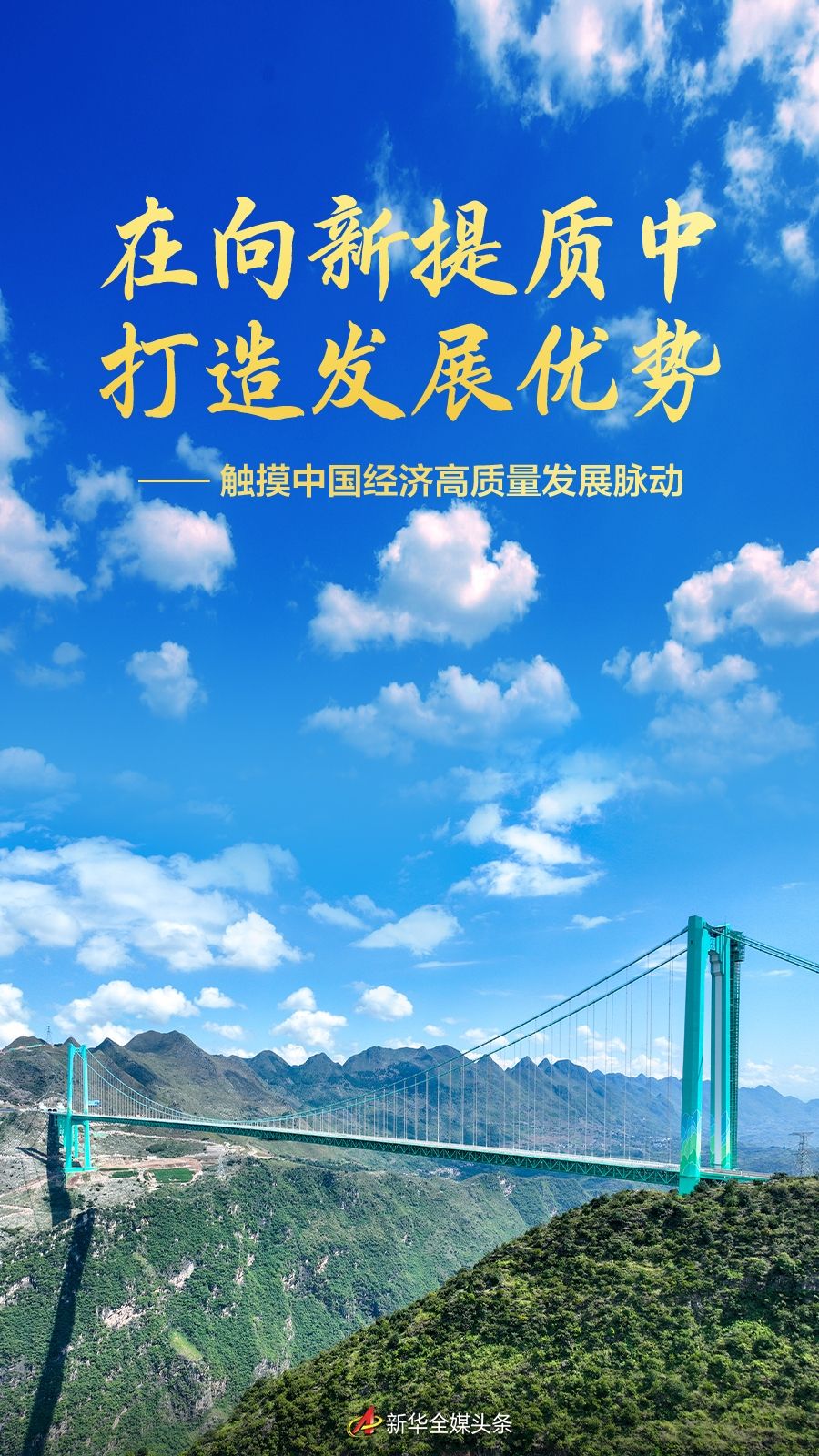
2025中国经济回眸|在向新提质中打造发展优势——触摸中国经济高质量发展脉动
Xin Hua Wang· 2025-12-04 15:28
Group 1 - High-quality development is the primary task for building a modern socialist country, with China focusing on delivering a more substantial economic performance by 2025 [2] - The Chinese economy is expected to continue its path of high-quality development, leveraging new development concepts to address external uncertainties [2][5] - Technological innovation is identified as the core driving force for high-quality development, with China entering the top ten in the global innovation index for the first time [5][9] Group 2 - The high-tech manufacturing sector showed a year-on-year increase of 9.6% in value added, with specific industries like smart drones and vehicle equipment experiencing growth rates of 59.9% and 25.1% respectively [7] - Renewable energy sectors, including wind and solar power, also reported double-digit growth in output, indicating a solid push towards green and low-carbon transformation [7] - Domestic consumption continues to be a significant driver of economic growth, contributing over 50% to the overall economic increase [7][9] Group 3 - The establishment of a unified national electricity market has facilitated cross-regional resource flow, enhancing the efficiency of energy distribution [10][11] - Reforms aimed at reducing market entry barriers have been implemented, with the negative list for market access shrinking from 117 to 106 items [13] - The number of newly established foreign-invested enterprises increased by 14.7% year-on-year, reflecting foreign confidence in China's market potential [16] Group 4 - The introduction of a national medical insurance imaging cloud platform has improved healthcare accessibility and efficiency for patients [17] - Employment strategies have led to the creation of 10.57 million new urban jobs in the first three quarters, demonstrating a commitment to improving living standards [18][20] - Policies aimed at enhancing education and human capital investment are seen as crucial for improving overall well-being and economic resilience [22]
署名文章 | 深入学习贯彻党的二十届四中全会精神 以高质量发展新成效谱写中国式现代化新篇章
国家能源局· 2025-12-04 03:51
Core Viewpoint - The article emphasizes the importance of the "15th Five-Year Plan" in promoting China's economic and social development, building a solid foundation for achieving socialist modernization, and ensuring high-quality development in the coming years [3][4]. Group 1: Achievements of the "14th Five-Year Plan" - The "14th Five-Year Plan" has led to significant achievements, with an average economic growth rate of 5.5% over the first four years, contributing approximately 30% to global economic growth [5]. - The total economic output is expected to reach around 140 trillion yuan this year, with high-tech manufacturing value-added growing at an annual rate of 9.2% [5]. - The plan has also seen improvements in employment, with over 12 million new urban jobs created annually, and a 5.5% annual increase in per capita disposable income [5]. Group 2: Development Environment for the "15th Five-Year Plan" - The "15th Five-Year Plan" will face complex changes in the development environment, including strategic opportunities and risks, necessitating a focus on consolidating advantages and addressing weaknesses [6][8]. - The global landscape is characterized by intensified great power competition, rising unilateralism, and challenges to international economic order, while economic globalization remains an unstoppable trend [7]. - China's economic foundation is strong, with significant market potential and a complete industrial system, although challenges such as unbalanced development and risks in key areas persist [8]. Group 3: Strategic Tasks for the "15th Five-Year Plan" - The article outlines key strategic tasks for the "15th Five-Year Plan," including promoting high-quality development, constructing a new development pattern, and advancing common prosperity [9][10]. - Emphasis is placed on building a modern industrial system, enhancing traditional industries, and fostering emerging sectors such as new energy and aerospace [10]. - The plan aims to strengthen domestic circulation while ensuring effective integration with international markets, enhancing the socialist market economy, and expanding high-level opening-up [11]. Group 4: Improving People's Livelihoods - The article stresses the importance of improving and safeguarding people's livelihoods, with a focus on increasing income distribution equity and enhancing social welfare systems [12]. - It highlights the need to address rural revitalization and regional development disparities, ensuring that agricultural productivity and quality are prioritized [12]. Group 5: National Security and Governance - Strengthening national security capabilities is a priority, focusing on food and energy security, risk management in key sectors, and enhancing public safety governance [13]. - The article advocates for a comprehensive approach to governance that aligns with the principles of socialism with Chinese characteristics [13]. Group 6: Leadership and Implementation - The article calls for strong leadership and active participation from all sectors of society in implementing the "15th Five-Year Plan," ensuring that the strategic goals are translated into actionable plans [14]. - It emphasizes the need for detailed planning and coordination to ensure the successful execution of the plan and the achievement of modernization goals [14].

国务院重要批复!
中国能源报· 2025-12-04 01:31
Core Viewpoint - The article discusses the approval of the "Yangtze River Delta Land Spatial Planning (2023-2035)" by the State Council, emphasizing the need for systematic optimization of land space development and protection, infrastructure support, and coordinated planning implementation to promote sustainable development in the region [2][5]. Group 1: Planning Framework - The "Planning" serves as a national-level land spatial special plan, guiding spatial development and sustainable growth in the Yangtze River Delta, and is based on Xi Jinping's thoughts and the principles of the 20th National Congress of the Communist Party of China [2][3]. - The planning aims to integrate development and security, promote harmony between humans and nature, and support the construction of a world-class urban agglomeration [2][3]. Group 2: Safety and Environmental Protection - By 2035, the region's arable land must not be less than 16.148 million acres, with permanent basic farmland protection of at least 14.29 million acres, and ecological protection red line covering no less than 77,000 square kilometers [3]. - The plan includes identifying key areas for natural disaster risk prevention and establishing control lines for geological disasters and floods [3]. Group 3: Spatial Development Strategy - The plan emphasizes optimizing the spatial layout led by metropolitan areas, enhancing the integration of urban spaces, and supporting the construction of a world-class city cluster [4]. - It aims to strengthen cross-regional collaboration in technological and industrial innovation, ensuring the spatial needs of key innovation corridors and ecological economic belts are met [4]. Group 4: Implementation and Governance - The planning document is a comprehensive arrangement for land space protection, development, utilization, and restoration, requiring strict adherence and monitoring [5][6]. - Local governments are tasked with organizing leadership, clarifying responsibilities, and integrating the planning goals into local spatial planning systems [6].