
智能建造

Search documents
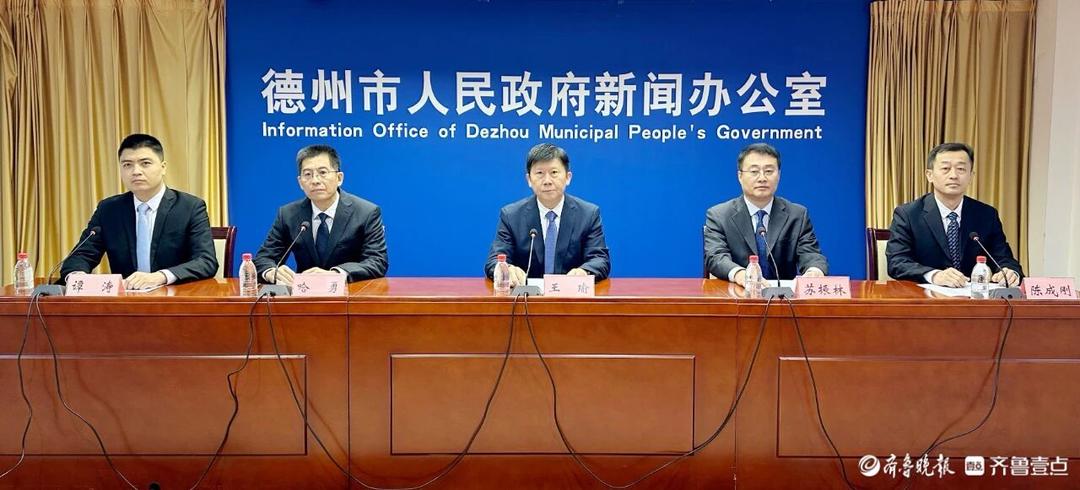
德州“十四五”期间投资870亿元实施中心城区城建项目526个
Qi Lu Wan Bao Wang· 2025-10-21 09:49
Core Viewpoint - The city of Dezhou has made significant progress in housing and urban construction during the "14th Five-Year Plan" period, focusing on high-quality development that prioritizes people's well-being and urban renewal [3][4][5]. Group 1: Focus on People's Livelihood - The city has emphasized improving living conditions, transitioning from "housing for all" to "quality housing for all," ensuring that development outcomes benefit all citizens [3][4]. - Housing security has been enhanced, with 88,000 units for relocation and 176,000 units of affordable housing constructed, benefiting 105,000 households [4]. - Initiatives such as the "micro-renovation" project have improved 845 old communities, adding 100,000 electric vehicle charging ports and installing 861 elevators in existing residential buildings [4]. Group 2: Urban Quality Enhancement - Urban renewal has been a key strategy, with 78 comprehensive area renovations and an investment of 87 billion yuan in 526 urban construction projects [5]. - Infrastructure improvements include the establishment of 238 square kilometers of sponge city, with water supply, gas, and sewage treatment rates exceeding 98% [5]. - The construction of 300 prefabricated rural houses and the renovation of 3,490 dangerous houses have been completed, enhancing rural living conditions [5]. Group 3: Industry Transformation and Innovation - The construction industry has seen a significant increase in output, growing from 34.41 billion yuan in 2020 to 46.08 billion yuan in 2024, with an average annual growth rate of 7% [6]. - The city has introduced policies to promote residential quality upgrades, with five projects recognized as national high-quality housing [6]. - A new model for real estate development has been explored, with the city approved as a pilot for nationwide pre-sale housing [6]. Group 4: Safety and Quality Assurance - Safety remains a top priority, with extensive actions taken to improve gas safety, including the renovation of 598.9 kilometers of gas pipelines [7]. - Quality control measures have been strengthened, leading to national awards for engineering quality and safety [7].

这支种子基金招GP了 | 科促会母基金分会参会机构一周资讯(10.14-10.21)
母基金研究中心· 2025-10-21 09:01
Group 1 - The establishment of the "China International Science and Technology Promotion Association Mother Fund Branch" aims to promote the development of technology finance and industrialization, leveraging government resources to guide social capital towards innovative enterprises and the real economy [1][29]. - The Mother Fund Branch consists of 85 participating institutions and provides weekly updates on relevant news [1]. Group 2 - The Central New Venture Capital Fund is publicly selecting sub-fund management institutions to enhance innovation capital investment, focusing on early-stage, small-scale, and long-term investments in hard technology [4][5]. - The selection process for sub-fund management institutions is ongoing without a set deadline, following a "mature one, invest in one" principle [5]. Group 3 - The Central New Venture Capital Fund aims to support the development of new productive forces and achieve high-level technological self-reliance through its investment strategy [4][5]. - The Zhengzhou Central Technology City Seed Fund is a policy-oriented fund that supports the transformation of scientific and technological achievements and the development of innovative enterprises [3]. Group 4 - The Guangzhou Development Zone Fund Group successfully held the second phase of the "I Want to Promote Projects" event, focusing on the energy storage sector [15][17]. - The event featured a simulation roadshow that highlighted innovative companies in the household energy storage field, showcasing their market potential and brand influence [17][18]. Group 5 - The Yellow Sea Bi-Cheng Ecological Partners Promotion Conference was held in Yancheng, discussing new paths for comprehensive energy development with industry experts and government representatives [21][22]. - The conference included strategic partnership signings with 16 quality enterprises in the energy sector, aiming to enhance collaboration and drive high-quality market development [22]. Group 6 - The Nanjing Key Industry Project Roadshow focused on artificial intelligence and software, gathering investment institutions and enterprises to discuss innovation applications and investment prospects [25][26]. - Nanjing is positioned as a national pilot zone for AI innovation applications, with a strong competitive market and high-quality enterprise development [26][27].
建筑产业规模屡创新高
Jing Ji Ri Bao· 2025-10-21 00:06
Core Insights - The construction industry is a pillar of the national economy and has seen significant growth during the 14th Five-Year Plan period, with total output value expected to reach 32.7 trillion yuan in 2024, an increase of 6.3 trillion yuan or 24% from 2020 [1] - The industry is focusing on modern construction methods, including smart and green building practices, to enhance quality and safety while promoting industrialization, digitalization, and sustainability [1][2] - China's construction enterprises are actively participating in the Belt and Road Initiative, with over 1 trillion USD in contracts signed for overseas projects from 2021 to 2024, showcasing the global reputation of "China Construction" [3] Group 1: Industry Growth and Development - The construction industry has completed 154 billion square meters of buildings, 7,900 kilometers of municipal roads, and significant infrastructure projects from 2021 to 2024, contributing to urban and rural development [2] - The modernization of the construction industry has accelerated, with major projects like the Shenzhen-Zhongshan Corridor and the Beijing Winter Olympics venues gaining international recognition [1][2] Group 2: New Construction Methods - The industry is advancing smart construction techniques, emphasizing digital design, automated production, and intelligent management on construction sites [2] - A focus on green building practices has led to the completion of energy-saving renovations for 800 million square meters of existing buildings, improving indoor winter temperatures by 3 to 5 degrees Celsius [2] Group 3: International Engagement - From 2021 to 2024, Chinese construction firms signed contracts worth over 1 trillion USD for overseas projects, with 76 firms ranked among the top 250 international contractors by 2025 [3] - Notable international projects include the China-Laos Railway and the "Qianhai Port" in Peru, highlighting the diverse engagement of Chinese firms in global construction [3]
预计至2025年底新增里程2600公里,织密“轨道上的长三角” 赋能一体化高质量发展
Yang Zi Wan Bao Wang· 2025-10-20 15:35
Core Insights - The article emphasizes the significant role of railway infrastructure in the integrated development of the Yangtze River Delta, highlighting the investment and expansion plans of the China Railway Shanghai Group [1][2][7] Investment and Development - During the 14th Five-Year Plan, railway construction investment in the Yangtze River Delta is projected to reach over 600 billion yuan by the end of 2025, with 22 projects expected to be operational and over 2,600 kilometers of new railway added [1][2] - Investment in railway construction has increased from approximately 90 billion yuan in 2021 to 142.38 billion yuan in 2024, with expectations to maintain over 140 billion yuan in 2025 [2] Infrastructure Expansion - The total operational railway mileage in the Yangtze River Delta has surpassed 15,000 kilometers, with over 7,700 kilometers of high-speed rail, forming a world-class rail network [2] - Key strategic corridors, such as the Xu-Lian High-Speed Railway and the He-Hang High-Speed Railway, have significantly improved regional connectivity and passenger transport, with millions of passengers served annually [3] Quality and Innovation - The construction of railways focuses on both speed and quality, with a commitment to excellence in project execution and the adoption of innovative technologies [4][5] - The application of smart construction techniques and green development principles is evident in projects like the Hu-Su-Lake High-Speed Railway, which avoids ecologically sensitive areas [4][7] Economic and Social Impact - The railway network enhances the efficiency of resource flow and supports economic development, with daily passenger traffic exceeding 2 million [7] - The integration of rail services has facilitated better connectivity between major cities, contributing to the growth of regional GDP from 27.6 trillion yuan in 2021 to over 33 trillion yuan in 2024 [8]
超半数装修建材股实现增长 菲林格尔以42.70元/股收盘
Bei Jing Shang Bao· 2025-10-20 10:28
Core Viewpoint - The renovation and building materials sector experienced a slight increase, closing at 15,281.49 points with a growth rate of 1.16% on October 20 [1] Group 1: Stock Performance - Several renovation and building materials stocks saw price increases, with Filinger leading at 42.70 CNY per share, up by 5.93% [1] - Kairun shares closed at 12.79 CNY, marking a 5.44% increase, ranking second in the sector [1] - Tubao shares ended at 12.70 CNY, with a rise of 5.31%, placing third among renovation and building materials stocks [1] - Conversely, *ST Yazhen led the decline with a closing price of 38.79 CNY, down by 5.00% [1] - Jingxue Energy closed at 20.89 CNY, down by 1.92%, ranking second in losses [1] - Beijing Lier shares ended at 8.72 CNY, with a decrease of 1.80%, ranking third in the decline [1] Group 2: Industry Reform - The Ministry of Housing and Urban-Rural Development has committed to deepening reforms in the construction industry, focusing on industrialization, digitalization, and greening as development paths [1] - The reform aims to transition the construction industry from a traditional extensive model to a refined and intelligent approach, with key initiatives including the promotion of prefabricated buildings and the application of construction robots [1] - The ultimate goal of these reforms is to achieve high-quality development across the industry, enhancing the quality, efficiency, and sustainability of "Chinese construction" [1]




人工智能时代土木类高校育人与就业协同转型路径探析
Xin Hua Ri Bao· 2025-10-20 03:26
Core Insights - The rapid development of artificial intelligence is profoundly reshaping the civil engineering industry, transitioning it from traditional construction models to intelligent construction systems [1][2] - The integration of AI technologies is creating new opportunities and challenges, necessitating a reevaluation of talent cultivation and educational frameworks in response to evolving industry demands [2][3] Group 1: Industry Transformation - AI technology is disrupting traditional operational models in the civil engineering sector, with applications such as Building Information Modeling (BIM) enabling digital management throughout the project lifecycle [2] - The emergence of new roles like intelligent design engineers and digital twin technology specialists is creating a demand for professionals with a combination of strong foundational knowledge and advanced digital skills [2] - Structural contradictions are becoming more pronounced, as traditional construction methods struggle to adapt to new intelligent equipment, leading to inefficiencies in some companies [2][4] Group 2: Educational Challenges - The existing knowledge framework in higher education is outdated, with insufficient integration of digital content in core professional courses, resulting in graduates lacking modern technical skills [4] - There is a disconnect between practical engineering education and real-world applications, with limited opportunities for students to engage with intelligent equipment and digital project management [4] - Current career guidance systems are not aligned with industry transformations, focusing primarily on traditional job application skills rather than emerging fields like intelligent construction and green building [4] Group 3: Strategic Opportunities - The synergy between new urbanization initiatives and carbon neutrality goals is injecting new momentum into the civil engineering industry, fostering rapid growth in areas like prefabricated buildings and smart cities [3] - Professionals equipped with skills in intelligent design, digital construction management, and sustainable building technologies are becoming key drivers of high-quality development in the sector [3] Group 4: Pathways for Educational Reform - A dynamic curriculum adjustment mechanism is needed to integrate intelligent construction technology into existing courses while maintaining core subjects like mechanics and structural design [5] - Establishing a blended practical training platform that combines virtual simulation with real-world engineering projects can help bridge the gap between theory and practice [5] - Developing a smart employment service system that utilizes big data to provide personalized career development advice is essential for aligning educational outcomes with industry needs [6]
9人获一等奖将参加全国赛!山东住建行业职业技能竞赛结果出炉
Qi Lu Wan Bao· 2025-10-16 07:03
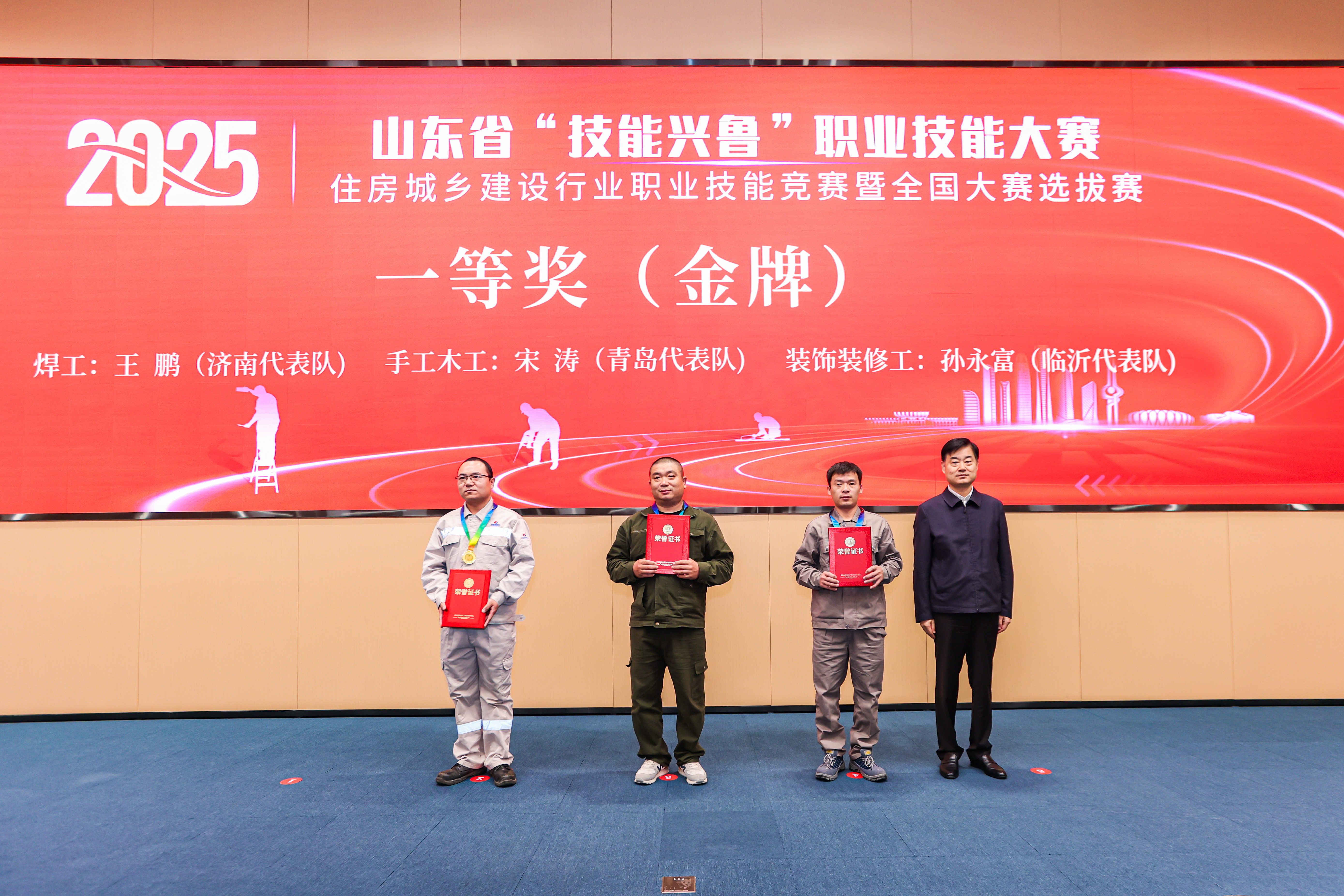
Core Points - The 2025 Shandong Province "Skill Prosperity Shandong" vocational skills competition results were announced on October 16, with 60 outstanding contestants selected, including 9 first-prize winners who will represent Shandong in the national competition next year [1][18] - The competition serves as a concentrated examination of the skill talent cultivation achievements in the Shandong construction industry and as an important rehearsal for the upcoming national competition [18] Group 1: Competition Results - Wang Peng from China Electric Power Construction Group Nuclear Power Engineering Co., Ltd. won the gold medal in the welding category [5] - Song Tao from Qingdao Yuanchangsheng Construction Group Co., Ltd. won the gold medal in the manual woodworking category [5] - Sun Yongfu from Tianyuan Construction Group Co., Ltd. won the gold medal in the decoration and renovation category [5] - Qingdao team won the team first prize, while Jinan and Linyi teams won the team second prize [15] Group 2: Future Competitions and Training - The second National Vocational Skills Competition for the Housing and Urban-Rural Construction Industry will be held next year, featuring 7 categories including masonry, piping, manual woodworking, intelligent building management, welding, gas appliance installation and maintenance, and decoration and renovation [18] - Shandong Province has strengthened collaboration with various departments to establish a competitive work pattern that promotes skill competitions and training [18][19] - The province aims to enhance the skill talent cultivation mechanism, focusing on advanced fields such as intelligent construction and green low-carbon technologies [19]
中国已建成铁路公路隧道逾5万公里 创造数量和规模两项世界之最
Zhong Guo Xin Wen Wang· 2025-10-16 05:53
Core Insights - China has constructed over 50,000 kilometers of railway and highway tunnels, making it the country with the largest number and scale of tunnels in the world [1][2] - The advancements in tunnel engineering technology, particularly in shield tunneling machines, have significantly contributed to China's rapid development in this sector [1][2] - China is transitioning from a follower to a leader in tunnel engineering technology, as evidenced by the inclusion of nine Chinese projects in the global list of 50 iconic tunnel and underground engineering projects [2] Group 1: Tunnel Engineering Achievements - The construction of world-class projects such as the Hong Kong-Zhuhai-Macao Bridge underwater tunnel and the Shenzhen-Zhongshan Channel highlights China's engineering capabilities [1] - The Jiaozhou Bay Second Undersea Tunnel is noted as the largest underwater highway tunnel, while the Ningbo-Zhoushan High-Speed Rail undersea tunnel is recognized as the longest [1][2] - The successful completion of these projects signifies China's engineering technology as a hallmark of high-quality development [1] Group 2: Bridge Engineering Innovations - China has also made significant strides in bridge engineering, with the Huajiang Gorge Bridge being recognized as the highest bridge in the world at a vertical height of 625 meters [2] - The Danyang-Kunshan Grand Bridge, measuring 164.85 kilometers, holds the Guinness World Record for the longest bridge [2] - These achievements reflect the high technical content and innovation in China's infrastructure development [2] Group 3: Future Directions - The new generation of information technology is driving the digitalization and intelligence of tunnel construction [3] - Future projects will focus on ultra-deep, ultra-long, and ultra-complex tunnel and bridge engineering, emphasizing innovation in smart construction technologies [3] - The integration of artificial intelligence with the construction industry is expected to enhance operational efficiency and project management [3]
推进新型城市基础设施建设,九部门部署
Zhong Guo Zheng Quan Bao· 2025-10-16 04:23
Core Viewpoint - The Ministry of Housing and Urban-Rural Development, along with nine other departments, has issued an action plan to implement the opinions on promoting new urban infrastructure construction and building resilient cities, aiming for significant progress by the end of 2027 [1] Group 1: Smart Infrastructure Development - The action plan emphasizes the construction of intelligent sensing systems for road infrastructure and urban cloud platforms, focusing on the integration of smart city infrastructure with intelligent connected vehicles [2] - It aims to enhance logistics distribution and emergency material support capabilities by improving smart logistics facilities and emergency logistics systems [2] - The plan promotes the intelligent transformation of urban parking facilities, encouraging the development of smart parking management platforms to improve resource utilization [2] Group 2: Community and Service Facilities - The action plan supports the smart construction of residential areas, advocating for the digital, networked, and intelligent transformation of public facilities [3] - It highlights the need for embedded service facilities in urban communities, focusing on services for the elderly and children, and enhancing community service accessibility [3] - The plan encourages the smart transformation of urban commercial areas, promoting diverse and integrated business development within residential neighborhoods [3] Group 3: Smart Construction Technologies - The action plan aims to cultivate smart construction industry clusters and encourages cities to establish smart construction industrial bases [4] - It promotes the application of Building Information Modeling (BIM) technology across major infrastructure projects, enhancing collaboration in design, construction, and maintenance [4] - The plan seeks to establish an internet platform for the construction industry to optimize resource allocation and reduce costs [4]
重磅利好!9部门发布!
Zhong Guo Ji Jin Bao· 2025-10-16 04:16
Core Viewpoint - The action plan aims to promote the construction of new urban infrastructure that is digital, networked, and intelligent, enhancing urban risk prevention and governance capabilities by 2027 [1][4][6]. Group 1: Financing Mechanisms - Establish a diversified financing system led by government investment and supported by enterprise investment, encouraging local governments to strengthen policy guidance through reward and subsidy mechanisms [2][30]. - Support eligible projects to issue Real Estate Investment Trusts (REITs) in the infrastructure sector, while promoting market-oriented credit allocation by financial institutions without increasing local government hidden debts [2][30]. Group 2: Smart Urban Infrastructure - Implement action plans for the construction and renovation of smart municipal infrastructure, focusing on safety management and the integration of information technology [2][7]. - Promote the development of smart city infrastructure in conjunction with intelligent connected vehicles, enhancing urban travel environments and digital governance [2][8]. Group 3: Smart Residential Areas - Advance the construction of smart residential areas and community embedded service facilities, improving safety and management systems for residential buildings [3][10]. - Support the digital transformation of urban commercial areas and enhance the management of residential properties through smart technologies [3][10]. Group 4: Digital Home Development - Strengthen the construction of residential information infrastructure, promoting the installation of high-speed fiber networks and smart home products in both new and existing homes [3][11]. - Encourage the interconnectivity of digital home product platforms to enhance user experience and data security [3][11]. Group 5: Intelligent Construction and Industrialization - Foster the development of intelligent construction industry bases in cities, promoting the application of Building Information Modeling (BIM) technology across various infrastructure projects [3][12][18]. - Encourage the intelligent production and upgrading of construction components, integrating automation and innovative technologies [3][12][20]. Group 6: Urban Information Model (CIM) Platform - Build a comprehensive data resource system to enhance information sharing across urban planning, construction, and management sectors [3][13][22]. - Develop the CIM platform as a digital foundation for urban governance, facilitating multi-domain applications and risk assessments [3][13][24]. Group 7: Urban Operation Management - Promote a unified urban operation management service platform to enhance real-time monitoring and coordination of urban services [3][14][25]. - Establish a three-tiered platform system for urban operation management, ensuring data sharing and collaborative governance [3][14][26]. Group 8: Support Measures - Drive technological empowerment and talent cultivation in the new urban infrastructure sector, enhancing research and development capabilities [3][15][29]. - Strengthen data sharing and security measures to ensure the safe and efficient operation of urban infrastructure [3][15][31].