国潮

Search documents
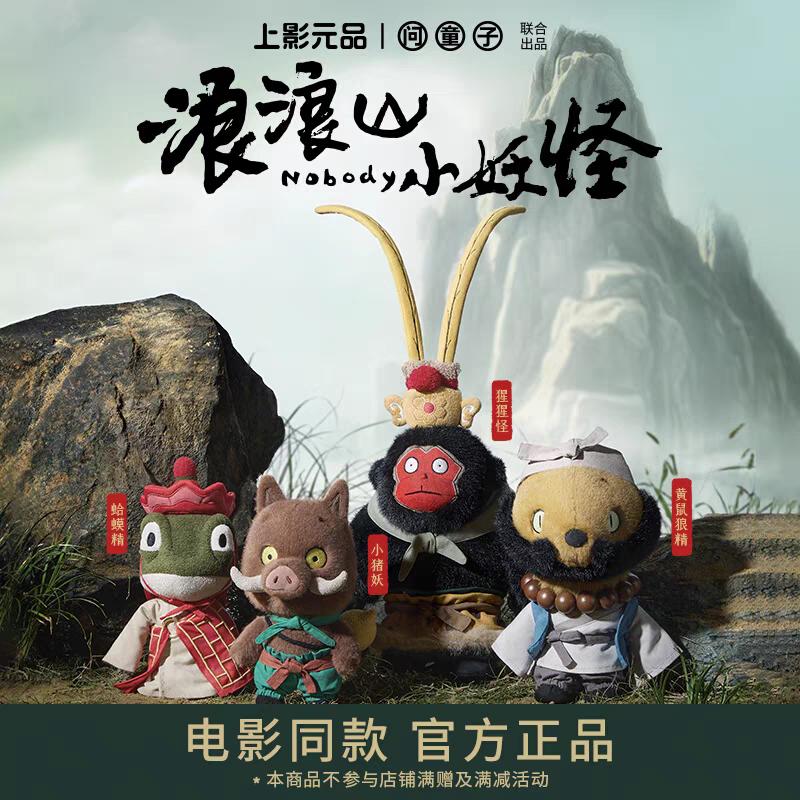
浪浪山小妖怪14亿票房背后,500元的毛绒玩具卖爆了
3 6 Ke· 2025-09-18 08:50
Core Insights - A new plush brand, "Wen Tong Zi," is gaining popularity, particularly through its collaboration with the animated series "The Little Monster of Langlang Mountain," selling nearly 100,000 items within a short period [2][4] - The brand emphasizes high-quality products, with prices ranging from 165 to over 1,000 yuan, and aims to differentiate itself from competitors like JellyCat by focusing on traditional Chinese culture [4][7] - Wen Tong Zi's strategy includes expanding beyond plush toys to explore various cultural expressions, while maintaining a focus on quality and design [6][10] Company Overview - Wen Tong Zi has quickly gained traction in the market, with its products appealing to young consumers aged 18-35 who value self-expression and quality [7][10] - The brand's product matrix includes both affordable and high-end items, with some priced at tens of thousands of yuan, showcasing a blend of modern aesthetics and traditional cultural elements [7][10] - The company has a concentrated production process, controlling design, sampling, and production internally, which allows for better quality assurance [11][12] Market Positioning - The brand's focus on high-end plush products allows for higher profit margins, estimated at over 50%, compared to the 10-20% typical for standard plush items [15] - Wen Tong Zi's marketing strategy includes leveraging online platforms, particularly its flagship store on Taobao, while also planning to expand into offline retail to enhance consumer experience [16][20] - The company aims to balance quality with scalability, addressing challenges related to production capacity and consumer price sensitivity [16][20] Future Plans - Wen Tong Zi plans to open physical stores in major urban centers, emphasizing experiential retail to allow consumers to interact with products [17][20] - The brand is exploring collaborations with established toy retailers and intends to differentiate its product offerings between online and offline channels [17][20] - The company is also focused on storytelling and building its brand identity, which remains a work in progress as it seeks to establish a strong market presence [20]

老铺黄金的“平替”,要IPO了
Xin Lang Cai Jing· 2025-09-18 02:36
Group 1: LVMH and Old Poo Gold - Bernard Arnault, CEO of LVMH, visited Old Poo Gold in Shanghai, indicating the brand's appeal to high-end consumers in China [1] - Old Poo Gold's consumer overlap with luxury brands like LV and Cartier is 77.3%, showcasing its strong market position [1] - Gold prices have reached historical highs, exceeding $3,600 and $3,700 per ounce, driven by rising expectations of interest rate cuts by the Federal Reserve [1][10] Group 2: Chao Hong Ji's Market Position - Chao Hong Ji, known as "Little Old Poo Gold," plans a dual listing in Hong Kong and A-shares, benefiting from the rising gold market [2] - The company has seen a stock price increase of over 160% since 2025, with a current market capitalization of approximately 13.2 billion yuan [2] - Chao Hong Ji ranks first in the fashion jewelry market by sales revenue, with a market share of 1.4% [3] Group 3: Product Differentiation and Target Audience - Chao Hong Ji's products emphasize Eastern aesthetics and heritage craftsmanship, appealing to a younger demographic with more affordable pricing [4] - The brand targets consumers under 45, contrasting with Old Poo Gold's focus on high-net-worth individuals [4] - Chao Hong Ji has established brand influence among young consumers through over 400 SKUs and collaborations with popular IPs [4] Group 4: Business Evolution and Revenue Structure - Chao Hong Ji's revenue structure has shifted, with jewelry contributing 93.6% of income in the first half of 2025, reflecting a diversification beyond K-gold [6] - The classic gold jewelry segment has shown a compound annual growth rate of 43.4% from 2022 to 2024, indicating a growing interest in traditional gold products [7] - The company has launched a high-end custom series to enhance its brand image in the premium market [7] Group 5: Expansion and International Strategy - Chao Hong Ji has shifted to a franchise model since 2018, resulting in a rapid increase in store numbers, totaling 1,542 by mid-2025 [9] - The company plans to use funds from its IPO to expand internationally, with a goal of opening 20 self-operated stores overseas by the end of 2028 [12] - Chao Hong Ji has already opened stores in Malaysia, Thailand, and Cambodia as part of its international growth strategy [13]

珠宝巨头冲刺IPO!CFO系内部提拔,上任未满1年
Sou Hu Cai Jing· 2025-09-17 10:19
Core Viewpoint - Guangdong Chao Hong Ji Industrial Co., Ltd. (Chao Hong Ji) is pursuing a dual listing on the A-share and Hong Kong stock markets, aiming to become the "first fashion jewelry stock" in Hong Kong if successful [3][4]. Company Overview - Chao Hong Ji was founded in 1996 by the Liao family and has grown from a self-operated gold shop to a well-known chain brand with over 1,500 stores [3][4]. - The company focuses on mid-to-high-end fashion consumer goods, including jewelry and handbags, and operates two main brands: "CHJ Chao Hong Ji" and "VENTI Fan Di" [4]. Financial Performance - Revenue figures for Chao Hong Ji from 2022 to the first half of 2025 are as follows: - 2022: approximately 4.364 billion RMB - 2023: approximately 5.836 billion RMB - 2024: approximately 6.452 billion RMB - First half of 2025: approximately 4.062 billion RMB [4][5]. - Net profit for the same periods is: - 2022: approximately 205 million RMB - 2023: approximately 330 million RMB - 2024: approximately 169 million RMB - First half of 2025: approximately 333 million RMB [4][5]. Revenue Breakdown - In the first half of 2025, 93.6% of Chao Hong Ji's revenue came from jewelry, with a notable decline in handbag revenue, which dropped by 16.9% year-on-year [6][7]. - The classic gold jewelry segment has shown significant growth, with revenue increasing from 1.42 billion RMB in 2022 to 2.92 billion RMB in 2024, reflecting a compound annual growth rate (CAGR) of 43.4% [7][9]. - Fashion jewelry revenue grew from 2.45 billion RMB in 2022 to 2.94 billion RMB in 2024, with a slower CAGR of 9.5% [8][9]. Operational Structure - As of June 30, 2025, Chao Hong Ji operates a total of 1,542 jewelry stores, comprising 201 self-operated stores and 1,337 franchise stores [10][11]. - The company has shifted from a self-operated model to a franchise-based model, indicating a strategic change in its operational approach [11]. Management - The CFO, Mr. Chen Shufeng, has been with the company since 2007 and was appointed CFO in November 2024, overseeing financial and accounting matters [12][18].


国潮在“县”:一副眼镜撬动千亿产业,中国小城改变世界的“目光”
3 6 Ke· 2025-09-17 09:26
Core Insights - Danyang and Yingtan Yujian have emerged as global benchmarks in the eyewear market due to their impressive production capabilities and extensive sales networks [1][2][22] - Danyang is recognized as the world's largest eyewear lens production base, accounting for over 400 million pairs of lenses annually, which represents three-quarters of China's total and half of the global total [7][8] - Yingtan Yujian, despite its small population, has established over 20,000 eyewear retail stores worldwide, generating annual sales exceeding 6 billion yuan [1][10] Danyang's Development - Danyang has evolved from a small-scale handcraft industry in the 1960s to a major production hub with over 2,000 related enterprises and more than 80,000 industry workers [7][8] - The establishment of the "China Danyang Eyewear Market" in 1986 marked a significant transition from informal to formal production, leading to the growth of specialized manufacturers [5][7] - In 2022, Danyang's eyewear manufacturing sector achieved a sales revenue of 12.23 billion yuan, with a focus on product innovation and quality improvement [7][8] Yingtan's Growth - Yingtan's eyewear industry developed from scratch, leveraging the migration of businesses from Wenzhou, which faced high operational costs [11][13] - The local government has prioritized the eyewear sector as a key industry, establishing a 1.2 billion yuan development fund and creating a complete industrial ecosystem [14][22] - By 2024, Yingtan's eyewear industry is expected to host over 300 companies, generating a total revenue of 10.822 billion yuan and exporting products to over 60 countries [14][22] Industry Trends - The Chinese eyewear market is experiencing rapid growth, with imports reaching 3.465 billion yuan in 2024, driven by increasing demand for high-end eyewear [17][18] - Exports have also seen a significant rise, from 21.261 billion yuan in 2021 to 30.444 billion yuan in 2024, indicating a robust global market presence [18] - The industry is shifting towards smart eyewear, with AI technology becoming a key driver of growth and innovation [21][22] Conclusion - The competitive dynamics between Danyang and Yingtan illustrate the evolution of the Chinese eyewear industry, moving from a manufacturing focus to a brand and innovation-driven approach [22] - Both cities are contributing to a higher quality and value-added direction for the industry, enhancing China's global standing in the eyewear market [22]

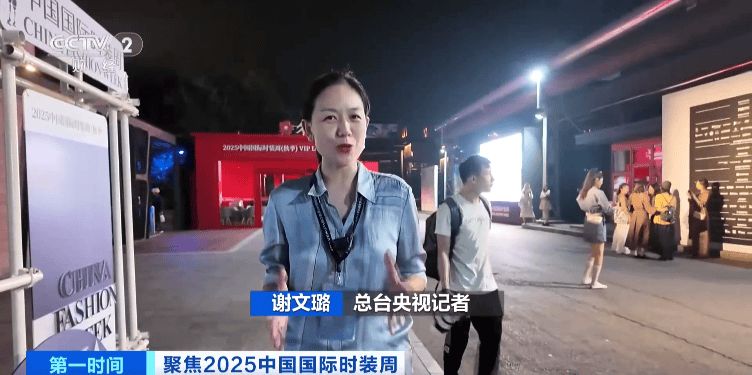
首发首秀数量高!2025中国国际时装周有哪些新亮点?记者探访→
Sou Hu Cai Jing· 2025-09-15 09:02
Core Insights - The 2025 Autumn China International Fashion Week concluded in Beijing, showcasing over 100 events and achieving a record high of 140 premieres [1][3]. Group 1: Event Highlights - The main venue for the fashion week was the 751 Park in Beijing's 798 Art District, hosting more than 100 fashion shows and exhibitions [3]. - The event featured participation from 11 countries, nearly 230 brands, and over 400 designers, with a significant focus on intangible cultural heritage elements [5]. Group 2: Cultural Integration - Non-heritage elements such as Yi and Miao ethnic clothing and embroidery were prominently displayed in over half of the brand showcases and various exhibitions [5]. - Designers emphasized the integration of Eastern aesthetics with global fashion trends, utilizing innovative materials and street fashion elements [5]. Group 3: Industry Perspectives - Designers expressed that there is a growing consumer demand for "Guochao" (national trend) products, providing opportunities to advance their design philosophies [7]. - The China Fashion Designers Association aims to create a platform for dialogue between Chinese and international designers, promoting cultural exchange and the global presence of Chinese fashion [9].
金价狂飙潮宏基闯关港股IPO,加盟店撑起半壁江山
Sou Hu Cai Jing· 2025-09-15 09:00
Core Viewpoint - Guangdong Chao Hong Ji Industrial Co., Ltd. (referred to as "Chao Hong Ji") has submitted an application for an IPO on the Hong Kong Stock Exchange, aiming for a dual listing in both A-share and H-share markets, with CITIC Securities as the sole sponsor [1] Company Overview - Chao Hong Ji was established in 1997 in Shantou, Guangdong, focusing on the younger consumer demographic with a differentiated product offering of 18K gold jewelry, earning the title "King of K-gold" [2] - The company successfully listed on the Shenzhen Stock Exchange in 2010, becoming the first fashion jewelry company to do so in China [3] Business Expansion - In 2014, Chao Hong Ji fully acquired the well-known women's bag brand "FION," expanding its business from jewelry to handbags [4] - The company has shifted its focus towards trendy, lightweight, and high-craftsmanship gold jewelry, launching a series of products in collaboration with domestic cultural trends [5] Financial Performance - For the first half of 2025, Chao Hong Ji reported a revenue of 4.102 billion RMB, a year-on-year increase of 19.54%, and a net profit attributable to shareholders of 331 million RMB, up 44.34% [5] - Jewelry remains the primary revenue source, contributing 93.6% of total income in the first half of 2025, while handbag revenue has been declining, dropping 16.9% year-on-year to 120 million RMB [7][5] Revenue Growth and Trends - The classic gold jewelry segment has seen rapid growth, with revenue increasing from 1.42 billion RMB in 2022 to 2.92 billion RMB in 2024, reflecting a compound annual growth rate (CAGR) of 43.4% [8] - In contrast, the fashion jewelry segment has experienced slower growth, with revenue rising from 2.45 billion RMB in 2022 to 2.94 billion RMB in 2024, showing a CAGR of 9.5% [9] Margin Analysis - The overall gross margin for Chao Hong Ji's jewelry has declined from 24.6% in 2022 to 19.6% in the first half of 2025 [10] - Specifically, the gross margin for fashion jewelry decreased from 34.5% to 26.8%, while the classic gold jewelry margin improved from 7.9% to 11.8% [11] Store Expansion Strategy - As of June 30, Chao Hong Ji operated a total of 1,542 jewelry stores, including 201 self-operated and 1,337 franchise stores [12] - The company has transitioned from a self-operated model to a franchise model, with the number of self-operated stores decreasing from 324 to 202 between 2022 and 2025 [13] Same-Store Sales Growth - In the first half of 2025, same-store gross merchandise volume (GMV) for self-operated stores grew by 26.5%, while franchise stores saw a 32.0% increase [14] International Expansion - Chao Hong Ji has begun international expansion, opening its first overseas store in Malaysia in 2024, followed by another in Thailand, and two more in Cambodia in 2025 [16] - The funds raised from the IPO will primarily be allocated for overseas expansion, building new production facilities, and marketing efforts to support both domestic and international growth [16]

关注高端国货美妆发展潜力
Xiangcai Securities· 2025-09-14 10:59
Investment Rating - The industry investment rating is maintained at "Overweight" [3] Core Views - The retail sector showed a slight increase of 0.85% last week, underperforming the CSI 300 index by 0.53 percentage points, indicating a mixed performance across various retail sub-sectors [4][9] - The current Price-to-Earnings (PE) ratio for the retail sector is 42.81X, reflecting a 0.45 percentage point increase week-on-week, with a one-year range between 24.35X and 43.07X [5][17] - The retail sector's Price-to-Book (PB) ratio stands at 2.06X, with a one-year range from 1.19X to 2.07X [5][19] Industry Dynamics - The Shenzhen Stock Exchange adjusted the list of eligible stocks for the Hong Kong Stock Connect, adding 20 stocks including brands related to retail and light manufacturing, which may enhance liquidity and trading opportunities [6][20][22] - In August, domestic beauty brands showed strong performance on Douyin, with Han Shu leading sales at over 700 million yuan, indicating a growing acceptance and market share for domestic brands [7][23] - The rise of domestic beauty brands is attributed to improved product quality and the growing trend of "Guochao" (national tide), which enhances consumer recognition and acceptance [7][23] Investment Recommendations - The report suggests focusing on recently added Hong Kong stocks in the retail sector and high-end domestic beauty brands, particularly those that are scarce in the market, such as Mao Ge Ping [6][24] - The ongoing domestic policies aimed at boosting consumption are expected to further enhance consumer willingness and capacity, supporting the retail sector's growth [7][24]
【西街观察】创新消费,国潮不止“潮”
Bei Jing Shang Bao· 2025-09-13 13:54
Group 1 - The rise of "Guochao" (national trend) is revitalizing consumer interest by merging traditional culture with modern technology, leading to innovative experiences [1][2] - The first 3A game in China, "Black Myth: Wukong," sold over 10 million copies within three days of its release, showcasing the potential of cultural innovation powered by technology [1] - In the first half of the year, China's cultural enterprises achieved a total profit of 629.8 billion yuan, a 19.3% increase year-on-year, indicating a growing profitability in the cultural sector [2] Group 2 - The concept of "effective demand" is highlighted as a crucial factor for cultural transmission, emphasizing the need for genuine consumer interest rather than just product creation [2][3] - The integration of technology in cultural products and services is seen as a beneficial exploration for the dissemination of "Guochao" [2] - The focus on consumer needs and innovative practices is essential for achieving growth and cultural heritage transmission [3][4]
【西街观察】创新消费,国潮不只“潮”
Bei Jing Shang Bao· 2025-09-13 11:16
Group 1 - The rise of "Guochao" (national trend) is revitalizing consumer interest by merging traditional culture with modern technology, creating innovative experiences that resonate with the public [1][2] - The successful launch of China's first AAA game "Black Myth: Wukong," which sold over 10 million copies within three days, exemplifies the potential of cultural innovation powered by technology [1] - In the first half of the year, China's cultural enterprises achieved a total profit of 629.8 billion yuan, marking a 19.3% increase year-on-year, driven significantly by digital content services and internet information services [2] Group 2 - The concept of activating genuine consumer demand is crucial for cultural transmission, emphasizing the need for effective supply alongside demand [2][3] - The integration of technology in cultural products and services is seen as a beneficial exploration for the dissemination of "Guochao" [2] - The focus on human-centered technology aims to meet true consumer needs, which is essential for growth and cultural heritage preservation [3]
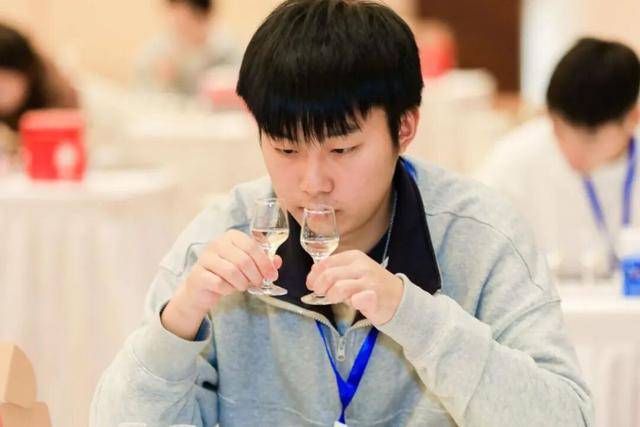
酒业消费之变,悦己是最核心的演变?
Sou Hu Cai Jing· 2025-09-13 08:11
Core Insights - The alcohol industry is facing pressures from policy fluctuations and environmental changes, necessitating adaptation to evolving consumer preferences and logic [1] Group 1: Changing Consumer Demographics - Young consumers are increasingly becoming the dominant force in the alcohol market, with a shift from older generations to younger ones like the 90s and 00s [2][4] - Current data shows that 45.45% of alcohol consumers are aged 31-40, while 35.23% are aged 26-30, indicating a generational shift in consumption patterns [2] - The proportion of first-tier city consumers is declining, with second-tier cities accounting for 34.78% of users, particularly strong in the Southwest region [2] Group 2: Evolving Consumption Preferences - The new generation of consumers prefers "less drinking, better drinking," leading to a rise in demand for lower-alcohol and healthier products [4][5] - Health considerations are significant, with 21.15% of consumers refusing to drink white liquor for health reasons, and mid-range priced alcohol being the most popular choice at 37.22% [5] - Social drinking scenarios are changing, with gatherings among friends (43.75%) and self-drinking (39.2%) becoming more common, while business banquets have decreased to 38.21% [5] Group 3: Transformation of Consumption Scenarios - New consumption scenarios are emerging, with instant retail and other modern settings replacing traditional social and business drinking occasions [6] - The instant retail market for alcohol is projected to reach nearly 20 billion yuan in 2023, reflecting a shift towards convenience and immediacy in consumer behavior [6] - Young consumers favor online shopping and are less interested in traditional purchasing methods, with leisure activities like camping and home viewing driving the growth of low-alcohol products [8] Group 4: Future Trends and Innovations - The alcohol industry is expected to evolve towards more functional products, such as health drinks with added probiotics and collagen, driven by consumer demand [10] - Digital penetration is anticipated to significantly impact the market, with projections suggesting that the instant retail scale could reach 100 billion yuan by 2030 [12] - The industry is transitioning from being a "social tool" to a "lifestyle companion," focusing on capturing the needs for health, emotion, and efficiency [13]