
数智化

Search documents
从“数字化”到“数智化”,一字之变,蕴含深意
Zhong Guo Xin Wen Wang· 2025-12-25 05:43
在更为广阔的新能源领域,坚实基础同样得以彰显。在玛纳斯县,集团参与建设的石玛兵地融合光伏基 地,将十万亩荒漠成功转变为绿色能源的"海洋"。在这里,数智化系统精准调度每一片光伏板,并智慧 管理配套储能设施。项目探索的"新能源开发+生态治理+民生改善"模式,其综合效益得益于海量数据 的智能分析。全部投产后,预计年可提供清洁电力约75亿千瓦时,年节约标准煤约267万吨。从精准运 维到大规模生态协同,集团已构建起多层次的数智化应用场景。 "促进制造业数智化转型""推进传统基础设施更新和数智化改造""推动文化建设数智化赋能"……细 读"十五五"规划建议,"数智化"已成为推动各产业升级的关键词。 从"数字化"到"数智化",这一字之变,深意何在?对于肩负能源保障重任的中新建电力集团而言,这绝 非简单的技术迭代,而是发展理念与实践路径的战略性跃迁。 数字化转型,重在运用数字技术实现流程在线与数据采集;而数智化转型,则是在此基础上引入人工智 能,实现自主分析、智能决策与预测优化。中新建电力集团的实践表明,国有能源企业在新的历史时 期,不能单纯依赖传统规模的简单扩张,必须紧紧依托"数智化"这一核心杠杆,切实履行好服务国家战 略的 ...
奋进的张家口“十四五”答卷|绿色转型,数智赋能,张家口工业强市迈出新步伐
Xin Lang Cai Jing· 2025-12-25 05:03
Core Insights - The industrial economy of Zhangjiakou is experiencing stable and healthy development during the 14th Five-Year Plan period, with the number of large-scale industrial enterprises increasing to 611 and total industrial added value rising from 35.94 billion yuan in 2020 to 46.22 billion yuan in 2024 [1] Industrial Structure Optimization - Zhangjiakou has accelerated industrial layout adjustments, with the proportion of mining industry continuously declining and the renewable energy sector rapidly developing, now having 216 large-scale renewable energy generation enterprises [3] - From January to November this year, the added value of the renewable energy industry grew by 23.8%, surpassing the overall industrial added value growth rate by 18.3 percentage points, becoming a key driver of industrial growth [3] - The automotive manufacturing sector has seen significant upgrades, with the Nanshan automotive industry base expected to produce 169,800 complete vehicles in 2024, establishing itself as an important new energy vehicle production base in the Beijing-Tianjin-Hebei region [3] Industrial Cluster Growth - The number of monitored characteristic industrial clusters in Zhangjiakou has increased from 13 in 2020 to 20, with operating income rising from 51.54 billion yuan to 149.48 billion yuan by 2024, maintaining a growth rate among the top three in the province for three consecutive years [5] - The city has established 21 municipal-level "shared factories," promoting collaboration among over 300 enterprises and enhancing production efficiency [5] Innovation and Digital Transformation - Zhangjiakou has nurtured 15 "little giant" enterprises and 266 specialized and innovative small and medium-sized enterprises since 2020, with the number of industrial R&D institutions increasing from 117 to 275 [6] - The city has created 32 basic-level intelligent factories and 2 advanced-level intelligent factories, with the industrial enterprises' digital transformation index improving significantly [6] - The number of enterprises utilizing cloud services has reached 3,400, with the cloud adoption rate of key industrial equipment rising from 13.3% in 2022 to 29.9% in 2024, moving from the last position in the province to sixth [6] Green Manufacturing Development - By the end of 2024, the energy consumption per unit of industrial added value and water consumption of large-scale industrial enterprises in Zhangjiakou have decreased by 40.58% and 22.54% respectively compared to the end of 2020 [8] - The city has launched 1,316 hydrogen fuel cell vehicles and is promoting the hydrogen energy industry, with several projects already operational [8] - Zhangjiakou has cultivated 12 national-level green factories and 30 provincial-level green factories, emphasizing green manufacturing and water conservation [8]


数智驱动与ESG赋能,韵达股份获肯定
Tai Mei Ti A P P· 2025-12-25 03:04
2025年12月21日,钛媒体「2025 EDGE AWARDS」正式揭晓,国内综合物流服务领军企业韵达股份 (002120.SZ)凭借稳健的经营业绩、领先的数字化能力与卓越的可持续发展实践,成功斩获 "最具投 资价值上市公司" 奖项。这一荣誉不仅是行业与市场对其核心竞争力的高度认可,更印证了其在物流行 业变革浪潮中,以科技创新与ESG实践双轮驱动,构筑长期投资价值的战略定力。在电商渗透率持续提 升与物流全球化加速的背景下,韵达股份正从 "快递服务商" 向 "全球综合物流服务商" 稳步迈进,成为 资本市场值得长期关注的优质标的。 数智化+多业务布局,激活增长新动能 作为物流行业数字化转型的先行者,韵达股份始终以"全面数字化、移动数字化"为战略核心,构建 "1+N+AI"多层次科技体系,将技术创新深度融入全链路运营场景。在智能调度领域,自主研发的快件 运营信息系统与GPS卫星定位系统,实现全国2500条陆运主干线、800余条航空直发线路的实时监控与 动态优化;末端服务环节,无人车、智能快递柜与9.4万余个末端门店驿站形成高效网络,成本管控能 力领跑行业。 数智化投入的持续兑现,直接转化为强劲的业绩增长。2025 ...

“十四五”以来规上工业总产值年均增长14.4% 湖北黄石智造引领产业转型
Jing Ji Ri Bao· 2025-12-23 22:09
Group 1 - The core viewpoint is that Huangshi City in Hubei Province is accelerating the construction of a modern industrial system, focusing on industrial strength and achieving an average annual growth of 14.4% in industrial output value since the 14th Five-Year Plan [1] - The city has invested nearly 100 billion yuan in industrial technological transformation to shift traditional industries like steel and copper smelting from "scale expansion" to "quality and efficiency improvement" [1] - Huangshi is focusing on strategic emerging industries such as new materials and optoelectronic information, promoting a transition from "single-point breakthroughs" to "cluster rise" [1] Group 2 - The city has established the world's first automated production line for fiber laser devices, breaking foreign monopolies in high-end wafer regeneration technology [1] - By 2029, Huangshi aims for the future industry output value to reach 10 billion yuan, creating new growth space for high-quality urban development [2] - The East Bay Group's robotic joint motors are in the testing phase, utilizing industrial internet for remote operation and maintenance [2]
优化供给挖掘生活服务消费潜能
Jing Ji Ri Bao· 2025-12-23 21:59
Core Viewpoint - The primary task for economic work next year is to "maintain domestic demand as the main driver and build a strong domestic market," focusing on optimizing consumption structure and enhancing quality in response to complex external environments and internal supply-demand pressures [1] Group 1: Consumption Trends - The service consumption market has been expanding, with retail service sales from January to November increasing by 5.4% year-on-year, surpassing the growth rate of goods retail sales [1] - The proportion of service consumption expenditure in total household consumption is continuously rising, indicating an ongoing optimization and upgrade of consumption structure [1] - Cultural and digital consumption supply is improving, with retail sales in cultural and recreational services maintaining double-digit growth [1] Group 2: Policy Support - Policies are being implemented to enhance the quality and efficiency of the life service consumption market, including the revision of the "Negative List for Market Access (2025 Edition)" to further relax market entry [2] - The environment for sectors like elderly care is improving, with increased efficiency in resource allocation and enhanced standardization of consumer services [2] - New consumption forms such as VR tourism and online fitness are being promoted through digital transformation and innovation in consumption scenarios [2] Group 3: Future Outlook - Life service consumption is expected to play a crucial role in stabilizing economic growth and improving livelihoods during the "14th Five-Year Plan" period [3] - There is a need to enhance the quality of supply in talent and technology, pushing life service consumption towards higher quality, added value, and diversification [3] - A regulatory framework that adapts to new business models is necessary, including the establishment of a unified national market construction regulation and the removal of various barriers [3] Group 4: Development Strategies - The development of life service industries should focus on improving factor support levels, including training high-skilled service talents and establishing service qualification systems aligned with international standards [4] - Digital transformation in the service sector is essential, with support for businesses to develop digital service functions such as smart booking and quality tracking [4] - The establishment of comprehensive urban and community service complexes integrating various functions like elderly care and cultural services is encouraged to enhance service standards and create well-known brands [4]
躬身产业实践 浙江民建企业家共探数智化发展新路径
Xin Lang Cai Jing· 2025-12-23 13:54
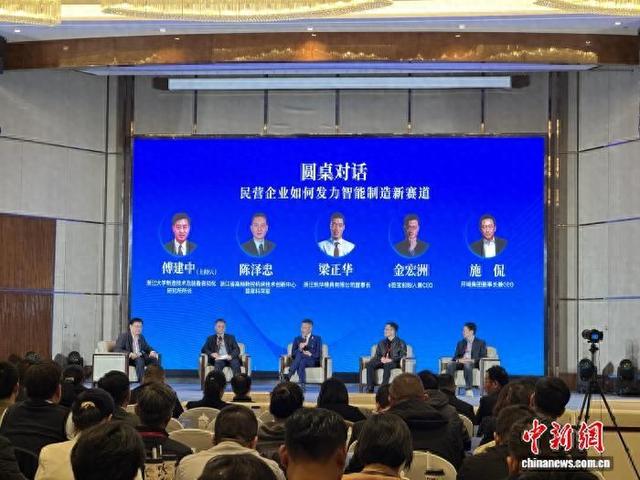
Group 1 - The event "National Minjian Entrepreneurs' Membership Taizhou Tour" was held in Taizhou, Zhejiang, focusing on the theme "Intelligent Leadership for the Future, Connecting the World" to help entrepreneurs grasp new opportunities for production capacity development and empower regional economic growth [1][3] - Taizhou has a history of innovation and entrepreneurship, having nurtured 78 listed companies and established 73 national industrial bases, with a strong push towards digital and intelligent transformation in industries like molds and valves [3][5] - The chairman of Zhejiang Kaihua Mould Co., Ltd. emphasized the importance of innovation for continuous growth, sharing his journey of transforming traditional manufacturing through digital management and intelligent production over the past two decades [3][5] Group 2 - Entrepreneurs in Taizhou are also exploring new avenues in the digital economy, with a focus on building a trustworthy digital identity and asset rights system, which is essential in the digital age [5][6] - E-signature technology has significantly improved operational efficiency for businesses, enabling digital signing of various contracts and agreements, thus facilitating global expansion [5][6] - The event featured speeches from experts on topics such as the integration of digital intelligence and green technology, providing entrepreneurs with insights into policy and technological directions [6]
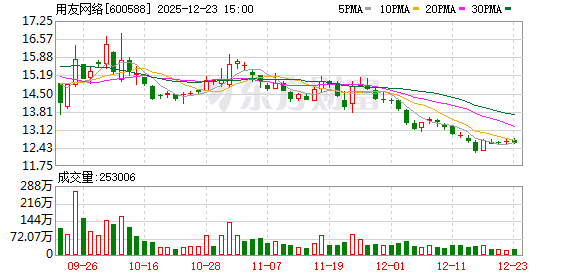
用友网络:公司控股股东滚动质押/解质押所持股份,均为其个人资金用途
Zheng Quan Ri Bao· 2025-12-23 13:47
证券日报网讯 12月23日,用友网络在互动平台回答投资者提问时表示,公司控股股东滚动质押/解质押 所持股份,均为其个人资金用途,与上市公司现金流情况无关。目前公司经营一切正常,公司会继续抢 抓数智化、国产化和全球化的市场机遇,推动业务持续健康发展。 (文章来源:证券日报) ...

【金融服务】以数智驱动“五个中心”能级跃升 交通银行上海市分行扎根上海主场,赋能上海发展
Xin Lang Cai Jing· 2025-12-23 12:09
Group 1: Digital Transformation in Shipping Finance - The launch of the "Shipping Butler" service by Bank of Communications Shanghai Branch enables a fully digital settlement system for shipping fees, reducing processing time from over 3 days to just a few minutes [1][14] - The service integrates multi-currency payments and eliminates the need for manual document submission, showcasing the bank's digital innovation in supporting the shipping industry [1][14] Group 2: Support for Key Industries - The "2+3+6+6" modern industrial system in Shanghai focuses on transforming traditional industries and developing three leading sectors: integrated circuits, biomedicine, and artificial intelligence [2][15] - Bank of Communications Shanghai Branch has provided over 170 billion yuan in credit support to more than 1,000 enterprises in these key industries as of September 2025 [17] Group 3: Financing for High-End Manufacturing - The bank plays a crucial role in supporting the domestic aircraft manufacturing supply chain, including financing for the C919 aircraft project [2][15] - It has successfully executed the first business on the China Commercial Aircraft Corporation's "de-nuclearization" supply chain platform, enhancing supply chain resilience [2][15] Group 4: International Trade and Cross-Border Financing - The bank is optimizing cross-border trade settlements to facilitate smoother capital flows, aiming to elevate Shanghai's status in the global trade landscape [6][19] - The introduction of the mBridge digital currency platform allows for innovative cross-border payment solutions, significantly reducing operational costs and risks for enterprises [20][21] Group 5: Aviation Financing Innovations - The bank has developed flexible financing solutions for airlines, including a combination of working capital loans and long-term leasing options for aircraft [9][23] - As of November 2025, the bank has facilitated financing for 30 aircraft, amounting to nearly 16.5 billion yuan [23] Group 6: Support for Technology and Innovation - The establishment of the first technology finance center by Bank of Communications aims to bridge the gap between banks and tech startups, addressing the unique financing challenges faced by these companies [10][24] - The bank has introduced innovative products like the "Smart List Loan," which evaluates companies based on their potential rather than fixed assets, providing significant support to over 1,600 tech enterprises [26][27]

中国科学院院士王松灵:数智化与稳态医学构建未来医学新范式
Ren Min Wang· 2025-12-23 09:30
2025人民好医生大会近日在北京举行。在主题发言环节,中国科学院院士、南方科技大学医学院院 长王松灵就《未来医学—数智化与稳态医学模式》分享了自己的观点。王松灵认为,健康长寿是人类共 同的追求,从基因层面来看,人类本具备更长的寿命潜力,但现实中多数人未能实现这一目标,核心原 因在于健康管理体系仍有诸多不足。要达成健康长寿的目标,需要直面多重行业挑战,而数智化与稳态 医学将是破解这些挑战、推动未来医学发展的关键方向。 "数智化技术将为未来医学发展提供重要支撑。"王松灵说,借助多组学与大数据融合,可实现疾病 的预测、预警与预防,通过穿戴设备实时监控健康状况,提前调整生活方式或干预治疗,从源头减少疾 病发生。在疾病诊疗阶段,数智化能助力精准诊断与治疗,比如对肿瘤进行精准分型,为个性化治疗方 案提供依据,提升治疗效果。 "技术与模式的创新,最终离不开人才与人文素养的保障。"在王松灵看来,理想的医学人才培养路 径,应是先培养出具备扎实临床能力的合格医生,在此基础上再逐步向专科医生、医学科学家进阶,同 时要构建适配数智化、稳态医学等新兴趋势的课程体系,让人才能力与行业发展需求精准匹配。医学人 文建设同样不可或缺,涵盖医学 ...
力合科技荣获2025年度环境保护科学技术奖
仪器信息网· 2025-12-23 09:02
Core Viewpoint - The project "Pollution Fine Control Technology and Application Based on Multi-Parameter Intelligent Equipment for Environmental Air" won the second prize in the Scientific and Technological Progress Award, highlighting its significance in supporting national air pollution control efforts [2][3]. Group 1: Project Overview - The project aims to support the fine control of air pollution in China, relying on national and local key scientific projects [3]. - It employs a technical route that includes core method and theory research, key component and complete equipment development, and data application system construction [3]. - The project team successfully developed a multi-parameter intelligent monitoring system for environmental air pollutants, addressing key challenges in high-resolution and precise monitoring [3]. Group 2: Application and Impact - The project's results have been widely applied in national air quality monitoring networks, mobile monitoring of atmospheric pollution along the Yangtze River, and analysis of cross-border pollution transmission [3]. - It serves various major activities' air quality assurance work, contributing significantly to the national campaign for blue sky protection [3]. Group 3: Future Directions - The company plans to continue focusing on the field of atmospheric environment monitoring, leveraging "digital intelligence" technology to enhance fine control of air pollution [3]. - It aims to overcome challenges related to the localization of high-end instruments and equipment, contributing to the construction of a beautiful China [3].

