
新旧动能转换

Search documents
11月金融数据出炉:贷款增速趋势性放缓,政府部门加杠杆支撑社融增长
Di Yi Cai Jing Zi Xun· 2025-12-12 10:21
Group 1: Monetary and Financing Environment - The central bank reported that M2 and social financing growth rates remain high, creating a favorable monetary environment for economic recovery [1] - As of the end of November, M2 balance reached 336.99 trillion yuan, with a year-on-year growth of 8.0%, which is 0.9 percentage points higher than the same period last year [1] - The total social financing stock was 440.07 trillion yuan, growing by 8.5% year-on-year, which is 0.7 percentage points higher than the previous year [1] Group 2: Government Debt and Financing - Government bond financing has significantly contributed to social financing growth, with net financing of 13.15 trillion yuan, an increase of 3.61 trillion yuan year-on-year [2] - The total new government debt for the year is expected to reach 11.86 trillion yuan, an increase of 2.9 trillion yuan compared to last year [2] - Government bonds accounted for 40% of the increase in social financing, indicating a strong reliance on government debt to support credit expansion [3] Group 3: Loan Growth Trends - The growth rate of loans has shown a downward trend, with RMB loans increasing by 15.36 trillion yuan in the first eleven months [4] - Loans to the real economy increased by 14.93 trillion yuan, which is a decrease of 1.28 trillion yuan year-on-year [5] - The decline in loan growth is attributed to various factors, including the substitution effect of government bonds and the impact of local government debt [5][6] Group 4: Structural Changes in Financing - The shift from investment-driven to consumption-driven economic growth has led to a decrease in traditional credit demand, particularly from real estate and local financing platforms [6] - New economic growth areas, such as technology innovation, are more aligned with equity financing rather than relying heavily on credit [6] - The current loan growth rate, adjusted for local government debt effects, remains around 7.5%, still above nominal economic growth [6] Group 5: Coordination of Monetary and Fiscal Policies - The coordination between monetary and fiscal policies is crucial for supporting economic growth and structural adjustments [8] - The central bank has maintained a stable funding environment, supporting the smooth issuance of government bonds [8] - The upcoming economic policies for 2026 are expected to continue a moderately loose monetary stance alongside proactive fiscal measures [9]
11月金融数据出炉:社融同比增长8.5%
Feng Huang Wang· 2025-12-12 10:12
Group 1 - The core viewpoint of the articles emphasizes the current state of monetary policy in China, highlighting that the growth rates of social financing and M2 are significantly higher than the nominal GDP growth, indicating a moderately loose monetary policy environment [1][2][4] - As of November 2025, the total social financing stock reached 440.07 trillion yuan, with a year-on-year growth of 8.5%, while the broad money (M2) balance was 336.99 trillion yuan, growing by 8% year-on-year [1] - The increase in government debt and the contribution of government bonds to social financing have been significant, with new government debt totaling 11.86 trillion yuan, an increase of 2.9 trillion yuan from the previous year [2] Group 2 - The loan growth rate has shown a decline, attributed to factors such as local government debt and the reform of small and medium-sized banks, which have exerted downward pressure on loan growth [3][4] - The overall loan balance in foreign and domestic currencies was 274.84 trillion yuan, with a year-on-year growth of 6.3%, while the RMB loan balance was 271 trillion yuan, growing by 6.4% [3] - The shift from traditional investment-driven growth to consumption-driven growth is leading to a decrease in loan demand from traditional sectors, as new economic growth points are less reliant on bank loans [5] Group 3 - The articles discuss the importance of direct financing channels, such as corporate bonds and equity financing, which are expected to play a more significant role in the financial system moving forward [2] - The net financing from corporate bonds reached 2.24 trillion yuan in the first eleven months of the year, an increase of 312.5 billion yuan year-on-year, indicating a growing trend in direct financing [2] - The central economic work conference emphasized the need for stable economic growth and reasonable price recovery as key considerations for monetary policy, with a long-term inflation target of around 2% [6][7]
11月金融数据出炉:社融存量同比增长8.5% 直接融资在金融体系中发挥更重要作用
Xin Lang Cai Jing· 2025-12-12 10:02
Group 1 - The core viewpoint of the articles emphasizes the significant growth in social financing and monetary supply, indicating a moderately loose monetary policy environment that supports economic stability and internal demand [1][2][8] - As of November 2025, the total social financing scale reached 440.07 trillion yuan, a year-on-year increase of 8.5%, while the broad money (M2) balance was 336.99 trillion yuan, also reflecting an 8% growth [1][8] - The increase in loans to the real economy was highlighted, with the balance of RMB loans reaching 267.42 trillion yuan, growing by 6.3% year-on-year, and the balance of inclusive small and micro loans increasing by 11.4% [1][8] Group 2 - The articles report that the total social financing increment for the first eleven months of 2025 was 33.39 trillion yuan, which is 3.99 trillion yuan more than the same period last year, supported by increased government debt issuance [2][10] - The contribution of government bonds to the social financing scale has notably increased, with new government debt totaling 11.86 trillion yuan, up by 2.9 trillion yuan from the previous year [2][10] Group 3 - Direct financing channels, including corporate bonds and equity financing, are accelerating, with net financing from corporate bonds reaching 2.24 trillion yuan, an increase of 3.125 billion yuan year-on-year [3][11] - The articles indicate that the development of direct financing aligns with the goals of the "14th Five-Year Plan," emphasizing its importance in supporting high-growth and innovative sectors [3][11] Group 4 - The articles discuss the reasons for the slowdown in loan growth, attributing it to the diversification of financing methods and the impact of local government debt and reforms in small and medium-sized banks [4][12] - It is noted that traditional sectors such as infrastructure and real estate are experiencing a decline in credit demand, while new economic growth points are less reliant on bank loans, leading to a trend of decreasing loan growth [5][13]
曾刚:培育新动能,服务经济高质量发展是未来五年金融业的核心任务
Bei Jing Shang Bao· 2025-12-12 08:47
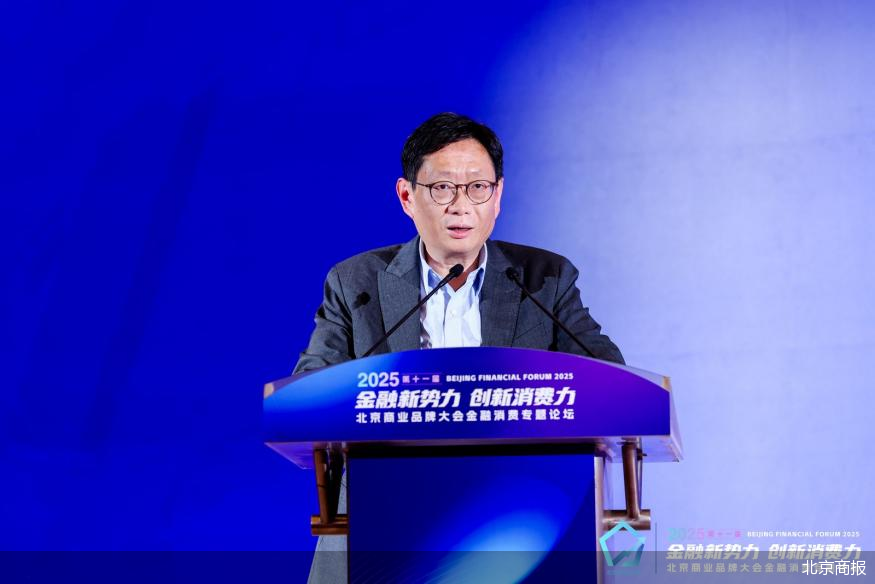
12月11日,由中外企业文化、北京商报社主办的2025年度北京商业品牌大会金融消费专题论坛在北京召开。上海金融与发展 实验室首席专家、主任曾刚就"十五五"期间金融工作的重点与前瞻发表演讲。他指出,"十五五"是我国承上启下的关键五 年,金融工作将紧紧围绕国家战略,回归本源、服务实体经济,加快推进金融强国建设。 消费领域仍是关注重点,但"结构变化与新兴变化需要我们把握和捕捉"。金融从业者需提升对产业与科技的认知能力,在规 范发展中捕捉新的增长空间,真正实现"回归本源、服务实体"的初心使命。 在此背景下,金融领域的改革方向也相应明确。 从"十五五"规划建议关于金融的表述来看,曾刚对比指出,"十四五"期间金融工作的主题是"深化金融供给侧改革",旨在解 决金融总量过剩、结构失衡问题,政策环境相对偏紧;而"十五五"规划建议则明确提出"加快金融强国建设",标志着基础工 作已基本完成,政策环境将更加积极,金融体系进入发力支持高质量发展的新阶段。 与之相应,资本市场的定位也更趋重要,从偏重融资功能转向"投资与融资功能协调发展",意味着更注重市场的健康与长期 价值培育。在人民币国际化方面,表述也从"稳慎推进"调整为直接"推进人民 ...

深化改革强动能,国企赋能新发展
Qi Lu Wan Bao· 2025-12-12 07:02
在全面贯彻党的二十届四中全会精神、奋力推进"十五五"规划落地实施的关键时期,国有企业作为国民 经济的重要支柱,肩负着推动区域发展、引领产业升级、助力乡村振兴的时代重任。济阳区产发集团紧 跟时代步伐,深入落实区委区政府工作要求,锚定"强理论、精主业、兴产业、促改革"核心任务,在学习型 国企建设、产业基金运作、农产品深加工等领域精准发力,以敢闯敢试的改革精神和求真务实的实干作 风,在深化国企改革的浪潮中勇立潮头,为济阳区经济社会高质量发展注入了源源不断的国企动能。 通讯员 于洋 建强学习型国企:以知识赋能筑牢人才根基 在学习内容的设置上,集团做到了政治理论与业务技能并重、政策法规与行业动态兼顾。党的创新理论 是国企发展的"定盘星",集团将二十届四中全会精神、国企改革等相关政策文件作为必学内容,引导干部 职工深刻领会国家战略部署,不断增强政治判断力、政治领悟力、政治执行力。同时,紧扣集团业务发展 需求,将行业前沿动态、岗位专业技能、集团规章制度等纳入学习范畴,涵盖资本运作、项目管理、风险 防控、农产品加工技术等多个领域,让干部职工在学习中补齐能力短板。 常态化的学习机制带来了显著成效。如今的济阳区产发集团,"比学赶 ...
重磅会议指引向好,关注中证A500ETF(159338)
Mei Ri Jing Ji Xin Wen· 2025-12-12 06:31
12月11日中证A500ETF(159338)小幅下跌0.86%。 资料来源: Wind 国内方面,11月受鲜菜等食品价格大幅上涨影响,CPI同比+0.7%,环比-0.1%,同比回升态势延续。核心CPI同比上涨1.2%与前值持平, 主要受金饰价格持续上涨驱动,医疗服务与教育服务价格也有所上涨。各类补贴退坡后,家用器具、交通工具价格有所回落。11月PPI同比 跌幅扩大至-2.2%,环比+0.1%,反内卷叠加季节性需求推动煤炭价格上涨,有色价格受国际传导上涨,中下游PPI偏弱,但光伏设备、锂电 池制造等新兴产业价格降幅持续收窄。 市场对于明年物价稳步温和回升的预期不变。12月政治局会议提出"继续实施更加积极的财政政策和适度宽松的货币政策",货币政策仍 在宽松周期内。我国经济当前处于新旧动能转换时期,内生增长动能逐步转换恢复,支撑A股长期"慢牛"趋势的底层结构没有改变。中证 A500作为新一代宽基指数,行业分布全面且均衡,市场代表性强,是捕捉市场上涨收益的优质工具。12月以来市场震荡调整,投资者可关注 中证A500ETF(159338)投资机会。 风险提示: 投资人应当充分了解基金定期定额投资和零存整取等储蓄方式的 ...

国企红利ETF(159515)盘中涨0.18%,机构:2026投资双主线围绕科技与红利
Xin Lang Cai Jing· 2025-12-12 02:29
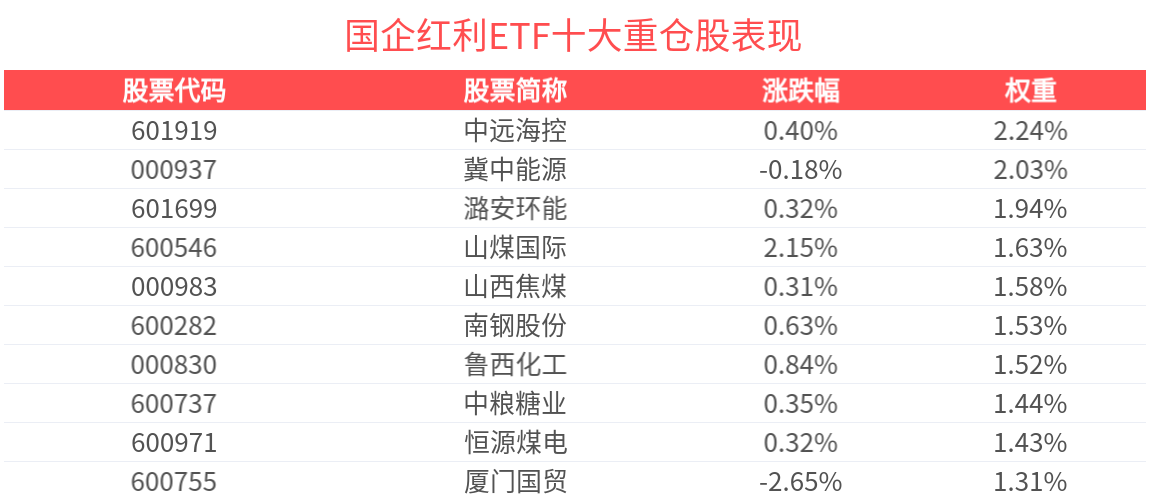
Group 1 - The core viewpoint of the news highlights the performance of the China State-Owned Enterprises Dividend Index, which has shown a slight increase, with specific stocks like Huayang Co., Ltd. and Western Mining experiencing notable gains [1] - The China State-Owned Enterprises Dividend ETF (159515) has seen a recent increase of 0.18%, with an average daily trading volume of 2.8974 million yuan over the past month [1] - The Federal Open Market Committee (FOMC) of the Federal Reserve announced a 25 basis point interest rate cut, lowering the target range to 3.50%-3.75%, aligning with market expectations [1] Group 2 - Since the beginning of 2025, China's economy has demonstrated two unexpected strengths: resilient exports and a robust capital market, supported by external factors like the Fed's easing cycle and proactive domestic policies [2] - The Central Political Bureau meeting in December reaffirmed the implementation of a moderately loose monetary policy, opening up space for further reserve requirement ratio cuts and interest rate reductions [2] - The ongoing structural transition in China's economy is expected to lead to a focus on technology and dividend stocks in the A-share market for 2026, with technology being a long-term strategic direction [2] Group 3 - As of November 28, 2025, the top ten weighted stocks in the China State-Owned Enterprises Dividend Index include COSCO Shipping Holdings, Jizhong Energy, and Shanxi Coal International, collectively accounting for 16.99% of the index [3] - The performance of individual stocks within the index varies, with notable movements such as COSCO Shipping Holdings increasing by 0.40% and Jizhong Energy decreasing by 0.18% [4]
债市回归“上有顶、下有底”震荡格局,关注十年国债ETF(511260)
Sou Hu Cai Jing· 2025-12-12 01:45
此前我们发出了对债市的做多信号,刚好遇上央行宣布重启国债买卖的利好消息。一个月下来之后,我们发现债市重新走回了"上有顶、下有底"的窄幅震荡 状态,这也是我们到年末的主要观点。 为什么要重提"上有顶、下有底"?首先,目前宏观"水温"比较冷,我们仍处于新旧动能转换时期,社会名义增长率相对不足,这对债市形成了支撑。但今年 货币政策非常温和,央行在避免引导债市形成单边预期,因此向更低利率突破的难度较大。有投资人会问,在这种震荡市该如何操作?我们的建议是:首 先,仓位不宜过重,因为震荡市确实难以择时;其次,建议大家参考我们第二部分将要介绍的量化择时模型,进行更精细化的操作。我们的模型也将陪伴各 位投资者,在市场中持续跟踪、不断迭代。 在介绍具体量化模型之前,我们先分析债市的潜在空间。量化模型跟踪的是趋势,仅能告知我们趋势延续的方向,但对远期空间的判断才是决定仓位的关 键。首先需要说明的是,历史上债市的大级别回撤,往往是基本面与政策面共同作用的结果。因此,目前大家暂时无需担心债券出现进一步大幅涨跌。当 然,近期有观点认为债市与基本面"脱钩",或认为基本面分析、宏观分析已失效。但我们认为这种说法并不准确,基本面仍是核心分析 ...

官宣,又一个14万亿大省来了
Mei Ri Jing Ji Xin Wen· 2025-12-11 14:58
Group 1 - Jiangsu's GDP is expected to exceed 14 trillion yuan, marking a significant milestone in its economic development [1][2] - The province aims to enhance its contribution to national economic growth, improve its radiating and driving capabilities, and increase development coordination and international competitiveness [2] - Jiangsu's manufacturing industry remains robust, with a projected added value of 4.63 trillion yuan in 2024, maintaining its position as the top manufacturing province in China [2] Group 2 - Jiangsu has the highest number of "trillion-yuan cities" in China, with cities like Suzhou, Nanjing, and Wuxi leading the way, and Xuzhou expected to join this group [3] - The province emphasizes expanding domestic demand as a strategic initiative, enhancing its role in economic growth [3] - Jiangsu's innovative consumption initiatives have gained national attention, reflecting its commitment to driving economic activity [3]
格局之变 “黄金腰部”挺起,如何影响四川经济?
Si Chuan Ri Bao· 2025-12-11 00:28
Core Viewpoint - The four cities of Neijiang, Meishan, Zigong, and Suining are collectively striving to surpass a GDP of 200 billion yuan, which would significantly enhance the economic structure of Sichuan province and contribute to a more resilient economic framework [5][6][10]. Economic Performance and Goals - As of 2024, the number of cities in Sichuan with a GDP exceeding 200 billion yuan is expected to increase from 9 to 13, indicating a collective leap in economic development levels [6][10]. - The four cities are targeting to achieve this goal by 2025, which would mean that over half of Sichuan's cities will have GDPs above 200 billion yuan [6][10]. Industry Development Strategies - Zigong is focusing on low-altitude economy and sodium battery industries, leveraging its aviation industrial park to create a complete industrial chain, with a reported 31% year-on-year growth in low-altitude economic output from January to September 2025 [7][8]. - Neijiang is developing its electronic information and biopharmaceutical industries, with a notable 10.7% year-on-year increase in industrial added value from January to September 2025 [8][12]. - Meishan is capitalizing on its geographical advantages to develop new energy and new materials industries, with significant investments from leading companies in various sectors [8][12]. - Suining is building a comprehensive lithium battery industry ecosystem, with over 55 lithium battery enterprises and a reported 15.6% increase in lithium industry added value from January to October 2025 [9][12]. Challenges and Future Outlook - The cities face challenges in transitioning from traditional industries to new growth drivers, with a need for innovation and efficiency improvements to sustain economic growth [10][11]. - The focus on new quality productivity and regional collaboration will be crucial for these cities to thrive in the post-200 billion yuan era [12][13]. - The competition will not only be about achieving the GDP target but also about who can effectively transition to new industrial opportunities and enhance collaborative development within the Chengdu-Chongqing economic circle [13].
