
碳减排

Search documents
全国碳市场四周年:首次扩围纳入钢铁等行业,覆盖80亿吨排放量
2 1 Shi Ji Jing Ji Bao Dao· 2025-07-16 12:28
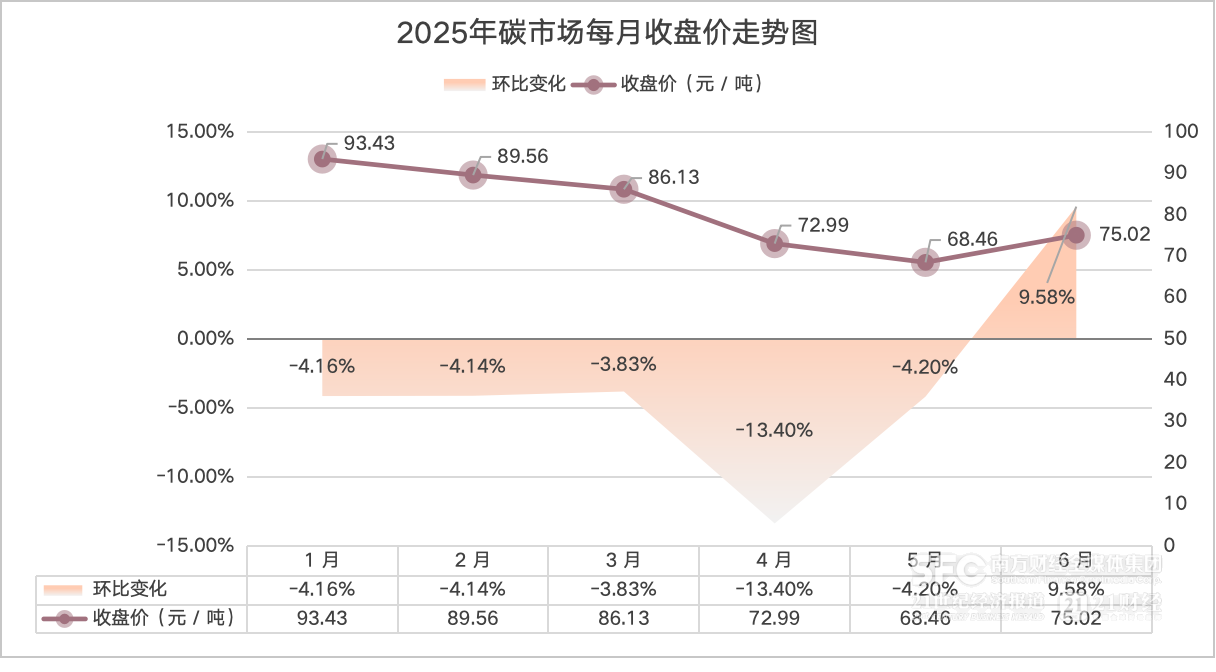
Core Insights - The national carbon emissions trading market in China is set to expand its coverage to include the steel, cement, and aluminum smelting industries, which are significant carbon emitters, with an estimated total emissions coverage of approximately 80 billion tons [1][3][4] - The market has seen a cumulative trading volume of about 673 million tons and a total transaction value exceeding 46.2 billion yuan as of July 15, 2025, indicating a growing trading scale and stable price trends [1][6][12] - The introduction of the voluntary carbon emissions reduction trading market (CCER) has begun, with the first certified voluntary reduction units officially issued, further enhancing market activity [1][12] Market Expansion - The national carbon market is recognized as a major institutional arrangement to address climate change and promote green low-carbon transformation in the economy [2][4] - The expansion plan was outlined in the government work report for 2025, emphasizing the need to broaden the industry coverage of the carbon emissions trading market [2][4] - The newly included industries are expected to add around 1,500 key emission units, increasing the total to approximately 3,700 units, which will cover over 60% of the national carbon emissions [3][4] Trading Mechanism and Performance - The carbon trading system has adopted a single-sided bidding method to enhance trading efficiency [3] - The carbon price has fluctuated within a reasonable range, with the market price recently stabilizing between 70-80 yuan per ton after reaching a peak of over 105 yuan per ton in November 2024 [7][9] - The completion rate for the 2023 carbon quota was approximately 99.98%, indicating a strong compliance culture among key emission units [6][11] CCER Market Development - The CCER market has seen a cumulative trading volume of about 237,800 tons and a total transaction value of 200 million yuan as of July 15, 2025, reflecting its growing importance [13][12] - Various stakeholders, including national and local key emission units, project developers, and financial institutions, are participating in the CCER market, which is expected to further stimulate market activity [13][14] - The CCER price has remained higher than the carbon emissions allowance (CEA) price, indicating strong market demand and the potential for future price adjustments as supply increases [10][14]

共话中国经济新机遇丨专访:“中国是最大市场,更是伙伴、创新和人才的重要来源”——访力拓集团中国区首席执行官许峰
Xin Hua She· 2025-07-16 09:14
Group 1 - The core viewpoint emphasizes that China is not only the largest market for Rio Tinto but also a significant source of partners, innovation, and talent [1] - Rio Tinto has participated in the China International Supply Chain Expo for three consecutive years, showcasing successful collaborations with partners [1] - The third edition of the expo is being held from July 16 to 20 in Beijing, marking its first summer occurrence [1] Group 2 - The external environment for business operations is increasingly uncertain, posing new challenges to supply chain resilience, which is crucial for stable global economic development [2] - Rio Tinto's collaboration with Baowu Steel Group exemplifies a win-win partnership, covering the entire supply chain from resource development to low-carbon steel production [2] - The Chinese government's initiatives are creating opportunities for multinational companies to deepen cooperation with local partners [2] Group 3 - China's advantages in carbon reduction technology are enhancing Rio Tinto's operational efficiency and contributing to broader industry carbon reduction goals [3] - The development of high-end manufacturing and new productive forces in China is expected to continue expanding market prospects for multinational companies [3] - Efforts by China to improve market access and optimize the business environment are solidifying its position in the global economy and providing more collaboration opportunities for multinational enterprises [3]

【有本好书送给你】下一个超级周期什么时候来?
重阳投资· 2025-07-16 06:29
Core Viewpoint - The article emphasizes the importance of reading as a pathway to growth and understanding, encouraging readers to engage with literature and share their thoughts on the topic of "Wealth and Cycles" [2][3][4]. Group 1: Super Cycles - The article discusses the concept of "Super Cycles," which are long-term upward trends in the market that create and consume wealth, highlighting the significant returns during these periods [12][31]. - Historical examples of Super Cycles include: 1. 1949-1968: Post-WWII explosive growth driven by the Marshall Plan and the baby boom [15]. 2. 1982-2000: A modern cycle characterized by the resolution of inflation issues, leading to a strong economic recovery and high returns [16]. 3. 2009-2020: A post-financial crisis cycle marked by quantitative easing and zero interest rates, resulting in one of the longest bull markets [17][18]. Group 2: Stagnant Periods - The article outlines two major "stagnant" periods: 1. 1968-1982: High inflation and low returns, with the S&P 500's nominal return at -5% [21]. 2. 2000-2009: A period marked by the bursting of the tech bubble and subsequent economic challenges, leading to low overall returns [22]. Group 3: Current Cycle Analysis - The article posits that the current economic and political landscape is shifting towards a new investment paradigm, influenced by factors such as rising interest rates, slowing economic growth, and a move from globalization to regionalization [23][24]. - Key drivers of the post-modern cycle include: 1. Rising costs of capital and inflation [27]. 2. Changes in global trade dynamics and geopolitical tensions [28]. 3. Increased government spending and debt levels [28]. 4. Shifts in labor and commodity markets, leading to tighter conditions [27]. Group 4: Investment Opportunities and Risks - The article suggests that understanding cycles is crucial for identifying wealth opportunities, emphasizing the need to recognize the factors driving these cycles and their implications for financial markets [31].
中日外长会谈45分钟,双方达成协议,日本向中方做出承诺
Sou Hu Cai Jing· 2025-07-11 08:16
Group 1: Economic Impact of US-Japan Trade War - The US has imposed a 25% tariff on Japanese auto parts, resulting in over $10 billion in losses for Japan and a projected GDP decline of 0.59% [1][3] - Hitachi Construction Machinery reported a profit drop of 30 billion yen, and the Bank of Japan has lowered its economic growth forecast to 0.5% for the year [1] - The tariff has triggered a negative cycle of yen depreciation, rising import costs, and soaring prices, with beef bowl prices exceeding 500 yen and scallop exports plummeting by 60% due to increased tariffs [1] Group 2: Japan's Export Dependency - Japan's automotive exports to the US account for nearly 30% of its total exports, making it vulnerable to the impact of tariffs on major manufacturers like Toyota and Honda [3] - Japan's efforts to shift seafood imports from China to the US have been undermined by the new tariffs, highlighting the fragility of its trade strategy [3] Group 3: Japan-China Relations and Cooperation - A recent 45-minute meeting between Japanese and Chinese foreign ministers resulted in Japan's commitment to "seriously address history" and adhere to the "Murayama Statement," marking a significant diplomatic gesture [4][6] - The meeting has led to potential cooperation in green energy and healthcare, with projects like the Kobe hydrogen port and smart care beds indicating a thaw in relations [10][12] - The two countries have reached twenty strategic agreements, including dialogues on carbon reduction policies and joint research in smart mobility, which could reshape the East Asian industrial landscape [12] Group 4: Historical Context and Future Implications - Japan's historical issues, including the Yasukuni Shrine visits and textbook controversies, continue to influence public sentiment and political discourse, complicating its diplomatic efforts [7][9] - The potential for Japan to miss strategic opportunities due to its historical stance is significant, as past incidents have led to setbacks in Japan-China relations [13][15] - The future of Japan-China relations hinges on Japan's ability to balance economic interests with historical responsibilities, as emphasized by the need for long-term efforts to heal historical wounds [16][17]

每日速递 | 特朗普:将上调铜关税至50%
高工锂电· 2025-07-09 10:04
Battery - Contemporary Amperex Technology Co., Ltd. (CATL) has established Dongying Times Zero Carbon New Energy Technology Co., Ltd., focusing on carbon reduction, carbon capture, and renewable energy technology services with a registered capital of 1 million RMB [2][3] - Xinwanda has founded Jiangxi Xinshi Yuan Recycling Technology Co., Ltd. with a registered capital of 10 million RMB, engaging in emerging energy technology research and battery manufacturing [4][5] - Enli Power Technology Co., Ltd. and Ningbo Junpu Intelligent Manufacturing Co., Ltd. have signed a strategic cooperation memorandum to collaborate on solid-state battery technology and expand into the North American market [6][7] - Lishen Battery has launched six new cylindrical batteries featuring a high nickel-silicon chemical system, achieving an energy density of over 330 Wh/kg and targeting eVTOL and humanoid robot applications [8][9] Materials - Baoming Technology has developed a fourth-generation composite copper foil aimed at enhancing fast charging performance and safety in lithium batteries, currently undergoing customer sample testing [10][11] Overseas - U.S. President Trump announced plans to raise tariffs on copper imports to 50%, with potential implementation by the end of July or early August, as part of broader tariff strategies affecting various industries [12][13]

飞友科技联合绿航时代 中飞院发布《中国民航碳排放报告2024》
Zhong Guo Min Hang Wang· 2025-07-09 04:08
Core Viewpoint - The "China Civil Aviation Carbon Emission Report 2024" highlights the progress and strategies of the Chinese civil aviation industry in achieving low-carbon transformation under the "dual carbon" strategy, emphasizing the importance of sustainable aviation fuel (SAF) and ESG principles in driving future developments [1][2][3] Group 1: Carbon Emission Management - The report indicates that the Chinese civil aviation industry has made significant breakthroughs in carbon emission management, including advancements in aircraft manufacturing, air traffic management, and the application of alternative fuels [1] - The introduction of new low-carbon aircraft and intelligent flight scheduling systems has contributed to a gradual reduction in carbon emissions [1] Group 2: Global Context and Standards - The report analyzes global carbon reduction efforts in the aviation sector, focusing on international standards and policies set by organizations like IATA and ICAO, with a particular emphasis on the evolution of global reduction mechanisms such as CORSIA [2] - Sustainable aviation fuel (SAF) is identified as a crucial element for the low-carbon development of the aviation industry worldwide [2] Group 3: ESG Framework and Practices - The report outlines the integration of Environmental, Social, and Governance (ESG) principles into the strategic planning of civil aviation enterprises, showcasing their efforts in green development and social responsibility [2] - ESG practices are expected to enhance the competitiveness and sustainability of civil aviation companies in the future [2] Group 4: Market Recovery and Case Studies - The report provides a comprehensive analysis of the recovery of the Chinese aviation market from 2023 to 2024, along with changes in carbon emission structures [3] - It highlights exemplary cases of energy-saving and emission-reduction practices from selected airlines and airports, offering replicable experiences for the industry [3] Group 5: Future Directions - The report emphasizes that the green transformation of Chinese civil aviation is at a critical juncture, with a focus on collaborative advancements in policy, technology, and market strategies to enhance sustainable development capabilities [3] - It aims to contribute "Chinese wisdom" and "Chinese strength" to global climate governance and ecological civilization construction [3]
好书推荐 | 下一个超级周期什么时候来?
点拾投资· 2025-07-08 07:04
Core Viewpoint - The article discusses the concept of "super cycles" in the stock market, highlighting historical periods of significant economic growth and the factors that drive these cycles, as well as the current transition to a "post-modern cycle" characterized by new challenges and opportunities. Group 1: Historical Super Cycles - Buffett's early investment success was significantly higher than the Dow Jones index, particularly from 1957 to 1968, during a post-war bull market [1][2] - The period from 1982 to 2000 saw a modern cycle driven by the resolution of inflation, with the Dow Jones Industrial Average achieving an average annual real return of 15% [8][9] - The post-financial crisis cycle from 2009 to 2020 marked the longest bull market, influenced by quantitative easing and low interest rates, despite a significant drop in the S&P 500 index [10][11] Group 2: Characteristics of Super Cycles - Super cycles are characterized by three main factors: initial low valuations, declining or low funding costs, and low initial yields [11][12] - Strong economic growth and regulatory reforms contribute to reducing the risk premium in the stock market, enhancing market returns [12] Group 3: "Fat and Flat" Periods - The period from 1968 to 1982 experienced high inflation and low returns, with the S&P 500's nominal total return at -5% [15][16] - The 2000 to 2009 period was marked by a tech bubble burst and subsequent bear market, leading to low overall investor returns despite significant volatility [17][18] Group 4: Current and Future Cycles - The current "post-modern cycle" reflects characteristics of both classical and modern cycles, with rising costs of capital and a shift towards regionalization driven by geopolitical tensions [20][23] - Factors driving the post-modern cycle include rising funding costs, slowing economic growth, and increased government spending and debt [23][25][26] - The changing demographic landscape and geopolitical tensions are expected to create new investment opportunities and risks [26][27]

中万宝砺科技(上海)有限公司成立,注册资本1000万人民币
Sou Hu Cai Jing· 2025-07-05 00:40
Company Formation - Zhongwan Baoli Technology (Shanghai) Co., Ltd. has been established with a registered capital of 10 million RMB [1] - The legal representative is Wang Chengrong, and the shareholders include Zhongwan Global Limited (55%) and Jiangsu Baoli Technology Co., Ltd. (45%) [1] Business Scope - The company’s business scope includes technology services, development, consulting, and transfer, as well as information system integration services [1] - It also engages in software development, battery sales, new energy vehicle battery swap facilities, energy storage technology services, and various sales related to electrical equipment and components [1] Industry Classification - The company is classified under the national standard industry of scientific research and technical services, specifically in technology promotion and application services [1] - The registered address is located in Jiading District, Shanghai, and the company is categorized as a limited liability company with natural person investment or control [1]
仕净科技等成立新材料科技公司
news flash· 2025-07-04 05:55
Group 1 - The establishment of Foshan Yanuoda New Materials Technology Co., Ltd. has been recently reported, with Chen Xianhua as the legal representative [1] - The company's business scope includes research and development in carbon reduction, carbon conversion, carbon capture, and carbon storage technologies, as well as engineering and technical research and experimental development, and resource recycling technology research [1] - The company is jointly held by Anhui Yanuoda New Materials Technology Co., Ltd. and other entities under Shijing Technology (301030) [1]
京博非粮生物基橡胶产品进入万吨级产业化阶段
Qi Lu Wan Bao Wang· 2025-07-02 02:57
Core Viewpoint - The company Jingbo Zhongju has achieved significant milestones in the production of non-grain bio-based rubber, marking a step towards green transformation in the rubber industry [1][2] Group 1: Company Achievements - Jingbo Zhongju's 10,000 tons/year non-grain bio-based rubber production line has been approved for construction, indicating the entry of bio-based rubber products into the tens of thousands of tons industrialization phase [1] - The bio-based polybutylene succinate rubber project utilizes agricultural waste, specifically corn cobs, as raw materials, showcasing both technological innovation and environmental value [1][2] Group 2: Environmental Impact - Each ton of bio-based polybutylene succinate rubber produced can reduce CO2 emissions by approximately 1.4 tons compared to traditional petroleum-based synthetic rubber [1][2] - The bio-based rubber has a carbon content ranging from 20% to 100%, contributing to a significant reduction in carbon emissions during production, which is 50% to 80% lower than petroleum-based alternatives [1][2] Group 3: Technological Innovations - The company, in collaboration with Beijing University of Chemical Technology, has successfully developed key technologies for raw material development, product structure design, and process optimization for bio-based rubber [2] - The bio-based rubber exhibits excellent properties such as aging resistance, slip resistance, wear resistance, and high-temperature resistance, meeting international advanced performance standards [2] Group 4: Market Applications and Future Outlook - The bio-based rubber has been applied in high-end footwear materials, protective gloves, and tires, indicating its market viability [2] - The company anticipates that the construction and operation of the tens of thousands of tons non-grain bio-based rubber facility will be completed within the next three years, promoting rapid development in global carbon reduction and bio-based materials [2]