
AI眼镜

Search documents
A股超4600股上涨,工业富联涨超9%,日韩股市跳水,加密货币集体大跌
2 1 Shi Ji Jing Ji Bao Dao· 2025-10-21 07:41
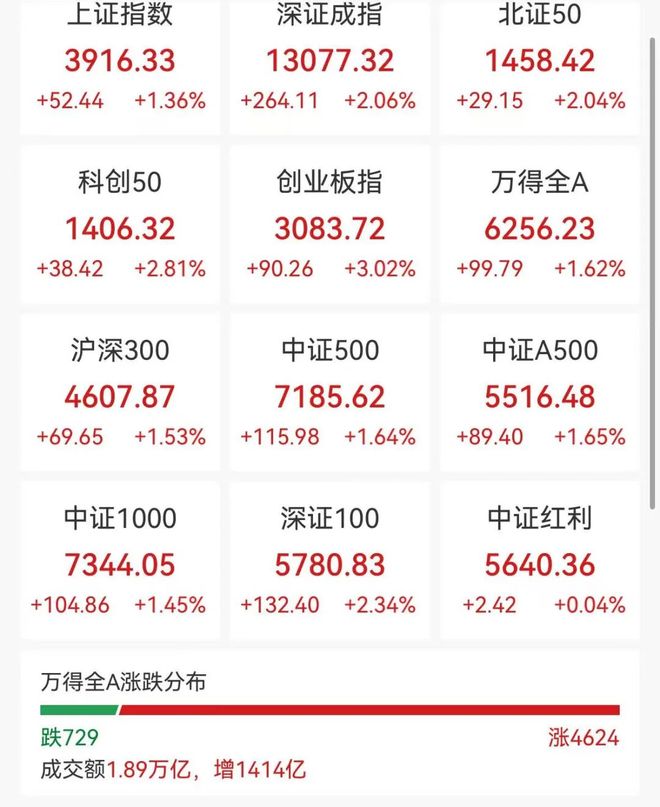
Market Overview - On October 21, A-shares saw a collective rise in the three major indices, with the Shanghai Composite Index increasing by 1.36%, the Shenzhen Component Index by 2.06%, and the ChiNext Index by 3.02% [1][2] - The total trading volume across the Shanghai and Shenzhen markets reached 1.8927 trillion yuan, an increase of 141.4 billion yuan compared to the previous day, with over 4,600 stocks rising [1][2] Sector Performance - The shale gas, Apple concept, engineering machinery, CPO, real estate, and storage chip sectors showed significant gains, while coal, gas, and precious metals sectors lagged behind [2][3] - The consumption electronics sector experienced a surge, with stocks like Huanxu Electronics and Wentai Technology hitting the daily limit, and Industrial Fulian rising over 9% [5][6] Consumption Electronics Insights - The recent launch of AI smart glasses by Meta has contributed to the growth in the consumption electronics sector, with a notable increase in stock prices for companies involved in this space [5][7] - IDC forecasts that the shipment volume of smart glasses in China will exceed 1 million units in the first half of 2025, representing a year-on-year growth of 64.2% [7] - The global smartphone market also showed growth, with a 2.6% increase in shipments in Q3 2025, reaching 320 million units [8] Apple Product Performance - The iPhone 17 series saw a 14% increase in sales compared to the iPhone 16 series during the first ten days of its launch in both China and the US [9] - Analysts expect that the sales of Apple devices, including smartphones and headphones, will exceed expectations, indicating a potential recovery in the industry [9]






百度、阿里即将入局,AI眼镜“大战”升级
3 6 Ke· 2025-10-21 07:16
Core Insights - Multiple AI glasses manufacturers are set to release new products soon, indicating a growing market for smart eyewear driven by AI technology and industry demand [1][2][10] - The Chinese smart glasses market is projected to see significant growth, with an expected shipment of 2.846 million units in 2023, representing a year-on-year increase of 116.4% [9][10] Group 1: Product Launches - Thunderbird glasses will launch the world's first HDR-supported smart viewing glasses on October 23 [1] - Yingmu Technology has released the new generation AI smart glasses INMO GO3 and is collaborating with Tencent, Ant Group, and Zhipu AI to build an AI+AR content ecosystem [1] - Alibaba's Quark AI glasses are accelerating production ramp-up, with a pre-sale interface screenshot circulating, although the exact release date remains undecided [1][3][8] - Baidu's Xiaodu AI glasses are also expected to launch within this year, having been first showcased at the 2024 Baidu World Conference [1][8] Group 2: Market Dynamics - IDC forecasts that by the first half of 2025, Chinese smart glasses manufacturers will ship over 1 million units, achieving a year-on-year growth of 64.2% and capturing 26.6% of the global market share [1] - The entry of major players like ByteDance, Alibaba, Baidu, and Meizu into the smart glasses market is expected to intensify competition [1][2][10] Group 3: Technological Integration - Alibaba's Quark AI glasses will integrate various AI capabilities and services from its ecosystem, including navigation and payment functionalities [3] - The glasses will feature a near-eye display navigation system developed in collaboration with Gaode Map, enhancing usability in mobile scenarios [3] Group 4: Industry Challenges - The supply chain for AI glasses faces challenges, including limited production capacity for core components and high production costs due to complex assembly requirements [10] - New entrants in the AI glasses market have experienced delivery issues, highlighting the pressures on production and supply chain management [10]



百度、阿里即将入局,AI眼镜“大战”升级
财联社· 2025-10-21 02:49
Core Viewpoint - The AI glasses market is experiencing significant growth, with multiple companies preparing to launch new products, driven by advancements in AI technology and increasing consumer demand [4][6][16]. Group 1: Upcoming Product Launches - Thunderbird glasses will launch the world's first HDR-supported smart viewing glasses on October 23 [4]. - Yingmu Technology has released the new generation AI smart glasses INMO GO3 and is collaborating with Tencent, Ant Group, and Zhipu AI to build an AI+AR content ecosystem [4]. - Alibaba's Quark AI glasses are in the process of ramping up production, with a pre-sale price of 9.9 yuan and additional benefits for early adopters [8][14]. Group 2: Market Growth and Competition - According to IDC, China's smart glasses shipments are expected to exceed 1 million units in the first half of 2025, marking a 64.2% year-on-year increase and capturing 26.6% of the global market share [6]. - The AI glasses market is becoming increasingly competitive, with major players like ByteDance, Alibaba, Baidu, and Meizu set to release AI-focused audio and video recording glasses [6][8]. Group 3: Industry Insights - The collaboration between Meta and Ray-Ban has demonstrated a viable commercialization path for smart glasses, focusing on user needs rather than excessive technological features [7]. - The integration of AI capabilities into products, such as navigation and payment systems, is expected to enhance user experience and drive market adoption [8][14]. Group 4: Supply Chain Challenges - The smart glasses industry faces supply chain and production challenges, including limited capacity for core components and high production costs due to complex manufacturing processes [16][17]. - Companies like Rokid have experienced delays in product delivery, highlighting the pressures on production and supply chain management in the rapidly expanding market [17].

轻工制造:出口把握阿尔法,新消费情绪改善关注优质个护
Huafu Securities· 2025-10-19 09:14
Investment Rating - The report maintains an "Outperform" rating for the light industry manufacturing sector [3]. Core Insights - The report highlights a potential improvement in export sentiment due to a signal from Trump regarding tariffs on Chinese goods, suggesting that high tariffs will not persist long-term. This could lead to a better outlook for export chains [2]. - Recent consumer sentiment has shown signs of recovery, particularly in the personal care sector, with recommendations to focus on leading companies such as Dengkang Oral Care, Weiguan Medical, Baiya Co., and Haoyue Care [2]. - The report emphasizes the advantages of overseas manufacturing, particularly in furniture, where companies in Vietnam are seen as having a competitive edge over those in China [2]. Summary by Sections Export Chain - In September, China's exports increased by 8.3% year-on-year in USD terms, with significant growth in exports to ASEAN countries [7]. - The report notes that furniture exports in September saw a slight increase of 0.35% year-on-year, while cumulative exports from January to September decreased by 4.8% [7]. - The report suggests that the easing of trade tensions could positively impact market sentiment [7]. Home Furnishings - The report cites a 23.84% month-on-month increase in sales for major building materials and home furnishing markets in September, although year-on-year sales decreased by 8.02% [5]. - The report highlights the performance of Iole Home, which reported a 2.2% increase in revenue and a 70.9% increase in net profit for the first three quarters of 2025 [5]. - The home furnishings sector is currently viewed as undervalued, with recommendations to consider leading companies in the sector [5]. Paper and Packaging - As of October 17, 2025, prices for various types of paper have shown mixed trends, with boxboard prices increasing by 56.6% to 3682.4 CNY/ton and corrugated paper prices rising by 68.75% to 2948.75 CNY/ton [5]. - The report indicates that the demand for packaging is expected to remain strong in the fourth quarter due to upcoming promotional events [5]. - The report recommends focusing on leading companies in the waste paper sector and those with strong fiber supply [5]. Consumer Goods - The report notes that the personal care brand "Free Point" has launched a new marketing campaign, indicating a strategic push for the upcoming sales season [7]. - The report suggests that companies in the stationery sector, such as Morning Glory, are expected to see steady growth due to strategic partnerships [7]. - The report also highlights the potential for growth in the AI glasses market, recommending companies like Kante Optical and Mingyue Lenses [7]. Textile and Apparel - The report mentions that Lutai A expects a net profit of 490 to 530 million CNY for the first three quarters of 2025, driven by non-recurring gains [10]. - The textile and apparel sector is noted for its resilience, with recommendations for companies like Anta and Li Ning [10].
轻工造纸行业研究:新消费值得重拾信心,关注金属包装提价进展
SINOLINK SECURITIES· 2025-10-19 08:34
Investment Rating - The report provides a positive outlook on the home furnishing sector, new tobacco, and packaging industries, while indicating a stable recovery in the paper industry and light consumer goods [3][4][11]. Core Insights - The home furnishing sector shows signs of stabilization in domestic demand, with a year-on-year decrease in transaction area narrowing to -22.46% as of October 17. The external sales are boosted by strong performances on platforms like Amazon, with notable growth in GMV for several companies [4][9]. - In the new tobacco sector, there is a strong push for regulatory enforcement against illegal e-cigarettes in the U.S., which may benefit established brands. The HNB product line is expanding globally, with significant market entry planned in Italy [10][19]. - The paper and packaging industries are experiencing price adjustments due to supply-demand dynamics, with expectations for price increases in corrugated and boxboard paper. The metal packaging sector is also anticipated to see improvements in profitability due to upcoming price hikes [11][12]. Summary by Sections Home Furnishing Sector - Domestic sales are stabilizing, with transaction areas showing a reduced decline. External sales are recovering, particularly in the U.S. market, aided by a favorable exchange rate and potential interest rate cuts [4][9]. - Key companies to watch include 欧派家居, 索菲亚, and 顾家家居, which are expected to have high earnings growth and dividend support [4][9]. New Tobacco - Regulatory support for legal brands is strengthening in the U.S., with 80% of voters favoring stricter enforcement against illegal e-cigarettes. The HNB product line is set to expand in major markets [10][19]. - Recommended companies include 思摩尔国际 and 中烟香港, which are positioned well for growth [10]. Paper and Packaging - Prices for various paper products are expected to rise due to supply constraints and increased demand. The metal packaging sector is also poised for profitability improvements with anticipated price hikes [11][12]. - Key players include 裕同科技 and 太阳纸业, which are expected to perform well in the upcoming quarters [11]. Light Consumer Goods and Trendy Toys - The light consumer goods sector is gearing up for a busy Q4 with the Double Eleven shopping festival, focusing on brand penetration and product innovation [15][16]. - The trendy toy market is seeing strong performance from leading brands, with new product launches and collaborations enhancing market presence [16][18].



每天三分钟公告很轻松 | 硕贝德第三季度净利润同比预增2837%—3204%
Shang Hai Zheng Quan Bao· 2025-10-15 15:20
Group 1 - ShuoBeide expects a net profit increase of 2837%-3204% year-on-year for Q3, driven by the mass production of smart wearable antennas and collaboration with a well-known domestic AI glasses client [1][2] - The company anticipates a net profit of approximately 49.53 million to 51.53 million yuan for the first three quarters of 2025, representing a growth of 1258.39%-1313.24% compared to the same period last year [1][2] - The significant profit growth is attributed to enhanced operational efficiency, optimized business structure, and substantial increases in production and delivery scale of key products [2] Group 2 - Shangwei New Materials has confirmed that there are no plans for a backdoor listing through asset integration with its actual controller in the next 36 months [3] - The company has verified that there are no clear plans for asset sales, mergers, or joint ventures involving its subsidiaries in the next 12 months [3] Group 3 - Tianpu Co. has completed its stock trading suspension review and will resume trading on October 16, 2025 [4] Group 4 - Sanhua Intelligent Control clarified that recent rumors regarding obtaining large robot orders are untrue, and the company has no undisclosed significant matters [5] Group 5 - Guanghua Technology reported a revenue of 2.044 billion yuan for the first three quarters of 2025, a year-on-year increase of 11.5%, with a net profit of approximately 90.39 million yuan, up 1233.7% [6] - Yuxin Electronics achieved a revenue of 572 million yuan, a 40.97% increase year-on-year, with a net profit of about 73.39 million yuan, up 60.21% [6] - Xinzhi Group reported a revenue of 4.539 billion yuan, a 1.42% increase, with a net profit of 122 million yuan, up 39.49% [6] Group 6 - Various companies, including TaiLing Micro and Asia-Pacific Co., have projected significant profit increases for the first three quarters of 2025, with TaiLing expecting a net profit increase of approximately 118% and Asia-Pacific projecting a growth of 97.38%-113.3% [8][9]


蓝思科技:公司为北美大客户最新推出的热销产品提供了精密结构件、光学部件、声学模组等核心部件
Zheng Quan Ri Bao Zhi Sheng· 2025-10-15 09:12
Core Viewpoint - The company is actively engaging in the production of precision structural components, optical components, and acoustic modules for a major North American client, with plans to expand into various module and accessory assemblies, including soft board SMT assembly and wireless charging modules [1] Group 1 - The company has launched hot-selling products for a North American client, providing core components such as precision structural parts, optical components, and acoustic modules [1] - The establishment of Lens Technology (Changsha) Co., Ltd. aims to deepen the company's involvement in the high-value, high-tech optical industry chain, leveraging vertical integration advantages [1] - The company plans to integrate more proprietary core components, optical waveguide lenses, optical parts, functional modules, and ultra-light materials into AI glasses, contributing to greater revenue and profit growth [1]

中科创达(300496.SZ):提供AI眼镜软硬一体化产品和方案
Ge Long Hui A P P· 2025-10-15 06:37
Core Viewpoint - The company has launched TurboX AI glasses, integrating both hardware and software solutions, targeting the global market [1] Group 1: Product Features - The TurboX AI glasses are built on Qualcomm's Wear 5100+MCU, featuring an innovative dual-chip distributed architecture [1] - This architecture offers superior cost control compared to mainstream solutions in the market and significantly improves power consumption performance [1] Group 2: AI Capabilities - The company's edge-side algorithms achieve millisecond-level response times [1] - The AI functionalities include voice recognition and image enhancement, catering to diverse scenarios such as schedule management and health analysis [1]

AI眼镜持续拓展应用场景
Zheng Quan Ri Bao Zhi Sheng· 2025-10-13 16:10
Core Insights - The Rokid smart glasses, developed by Lingban Technology, have gained significant attention after being used by traffic police in Hangzhou during the National Day holiday, showcasing their practical application in real-world scenarios [1][2] - The product has achieved over $3.61 million in crowdfunding on Kickstarter, setting a record in the global XR industry, and has received 300,000 pre-orders before its official launch [1][4] - The glasses are being marketed as a lightweight solution with advanced display and interaction capabilities, marking a shift in the smart glasses market from voice accessories to visual entry points [2][5] Product Performance - The Rokid glasses can identify vehicle reservation information from a distance of 5 to 7 meters, reducing verification time from 3-5 seconds to 1-2 seconds, thus increasing the hourly vehicle verification capacity from 80 to 150 [2] - Weighing only 49 grams, the glasses integrate advanced optical technology, allowing clear display of information even in bright outdoor conditions [2] Market Dynamics - The rapid market demand has led to extended shipping times, with orders now scheduled for delivery after October 31 [4] - The supply chain is responding to the increased demand, with companies like Lens Technology ramping up production to meet the needs of both Rokid and other major AR/VR manufacturers [4] Industry Implications - The success of Rokid glasses is expected to stabilize orders for upstream suppliers and enhance growth expectations within the industry [5] - The market performance may encourage collaborative innovation among industry players, leading to increased R&D investment and technological advancements [5] - The positive market reception could attract more capital into the smart wearable sector, further optimizing and upgrading the industry chain [5]
专家点赞苹果(AAPL.US)战略转向AI眼镜 有望成为“类iPhone”爆款设备
Zhi Tong Cai Jing· 2025-10-13 03:29
Core Insights - Apple's decision to shift focus from the Vision Pro headset to AI glasses is seen as a correct move, indicating a strategic pivot away from niche markets towards more mainstream opportunities [1] - The Vision Pro headset may still have a future, with potential updates and a new design expected to be priced above $3000, but it is unlikely to be a mainstream hit [2] - Apple's strengths in design, chip efficiency, and ecosystem integration position it well to create a successful smart glasses product [3] Group 1 - The transition to smart glasses aligns with Apple's historical success in high-volume consumer products like the iPhone and iPad, rather than niche offerings [1] - The company is expected to leverage its expertise in expanding product lines once market appeal is established, similar to its approach with other successful devices [2] - Competitors like Samsung and Alphabet are also moving towards smart glasses, indicating a broader industry trend [2] Group 2 - Upcoming product launches in October are anticipated to include the M5 iPad Pro and an upgraded Vision Pro, with both products already in mass production [3] - The new product announcements will be conducted online rather than through a large-scale event at Apple's headquarters, reflecting a shift in marketing strategy [3] - The integration of smart glasses into Apple's existing ecosystem could provide a competitive edge over rivals [3]
