
数字化

Search documents
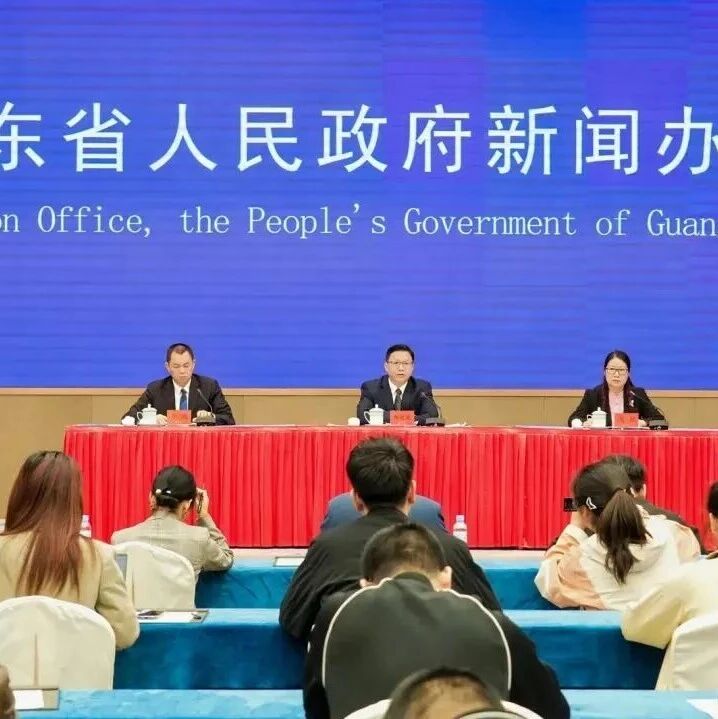
诚发“英雄帖”!广东邀你来做“合伙人”
21世纪经济报道· 2026-01-01 03:11
Core Viewpoint - The Guangdong Provincial Government is launching a "Fifteen Five" public cultural service initiative to enhance cultural accessibility and quality for the public, building on the achievements of the "Fourteen Five" period [3][11]. Group 1: "Fifteen Five" Initiative Overview - The initiative aims to collect 300 outstanding public cultural service cases and identify quality social entities capable of providing these services, establishing a resource database [6][8]. - The focus is on creating a collaborative environment for public cultural services, emphasizing community involvement and shared responsibility [11][12]. Group 2: Achievements of "Fourteen Five" - During the "Fourteen Five" period, Guangdong established 150 public libraries, 144 cultural centers, 416 museums, and 139 art galleries, with a total of 26,000 community cultural service centers [7]. - The province has implemented a digital cultural construction plan, launching platforms like "Cultural Guangdong" and "Yue Reading" with 392 projects approved for smart libraries and public cultural cloud services [7][12]. Group 3: Key Features of the "Call for Proposals" - The call for proposals will cover 14 areas, including innovative practices in public cultural theory and system [8]. - Clear standards have been set for the cases to be submitted, ensuring they have been implemented during the "Fourteen Five" period and demonstrate significant results [8]. Group 4: Future Directions - The initiative will focus on five key areas: organizational, systematic, social, professional, and digital development to enhance cultural service quality [11][13]. - Plans include creating a digital cultural system that allows for easy access to cultural resources, ensuring that quality services reach the grassroots level [12][13].

狂投660亿美元加码AI与数字化 全球主权财富基金首破15万亿美元
智通财经网· 2026-01-01 01:53
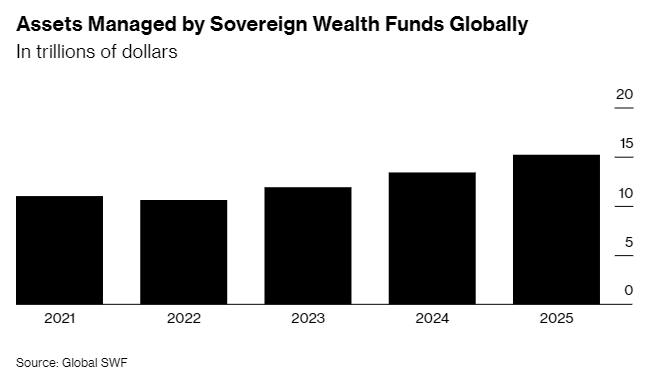
智通财经APP获悉,全球主权财富基金研究机构Global SWF发布的最新报告显示,在多数主权基金加大 科技领域投资布局、并从繁荣的市场中获利的一年里,全球主权财富基金管理资产规模创下15万亿美元 的历史新高。 该数据机构指出,2025年,主权投资机构在人工智能(AI)及数字化领域的投资总额高达660亿美元。中 东地区主权基金在数字化投资方面尤为活跃,其中阿布扎比的穆巴达拉投资公司以129亿美元领跑,科 威特投资局与卡塔尔投资局分别投入60亿和40亿美元。 中东持续巩固其作为主权财富基金聚集地的地位。海湾地区七大主权基金全年投资总额达1260亿美元, 占全球主权投资机构总投资额的43%,创历史新高。 值得一提的是,沙特阿拉伯公共投资基金以362亿美元的年度投资总额成为2025年全球最大的主权交易 方,其中对艺电(EA.US)的收购案占其投资大头。若剔除该笔交易,阿布扎比穆巴达拉则以327亿美元 的创纪录总投资额(涉及40笔交易)成为年度最活跃的主权基金。 Global SWF表示,在2025年市场普遍向好的背景下,涵盖公共养老基金在内的各类主权投资机构在固 定收益、公开股票、房地产及基础设施等领域均获得可观回 ...
全球主权基金进军科技领域,资产规模增至 5万亿美元
Xin Lang Cai Jing· 2026-01-01 01:20
Core Insights - By 2025, the total assets managed by global sovereign wealth funds are projected to reach a record $15 trillion [1] - Sovereign wealth funds are increasing investments in technology, particularly in artificial intelligence and digitalization, with a total investment of $66 billion in these sectors by 2025 [1] Investment Highlights - The Middle East sovereign wealth funds are leading in digital investment, with Abu Dhabi's Mubadala Investment Company investing $12.9 billion, followed by the Kuwait Investment Authority with $6 billion and the Qatar Investment Authority with $4 billion [1] - The seven Gulf region wealth funds have achieved a total investment of $126 billion globally, accounting for 43% of the total investments by state-owned investors, marking a historical high [1]
中国夯实制造业根基,美国经济“脱实向虚”之困
Sou Hu Cai Jing· 2025-12-31 18:36
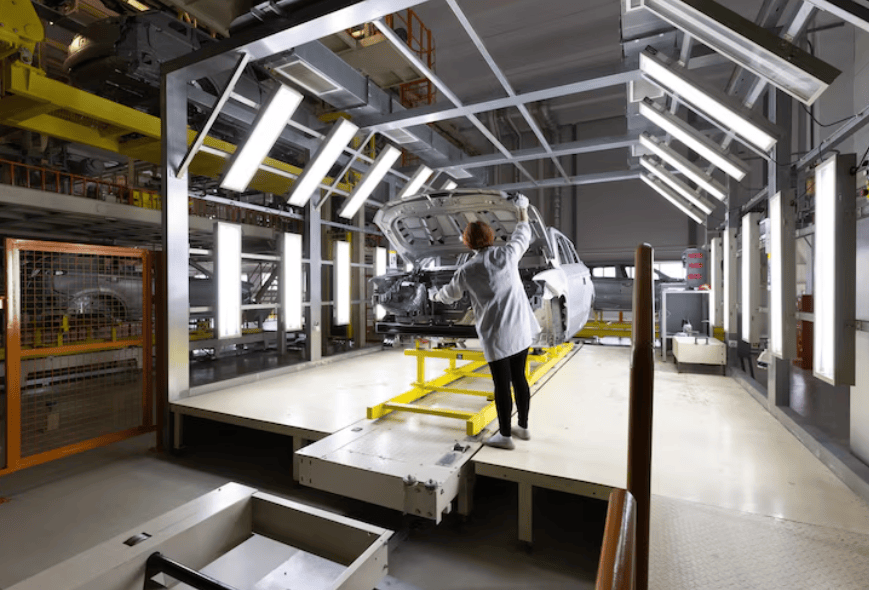
Group 1: Economic Paths - The global economic landscape in the 21st century shows a clear contrast between the industrial development paths of the US and China, with the US experiencing significant deindustrialization and a shift towards a virtual economy, while China focuses on strengthening its manufacturing sector [2][3] - China's manufacturing industry has grown from 26.6 trillion yuan in 2020 to a projected 33.6 trillion yuan by 2024, contributing over 30% to global manufacturing growth during the 14th Five-Year Plan period [2] Group 2: Challenges in the US - The US faces severe challenges due to the weakening of its manufacturing base, exemplified by Boeing's reliance on global supply chains and diminished domestic manufacturing capabilities [3] - The consequences of deindustrialization include insufficient domestic manufacturing investment, increasing trade deficits, and heightened social inequality [3] Group 3: China's Strategic Focus - China emphasizes the importance of the real economy, particularly manufacturing, as a foundation for national development, as stated in the 2022 Party Congress report [5] - The manufacturing sector is crucial for innovation, job creation, and meeting consumer demand, with logistics from manufacturing accounting for nearly 90% of total social logistics [5] Group 4: Capital Flows and Policy Responses - A study from 1998 to 2020 indicates a trend of productive capital escaping to the virtual economy in China, prompting policy efforts to redirect capital back to the real economy [7] - The Chinese government has implemented various policies to stimulate effective investment, including promoting equipment upgrades and facilitating trade-in programs for vehicles and appliances [7] Group 5: Digital Transformation - China is advancing its manufacturing sector through digitalization and smart technologies, with over 35,000 basic-level and 7,000 advanced-level smart factories established [8] - The integration of digital and traditional manufacturing is evident, with significant growth in high-tech manufacturing and new energy vehicles [9] Group 6: US Manufacturing Rebound Efforts - The US has attempted to promote manufacturing return through various policies since the 2008 financial crisis, but faces challenges such as aging infrastructure and high labor costs [10] - Approximately 20.6% of US factories are limited in capacity due to labor shortages, with predictions that half of manufacturing jobs may face vacancies by 2033 [10] Group 7: Future Outlook - The differing industrial strategies of the US and China will continue to shape their economic futures, with China needing to maintain a reasonable proportion of manufacturing to avoid premature deindustrialization [12][13] - China's manufacturing sector has shown resilience and potential for upgrading, with a 5.7% increase in manufacturing value added in August 2025, outpacing overall industrial growth [13][14]
焦点访谈|从“马路货郎担”到“全球数贸中心”,“世界超市”再升级
Yang Shi Wang· 2025-12-31 13:50
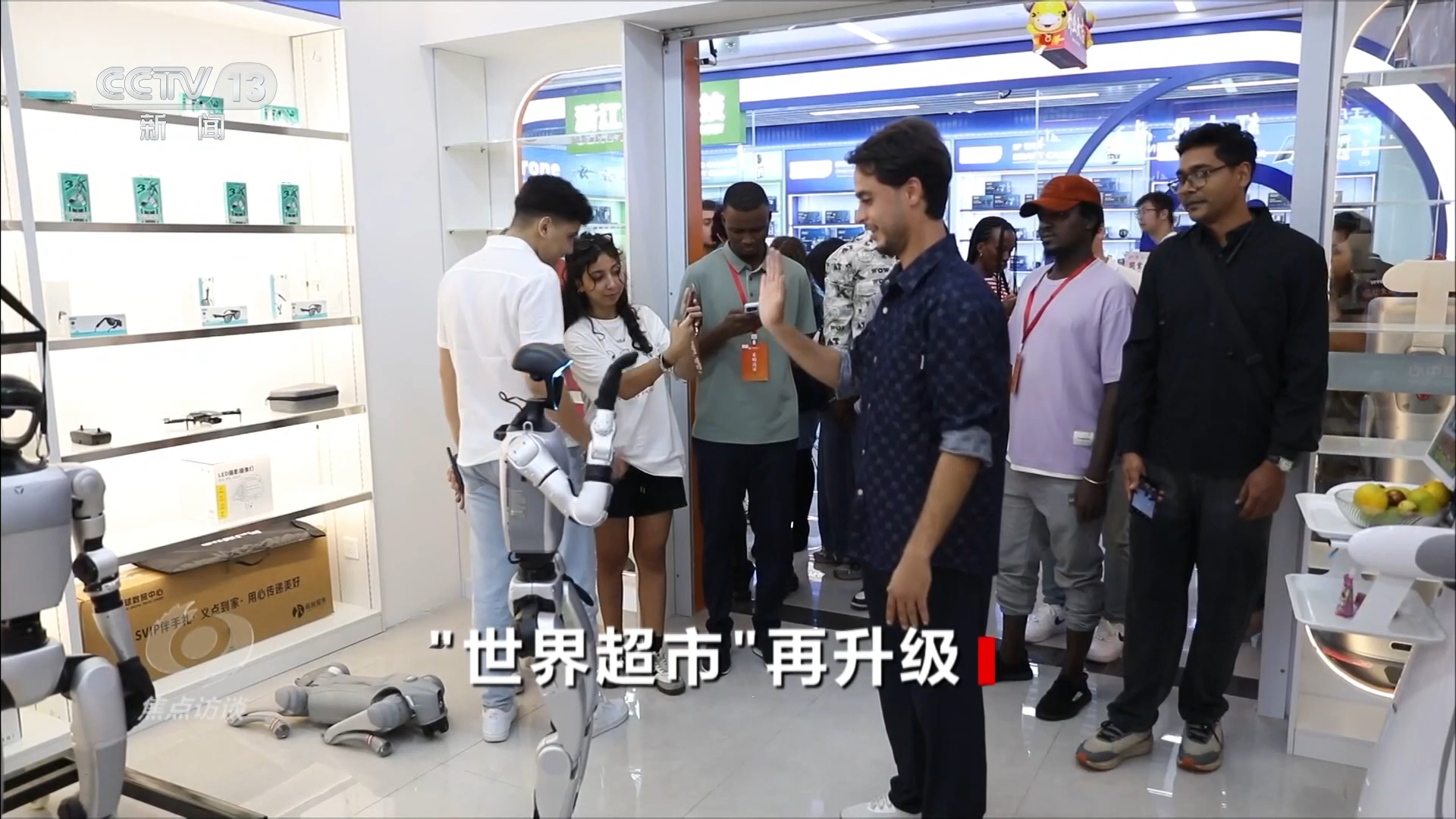
Core Insights - The Yiwu Global Digital Trade Center, the sixth-generation market, is set to open by the end of 2025, focusing on digitalization to enhance global trade dynamics [1] - The evolution of Yiwu's markets from street stalls in 1982 to the current sixth-generation market reflects a significant transformation in trade practices and infrastructure [10] Group 1: Market Evolution - The sixth-generation market represents a new phase in Yiwu's market development, moving from traditional trade to a more advanced digital trade model [4] - Yiwu has undergone six relocations and thirteen expansions over 40 years, transitioning from domestic to global trade [10] Group 2: Technological Advancements - The sixth-generation market features a dedicated Smart Equipment Zone with nearly 200 top domestic companies showcasing cutting-edge products, including drones and robotics [3] - A comprehensive digital upgrade has been implemented, introducing 13 AI tools designed to assist buyers and sellers, enhancing communication and design capabilities [8] Group 3: Strategic Goals - The upgrade aims to facilitate Yiwu's transition from low-end manufacturing to mid-to-high-end production, aligning with global market demands [6] - The establishment of the sixth-generation market is seen as a pivotal move for China to break traditional trade models and ascend the global value chain [10]
海洋钻井公司平台拖航跑出“加速度”
Qi Lu Wan Bao· 2025-12-31 13:32
Core Viewpoint - The application of the self-developed "Drilling Platform Stability Calculation Intelligent System" by Victory Oil Engineering Company enhances operational efficiency and safety in high-risk drilling operations [1] Group 1: Technological Advancements - The drilling platform achieved significant operational milestones by completing the positioning of the North 6FB well group five hours ahead of schedule [1] - The intelligent system utilizes DeepSeek artificial intelligence programming to create a visualized stability calculation model based on the platform's structural layout [1] Group 2: Safety and Efficiency - The system establishes a dynamic load distribution framework across the entire platform, dividing it into multiple areas for precise load input [1] - It features robust analytical capabilities, allowing for the comprehensive calculation of operational loads and displaying critical stability parameters such as draft and coordinate positions [1] Group 3: Operational Management - The system enables clear information management for the crew, facilitating specialized and efficient management of platform stability [1] - Key data such as pile stress and ground pressure are calculated, providing essential insights for operational decision-making [1]
宁波银行2026新年致辞
Xin Lang Cai Jing· 2025-12-31 10:24
Core Viewpoint - Ningbo Bank aims to achieve steady and high-quality development by implementing a service system focused on professionalism, digitalization, comprehensiveness, and internationalization, while supporting the real economy and enhancing customer value [1][5]. Group 1: 2025 Performance and Goals - In 2025, Ningbo Bank's total assets are expected to exceed 3.5 trillion yuan, maintaining its position as one of the highest-valued and lowest non-performing rate banks in A-shares [1][5]. - The bank is projected to advance to the 72nd position in the "2025 Global Top 1000 Banks" list, continuing its status as a systemically important bank in China [1][5]. Group 2: Strategic Focus for 2026 - For 2026, Ningbo Bank will continue to prioritize customer-centric services, aiming to create unexpected value and become a comprehensive service partner for clients [2][6]. - The bank plans to enhance its offerings in foreign exchange management, interest rate management, and asset allocation to help clients preserve and increase their assets [2][6]. - Digital systems will be utilized to improve service efficiency and support clients' digital management, while comprehensive services will link various resources to facilitate high-quality development [2][6]. Group 3: Commitment to Real Economy - Ningbo Bank will uphold its mission to serve the real economy, emphasizing a customer-first approach and a commitment to creating value for clients [4][7]. - The bank will continue to strengthen its support for the real economy and align its operations with the principles of political and people-oriented financial work [1][5].


每日报告精选(2025-12-30 09:00——2025-12-31 15:00)-20251231
国泰海通· 2025-12-31 07:53
Group 1: Strategy Observation - The report highlights that prices of cyclical resources are rising, driven by supply constraints and strong downstream demand in sectors like basic chemicals, new energy materials, and industrial metals [3] - The AI industry trend continues, with domestic electronic industry demand significantly boosted, leading to an increase in storage prices and sustained high growth in PCB exports [3][4] - Service consumption shows marginal improvement, with tourism in Hainan experiencing a price index increase due to travel demand, and pig prices stabilizing and rising towards the year-end [3] Group 2: Industry Tracking - Electronics - Mini LED technology is entering a rapid development phase, with increasing penetration in mid-to-high-end TV markets and expanding into lower-end markets and automotive applications [17] - The report anticipates that by 2025, Mini LED TV shipments in China will reach 9.23 million units, a year-on-year increase of 122%, with a penetration rate exceeding 25% [20] Group 3: Industry Monthly Report - Aviation - The Chinese aviation industry is expected to turn profitable in 2026, driven by a recovery in public and business demand, with significant growth in passenger traffic projected for 2025 [21][30] - The report suggests that the upcoming New Year holiday will see strong travel demand, with expectations for improved pricing and passenger volume [33] Group 4: Industry Deep Dive - Cultural Communication - The report emphasizes the ongoing progress of native large model companies in Hong Kong, highlighting the potential investment opportunities arising from the commercialization of AI technology [35] - Companies involved in AI algorithms and applications are recommended, including Meitu and Zhejiang Shuju, as they are well-positioned to benefit from the AI trend [35][36] Group 5: Industry Tracking - Automotive - The report notes the continuation of the "old-for-new" policy for automobiles in 2026, which includes subsidies for scrapping and replacing vehicles, aimed at boosting consumption [46][48] - The policy supports consumers who scrap their vehicles and purchase new energy or low-emission vehicles, with specific subsidy percentages outlined [49]




巨化股份:打造氟化工领军标杆
Zheng Quan Shi Bao· 2025-12-30 18:16
Core Viewpoint - Juhua Co., Ltd. has solidified its leadership in the refrigerant sector during the 14th Five-Year Plan period, achieving breakthroughs in high-end fluorinated polymers and green energy new materials, while maintaining a focus on high-end, intelligent, and green development [2][3]. Group 1: Business Performance - Juhua's core business in fluorinated refrigerants has achieved global leadership, with the third-generation refrigerant quota reaching 37.86% of the industry total by 2025, and domestic usage quota at 38.77%, both ranking first in the industry [2]. - From 2021 to 2024, Juhua's cumulative operating income is expected to grow by 38%, while total profit is projected to increase by 140% [2]. - In the first three quarters of 2025, Juhua achieved operating income of 20.393 billion yuan and net profit attributable to shareholders of 3.248 billion yuan, representing year-on-year growth of 13.89% and 160.22%, respectively [2]. Group 2: Innovation and Development - Breakthroughs in high-end new materials have been a highlight for Juhua during the 14th Five-Year Plan, with the company achieving domestic substitution in several high-value new material fields through independent research and investment [3]. - Juhua has fully promoted the construction of "digital workshops," completing "zero manual" transformations of major production units, achieving full-process automated control [3]. - The company has maintained a high dividend payout ratio, with cash dividends accounting for approximately 30% of net profit for several consecutive years, totaling 5.973 billion yuan by June 2025, which is 38.11% of cumulative net profit [3]. Group 3: Future Outlook - Looking ahead to the 15th Five-Year Plan, Juhua aims to continue focusing on green development, digital transformation, and innovation-driven upgrades, striving to become a world-class manufacturing base for high-performance fluorinated and chlorinated new materials [3].

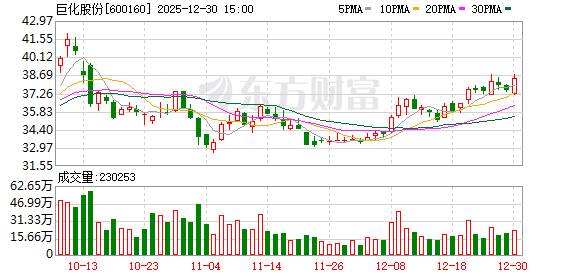
巨化股份: 打造氟化工领军标杆
Zheng Quan Shi Bao· 2025-12-30 18:08
Core Insights - Juhua Co., Ltd. has solidified its leadership position in the refrigerant sector during the 14th Five-Year Plan, achieving breakthroughs in high-end fluorinated polymers and green energy new materials [1][2] - The company has adopted a new development philosophy focusing on high-end, intelligent, and green industrialization, establishing a high-performance fluorine-chlorine new materials base [1] Financial Performance - From 2021 to 2024, Juhua's cumulative operating income is expected to grow by 38%, while total profit is projected to increase by 140% [1] - In the first three quarters of 2025, Juhua achieved an operating income of 20.393 billion yuan and a net profit attributable to shareholders of 3.248 billion yuan, representing year-on-year growth of 13.89% and 160.22%, respectively [1] Market Position - Juhua is the only domestic company with a complete series of fluorinated refrigerants from the first to the fourth generation, with a projected market share of 37.86% for third-generation refrigerants by 2025 [1] - The company has maintained a high dividend payout ratio, with cash dividends accounting for approximately 30% of net profit in recent years, totaling 5.973 billion yuan by June 2025 [2] Innovation and Sustainability - Juhua has made significant advancements in high-end new materials, achieving domestic substitution in several high-value sectors through independent research and investment [2] - The company has implemented a "zero manual" transformation in its main production facilities, achieving full automation and significantly reducing carbon emissions through the recycling of by-products [2] Future Outlook - Looking ahead to the 15th Five-Year Plan, Juhua aims to continue its focus on green development and digital transformation, striving to become a world-class manufacturer of high-performance fluorinated and chlorinated new materials [2]