
生成式AI

Search documents
科技日报:软件行业不会终结 只是在被AI重塑
Ke Ji Ri Bao· 2026-02-10 00:17
Core Viewpoint - The rise of AI is reshaping the software industry, leading to concerns about the relevance of traditional software models, particularly SaaS, but it is not expected to end the software industry itself [1][3]. Group 1: Impact of AI on Software - AI tools, such as the legal plugin from Anthropic, are challenging traditional software functionalities by automating tasks that were previously reliant on specialized software [1]. - The market is questioning the necessity of standalone software as AI can directly perform tasks, leading to a reevaluation of the entire software industry's business model [1][2]. - The SaaS model, which has been a stable growth engine for over a decade, is facing challenges as generative AI and intelligent agents reduce the value of software as an intermediary tool [1][2]. Group 2: Evolution of Software Development - The software development paradigm is shifting from "human writing code + tool assistance" to "human defining goals + AI generating implementation," changing the role of developers to system designers and AI collaborators [2][3]. - Software usage is evolving from tools that require learning to intelligent systems that understand needs and execute tasks proactively [2][3]. - Future competition in software will focus on intelligence and industry understanding rather than just functionality and richness [2]. Group 3: New Opportunities in Software - AI is creating new software spaces, with growing demand for infrastructure such as model training platforms, data engineering, and AI security [2]. - Industries like manufacturing, healthcare, and finance require specialized systems that integrate AI with industry knowledge, presenting new opportunities for software engineering [2][3]. - Companies that effectively integrate AI capabilities with industry scenarios will thrive in this new industrial transformation, while traditional software firms lacking technological and contextual barriers may face accelerated obsolescence [3].
从“买算力”到“造算力”,万亿资本押注AI硬件新战争
Jin Rong Jie· 2026-02-09 16:32
Core Insights - The article discusses a significant shift in the technology industry as major companies like Amazon, Alphabet, and Meta are heavily investing in self-developed chips and data centers, reminiscent of the vertical integration model pioneered by IBM decades ago [1][2]. Group 1: Historical Context - The current vertical integration strategy by tech giants is not a new concept, as it mirrors IBM's successful model from the 1960s, where the company produced everything from hardware to software [2]. - This model declined in the 1990s due to specialization, but the explosive demand for computational power driven by generative AI has led companies to return to self-developed hardware [2]. Group 2: Capital Investments - Amazon has raised its capital expenditure forecast for 2026 to $200 billion, a 50% increase, driven by strong and sustained demand signals, with its AWS cloud division experiencing a 24% year-over-year growth and a backlog of $244 billion [3]. - Alphabet plans to increase its capital spending to between $175 billion and $185 billion for 2026, nearly doubling its 2025 expenditure [3]. - Meta is also doubling its capital expenditure to $135 billion [3]. - Microsoft has not disclosed specific figures but expresses extreme optimism regarding AI demand [3]. Group 3: Chip Development Challenges - Self-developed chips are central to the vertical integration strategy, but the transition is fraught with challenges; for instance, Microsoft faced delays with its "Braga" chip, which did not perform as well as Nvidia's latest products [4]. - In contrast, Amazon's self-developed AI inference chip, Trainium, offers a 60% cost-performance advantage over GPUs for similar tasks, with the third generation of Trainium chips now being shipped and showing a 40% improvement in cost-performance over the previous generation [4]. Group 4: Beyond Chips - Full Stack Integration - The integration efforts extend beyond chips, as companies are also investing in controlling every physical aspect of data centers [5]. - Microsoft and Amazon are investing in "dark fiber," which refers to unused fiber optic cables already laid underground, while Google and Meta have their own cables but still purchase from third parties [5]. Group 5: Future Landscape - The market dynamics in the AI sector are changing, with Amazon's CEO noting a "barbell" demand structure: one end consists of AI labs and popular applications, while the other end includes numerous enterprises focused on productivity enhancement, with the middle segment representing the largest and most enduring market [6].




腾讯研究院AI速递 20260210
腾讯研究院· 2026-02-09 16:03
Group 1: Generative AI Developments - Pony Alpha has gained popularity on OpenRouter for its strong programming capabilities, allowing developers to create playable games like Pokemon Ruby in just three hours [1] - The model demonstrated impressive performance by autonomously replicating "Stardew Valley," showcasing its understanding of system-level engineering and long-term reasoning abilities [1] - Speculations about the model's origins suggest it could be from Anthropic Sonnet 5, DeepSeek-V4, or Zhizhu GLM-5, indicating a new stage for domestic models in advanced programming [1] Group 2: AI Video Editing Innovations - Xiaohongshu is developing an AI video editing application called OpenStoryline, which utilizes a "non-linear editing + dialogue-driven" approach for users to create videos by uploading images and using natural language [2] - The technology combines DeepSeek and Qwen 3 open-source models with Xiaohongshu's own dots.lm text model and FireRedASR audio model for ecosystem adaptation [2] - The establishment of the Red&Live independent department aims to focus on short videos and live streaming, targeting a goal of 300 million DAU and transitioning from a text-based community to a comprehensive platform [2] Group 3: Film Production Tools - The Beijing Film Academy director tested the Keling 3.0 Omni for pre-production, generating dynamic previews that help unify visual understanding among photography, art, and lighting departments before filming [3] - The model exhibited film-level tonal control, accurately replicating the quality of diffused light on cloudy days and the refraction of raindrops [3] - In tests involving multi-character dialogue scenes, the model performed excellently in character consistency, audio-visual synchronization, and gaze matching, making it suitable for rehearsal materials and lighting plans [3] Group 4: Real-time Interactive Video Models - Xmax AI launched the world's first real-time interactive video generation model, X1, capable of millisecond-level real-time generation and gesture interaction [4] - Key features include dimensional interaction, world filters, touch animations, and expression capture, allowing users to upload character images for real-world interaction [4] - The team enhanced diffusion sampling speed by a hundredfold through an end-to-end streaming re-rendering architecture, addressing industry data scarcity [4] Group 5: AI Domain Acquisition - Kris Marszalek, founder of Crypto.com, purchased the domain AI.com for $70 million (approximately 500 million RMB), setting a new record for domain transactions [5] - AI.com is positioned as a Personal AI Agent platform, promising users the ability to create personal AI agents capable of messaging, app operations, and stock trading within 60 seconds [5] Group 6: AI Infrastructure Spending - By 2026, the combined AI infrastructure spending of Meta, Amazon, Microsoft, and Google is expected to exceed $60 billion (approximately 416 billion RMB), representing a year-on-year increase of over 70% [9] - This spending level is comparable to the annual GDP of Sweden or Israel and accounts for about 2.1% of the US GDP, second only to the Louisiana Purchase in 1803 [9] - Apple is the only company reducing capital expenditures by 19% year-on-year, opting to collaborate with Google's Gemini to access top-tier AI models at a lower cost [9]


这次真的不是“狼来了”:AI主导下,码农职场彻底洗牌了
虎嗅APP· 2026-02-09 14:30
Core Viewpoint - The article discusses the significant impact of AI programming tools on the tech industry, particularly the replacement of mid-level programmers with AI, leading to a transformation in employment dynamics within the sector [5][6]. Group 1: AI Impact on Employment - A major internet company has reduced its programming team by one-third over two years due to AI tools, with plans for further reductions [5]. - The strategy involves replacing experienced mid-level programmers with younger, less expensive talent, as AI can effectively handle the tasks previously performed by these workers [5][6]. - The trend of using AI to replace lower-value human labor is prevalent across the tech industry, raising questions about the sustainability of this approach [6]. Group 2: New AI Tools - Recent releases of Claude Code and GPT-5.3-Codex have revolutionized programming capabilities, allowing for more automated and intelligent application development [6][9]. - Claude Code is noted for its strong reasoning abilities and support for long context windows, while Codex excels in execution speed and automation [10][11]. - The emergence of these tools signals a potential shift in the software outsourcing industry, as AI may replace human developers entirely [12]. Group 3: Market Reactions - The release of advanced AI models has caused panic in the capital markets, particularly among gaming companies and game engine developers [12]. - The introduction of new models like ByteDance's Seedance 2.0 has further intensified discussions about the impact of AI on various industries, including video production [13]. Group 4: Future Outlook - The article suggests that companies not primarily focused on software development will likely downsize their development teams, as AI tools become more user-friendly and capable [12]. - The tech industry is at a crossroads, with companies needing to adapt quickly to survive and thrive in an AI-driven landscape [14].
摩根士丹利建议买入这9只被AI冲击的折价软件股
美股IPO· 2026-02-09 12:27
Core Viewpoint - The report highlights that high uncertainty has significantly impacted software valuation multiples, which have declined by approximately 33% since October 2025 [2] Group 1: Software Valuation - The average software valuation multiple has returned to around 4.4 times enterprise value/sales, reflecting levels seen during previous periods of high uncertainty in the public cloud sector [3] - Investors are underestimating the ability of existing vendors to benefit from AI adoption [3] Group 2: Investment Opportunities - The report suggests that pessimistic views on generative AI have led to a lack of trust in the ability of existing software vendors to participate in this innovation cycle [4] - Morgan Stanley identifies Microsoft, ServiceNow, Salesforce, Atlassian, Snowflake, Cloudflare, Shopify, and Palo Alto Networks as attractive investment opportunities due to their strong product cycles, improved financial metrics, and discounted valuations [4] - Microsoft is noted as a key player in significant innovation cycles, while the valuation of ServiceNow is described as "very attractive" [4] - Salesforce's AI-related annual recurring revenue has increased by 114% year-over-year [4] - Shopify is viewed as highly capable of capturing a larger share of the expanding online commerce market [4] Group 3: Long-term Opportunities - Generative AI represents a significant long-term opportunity, with an estimated potential to add approximately $400 billion to the broader enterprise software total addressable market by 2028 [5] - The key issue is not whether software will ultimately monetize in this innovation cycle, but rather which companies will participate [6]



实测AI大模型能否取代保险代理人
21世纪经济报道· 2026-02-09 11:18
Core Viewpoint - The insurance industry in China is set to surpass 6 trillion yuan in original insurance premium income by 2025, driven by a digital transformation led by generative AI [1] Digital Transformation and AI Integration - The insurance industry is accelerating its digital transformation, with AI service volumes reaching 937 million in 2024, transitioning from "efficiency tools" to "decision support" [1] - Consumers increasingly demand simplified interpretations of complex insurance policies, leading to a trend of using generative AI for policy analysis and underwriting consultations [1] Performance of AI Models - In tests conducted on major domestic AI models like DeepSeek, Tencent Yuanbao, and Kimi, the models excelled in interpreting lengthy insurance contracts, significantly lowering the reading barrier for consumers [3][5] - DeepSeek effectively identified and categorized exclusion clauses in a medical insurance policy, while Kimi used mnemonic techniques to simplify complex terms, enhancing consumer understanding [3][5] Personalized Insurance Solutions - In family insurance planning scenarios, AI models demonstrated the ability to provide personalized recommendations, moving away from one-size-fits-all templates [7] - Models like Doubao and Tongyi Qianwen prioritized coverage for economic pillars and health risks, suggesting tailored insurance solutions based on family income and liabilities [7] Limitations of AI in Insurance - Despite advancements, AI models still exhibit limitations in actuarial simulations and underwriting depth, particularly in handling complex scenarios and individual health assessments [11][17] - AI's inability to assume responsibility for erroneous advice and its reliance on standard conclusions restrict its role to that of an assistant rather than a primary advisor [10][17] Legal and Compliance Insights - AI models showed high compliance sensitivity in legal scenarios, accurately interpreting insurance laws and highlighting the risks of fraudulent claims [19] - However, the models often refrained from providing specific product recommendations, emphasizing the need for professional brokers to guide consumers [22] Future Outlook - AI is changing how insurance information is accessed but has not yet altered the responsibility for decision-making in insurance [25] - The technology is best viewed as a starting point for consumer understanding rather than a replacement for professional judgment in insurance decisions [25]

2025外资入华云图:超80%企业驶入“多云”深水区
Sou Hu Cai Jing· 2026-02-09 10:45
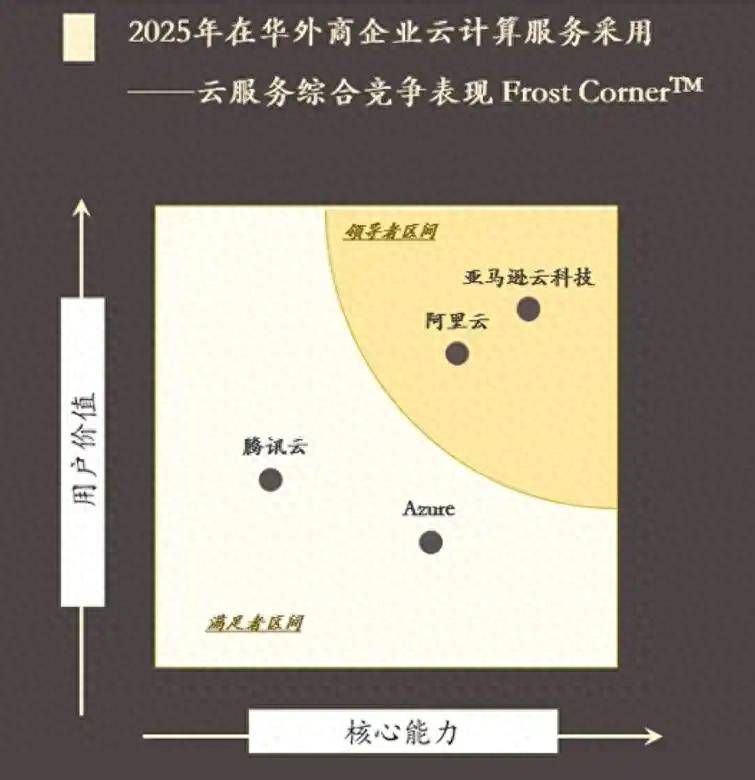
沙利文《报告》也显示,高技术产业外资投入占比逐年上升,汽车制造、生命科学、消费零售等领域成为 外资布局重点。由于外资投入均为高技术行业,不仅仅包含营销等业务,往往还涉及研发中心、高端制造 工程等落地,这极大刺激了外企对于数字化转型的进程和拥抱云计算的趋势。 随着中国市场持续对外开放,在华外企对于中国市场的投资热度稳步提升。在华外企业务在深度融入中国 市场的同时,其数字化转型的进程也在提速,尤其是对于云计算拥抱成为大势所趋。如今,云计算已不再 仅是技术支持工具,而是演变为跨国企业在中国市场扎根、生长与进化的核心战略设施。 近日,弗若斯特沙利文(Frost & Sullivan)联合头豹研究院发布最新的《2025年在华外商企业云计算服务采 用研究报告》(以下简称《报告》)。《报告》显示,截至2024年年底,外商在华设立企业总量达68万家 以上,超过80%的在华外企选择多供应商云服务方案,"本土云+国际云"协同部署占比超60%,行业化用云 特征日益凸显。 这标志着外企用户在中国云计算市场中扮演着重要角色。而像亚马逊云科技这样的全球云巨头在中国市场 的深度布局,有望通过全球一致性体验和全栈赋能,为外企数字化转型和上云 ...
大模型能否取代保险代理人?实测千问、元宝、DeepSeek
2 1 Shi Ji Jing Ji Bao Dao· 2026-02-09 09:32
Core Insights - The insurance industry in China is projected to surpass 6 trillion yuan in original insurance premium income by 2025, driven by a digital transformation led by generative AI [1][2] - The demand for deconstructing complex insurance policies is increasing among consumers, with generative AI being utilized for policy analysis, underwriting consultation, and plan design [1][2] Digital Transformation and AI Integration - The China Insurance Industry Association reported that AI service volume reached 937 million instances in 2024, indicating a shift from efficiency tools to decision-support systems [1][2] - AI models like DeepSeek and Kimi excel in interpreting lengthy insurance contracts, significantly lowering the reading barrier for consumers [3][4] Consumer Experience and Personalization - AI models have shown the ability to provide personalized insurance solutions, moving away from one-size-fits-all templates [5][10] - For family protection plan design, models like Doubao and Tongyi Qianwen prioritize coverage for economic pillars and health risks, demonstrating a nuanced understanding of consumer needs [5][10] Limitations of AI in Insurance - Despite advancements, AI's analysis still contains inaccuracies, particularly in specialized areas like actuarial simulations and underwriting consultations [12][15] - AI lacks the ability to assume responsibility for erroneous advice, reinforcing its role as an assistant rather than a primary consultant [10][18] Regulatory and Compliance Considerations - AI models exhibit high compliance sensitivity, effectively identifying potential fraudulent behaviors in insurance claims [19][25] - However, the algorithms' boundaries regarding product recommendations remain unclear, with many models refraining from providing specific product rankings [23][25] Future Outlook - AI is expected to enhance the efficiency of information access in the insurance sector but will not replace the responsibility of professional decision-making [26] - The integration of AI in insurance is seen as a starting point for consumer understanding rather than a substitute for expert judgment [26]


这次真的不是“狼来了”:AI主导下,码农职场彻底洗牌了
3 6 Ke· 2026-02-09 07:51
Core Insights - The article discusses the impact of AI programming tools on the workforce, particularly in the tech industry, highlighting significant job reductions and shifts in employment dynamics due to automation [1][2][3]. Group 1: AI Tools and Workforce Changes - A major internet company has reduced its programming team by one-third over two years due to AI programming tools, with plans for further reductions [1] - The strategy involves replacing experienced mid-level programmers with younger, less expensive talent, as AI can effectively handle the tasks previously performed by these workers [1][2] - The broader tech industry is adopting similar strategies, focusing on automating standardized programming tasks and replacing lower-cost human labor with AI [2][3] Group 2: New AI Developments - Recent releases of Claude Code and GPT-5.3-Codex have significantly changed the landscape, enabling more comprehensive automation in application development [2][4] - Claude Code excels in deep reasoning and complex architecture, while Codex focuses on high automation and speed, indicating a shift towards tools that can fully automate programming tasks [5][6] Group 3: Future of Software Development - The emergence of AI programming tools raises questions about the future of software outsourcing, as AI may replace human developers in many tasks [7] - Companies that do not primarily focus on software development are likely to downsize their development teams, potentially outsourcing to AI rather than human developers [7][8] - Major tech firms are adapting quickly to these changes, with a trend of aggressive layoffs among mid-level programmers who are often more familiar with technology [8] Group 4: Market Reactions and Industry Implications - The release of new AI models has caused panic in the market, particularly among gaming companies, reflecting the broader anxiety about AI's impact on various industries [8] - The article suggests that the rapid advancement of AI tools will lead to significant disruptions across multiple sectors, including video production and software development [8][9]
Claude继血洗软件业后,再向人类会计“开刀”!高盛牵手Anthropic,剑指会计合规自动化
Zhi Tong Cai Jing· 2026-02-09 04:11
Core Insights - Goldman Sachs is collaborating with AI startup Anthropic to develop AI agents aimed at automating various internal roles within the bank [1] - The initial focus areas for these AI agents include transaction reconciliation and customer due diligence processes [1] - The AI agents, based on Anthropic's Claude model, are expected to significantly reduce processing times for these core business functions [1] Group 1: AI Development and Implementation - Goldman Sachs' Chief Information Officer, Marco Argenti, stated that Anthropic's engineers have been working with the bank for the past six months to develop autonomous AI agents [1] - The AI agents are currently in the early stages of development, with plans to launch soon, although no specific date has been provided [1] - The bank has been testing a programming tool named Devin since 2025, which has now been made available to all engineers [2] Group 2: Broader Applications and Impact - Argenti noted that the capabilities of Claude extend beyond programming, showing promise in accounting and compliance tasks that require data analysis and rule application [2] - The bank anticipates that other business areas will achieve similar levels of automation and efficiency as seen in programming [2] - Future plans include expanding the AI agent's applications to employee supervision and the creation of investment banking pitch materials [3] Group 3: Strategic Considerations - While the accounting and compliance departments currently employ thousands of staff, Argenti emphasized that it is premature to assume that the technology will lead to job cuts [3] - As AI technology matures, Goldman Sachs may gradually reduce reliance on certain third-party service providers [4] - The core strategy is to enhance business operations through AI, improving efficiency and customer experience while creating more business opportunities [4]
