
稀土出口管制

Search documents
中国反制手段层出不穷!华尔街发出警告,特朗普已无计可施
Sou Hu Cai Jing· 2025-10-14 11:01
Group 1 - The article discusses the escalating trade tensions between the US and China, particularly highlighting the significant increase in tariffs imposed by the US on Chinese goods, which reached as high as 145% [3][5][9] - China's response to US tariffs has included measures such as export controls on rare earth materials, which are crucial for high-tech industries, thereby impacting US companies heavily reliant on these materials [7][9] - The article notes that despite the US's attempts to negotiate and reach agreements, the trade relationship remains fraught with challenges, and recent actions from both sides have led to renewed tensions [5][11] Group 2 - The economic implications of the trade war are severe, with warnings from Moody's about potential recessions in 22 US states, affecting a significant portion of the population and leading to increased debt burdens on middle and low-income families [11][13] - The US government's debt is highlighted as a critical issue, with projections indicating a deficit of $1.7 trillion for the fiscal year 2025, raising concerns about the sustainability of US fiscal policy and the potential for a debt crisis [13] - The article emphasizes the interconnectedness of the US and Chinese economies, suggesting that the trade relationship's deterioration could have far-reaching consequences for the global economy [11][13]

银河磁体:2024年钐钴磁体和热压钕铁硼磁体销售收入占公司总销售收入的9.47%
Zhi Tong Cai Jing· 2025-10-14 11:00
Core Viewpoint - The announcement by the Ministry of Commerce regarding export controls on certain rare earth items is expected to have a significant impact on the company's export business, particularly concerning its samarium-cobalt and hot-pressed neodymium-iron-boron magnets, which contain the listed rare earth items [1] Group 1: Company Overview - The company, Galaxy Magnetics (300127.SZ), produces various types of magnets, including bonded neodymium-iron-boron magnets, samarium-cobalt magnets, hot-pressed neodymium-iron-boron magnets, and injection-molded magnets [1] - The bonded neodymium-iron-boron magnets and injection-molded magnets do not contain the rare earth items listed in the Ministry of Commerce's announcement [1] Group 2: Financial Impact - In 2024, the sales revenue from samarium-cobalt magnets and hot-pressed neodymium-iron-boron magnets accounted for 9.47% of the company's total sales revenue [1] - The new export controls are anticipated to affect the company's export business due to the inclusion of certain rare earth items in its samarium-cobalt and hot-pressed neodymium-iron-boron magnets [1]

银河磁体(300127.SZ):2024年钐钴磁体和热压钕铁硼磁体销售收入占公司总销售收入的9.47%
智通财经网· 2025-10-14 10:59
Core Viewpoint - The announcement by the Ministry of Commerce regarding export controls on certain rare earth items is expected to have a certain impact on the company's export business, particularly concerning its samarium-cobalt and hot-pressed neodymium-iron-boron magnets, which contain the listed rare earth items [1] Company Summary - The company, Galaxy Magnetic, produces various types of magnets, including bonded neodymium-iron-boron magnets, samarium-cobalt magnets, hot-pressed neodymium-iron-boron magnets, and injection-molded magnets [1] - The bonded neodymium-iron-boron magnets and injection-molded magnets do not contain the rare earth items listed in the export control announcement [1] - In 2024, the sales revenue from samarium-cobalt magnets and hot-pressed neodymium-iron-boron magnets accounted for 9.47% of the company's total sales revenue [1]
银河磁体(300127.SZ):预计商务部发布的《公布对境外相关稀土物项实施出口管制的决定》对公司出口业务有一定的影响
Ge Long Hui A P P· 2025-10-14 10:46
Core Viewpoint - The announcement by the Ministry of Commerce regarding export controls on certain rare earth items is expected to have a certain impact on the company's export business, particularly concerning its products that contain listed rare earth items [1] Company Summary - Galaxy Magnetic Materials (300127.SZ) reported an unusual fluctuation in stock trading [1] - The company's product range includes bonded neodymium iron boron magnets, samarium-cobalt magnets, hot-pressed neodymium iron boron magnets, and injection-molded magnets [1] - The bonded neodymium iron boron magnets and injection-molded magnets do not contain the rare earth items listed in the Ministry's announcement [1] - The samarium-cobalt magnets and hot-pressed neodymium iron boron magnets contain rare earth items that are included in the export control announcement [1] - In 2024, the combined sales revenue from samarium-cobalt magnets and hot-pressed neodymium iron boron magnets accounted for 9.47% of the company's total sales revenue [1]
银河磁体:预计商务部发布的《公布对境外相关稀土物项实施出口管制的决定》对公司出口业务有一定影响
Di Yi Cai Jing· 2025-10-14 10:22
Core Viewpoint - The announcement by the Ministry of Commerce on October 9 regarding export controls on certain rare earth items is expected to have a notable impact on the company's export business, particularly concerning its samarium-cobalt and hot-pressed neodymium-iron-boron magnets, which contain the listed rare earth items [1] Company Summary - The company produces various types of magnets, including bonded neodymium-iron-boron magnets, samarium-cobalt magnets, hot-pressed neodymium-iron-boron magnets, and injection-molded magnets [1] - The bonded neodymium-iron-boron magnets and injection-molded magnets do not contain the rare earth items specified in the Ministry's announcement [1] - In 2024, the combined sales revenue from samarium-cobalt magnets and hot-pressed neodymium-iron-boron magnets is projected to account for 9.47% of the company's total sales revenue [1]
对华加税100%?还没等中国发话,美国国内先给了特朗普当头一棒
Sou Hu Cai Jing· 2025-10-14 09:45
Core Viewpoint - Trump's threat to impose a 100% tariff on Chinese goods has led to significant market reactions, highlighting the strategic anxiety of the U.S. in the ongoing U.S.-China trade conflict [1][3]. Market Reaction - The announcement resulted in a sharp decline in U.S. stock indices, marking the largest single-day drop since April, indicating market disapproval of Trump's tariff policy [1][5]. - The Nasdaq index's drop reflects panic in the tech sector, with major companies like Apple and Nvidia experiencing significant stock price declines due to their reliance on Chinese rare earth materials and electronic components [5][7]. Impact on Industries - The tariff threat poses a secondary blow to traditional industries in the U.S., such as automotive and machinery, with companies like Ford and General Motors seeing stock price drops due to potential supply chain disruptions in their joint ventures in China [5][7]. - China's recent export controls on rare earth materials directly impact the U.S. defense and semiconductor industries, as China controls over 90% of global rare earth processing capacity, which could lead to a technology supply risk for U.S. tech companies over the next 3-5 years [3][5]. Financial Market Sentiment - The uncertainty caused by Trump's tariff policies has led to a collapse in financial market confidence, with a surge in the fear index and a shift of investors towards safe-haven assets like gold, while U.S. 10-year Treasury yields have declined [7]. - The potential for rising inflation and a crisis in the job market looms if tariffs are implemented, indicating a shift in the balance of power in the U.S.-China trade war, with the U.S. becoming the more vulnerable party [7].
美国盲猜中国稀土管制三个原因,其背后细节不止于矿石
Sou Hu Cai Jing· 2025-10-14 09:40
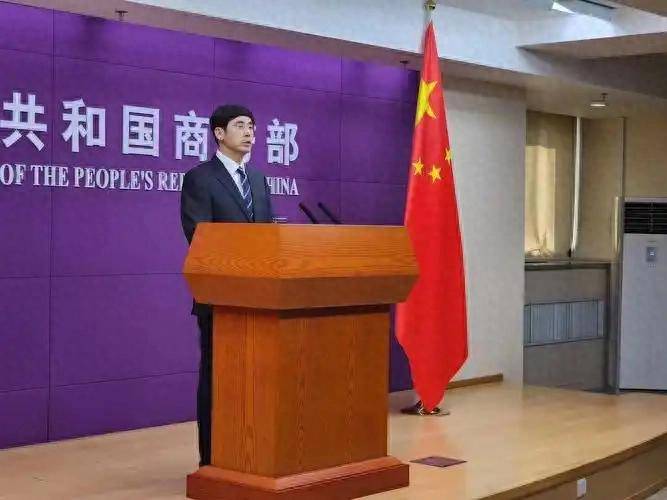
Core Viewpoint - China's Ministry of Commerce announced new export controls on specific rare earth technologies, particularly those related to military applications, which has sparked significant reactions from the U.S. and other countries [4][9][11]. Group 1: Export Control Announcement - On October 9, China's Ministry of Commerce decided to implement export controls on certain rare earth technologies, including extraction and separation processes for metals like terbium, erbium, and dysprosium [4]. - The policy aims to manage the use and flow of these technologies, particularly in areas that may pose national security risks, rather than completely halting exports [9][11]. Group 2: U.S. Reaction and Misinterpretations - The U.S. response was immediate, with Treasury Secretary Janet Yellen suggesting that China's move was a sign of economic distress and a distraction from other issues, such as the Middle East situation [6][11]. - The U.S. interpretations of China's motives reflect a misunderstanding of China's strategic intentions, which are based on compliance and sustainable resource management rather than economic desperation [6][8]. Group 3: Importance of Rare Earth Elements - Rare earth elements are critical for modern industries, including electric vehicles, batteries, wind power, semiconductors, and military equipment, making China's export controls significant on a global scale [4][11]. - The U.S. heavily relies on China for rare earth materials, with military applications being particularly sensitive, as seen in the F-35 fighter jet, which requires over 400 kilograms of rare earth materials per unit [11]. Group 4: Broader Implications and Strategic Context - The situation highlights the growing geopolitical tensions and the U.S.'s tendency to politicize trade and resource management issues, viewing them through a lens of national security [13][15]. - China's export control policy is part of a broader strategy to align with international responsibilities and ensure the sustainable use of its resources, contrasting with the U.S.'s approach of imposing restrictions on China in various sectors [9][13]. Group 5: Call for Dialogue - The article emphasizes the need for constructive dialogue between China and the U.S. to address mutual concerns about resource management and industry security, rather than engaging in speculation and misunderstanding [15][17]. - Establishing transparent rules and collaborative efforts for sustainable development is presented as a more effective approach than adversarial posturing [17].

稀土管制彰显隐形控制力,未来应从资源依赖转向科技创新
3 6 Ke· 2025-10-14 08:19
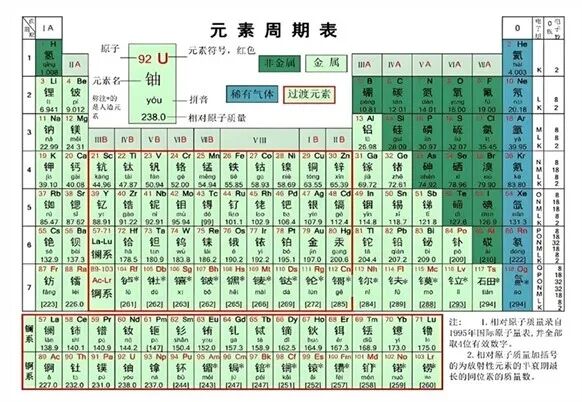
日前,中国商务部宣布收紧稀土出口管制,并首次将含中国稀土成分的境外产品与半导体产业纳入审批范围。这项被视为对美科技封锁的"反制措施",迅 速引发全球震动。 据路透社报道称,新规要求海外企业在采购中国稀土时必须获得出口许可,自12月1日起,凡含中国稀土的产品出口均需逐案批准。这意味着,中国首次 在稀土领域实施"长臂管辖",哪怕芯片在境外制造,只要含有源自中国的稀土,也可能受限。 近日,中国商务部宣布全面收紧稀土出口管制,并首次将含有中国稀土成分的境外半导体产品纳入监管范围。这一政策被视为中美科技博弈进入新阶段的 标志性事件,也让全球高科技产业链再度陷入不确定性。 再祭出稀土管制,彰显高端制造链隐形控制力 此次管制重点针对中重稀土,如钐、钆(中稀土)、铽、镝、镥、钇(重稀土)及钪。目前,中国掌握着全球约70%的稀土开采量和90%的精炼产能,拥 有世界上唯一完整的稀土产业链。具体表现在,2024年全球稀土矿产量390,000吨,中国产量270,000吨,占比69%;全球储备超90,000,000吨,中国 44,000,000吨,占比48%。因此,当我们"收紧阀门",全球高科技产业链的神经随之紧绷。 2024年全球稀 ...
市场情绪逆转,美为何迅速软化对华立场?
Xin Lang Cai Jing· 2025-10-14 08:08
来源:财经网 随着特朗普政府持续释放缓和信号寻求谈判。美股周一收高,三大股指均挽回上周五的部分失地。道指 反弹将近600点,标普对上周五的失地收复大约一半。半导体ETF收涨超4.4%,领跑美股行业ETF,标 普科技板块涨约2.5%。中概指数收涨3.2%。 黄金涨势继续,10月13日纽约尾盘,现货黄金涨2.27%,报4109.17美元/盎司,全天持续、平滑地震荡 上行,一度刷新历史高位至4117.13美元。COMEX黄金期货涨3.21%,报4128.80美元/盎司,一度涨至 4137.20美元创盘中历史新高。费城金银指数收涨4.76%,报309.59点,突破10月8日所创收盘历史最高 位309.12点。纽约证交所ARCA金矿开采商指数收涨4.00%,报2201.05点,逼近10月8日所创收盘历史最 高位2207.52点。 美国总统特朗普当地时间10日威胁对中国商品大规模加征关税,包括对关键软件实施出口管制。特朗普 表示,针对中方采取的稀土等相关物项出口管制,美国将从11月1日起对中国商品加征100%关税。美股 市场因此出现大幅波动,期权交易量创下历史纪录。 在此后的60多个小时内,美国政府立场大幅转向。特朗普暗 ...

稀土出口管制加强提振板块战略价值!稀土ETF(516780)备受关注,单日成交额、单日净流入额双创其历史新高
Xin Lang Ji Jin· 2025-10-14 05:13
Core Viewpoint - The rare earth sector has become a market focus amid escalating China-U.S. trade tensions and increased export controls on rare earths, with significant inflows into the rare earth ETF (516780) leading to record trading volumes and net inflows [1][2]. Group 1: Market Activity - On October 13, 2025, the rare earth ETF (516780) recorded a trading volume of 1.209 billion yuan, an increase of over 140% compared to the previous period, marking a new single-day trading record [1]. - The ETF saw a net inflow of 761 million yuan on the same day, setting a new record for single-day net inflows since its inception [1]. - The total size of the rare earth ETF (516780) reached 4.545 billion yuan, also a historical high, indicating strong liquidity and scale advantages [1]. Group 2: Regulatory Environment - On October 9, 2025, the Ministry of Commerce announced new export control measures on certain rare earth items, expanding the scope of controls to include technologies and equipment related to rare earth recycling, covering the entire industry chain [1][2]. - The new regulations are expected to strengthen supply rigidity in the rare earth sector, particularly in the context of ongoing U.S.-China competition [2]. Group 3: Industry Outlook - China remains the only country with the capability to produce a full range of rare earth products, holding significant advantages in both reserves and production [2]. - The industry is expected to maintain a tight supply-demand balance, supported by increasing demand driven by AI and other technologies, which may bolster product prices [2]. - The rare earth ETF (516780) closely tracks the CSI Rare Earth Industry Index, which includes companies involved in rare earth mining, processing, trading, and applications, with leading constituents being Northern Rare Earth, Wolong Electric Drive, Lingyi iTech, China Rare Earth, and Shenghe Resources [2].


