通用人工智能

Search documents
推动平台经济创新和健康发展
Jing Ji Ri Bao· 2025-12-02 22:07
Core Insights - The rapid development of artificial intelligence is transforming the platform economy and raising concerns about its healthy development [1] - The platform economy is a crucial link between merchants and consumers, with over 1 billion users across major companies like Tencent, Alibaba, Douyin, and Baidu as of June this year [1] - The platform economy is projected to account for approximately 26.8% of the total retail sales of consumer goods in China, with an estimated online retail sales of about 15.52 trillion yuan in 2024 [1] Group 1 - The platform economy is characterized by digital consumption growth, accelerated industrial internet upgrades, and the rapid digitization of the real economy [2] - It has become a key driver of innovation and a testing ground for cutting-edge technologies, including general artificial intelligence [2] - The emergence of platform-based employment represents a significant new form of employment in the economy [2] Group 2 - Policies such as "Opinions on Promoting the Standardized, Healthy, and Sustainable Development of the Platform Economy" have been introduced to create a vibrant and innovative market environment [2] - However, there are risks associated with platform enterprises, including potential abuse of market dominance, privacy violations, and capital expansion issues [2] - The platform economy exhibits a Matthew effect, where leading companies like Google and Amazon dominate the international market due to their early advantages and global reach [2] Group 3 - Promoting innovation and healthy development in the platform economy is crucial for economic growth, necessitating a balance between development and regulation [3] - Strengthening regular oversight of the platform economy and enhancing data security governance capabilities are essential [3] - A collaborative regulatory framework that integrates online and offline supervision should be established to ensure effective governance [3]
两位科技大佬的对话,AI到底是泡沫还是未来?
大胡子说房· 2025-12-02 08:45
Core Viewpoint - The dialogue between Musk and Huang Renxun at the Saudi-US Investment Forum highlights the significant impact of AI on the future of work and the economy, raising questions about whether AI represents a bubble or a transformative future narrative [1][2]. Group 1: AI and Work - Musk envisions a future where work becomes optional and money loses its importance as AI and robots take over most jobs, leading to a scenario where basic material production is no longer scarce [3][4][5]. - The idea is that households will have humanoid robots to assist with daily tasks, and factories will be filled with robots producing goods continuously, resulting in lower prices for essential items [6]. - In this future, individuals will work not for survival but for personal fulfillment, choosing to work based on passion rather than necessity [7][8]. Group 2: The Concept of Money - Musk suggests that in an AI-driven world, the concept of money will gradually lose its significance, as machines will handle all production, potentially leading to a scenario where essential goods are free [11][13]. - Huang Renxun offers a more pragmatic view, stating that while AI will not eliminate jobs, it will change the nature of work, making low-value jobs obsolete and allowing individuals to focus on more valuable tasks [14][15]. Group 3: AI as Infrastructure - Huang Renxun argues that AI is fundamentally an infrastructure shift, moving from retrieval-based computing to real-time generative computing, which minimizes the space for a potential bubble [19][20]. - This transition indicates that AI is continuously evolving and optimizing, suggesting that concerns about an AI bubble may be premature [20]. Group 4: Investment Opportunities - The dialogue emphasizes the importance of identifying investment opportunities in AI, suggesting that individuals can either participate directly in the industry or invest financially [21][24]. - The tech giants in the US have seen significant market value, and the recent performance of tech stocks in both the US and Hong Kong indicates a strong trend towards technology investments [28][29]. - The ongoing technological advancements, particularly in humanoid robots, suggest that there will be substantial investment opportunities as these technologies become more widely implemented [32]. Group 5: Energy and AI - Both Musk and Huang Renxun agree that energy is a critical bottleneck for AI development, with increasing energy demands as AI technologies advance [36]. - This presents investment opportunities in energy sectors, particularly in regions upgrading their infrastructure to support AI, such as Saudi Arabia's plans to transform oil refineries into AI factories [39].


8点1氪:香港大埔火灾已拘捕13人,罪名是误杀;明年起避孕药品和用具征收增值税;万科被冻结5.7亿元股权,冻结期限为3年
36氪· 2025-12-02 00:09
Group 1 - The Hong Kong police have arrested 13 individuals for manslaughter in connection with the Tai Po fire incident, with ongoing investigations that may lead to more arrests [2][3] - The investigation revealed that samples from seven locations in the affected building did not meet fire-retardant standards [2][3] Group 2 - Starting January 1, 2026, contraceptive drugs and devices will be subject to value-added tax (VAT), ending the current exemption [4] - The removal of the VAT exemption is expected to impact production and sales companies, requiring them to reassess cost structures and pricing strategies, potentially leading to increased market prices for consumers [4] Group 3 - Vanke has had 570 million yuan worth of equity frozen for three years, as reported on December 1 [4] - The frozen equity is associated with Shenzhen Vanke Development Co., Ltd., which is involved in real estate development and management [5] Group 4 - Former CEO of Hema, Hou Yi, has launched a new venture called "Lao Cai Rui Xuan," focusing on live-streaming sales of food products [6][7] - The first live stream attracted significant consumer attention, with over 3,100 followers and 2,347 likes on his account [6][7] Group 5 - The China National Health Commission reported that flu activity has reached an epidemic level nationwide, with some provinces experiencing high levels of flu activity [8] - The flu positivity rate among emergency and outpatient cases has approached 45%, indicating a rising trend in respiratory infectious diseases [8] Group 6 - CATL announced a salary increase of 150 yuan per month for grassroots employees starting January 1, 2026, as part of efforts to attract and retain talent [7] - The company reported an average salary of 236,300 yuan per employee in the previous year, reflecting a year-on-year increase [7] Group 7 - Kuaishou's Magnetic Engine has introduced a new brand marketing strategy aimed at enhancing direct GMV and building long-term customer assets [8] - The strategy focuses on a multi-dimensional approach to improve brand marketing effectiveness [8] Group 8 - DeepSeek has released two official model versions, DeepSeek-V3.2 and DeepSeek-V3.2-Speciale, with updates available across various platforms [9] Group 9 - The film "Zootopia 2" has achieved a box office of over 1.9 billion yuan within five days of release, becoming the highest-grossing imported film in China for the year [12] - The film also set a record for single-day box office and audience attendance for animated films in China [12]






辽宁“十五五”规划建议:举全省之力发展人工智能核心产业 加快工业软件创新突破
Xin Lang Cai Jing· 2025-12-01 02:17
Core Insights - The proposal emphasizes the development of the core artificial intelligence (AI) industry in Liaoning Province, aiming to leverage the province's full capabilities [1] - It highlights the need for breakthroughs in industrial software innovation and promotes the intelligentization of all industrial elements [1] - The plan includes building an AI industry ecosystem that encompasses computing power, algorithms, data, and applications [1] Industry Development - The initiative aims to deepen collaboration with advanced domestic AI research institutions to foster the development of general AI and generative AI [1] - Support is provided for the research and promotion of smart hardware products, including intelligent transportation tools, wearable devices, smart home products, and embodied intelligent robots [1]
突发!日本重启人形机器人计划!
机器人大讲堂· 2025-11-30 06:25
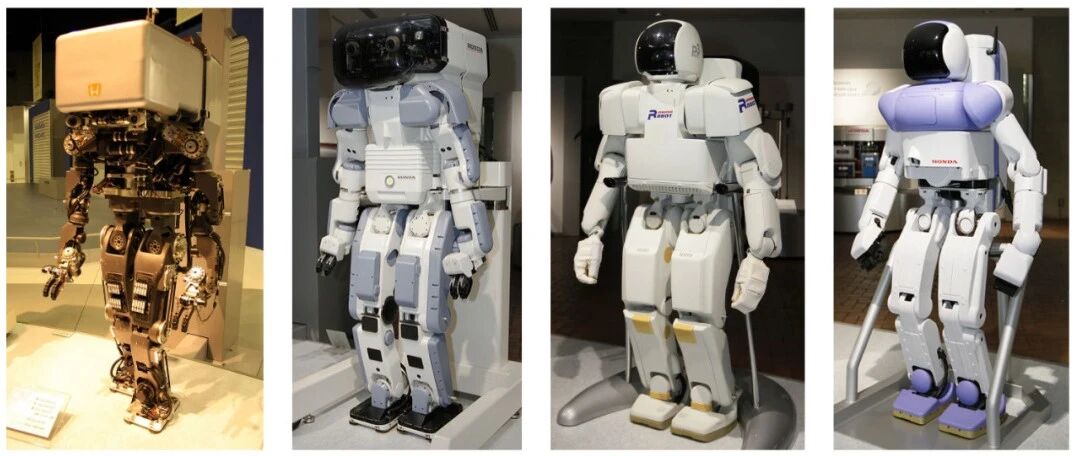
Core Viewpoint - The Japanese government is preparing to inherit or restart the unfinished business of Asimo in the humanoid robot field, aiming to develop AI-driven humanoid robots for workplaces and homes by 2030, with a long-term goal of creating multifunctional humanoid robots by 2050 that can perform all human tasks and make independent decisions [1][4]. Group 1: Current Status of Humanoid Robotics in Japan - Despite rumors of Japan exiting the humanoid robot competition after Honda discontinued Asimo, the country's technological strength and research enthusiasm in this field have not diminished [4][6]. - Major Japanese institutions like Toyota Research Institute and Kawasaki Heavy Industries continue to hold patents and advance humanoid robot technology [6]. Group 2: Key Players and Developments - Toyota Research Institute (TRI) has been focusing on humanoid robotics since its establishment in 2015, collaborating with Boston Dynamics to enhance the Atlas robot's autonomous task handling capabilities [7][10]. - The collaboration with Boston Dynamics aims to integrate TRI's large behavior model into Atlas, allowing it to autonomously generate control signals based on various inputs [10][12]. - TMSUK, a representative company in service robots, has developed humanoid robots for various fields, including a dental training robot that simulates children's behavior for training purposes [13][15]. Group 3: Future Plans and Collaborations - TMSUK plans to develop a prototype humanoid robot for disaster response by the end of 2026 in collaboration with several institutions [19]. - Kawasaki Heavy Industries has iterated its Kaleido series of humanoid robots, with the latest models capable of complex tasks and enhanced human interaction features [34][36]. - Murata Manufacturing is also involved in humanoid robotics, with plans to start trials for domestically produced humanoid robots by March 2026 [33]. Group 4: Global Context and Competition - Other countries, such as South Korea, are also advancing in humanoid robotics, with plans to develop commercial humanoid robots by 2028, involving major tech companies [39][41]. - The global landscape for humanoid robotics remains competitive, with no standout companies achieving mass production yet, indicating that the industry is still in its early stages [41][42].
双区引领 多极支撑 北京未来产业布局全景
Xin Jing Bao· 2025-11-28 10:14
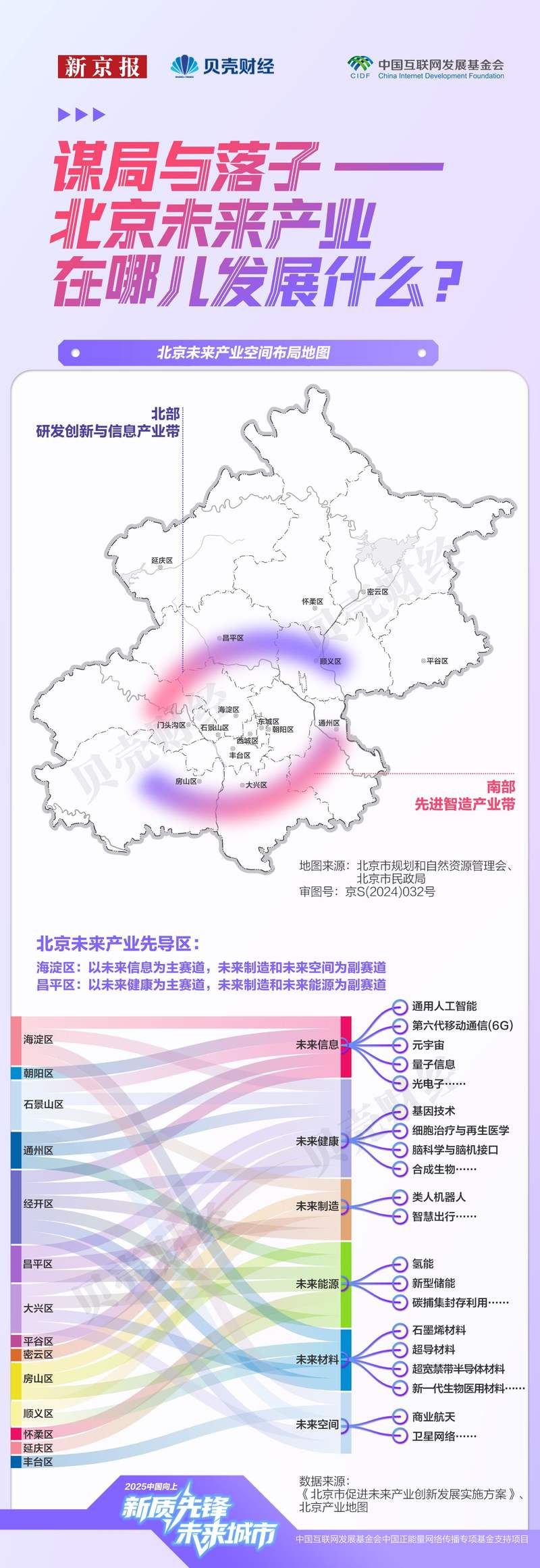
Core Insights - Beijing is positioning itself as a leader in future industries, focusing on sectors like 6G and embodied intelligence, aiming to become a global benchmark for digital economy by the end of the 14th Five-Year Plan [1] - The city has integrated future industries into its "2441" high-precision industrial system and has outlined a comprehensive policy framework to promote disruptive technologies [1][2] Group 1: Future Industry Development - Beijing has established a "2+N" spatial layout, with Haidian District focusing on general artificial intelligence and quantum information, while the Economic Development Zone is developing a high-level autonomous driving demonstration area [2] - The city is accelerating the creation of future industry pilot zones in Haidian and Changping Districts, aiming to integrate innovation, industry, finance, and talent [2] Group 2: Sector-Specific Focus - Key sectors include future information, health, manufacturing, energy, materials, and space, with specific districts assigned to lead in these areas [4][5] - The city is fostering advancements in hydrogen energy, new energy storage, and synthetic biology, among other fields, to drive technological innovation [2][5]
为什么我国的人工智能人才,都喜欢往美国跑?
Sou Hu Cai Jing· 2025-11-28 09:59
有人戏言,说美国硅谷科技公司中来自人工智能领域的人才,有一半都是国人。 今年6月份,Meta首席执行官马克·扎克伯格公布超级智能实验室时,列出了11位加入该计划的人工智能研究员,他们都是人工智能领域的大拿,扎克伯格的 目标,就是打造一台比人类大脑更强大的机器。 根据公开资料显示,扎克伯格组建的超级智能实验室中的11位成员,全部都是在其他国家接受教育的移民,而其中有七人,也就是超过一半都来自我国。 这就是今天的硅谷现状,嘴里说着要大国竞争,但实际上用的人很大一部分都来自我国。 为什么我国的人工智能人才,都喜欢往美国跑? 尽管目前特朗普已经收紧了移民,美国鹰派对华情绪也日益高涨,但过去多年,在我国出生并接受教育的研究人员,一直都在美国顶尖人工智能实验室扮演 着重要角色。 早在2020年,致力于促进中美建设性关系的保尔森研究所就发布研究称,我国人工智能研究员约占全球顶尖人工智能人才的近三分之一,但这些人大多就职 于美国企业和高校。 卡内基国际和平基金会的一项新研究也表示,这些我国研究员中的绝大多数仍然在为美国机构工作。2019年曾经入选原研究的100位就职于美国高校或企业 的顶尖我国研究员中,如今仍然有高达87位在 ...

Gemini如何逆风翻盘?谷歌首席AI架构师:从承认落后开始,找回自己的节奏
美股IPO· 2025-11-28 01:09
Core Insights - Acknowledging setbacks is the first step for Google to restart its AI journey, leading to a restructuring of its foundational architecture and a focus on multi-modal understanding as a core advantage [1][6] - The release of Gemini 3 marks a significant turnaround for Google, demonstrating its ability to not only catch up but also redefine its organizational methodology and technological path [4][8] Group 1: Acknowledgment of Challenges - Google’s AI chief openly admitted that the company had fallen behind, particularly in the wake of ChatGPT's rise, which shifted industry focus towards OpenAI [3][4] - The internal consensus shifted, recognizing that traditional long-term research alone could not keep pace with the rapid evolution of AI technology [5][6] Group 2: Multi-Modal Understanding - Multi-modal capabilities are essential for understanding the complexities of the real world, as they integrate text, images, audio, and video into a unified model [7][8] - Google’s approach involves restructuring at the architectural level to allow different modalities to be trained together, enhancing the model's ability to comprehend the world rather than just generating aesthetically pleasing outputs [7][8] Group 3: Organizational Restructuring - The transformation of Google’s organizational structure from a serial pipeline to a parallel system has significantly accelerated the development and deployment of Gemini [8][9] - This restructuring allows for real-time collaboration among product managers, engineering teams, and safety protocols, leading to a more cohesive and efficient development process [8][10] Group 4: Enhanced Usability and Functionality - The improvements in Gemini's user experience are attributed to a focus on usability, including enhanced instruction comprehension and internationalization capabilities [11][12] - The model's ability to execute tasks rather than merely respond to queries marks a shift towards more actionable intelligence [13][14] Group 5: Competitive Advantages - Google’s competitive edge lies not just in model capabilities but also in its robust infrastructure, including TPU, global data centers, and a mature security system [15][16] - The activation of this infrastructure has been pivotal in Google’s rapid recovery from being perceived as a laggard in the AI space [16] Group 6: Future Directions - The next phase of AI competition will focus on action-oriented intelligence rather than just conversational capabilities, with an emphasis on automating workflows and enhancing developer tools [17][18] - The distinction between dialogue models as products and action models as platforms highlights the greater commercial value of the latter [19] Group 7: Broader Implications - The real measure of progress is the application of models in real-world scenarios across various fields, indicating a shift towards practical utility in AI development [20][21] - The journey from research to product integration reflects a significant evolution in Google’s approach to AI, emphasizing the importance of user feedback and real-world applicability [44][59]


AI洗牌,机会均等
Bei Jing Shang Bao· 2025-11-27 16:13
Core Insights - The AI industry is experiencing rapid changes, with major players like Google and Alibaba making significant advancements in AI models and chips, indicating a competitive landscape that is constantly evolving [1][2] - The emergence of new players like DeepSeek demonstrates that established companies are not guaranteed dominance, as the speed of technological iteration can disrupt traditional market leaders [1][2] - The shift from closed development to open collaboration in AI research is fostering a more equitable competitive environment, allowing for faster innovation and shared technological advancements [2][3] Group 1 - Major companies are launching new AI models and chips, with Google nearing a market valuation of $4 trillion and Alibaba aggressively entering the AI to C market [1] - The rapid pace of AI development is creating opportunities for new entrants, as seen with DeepSeek's rise, which challenges established players like Nvidia and ChatGPT [1][2] - The diverse needs across industries, such as banking and healthcare, highlight the importance of specialized solutions over general models, allowing smaller teams to excel in niche markets [2] Group 2 - The competitive landscape is shifting towards a focus on technological advantages and execution efficiency, rather than traditional strengths like user base and funding [3] - The AI sector is characterized by a lack of permanent leaders, with new companies emerging as potential frontrunners based on their ability to adapt and innovate [3] - Investors are becoming more discerning, emphasizing the need for practical applications and scenario breakthroughs, which is leading to a more rational valuation system in the AI market [2]
谷歌阿里百度加码AI竞争,技术迭代加速行业洗牌
Bei Jing Shang Bao· 2025-11-27 14:34
Core Viewpoint - The AI industry is experiencing rapid changes, with no permanent leaders, as new players emerge and established companies face challenges from innovative technologies and competitors [1][3]. Group 1: Industry Dynamics - The AI landscape is characterized by intense competition, with major players like Google and Alibaba launching new models and technologies to capture market share [1][2]. - The emergence of new AI models, such as DeepSeek, demonstrates that established companies can be disrupted by innovative newcomers, highlighting the unpredictable nature of AI advancements [1][2]. - The decreasing cost of computing power and the availability of open-source code have leveled the playing field, allowing global participants to compete more equally [2]. Group 2: Technological Evolution - The rapid pace of technological iteration in AI means that traditional advantages, such as user base and financial strength, are becoming less reliable [3]. - Companies are shifting from closed development to open collaboration, which fosters a shared technological foundation and accelerates innovation across the industry [2]. - The diverse needs of various sectors, such as banking and healthcare, create opportunities for specialized teams to excel in niche markets, despite the heavy investments made by larger firms in general models [2]. Group 3: Investment Landscape - Investors are becoming more discerning, focusing on practical applications and scenario breakthroughs rather than just concepts, which encourages a more rational valuation system [2]. - The evolving investor attitude supports fair competition, allowing promising projects to receive necessary backing despite the competitive landscape [2].