消费品以旧换新

Search documents
2026年“两新”政策发布,首批625亿元“国补”资金下达
2 1 Shi Ji Jing Ji Bao Dao· 2025-12-30 12:20
优化"两新"政策支持范围 《通知》明确指出,在继续支持工业、电子信息、能源电力、交通运输、物流、教育、文旅、医疗、设 施农业、粮油加工、安全生产、海关查验、住宅老旧电梯、节能降碳环保等领域设备更新项目的基础 上,将老旧小区加装电梯、养老机构、消防救援设施、检验检测等领域设备更新纳入支持范围,更好满 足民生和安全需要。支持商业综合体、购物中心、百货店、大型超市等线下消费商业设施设备更新。优 化申报条件和审核流程,进一步降低申报设备更新项目的投资额门槛,加大对中小企业设备更新的支持 力度,扩大政策惠及面。 21世纪经济报道记者 周潇枭 北京报道 12月30日,国家发展改革委和财政部联合对外发布《关于2026年 实施大规模设备更新和消费品以旧换新政策的通知》(下文简称《通知》),明确了2026年"两新"政策 的补贴范围和补贴标准。 《通知》明确指出,在继续支持工业、电子信息、能源电力、交通运输等领域设备更新项目的基础上, 将老旧小区加装电梯、养老机构等设备更新纳入支持范围。在汽车报废更新、汽车置换更新、家电、数 码和智能产品等领域,实施消费品以旧换新政策。 官方消息显示,为优化实施"两新"政策,做好政策平稳有序衔接 ...

2026年“国补”来了!买手机、平板、家电等都有补贴,汽车按车价比例补贴
Mei Ri Jing Ji Xin Wen· 2025-12-30 12:20
记者今天(30日)从国家发展改革委了解到,2026年优化实施"两新"政策方案发布。 优化支持范围。设备更新在总体延续的基础上,增加老旧小区加装电梯、养老机构、消防救援、检验检 测、线下消费商业设施等领域,更好满足民生和安全需要。 消费品以旧换新方面,支持汽车以旧换新,家电以旧换新聚焦冰箱、洗衣机、电视、空调、电脑、热水 器等6类产品;支持数码和智能产品购新,包括手机、平板、智能手表(手环)、智能眼镜、智能家居 产品(含适老化家居产品)。 优化实施方式,提升重点消费品"得补率"。 国家已于近日向地方提前下达2026年第一批625亿元超长期特别国债支持消费品以旧换新资金计划,满 足元旦、春节等旺季消费需求。各地将结合实际组织落实,提升"两新"政策效能。 那么明年以旧换新政策都有哪些变化?老百姓都能享受哪些优惠?一起来看专家的解读。 明年"两新"政策在支持范围上进行了优化。消费品以旧换新政策重在提升覆盖人群广、带动效应强的重 点消费品"得补率",继续支持汽车、家电、数码产品的补贴,并且增加了智能眼镜和智能家居产品(含 适老化家居产品)的购新补贴。 国家信息中心经济预测部宏观经济研究室副主任邹蕴涵介绍,2026年的消 ...
首批“国补”资金提前下达,明年补贴范围标准有这些变化
Sou Hu Cai Jing· 2025-12-30 11:49
12月30日,国家发改委发布消息称,为优化实施"两新"政策,做好政策平稳有序衔接,满足元旦、春节 等旺季消费需求,近日,国家发改委会同财政部,已向地方提前下达2026年第一批625亿元超长期特别 国债支持消费品以旧换新资金计划。 二是优化补贴标准。设备更新方面,将住宅老旧电梯更新由定额补贴调整为按电梯层(站)数分档差异 化补贴;在老旧营运货车报废更新补贴中,优先支持更新为电动货车。 消费品以旧换新方面,在保持汽车补贴上限不变的基础上,将定额补贴调整为按车价比例进行补贴;家 电以旧换新调整为补贴1级能效或水效产品,补贴产品售价的15%,单件补贴上限为1500元;数码和智 能产品的补贴标准保持此前数码产品标准不变。 三是优化实施机制。设备更新方面,优化项目申报机制和审核流程,进一步降低申报项目的投资额门 槛,加大对中小企业的支持力度,扩大政策惠及面。 消费品以旧换新方面,优化资金分配方式,完善全链条实施细则,严厉打击骗补套补和"先涨后补"等违 法违规行为。同时,落实全国统一大市场建设要求,对汽车报废更新、汽车置换更新、6类家电以旧换 新、4类数码和智能产品购新,明确在全国范围内执行统一的补贴标准。 来源:北京日报 ...
2026年优化实施“两新”政策方案发布!新增智能产品补贴
Qi Huo Ri Bao Wang· 2025-12-30 11:38
Group 1 - The National Development and Reform Commission and the Ministry of Finance have issued a notice regarding the implementation of large-scale equipment updates and consumer goods replacement policies in 2026, outlining support scope, subsidy standards, and work requirements [1] - The policy will continue to support equipment updates in various sectors including industrial, electronic information, energy, transportation, logistics, education, cultural tourism, healthcare, agricultural facilities, grain and oil processing, safety production, customs inspection, old residential elevator installations, and environmental protection, while also including new areas such as elderly care facilities and fire rescue equipment [1] Group 2 - The policy supports the replacement of automobiles and the trade-in of old household appliances, providing a subsidy of 15% of the sales price for energy-efficient appliances, with a maximum subsidy of 1,500 yuan per item for six categories of appliances [2] - For digital and smart products, a similar subsidy of 15% applies, with a maximum of 500 yuan per item for four categories, including smartphones and smartwatches, with a sales price limit of 6,000 yuan [2] - The implementation mechanism has been optimized to ensure a unified subsidy standard across the country for vehicle scrapping, automobile replacement, and the trade-in of specified household and digital products, while also addressing fraudulent activities related to subsidies [2]
明年继续支持消费品以旧换新,现存物资回收相关企业超23万家
Sou Hu Cai Jing· 2025-12-30 11:24
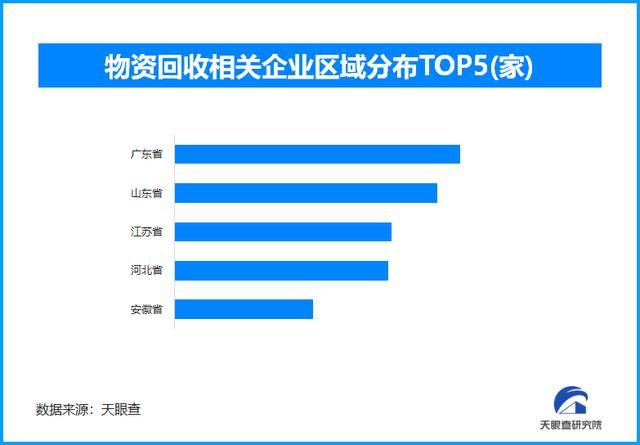
Core Viewpoint - The Ministry of Finance emphasizes that next year's fiscal policy will focus on boosting consumption, with a key initiative being the support for the replacement of old consumer goods with new ones [1] Group 1: Fiscal Policy Initiatives - The Ministry of Finance will continue to allocate special funds to support the initiative of replacing old consumer goods, providing solid financial backing for consumers to upgrade their products [1] - The subsidy scope and standards will be adjusted and optimized to better align with market demands and consumer expectations, enhancing the effectiveness of subsidy policies [1] Group 2: Market Impact - The adjustments in fiscal policy are expected to stimulate consumption and promote a sustained increase in the consumer market, injecting new momentum into high-quality economic development [1] Group 3: Industry Statistics - As of now, there are over 230,000 existing and operational enterprises related to material recycling in China, with Guangdong, Shandong, and Jiangsu provinces having the highest number of such enterprises, exceeding 25,000, 23,000, and 19,000 respectively [1]
明年“国补”范围有增有减,补贴力度有变
Di Yi Cai Jing· 2025-12-30 11:07
Core Viewpoint - The 2026 "National Subsidy" policy for consumer goods has been clarified, with adjustments in the scope and intensity of subsidies compared to 2025 [2][5]. Group 1: Subsidy Scope Changes - The 2026 "National Subsidy" will focus on four main categories: automotive scrapping, automotive replacement, home appliances, and digital/ smart products, while excluding home decoration and electric bicycles [3][4]. - The home appliance subsidy category has been reduced from 12 types in 2025 to 6 types in 2026, specifically including refrigerators, washing machines, televisions, air conditioners, computers, and water heaters, with the exclusion of kitchen appliances like stoves and microwaves [3][4]. Group 2: Subsidy Intensity Adjustments - The subsidy for automotive scrapping will shift from fixed amounts (20,000 or 15,000 yuan) to a percentage of the new car purchase price (12% or 10%), maintaining the previous upper limit [5]. - For home appliances, the subsidy rate will decrease from 20% to 15%, and the maximum subsidy per appliance will drop from 2,000 yuan to 1,500 yuan [5]. Group 3: Policy Implications - The adjustments in the subsidy policy are expected to promote green and intelligent manufacturing investments, stabilize manufacturing investments, and enhance consumer spending [6]. - The optimization of the consumer goods replacement policy aims to better align with market demands by considering local population and appliance ownership, thereby maximizing the effectiveness of fiscal funds [6].
明年买手机、平板、智能手表手环、智能眼镜,可享15%的“国补”
财联社· 2025-12-30 11:07
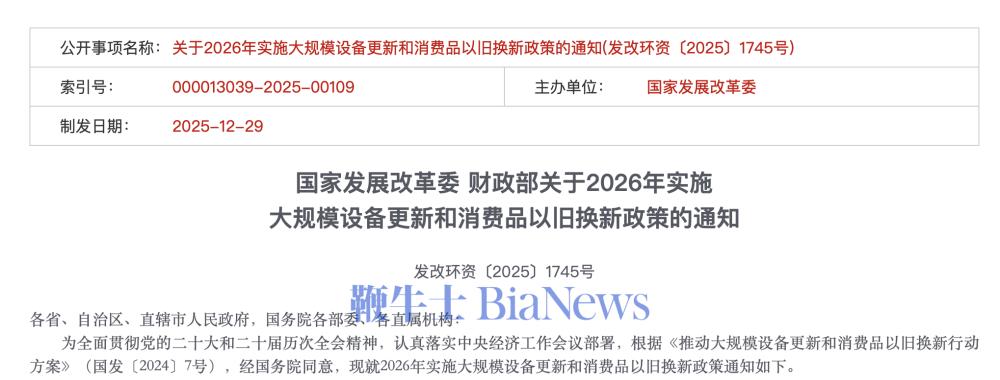
国家发展改革委、财政部发布关于2026年实施大规模设备更新和消费品以旧换新政策的通知。 支持智能家居产品(含适老化家居产品)购新补贴,具体补贴品类、补贴标准由地方结合实际自主合理制定。 通知提到,支持家电以旧换新。个人消费者购买冰箱、洗衣机、电视、空调、电脑、热水器等6类家电中1级能效或水效标准的产品,按产品销售价 格的15%给予补贴,每位消费者每类产品可补贴1件,每件补贴不超过1500元。 支持数码和智能产品购新。 个人消费者购买手机、平板、智能手表手环、智能眼镜等4类产品(单件销售价格不超过6000元),按产品销售价格的 15%给予补贴,每位消费者每类产品可补贴1件,每件补贴不超过500元。 ...

两部门:2026年个人消费者购买手机等4类产品,给予15%补贴
Xin Lang Cai Jing· 2025-12-30 11:05
12月30日,国家发展改革委、财政部发布关于2026年实施大规模设备更新和消费品以旧换新政策的通知。 通知提到,2026年个人消费者购买手机、平板、智能手表手环、智能眼镜等4类产品,按产品销售价格的15%给予补贴。 支持家电以旧换新。个人消费者购买冰箱、洗衣机、电视、空调、电脑、热水器等6类家电中1级能效或水效标准的产品,按产品销售价格的 15%给予补贴,每位消费者每类产品可补贴1件,每件补贴不超过1500元。 支持数码和智能产品购新。个人消费者购买手机、平板、智能手表手环、智能眼镜等4类产品(单件销售价格不超过6000元),按产品销售价 格的15%给予补贴,每位消费者每类产品可补贴1件,每件补贴不超过500元。 支持智能家居产品(含适老化家居产品)购新补贴,具体补贴品类、补贴标准由地方结合实际自主合理制定。 支持智能家居产品(含适老化家居产品)购新补贴,具体补贴品类、补贴标准由地方结合实际自主合理制定。 12月30日,国家发展改革委、财政部发布关于2026年实施大规模设备更新和消费品以旧换新政策的通知。 通知提到,2026年个人消费者购买手机、平板、智能手表手环、智能眼镜等4类产品,按产品销售价格的15%给 ...
两部门:2026年继续实施消费品以旧换新 支持汽车置换更新
智通财经网· 2025-12-30 10:56
智通财经APP获悉,12月30日,国家发展改革委、财政部发布关于2026年实施大规模设备更新和消费品 以旧换新政策的通知。通知指出,实施消费品以旧换新。支持汽车置换更新。个人消费者转让登记在本 人名下的乘用车,并购买纳入《减免车辆购置税的新能源汽车车型目录》的新能源乘用车或2.0升及以 下排量燃油乘用车的,给予汽车置换更新补贴支持,购买新能源乘用车补贴车价的8%(最高不超过1.5万 元)、购买2.0升及以下排量燃油乘用车补贴车价的6%(最高不超过1.3万元)。 (二)支持老旧营运货车报废更新。继续支持报废国四及以下排放标准营运货车更新为低排放货车,优先 支持更新为电动货车,补贴标准按照《关于实施老旧营运货车报废更新的通知》(交规划发〔2025〕17 号)执行。 支持家电以旧换新。个人消费者购买冰箱、洗衣机、电视、空调、电脑、热水器等6类家电中1级能效或 水效标准的产品,按产品销售价格的15%给予补贴,每位消费者每类产品可补贴1件,每件补贴不超过 1500元。 支持数码和智能产品购新。个人消费者购买手机、平板、智能手表手环、智能眼镜等4类产品(单件销售 价格不超过6000元),按产品销售价格的15%给予补贴,每 ...
优化支持范围!2026年“两新”政策部署来了
Wind万得· 2025-12-30 10:55
Core Viewpoint - The article discusses the implementation of a large-scale equipment update and consumer goods replacement policy in 2026, focusing on optimizing support scope, subsidy standards, and implementation mechanisms to enhance consumer spending and promote economic growth [6]. Group 1: Equipment Update - The policy continues to support various sectors including industrial, electronic information, energy, transportation, and healthcare, while expanding to include the installation of elevators in old residential areas and updating equipment in elderly care institutions [7]. - The subsidy for updating old operational trucks will prioritize the replacement with electric vehicles, and the support for urban public transport will focus on electric buses [8]. - The project application process will be streamlined to lower investment thresholds, particularly benefiting small and medium-sized enterprises [7][8]. Group 2: Consumer Goods Replacement - The policy maintains the upper limit for automobile subsidies while adjusting the subsidy structure to be based on a percentage of the vehicle price [9]. - Consumers will receive a subsidy of 15% for purchasing energy-efficient home appliances, with a cap of 1,500 yuan per item for six specified categories [10]. - For digital and smart products, a subsidy of 15% will be provided for purchases, with a maximum of 500 yuan per item for specified categories [10]. Group 3: Implementation Mechanism - The policy emphasizes a unified subsidy standard across the country for various consumer goods, ensuring consistency in implementation [11]. - Local governments are tasked with organizing and implementing the policy effectively, with a focus on enhancing the efficiency of the "two new" policies [5][14]. - A comprehensive management system will be established to oversee project applications, funding distribution, and compliance with regulations to prevent fraud and misuse of funds [17]. Group 4: Recycling and Utilization - The policy aims to improve the recycling network for waste equipment and consumer goods, supporting the establishment of a national resource recovery platform [12]. - It encourages the development of a standardized second-hand goods market and promotes the recycling of used machinery and automotive parts [12]. - The initiative includes funding support for high-level resource recycling projects and emphasizes the importance of environmental compliance in the recycling process [12].