
绿色经济

Search documents
广西与东盟共赴开放新赛道
Guang Xi Ri Bao· 2025-11-04 02:49
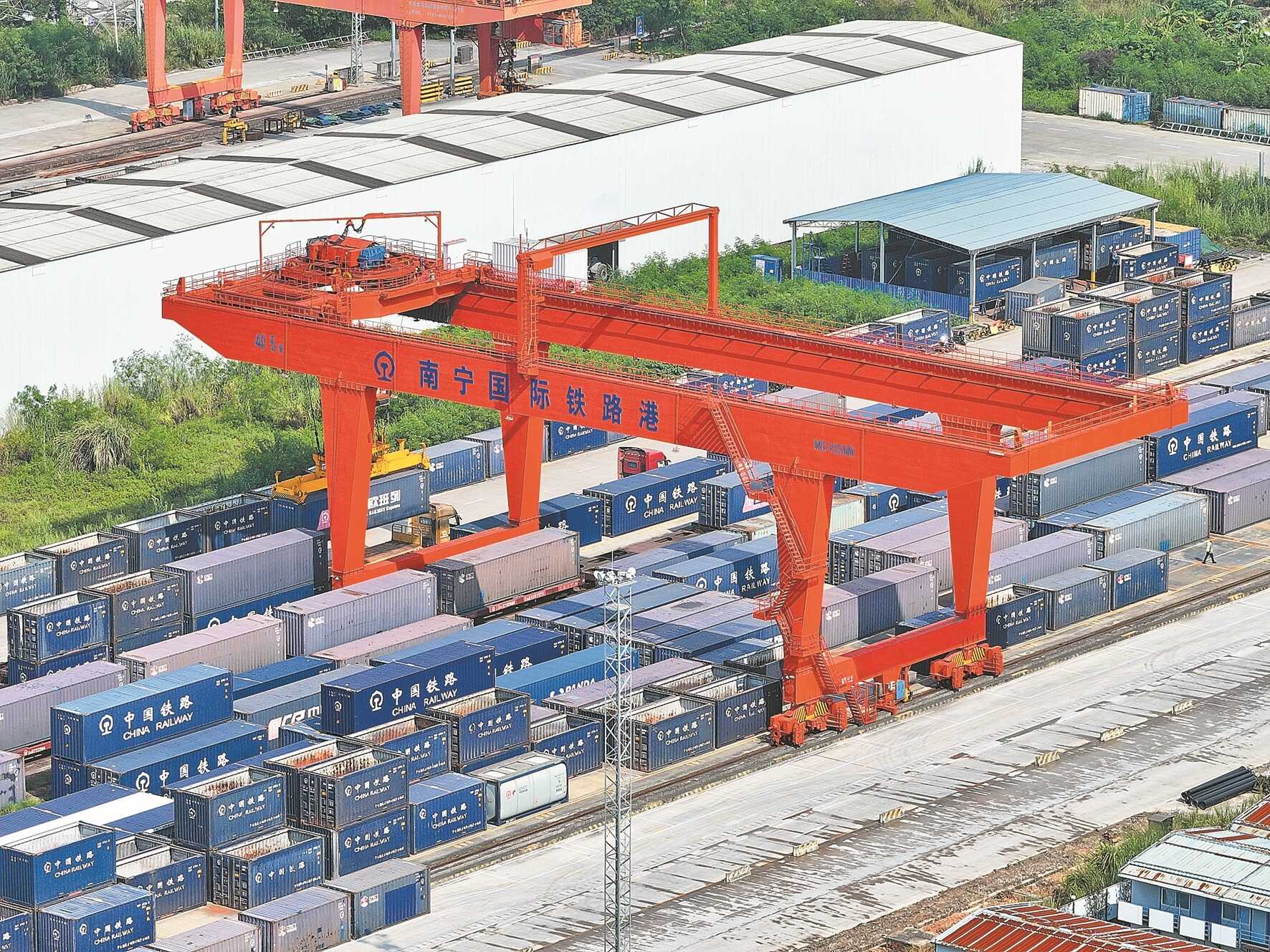
Trade Growth - The Guangxi region has seen a significant increase in exports to ASEAN countries, with a total of 29,000 TEUs shipped as of October 22, 2023, representing a year-on-year growth of 143% [2] - Guangxi's trade with ASEAN has grown from 441 billion yuan in 2010 to over 397.8 billion yuan in 2024, marking an increase of more than nine times [3] - In the first three quarters of 2023, Guangxi's import and export value with ASEAN reached 311.02 billion yuan, up 13.2% year-on-year [3] Industry Transition - Guangxi's exports have shifted from traditional agricultural products and textiles to machinery and new energy products, with machinery and electrical products exports to ASEAN reaching 1,754 billion yuan in 2024, a year-on-year increase of 32.9% [4] - The import value of bulk commodities such as metal ores and pulp has reached a historical high of 178.78 billion yuan in 2024, supporting local manufacturing [4] Infrastructure Development - The Western Land-Sea New Corridor has become a vital economic artery, with container shipments increasing by 70.3% year-on-year in the first three quarters of 2023, totaling 1.09 million TEUs [6] - The container throughput at Beibu Gulf Port reached 7.2481 million TEUs in the first nine months of 2023, reflecting a year-on-year growth of 10.34% [6] Digital and Green Economy Initiatives - The signing of the China-ASEAN Free Trade Area 3.0 agreement emphasizes cooperation in digital and green economies, with Guangxi focusing on cross-border e-commerce and green standards [8] - Guangxi is implementing a negative list for data exit management to facilitate the free flow of data as a new production factor [8] Investment Trends - Over 800 ASEAN companies have established operations in Guangxi, with actual investments nearing 2 billion USD, while more than 500 Guangxi enterprises have invested over 2.7 billion USD in ASEAN [9] - Manufacturing has emerged as a hot investment sector, with international cooperation parks like the China-Malaysia "Two Countries, Twin Parks" serving as models for bilateral investment and capacity cooperation [9]

【中拉企业家高峰会】在相识中走近 在相知中同行
Zheng Zhou Ri Bao· 2025-11-04 02:12
Core Insights - The 18th China-Latin America Entrepreneurs Summit was held in Zhengzhou, focusing on economic and cultural integration between China and Latin America [1][3] - The summit aims to enhance traditional trade cooperation and expand into emerging fields such as green economy, digital economy, and smart manufacturing [4][10] - The event showcased the potential for collaboration in various sectors, including renewable energy, agricultural technology, and infrastructure [3][4] Group 1: Event Overview - The summit was co-hosted by multiple Chinese governmental bodies and featured representatives from nearly 30 Latin American and Caribbean countries [1][3] - It included a series of activities such as opening ceremonies, plenary sessions, and specialized meetings to highlight the rich natural resources and innovative potential of Latin America [4][10] Group 2: Trade and Economic Data - In 2024, trade between China and Latin America is projected to exceed $500 billion, with China being the second-largest trading partner for the region [3] - Zhengzhou's total import and export volume reached 556.6 billion yuan in 2024, with trade with Latin America amounting to 30 billion yuan [6] Group 3: Cultural Exchange and Exhibitions - The summit featured cultural displays, including non-material cultural heritage from Henan, showcasing local cuisine and craftsmanship [7][9] - Latin American countries presented their unique industries, such as Mexico's service trade and Venezuela's coffee and chocolate sectors, emphasizing their economic growth and investment opportunities [9][10] Group 4: Industry Participation - Companies like Yutong Bus have established a significant presence in Latin America, exporting to 21 countries and holding a market share of approximately 40% [12] - The summit highlighted various Chinese products, including advanced machinery like the large-diameter shield tunneling machine, which has already been exported to Brazil [12]

从庆州到深圳:APEC共倡“开放创新”,亚太多边合作接力前行
2 1 Shi Ji Jing Ji Bao Dao· 2025-11-03 13:25
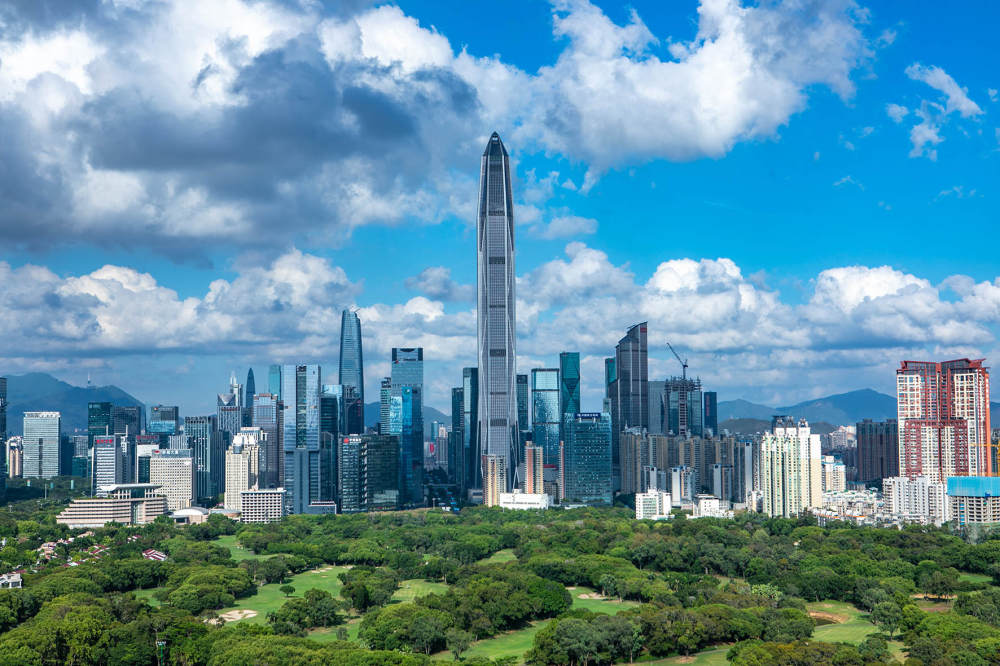
Group 1: APEC Summit Overview - The 2025 APEC Leaders' Informal Meeting was held in Gyeongju, South Korea, marking the country's return as the APEC chair after 20 years [2] - The summit's theme was "Building a Sustainable Future: Connectivity, Innovation, Prosperity," focusing on three priorities: enhancing connectivity, promoting innovation, and achieving inclusive growth and prosperity [3][6] - The meeting served as a platform for significant diplomatic activities, including bilateral talks between leaders from China, the U.S., South Korea, Canada, Thailand, and Japan [3][7] Group 2: Key Outcomes and Agreements - The summit produced several key documents, including the "Gyeongju Declaration," the "APEC Artificial Intelligence Initiative," and the "Framework for APEC Response to Demographic Changes" [4][9] - The Gyeongju Declaration emphasized the commitment to free trade and the advancement of the APEC Free Trade Area (FTAAP) agenda, highlighting the importance of market-driven regional economic integration [9][10] - The summit recognized the cultural and creative industries as a new growth driver for the APEC region, marking a significant initiative [10] Group 3: China's Role and Future APEC Meetings - China will host the next APEC summit in Shenzhen in 2026, symbolizing its commitment to deepening reforms and expanding high-level openness [4][14] - The choice of Shenzhen reflects China's achievements in innovation and economic development, showcasing its role as a vital player in regional cooperation [15][16] - The upcoming summit is expected to focus on enhancing trade and investment liberalization, promoting digital and green economies, and fostering a more inclusive regional economic environment [11][14]
“为外企在华厚植与发展提供宝贵机遇”
Ren Min Ri Bao· 2025-11-03 09:59
Core Insights - Samsung views China as one of its largest overseas markets, highlighting the significant opportunities presented by China's high-level opening and market potential [2] - Since entering the Chinese market in 1992, Samsung has transformed its operations from labor-intensive industries to technology-intensive sectors such as semiconductors and electric vehicle batteries, becoming a key player in Sino-Korean economic cooperation [2] - Samsung has participated in the China International Import Expo for eight consecutive years, showcasing its innovations in AI, semiconductors, and medical devices, and emphasizing the integration of technology into daily life for Chinese consumers [3] Business Development - Samsung has established 13 R&D centers in China, focusing on emerging industries like AI and 6G, which support global product development [3] - The company has engaged in various initiatives in rural revitalization, education innovation, and green operations, contributing to China's agricultural modernization and youth talent development [4][5] - Samsung's commitment to green development includes innovations in green technology and sustainable supply chain practices, aligning with China's economic transformation [5] Market Trends - The Chinese market is experiencing growth across multiple sectors, driven by digitalization and smart transformation of traditional industries, as well as increasing demand for health, smart, and cultural consumption [5] - Samsung aims to enhance its collaboration with local partners, focusing on localized innovation, co-development of supply chains, and precise market services to foster mutual growth [5]

第十八届中国—拉美企业家高峰会11月3日在郑州开幕
Xin Hua Cai Jing· 2025-11-03 05:50
Core Points - The 18th China-Latin America Entrepreneurs Summit opened in Zhengzhou, Henan Province, focusing on the theme "Towards a New and Intelligent Future" [1][2] - The summit serves as a mechanism for economic and trade cooperation between China and Latin America, showcasing the depth and breadth of collaboration across various sectors [1] - China-Latin America trade has surpassed $500 billion in 2024, with China being the second-largest trading partner for Latin America, indicating a shift from traditional trade to technology innovation and industrial collaboration [1] Group 1 - The summit is co-hosted by the China Council for the Promotion of International Trade, the Henan Provincial Government, and the People's Bank of China, highlighting its significance in promoting bilateral relations [1] - The event features participation from nearly 30 Latin American and Caribbean government officials, diplomats, trade promotion organizations, and business representatives, emphasizing its international scope [2] - The summit aims to strengthen traditional trade cooperation while expanding into emerging fields such as green economy, digital economy, and intelligent manufacturing [1]
专访|中国-东盟自贸区升级创造广阔产业合作机遇——访印尼工商会中国委员会主席加里巴尔迪·托希尔
Xin Hua She· 2025-11-03 03:01
Core Insights - The recent signing of the China-ASEAN Free Trade Area 3.0 upgrade protocol in Kuala Lumpur creates extensive market and industrial cooperation opportunities for ASEAN and Chinese enterprises [1] - The protocol enhances competitiveness, attracts sustainable investment, and strengthens regional integration for ASEAN member countries like Indonesia [1] - The focus on digital economy and green growth aligns with Indonesia's development agenda, particularly in achieving net-zero emissions through clean energy and green transportation cooperation with China [1] Group 1 - The protocol covers new areas such as digital economy, green economy, and supply chain connectivity, which are crucial for Indonesia's development [1] - Indonesia aims to collaborate with China in e-commerce platforms, AI logistics, and digital payment ecosystems to support SMEs and reduce transaction costs [1] - In the green economy sector, Indonesia seeks to learn from China's experience in renewable energy technology, electric vehicle supply chains, and green finance frameworks [1] Group 2 - The Regional Comprehensive Economic Partnership (RCEP) provides new momentum for Indonesia-China cooperation, especially benefiting SMEs by simplifying customs procedures and promoting e-commerce [2] - The "Two Countries, Twin Parks" cooperation project between Indonesia and China aims to leverage complementary advantages in green energy, digital economy, mineral downstream processing, and sustainable agriculture [2] - The upcoming China International Import Expo in Shanghai offers Indonesian SMEs a platform to find partners, expand markets, and integrate into the global trade ecosystem [2]
接棒APEC2026 领航亚太合作新征程
Xin Hua Wang· 2025-11-03 02:01
Core Points - China has taken over the APEC hosting role, marking the beginning of the "China Year" for APEC, with a commitment to build an Asia-Pacific community and promote growth and prosperity in the region [1][2] - The historical context highlights China's evolving role in APEC, from its early participation to becoming a key advocate for regional cooperation and economic integration [2][3] - The current global landscape presents challenges such as unilateralism and protectionism, making China's leadership in APEC crucial for fostering stability and certainty in the Asia-Pacific region [2] Group 1 - China aims to enhance regional economic integration and the construction of the Asia-Pacific Free Trade Area, emphasizing the importance of open cooperation for the stability of global supply chains [2] - The new technological revolution and industrial transformation are seen as vital growth engines, with China focusing on digital infrastructure and green economy initiatives to benefit the Asia-Pacific community [3] - The diversity of the Asia-Pacific region necessitates a path of mutual respect and cooperation, with China's proposals expected to strengthen regional collaboration and address current challenges [3] Group 2 - Shenzhen's selection as a symbol of China's commitment to deepening reforms and expanding high-level openness reflects the country's strategy of mutual benefit and win-win cooperation [3] - The expectation is that China will work alongside Asia-Pacific partners to achieve a more prosperous, stable, and inclusive future for the region [3]
从硬联通到软联通 中国—东盟3.0版开启区域经济合作新篇章
Yang Shi Xin Wen· 2025-11-03 02:00
Core Viewpoint - The signing of the China-ASEAN Free Trade Area 3.0 upgrade protocol on October 28 marks a significant step towards enhancing digital technology empowerment, supply chain connectivity, and green standard alignment across various regions in China and ASEAN countries [1] Group 1: Logistics and Connectivity - The "Air Silk Road" between Zhengzhou and Kuala Lumpur has seen an increase in cargo flights to one per day, transporting nearly 10,000 tons of goods since its launch [2] - Zhengzhou Airport has opened 46 international cargo routes, reaching 18 countries involved in the Belt and Road Initiative, focusing on both "hard connectivity" in logistics and "soft connectivity" through systems like single-window and electronic bills of lading [4] Group 2: Trade Facilitation - The implementation of a single-window system allows companies in Gansu to quickly obtain certificates of origin, enabling them to enjoy tariff reductions of 12% and 5% when exporting products to Vietnam and Indonesia, respectively [6] - The protocol includes mutual recognition of certificates of origin and provisions for a single-window platform, which will enhance customs efficiency and reduce operational costs for businesses [6] Group 3: Industrial Cooperation - The 3.0 version of the free trade agreement aims to deepen the integration of supply chains between China and ASEAN, with a notable increase in rubber imports from ASEAN countries by 40.7% and a 19.8% rise in exports of automotive parts [7][9] - The establishment of a robust rubber tire processing industry cluster in Qingdao supports the export of processed tires to ASEAN nations, reflecting a shift from "product export" to "industry export" [9] Group 4: Green Economy Collaboration - The 3.0 version emphasizes green economy cooperation, with China’s advanced technologies in electric vehicles and solar products providing a foundation for capacity cooperation with ASEAN [10] - The protocol defines key concepts related to green economy and renewable energy, establishing a framework for future collaboration in green trade, investment, and circular economy [14]

趋势研判!2025年中国生物基产品行业政策、产业链、市场规模、竞争格局及开发方向分析:市场规模有望达到231亿美元,约占全球52.73%[图]
Chan Ye Xin Xi Wang· 2025-11-03 01:27
Core Viewpoint - Biobased products are considered "carbon neutral" and are essential for addressing climate change by replacing fossil-based products, especially in the context of dwindling petrochemical resources and global warming [1][5]. Market Overview - The global biobased products market is projected to grow from $22.8 billion in 2020 to $42.1 billion in 2024, with China leading the market at $19.9 billion, accounting for 47.27% of the global share [5][6]. - By 2025, the global market is expected to reach $48.1 billion, with China's share increasing to $23.1 billion, or 48.02% [5][6]. - The market is anticipated to exceed $80 billion within the next five years [5]. Industry Definition and Classification - Biobased products are defined as products derived from biomass (including plants, animals, and microorganisms) or biological processes (such as fermentation) [2]. - They can be categorized into two main types: biobased energy (solid, liquid, and gas forms) and biobased materials (macromolecular and small molecular biochemicals) [2][3]. Industry Chain - The biobased products industry chain includes upstream raw materials (crops, plant waste, and biomass), midstream processing companies that convert these materials into biobased products, and downstream applications in various sectors such as packaging, textiles, and transportation [6][7]. Policy Environment - The Chinese government has implemented various policies to promote the development of biobased products, emphasizing the reduction of fossil resource dependency and the promotion of a green economy [8][9]. Competitive Landscape - The biobased products industry in China is characterized by a diverse and tiered competitive landscape, with key players including Fengbei Bio, Kaisa Bio, Jindan Technology, and Wanhua Chemical [10][11]. - Notable companies like Anhui Huaheng Bio and Shanghai Kaisa Bio have established themselves as leaders in the biobased product sector, focusing on research, production, and sales of biobased materials [11][12]. Development Directions - The increasing global energy demand and the finite nature of conventional energy resources highlight the significance of biobased products as a sustainable alternative [13][14]. - The industry is seen as a crucial pathway towards achieving carbon neutrality, with ongoing technological advancements and cost reductions enhancing market prospects [15].


新华时评丨接棒APEC2026 领航亚太合作新征程
Xin Hua She· 2025-11-03 00:01
Core Points - China has taken over the APEC hosting duties, marking the beginning of the "China Year" for APEC, with a commitment to enhance cooperation in the Asia-Pacific region [1][2] - The historical context highlights China's evolving role in APEC since its entry into the WTO, emphasizing its contributions to multilateral trade and regional economic integration [1][2] - The current global challenges, including unilateralism and protectionism, underscore the importance of China's leadership in fostering open cooperation in the Asia-Pacific [2][3] Group 1 - China aims to promote the Asia-Pacific Free Trade Area, connectivity, digital economy, and artificial intelligence as part of its commitment to regional growth and prosperity [1][2] - The emphasis on maintaining stable global supply chains and advancing regional economic integration reflects China's strategy to enhance its role in the global economy [2] - The focus on digital and green economies as key growth drivers indicates China's intention to leverage its advancements in technology for the benefit of the Asia-Pacific region [3] Group 2 - The diversity of the Asia-Pacific region necessitates a path of mutual respect and cooperation, with the goal of building a community for long-term development and prosperity [3] - Shenzhen's selection as a symbol of China's commitment to reform and high-level opening up highlights the country's dedication to a win-win cooperation strategy [3] - The belief in a collaborative future for the Asia-Pacific, driven by China's initiatives, suggests a positive outlook for regional stability and inclusiveness [3]