滞胀

Search documents
“美联储传声筒”:数据“打架”让美联储左右为难
Jin Shi Shu Ju· 2025-09-12 06:07
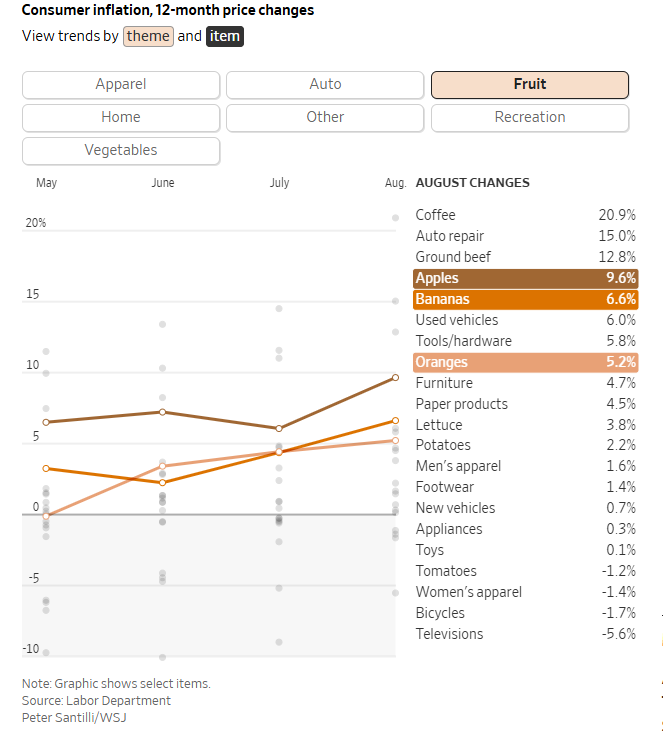
Group 1 - The Consumer Price Index (CPI) for August increased by 2.9% year-on-year, returning to the highest level since the beginning of the year, significantly up from 2.7% in July and 2.3% in April, aligning with market expectations [1] - The core CPI, excluding food and energy, rose by 3.1% year-on-year, indicating persistent inflationary pressures [1] - The labor market shows signs of weakness, with initial jobless claims rising to 263,000, the highest since October 2021, suggesting a potential shift towards more layoffs [1] Group 2 - U.S. stock indices reached new historical highs as investors bet on multiple rate cuts by the Federal Reserve, with the weak August non-farm report reinforcing expectations for a September rate cut [2] - Price pressures from tariffs are showing a mixed impact, with certain categories like automobiles and clothing seeing accelerated price increases, while others like tires and furniture have seen reduced price hikes [2] - Companies are extending the cost-sharing period to avoid sudden price spikes, with retailers like Walmart and Target implementing gradual price adjustments related to tariffs [5] Group 3 - The Federal Reserve faces a dilemma in determining whether tariff-driven inflation is temporary or persistent, with recent comments suggesting that a weakening labor market may lead to inflation being viewed as a one-time shock [6] - Market expectations indicate a 25 basis point rate cut in September, with two additional cuts by year-end, totaling 75 basis points [6] - Ongoing inflation combined with a weak job market is straining consumer purchasing power, potentially complicating the Fed's decision-making between stimulating the economy and controlling inflation [7]

多重因素助推,黄金价格创历史新高
Huan Qiu Wang· 2025-09-12 03:21
在美国经济数据公布前,金价曾一度下跌多达0.6%。随着数据出炉,价格迅速扭转跌势并刷新高位。独立金属交易员黄泰评论称:"上周初请失业金人数大 幅攀升至26.3万,创三年来新高,而核心CPI环比增幅仍维持在0.3%的高位,这些因素共同'拯救'了黄金。"他补充道,尽管短期走势显示部分买家出现疲 态,但未来几个月黄金前景依然具有建设性,大幅回调的空间有限。 【环球网消费综合报道】9月12日,现货黄金一度升至3674.27美元/盎司,创下新的历史纪录,并首次突破1980年1月21日创下的850美元/盎司峰值(按通胀 调整约为3590美元)。本月以来金价累计上涨约5%,今年以来涨幅已接近40%。市场普遍认为,这一突破再次凸显黄金在持续的宏观不确定性中作为避险 资产的地位。 市场分析人士表示,本轮金价上涨的波动性明显降低。部分原因在于市场流动性增强,以及ETF等产品使更多投资者能够便捷配置黄金。伦敦金库中黄金储 备的总价值上月首次突破1万亿美元,凸显机构需求。高盛在最新报告中称,央行持续购金、私人投资者加仓以及美元资产信任削弱,共同推动金价进入新 阶段。该行预计,到2025年底金价或升至3700美元,2026年中有望突破 ...
有色金属ETF基金(516650)走强,机构:美联储降息预期强化,铜价易涨难跌
2 1 Shi Ji Jing Ji Bao Dao· 2025-09-12 02:29
Group 1 - The expectation of a Federal Reserve interest rate cut has led to a rise in copper prices and strength in the non-ferrous metals and gold sectors [1][2][3] - The non-ferrous metals ETF (516650) increased by 1.15%, with stocks like Northern Copper and Yun Aluminum showing significant gains [1] - Gold-related products have seen continuous capital inflow, with the gold stock ETF (159562) recording a net inflow of nearly 580 million yuan over the past ten trading days [1] Group 2 - The U.S. Consumer Price Index (CPI) rose by 0.4% month-on-month in August, the largest increase in seven months, raising concerns about inflation and potential stagflation [2][3] - Initial jobless claims in the U.S. reached 263,000, the highest level since October 2021, indicating a cooling labor market [2][3] - Analysts believe that despite inflation concerns, the Federal Reserve is likely to proceed with a 25 basis point rate cut in the upcoming meeting [2][3] Group 3 - The copper market is expected to remain strong due to healthy supply-demand dynamics, with ongoing supply shortages and production cuts from overseas and domestic smelters [3] - The demand for copper is resilient, supported by high growth in electric investment [3] - The combination of fundamental support and interest rate cut expectations is likely to lead to an upward trend in copper prices [3]


美国8月CPI超预期,但降息预期未改
Di Yi Cai Jing· 2025-09-12 02:13
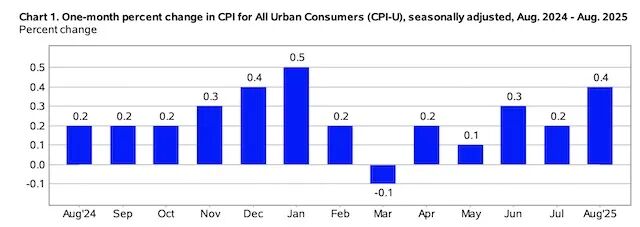
SHMET 网讯:当地时间9月11日,美国劳工统计局公布数据显示,8月消费者价格指数(CPI)环 比上涨0.4%,高于预期的0.3%,录得七个月来最大涨幅;同比增速为2.9%,亦高于7月的2.7%。剔除食 品和能源的核心CPI环比上涨0.3%,同比上涨3.1%,与市场预期一致。 服务价格同样呈现上行,机票环比上涨5.9%,二手车与卡车上涨1.0%,新车上涨0.3%,服装上涨 0.5%。相对而言,医疗保健、娱乐和通信价格则小幅回落。 从同比看,住房类指数过去一年上涨3.6%,医疗保健上涨3.4%,家庭用品与运营上涨3.9%,二手 车与卡车上涨6.0%,机动车保险上涨4.7%。这些项目在未来数月仍可能对核心通胀形成支撑。 分析人士认为,此轮通胀反弹与住房租金的粘性以及关税传导有关。随着企业库存逐渐消化,进口 成本上升可能更明显地体现在消费品价格中。桑坦德银行美国资本市场首席经济学家斯蒂芬·斯坦利 (Stephen Stanley)评论称,更多与关税相关的通胀将在未来数月逐步显现,尽管完全传导仍需时间。 就业走弱巩固降息预期 与此同时,美国初请失业金人数升至26.3万人,为2021年10月以来最高水平,四周均值也升 ...
突破1980年通胀调整峰值,现货黄金再创历史新高
Di Yi Cai Jing· 2025-09-12 01:21
Group 1 - Gold prices reached a historic high of $3,674.27 per ounce, surpassing the inflation-adjusted peak of $850 per ounce from January 1980, with a cumulative increase of approximately 5% in September and nearly 40% year-to-date [1] - The rise in gold prices is attributed to macroeconomic uncertainties, with significant factors including a surge in initial jobless claims to 263,000, the highest in three years, and a core CPI increase of 0.3% [1] - Analysts suggest that despite some short-term buyer fatigue, the outlook for gold remains constructive with limited room for significant pullbacks in the coming months [1] Group 2 - Recent economic data indicates a cooling U.S. economy, with the August CPI rising by 2.9%, the largest increase in seven months, and non-farm payrolls adding only 22,000 jobs, leading to a rise in the unemployment rate to 4.3% [2] - The market is increasingly concerned about stagflation, with traders fully pricing in a 25 basis point rate cut by the Federal Reserve in the near future [2] - The combination of a weakening labor market and persistent inflation signals a shift in monetary policy expectations, with a gradual resumption of rate cuts anticipated [2] Group 3 - Factors such as tax cuts and tariffs from the Trump administration, along with challenges to the independence of the Federal Reserve, have diminished the attractiveness of the U.S. dollar and Treasury bonds, driving investment into gold [3] - Gold is viewed as a unique hedge against inflation and currency devaluation, with historical precedence reinforcing its role as a safe haven during economic uncertainty [3] - The volatility of gold prices has decreased compared to the sharp spikes seen in 1980, attributed to enhanced market liquidity and the accessibility of gold through ETFs [3] Group 4 - Central banks are diversifying their foreign reserves, with gold's share in reserves increasing since the Russia-Ukraine conflict, now surpassing the euro to become the second-largest reserve asset globally [4] - The future trajectory of gold prices will depend on the Federal Reserve's policy direction and global risk events, with historical trends indicating that rate cuts typically enhance gold's appeal [4] - The ongoing gold market rally is supported by a broad investor base and policy uncertainties, positioning gold as both an inflation hedge and a beneficiary of global asset reallocation [4]
金价突破1980年通胀调整峰值
Di Yi Cai Jing Zi Xun· 2025-09-12 00:32
Core Insights - Gold prices reached a historic high of $3,674.27 per ounce, surpassing the previous peak of $850 per ounce (adjusted for inflation) from January 1980, with a year-to-date increase of nearly 40% [2] - The recent surge in gold prices is attributed to macroeconomic uncertainties and a shift in investor sentiment towards gold as a safe-haven asset [2][4] - Economic indicators suggest a cooling U.S. economy, with rising unemployment and inflation concerns, leading to expectations of potential interest rate cuts by the Federal Reserve [3][5] Economic Indicators - The U.S. Consumer Price Index (CPI) rose by 2.9% year-on-year in August, marking the largest increase in seven months, while the Producer Price Index (PPI) unexpectedly declined [3] - Non-farm payrolls added only 22,000 jobs in August, with the unemployment rate rising to 4.3%, indicating a weakening labor market [3] - The Federal Reserve is expected to initiate a gradual rate-cutting cycle after pausing monetary easing earlier this year [3] Factors Driving Gold Prices - The Trump administration's tax and tariff policies have diminished the attractiveness of the U.S. dollar and Treasury bonds, leading to increased investment in gold [4] - Historical perspectives highlight gold's role as a hedge against inflation and currency devaluation, a sentiment echoed by economists [4] - Enhanced market liquidity and the availability of gold through ETFs have contributed to reduced volatility in gold prices compared to past surges [4] Central Bank Trends - Central banks have been diversifying their foreign reserves, with gold's share in reserves increasing since the Russia-Ukraine conflict, now surpassing the euro [5] - The ongoing demand from central banks and private investors, coupled with a decline in trust in dollar assets, is expected to support gold prices in the long term [5] - Historical trends indicate that periods of interest rate cuts typically enhance gold's appeal as an investment [5]
金价突破1980年通胀调整峰值
第一财经· 2025-09-12 00:24
Core Viewpoint - The article highlights the recent surge in gold prices, reaching a historical high of $3674.27 per ounce, driven by macroeconomic uncertainties and inflation concerns, reinforcing gold's status as a safe-haven asset [3][4]. Economic Slowdown and Monetary Easing Expectations - Recent data indicates a cooling U.S. economy, with the August Consumer Price Index (CPI) rising by 2.9%, the largest increase in seven months, while the Producer Price Index (PPI) unexpectedly declined [5]. - Non-farm payrolls added only 22,000 jobs in August, with the unemployment rate rising to 4.3%, and the annual employment data was revised down by 911,000 jobs [5]. - These signals of a weakening labor market alongside persistent inflation have heightened concerns about stagflation, leading traders to fully price in a 25 basis point rate cut by the Federal Reserve [5]. Multiple Factors Driving Gold Prices - Policies from the Trump administration, including tax cuts and tariffs, have diminished the attractiveness of the U.S. dollar and Treasury bonds, accelerating capital inflow into gold [6]. - Gold has historically served as a hedge against inflation and currency devaluation, a role that is being reinforced amid current economic conditions [6]. - Analysts note that unlike the volatile spikes in gold prices seen in 1980, the current price increase is characterized by reduced volatility due to enhanced market liquidity and the accessibility of gold through ETFs [6][7]. - Goldman Sachs projects that gold prices could reach $3700 by the end of 2025 and potentially exceed $4000 by mid-2026, with scenarios suggesting prices could touch $4500 to $5000 if there is a significant outflow from dollar assets [7]. Central Bank Diversification and Long-term Support for Gold - Since the onset of the Russia-Ukraine conflict, the proportion of gold in central bank reserves has increased, surpassing that of the euro, making gold the second-largest reserve asset globally [8]. - Future gold price movements are expected to depend on the Federal Reserve's policy direction and global risk events, with historical trends indicating that rate-cutting cycles tend to enhance gold's appeal [8]. Broader Investor Base and Policy Uncertainty - The sustainability of the current gold market is attributed to a broad base of investors and ongoing policy uncertainties, positioning gold not only as an inflation hedge but also as a beneficiary of global asset reallocation [9].

美股三大指数齐创新高,中国资产大涨
Di Yi Cai Jing Zi Xun· 2025-09-11 23:54
Market Performance - US stock market continued its strong performance with all three major indices reaching new historical highs, driven by expectations of an upcoming interest rate cut by the Federal Reserve [2][3] - The Dow Jones Industrial Average rose by 617.08 points, or 1.36%, closing at 46,108.0 points, marking the first time it surpassed the 46,000-point threshold [2] - The S&P 500 index increased by 55.43 points, or 0.85%, to close at 6,587.47 points, while the Nasdaq Composite gained 157.01 points, or 0.72%, closing at 22,043.07 points, also a record high [2] Sector Performance - Among the 11 sectors of the S&P 500, 10 sectors saw gains, with the materials sector leading at a 2.14% increase, followed by the healthcare sector which rose by 1.73% [3] - Large-cap technology stocks showed mixed results, with Tesla up over 6% and Apple rising more than 1%, while Intel and AMD experienced declines [2][3] Economic Data - The US Consumer Price Index (CPI) for August increased by 0.4% month-over-month, exceeding market expectations of 0.3%, marking the largest increase since January [3] - Year-over-year CPI rose to 2.9%, up from the previous value of 2.7%, while core CPI increased by 0.3% month-over-month and 3.1% year-over-year, aligning with market expectations [3] Employment Data - Initial jobless claims in the US rose to 263,000 for the week ending September 6, the highest level since October 2021, indicating a cooling labor market [3] Federal Reserve Outlook - Market expectations for a 25 basis point rate cut by the Federal Reserve are high, with a probability of nearly 93%, while there is a 7% chance of a direct 50 basis point cut [4] - Moody's Chief Credit Officer indicated that the labor market is slowing down while inflation remains persistent, suggesting a different economic environment compared to previous years [3][4] Commodity Prices - International oil prices declined, with WTI crude oil futures falling by 2.04% to $62.37 per barrel, and Brent crude oil futures down by 1.66% to $66.37 per barrel [4] - COMEX gold futures slightly retreated by 0.23%, closing at $3,673.6 per ounce [4]
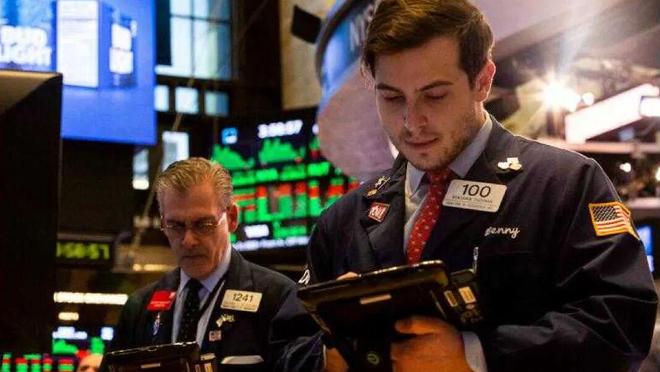
突破1980年通胀调整峰值!现货黄金再创历史新高
Di Yi Cai Jing· 2025-09-11 23:53
Core Viewpoint - The price of spot gold has reached a new historical high of $3,674.27 per ounce, marking a significant increase of approximately 5% this month and nearly 40% year-to-date, highlighting gold's status as a safe-haven asset amid ongoing macroeconomic uncertainties [1] Group 1: Gold Price Dynamics - Spot gold prices have surpassed the inflation-adjusted peak of $850 per ounce from January 21, 1980, which is approximately $3,590 today [1] - The recent surge in gold prices is attributed to a combination of rising unemployment claims and persistent high core CPI growth, which have reinforced gold's appeal [1][2] - The market has observed a significant increase in institutional demand, with the total value of gold reserves in the London vaults exceeding $1 trillion last month [3] Group 2: Economic Indicators and Market Sentiment - Recent economic data indicates a cooling U.S. economy, with the August Consumer Price Index (CPI) rising by 2.9%, the largest increase in seven months, and non-farm payrolls adding only 22,000 jobs [2] - The market is increasingly concerned about stagflation, as evidenced by the FedWatch tool indicating traders fully expect a 25 basis point rate cut from the Federal Reserve [2] - Analysts suggest that the current gold price rally is characterized by lower volatility compared to the sharp spikes seen in 1980, due to enhanced market liquidity and the accessibility of gold through ETFs [3] Group 3: Central Bank Policies and Global Trends - Central banks are diversifying their foreign reserves, with gold's share in reserves rising since the Russia-Ukraine conflict, making it the second-largest reserve asset globally [4] - Historical trends show that periods of interest rate cuts typically enhance gold's attractiveness as an investment [4] - Goldman Sachs projects that gold prices could reach $3,700 by the end of 2025 and potentially exceed $4,000 by mid-2026, with scenarios suggesting prices could even touch $4,500 to $5,000 if there is a significant outflow from dollar assets [3]
美国8月CPI超预期,但降息预期未改
第一财经· 2025-09-11 23:46
2025.09. 12 作者 | 第一财经 胡弋杰 当地时间9月11日,美国劳工统计局公布数据显示,8月消费者价格指数(CPI)环比上涨0.4%,高 于预期的0.3%,录得七个月来最大涨幅;同比增速为2.9%,亦高于7月的2.7%。剔除食品和能源 的核心CPI环比上涨0.3%,同比上涨3.1%,与市场预期一致。 与此同时,美国初请失业金人数升至26.3万人,为2021年10月以来最高水平,四周均值也升至 24.05万人。尽管节假日效应可能带来短期波动,但整体趋势显示裁员活动正在增加。 通胀再度抬头与就业走弱叠加,引发市场对"滞胀"的担忧。但分析人士普遍认为,美联储下周启动 降息的节奏不会因此受阻。 本文字数:1288,阅读时长大约2分钟 关税压力渐显 分析人士认为,此轮通胀反弹与住房租金的粘性以及关税传导有关。随着企业库存逐渐消化,进口成 本上升可能更明显地体现在消费品价格中。桑坦德银行美国资本市场首席经济学家斯蒂芬·斯坦利 (Stephen Stanley)评论称,更多与关税相关的通胀将在未来数月逐步显现,尽管完全传导仍需时 间。 分项来看,8月CPI的走高主要来自住房、食品和能源价格。住房成本指数环比上涨 ...