
高端化

Search documents
魏牌九年九帅,长城高端化之困待破局
Guan Cha Zhe Wang· 2025-12-22 10:37
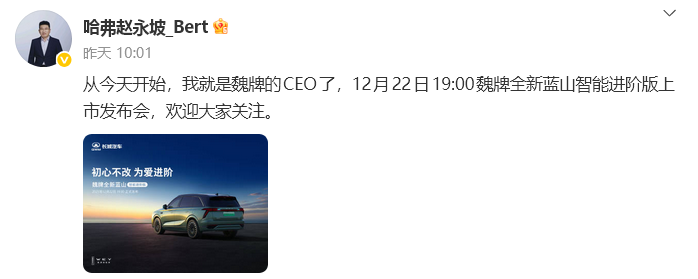
Core Viewpoint - The appointment of Zhao Yongpo as CEO of WEY marks the ninth leadership change since the brand's establishment in 2016, reflecting ongoing strategic instability and challenges in positioning within the high-end automotive market [1][2][6]. Leadership Changes - WEY has experienced frequent CEO changes, with eight different leaders in nine years, indicating a lack of stability in its management [2][4]. - The longest-serving CEO, Yan Si, held the position for two years, while the shortest tenure lasted only two months [2][4]. - Recent CEOs, including Feng Fuzhi, have left due to various reasons, including failure to meet strategic goals such as establishing a direct sales channel [5][10]. Strategic Challenges - WEY's strategic direction has been inconsistent, with shifts in focus that have not solidified its market position [7][9]. - The brand initially aimed for a luxury market presence with models like VV7 and VV5 but struggled with innovation and market differentiation, leading to a decline in sales after 2019 [7][9]. - The decision to pivot to a "coffee series" of electric vehicles did not resonate with consumers, resulting in confusion and a loss of brand identity [9][10]. Market Performance - Despite a 93% year-on-year sales increase in the first eleven months of the year, WEY's total sales were only 89,000 units, representing just 4.4% of Great Wall's total sales [13]. - The brand's performance is significantly lower compared to competitors like Geely and Dongfeng, which have established stronger sales figures in the high-end market [13]. Broader Industry Context - Great Wall Motors faces challenges in high-end market penetration, electric vehicle transition, and global expansion, with its overseas revenue contributing nearly 40% of total income [11][13]. - The company is perceived as a follower in the competitive landscape, particularly in the smart vehicle sector, where it lags behind rivals like BYD and Chery [11][13].


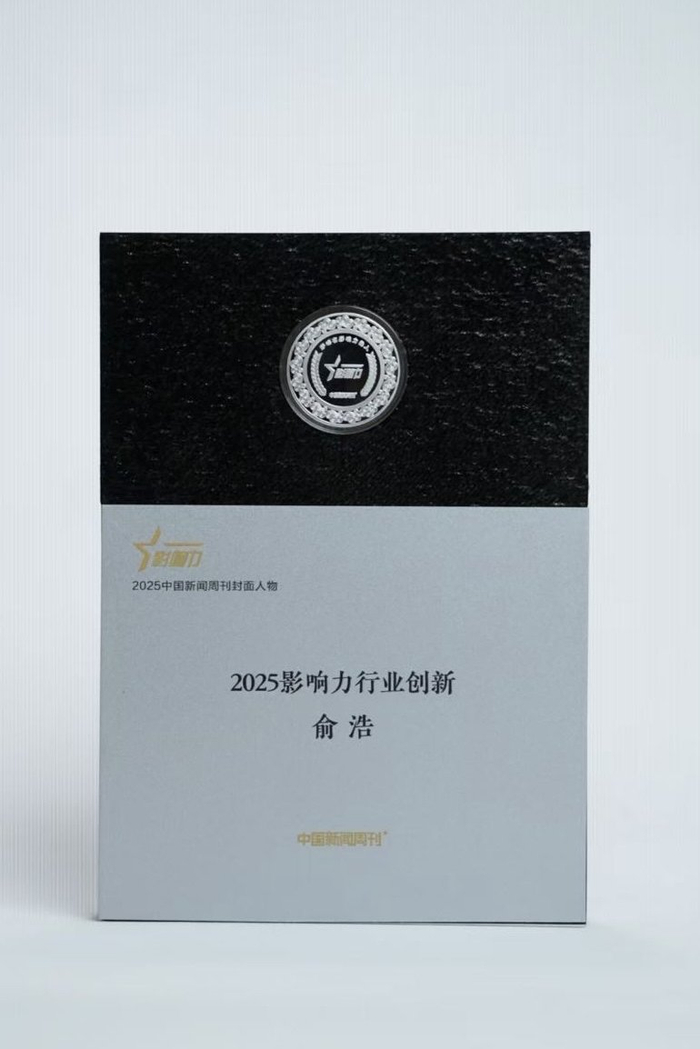
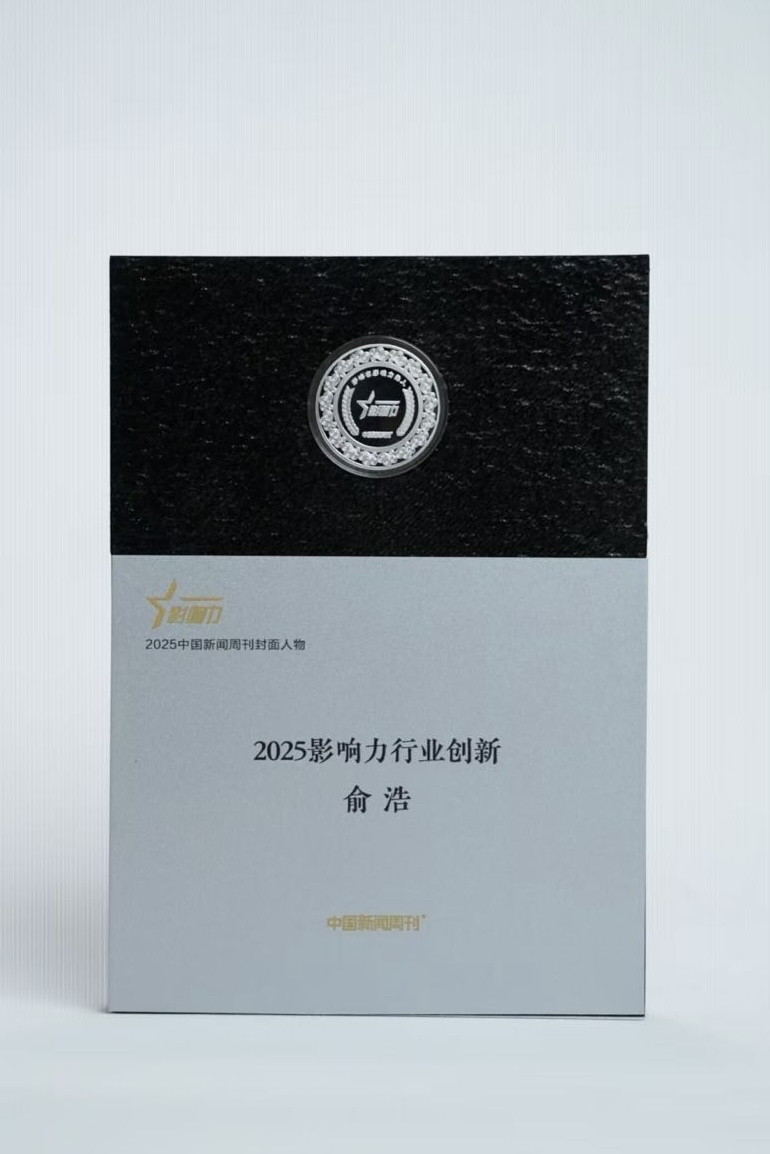
追觅科技俞浩荣膺“2025封面人物影响力行业创新奖”
Zheng Quan Ri Bao Zhi Sheng· 2025-12-21 14:14
Core Insights - The founder and CEO of Pursuit Technology, Yu Hao, received the "2025 Cover Character Influence Industry Innovation Award" for his leadership in guiding the company towards high-end markets and making technological innovation accessible to the public [1][3]. Company Overview - Pursuit Technology, founded in 2017, has rapidly expanded its presence in over 120 countries and regions, including major markets like China, the United States, Germany, and France [4]. - The company has achieved a compound annual growth rate (CAGR) of over 100% for six consecutive years, establishing itself as a leading global high-end technology brand [3][4]. Strategic Focus - Yu Hao emphasizes a strategy centered on "high-end, technology, and fashion" as core competitive advantages, advocating for a long-term approach to enhance product innovation and brand recognition [3]. - The company allocates one-third of its R&D investment to existing technology iterations, one-third to innovations in existing fields, and one-third to new field innovations, with the latter two being crucial for growth [4]. Market Performance - Pursuit Technology has successfully achieved market leadership in nearly 20 countries, including Germany, France, and Singapore, demonstrating the importance of technological innovation in establishing a high-end brand [4]. - The company has over 6,000 physical stores worldwide and has served more than 30 million households globally [4]. Recent Developments - Pursuit Technology, through its partnership with ZhuYue Hongzhi Technology Development Partnership, has acquired 54.90% of JiaMei Food Packaging Co., Ltd. for approximately 2.282 billion yuan, changing the controlling shareholder to ZhuYue Hongzhi and the actual controller to Yu Hao [4][5]. - Industry experts believe that Yu Hao's leadership at JiaMei Packaging will inject vitality into technological innovation within the traditional packaging industry, pushing it towards automation and AI, and facilitating global expansion [5].
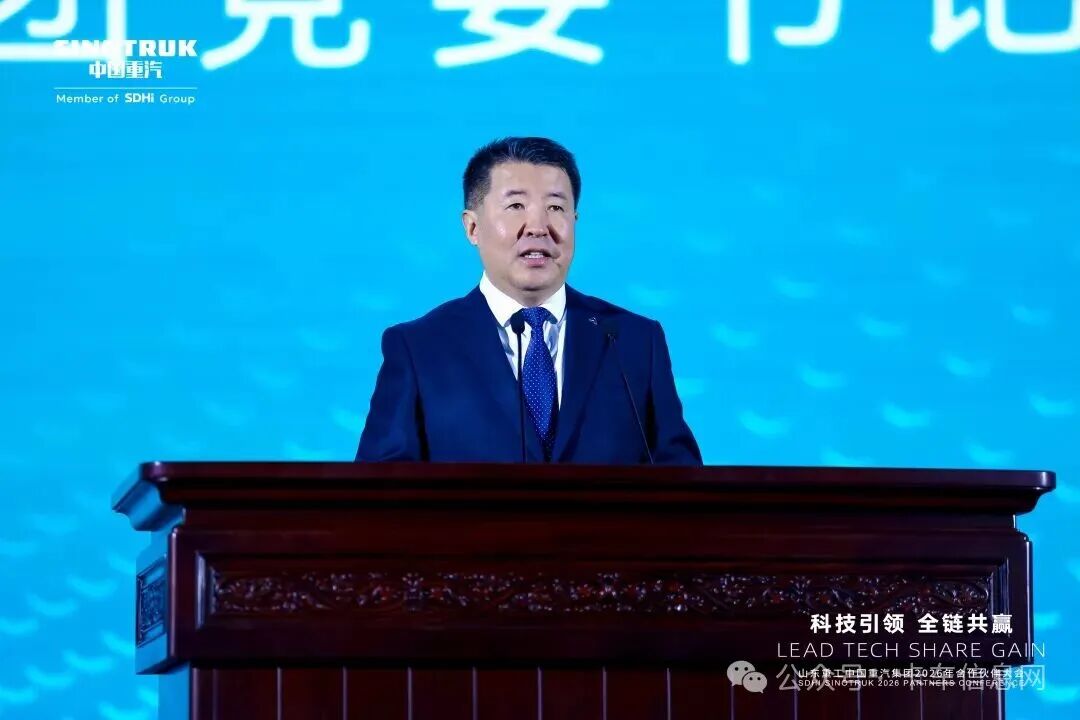
山东重工中国重汽集团成王牌公司业务分会济南召开
Zhong Guo Qi Che Bao Wang· 2025-12-21 07:09
Core Insights - The Shandong Heavy Industry China National Heavy Duty Truck Group Partner Conference was held in Jinan, focusing on "Technology Leading, Win-Win for the Whole Chain" during a critical transition in the commercial vehicle industry towards green and intelligent transformation [1] - Chengdu Wangpai, a subsidiary of China National Heavy Duty Truck Group, showcased its impressive performance in 2025 and outlined a clear blueprint for 2026, emphasizing its role as a key player in the new energy industry chain and a strategic base in Western China [1] Group 1: Sales and Structural Breakthroughs - In 2025, Chengdu Wangpai is expected to achieve sales of 27,000 units, a year-on-year increase of 46%, with a compound annual growth rate of around 40% over the past three years, significantly outperforming the industry average [3] - The new energy business has grown at an astonishing rate of over 150%, becoming the core engine of growth, with penetration rates in the heavy-duty truck sector reaching 87.1% for concrete mixers, 38% for dump trucks, and 33.3% for tractors, all well above industry averages [5] - Chengdu Wangpai has successfully established multiple market "strongholds," achieving the top market share in various regions and segments, thus diversifying its market presence beyond reliance on a single region [5] Group 2: Multi-Dimensional Advantages - Chengdu Wangpai's market performance is supported by strong internal advantages and precise strategic planning, including a commitment to the transformation strategy of "greening, digitization, service, internationalization, and high-end" [6] - The company has increased R&D investment and launched 12 new models in 2025, covering various energy forms, while focusing on the autonomy and intelligent upgrades of the "three electric" systems [6] - Upgrades to production lines and logistics are expected to enhance capacity by 50% and significantly shorten delivery cycles, while also improving vehicle reliability through early fault rate reduction [8] Group 3: Strategic Goals for 2026 - For 2026, Chengdu Wangpai aims to sell 29,000 units, including 12,000 units of new energy vehicles, contributing significantly to the strategic goals of China National Heavy Duty Truck Group [9] - The company plans to launch five major campaigns targeting market share enhancement in various segments, including light trucks and specialized vehicles, while ensuring balanced development across new energy, traditional energy, and specialized vehicles [11] - Strategies will focus on marketing, product development, technology, management, service, and ecosystem collaboration to achieve these ambitious targets [11] Group 4: Industry Transformation and Future Outlook - The commercial vehicle industry is undergoing profound changes driven by policy and market forces, with green and intelligent transformations becoming key competitive factors [12] - Chengdu Wangpai has positioned itself advantageously in the new energy sector, demonstrating strong execution capabilities and a clear understanding of industry trends [12] - The company aims to leverage its strong backing from Shandong Heavy Industry to play a crucial role in the high-quality development of the commercial vehicle industry and the green transformation of the transportation sector [14]


【要闻】何朝晖到涟源市调研路基施工机械产业并征求对《政府工作报告(征求意见稿)》意见
Xin Lang Cai Jing· 2025-12-21 02:12
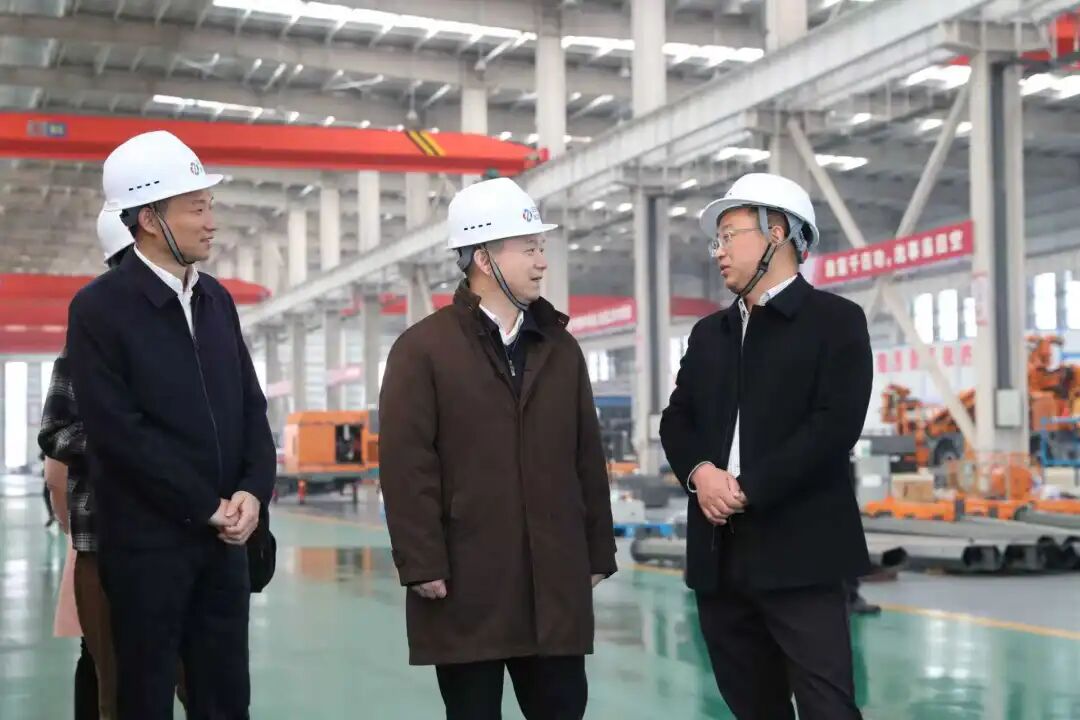
Group 1 - The core message emphasizes the importance of strengthening the特色优势产业 (characteristic advantageous industries) to boost the county's economic vitality and support the construction of a "material valley" in the central region [1][2] - The road construction machinery industry in Liyuan City is identified as a national-level characteristic industry cluster for small and medium-sized enterprises, serving as a crucial engine for county economic development [2] - Companies are encouraged to enhance their R&D and production capabilities for key products, actively explore overseas markets, and advance the industry towards high-end, intelligent, and green development [2] Group 2 - Local government departments are urged to assist enterprises in finding supply chains, orders, technologies, and talents, and to support them in participating in competitive cooperation [2] - A meeting was held post-research to gather opinions and suggestions from various stakeholders, including county leaders, department heads, and community representatives, regarding the draft of the government work report [2]
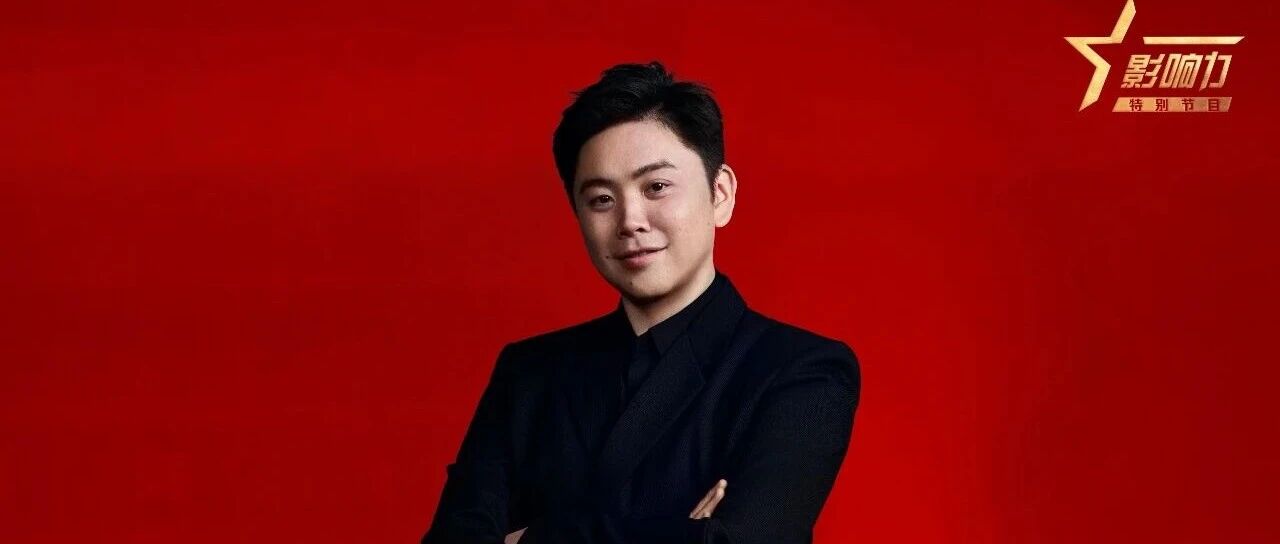
追觅连续六年年复合增长率超 100% ,俞浩获评“2025 封面人物”
IPO早知道· 2025-12-20 09:47
Core Viewpoint - The article highlights the recognition of Yu Hao, the founder and CEO of Chasing Technology, as a leading figure in the high-end technology sector, emphasizing his commitment to global market expansion and technological innovation that benefits the public [2][4]. Group 1: Company Overview - Chasing Technology, founded in 2017, has rapidly established itself as a global high-end technology brand, offering a diverse range of products including high-end smart home appliances, smart cars, and personal care devices [5]. - The company has achieved a compound annual growth rate of over 100% for six consecutive years, positioning itself as a flagship for Chinese technological innovation on the global stage [4][11]. Group 2: Strategic Focus - From its inception, Chasing Technology has aimed for global market positioning, ensuring that its technology and products meet international standards [7][8]. - The company emphasizes a strategy of high-end branding, focusing on "high-end, technology, and fashion" as core competitive advantages, while adhering to a long-term vision [9][10]. Group 3: Technological Innovation - Yu Hao believes that "core technology is fundamental," and has led the company to invest significantly in research and development, ensuring sustainable technological innovation [13][14]. - Chasing Technology allocates its R&D budget into three equal parts: existing technology iteration, existing technology innovation, and new field innovation, with the latter two being crucial for growth [15]. Group 4: Market Presence and Achievements - The company has successfully penetrated nearly 20 countries, including Germany, France, and Singapore, achieving the number one market share in these regions [11]. - Chasing Technology's products are now available in over 120 countries and regions, with more than 6,000 physical stores worldwide, serving over 30 million households [17]. Group 5: Future Outlook - Yu Hao anticipates a future where global resources, Chinese R&D, local manufacturing, and worldwide consumption converge, aiming to create a high-end technology enterprise that can significantly enhance productivity [19].
追觅科技俞浩荣膺中国新闻周刊“2025 封面人物”
Zhong Jin Zai Xian· 2025-12-20 07:33
Core Insights - The article highlights the recognition of Yu Hao, founder and CEO of Chasing Technology, as the "2025 Cover Person Impact Industry Innovation Award" for his leadership in driving the company towards high-end markets and making technological innovation accessible to the public [1][3]. Company Overview - Chasing Technology, founded in 2017, has rapidly established itself as a global high-end technology brand, with products spanning high-end smart home appliances, smart cars, smart kitchen appliances, smart cleaning devices, outdoor smart equipment, and personal care products [4][5]. - The company has achieved a compound annual growth rate of over 100% for six consecutive years, positioning itself as a flagship for Chinese technological innovation on the global stage [3][4]. Strategic Focus - The company has adopted a high-end branding strategy since its inception, aiming to position itself as a global enterprise that benchmarks its technology and products against international standards [5][7]. - Yu Hao emphasizes that the core competitiveness of a new generation of high-end technology consumer brands should be "high-end, technology, and fashion," advocating for a long-term approach to enhance product innovation and brand recognition [5][7]. Market Performance - As of 2023, Chasing Technology has successfully achieved significant milestones in efficiency improvement, brand elevation, and market share growth, overcoming the industry's "impossible triangle" challenge [7]. - The company has attained the number one market share in nearly 20 countries and regions, including Germany, France, and Singapore, demonstrating the importance of technological innovation for high-end technology brands [7]. Technological Innovation - Chasing Technology invests heavily in research and development, allocating one-third of its budget to existing technology iterations, one-third to innovations in current fields, and one-third to new technology innovations, ensuring sustainable technological advancement [10]. - The company holds a series of authorized patents in core technology areas, maintaining a leading position globally, which enhances product innovation and consumer experience [10]. Recent Developments - Recently, Yu Hao acquired a 54.90% stake in Jiamei Packaging for approximately 2.282 billion yuan, which is expected to inject vitality into technological innovation within the traditional packaging industry, promoting a shift towards robotics and artificial intelligence [10]. - The acquisition aims to help Jiamei Packaging achieve international standards and gradually expand into global markets, including Germany, the United States, and Italy [10]. Future Outlook - The future global industry landscape is expected to present three major opportunities: the combination of China's manufacturing and engineering talent, disruptive technologies creating competitive advantages, and the restructuring of global supply chains [11]. - Yu Hao envisions a future where global resources, Chinese research and development, local manufacturing, and world consumption converge, aiming to create high-end technology enterprises that significantly enhance productivity [11].
中国重汽的“变”与“不变”
Xin Lang Cai Jing· 2025-12-19 12:49
在2026年合作伙伴大会上,中国重汽交出了一份2025年营收突破2250亿元,并正式提出"到2030年,实现汇总营收4000亿元、整车销量80万辆的宏伟蓝 图。" 面对行业变革,中国重汽如何通过战略升级、模式创新引领发展?又如何在转型中坚守对合作伙伴的共赢承诺? 笔者将从中国重汽集团党委书记、董事长刘正涛与总经理刘伟的发言中,剖析中国重汽在"变"与"不变"中构建共赢生态的发展路径。 变的魄力 六大战略,重汽迈向系统性重构 "2025年,中国重汽重卡销量预计突破30万辆,连续四年位居中国第一,更是中国品牌首次位居全球重卡销量榜首。"中国重汽集团党委书记、董事长刘正 涛用一组数据宣告了中国商用车行业的历史性突破。 中国重汽集团党委书记、董事长刘正涛 变的不仅是规模,更是增长逻辑。中国重汽集团总经理刘伟指出,2025年中国重汽的成功源于"三个转变"——产品结构向高端升级、营销从渠道管理转向 渠道赋能、业务从单一销售延伸至全生命周期服务。这推动国内重卡销量同比增长33%,轻卡增长29%,新能源重卡销量达2.8万辆,出口连续21年位居重 卡行业首位。 中国重汽集团总经理刘伟 面向2030年,中国重汽的"变"更加系统化。 ...
光伏行业请来“拆卷”专家宋志平,他给出了四招
Tai Mei Ti A P P· 2025-12-19 09:12
Core Insights - The photovoltaic industry is facing a severe crisis characterized by overcapacity and price wars, leading to a "prisoner's dilemma" situation where companies are reluctant to reduce production despite losses [2][10] - Song Zhiping, a notable figure in the industry, proposes a comprehensive strategy called "拆卷心法" (Disassembly Methodology) consisting of differentiation, segmentation, high-end positioning, and branding to navigate the current challenges [1][4][5] Industry Overview - The production capacity of photovoltaic components in China is expected to exceed 1000 GW by 2024, while global demand is projected to be around 500 GW, resulting in a utilization rate below 60% [1] - The industry is experiencing a significant decline in profitability, with over 30% of companies reportedly selling at a loss to maintain cash flow and market share [2][10] Key Strategies Proposed by Song Zhiping - **Differentiation**: Emphasizes the need for a fundamental shift in value creation rather than merely adding product variations. Companies should focus on customized solutions that can command a premium price [5][6] - **Segmentation**: Encourages companies to explore niche markets that have been overlooked, such as specialized components for extreme environments or integrated solutions for specific industries [6][7] - **High-end Positioning**: Advocates for a shift from cost advantages to technological innovations that define new standards and create new demands, highlighting the potential of emerging technologies like perovskite [7][8] - **Branding**: Stresses the importance of building brand recognition and trust, especially in a market where products are increasingly commoditized. Successful brands can survive price wars by offering superior value [8][9] Challenges to Implementation - The industry is currently plagued by a lack of trust among companies, making collaboration difficult in a highly competitive environment [10][11] - Companies face significant cash flow pressures, hindering their ability to invest in the long-term strategies proposed by Song Zhiping [11][12] - The regulatory environment remains uncertain, complicating strategic planning for companies in the photovoltaic sector [11][12] Conclusion - The future of the photovoltaic industry hinges on the willingness of companies to adopt the proposed strategies and move away from destructive competition towards value creation and collaboration [13][14]
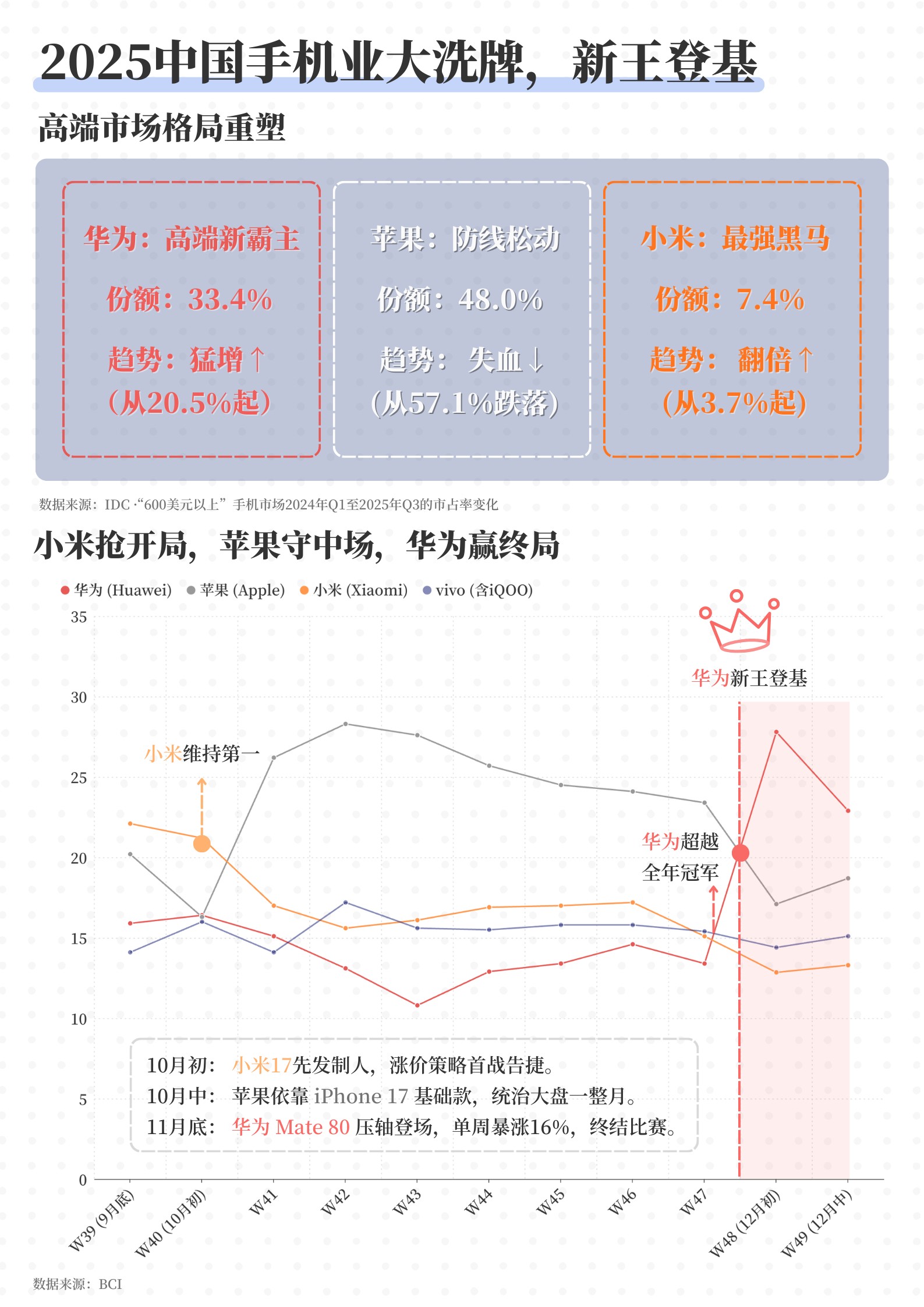
2025手机三国杀:小米涨价了、华为重回王位、苹果不装了丨36氪年度透视②
3 6 Ke· 2025-12-19 07:32
Core Insights - The smartphone industry is undergoing a brutal reshuffle in 2025 due to a "super cycle" with component costs rising by 10%-25%, leading to a market split at the $600 price point, where only the high-end market is expanding thanks to AI and ecosystem advancements [2]. Group 1: Company Strategies - Apple has responded to domestic competition by enhancing the base model of the iPhone 17, addressing key shortcomings like high refresh rates, resulting in nearly doubling sales in China and dominating the market in October [7]. - Xiaomi is focusing on high-end products to secure its future, with the Xiaomi 17 Pro version surpassing the base model in sales for the first time, achieving a 20% increase in average selling price (ASP) [11]. - Huawei has reclaimed its position as the market leader in China with a 95% localization rate and the successful launch of the Mate 80, which saw a 16% sales increase in one week, surpassing Apple in sales [10]. Group 2: Market Dynamics - The high-end smartphone market is projected to be the only growth segment, with a significant market share shift expected from Q1 2024 to Q3 2025 [9]. - The Chinese high-end market is now dominated by three major players, indicating that the competition will become increasingly challenging in 2026 [15]. - HarmonyOS is closing the gap with iOS, holding a 14.6% market share, just 0.7% behind iOS, while Android remains the leader with 70% [19].


携手合作启新程 新华网与东风股份签署深化战略合作框架协议
Xin Hua Wang· 2025-12-18 10:39
Group 1 - The core viewpoint of the news is the signing of a strategic cooperation framework agreement between Xinhua Net and Dongfeng Motor Corporation, focusing on the automotive industry's trends of "greening, intelligence, high-end, service, and internationalization" [1][4] - The partnership aims to explore innovative paths for deep integration between media and enterprises, actively serving national strategies and contributing to the construction of a strong automotive nation [1][4] - Xinhua Net will leverage its platform, content, communication channels, and technological innovation to support the development of the Chinese automotive industry and enhance brand building for companies like Dongfeng [3] Group 2 - Dongfeng Motor Corporation is a large state-owned enterprise responsible for the development of light commercial vehicles, offering a comprehensive range of products including light trucks, vans, buses, and specialized vehicles [4] - The company aims to become a leading green technology enterprise in light commercial vehicles, targeting to achieve the top sales in the new energy sector and rank second in total sales in the domestic market [4] - The cooperation will involve nine key areas, including the establishment of a media innovation center and automotive live streaming, to promote high-quality development in the automotive industry [4]

