
元宇宙

Search documents
徐州用产业“换新”迎接城市“焕新”
Xin Hua Ri Bao· 2025-12-25 23:55
Group 1: Industry Development - The engineering machinery industry is a crucial pillar for Xuzhou, showcasing significant achievements during the "14th Five-Year Plan" period, with a focus on industrial, consumer, cultural, and livelihood aspects [1] - Xuzhou Heavy Machinery Co., as one of the first 15 "leading intelligent factories" in China, exemplifies the city's manufacturing transformation and the promotion of replicable intelligent manufacturing models [1][2] - In 2025, Xuzhou aims to establish 100 intelligent factories and complete the transformation of all industrial enterprises above designated size by 2027, reflecting a strong commitment to becoming a national advanced manufacturing city [2] Group 2: Intelligent Manufacturing - Xuzhou's intelligent manufacturing sector has gained recognition, with three companies listed in the Ministry of Industry and Information Technology's 2025 annual excellent intelligent factory project list [2][3] - The city has implemented 548 "intelligent transformation and digital connection" projects in 2025, with an investment of 13.305 billion yuan, achieving 81.83% of the annual plan [3] - Leading companies in Xuzhou, such as Xugong Heavy Machinery and New Fengming, have adopted advanced technologies, achieving over 95% automation in production processes and increasing production capacity by 80% [3] Group 3: Agricultural Innovation - Xuzhou is focusing on enhancing agricultural productivity through technology, with initiatives like the "AI planting guide" that utilizes satellite remote sensing and IoT for precise farming management [4][5] - The city has transformed traditional agriculture into "smart agriculture," with significant advancements in processing and value addition, such as the production of black garlic, which increases value fourfold [5] - Xuzhou has 11 national-level agricultural industrialization leading enterprises and 100 provincial-level enterprises, ranking second in the province for the number of higher-level enterprises [5] Group 4: Future Industry Development - Xuzhou is actively pursuing innovation in future industries, with a focus on hydrogen energy, new energy storage, and zero-carbon industries, aiming to establish a stronghold for future industrial development [6][7] - The city has launched initiatives to build 18 near-zero carbon parks by the end of 2027, enhancing its industrial ecosystem [6][8] - Recent projects in Xuzhou include advancements in metaverse technology and deep-sea exploration, demonstrating the city's commitment to original innovation and technological integration [7][8]
我省加快推进科技赋能文旅发展
Xin Lang Cai Jing· 2025-12-25 17:23
Core Viewpoint - The province aims to accelerate the integration of technology into cultural and tourism development, targeting the establishment of 3 to 5 nationally influential cultural tourism technology enterprises by the end of 2027, along with the creation of attractive and competitive new consumption scenarios, business formats, and models in the cultural tourism sector [1] Group 1: Immersive Cultural Tourism Development - Immersive cultural tourism performances are gaining attention due to innovations in cultural expression and technology, as well as increasing visitor demand for deep cultural experiences [2] - The province plans to utilize virtual reality and augmented reality technologies to develop immersive entertainment services, including virtual concerts and immersive cinemas, enhancing the cultural tourism infrastructure [2] - Projects like XR immersive experience exhibitions and "Meta Bookstore" digital scenes will be promoted to enhance the influence of existing immersive cultural tourism brands [2][3] Group 2: Digital Transformation in Cultural Infrastructure - The development of digital exhibitions, performances, and cloud-based entertainment is being prioritized, alongside the digital transformation of cultural venues such as theaters and libraries [3] - The integration of cutting-edge technologies with traditional performances aims to create immersive theaters and digital music venues, revitalizing various cultural sites and districts [3] Group 3: Low-altitude Aviation in Tourism - The province is innovating low-altitude technology applications, developing tourism products like aerial sightseeing and training, and establishing green aviation camps in cities like Hefei and Wuhu [4] - New tourism experiences such as drone performances and immersive red aviation culture projects are being explored, particularly in mountainous tourist areas [4] Group 4: AI Integration in Cultural Tourism - The implementation of the "Artificial Intelligence +" initiative will expand AI services in tourism sites, enhancing visitor experiences through AI-driven planning, customer service, and marketing [5] - The province supports leading enterprises in developing key AI technologies for cultural tourism, fostering new business models and applications in various tourism sectors [5]
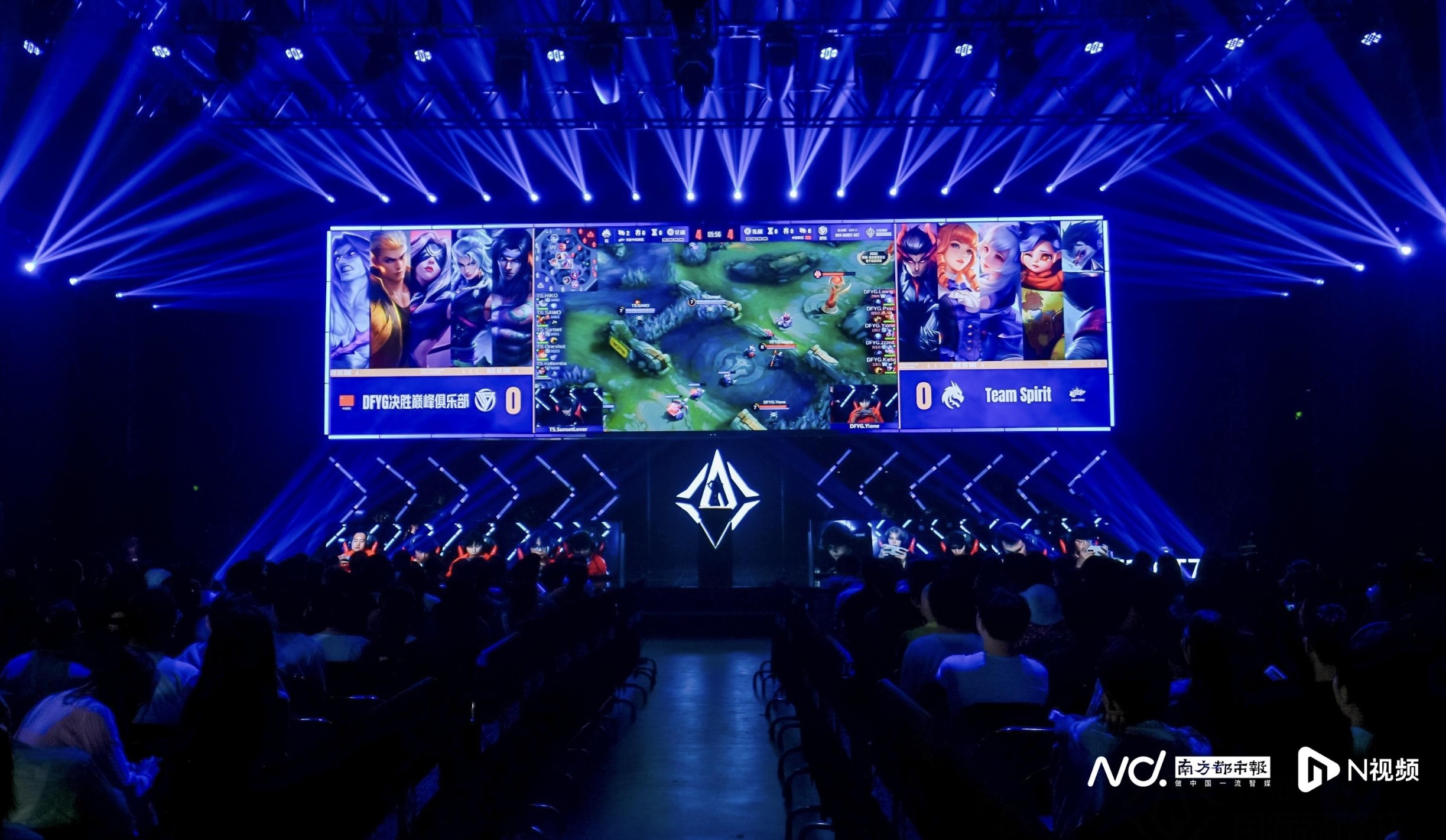
最高1000万元!广州首个游戏电竞产业专项扶持政策发布
Nan Fang Du Shi Bao· 2025-12-25 15:11
Core Viewpoint - Guangzhou has officially released its first special policy to support the development of the gaming and esports industry, aiming to enhance the city's cultural influence and showcase its innovative vitality [1] Group 1: Policy Overview - The policy includes 18 measures to support the gaming and esports industry, focusing on esports events, game products, and the entire industry chain [1][6] - The goal is to position Guangzhou among the most influential cities in the global gaming and esports industry by 2030 [6] Group 2: Financial Support - The policy provides financial support for hosting esports events, with a maximum subsidy of 5 million RMB for each high-level event [3][8] - Individual companies can receive up to 10 million RMB annually under this policy [5][7] - Support for esports clubs and alliances includes a maximum subsidy of 2 million RMB based on annual event investments [4][8] Group 3: Technological Integration - The policy encourages the integration of technologies such as AI, virtual reality, and the metaverse with the gaming industry, offering up to 3 million RMB for significant breakthroughs in game technology [4][7] Group 4: Game Development and Operations - Financial incentives are provided for the development of original games that reflect Chinese culture, with up to 200,000 RMB for each selected project [7] - Support for game products that have been online for 1 to 3 years includes a maximum subsidy of 5 million RMB based on revenue [7] Group 5: Talent and Infrastructure Development - The policy emphasizes the importance of talent cultivation in the gaming and esports sector, supporting educational institutions in developing relevant programs [7][8] - It also promotes the construction of professional esports venues to meet international standards [4][8] Group 6: Market Environment and Regulations - The policy aims to optimize the business environment for the gaming industry, including the establishment of service centers and the enforcement of intellectual property rights [7][8] - It includes measures to encourage investment in the gaming and esports industry, leveraging government funds to attract private capital [7]

消费电子行业迎来多重驱动 产业链估值有望提升
Mei Ri Jing Ji Xin Wen· 2025-12-25 14:57
Core Viewpoint - The consumer electronics industry is expected to experience a significant recovery and innovation cycle driven by AI technology, with new product launches and price increases anticipated in 2026, leading to improved valuations across the supply chain [1][7]. Group 1: Market Trends and Innovations - Major companies are set to launch a variety of AI-enabled consumer electronics, including AI smartphones, AI glasses, and AI speakers, marking the beginning of a new innovation cycle [2][3]. - Apple plans to expand its smartphone product line significantly, with at least seven new flagship models expected by 2027, including its first foldable iPhone [2][4]. - Google is collaborating with various partners to develop AI glasses and AR products, with the first models expected to hit the market in 2026 [3][4]. Group 2: Financial Performance and Valuation - The consumer electronics sector saw a 42.87% increase in the Shenwan Consumer Electronics Index from early 2025 to December 18, 2025, although it remains undervalued compared to other electronic sectors [6]. - As of December 18, 2025, the PE-TTM for the consumer electronics sector was 37.76 times, significantly lower than the semiconductor sector at 96.72 times [6]. - The sector's revenue and net profit grew by 27.12% and 34.95% year-on-year, respectively, in Q3 2025, indicating a positive financial trend [6]. Group 3: Demand and Pricing Dynamics - The global smartphone market showed signs of recovery, with a 2.6% year-on-year increase in shipments in Q3 2025, driven by high-end models and AI smartphones [7]. - Price increases for consumer electronics are anticipated due to rising storage chip costs, with major companies like Dell and HP considering price hikes for their products [7]. - The combination of structural price increases and cost-sharing strategies among industry players is expected to be implemented around the upcoming New Year [7]. Group 4: Opportunities in the Industry - The introduction of foldable smartphones by leading brands like Apple is expected to create a significant growth opportunity for the entire supply chain [8]. - The complexity of foldable devices is likely to increase demand for components such as batteries and PCBs, leading to potential price and volume increases in these segments [8]. - New product innovations will necessitate upgrades in production lines and automation processes, presenting new order opportunities for equipment manufacturers [8].
【甘快看】图解|AI换脸+免费送礼,专骗养老钱的新套路
Xin Lang Cai Jing· 2025-12-25 14:16
Core Insights - The article highlights the increasing sophistication of scams targeting the elderly, utilizing advanced technology and psychological manipulation to exploit their vulnerabilities [2][5][9]. Group 1: Types of Scams - Scammers are employing various tactics such as false investment schemes, AI-driven fraud, high-interest fundraising, and free giveaways to deceive elderly individuals [2][5]. - The use of technology concepts like "blockchain," "digital currency," and "metaverse" is prevalent, with scammers presenting these as low-risk, high-return investment opportunities [5]. - AI technology is being leveraged to create realistic fake personas and scenarios, making it difficult for elderly individuals to discern truth from deception [9]. Group 2: Psychological Manipulation - Scammers exploit the elderly's trust in authority and emotional connections, using AI-generated content to create a false sense of security [9]. - Three main types of AI scams are identified: fake policies presented by AI avatars, emotional manipulation through AI-generated personas, and deepfake technology to impersonate familiar voices [9]. Group 3: Precautionary Measures - It is advised that elderly individuals verify any information related to "policy benefits," "health subsidies," or "requests for help" through official channels to avoid falling victim to scams [10]. - The article emphasizes the importance of communication with family members to safeguard financial assets and avoid scams disguised as technological advancements [10].

12月25日重要资讯一览
Zheng Quan Shi Bao Wang· 2025-12-25 14:14
Group 1 - The Ministry of Commerce of China has expressed strong opposition to the U.S. decision to impose 301 tariffs on certain Chinese semiconductor products, stating that it does not recognize the conclusions of the U.S. 301 investigation and has lodged formal representations through the China-U.S. economic and trade consultation mechanism [2] - The Ministry of Commerce emphasized its commitment to maintaining the security and stability of global supply chains and facilitating compliant trade, particularly regarding rare earth magnet exports to the U.S. [2] - The Shanghai Stock Exchange has announced the scheduled disclosure dates for 2025 annual reports, with Chipway Technology set to disclose on February 3, 2026, followed by *ST Huawang and Shangwei Co. on February 13 and 14, 2026, respectively [2] Group 2 - The State Administration for Market Regulation has identified issues related to the "Antarctic Krill Oil" incident, highlighting non-compliance in the production and processing behaviors of some enterprises, and plans to implement new regulations to enhance supervision over food entrusted production [3] - The National Development and Reform Commission will hold a press conference on December 26 to discuss the work related to the National Venture Capital Guidance Fund [4] - The National Press and Publication Administration has approved 144 domestic online games for December 2025 [5] Group 3 - The Shanghai Municipal Government has issued an implementation plan to strengthen the open-source system, aiming to build a competitive open-source innovation hub by 2027, with goals including the establishment of 1-2 internationally influential open-source communities and the cultivation of 100 commercial open-source enterprises [5] - The Guangzhou Municipal Government has introduced 18 measures to support the development of the gaming and e-sports industry, encouraging technological innovation and collaboration with national-level projects [6] - A team from the National University of Defense Technology has set a new global record in magnetic levitation experiments, accelerating a test vehicle weighing tons to 700 km/h in just two seconds [6] Group 4 - Major silicon wafer companies have significantly raised their prices, with 183N silicon wafers priced at 1.4 yuan per piece, 210RN at 1.5 yuan, and 210N at 1.7 yuan, reflecting an average increase of 12%, attributed to rising upstream silicon material costs [6] Group 5 - Shanghai Port Bay reported that its commercial aerospace and perovskite solar business will account for less than 1% of the company's revenue in 2024 [8] - Huadian Technology has signed a contract worth 265 million yuan for six major pipelines for a supercritical power plant [8] - Yichang Technology will see the Chuzhou State-owned Assets Supervision and Administration Commission become its actual controller, with shares resuming trading on the 26th [8] Group 6 - Unisoc Microelectronics plans to establish a new company with a subsidiary of CATL to engage in automotive domain control chip business [9] - Baina Qiancheng intends to acquire 100% of Zhonglian Century's shares, with trading resuming on the 26th [9] - Zhongding Holdings plans to set up a joint venture to manufacture humanoid robots [9] Group 7 - Guangju Energy intends to collaborate with China General Nuclear Power Corporation in areas such as electricity sales and virtual power plants [10] - Zhongwei Co. has signed a strategic cooperation framework agreement with Xinwanda for solid-state batteries [10]
AI豪赌进入深水区:扎克伯格一边砸钱,一边开始勒紧Meta的钱袋子
Xin Lang Cai Jing· 2025-12-25 12:40
Core Insights - Mark Zuckerberg is making significant investments in artificial intelligence (AI) for 2025, but may tighten Meta's budget as costs for data centers and top AI researchers rise [1][5] - Meta raised $27 billion through the largest private credit deal in Wall Street history to fund its Hyperion supercomputer, but investor sentiment has soured as Meta's stock price has dropped 15.8% from its record high [1][5] - Analysts express concerns over Meta's reliance on advertising revenue compared to other tech giants like Alphabet and Amazon, which have cloud computing businesses [2][5] Financial Performance - Meta's spending growth in Q3 outpaced revenue growth, raising concerns about future profitability as depreciation costs from data centers begin to impact the income statement [1][5] - The Reality Labs division, which includes the metaverse, reported a loss of $4.4 billion last quarter, prompting significant budget cuts and a shift in focus towards more profitable projects [2][6] Strategic Shifts - Meta is reallocating investments from the metaverse to AI glasses and wearable devices, reflecting a strategic pivot in its Reality Labs portfolio [3][6] - The company aims to explore new AI revenue models through its Meta AI assistant and Messenger Bots, with over 1 billion monthly active users reported [6][7] Future Developments - Meta's Superintelligence Labs, led by Alexandr Wang, is under pressure as the latest Llama 4 model has not met user expectations, with new models like Mango and Avocado expected to launch in spring [7] - Analysts suggest that Meta could distribute its AI models through cloud service providers like Amazon and Microsoft, potentially creating a new revenue stream [4][7]
【环球财经】意大利反垄断机构要求美国元宇宙平台公司暂停对竞争对手限制
Zhong Guo Jin Rong Xin Xi Wang· 2025-12-25 06:52
Core Viewpoint - The Italian antitrust authority has ordered Meta to suspend certain practices that may exclude competitors' AI chatbot services from WhatsApp, raising concerns about market dominance and consumer harm [1][2]. Group 1: Regulatory Actions - The Italian Competition and Market Authority has initiated an investigation into Meta's integration of its AI service "Meta AI" into WhatsApp, potentially disadvantaging competitors [1]. - The authority's statement indicates that Meta's actions could limit market output, access, or technological development in the AI chatbot sector, harming consumer interests [1]. Group 2: Company Response - Meta has expressed disagreement with the antitrust decision, claiming it is fundamentally flawed [2]. - A spokesperson for Meta stated that other AI chatbots exert pressure on existing systems not originally designed to support such integrations, challenging the authority's view of WhatsApp as an "app store" [2].


重磅!广州发布首个游戏电竞产业专项扶持政策
Ge Long Hui· 2025-12-25 05:22
Core Viewpoint - Guangzhou government has officially released the "Eighteen Measures to Support the Development of the Game and E-sports Industry," marking the city's first dedicated policy to support this sector [1][2]. Group 1: Financial Support Measures - Establishment of a special fund for the game and e-sports industry in Guangzhou, with a maximum annual financial support of 10 million RMB per enterprise [3]. - A one-time subsidy of up to 5 million RMB will be provided to game operation units for outstanding game products that have been online for more than one year but less than three years, based on revenue sharing [3][4]. - A one-time support of up to 300,000 RMB will be awarded for projects that achieve significant breakthroughs in game technology [3]. Group 2: Technological Innovation and Development - Support for the integration of technologies such as artificial intelligence, virtual reality, and the metaverse with the game and e-sports industry [3]. - Encouragement for game companies to undertake national-level key laboratories and major projects, as well as to introduce high-quality results from national R&D projects for local transformation [3]. Group 3: Promotion of Original Game Development - Incentives for developing original games that incorporate traditional Chinese culture, with a maximum pre-subsidy of 2 million RMB for selected key projects [4]. - Support for small and medium-sized game projects with a maximum pre-subsidy of 200,000 RMB [4]. Group 4: E-sports Event Support - Financial support of up to 5 million RMB for hosting international and domestic high-level e-sports events [4]. - A maximum subsidy of 200,000 RMB for e-sports event alliances based on annual total investment [4]. Group 5: Market Development and Talent Cultivation - Initiatives to attract and cultivate market players in the game and e-sports sector, including unicorn companies and top game manufacturers [4]. - Support for educational institutions to establish talent training bases and relevant courses in the game and e-sports industry [4]. Group 6: Infrastructure and Environment Optimization - Support for the construction of professional e-sports venues that meet international event standards [4]. - Establishment of service centers for the game industry to provide convenient administrative services and protect intellectual property rights [4].
广州:支持人工智能等技术和游戏电竞产业深度融合,围绕游戏领域“卡脖子”技术开展研发
Xin Lang Cai Jing· 2025-12-25 05:02
Core Viewpoint - Guangzhou has officially released its first special policy to support the development of the gaming and esports industry, aiming to position the city among the most influential in the global gaming esports sector by 2030 [1] Group 1: Policy Measures - The policy includes 18 measures designed to promote the integration of technologies such as artificial intelligence, virtual reality, metaverse, and ultra-high-definition video with the gaming and esports industry [1] - It encourages gaming and esports companies to undertake national-level key laboratories, national industrial innovation platforms, and major national projects, as well as to attract high-quality results from national key R&D programs to be implemented in Guangzhou [1] - A one-time support reward of up to 3 million yuan will be granted to projects that achieve significant breakthroughs in gaming technology, as recognized by the city's gaming and esports industry authorities [1] Group 2: Cultural Integration and International Expansion - The policy supports gaming companies in organically integrating elements of traditional Chinese culture with gaming scenarios to promote the overseas expansion of gaming products [1] - For outstanding games that are released overseas and have a strong impact, a one-time subsidy of up to 300,000 yuan will be provided based on the annual actual settlement amount for each game product [1]