
能源安全

Search documents
成本高也签?乌克兰27年LNG协议,大国博弈下的无奈选择
Sou Hu Cai Jing· 2025-11-20 08:07
Core Viewpoint - Ukraine has signed a 27-year gas cooperation agreement with Greece's Atlantic-seeLNGTrade company to import liquefied natural gas (LNG) from the United States, potentially altering the energy landscape in Europe [1][8]. Group 1: Background and Context - Ukraine has historically relied heavily on Russian gas imports, which has raised significant energy security concerns [3]. - The ongoing conflict between Russia and Ukraine has intensified the need for Ukraine to accelerate its strategy to reduce dependence on Russian energy sources [5]. Group 2: Agreement Details - The agreement aims to establish a sustainable supply chain, including stable LNG supplies from the U.S. and the integration of infrastructure for energy logistics to Europe [6]. - Greece will play a crucial role as an energy hub, facilitating the efficient transfer of U.S. LNG to Ukraine, thus addressing Ukraine's lack of LNG receiving facilities [6]. Group 3: Implications for Stakeholders - The deal is seen as a win-win for all parties: Ukraine reduces its reliance on Russian gas, Greece activates its energy facilities, and the U.S. expands its market presence in Europe [10]. - The agreement represents a strategic move by the U.S. to diminish Russia's influence in the European energy market [8]. Group 4: Challenges and Risks - The long-term agreement may face challenges, particularly regarding the higher costs associated with U.S. LNG compared to Russian pipeline gas [10]. - Ukraine may encounter significant energy expenditure pressures similar to those faced by other countries importing U.S. LNG [11]. - Geopolitical changes could impact the execution of the agreement, given its 27-year duration and the potential for shifts in international relations [11][12]. Group 5: Future Outlook - The success of the agreement in providing stable energy supplies will require time to assess [14]. - The deal introduces new variables into the European energy landscape, suggesting that further changes in the market are likely in the coming years [14].

二十届四中全会定调:能源安全与绿色转型成 “十五五” 核心命题
Sou Hu Cai Jing· 2025-11-20 07:23
1. 新型能源体系:构建 "清洁为主、兜底有力" 的供应格局 根据规划建议,新型能源体系以非化石能源为供应主体、化石能源为兜底保障、新型电力系统为关键支撑、绿色智慧节约为用能导向。国家能源 局明确,到 "十五五" 末,新增用电需求绝大部分将由清洁能源满足,火电将从 "主力电源" 转型为 "调节性电源",新能源将成为电力供应的核心 力量。 前三季度的能源数据已显现转型成效:全国可再生能源装机接近 22 亿千瓦,风电、太阳能发电合计突破 17 亿千瓦,新增装机占比达 84.4%;风 电光伏发电量同比增长 28.3%,占全社会用电量的 22%,甚至超出同期第三产业用电量总和。这背后,是 "人工智能 + 能源""新型储能规模化建 设""绿电直连" 等一系列政策 "组合拳" 的持续发力,为十五五能源转型铺平道路。 2025 年 10 月,党的二十届四中全会在北京胜利召开,审议通过的《中共中央关于制定国民经济和社会发展第十五个五年规划的建议》,为未来 五年能源发展锚定总航向。全会明确提出 "加快建设新型能源体系""建设能源强国" 的重大任务,将能源安全与绿色转型提升至中国式现代化建设 的战略高度,这既是对 "十四五" 能 ...
煤化工与再生塑料:能源安全与循环经济的博弈与共存
Xin Lang Cai Jing· 2025-11-20 02:16
Core Insights - The coal chemical industry in China is experiencing unprecedented expansion due to the country's resource endowment and energy security strategy, with domestic polypropylene production capacity nearing 50 million tons by October 2025, and an additional 7.43 million tons expected in 2026, of which 58% will be coal-based [1][3] - The cost structure of coal chemical processes, particularly in coal-to-olefins, shows a significant cost advantage over oil-based processes, with coal-based olefins costing approximately 3,900 RMB per ton compared to 5,500 RMB per ton for oil-based, translating to a price advantage of 800-1,500 RMB per ton for coal-based polyethylene and polypropylene [1][2] Coal Chemical Technology and Cost Advantages - Coal chemical processes convert coal into gas, liquid, and solid fuels and chemicals, with gasification technology being a core component due to its ability to produce syngas and reduce emissions [1] - Recent technological innovations, such as the DMTO-III process by Baofeng Energy, have further reduced production costs, with methanol consumption decreasing from 3 tons to 2.66 tons per ton of product, and additional savings from using green electricity [2] Impact on Plastic Raw Material Market - The expansion of coal chemical capacity is leading to an imbalance in the plastic raw material market, with polypropylene demand growth at only 6% by 2025, while capacity is expected to grow by over 10%, potentially creating a supply-demand gap exceeding 7 million tons [3] - The price of recycled plastics is under pressure due to this supply-demand mismatch, with recycled HDPE prices expected to range between 6,200-8,500 RMB per ton, while coal-based polypropylene prices are positioned within this range, leading to direct competition [3] Strategies for the Recycled Plastic Industry - The recycled plastic industry can navigate the challenges posed by coal chemicals by focusing on technological upgrades, market segmentation, and compliance operations to build differentiated competitive advantages [4] - Companies like Wuhu Baolute Plastics are investing in advanced sorting and cleaning technologies to enhance product purity and performance, thereby reducing reliance on low-price competition [6] - Targeting high-value application scenarios, such as food packaging and automotive parts, allows recycled plastic companies to avoid direct competition with coal-based products and establish market barriers [8] Long-term Value of Circular Economy and Policy Support - The development of coal chemicals aligns with national energy security strategies, while the growth of recycled plastics is driven by circular economy principles and carbon reduction goals, indicating that both can coexist and meet different market needs [13][17] - Policies supporting the recycled plastic industry, such as tax incentives and mandates for recycled content, are expected to boost market demand significantly, with projections indicating a total demand for HDPE recycled pellets exceeding 3 million tons by 2025 [13] - The transition from traditional low-end applications to high-end uses for recycled HDPE is anticipated, driven by policy and market demand, with significant performance improvements expected from advanced recycling technologies [14]
上合组织天津峰会丨上海合作组织成员国元首理事会关于能源可持续发展的声明
Xin Hua She· 2025-11-20 01:26
Core Points - The Shanghai Cooperation Organization (SCO) member states emphasize the need to maintain energy security and market stability while promoting fair energy transformation according to national conditions [2][3] - The declaration reaffirms commitment to the United Nations 2030 Sustainable Development Agenda Goal 7, ensuring access to affordable, reliable, and sustainable modern energy for all [2] - The member states call for expanded cooperation in practical collaboration, technological innovation, and capacity building to achieve sustainable energy development [3] Group 1 - The global energy landscape is undergoing profound adjustments, necessitating a focus on energy security and ecological protection [2] - Member states aim to implement joint projects in the energy sector, including the construction of new energy infrastructure and upgrading existing facilities [3] - There is a call for investment cooperation based on the priority development directions of each member state [3] Group 2 - The cooperation will include exploration, development, utilization, and maintenance of energy resources, as well as trade, project investment, construction, and operation [3] - The member states emphasize the importance of developing and utilizing advanced energy technologies and fostering research collaboration among SCO member research institutions [3] - There is a focus on strengthening professional talent training and creating favorable conditions for sharing experiences, knowledge, and technological achievements in the energy sector [3]
持续夯实高质量发展安全根基
Jing Ji Ri Bao· 2025-11-20 00:41
Group 1: Innovation and Technology - The current technological revolution and industrial transformation are characterized by unprecedented levels of innovation, particularly in fields like artificial intelligence and quantum communication, which are reshaping global order and development patterns [2] - China's original innovation capabilities remain relatively weak, especially in critical core technologies, leading to risks in certain industrial sectors [2] - There is a need to enhance security guarantees while promoting innovation and industrial upgrading, ensuring that core technologies are firmly in national control [2] Group 2: Economic Coordination and Development - Long-standing issues of uncoordinated development in China manifest as imbalances in industrial growth and regional disparities [3] - Emphasis on supply-side structural reforms is crucial to maintain the stability of industrial and supply chains while fostering new industries and upgrading traditional sectors [3] - Regional coordination and urban-rural integration are essential for optimizing productivity distribution and reducing disparities [3] Group 3: Ecological and Energy Security - Respecting and protecting nature is vital for building a modern socialist country, necessitating a focus on ecological and energy security [4] - Continuous improvement of environmental quality and a transition to green, low-carbon development are prioritized to enhance ecological resilience [4] - A multi-faceted energy supply system that includes traditional, renewable, and new energy sources is essential for ensuring energy security [4] Group 4: Open Economy and Security - Increased openness in China's economy necessitates a heightened focus on security, particularly in foreign trade and investment [5] - Diversifying trade partnerships and aligning with high-standard international economic rules are critical to mitigate risks associated with over-reliance on single partners [5] - As Chinese enterprises expand globally, there is a need for robust policy guidance and emergency management systems to protect overseas interests [5] Group 5: Shared Development and Social Equity - Shared development aims to address social equity issues, ensuring that economic growth benefits all citizens and fosters social stability [6] - Enhancing public services in education, healthcare, and social security is essential for improving the quality of life and ensuring equitable access [6] - Promoting high-quality employment is fundamental to achieving social stability and ensuring that laborers share in the economic development outcomes [6]
周绍东:持续夯实高质量发展安全根基
Jing Ji Ri Bao· 2025-11-20 00:40
Group 1: Innovation and Technology - The current technological revolution and industrial transformation are characterized by unprecedented levels of innovation, particularly in fields like artificial intelligence and quantum communication, which are reshaping global order and development patterns [2] - China's original innovation capabilities remain relatively weak, especially in critical core technologies, leading to risks in certain industrial sectors [2] - There is a need to enhance security guarantees while promoting innovation and industrial upgrades, focusing on mastering core technologies to ensure national economic security [2] Group 2: Economic Coordination and Development - Long-standing issues of uncoordinated development in China manifest in industrial and regional disparities, necessitating a focus on supply chain stability and the promotion of new industries [3] - The strategy for regional coordination and urban-rural integration aims to optimize productivity distribution and reduce urban-rural gaps [3] Group 3: Ecological and Energy Security - Emphasizing the importance of ecological and energy security, there is a call for a green and low-carbon transformation of development methods, alongside improving ecological environment quality [4] - The establishment of a multi-faceted energy supply system that includes traditional fossil fuels, new energy, and renewable energy is crucial for ensuring energy security [4] Group 4: Open Economy and Security - Increased openness in China's economy necessitates a focus on security, particularly in foreign trade and investment, to avoid over-reliance on single trade partners [5] - The "Belt and Road" initiative and other international collaborations require robust policy guidance and emergency management to protect overseas interests [5] Group 5: Shared Development and Social Equity - Shared development aims to address social equity issues, ensuring that development benefits are distributed fairly among the population [6] - Enhancing public services in education, healthcare, and social security is essential for improving the overall well-being and stability of society [6]
中经评论:深海采火照未来
Jing Ji Ri Bao· 2025-11-20 00:20
历次运动会的火炬点燃方式都备受瞩目。随着十五运会主火炬在万众瞩目中踏浪而起,人们记住的 是那道划过水幕的矫健身影,是圣火熊熊燃起的激情瞬间。但很少有人注意到,火炬手擎起的那个名 为"绽放"的火炬里,跃动的火焰有着怎样不同寻常的"身世"——它采自南海1522米深的海底,是体育运 动史上首次在深海海底原位获取"源火";它燃烧的也不是寻常燃料,而是一种被称为"可燃冰"的神秘物 质。这簇冰与火交织的火焰,如何叩开未来能源的大门? 简单来说,可燃冰是天然气和水分子在高压低温下,形成的类冰状固态结晶物质。它就像一块块被 冰封印的天然气,外表看像普通冰块,却能在点燃后释放出熊熊烈焰,科学家将其喻为"冰封的能源宝 库"。它能量密度极高,1立方米可燃冰分解后,可释放出约160立方米至180立方米的天然气,相当于把 天然气压缩了上百倍。 这种独特的"能量块"储量巨大。据估算,全球可燃冰的资源储量相当于目前已知煤、石油、天然气 总和的2倍以上。这意味着,谁先掌握其商业化开采技术,谁就可能在未来能源版图上获得战略主动 权。更关键的是,它燃烧后几乎不产生粉尘,二氧化碳排放也远低于煤炭,是一种相对清洁的化石能 源。在风电、光伏等新能源尚 ...
东吴证券晨会纪要-20251120
Soochow Securities· 2025-11-19 23:30
Macro Strategy - The report anticipates that the monetary policy in 2026 will continue to be supportive, with potential for 1-2 rate cuts and 1-2 reserve requirement ratio reductions [1][9][10] - The 10-year government bond yield is expected to fluctuate between 1.70%-2.0%, while the 30-year yield may range from 1.90%-2.30% [1][9] Fixed Income - The report outlines key valuation indicators for urban investment public REITs, including operational indicators like current revenue and distributable amount, valuation indicators such as expected REITs dividend rate and P/FFO multiples, liquidity indicators like daily turnover rate, and price indicators like daily price fluctuation [2][12] - Recommended REITs include Zhejiang Merchants Hu-Hang-Ning REIT and Zhongjin Anhui Traffic Control REIT in transportation infrastructure, Zhongjin Hubei Science and Technology REIT and E Fund Guangkai Industrial Park REIT in park infrastructure, and Guotai Junan City Investment Wide Court Rental Housing REIT in affordable rental housing [2][12] Industry - The 2025 Double Eleven sales totaled approximately 16,950 billion yuan, reflecting a year-on-year growth of 14.2%, with comprehensive e-commerce platforms achieving 16,191 billion yuan, up 12.3% [3][14] - Instant retail showed remarkable growth, with sales reaching 670 billion yuan during Double Eleven, marking a 138% increase year-on-year [3][14] - The report suggests that the extended sales period significantly contributed to the overall growth, and highlights the importance of focusing on fast-growing sectors like pet products [3][14] Coal Industry - The coal price is expected to fluctuate in a weak equilibrium state in 2026, with a reasonable price expectation around 770 yuan/ton [4][15] - The report emphasizes the importance of energy security and suggests focusing on companies like Guanghui Energy and Haohua Energy, which are expected to benefit from increased production and price elasticity [4][15] - High dividend logic is highlighted, with expectations that the dividend yield for China Shenhua and Shaanxi Coal will decrease from around 4.5% in 2025 to approximately 3.5% by mid-2026 [4][15] Company Analysis - Xiaomi Group reported a Q3 revenue of 1131.2 billion yuan, a year-on-year increase of 22.3%, with a net profit of 113.1 billion yuan, up 80.9% [6][18] - The automotive segment achieved profitability for the first time, with a revenue of 290.1 billion yuan, reflecting a 199.2% increase year-on-year [6][18] - Xpeng Motors reported a Q3 revenue of 203.8 billion yuan, a 101.8% increase year-on-year, with a net loss of 3.8 billion yuan, which is an improvement from the previous quarter [8][22] - Canadian Solar (CSIQ) expects Q4 sales between 13 billion to 15 billion USD, with a significant increase in storage shipments projected for 2026 [7][21]
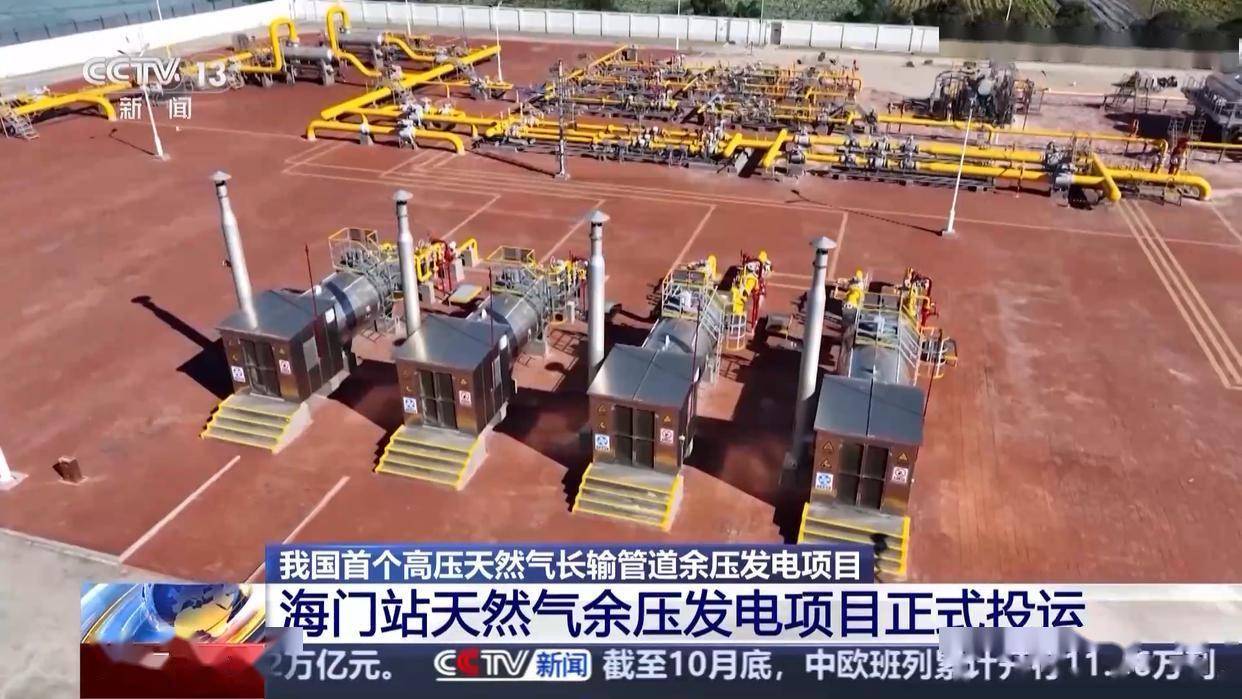
突发特讯!中国首个高压天然气长输管道余压发电项目正式投运,引发高度关注
Sou Hu Cai Jing· 2025-11-19 09:35
Core Insights - The launch of the gas pressure recovery power generation project at Haimen Station in Jiangsu marks a significant advancement in China's energy sector, utilizing a self-developed "pressure recovery system" to generate 3 million kilowatt-hours of clean electricity annually, equivalent to removing 2,000 tons of CO2 from the atmosphere [1] Group 1: Energy Waste and Technological Innovation - Natural gas long-distance pipeline pressure regulating stations have historically been areas of energy waste, with energy losses from pressure regulation equivalent to the output of a medium-sized thermal power plant annually [4] - The project employs innovative technologies such as 3D printing for turbine manufacturing and adjustable flow guidance to enhance efficiency and extend equipment lifespan from an industry average of 5 years to 15 years [4][6] Group 2: Domestic Technology and Energy Security - The power generation unit at Haimen Station is fully domestically produced, achieving 92% efficiency at a pressure of 10 MPa and a flow rate of 3,000 cubic meters per second, challenging international norms [6] - The dual insurance model of the project allows for seamless operation between the pressure recovery system and traditional pressure regulating devices, significantly enhancing the resilience of China's natural gas supply [8] Group 3: Global Implications and Market Dynamics - If the entire national pipeline pressure resource of 42,000 kilowatts is developed, it could generate 3.5 billion kilowatt-hours of electricity annually, replacing 1.2 million tons of standard coal and reducing CO2 emissions by 9 million tons [8] - The project exemplifies China's potential to export its energy technology solutions along the Belt and Road Initiative, tapping into over 100,000 kilometers of long-distance pipelines with significant pressure recovery resources [10][11] Conclusion: The Chinese Paradigm of Energy Revolution - The advancements at Haimen Station signify a paradigm shift in energy transition, emphasizing practical solutions to real challenges rather than mere numerical achievements, and showcasing China's commitment to innovation in the global energy landscape [12][14]
储能系列报告(一):从“配角”到“主角”,储能前景广阔
Ping An Securities· 2025-11-19 05:11
Investment Rating - The report maintains an "Outperform" rating for the electric equipment and new energy sector [1] Core Viewpoints - The rapid development of new energy sources poses challenges to the power system's regulation and support capabilities, necessitating a transition from a "source-grid-load" model to a "source-grid-load-storage" model, with energy storage becoming a crucial foundation for the new power system [2][11] - The demand for energy storage is expected to grow significantly due to energy security and carbon neutrality strategies, with China's wind and solar installed capacity projected to continue increasing [2][30] - As of September 2025, China's new energy storage capacity has exceeded 100GW, representing over 40% of the global total, but the penetration rate remains low compared to the overall power system, indicating substantial growth potential [2][41] Summary by Sections Concept - Energy storage refers to devices that convert and store electrical energy, acting as a "reservoir" in the power system. It helps balance real-time energy production and consumption, improving power quality and efficiency [7][9] Logic - The demand for energy storage is driven by the need for energy security and carbon neutrality, with significant growth expected in wind and solar installations. By the end of 2024, China's wind and solar installed capacity is projected to reach 1.4 billion kW, accounting for 42% of total power generation capacity [2][19] - The penetration of new energy storage is still low, with only 2.7% of total installed capacity and 5.9% of new energy capacity as of September 2025, indicating ample room for growth [2][41] Technology Routes and Installation Status - The report outlines various technology routes for energy storage, including pumped hydro storage and electrochemical storage, with lithium batteries being the primary growth driver. The current installed capacity of new energy storage in China is substantial but still small relative to the overall power system [3][41] Investment Recommendations - The report suggests that the total installed capacity of wind and solar will continue to grow, and the penetration rate of energy storage has significant room for improvement. It recommends investing in leading companies in the energy storage sector, such as Sunshine Power and Haibo Technology, which are well-positioned to capitalize on the growth opportunities in both domestic and international markets [2][45]