
A股市场

Search documents
指数回调 A股中长期慢牛趋势未变
Sou Hu Cai Jing· 2025-11-23 16:08
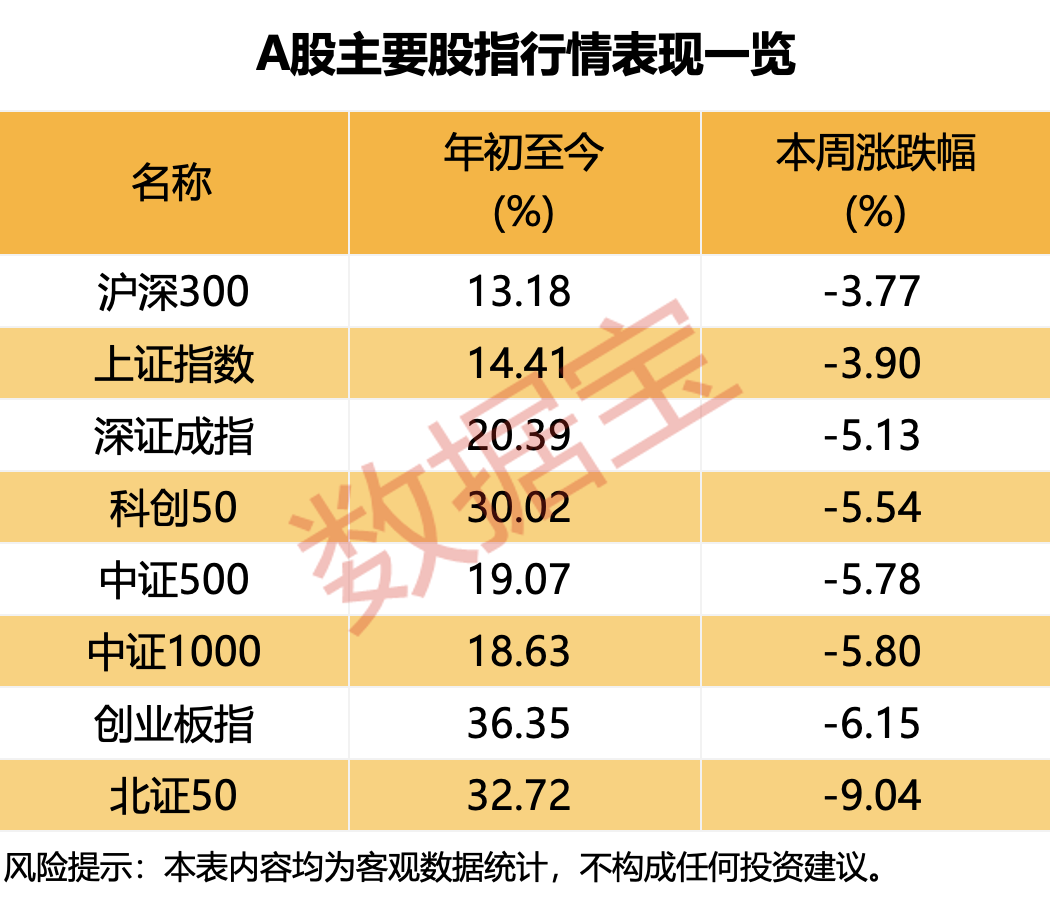
Group 1 - A-shares experienced a significant decline last week, with the Shanghai Composite Index dropping 3.90% to close at 3834.89 points, and the Shenzhen Component Index falling 5.13% to 12538.07 points [1] - The ChiNext Index saw a weekly drop of 6.15%, closing at 2920.08 points, and fell below the 3000-point mark on November 21, with a single-day decline of 4.02% [1] - Over 5000 stocks declined on Friday, indicating a continuous sell-off trend, which has severely impacted investor confidence [1] Group 2 - Despite short-term pressures, several brokerages maintain that the long-term slow bull trend of A-shares remains unchanged [2] - Analysts suggest that the current mid-term adjustment is in its early stages, and investors should remain patient as the market faces potential downward pressure from global stock markets [2] - The long-term upward trend is expected to continue, with a potential transition into a "second phase" after the current adjustments [2] Group 3 - The market's overall resilience is noted, with long-term funds providing support, which reduces the likelihood of significant declines [3] - After a 200-point pullback, the market is expected to have a foundation for recovery, although uncertainties remain regarding global economic factors and domestic industry performance [3] - Investors are advised to maintain a core position of 50-60% and to be cautious of stocks that have risen significantly without strong earnings support [3]
市场能否重回4000点?这一板块获大幅看好!
Zheng Quan Shi Bao Wang· 2025-11-23 12:52
Market Performance - The A-share market has shown poor profitability this week, with only 11% of respondents reporting profits, while 89% reported losses [7] - Major indices such as the Shanghai Composite Index and the Shenzhen Component Index experienced declines, with the Shanghai Composite Index down 3.90% this week [2] - The overall market sentiment indicates a bearish outlook, with 38% of respondents expecting the market to trade sideways and unable to reach 4000 points [8] Sector Performance - All major industry indices saw declines, with the power equipment sector leading the losses at 10.54%, followed by comprehensive and basic chemical sectors [3] - The banking sector experienced the smallest decline at 0.89%, indicating relative stability compared to other sectors [3] Fund Flow - A total of 249.32 billion yuan in net outflow was recorded from A-share main funds this week, with all 31 major industry sectors experiencing net outflows [3] - The power equipment, electronics, and pharmaceutical sectors saw the highest net outflows, amounting to 50.52 billion yuan, 38.39 billion yuan, and 25.76 billion yuan respectively [3] Investor Sentiment - A survey indicated that 26% of investors increased their positions, while 18% reduced their holdings, reflecting a cautious approach to market conditions [4] - The proportion of investors holding less than 50% of their positions increased, indicating a shift towards more conservative investment strategies [4] Future Outlook - Respondents remain optimistic about the long-term trend of the A-share market, with 50% believing the Shanghai Composite Index could reach 4000 points [10] - The military industry sector has seen a significant increase in positive sentiment, rising by 9 percentage points to 12%, indicating growing interest in this area [12] Industry Trends - The military industry is expected to experience significant growth driven by domestic and international demand, with key factors including the "14th Five-Year Plan" and military trade developments [13] - Analysts predict a shift towards high-end demand and improved financial health within the military sector, with a focus on new combat capabilities and military-civilian integration [13]

和讯投顾阮军:放量大跌,行情结束了吗?
Sou Hu Cai Jing· 2025-11-21 12:26
Market Overview - The market experienced a significant drop, breaking through the 3850-point level, but this is viewed as a normal correction after a bullish run, rather than the end of a bull market [1] - The increase in trading volume during the drop indicates that there is still interest in the market, with volumes rising from approximately 1.70 trillion to around 2 trillion [1] Economic Indicators - The macroeconomic fundamentals have not shown significant deviations, supporting the continuation of the bull market [1] - There is a notable presence of incremental capital inflow, which is essential for sustaining the bullish trend [1] Market Sentiment - Despite recent declines, there are indicators suggesting that the bull market is not over, with key sectors like technology and profit batteries performing well [2] - The market is expected to confirm a bottom around the 3834-point level, with potential for a rebound if this level holds [3] Future Outlook - The outlook for the A-share market remains optimistic, with expectations for a recovery in corporate earnings by 2026, contingent on macroeconomic stability and inflation trends [3] - Investors are advised to monitor weekend news and external market performances, particularly from US markets, as these will influence opportunities in the A-share market [3]
沪指跌超2% 创业板指、深证成指跌超3%
Shang Hai Zheng Quan Bao· 2025-11-21 06:57
Core Viewpoint - The A-share market is experiencing a significant decline, with major indices dropping sharply on November 21, 2023 [1] Market Performance - As of 10:54 AM, the Shanghai Composite Index fell by 2.16%, the Shenzhen Component Index decreased by 3.02%, and the ChiNext Index dropped by 3.44% [1] - The sectors most affected include the lithium battery supply chain, computing hardware, photovoltaic, and storage chips, which are leading the declines in the market [1]

私募保持高仓位运作 百亿私募仓位攀升至87%
Zheng Quan Shi Bao Wang· 2025-11-21 04:17
Group 1 - The A-share market has shown a notable profit effect this year, leading to increased enthusiasm for market entry, with the private equity position index reaching a year-high of 81.13% as of November 14, 2025, up 1.05 percentage points from the previous week [1] - The position index for private equity firms with over 10 billion yuan in assets has significantly increased, with full-position firms accounting for 73.41% of the total, while the proportion of medium-position firms has decreased to 18.47% [2] - The rise in private equity positions is driven by three main factors: the upward trend of the A-share market since August, positive policy signals for the long-term health of the capital market, and the ability of large private equity firms to capture structural opportunities through concentrated investments in sectors like technology and innovative pharmaceuticals [2] Group 2 - There has been a high enthusiasm for new product registrations among private equity institutions, with 10,608 new private equity securities investment funds registered this year, a 100.76% increase compared to 5,284 products in the same period of 2024 [3] - Stock strategy remains the dominant strategy for new registrations, with 6,954 new stock strategy private equity funds accounting for 65.55% of the total, followed by multi-asset strategies at 14.08% [3] - The number of new registrations for futures and derivatives strategy private equity funds is 1,062, making up 10.01% of the total, while bond strategy and combination fund private equity products account for less than 5% each [3]
合煦智远基金杨志勇:对A股市场保持乐观 消费投资配置时机已至
Zhong Zheng Wang· 2025-11-21 02:49
Group 1: Market Outlook - The A-share market is expected to continue a trend of oscillating upward, with 2024 being a pivotal year for market performance [1] - The long-term growth trajectory of China's economy is a fundamental support for the A-share market [1] - The current low interest rate environment is likely to persist, enhancing the value of equity asset allocation [1] Group 2: Consumption Investment - A favorable configuration opportunity for consumption investment has emerged, with a significant contribution expected from the consumption sector to A-share investments [2] - Traditional consumer stocks with improved competitive landscapes, strong cash flows, and high dividend yields are identified as valuable investment targets [2] - New consumption and service consumption sectors should be explored for growth and innovation potential, with a focus on global market expansion [2] Group 3: Risk Factors - Attention should be paid to the economic recovery process, including factors affecting consumer capacity and willingness, such as prices, employment, and disposable income growth [3] - The effectiveness and timing of consumption-boosting policies need to be monitored, as policy transmission takes time [3] - Industry competition dynamics, particularly in sectors with high brand saturation, should be observed for potential impacts on supply-demand balance and pricing [3]
A股三大指数均跌超1%!沪指跌1.01%,深证成指跌1.72%,创业板指跌1.94%,现报2983.338点
Ge Long Hui· 2025-11-21 02:13
Market Performance - The Shanghai Composite Index fell by 1.01%, currently at 3891.488 points [1] - The Shenzhen Component Index decreased by 1.72%, currently at 12757.258 points [1] - The ChiNext Index dropped by 1.94%, currently at 2983.338 points [1] Detailed Index Changes - Shanghai Composite Index: 3885.92, down by 45.13 points, or 1.15% [2] - ChiNext Index: 2964.39, down by 77.95 points, or 2.56% [2] - Shenzhen Component Index: 12709.78, down by 271.04 points, or 2.09% [2] - STAR Market 50 Index: 1298.67, down by 29.52 points, or 2.22% [2] - North China 50 Index: 1425.77, down by 19.77 points, or 1.37% [2] - CSI 300 Index: 4498.03, down by 66.92 points, or 1.47% [2] - SSE 50 Index: 2980.14, down by 28.15 points, or 0.94% [2]

A股三大指数走弱,沪指跌1.15%,深成指跌2.09%,创业板指跌2.56%!锂电产业、算力硬件、存储芯片领跌,超4300股下跌
Ge Long Hui· 2025-11-21 02:13
Market Performance - The A-share major indices weakened, with the Shanghai Composite Index falling by 1.15% to 3885.92, a decrease of 45.13 points [1][2] - The Shenzhen Component Index dropped by 2.09% to 12709.78, down 271.04 points [1][2] - The ChiNext Index declined by 2.56% to 2964.39, a decrease of 77.95 points [1][2] - The Sci-Tech Innovation 50 Index fell by 2.22% to 1298.67, down 29.52 points [2] - The CSI 300 Index decreased by 1.47% to 4498.03, down 66.92 points [2] - The Shanghai 50 Index dropped by 0.94% to 2980.14, down 28.15 points [2] Sector Performance - The lithium battery industry chain, computing hardware, and storage chips experienced significant declines, leading the market downturn [1]
【机构策略】A股近期震荡整理相对充分 指数下探空间或有限
Zheng Quan Shi Bao Wang· 2025-11-21 01:05
东吴证券认为,周四,A股市场高开低走,震荡调整。盘面上,海南、银行等板块涨幅居前,美容护 理、光伏设备、食品加工等板块跌幅居前。走势上看,上证指数虽未跌破周二低点3926点,但收盘也很 接近,且周四阴线反包周三的震荡十字,技术上短期往3900点整数关口下探概率加大。创业板指数亦是 高开低走,收盘跌破60日均线,且近乎最低点收盘,创业板指数技术走势看继续向3000点整数关口甚至 5月线需求支撑的概率加大。 财信证券认为,周四,在隔夜美股以及当天日韩市场转暖的背景下,A股高开低走,成交额小幅缩量, 反映出当前市场情绪仍偏谨慎,需继续等待大盘出现明显的企稳回升信号。短期内,随着大盘近期震荡 消化整理已相对充分,指数层面下探空间或相对有限,但当日大盘高开低走的行情给市场带来了一定不 确定性。中期来看,在全球科技投资热情不减、"反内卷"政策持续推进、居民储蓄入市等因素支撑下, 本轮慢牛行情的根基并未动摇,后续A股指数仍存在继续走强的基础。 东莞证券认为,周四,A股市场高开低走,缩量调整。盘面上,建筑材料、综合、银行、通信和房地产 等板块涨幅靠前;美容护理、煤炭、电力设备、石油石化和商贸零售等板块跌幅靠前。当前市场仍处于 ...
市场分析:银行地产行业领涨,A股震荡整固
Zhongyuan Securities· 2025-11-20 09:29
Market Overview - On November 20, the A-share market experienced slight fluctuations, with the Shanghai Composite Index facing resistance around 3967 points[2] - The Shanghai Composite Index closed at 3931.05 points, down 0.40%, while the Shenzhen Component Index fell 0.76% to 12980.82 points[7] - Total trading volume for both markets was 17,228 billion yuan, slightly lower than the previous trading day[3] Sector Performance - Strong performers included banking, real estate, energy metals, and cement materials, while battery, beauty care, photovoltaic equipment, and mining sectors lagged[3] - Over 70% of stocks in the two markets declined, with energy metals and cement materials showing the highest gains[7] Valuation Metrics - The average price-to-earnings (P/E) ratios for the Shanghai Composite and ChiNext indices are 16.19 times and 48.48 times, respectively, above the median levels of the past three years[3] - The current market is in a consolidation phase, with the Shanghai Composite Index likely to stabilize around the 4000-point mark[3] Investment Strategy - Investors are advised to maintain reasonable positions and avoid chasing highs or selling lows, while closely monitoring macroeconomic data and policy changes[3] - Short-term investment opportunities are suggested in sectors such as energy metals, insurance, banking, and cement materials[3] Risk Factors - Potential risks include unexpected overseas economic downturns, domestic policy changes, and macroeconomic disturbances[4]
