
产业转型升级

Search documents
未来中国出口走势预测:订单占比将进一步提升
Xin Lang Cai Jing· 2026-02-18 07:00
Core Insights - Export has been a significant driver of China's economic growth in recent years, but data from the WTO indicates that from 2022 to the first three quarters of 2025, China's export growth in USD terms is below the global average [1] - The share of China's exports in the global market has declined from a peak of 14.9% in 2021 [1] - Chief Economist Li Xunlei from Zhongtai International highlights that the divergence between intuition and data is due to the drag from export prices and exchange rates [1] Group 1 - Excluding the effects of export prices and exchange rates, China's export volume share in the global market has been steadily increasing, rising from 13.2% in 2019 to 17.0% in the first three quarters of 2025 [1] - This increase is attributed to industrial transformation and upgrading, a decline in export product prices, and the Belt and Road Initiative opening new markets [1] - Li Xunlei anticipates that China's export volume share will continue to rise, supported by the 20th Central Committee's focus on technology and industrial upgrades [1] Group 2 - The short-term export price advantage is expected to remain intact, and improvements in the external environment are anticipated [1] - The negative impact of price factors is expected to diminish, with the RMB exchange rate likely to stabilize or appreciate [1] - Li Xunlei estimates that by 2026, China's export share in the global market will rebound, stabilizing around 17% by 2030, which represents an increase of over 2 percentage points from current levels, indicating resilience in year-on-year export growth [1]
“一带一路”战略助力中国出口多元化
Xin Lang Cai Jing· 2026-02-18 06:59
Core Viewpoint - From 2019 to 2025, China is diversifying its export destinations through the "Belt and Road" initiative, increasing its global export share from 13.2% in 2019 to 17.0% in the first three quarters of 2025, despite rising protectionism in developed economies [1] Group 1: Export Market Diversification - China's market share in ASEAN, Africa, Russia, India, and Mexico has increased by 3.26, 1.44, 0.75, 0.61, and 0.51 percentage points respectively, mitigating the impact of external environmental changes [1] - The proportion of exports from the US, EU, Japan, South Korea, and the UK to China has decreased during the same period [1] Group 2: Factors Driving Export Growth - The rapid increase in China's export share is attributed to three main factors: accelerated industrial transformation and upgrading, a "strong supply and weak demand" scenario leading to continuous price declines for Chinese export products, and the successful implementation of the "Belt and Road" strategy [1] - These factors are expected to persist in the short term, with further increases in China's export share anticipated in the coming years [1] Group 3: Future Projections - The stable appreciation of the RMB against the USD and increased use of RMB in international trade financing and payment will support China's exports [1] - By 2030, China's export share is projected to stabilize around 17% of the global total [1]
李迅雷:如何理解出口引擎的“数据错觉”
Jing Ji Guan Cha Bao· 2026-02-18 05:50
Core Viewpoint - The article discusses the divergence between intuition and data regarding China's export growth, highlighting that while exports are traditionally seen as a key driver of economic growth, recent data shows a decline in China's export growth compared to global averages [1][2]. Group 1: Export Growth Analysis - According to WTO data, only in 2024 did China's export growth in USD terms exceed the global average over the past four years, with lower growth rates observed in 2022, 2023, and the first three quarters of 2025 [1]. - China's share of global exports has remained relatively stable, fluctuating between 14% and 15% from 2020 to the first three quarters of 2025, with a peak of 14.9% in 2021 [1][2]. - The actual effectiveness of China's exports as a GDP driver is masked by price and exchange rate factors, but when these are adjusted for, the quantity of exports as a share of global totals has been increasing [2][3]. Group 2: Factors Influencing Export Performance - The increase in China's export quantity share from 13.2% in 2019 to 17.0% by the first three quarters of 2025 is attributed to three main factors: accelerated industrial upgrading, declining export prices, and the diversification of markets through the Belt and Road Initiative [3][4]. - The share of high-value-added products in China's exports has risen, with capital-intensive goods increasing from 56.80% in 2019 to 62.97% in 2025, while labor-intensive and raw material exports have decreased [3]. - The prices of Chinese export products have been declining, with a cumulative drop of 10.1% in export prices from 2023 to 2025, reflecting a "strong supply, weak demand" environment [3][4]. Group 3: Market Diversification and Future Outlook - The Belt and Road Initiative has successfully opened new markets, with significant increases in export shares to ASEAN, Africa, Russia, India, and Mexico, while shares to the US and EU have decreased [4][5]. - Future predictions indicate that China's export quantity share will continue to rise due to ongoing industrial upgrades, stable export prices, and improved external conditions [5][6]. - The potential for further increases in China's global export share is estimated to be around 2 percentage points by 2030, suggesting continued resilience in export growth [11].
春晚超20家赞助商花式露出,春晚王菲耳环售价超3000元
Xin Lang Cai Jing· 2026-02-17 02:49
Core Insights - This year's Spring Festival Gala features a record number of over 20 sponsors, showcasing a variety of brands and products, particularly from the robotics industry, marking a significant shift in the event's presentation style [1] Group 1: Industry Trends - The inclusion of multiple domestic robotics companies at the Spring Festival Gala represents a historical first, indicating a trend towards integrating advanced technology into traditional entertainment formats [1] - The event has evolved from solely featuring song and dance performances to incorporating elements like skits and short films, reflecting broader changes in consumer preferences and industry innovation [1] Group 2: Brand Engagement - The Spring Festival Gala serves as a critical platform for brands to reach a vast audience, with over 20 collaborating brands spanning various sectors such as social media, smart home appliances, collectible cards, robotics, and automotive [1] - Brands utilize diverse promotional methods including voiceovers, subtitles, product placements, and live interactions to engage viewers during the gala [1]
立规之地听回响
Xin Hua She· 2026-02-15 05:21
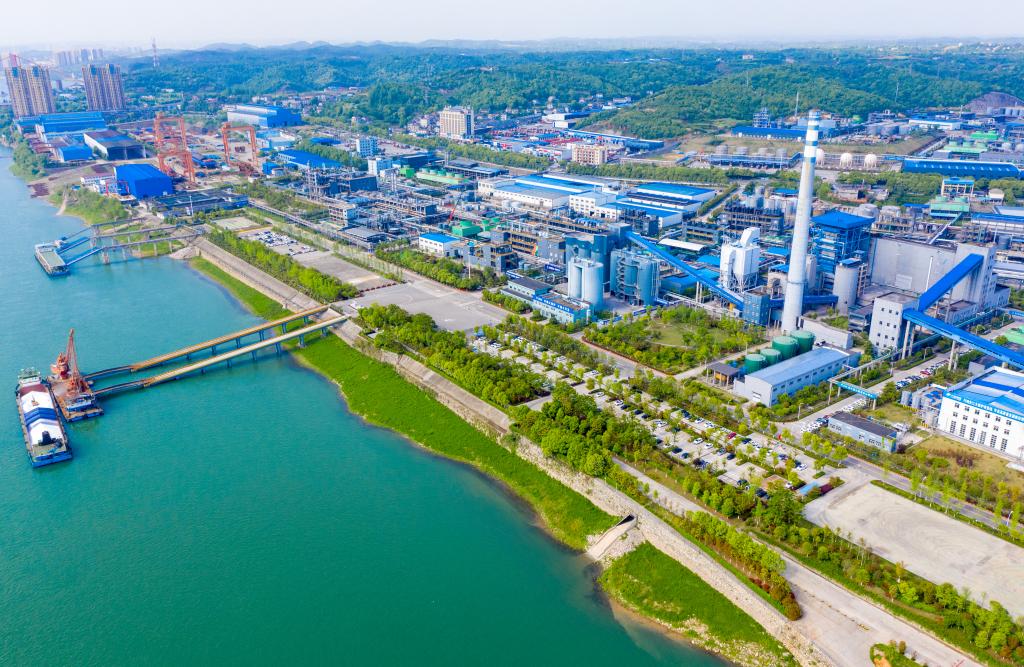
浩浩长江水清清。 "如果不是生态环境变好,这些'客人',怕是我想请也请不来呦!"湖北兴发化工集团股份有限公司总经 理程亚利操着峡江特有的转音说。 兴发集团宜昌新材料产业园临江码头,清澈的江水中,成群的鱼儿循着江岸从容觅食,一团团、一簇 簇,映着粼粼波光。不远处,厂区的排污口早已永久封堵。 这片区域在虎牙山下,与荆门山隔江相望,是万里长江出峡谷、入平原的最后一道险隘。1300年前,李 白辞亲远游,船出三峡,穿过此地,面对壮阔的山水意象,写下"渡远荆门外,来从楚国游。山随平野 尽,江入大荒流……"的诗句。 江水泱泱,山川依旧。在这个当年改写吴蜀历史进程的"猇亭之战"发生地,如今,打响了一场长江生态 保护战。 2018年4月24日,习近平总书记一下飞机,就到兴发集团宜昌新材料产业园,察看化工企业搬迁、改造 以及码头复绿情况。总书记强调,要坚持把修复长江生态环境摆在推动长江经济带发展工作的重要位 置,共抓大保护,不搞大开发。不搞大开发不是不要开发,而是不搞破坏性开发,要走生态优先、绿色 发展之路。 "为了保护长江生态,我们永久关闭了园区4个排口,污水处理装置扩能改造到实际需求的1.5倍,所有 废水集中处理达标后进入市 ...

新春走基层丨立规之地听回响
Xin Hua She· 2026-02-14 13:08
浩浩长江水清清。 "如果不是生态环境变好,这些'客人',怕是我想请也请不来呦!"湖北兴发化工集团股份有限公司总经理程亚利操着峡江特有的转音说。 兴发集团宜昌新材料产业园临江码头,清澈的江水中,成群的鱼儿循着江岸从容觅食,一团团、一簇簇,映着粼粼波光。不远处,厂区的排污口 早已永久封堵。 这片区域在虎牙山下,与荆门山隔江相望,是万里长江出峡谷、入平原的最后一道险隘。1300年前,李白辞亲远游,船出三峡,穿过此地,面对 壮阔的山水意象,写下"渡远荆门外,来从楚国游。山随平野尽,江入大荒流……"的诗句。 江水泱泱,山川依旧。在这个当年改写吴蜀历史进程的"猇亭之战"发生地,如今,打响了一场长江生态保护战。 2018年4月24日,习近平总书记一下飞机,就到兴发集团宜昌新材料产业园,察看化工企业搬迁、改造以及码头复绿情况。总书记强调,要坚持把 修复长江生态环境摆在推动长江经济带发展工作的重要位置,共抓大保护,不搞大开发。不搞大开发不是不要开发,而是不搞破坏性开发,要走 生态优先、绿色发展之路。 "为了保护长江生态,我们永久关闭了园区4个排口,污水处理装置扩能改造到实际需求的1.5倍,所有废水集中处理达标后进入市政二次污水 ...

永年区:开年引来两个大项目
Xin Lang Cai Jing· 2026-02-14 00:57
Core Viewpoint - The article highlights the successful signing of two key industrial projects in Yongnian District, with a total investment of 920 million yuan, aimed at enhancing the local economy and supporting the development of key industries such as fasteners and renewable energy [1] Group 1: Project Details - Two major projects were signed during the investment promotion conference, with a total investment of 920 million yuan [1] - The first project focuses on the manufacturing of hydrogen energy equipment, with a total investment of 800 million yuan, signed between Yongnian Feidi Economic Industrial Office and Gongshe New Energy (Shenzhen) Group Co., Ltd [1] - The second project involves the production base for non-modulated cold-formed steel and high-strength fasteners, with a total investment of 120 million yuan, signed between Yongnian Industrial Park and Hunan Bogu Technology Co., Ltd [1] Group 2: Economic Impact - The projects are expected to enhance the high-end manufacturing industry system in Yongnian, injecting new momentum into the region's economic high-quality development [1] - The Yongnian District Investment Promotion Center aims to leverage this event to strengthen investment attraction efforts, ensuring alignment with industrial needs and attracting more quality projects [1] - There is a commitment to provide service guarantees for the signed projects, promoting early commencement, construction, and production to drive industrial transformation and upgrading in the region [1]
“中国春天” 花开世界
Xin Lang Cai Jing· 2026-02-13 20:37
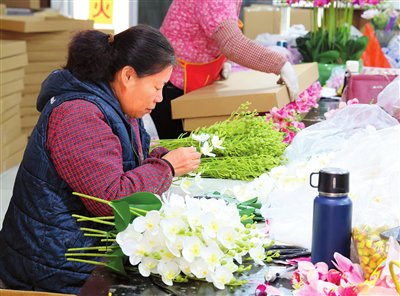
(来源:天津日报) 转自:天津日报 腊月,天津。 推开天津德怡科技股份有限公司的大门,瞬间闯进了一片灿烂的"春天"。 7000平方米的厂房内,铺展着一片花海。几片花瓣、几簇花蕊、几根花茎……转眼间,一朵朵蝴蝶兰仿 佛被赋予了生命,在工人师傅们的手中次第"绽放"。 "这批货,下午发往欧洲。"38岁的总经理商恩祥刚刚结束一场国际视频会议,"春节市场的货刚发完, 国际市场的订单就紧跟而来。"谈笑间,他领着记者走进车间,顺手拿起一枝仿真花递过来,"您闻闻, 有香味儿!" 深厚的产业基础孕育了庞大的产业集群,但现实的压力也摆在眼前。曹子里镇总共2.8万人,一半以上 靠绢花产业谋生。近几年,国际市场波动加剧,不少企业猛然发现——老路,走不通了。 "大家都在寻找新出路。要么出彩,要么出局。"商恩祥道出了众多同行的心声,"向上突破",正成为曹 子里产业转型升级的共同方向。 然而,出彩得有真本事。 商恩祥拿起一沓用3D打印技术制作的花瓣递给记者。指尖触及的瞬间,竟传来类似真实花瓣的微凉与 细腻。对着光细看,每一条脉络都清晰可见——那纹理不像印上去的,倒像是从内部自然生长出来的。 在曹子里,越来越多的绢花企业意识到,拼价格、拼速 ...
人工智能推动产业转型升级的路径探索
Xin Lang Cai Jing· 2026-02-13 16:24
(来源:中国经济导报) 转自:中国经济导报 李鑫 人工智能技术已成为驱动产业深刻变革的关键力量,从根本上重塑全球产业发展形态与国际竞争格局。 深入系统探究人工智能赋能产业转型升级的实现路径,对于加快建设现代化产业体系、推动经济高质量 发展具有重要现实意义与实践价值。基于此,本文聚焦产业转型升级探索,从产业链协同优化、生产流 程重塑及产业价值形态创新三个层面着手,具体阐释人工智能技术的赋能路径,为相关政策设计及实践 推进提供有益的理论依据。 技术驱动数据要素价值释放,优化全产业链协同决策。人工智能技术有效释放数据要素的价值,通过算 法对产业链各环节产生的大规模、多来源、异质性数据进行深入挖掘与解析,将滞后、零散的数据资源 转变为可实时指导行动的策略性知识协同指令,推动产业链运作机制从依赖局部经验的优化,升级为依 托全局数据实现动态协同、精准匹配的运行模式。 人工智能技术嵌入生产全流程,以数据智能为联结纽带、以智能算法为核心动力,对生产各环节展开的 系统化再造与协同性升级,推动制造业朝着智能化、柔性化、高效化的方向持续演进,为产业转型升级 筑牢坚实的生产力根基。 赋能产品与服务创新,重塑产业价值形态。人工智能技术 ...
四川美丰:公司持续抓好提质增效相关重点工作
Zheng Quan Ri Bao Wang· 2026-02-13 12:35
Core Viewpoint - Sichuan Meifeng (000731) emphasizes its commitment to improving development quality while promoting industrial transformation and upgrading [1] Group 1 - The company aims to enhance quality and efficiency through focused efforts on key initiatives [1] - Sichuan Meifeng is actively exploring effective methods and pathways for market value management [1] - The company strives to synchronize the improvement of development quality with investment value [1]
