
低碳转型

Search documents
“因地制宜”成为城市气候行动新黄金标准
Xin Lang Cai Jing· 2026-01-30 16:39
Core Insights - The report indicates that "local adaptation" has replaced mere indicator chasing as the new gold standard for climate action in Chinese cities, showcasing how cities leverage their resource endowments or industrial foundations into differentiated competitive advantages [1] Group 1: City Rankings and Performance - Beijing ranks first in the comprehensive rankings, followed by Chengdu, Shanghai, Ningbo, and Kunming, highlighting the leading role of different regional central cities [1] - Zhuzhou, an old industrial base, has entered the top 10 for the first time, exemplifying a successful differentiated path in transformation [1] Group 2: Energy Transition and Challenges - The average penetration rate of new energy vehicles in participating cities has reached 45% in 2024, significantly exceeding national planning targets [3] - The report reveals deep-seated contradictions in low-carbon transitions, particularly that energy efficiency improvements are encountering a "bottleneck" [3] - Despite advancements in renewable energy, the overall electricity consumption intensity has seen limited reduction, indicating a persistent dependency of economic growth on energy consumption [3] Group 3: Regional Development Disparities - Eastern regions remain the biggest "winners," occupying half of the top 10 in comprehensive rankings, with cities like Beijing and Shanghai not only performing well but also exporting carbon management systems and ESG standards [3] - The central region is rising, with Zhuzhou's strong decoupling performance challenging the stereotype that mid-sized cities cannot balance growth and emissions reduction [4] Group 4: Recommendations for Improvement - The report suggests deepening collaborative efficiency to promote structural emissions reduction, integrating carbon evaluation into environmental impact assessments, and establishing industry entry and exit mechanisms based on carbon intensity [6] - It recommends differentiated energy transition strategies tailored to resource-rich cities, industrial and energy base cities, and capital-driven cities to build green industrial ecosystems [6] - The establishment of a city-level carbon perception and data governance system is advised, utilizing big data and IoT technologies for timely carbon data reporting [6]
加速整合、掘金海外,水泥行业探寻新平衡
Shang Hai Zheng Quan Bao· 2026-01-28 18:39
"2026年预计水泥价格反弹空间有限,均价仍将下移,行业利润仍处于低位水平。"展望2026年行业价格 走向,中国水泥网水泥大数据研究院分析师李坤明在接受上海证券报记者采访时称。 回望2025年,水泥市场总体呈现"量价齐跌"态势。但得益于上半年煤炭成本下降明显,叠加水泥价格高 于同期,全年行业利润有所修复。同时,水泥行业在2025年底完成了全国碳市场首个履约周期;工业和 信息化部等六部门联合印发《建材行业稳增长工作方案(2025—2026年)》则为行业指明严控产能、绿 色智能转型路径。 站在新的起点,水泥行业发展将面临怎样的外部环境,供需能否改善?企业又将如何在"存量竞争"中破 局,寻找新的增长曲线? 去产能主基调不改 据水泥网App统计,2025年全国共有31条熟料生产线宣布不再建设,合计产能4746.1万吨(产能按照310 天计算),这也成为水泥行业在需求下行压力下,主动收缩供给、迈向再平衡的缩影。 政策层面也在积极引导行业结构优化。1月以来,多省份积极响应国家层面产能管控政策,密集发布辖 区内水泥企业补充产能置换方案公示及公告,推动结构性产能出清。 "2026年,水泥行业有望强化产能管理,持续推动备案产能 ...
工业转型规模化:2025年高排放行业与净零转型进展
Zhong Guo Yin He Zheng Quan· 2026-01-28 03:24
Group 1: Industrial Transition Overview - The report highlights that global industrial transition is entering a decisive phase by 2025, with a clear decarbonization path established[3] - The focus has shifted from "can emissions be reduced" to "how to achieve large-scale reductions at acceptable costs"[6] - In 2024, global CO2 emissions are projected to reach 3.82 billion tons, marking a historical high with a year-on-year increase of 0.9%[8] Group 2: Key Challenges - Five core constraints identified include technology deployment pace differences, insufficient low-carbon demand, fragmented policies, infrastructure gaps, and uneven capital allocation[4] - Approximately 50% of industrial emissions can be reduced using existing mature technologies, while the remaining emissions rely on advanced technologies like hydrogen and CCUS[6] - The rising interest rates are expected to increase the costs of wind and solar energy by approximately 30%[6] Group 3: Sector-Specific Insights - In 2024, the aviation sector is expected to see a 10.4% increase in operational activity, contributing 1.108 billion tons of CO2 emissions, a 6.4% rise from the previous year[8] - The cement and steel industries are projected to experience slight decreases in emissions, while sectors like aviation and aluminum will see significant increases[8] Group 4: Policy and Economic Environment - The global industrial transition exhibits significant regional differentiation, with the EU leading compliance, the US balancing incentives and compliance, and emerging markets developing frameworks[14] - The economic environment is characterized by rising interest rates and cost inflation, which elevate the economic feasibility threshold for low-carbon projects[15] Group 5: Recommendations for Scaling Transition - The report suggests five strategic actions to promote large-scale transition: standardizing demand mechanisms, accelerating shared infrastructure construction, optimizing financing costs, prioritizing mature technology deployment, and enhancing policy and innovation collaboration[23]
美国单边退群冲击全球能化产业
Zhong Guo Hua Gong Bao· 2026-01-28 03:08
Core Viewpoint - The United States has officially initiated the process of withdrawing from key international agreements such as the United Nations Framework Convention on Climate Change, marking a significant policy shift that poses a serious threat to the multilateral global climate-energy governance system [1] Short-term Impact: Rising Compliance Costs and Fragmentation of Market Rules - The immediate effect of the U.S. withdrawal is a sharp increase in trade and compliance costs, as the decoupling of U.S. domestic emission policies from international standards will lead to substantial carbon tariff barriers for U.S. energy and chemical products exported to Europe [2] - U.S. chemical products, particularly those derived from oil and gas, will face significant challenges under the European Carbon Border Adjustment Mechanism (CBAM), which could erode their price competitiveness [2] - The weakening of the International Energy Forum (IEF) coordination mechanism will increase volatility risks in the global oil and gas market, impacting the profitability and predictability of production planning in the chemical industry [2] Long-term Changes: Shift in Technological Leadership and Supply Chain Resilience - The U.S. withdrawal is expected to result in a transfer of technological pathways and industry leadership, as it relinquishes its position in global clean energy technology rule-making [3] - This will lead to a reorganization of technological cooperation alliances, with countries like Europe, China, and Japan becoming central to the development of next-generation low-carbon chemical technologies [3] - The global green investment landscape, valued in trillions, will be reshaped, with capital flowing towards regions with stable policies and unified carbon market prospects, such as the EU and East Asia, potentially leading to a "bleeding" risk for U.S. chemical industries [3] Industry Response: From Passive Adaptation to Proactive Resilience Building - The global energy and chemical industry must strategically adjust to survive and compete in light of this historic change, with supply chains moving towards "nearshoring" and "friend-shoring" to mitigate carbon tariff risks [4] - Companies will accelerate the establishment of integrated, low-carbon production bases in major consumer markets, particularly in Europe and Asia, adopting a "regional production, regional sales" model [4] - There will be a shift away from U.S.-centric technological cooperation, with industry leaders seeking bilateral or regional alliances to ensure they remain aligned with global technological innovation [4] - Asset portfolios will increasingly tilt towards "climate resilience," with a notable increase in investments in circular economy, green hydrogen, and biomanufacturing, which are less affected by geopolitical and national policy changes [4] Role of Corporate Climate Diplomacy - In the absence of government leadership, large U.S. chemical companies may be compelled to adopt more proactive self-imposed emission reduction commitments and climate lobbying efforts, effectively engaging in "private sector climate diplomacy" to fill the leadership vacuum left by the government [5] - The U.S. unilateral withdrawal from international climate agreements signals a clear shift in the competitive paradigm of the global energy and chemical industry [5]
美国单边退群冲击全球能化产业
Zhong Guo Hua Gong Bao· 2026-01-28 03:02
Core Viewpoint - The U.S. has officially initiated the process to withdraw from key international agreements such as the United Nations Framework Convention on Climate Change, signaling a significant policy shift that poses serious challenges to the multilateral global climate-energy governance system [1] Short-term Impact: Compliance Costs and Market Fragmentation - The immediate effect of the U.S. withdrawal is expected to be a sharp increase in trade and compliance costs, particularly for the energy and chemical sectors, as U.S. domestic emission policies diverge from international standards [1] - The European Union's Carbon Border Adjustment Mechanism (CBAM) will impose substantial carbon tariff barriers on U.S. energy and chemical products, particularly basic chemicals and energy-intensive materials [1] - Global chemical giants will need to establish multiple operational and compliance systems to adapt to the differing carbon accounting and pricing rules, leading to a geometric increase in complexity and costs [1] Long-term Changes: Shift in Technological Leadership and Supply Chain Resilience - The withdrawal is expected to result in a transfer of technological pathways and industry leadership, with the U.S. effectively relinquishing its advantages in global clean energy technology rule-making [3] - This will lead to a restructuring of technology cooperation alliances, with countries like Europe, China, and Japan becoming central to the development of next-generation low-carbon chemical technologies [3] - The global investment landscape will also be reshaped, with capital increasingly flowing to regions with stable policies and unified carbon market prospects, such as the EU and East Asia, potentially leading to a "bleeding" risk for U.S. chemical industries [3] Industry Response: From Passive Adaptation to Proactive Resilience Building - The global energy and chemical industry must now view strategic adjustments as essential for survival and competitiveness [4] - There will be an acceleration of supply chain "nearshoring" and "friend-shoring" to mitigate carbon tariffs and regulatory uncertainties, with multinational chemical companies establishing localized, integrated, low-carbon production bases in major consumer markets [4] - The industry will also shift towards "de-Americanized" technology cooperation, forming bilateral or regional commercial alliances to ensure alignment with global technological innovation [4] - Asset portfolios will increasingly tilt towards "climate resilience," with a notable increase in investments in circular economy, green hydrogen, and biomanufacturing, which are less affected by geopolitical and national policy changes [4] Role of Corporate Climate Diplomacy - In the absence of government leadership, large U.S. chemical companies may be compelled to adopt more proactive self-imposed emission reduction commitments and climate lobbying efforts, effectively engaging in "private sector climate diplomacy" to fill the leadership vacuum left by the government [5] - This shift indicates that the U.S. unilateral withdrawal from international climate agreements is not just a political upheaval but also a clear signal of a transformation in the competitive paradigm of the global energy and chemical industry [5]
报告点评:工业转型规模化:2025年高排放行业与净零转型进展
Yin He Zheng Quan· 2026-01-28 02:55
Group 1: Industrial Transition Overview - The report highlights that global industrial transition is entering a decisive phase by 2025, with a clear decarbonization path established[3] - Approximately 50% of industrial emissions can be reduced using existing mature technologies, while the remaining emissions rely on deep innovation and large-scale application of frontier technologies like hydrogen and CCUS[6] - In 2024, global CO2 emissions are projected to reach 38.2 billion tons, marking a historical high with a year-on-year increase of 0.9%, where high-emission industries contribute nearly 40% of the emission growth[8] Group 2: Key Challenges - The core challenges for high-emission industries have shifted from technical feasibility to economic feasibility and system coordination for large-scale deployment[4] - Five main constraints identified include: technology deployment pace differences, insufficient low-carbon demand, fragmented policies, infrastructure gaps, and uneven capital allocation[4] - The rise in interest rates and cost inflation has increased the economic viability threshold for low-carbon projects, making financing and policy coordination critical for project implementation[15] Group 3: Sector-Specific Insights - In the aviation sector, operational activity is expected to grow by 10.4% in 2024, with emissions increasing to 1.108 billion tons, a rise of 6.4%[8] - The shipping industry will see a 5.5% increase in operational activity, with emissions reaching 0.847 billion tons, up by 2.7%[8] - The cement and steel industries are projected to experience slight decreases in emissions, while sectors like aluminum and basic chemicals will see significant increases in emissions[8] Group 4: Policy and Economic Environment - The global industrial transition exhibits significant regional differentiation, with the EU leading compliance, the US balancing incentives and compliance, and emerging markets developing frameworks[14] - The EU's carbon market is expected to cover over 45% of industrial emissions by 2030, while the US faces policy volatility affecting corporate decision-making[14] - Emerging markets like China and India are accelerating carbon accounting systems, but face challenges in policy maturity and infrastructure development[14] Group 5: Recommendations for Scaling Transition - Establish standardized low-carbon demand mechanisms to enhance the credibility of demand signals and promote public procurement of low-carbon products[23] - Accelerate the construction of shared infrastructure, including integrated energy networks and CO2 transport pipelines, to support large-scale reductions[23] - Innovate financial tools to lower financing costs and support the scaling of frontier technologies like hydrogen and CCUS[24]
阿布扎比推出政府高效电器采购政策
Xin Lang Cai Jing· 2026-01-27 02:16
(来源:中国政府采购报) 本报讯 记者从商务部获悉,阿布扎比能源部近日推出政府机构高效电器采购政策,将能效与水效纳入 政府采购核心标准,推动低碳转型。 据了解,作为《2030年能源和水资源效率战略》的重要举措,这一政策目标是到2030年将电力消耗减少 22%、用水损耗减少32%。 本报拥有此文版权,若需转载或复制,请注明来源于中国政府采购报,标注作者,并保持文章的完整 性。否则,将追究法律责任。 转自:中国政府采购报 【国际动态】 阿布扎比推出政府高效电器采购政策 ...
标普全球:全球特化品市场保持增长态势
Zhong Guo Hua Gong Bao· 2026-01-26 03:09
报告指出,这一增长预期体现消费需求与市场稳定性持续改善,彰显全球特化品市场向好前景及较强抗 风险能力。各细分领域增速呈差异化特征,凸显市场动态变化属性。受益于全球低碳转型推进及可持续 技术领域投资扩容,未来5年新能源材料用特化品市场规模有望大幅增长。 中化新网讯近日,标普全球能源特种化学品更新计划(SCUP)发布最新《特化品行业概况报告》显示, 2024年启动的全球特化品市场复苏态势于2025年延续。报告预计,2026~2030年全球特化品市场整体年 复合增长率为3%,与全球经济预期走势基本同步。 2026~2030年,电子化学品将成为特化品各细分领域中增长冠军,年复合增长率预计达7%,其中半导体 用电子化学品、集成电路制造工艺用电子化学品增长势头最强劲。报告强调,显示材料、印制电路板及 包装用化学品的技术突破将进一步拉动电子化学品市场增长。这一趋势核心驱动力源于智能手机、平板 电脑、可穿戴设备等电子产品需求持续攀升,加之物联网、人工智能、5G通信等前沿技术飞速发展, 推动相关特化品市场快速扩容。 预计2026~2030年,中国将持续稳居全球最大特化品消费国,2030年消费量占全球总量约三分之一。南 亚、中东 ...
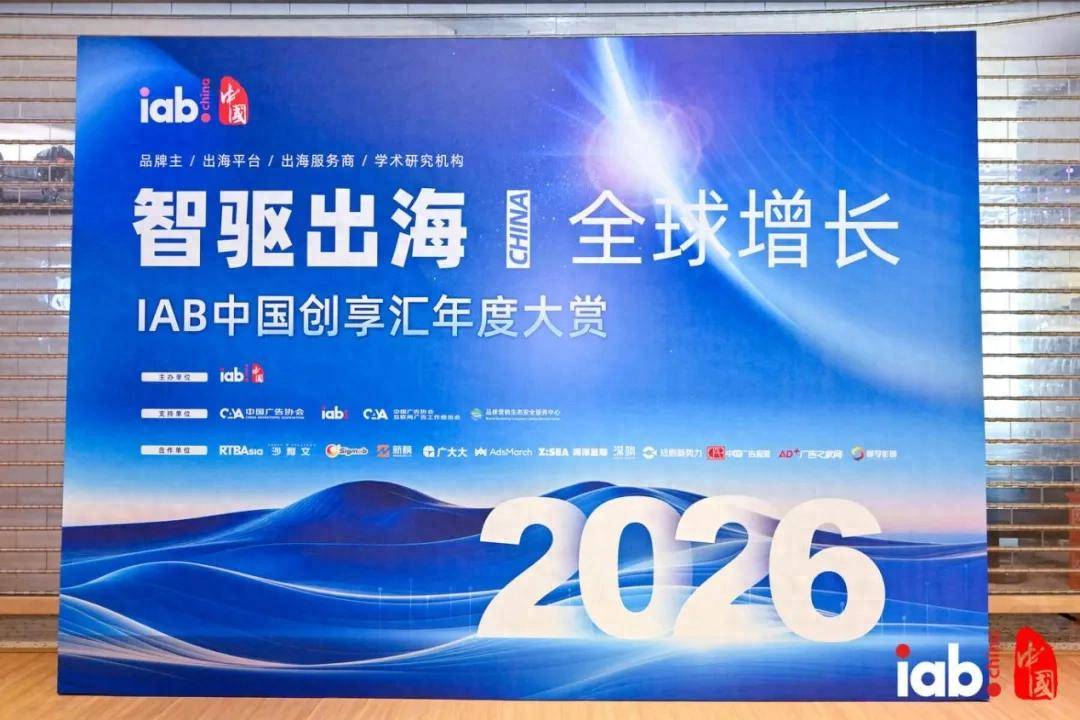
2026 IAB中国创享汇年度大赏:共探数字营销与品牌出海新路径
Sou Hu Cai Jing· 2026-01-22 05:17
Core Insights - The 2026 IAB China Creative Summit aims to explore new opportunities and paths for the high-quality development and globalization of Chinese brands, gathering industry experts and leaders for in-depth discussions [2][6][41] - The event emphasizes the importance of building a credible content ecosystem in digital marketing, addressing issues like misinformation and low-quality content [21][22][24] Group 1: Event Overview - The summit is hosted by IAB China and supported by various industry partners, focusing on international communication and industry standard development [4] - The opening speech highlighted the theme "Intelligent Driving Overseas Growth," emphasizing the competitive quality and brand strength of Chinese products on a global scale [6][8] Group 2: Key Themes and Discussions - The importance of cultural value and business philosophy in brand globalization was stressed, with digital technologies like AI reshaping marketing strategies [8][10] - Experts discussed the need for brands to transition from "single-point breakthroughs" to "ecological collaboration" for sustainable growth [10] Group 3: Industry Practices and Innovations - Danone's VP shared insights on low-carbon transformation in the food and beverage industry, emphasizing sustainability as a key support for overseas growth [12] - AI-driven marketing strategies were presented as essential for business growth, focusing on data integration and personalized communication [14][16] Group 4: Challenges and Solutions - The challenges of high costs, customer acquisition difficulties, and operational complexities in overseas markets were addressed, with proposed solutions involving AI and automation [16] - A roundtable discussion highlighted the need for innovative advertising models that integrate content and user experience to enhance commercial efficiency [18] Group 5: Industry Initiatives - The establishment of the IAB China Micro-Short Video Professional Committee aims to promote the development and standardization of the micro-short video industry [19] - A joint initiative for credible content in digital marketing was launched, focusing on industry self-regulation and the establishment of trust [21][24] Group 6: Resources and Tools - The release of the first edition of the "China Brand Overseas Ecosystem Panorama" provides a comprehensive resource for companies to navigate overseas markets, detailing key opportunities and growth paths [30] - The event concluded with the issuance of certificates to recognized companies, reinforcing the commitment to high-quality development in the industry [32][41]

以“含绿量”提升发展“含金量”
Guang Xi Ri Bao· 2026-01-20 02:42
Group 1: Environmental Initiatives - Liu Steel Group has invested over 9.2 billion yuan in environmental protection over the past three years, implementing more than 230 environmental improvement projects, leading to a significant increase in local bird populations [1] - The company has transitioned from a high-energy-consuming entity to a recognized "green development benchmark enterprise," achieving ultra-low emissions across its processes [1] - Guangxi's state-owned assets and enterprises are enhancing their development quality by increasing their "green content," focusing on green low-carbon development [1] Group 2: Energy Efficiency and Upgrades - Guangxi Investment Group has completed energy-saving upgrades for its entire 700,000-ton electrolytic aluminum capacity, saving approximately 420 million kilowatt-hours annually [2] - Guangxi Huayin Aluminum Industry has implemented technical upgrades that reduced carbon emissions intensity and overall energy consumption by 5.63% and 4.98%, respectively [2] - The North Bay Port Group has enhanced its solid waste treatment capacity to 3 million tons per year through technological improvements [2] Group 3: Renewable Energy Development - Guangxi Investment Group has acquired a total of 5 million kilowatts of controlling new energy indicators, with clean energy accounting for over 60% of its installed capacity [3] - The Liu Cheng North Shale Gas Project has achieved a daily output of 15,000 cubic meters, replacing 180,000 tons of standard coal annually and reducing carbon dioxide emissions by 484,000 tons [3] - The North Bay Port Group's energy sector has a total installed capacity of 1.2798 million kilowatts, with cumulative on-grid electricity reaching 2.788 billion kilowatt-hours by October 2025 [3] Group 4: Innovation and Technology - Regulatory enterprises are encouraged to focus on key technology breakthroughs in energy conservation and carbon reduction, with 19 green low-carbon technology projects supported by local state capital in the past two years [3] - Liu Gong Group is developing 11 key core technologies, including hybrid power and integrated technology, to enhance energy efficiency [3] - Guangxi Automobile Group is working on insulation technology for vehicle bodies, optimizing material environmental performance and structural lightweighting [3] Group 5: Forestry and Sustainable Practices - Guanglin Group is leveraging technology in forestry, leading to the approval of two important national standards that promote industry green transformation [4] - The company has established a forestry industry internet platform, achieving over 23 billion yuan in transaction volume and onboarding more than 1,100 forestry enterprises [4] - The application of drone technology in forestry has significantly reduced labor costs and improved survey accuracy, covering approximately 850,000 acres [4] Group 6: Comprehensive Ecological Protection - Guangxi Water Development Group prioritizes ecological protection in its planning and implementation of projects, improving construction processes to enhance resource utilization [5] - The company is implementing ecological networks through various projects, including ecological fishways and fish species proliferation stations [5] - The use of BIM+GIS platforms for construction monitoring is creating a comprehensive ecological protection system throughout the design, construction, and operation phases [5]