保供稳价

Search documents
镇江发改委节前 “把脉” 市场,巡检农批商超与粮油企业,确保节日民生商品量足价稳
Yang Zi Wan Bao Wang· 2026-02-07 10:59
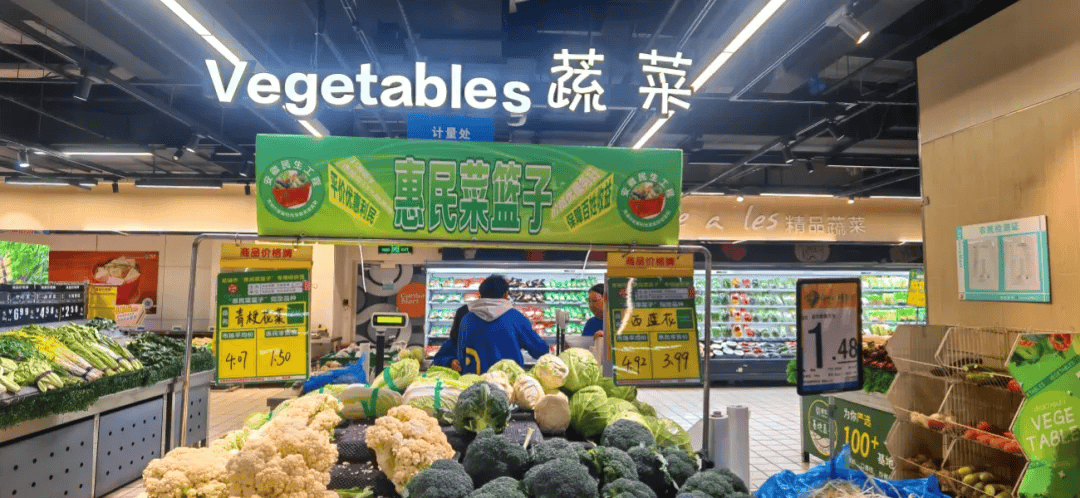
Core Viewpoint - The local government in Zhenjiang is actively ensuring sufficient supply and stable prices of agricultural products during the upcoming Spring Festival, focusing on fresh, high-quality, and affordable goods for consumers [2][4]. Group 1: Market Supply and Price Monitoring - The Zhenjiang Development and Reform Commission conducted inspections to monitor grain emergency supply, price regulation, and the operations of grain and oil production and storage enterprises ahead of the festival [2]. - Inspections included visits to agricultural wholesale markets and supermarkets, emphasizing the need for timely and accurate reporting of prices for essential goods like grains, vegetables, and meats [4]. Group 2: Price Control Measures - During the festival, price control points will implement a sales policy that increases discounts on selected agricultural products from 15% to 20% below market prices, with specific items like pork, rice, and cooking oil sold at 5% below market prices [6]. - The inspections highlighted the importance of effective management and coordination among grain and oil processing companies to ensure quality and quantity of products [6]. Group 3: Current Market Conditions - The inspection results indicate that Zhenjiang's grain and oil enterprises are busy with production, and the supply of essential goods such as packaged grains, vegetables, and meats is sufficient and prices are stable [8]. - The Development and Reform Commission plans to continue market inspections during the holiday to maintain a stable supply of essential goods for the community [8].

王晓在西安市督导检查春运保障、保供稳价等工作
Shan Xi Ri Bao· 2026-02-06 23:24
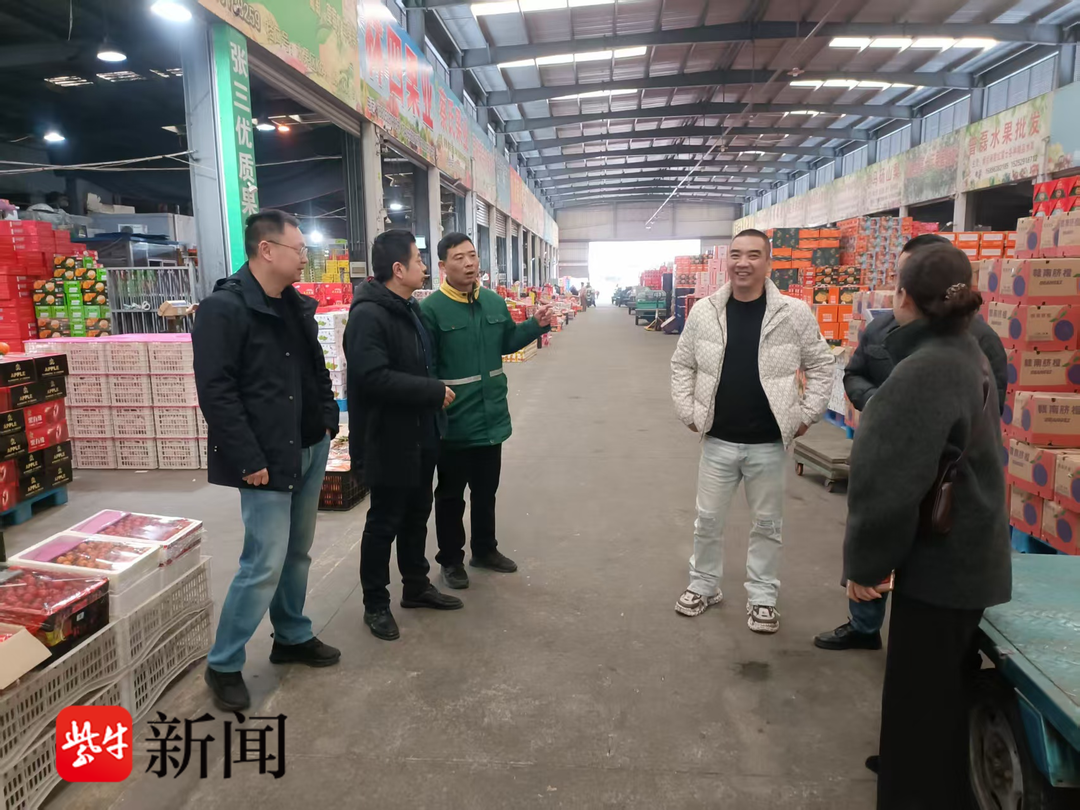
Core Viewpoint - The article highlights the efforts of the provincial government in ensuring transportation safety, supply stability, and fire risk management during the Spring Festival period, emphasizing the importance of effective planning and execution to enhance public service and safety [2][3]. Group 1: Transportation and Supply Management - The provincial government is actively overseeing the Spring Festival transportation arrangements, focusing on passenger flow dynamics and optimizing transport plans to enhance capacity [2][3]. - Key measures include ensuring sufficient transport supply for laborers, students, and tourists, and promoting staggered travel to improve service [2][3]. - The government is committed to maintaining stable prices and sufficient supply of essential goods such as grain, oil, meat, dairy, and vegetables during the festive season [2][3]. Group 2: Safety and Risk Management - There is a strong emphasis on safety production and fire risk management, with strict adherence to safety responsibilities and enhanced inspections of vulnerable areas [2][3]. - The government is reinforcing emergency response plans to effectively handle adverse weather, passenger delays, and accidents [2][3]. - Continuous monitoring and support for frontline workers are prioritized to ensure a safe and enjoyable Spring Festival for the public [2][3].
煤化工策略月报-20260202
Guang Da Qi Huo· 2026-02-02 11:26
1. Report Industry Investment Rating No relevant content provided. 2. Core Viewpoints of the Report Urea - In January, urea supply increased steadily, demand was strong due to pre - holiday stocking, and prices rose. In February, supply is expected to further increase, and demand will first decline and then recover after the Spring Festival. From March to May, urea prices are usually demand - driven, with strong support, but price increases may trigger price - stabilizing mechanisms [5][6][8]. Soda Ash - In January, soda ash supply increased, demand was weakly stable, and enterprise inventory slightly accumulated. In February, supply will continue to increase, and demand will shrink. The supply - demand situation will be looser, and inventory pressure will increase. However, external factors may have a positive impact on futures prices [11][12][13]. Glass - In January, glass supply decreased slightly, and demand was supported. In February, supply is expected to decline slightly, but demand will decline seasonally more than supply, and inventory pressure will remain high. In the long - term, the supply - demand contradiction is still not effectively resolved, but external factors may lead to short - term fluctuations [15]. 3. Summaries According to the Table of Contents 3.1 Futures Market and Raw Material Situation in the Industry Chain 3.1.1 Futures Prices - Urea: In January, the futures price of urea fluctuated strongly at a high level. As of January 30, the main 05 contract was reported at 1,790 yuan/ton, with a monthly increase of 2.7% [5]. - Soda Ash: In January, the futures price of soda ash fluctuated within a range. As of January 30, the main 05 contract was reported at 1,204 yuan/ton, with a monthly decrease of 0.41% [11]. - Glass: In January, the futures price of glass fluctuated widely. As of January 30, the main 05 contract was reported at 1,056 yuan/ton, with a monthly decrease of 2.94% [15]. 3.1.2 Futures - related Varieties - Various futures - related varieties such as glass - soda ash, urea - methanol, etc. are presented in the form of price difference trend charts [23]. 3.1.3 Raw Material Prices - Coal: The prices of different types of coal showed different changes in January [26]. - LNG: The ex - factory prices of LNG in various regions increased in January [30]. - Raw Salt: The prices of raw salt in some regions decreased slightly in January [33]. - Synthetic Ammonia: The price of synthetic ammonia in Shandong decreased by 4.45% in January [34]. 3.2 Urea: Demand Varies Before and After the Spring Festival, and There are Many Factors Restricting the Price Increase 3.2.1 Spot Price - In January, the spot price of urea increased. As of January 29, the prices in Shandong and Henan were 1,780 yuan/ton and 1,770 yuan/ton respectively, up 70 yuan/ton and 80 yuan/ton from the end of December [38]. 3.2.2 Basis - The basis of urea in different regions showed different changes in January [41]. 3.2.3 Industry Operating Rate - The overall operating rate of the urea industry increased in January. The weekly capacity utilization rate of urea in January 30 was 88.28%, up 7.98% month - on - month [46]. 3.2.4 Weekly and Daily Output - The daily output of urea increased in January. As of January 28, the daily output was 21.11 tons, up 8.75% month - on - month [53]. 3.2.5 Enterprise Inventory and Port Inventory - In January, the enterprise inventory of urea decreased by 7.29% month - on - month, and the port inventory decreased by 16.28% month - on - month [55]. 3.2.6 Profit and Cost - The production costs of different urea production processes changed in January, and the production profits also changed accordingly [59]. 3.2.7 Apparent Consumption and Production - Sales Ratio - The weekly apparent consumption of urea in January increased by 2.28% month - on - month, and the production - sales ratio decreased by 4.64% month - on - month [62]. 3.2.8 Downstream Demand - The operating rate and output of downstream industries such as melamine, compound fertilizer, etc. showed different changes in January [65][72]. 3.2.9 Monthly Import and Export Quantities - In December 2025, the import volume of urea decreased by 82.11% month - on - month, and the export volume decreased by 53.75% month - on - month [84]. 3.2.10 International Market - India's latest tender only purchased 970,000 tons of urea, far less than the planned 1.5 million tons, increasing the expectation of another tender. International urea prices rose significantly in January [7]. 3.2.11 Related Products - The prices of related products such as phosphate fertilizer, potash fertilizer, and small nitrogen fertilizers showed different changes in January [89][92]. 3.2.12 Urea Option Volatility - The historical volatility and volatility cone of urea options are presented in the report [95]. 3.3 Soda Ash: Fundamental Pressure Remains, and External Factors May Provide Support 3.3.1 Spot Price - In January, the domestic soda ash market price was weak. The prices of light and heavy soda ash in some regions decreased [102]. 3.3.2 Basis - The basis of soda ash in the Shahe area increased in January [107]. 3.3.3 Industry Operating Rate - The overall operating rate of the soda ash industry decreased slightly in January. The industry - wide operating rate on January 30 was 84.19%, down 2.23% month - on - month [112]. 3.3.4 Production - The weekly production of soda ash increased in January. The weekly production on January 30 was 783,100 tons, up 12.34% month - on - month [122]. 3.3.5 Enterprise Inventory - In January, the enterprise inventory of soda ash increased by 2.37% month - on - month [126]. 3.3.6 Monthly Import and Export Quantities - In December 2025, the import volume of soda ash increased by 1278.00% month - on - month, and the export volume increased by 22.92% month - on - month [132]. 3.3.7 Cost - The production costs of ammonia - soda and combined - soda processes decreased slightly in January [134]. 3.3.8 Profit - The production profits of ammonia - soda and combined - soda processes increased slightly in January [138]. 3.3.9 Apparent Consumption and Production - Sales Ratio - The weekly apparent consumption of soda ash increased by 4.51% month - on - month, and the production - sales ratio decreased by 7.27% month - on - month [142]. 3.3.10 Heavy Soda Ash Demand - The daily melting volume of float glass and photovoltaic glass decreased in January [144]. 3.3.11 Light Soda Ash Downstream - The operating rates of downstream industries such as the printing and dyeing industry decreased in January [149]. 3.3.12 Soda Ash Option Volatility - The historical volatility and volatility cone of soda ash options are presented in the report [154]. 3.4 Glass: Supply and Demand of Glass Decline in February, and the Market Game Continues 3.4.1 Spot Price - In January, the domestic glass spot price increased slightly. As of January 30, the average market price of float glass was 1,107 yuan/ton, up 34 yuan/ton from the end of December [15]. 3.4.2 Operating Rate and Production - The operating rate and weekly production of float glass decreased in January. The operating rate on January 30 was 71.86%, down 1.17% month - on - month [162]. 3.4.3 Daily Melting Volume - The daily melting volume of float glass decreased in January. As of January 30, it was 151,000 tons, down 0.11% month - on - month [166]. 3.4.4 Enterprise Inventory - In January, the enterprise inventory of glass decreased by 7.57% month - on - month [169]. 3.4.5 Cost and Profit - The production costs of different glass production processes changed slightly in January, and the production profits also changed accordingly [174]. 3.4.6 Apparent Consumption - The weekly apparent consumption of float glass decreased by 8.61% in January [178]. 3.4.7 Deep - processing - The operating rate of Low - E glass decreased by 2.90% in January, and the monthly output of deep - processed glass products showed different changes [180][183]. 3.4.8 Terminal Demand - Real estate - related data such as the cumulative year - on - year growth rate of commercial housing sales area showed different trends. The production and sales of the automobile industry and the production of household appliances also showed different changes [187][190][192]. 3.4.9 Monthly Import and Export Quantities - In December 2025, the export volume of float glass increased by 2.59% month - on - month, and the import volume decreased by 5.95% month - on - month [195]. 3.4.10 Glass Option Volatility - The historical volatility and volatility cone of glass options are presented in the report [198].
光大期货煤化工商品日报-20260108
Guang Da Qi Huo· 2026-01-08 03:20
Group 1: Investment Ratings - The report gives a "Bullish" rating for urea, soda ash, and glass [1] Group 2: Core Views - For urea, on Wednesday, the spot market continued to strengthen with some mainstream regional prices rising by 10 yuan/ton. The daily output was 20.4 tons, remaining stable. Supply is expected to increase after mid - month. Demand chasing sentiment is cautious with a产销率 in the 10% - 30% range. The inventory increased slightly by 0.29%. The strong coal in the futures market supports the urea futures price. It is expected to run strongly in the short term, but the upside space is limited [1] - For soda ash, on Wednesday, the futures price rose significantly while the spot price was stable with some manufacturers willing to raise prices. The industry's maintenance is basically over with an 84.7% operating rate. Supply will increase. Demand sentiment improved with more active downstream purchasing, but the rigid demand is still not optimistic. The strong coal and macro - policy factors support the futures price. It is expected to be strong in the short term with increased volatility [1] - For glass, on Wednesday, both the futures and spot prices rose significantly. The daily melting volume is around 15.15 tons. The 产销率 in some regions reached 180% - 190%. The short - term spot trading supports price increases, but the rigid demand faces pressure as the Spring Festival approaches. The strong coal in the futures market drives the glass futures price. It is expected to be strong in the short term with a game between internal and external factors [1] Group 3: Market Information - Urea - On January 7, the urea futures warehouse receipts were 12,619, unchanged from the previous day, with 333 valid forecasts [4] - On January 7, the urea industry's daily output was 20.04 tons, a decrease of 0.1 tons from the previous day and an increase of 2.58 tons from the same period last year. The operating rate was 82.86%, a 4.89 - percentage - point increase from the same period last year [4] - On January 7, the small - particle urea spot prices in Shandong, Henan, Hebei, Anhui, and Jiangsu were 1750 yuan/ton (Shandong + 10, Hebei + 10, Anhui + 10, Jiangsu 1760 + 10), and in山西 it was 1620 yuan/ton (unchanged) [4] Group 4: Market Information - Soda Ash & Glass - On January 7, the soda ash futures warehouse receipts were 5276, an increase of 500 from the previous day, with 878 valid forecasts. The glass futures warehouse receipts were 1676, unchanged from the previous day [6] - On January 7, the soda ash spot prices varied by region. For example, in North China, the light soda ash was 1200 yuan/ton and the heavy soda ash was 1250 yuan/ton [6] - On January 7, the soda ash industry's operating rate was 84.7%, unchanged from the previous day. The average price of the float glass market was 1081 yuan/ton, a 5 - yuan increase from the previous day, and the daily output was 15.16 tons [7] Group 5: Research Team Introduction - Zhang Xiaojin is the director of resource product research at Everbright Futures Research Institute, focusing on the sugar industry. He has won many analyst awards [24] - Zhang Linglu is an analyst at Everbright Futures Research Institute, responsible for urea, soda ash, and glass research. She has won many honors in relevant fields [24] - Sun Chengzhen is an analyst at Everbright Futures Research Institute, mainly engaged in the research of cotton, cotton yarn, ferroalloys, etc. He has also won relevant awards [24]
济南:正确把握新形势,努力开创价格监测事业新局面
Zhong Guo Fa Zhan Wang· 2026-01-06 03:56
Core Viewpoint - The article emphasizes the importance of price monitoring in Jinan, highlighting the efforts made to ensure stable prices for essential goods and services through comprehensive monitoring and emergency response mechanisms [1][4]. Group 1: Regular Price Monitoring - The center aims for "precise monitoring, scientific early warning, and efficient supply assurance," enhancing the quality and efficiency of regular price monitoring [2]. - A full-chain monitoring network has been established, covering various channels and categories, including large supermarkets, agricultural markets, and individual farmers [2]. - Daily monitoring and reporting mechanisms for key agricultural products and bulk commodities have been implemented, providing timely analysis to local government [2][3]. Group 2: Emergency Monitoring Capabilities - The core mission is to ensure supply and stabilize prices, with a focus on enhancing emergency monitoring capabilities [2][4]. - Emergency monitoring is conducted during adverse weather and peak consumption periods, allowing for rapid information gathering and precise early warnings [2][4]. - Multiple emergency monitoring tasks have been carried out this year, including market inspections and special research [2][5]. Group 3: Financial and Resource Support - Financial support has been actively sought to ensure adequate funding for monitoring personnel at various points [3]. - The center has completed all reporting tasks related to essential goods and services, providing multiple analysis reports to local government [3]. Group 4: Special Investigations and Surveys - Special investigations have been conducted on various sectors, including farmers' income, dairy industry, corn market, and real estate market, providing actionable insights for decision-making [7]. - Collaboration with relevant departments has been emphasized to gather accurate data and insights on the real estate market and agricultural pricing [7]. Group 5: Market Inspection and Digital Transformation - Regular market inspections are conducted monthly, with increased frequency during significant holidays and events to ensure data accuracy and timely reporting [8]. - The center is adapting to digital transformation challenges by implementing automatic price collection systems in supermarkets, enhancing the efficiency of price monitoring [9][10]. Group 6: Public Awareness and Communication - Efforts are being made to increase public awareness of price monitoring activities through various media channels, aiming to stabilize market expectations and enhance the social impact of Jinan's price monitoring work [11].
多家磷肥企业承诺保供稳价
Zhong Guo Hua Gong Bao· 2026-01-05 02:25
Core Viewpoint - Nine phosphate fertilizer companies in China have jointly issued a commitment to ensure stable supply and pricing of phosphate fertilizers, responding to high sulfur prices affecting production costs [1][2]. Group 1: Companies Involved - The nine phosphate fertilizer companies include Chengdu Yuntu Holdings Co., Ltd., Deyang Haohua Qingping Phosphate Mine Co., Ltd., Guizhou Phosphate (Group) Co., Ltd., Hubei Yihua Group Co., Ltd., Sichuan Development Longmang Co., Ltd., Sichuan Hongda Co., Ltd., Shikefeng Chemical Co., Ltd., Xinyangfeng Agricultural Technology Co., Ltd., and Yunnan Yuntianhua Co., Ltd. [1] Group 2: Commitments Made - The companies have made five key commitments: 1. Stabilizing production to ensure sufficient market supply 2. Actively selling phosphate fertilizers without hoarding or limiting sales 3. Maintaining stable prices until the end of spring farming in 2026 4. Ensuring adequate reserves by prioritizing supply for storage needs 5. Providing emergency support in case of local supply shortages or price instability [2]


持续夯实粮食安全根基
Jing Ji Ri Bao· 2026-01-04 21:47
Core Viewpoint - China's grain production reached 14,297.5 billion jin in 2025, an increase of 167.5 billion jin or 1.2% from the previous year, but challenges remain in ensuring food security due to long-term supply-demand imbalances and structural shortages [1][2][3] Group 1: Grain Production and Supply - Grain production is fundamental for food security, with stable production ensuring the Chinese population's food supply and supporting agricultural modernization and economic recovery [2] - The increase in grain production in 2025 is attributed to several factors, including an increase in sown area to 1.791 billion mu, a rise in grain yield to 399.1 kg/mu, and effective management of autumn grain production [2][3] - Despite high production levels, structural shortages persist, particularly in wheat and soybeans, indicating a need for enhanced agricultural production capacity and quality [3] Group 2: Price Stability and Market Dynamics - Maintaining reasonable grain prices is crucial for farmers' income, with the National Grain and Material Reserve Bureau implementing market-oriented purchasing and minimum price policies [4] - In 2025, grain purchases reached 8.3 billion jin, with around 450 million jin of wheat and rice purchased at minimum prices, stabilizing market expectations [4] - The prices of major autumn grain varieties have stabilized and increased, with notable rises in prices for high-quality rice and soybeans, leading to improved farmer incomes [6] Group 3: Challenges in Soybean Supply - The soybean market faces challenges with high dependency on imports despite domestic production increases, highlighting structural contradictions in supply [7][8] - The domestic soybean supply is characterized by a significant gap between production and processing needs, necessitating continued imports to meet demand [7] - Risks in soybean supply include resource competition, industry adaptation issues, and supply chain vulnerabilities, requiring coordinated efforts to enhance domestic production and diversify import channels [8]
硫酸行业保供稳价,碳酸锂、PTA涨幅居前
Zhong Guo Neng Yuan Wang· 2026-01-04 06:11
Market Performance - The basic chemical index increased by 2.58% from December 13 to December 19, while the CSI 300 index decreased by 0.28%, indicating that the basic chemical sector outperformed the CSI 300 by 2.85 percentage points, ranking fifth among all sectors [1][2] - The top-performing sub-industries included spandex (15.38%), other rubber products (10.78%), viscose (5.14%), civil explosives (4.25%), and potassium fertilizer (3.98%) [1][2] Chemical Price Trends - The top five products with the highest weekly price increases were hydrochloric acid (Jiangsu) at 57.14%, hydrochloric acid (Shandong) at 44.44%, industrial-grade lithium carbonate at 7.63%, battery-grade lithium carbonate at 7.57%, and butadiene at 6.12% [3] - The top five products with the largest weekly price declines included concentrated nitric acid at -9.30%, VCM (vinyl chloride monomer) at -6.25%, international gasoline at -6.11%, caustic soda (32% ion membrane) at -5.45%, and sulfur at -5.06% [3] Industry Dynamics - The sulfuric acid industry is focusing on supply stability and price control to ensure national food security, with measures being implemented to stabilize fertilizer supply and prices ahead of the spring farming season [4] - The current international sulfur supply is tight, leading to increased global sulfur resource prices and significantly raising the production costs for phosphate fertilizer [4] - As of December 19, the market price for sulfuric acid (98% smelting acid, Shandong) was 865 RMB/ton, with an increase of 8.81% in December and a year-to-date increase of 162.12% [4] Company Developments - Mitsui Chemicals announced an expansion of its MDI production capacity in South Korea, adding 100,000 tons/year, which will increase the plant's annual capacity from 610,000 tons to 710,000 tons, with production expected to start in May 2027 [5] - Dow Chemical plans to raise prices for its polymer MDI products in Southeast Asia by $200/ton, while Wanhua Chemical will also increase prices for all MDI and TDI products in Latin America by $200/ton starting December 15 [5] Investment Recommendations - The current investment focus includes the refrigerant sector, chemical fiber sector, and high-quality growth stocks, with specific companies recommended for attention [6] - Suggested companies in the refrigerant sector include Jinshi Resources, Juhua Co., and Sanmei Co. [6] - In the chemical fiber sector, recommended companies include Huafeng Chemical and Xinfengming [6] - Other notable companies include Wanhua Chemical, Hualu Hengsheng, and Luxi Chemical [6]

元旦假期重要民生商品货足价稳 节日市场亮点纷呈活力涌动
Zhen Jiang Ri Bao· 2026-01-03 23:38
Core Insights - The consumer market in the city during the New Year holiday showed a stable supply, steady prices, and orderly operations, reflecting robust vitality in the festive market [1][2] Group 1: Market Supply and Pricing - The supply channels for essential goods, including grains and vegetables, were smooth and comprehensive, with stable prices for grains and oils, and overall stability in meat and poultry prices, although pork prices slightly decreased [1] - Vegetable prices experienced minor fluctuations due to holiday demand and seasonal factors, while the fruit market remained well-supplied with stable prices for mainstream varieties such as apples, bananas, and oranges [1] Group 2: Sales Performance and Consumer Demand - Longshen Supermarket reported sales of approximately 4.49 million yuan and foot traffic of about 45,500 people from January 1 to 2, maintaining levels consistent with the previous year [1] - To meet consumer demand for staple and supplementary foods, Longshen Supermarket organized the supply of 143 tons of vegetables and around 85 tons of pork to ten stores in various cities, ensuring stable prices and ample supply [1] Group 3: Price Control and Consumer Benefits - The price control policies were effective, with 19 price control outlets achieving total sales of about 17,500 kilograms and providing discounts totaling approximately 41,000 yuan, resulting in an average discount rate of 20.7%, with vegetables seeing an average discount of 29.3% [2] - Overall, the supply of staple foods was abundant during the New Year period, and the market order was good, indicating significant effectiveness in price stabilization and supply assurance efforts [2]
芜湖这16家门店,供应平价菜!
Sou Hu Cai Jing· 2026-01-01 17:42
Core Viewpoint - Wuhu City Development and Reform Commission has launched the "Beneficial Vegetable Basket" initiative to ensure stable market supply and promote holiday consumption during the New Year and Spring Festival in 2026 [1][3]. Group 1: Initiative Details - The "Beneficial Vegetable Basket" activity will take place from December 30, 2025, to January 3, 2026, for New Year, and from February 10 to February 25, 2026, for Spring Festival, covering a total of 21 days [3]. - A total of 16 designated stores in Wuhu will supply affordable vegetables, ensuring citizens have access to quality agricultural products [1][3]. Group 2: Store Locations - The initiative includes various stores across multiple administrative regions, such as: - Century Lianhua Zhongshan Store, located in Jinghu District [4]. - Dazhonghua Wuhu Store, located on Beijing Middle Road in Jinghu District [4]. - Other stores include Youxuan Life Supermarket, Huarun Fresh Supermarket, and several Dajiangji stores [4][5]. Group 3: Supply Assurance Measures - The notification emphasizes the need for designated operating units and agricultural wholesale enterprises to prepare supply plans in advance to ensure sufficient stock and smooth delivery, especially considering potential adverse weather conditions during winter [3]. - The Wuhu City Development and Reform Commission, along with the Commerce Bureau and Agricultural and Rural Affairs Bureau, will conduct market inspections and strengthen price monitoring and quality supervision to ensure the effectiveness of the beneficial policies [3].