关税大战

Search documents
美国扬言加税500%,隔日俄能源部长便来华,保护好中国朋友钱袋子
Sou Hu Cai Jing· 2025-07-21 02:11
Core Viewpoint - The article discusses the implications of Trump's proposed tariffs on China and the visit of the Russian Energy Minister to China, highlighting the strategic responses from Russia to maintain its trade relations with China amidst U.S. pressure [1][2]. Group 1: U.S. Tariff Proposal - Trump has proposed a 100% tariff on Russia and a secondary tariff of up to 500% on countries purchasing Russian energy, aimed at pressuring Russia to cease hostilities in Ukraine [1]. - The effectiveness of the 100% tariff is questioned, as U.S.-Russia trade has already plummeted to $3.7 billion, making additional tariffs less impactful [1][2]. Group 2: Russian Energy Exports - China and India are the primary buyers of Russian energy, with Russian crude oil accounting for 36% of India's imports and nearly 20% of China's imports [2]. - The proposed tariffs are seen as a strategy to compel China and India to influence Russia to halt its actions in Ukraine [2]. Group 3: Russian Response - The visit of Russian Energy Minister Zivilev to Beijing is interpreted as a strategic move to reassure China and maintain strong trade ties, which are crucial for Russia's economy [4]. - The meeting is expected to focus on discussions regarding how to counteract Trump's tariff proposals and reinforce the importance of Sino-Russian trade relations [4][6]. Group 4: Strategic Implications - The strengthening of Sino-Russian relations is emphasized, with Russia signaling that U.S. actions will not disrupt their trade and partnership [6]. - The article suggests that Trump's tariff threats may inadvertently provide China with an opportunity to secure cheaper Russian energy, as China is unlikely to be intimidated by such proposals [6].

特朗普赚翻了,拿下250亿美元,又将达成关税协议,联合国警告!
Sou Hu Cai Jing· 2025-07-18 23:45
Group 1 - The U.S. has imposed tariffs amounting to $25 billion, targeting 24 countries, including the EU, with rates as high as 50% on certain goods [1][3] - The trade tensions have led to significant disruptions in global supply chains, increasing costs and causing a projected reduction in global economic growth from 2.8% to 2.3% [5] - Small economies and export-dependent countries, such as Cambodia, are particularly vulnerable, with trade with the U.S. constituting a significant portion of their GDP [5] Group 2 - U.S. exporters in various sectors, including alcohol and automotive, are facing severe repercussions, with exports to the EU dropping by 20% from 2018 to 2021 [7] - Major U.S. banks are experiencing pressure as corporate clients reduce capital expenditures and hiring due to the uncertainty created by tariff policies [5][7] - The Federal Reserve is cautious about interest rate cuts, as ongoing tariffs are contributing to rising consumer prices and inflation [9][11] Group 3 - The trade war is characterized by retaliatory measures from affected countries, with the EU considering a counter-response worth €720 billion [1][3] - Trump's tariff strategy is perceived as a "global harvesting machine," impacting not only foreign nations but also the U.S. economy itself [3][11] - The overall sentiment in the market indicates that the trade war has created a situation where there are no clear winners, only escalating tensions and potential economic fallout [11]
硅谷掀AI人才争夺战:Meta开四年3亿美元薪酬,全球顶尖专家不足千人;“大而美”法案如何影响美国各行业;日本驳斥“毁灭性地震”预言 | 一周国际财经
Mei Ri Jing Ji Xin Wen· 2025-07-05 05:54
Group 1 - Meta is offering a compensation package of up to $300 million over four years to attract AI researchers from companies like OpenAI, intensifying the competition for top AI talent in Silicon Valley [1][3][4] - The number of top AI experts globally is reported to be less than 1,000, leading to a significant scarcity of talent [4][18] - Salaries for AI engineers at Meta range from $186,000 to $3.2 million, surpassing those at OpenAI, which range from $212,000 to $2.5 million [6][4] Group 2 - The average annual salary for senior AI research scientists has surged to between $3 million and $7 million, with some top scientists earning over $10 million [7][10] - The disparity in salaries is stark, as senior software engineers without AI experience typically earn between $180,000 and $220,000 [10][14] - The "30k Club" in Silicon Valley indicates that a significant portion of employees earn over $300,000 annually, with Meta's median salary projected at $379,000 for 2024 [15][14] Group 3 - The "Big and Beautiful" tax and spending bill signed by President Trump is expected to increase the national debt by $4.1 trillion by 2034, raising concerns about fiscal deficits [20][21] - The bill will impact various industries, including electric vehicle manufacturers and AI companies, by eliminating certain tax incentives [22][20] - Chip manufacturers, energy companies, and real estate developers are anticipated to benefit from the new legislation [23][20] Group 4 - Jane Street, a quantitative trading firm, has been banned from the Indian market due to alleged market manipulation, with the Indian regulator seizing approximately $570 million in illegal profits [29][28] - The firm reportedly made $4.3 billion in profits from its Indian operations since starting in 2020 [29][28] Group 5 - Nvidia's market capitalization briefly surpassed $3.92 trillion, making it the first company to achieve this milestone, reflecting strong performance in the tech sector [34][33] - The stock market indices, including the S&P 500 and Nasdaq, reached new historical highs, indicating robust market conditions [34][33]






黄金,6月暴跌;多头最后的希望7月9日特朗普关税截止日!
Sou Hu Cai Jing· 2025-06-29 13:50
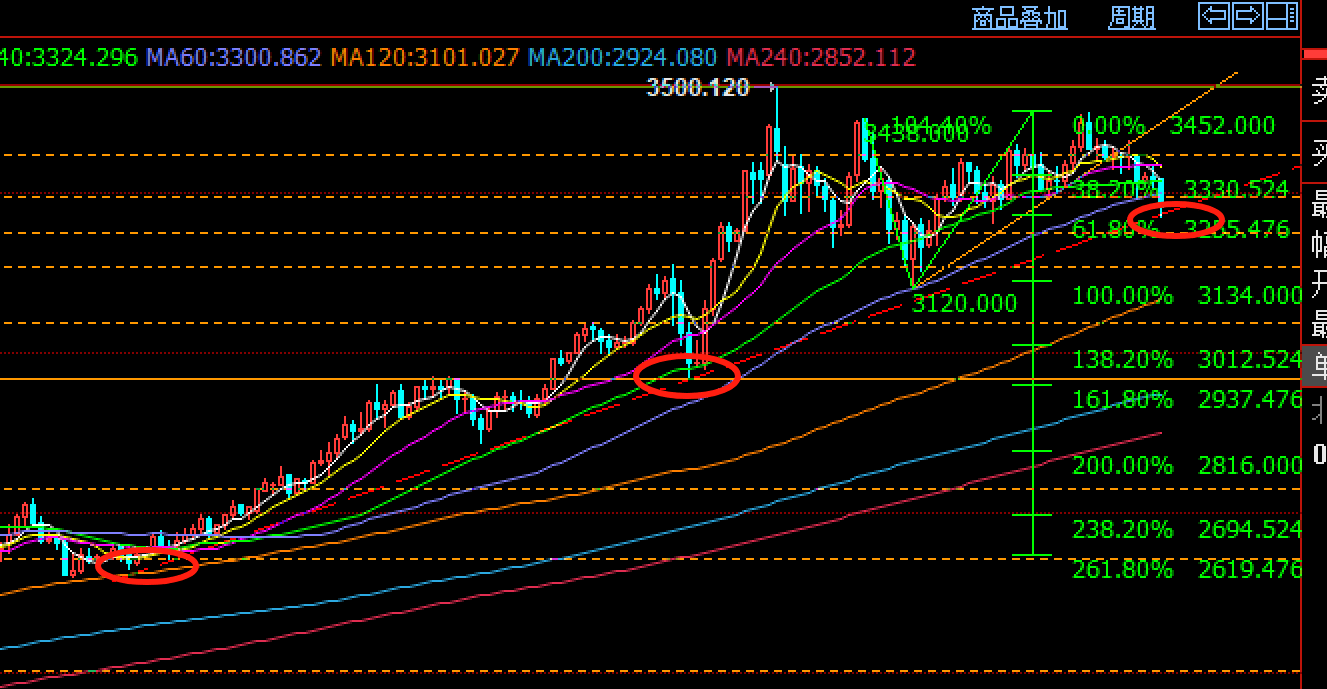
Core Viewpoint - The article emphasizes the importance of stop-loss strategies in trading, highlighting that holding onto losing positions is generally a mistake. It discusses the recent performance of gold and oil in the context of geopolitical tensions, particularly the Iran-Israel conflict, and suggests a bearish outlook for gold in the near term while noting potential support from global trade tensions [1][3][5]. Gold Market Analysis - Gold experienced significant volatility, opening at 3367, reaching a high of 3398, a low of 3255, and closing at 3273, indicating a bearish trend with a large downward candle [1][3]. - The article notes that gold has seen a maximum decline of nearly 200 USD from its peak of 3452, suggesting that geopolitical events have not provided the expected support for gold bulls [1]. - The outlook for gold remains bearish for the third quarter, with expectations of continued downward pressure unless significant geopolitical or economic changes occur [1][5]. Silver Market Analysis - Silver is described as showing high volatility after a significant rise, with expectations of a pullback. Key resistance levels are identified at 36.8, 37.3, and 37.8, while support levels are at 35.3, 34.7, and 34 [5]. Oil Market Analysis - The oil market has been disrupted by geopolitical tensions, with a notable drop of 12 USD following a high opening. The article suggests that the market may see a recovery if it can hold above the 64-65 USD range [1][8]. - The article indicates that the oil market has been under pressure for two months, with a recent high above 78 USD before a pullback [8][10]. Currency Market Analysis - The dollar index is expected to experience a rebound after a recent decline, with key support levels identified at 97-96.5. The article suggests that non-USD currencies may present mid-term trading opportunities [7].
吴晓波:我们无法改变风向,但我们能改变帆的方向丨出海峰会演讲
吴晓波频道· 2025-06-22 17:02
Core Viewpoint - The article emphasizes the importance of optimism, risk awareness, and adaptability for entrepreneurs venturing into global markets, drawing parallels between sailing and business expansion [1][14][16]. Group 1: Sailing Metaphor - The journey of sailing represents the challenges faced by companies as they expand globally, with the sailboat symbolizing the enterprise and the captain representing the entrepreneur [5][7]. - Team collaboration and synergy are crucial for success in both sailing and business, highlighting the importance of a cohesive team [5][16]. - The captain's experience and ability to navigate challenges are likened to the entrepreneur's role in steering the company through uncertainties [9][12]. Group 2: Macro Changes - The article outlines three significant changes impacting Chinese enterprises: domestic economic shifts, the rise of artificial intelligence, and geopolitical challenges [17][21][22]. - The domestic economy has seen a recovery with new stimulus policies, indicating a potential for growth after a period of stagnation [18][19]. - The proliferation of artificial intelligence tools is transforming industries, making it essential for companies to adapt to these technological advancements [21]. Group 3: Challenges of Going Global - Companies face various challenges when expanding internationally, including market selection, compliance issues, supply chain restructuring, talent shortages, and marketing innovation [43][44][46][49][51][53]. - A significant portion of companies lack knowledge about foreign tax regulations, which poses risks when entering new markets [46]. - The need for a robust supply chain that integrates with global networks is emphasized, as many companies struggle with inefficiencies and localization [49]. - Talent development is identified as a critical bottleneck, with a shortage of globally-minded professionals hindering expansion efforts [51]. Group 4: Future Outlook - The article predicts that 2025 will be a pivotal year marked by overlapping economic, geopolitical, and technological cycles, presenting unique opportunities for Chinese entrepreneurs [28]. - The current wave of globalization is characterized by a comprehensive approach, where products, technology, talent, and management practices are all part of the international strategy [33][34]. - The article concludes with a call for companies to embrace innovation and adaptability, positioning themselves as responsible global citizens [37][41][42].

特朗普的关税大战,已打成美国想要的样子,中国或成最大受害者?
Sou Hu Cai Jing· 2025-06-18 09:37
Group 1: Core Argument - The article discusses the recent developments in Trump's tariff war, highlighting his decision to suspend tariffs for 90 days on countries that do not retaliate, while maintaining a 10% base tariff, affecting approximately 75 countries [1] - It suggests that the tariff war has primarily targeted China, which is seen as the biggest victim, while other countries have managed to avoid the brunt of the tariffs [1] Group 2: Underlying Logic of the Tariff War - The article argues that the root cause of the tariff war is not about making America great again, but rather a response to the economic difficulties faced by the U.S. [3] - It references the historical context of U.S.-China relations, indicating that the U.S. has viewed China as a primary competitor since the 2008 financial crisis [5][7] Group 3: Global Reactions and Implications - The article posits that many countries are pleased with the U.S.-China conflict, as it allows them to benefit economically while China suffers [7][10] - It emphasizes that the ongoing geopolitical tensions, including the Russia-Ukraine conflict, complicate the U.S.'s position and weaken its alliances, particularly with Europe [12][13] Group 4: Conclusion on the Tariff War's Effectiveness - The article concludes that Trump's tariff war has ultimately failed, as evidenced by the lack of significant gains for the U.S. and the successful counteractions by China [17][19] - It suggests that the U.S. is caught in a "deadlock" with multiple adversaries, indicating a challenging future for American foreign policy [15]
刚挂断中方电话,特朗普突然收到一则噩耗:1800万桶原油被拒之门外
Sou Hu Cai Jing· 2025-06-09 11:45
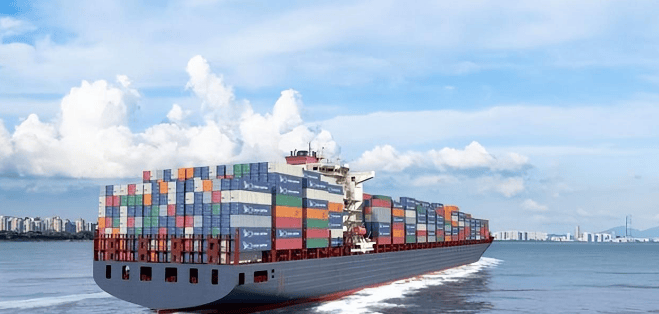
Core Viewpoint - The ongoing trade tensions between China and the United States have led to significant shifts in trade patterns, particularly in the oil sector, with China halting imports of U.S. crude oil for two consecutive months, resulting in the lowest U.S. crude oil export levels since 2020 [1][8]. Group 1: Trade Relations and Tariffs - The U.S.-China trade war began in 2018, initiated by the Trump administration's imposition of tariffs on $34 billion worth of Chinese goods, citing trade deficits and intellectual property concerns [1][3]. - China responded with tariffs ranging from 5% to 25% on U.S. products, significantly impacting U.S. agricultural exports, particularly soybeans [3]. - The trade conflict escalated with the U.S. targeting Chinese tech firms like Huawei, leading to further tariffs on $1.2 trillion and $1.8 trillion worth of Chinese goods [3][4]. Group 2: Economic Impact - The U.S. trade deficit has increased from $950.2 billion in 2018 to $1,211.75 billion in 2024, indicating that the tariffs have not achieved their intended goal of reducing the trade deficit [7]. - Over 90% of the tariff costs have been passed on to U.S. importers, downstream businesses, and consumers, leading to increased prices and living costs in the U.S. [7]. - Despite facing some export pressures, China has shown resilience by expanding domestic demand and diversifying trade partnerships, maintaining stable economic growth [7]. Group 3: Energy Sector Dynamics - The halt in U.S. crude oil imports by China is attributed to the U.S. tariff policies, which have diminished the price advantage of U.S. crude oil for China [8]. - The U.S. shale oil producers are projected to face losses of at least $10 billion due to the absence of the Chinese market, with U.S. crude oil exports dropping to 3.883 million barrels per day, a 4% decrease [8]. - China is actively seeking to diversify its energy imports, with agreements in place with Russia and Qatar to secure alternative oil and gas supplies [8]. Group 4: Global Economic Implications - The trade war has disrupted global supply chains, forcing multinational companies to reallocate resources and adjust production strategies, thereby increasing operational costs and risks [10]. - The unilateral actions by the U.S. have undermined the multilateral trade system, leading to slower progress in global trade negotiations and increasing trade disputes among nations [10]. - Some Southeast Asian countries have benefited from the trade war as they become alternative production bases for multinational companies, while those reliant on U.S.-China trade face economic slowdowns [10].
中美这场较量,终于迎来大结局?特朗普算盘全落空,美国自身难保
Sou Hu Cai Jing· 2025-06-06 05:26
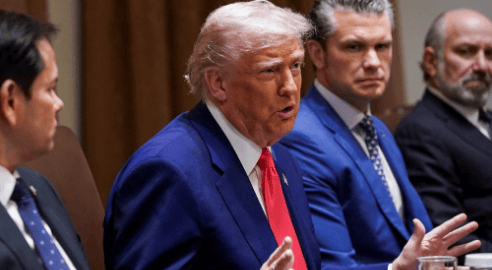
Group 1: Trade Relations - The U.S.-China trade relationship has been characterized by escalating tensions, particularly through tariff battles initiated by the U.S. [1][3] - The U.S. raised tariffs on Chinese goods to 125%, but later expressed a desire for peace, indicating a failure of the tariff strategy [1][3] - China responded by increasing its tariffs and demonstrated resilience by not yielding to U.S. pressure, ultimately leading to concessions from the U.S. [1][3] Group 2: Technology and Industry - The U.S. has attempted to restrict China's access to essential technology, particularly in the semiconductor sector, but these efforts have backfired [3][4] - China's advancements in AI and EDA tools have significantly improved chip design efficiency by over 40%, showcasing its ability to overcome technological barriers [3] - The U.S. restrictions on companies like NVIDIA have resulted in substantial losses, exceeding $150 billion in orders, while failing to halt China's progress in chip self-sufficiency [3] Group 3: Aerospace and Defense - The U.S. has halted technology exports to China in the aerospace sector, yet China's COMAC has achieved a 60% localization rate for its C919 aircraft [4] - The U.S. military's reliance on Chinese rare earth materials for critical components, such as those used in the F-35 fighter jet, highlights its vulnerability [4] - The ongoing technological and supply chain challenges faced by the U.S. military underscore the risks associated with its strategy against China [4] Group 4: Diplomatic Dynamics - The U.S. has shown a willingness to engage diplomatically with China, as evidenced by Trump's unexpected attendance at the G20 summit to meet with Chinese officials [6] - Despite diplomatic overtures, the U.S. continues to provoke tensions in the South China Sea, revealing a contradiction in its approach to China [6][8] - The U.S. must reconsider its hegemonic mindset and adopt a more respectful and cooperative stance towards China to avoid further failures [8]
美债风暴酝酿,美联储真的会救市吗?
Sou Hu Cai Jing· 2025-05-28 08:39
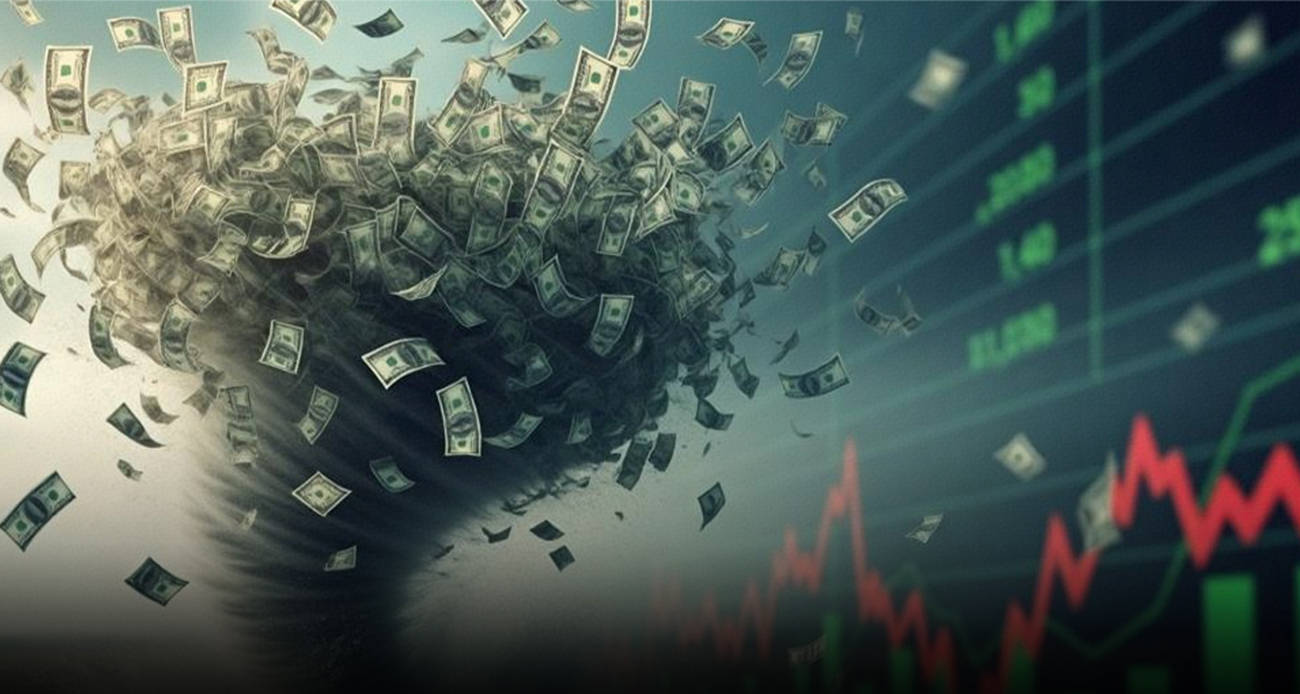
Group 1 - The Federal Reserve may consider interest rate cuts in the second half of 2025 if tariffs remain around 10% [1] - The ongoing trade tensions have created a dilemma for the Federal Reserve, balancing between persistent inflation data and market volatility caused by tariffs [3] - The U.S. market experienced a significant downturn on May 21, with a sharp rise in bond yields, a drop in stock prices, and the dollar index falling below 100 [4] Group 2 - The long-standing debt issues have been exacerbated by the trade tensions, leading to increased scrutiny on the Federal Reserve's role in stabilizing the market [5] - The weak auction of 20-year U.S. Treasury bonds on May 22 resulted in a "triple whammy" effect on stocks, bonds, and currencies, with the S&P 500 index dropping nearly 1.6% [7] - The auction's final yield of 5.047% marked a significant increase from previous rates, indicating a lack of demand and raising concerns about the U.S. fiscal situation [8] Group 3 - The recent surge in U.S. Treasury yields has raised fears among investors regarding the government's fiscal health and monetary policy [8] - The ongoing trade war has revealed underlying issues in the U.S. economy, with tariff revenues not keeping pace with rising national debt [9] - The proposed tax cuts are expected to further pressure the U.S. debt situation, with potential implications for the bond market [10] Group 4 - The anticipated tax legislation is projected to reduce household tax burdens significantly, which could impact the fiscal deficit and bond market reactions [11] - The recent rebound in U.S. stocks has raised questions about the sustainability of this rally amid ongoing geopolitical risks and rising federal spending [12] - Investors are advised to be cautious with dollar assets as the market navigates through the current volatility, with a potential shift towards safe-haven assets like gold and yen [13][14]
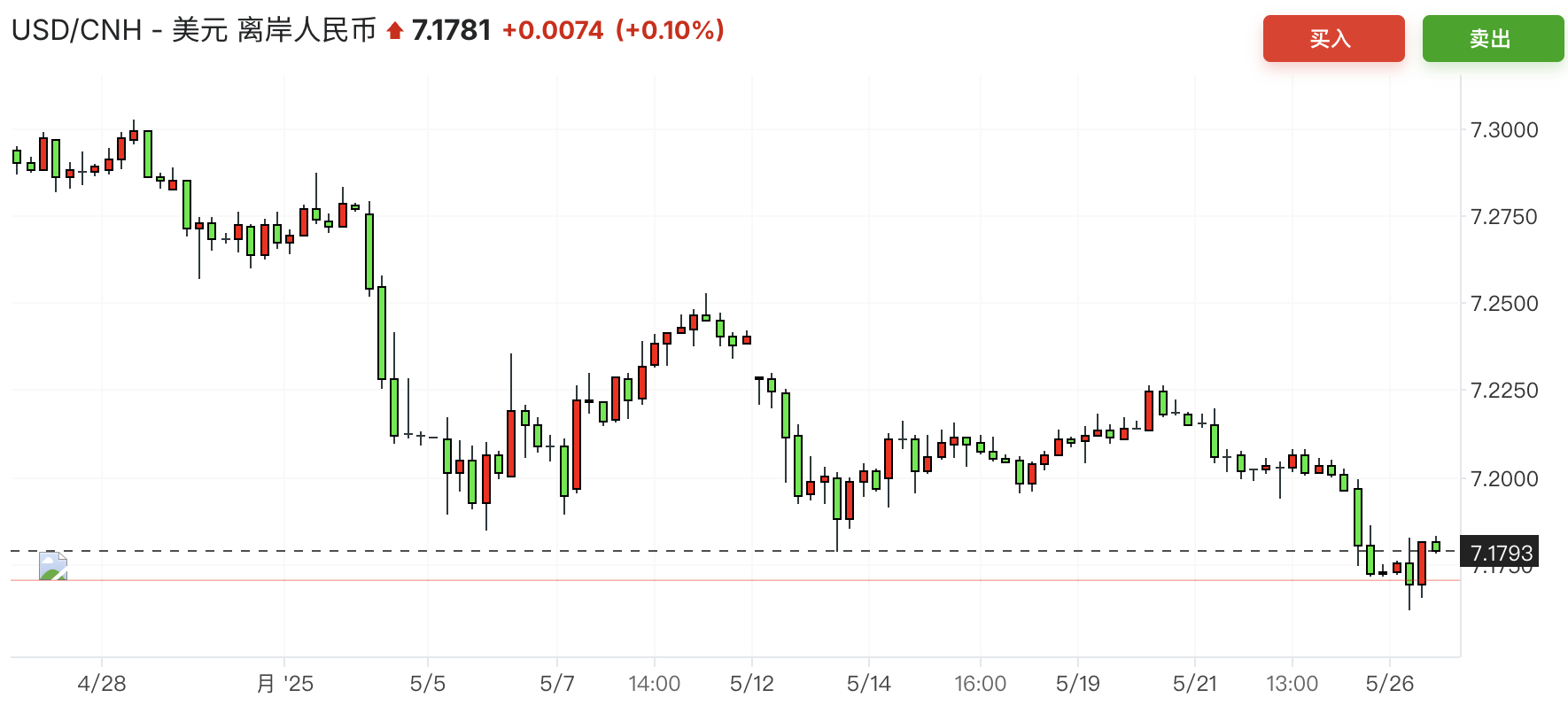
人民币升破7.17!华尔街预计升值或推升股市估值,哪些主题将受益?
Di Yi Cai Jing· 2025-05-26 13:59
Group 1 - The offshore RMB has recently appreciated against the USD, breaking through 7.17 and reaching a low of 7.16, with a closing rate of 7.1782 on May 26 [1] - Asian currencies and the Euro have generally appreciated by 5% to 10% against the USD this year, while the RMB's increase was less than 2% until early May [1] - Goldman Sachs has adjusted its 12-month USD/RMB target to 7.0, indicating a potential 3% foreign exchange gain for the RMB in the next year [1][4] Group 2 - Historically, when the RMB appreciates, the Chinese stock market tends to perform well, particularly in sectors like consumer discretionary, real estate, and diversified financials [1][4] - The recent appreciation of the RMB was catalyzed by the RMB midpoint breaking below 7.2 on May 13, which was seen as a signal for potential appreciation [1][7] - The RMB's appreciation is expected to benefit companies with significant exposure to USD costs, particularly in sectors sensitive to import costs [5][6] Group 3 - Companies that may benefit from RMB appreciation include those with a market capitalization over $2 billion and daily trading volumes exceeding $500 million, particularly in industries like aviation, petrochemicals, and construction [5][6] - Conversely, companies with over 30% of their revenue from overseas and low USD debt exposure may be negatively impacted by RMB appreciation [6] Group 4 - The sustainability of the RMB's appreciation remains uncertain due to ongoing trade negotiations and macroeconomic conditions [7][8] - Future RMB exchange rates are expected to fluctuate between 7.2 and 7.3, depending on export performance and exporters' willingness to convert USD to RMB [8][9]