
再军事化

Search documents
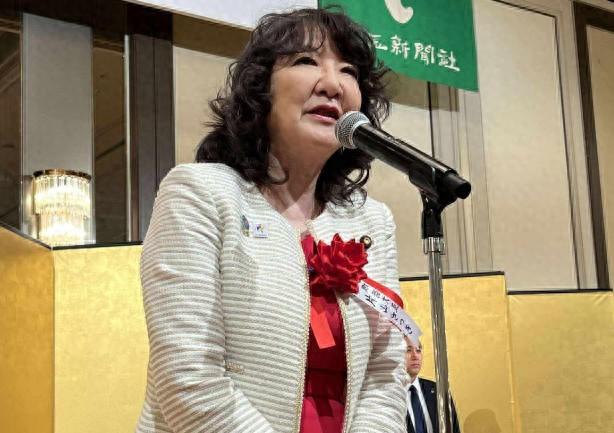
郑丽文直言:觉得非常痛心
Xin Lang Cai Jing· 2026-01-17 06:24
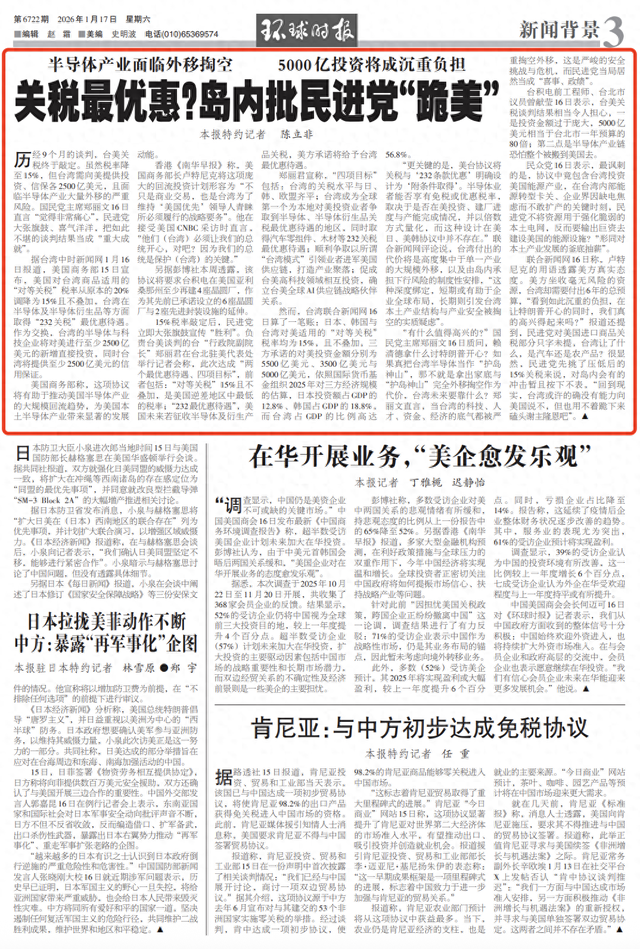
Core Points - The U.S. has finalized a tariff agreement with Taiwan, reducing the tariff rate from 20% to 15% for Taiwanese goods, while requiring Taiwan to provide $250 billion in investment and $250 billion in credit guarantees [1][2][3] - The agreement is seen as a strategic move to bolster the U.S. semiconductor industry and is characterized by U.S. officials as essential for maintaining Taiwan's favor with the U.S. administration [1][3][5] - The deal mandates TSMC to build at least four additional semiconductor fabs in Arizona, extending previous commitments [1][3] Summary by Sections Tariff Agreement Details - The tariff rate for Taiwanese goods is set at 15%, which is the lowest among U.S. trading partners with similar agreements [2][7] - Taiwan has secured "most favored nation" treatment for semiconductors and related products, which includes a commitment to invest $250 billion in the U.S. semiconductor sector [1][2] Economic Implications - The investment commitments from Taiwan are substantial, with $500 billion representing 56.8% of Taiwan's GDP, compared to 12.8% for Japan and 18.8% for South Korea [2][7] - The agreement is designed to tie tariff benefits to Taiwan's investment and production capabilities in the U.S., which could lead to significant shifts in Taiwan's semiconductor industry [3][7] Political Reactions - The Taiwanese government, particularly the DPP, has framed the agreement as a victory, while opposition parties express concern over the potential risks and economic burdens [2][4][5] - Critics argue that the deal may lead to a significant outflow of Taiwan's semiconductor industry to the U.S., raising concerns about the long-term viability of Taiwan's local industry [3][4][8]


坚决抵制日本军国主义死灰复燃和“再军事化”
Xin Lang Cai Jing· 2026-01-16 18:01
Core Viewpoint - The Chinese Foreign Ministry firmly opposes the resurgence of Japanese militarism and its re-militarization, emphasizing the need for peace and stability in the region in light of Japan's military cooperation with the Philippines [1]. Group 1: Japan-Philippines Military Cooperation - Japan and the Philippines have signed an agreement to enhance military logistics cooperation, with Japan pledging to provide millions of dollars in security assistance to strengthen their so-called "quasi-alliance" [1]. - The Chinese government expresses concern that such cooperation may undermine regional peace and stability, asserting that international cooperation should not target third parties or harm their interests [1]. Group 2: Historical Context and Criticism - The Chinese Foreign Ministry recalls Japan's historical aggression during World War II, particularly its invasion of the Philippines, and stresses the importance of remembering this history and addressing past grievances [1]. - There is a growing criticism from Southeast Asian countries and the international community regarding Japan's military security movements, which are perceived as attempts to revive militarism and expand military capabilities [1].
国防部:日本军国主义野心一旦失控将给日本人民带来毁灭性灾难
Zheng Quan Shi Bao Wang· 2026-01-16 07:23
Core Viewpoint - The Chinese defense spokesperson Zhang Xiaogang criticized Japan's militarization and the rise of right-wing forces, warning that it poses a serious threat to Asia and could lead to catastrophic consequences for the Japanese people [1]. Group 1: Japan's Militarization - There is a significant increase in Japan's right-wing conservative forces, which are pushing for military expansion and re-militarization [1]. - The actions of the Japanese government are viewed as leading the country down a dangerous path, reminiscent of its militaristic past [1]. Group 2: Historical Context - Historical evidence suggests that unchecked Japanese militarism can lead to severe threats to neighboring countries and disastrous outcomes for Japan itself [1]. - The Potsdam Declaration emphasizes the need to permanently eliminate any ambitions of Japanese militarism to prevent future aggression [1]. Group 3: International Response - China expresses its commitment to collaborate with peace-loving nations to counter any resurgence of militarism in Japan [1]. - The focus is on maintaining the outcomes of World War II and ensuring regional and global peace and stability [1].
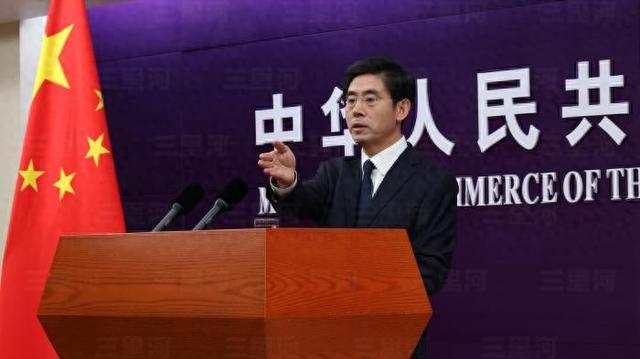
日本要求中方撤回两用物项出口管制措施,商务部:不予接受
Nan Fang Du Shi Bao· 2026-01-15 11:22
Group 1 - The core viewpoint of the article is that China's export control measures on dual-use items are a legitimate response to Japan's actions and statements, particularly those made by Prime Minister Kishi Sanae, which are seen as infringing on China's sovereignty and security [1][2] - China's export control measures are aimed at preventing military use and enhancing Japan's military capabilities, which are viewed as a threat to regional and global peace [2] - The Chinese government emphasizes that its export controls are in line with international practices and are intended to fulfill non-proliferation obligations, asserting that the measures are reasonable and lawful [2] Group 2 - Reports indicate that China has suspended export license reviews for rare earths to Japan, and state-owned enterprises have informed some Japanese companies that new contracts for rare earths will not be signed [2] - The Chinese government maintains that its export controls will not affect civilian uses and aims to ensure the stability and security of global supply chains [2]
日安保文件或加入强化太平洋防卫
Xin Lang Cai Jing· 2026-01-12 16:10
Group 1 - The core viewpoint of the article is that Japan's Prime Minister, Sanna Takichi, is pushing for the revision of the "National Security Strategy" and other "security three documents" by the end of 2026, with a focus on strengthening Pacific defense [1] - The Japanese government plans to include the concept of "strengthening Pacific defense" as a guideline in the revised security documents [1] - Experts suggest that Japan aims to further "bind" its alliance with the United States through the "strengthening Pacific defense" initiative, while also accelerating its "re-militarization" efforts [1]

中国出手反制日本“再军事化”意图
Xin Lang Cai Jing· 2026-01-11 06:51
Group 1 - China has announced stricter export controls on dual-use items to Japan to prevent its militarization and nuclear ambitions, emphasizing the legality and reasonableness of the measures [1][3] - The new regulations cover all dual-use items, prohibiting any that may enhance Japan's military capabilities, with China retaining the right to interpret these regulations [3][4] - Japan's imports of dual-use items from China are estimated to be around 10.7 trillion yen in 2024, accounting for 42% of its total imports from China, raising concerns in Japanese industries [4] Group 2 - The potential tightening of export controls on rare earth materials could significantly impact Japan's economy, particularly in the automotive and electronics sectors, where China supplies over 70% of its rare earth imports [4] - If the rare earth export controls persist for three months, Japan could face losses of up to 660 billion yen, equating to a 0.11% decline in economic output [4] - The relationship between technology, resources, and military capabilities indicates that economic ties cannot be entirely separated from security considerations, with China aiming to establish clear boundaries through these regulations [4]


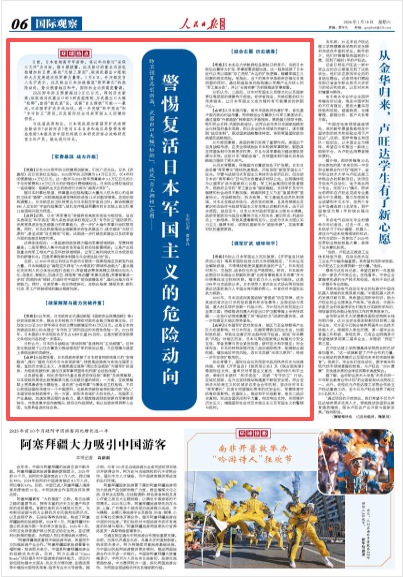
防卫预算再创新高,武器出口大幅“松绑”,放风“自主拥核”企图——警惕复活日本军国主义的危险动向(环球热点)
Xin Lang Cai Jing· 2026-01-10 09:09
Core Viewpoint - Japan is accelerating its militarization efforts, including increasing defense spending, modifying its "Three Non-Nuclear Principles," lifting restrictions on arms exports, and developing offensive military capabilities, raising concerns about a resurgence of militarism in the region [1][2][4]. Defense Budget and Military Expansion - The defense budget for the fiscal year 2026 is set to exceed 9 trillion yen, marking a historic high, with a significant increase of 3.6 trillion yen from the fiscal year 2022 budget of 5.4 trillion yen [1][2]. - The government plans to lift restrictions on five types of arms exports, indicating a substantial relaxation of arms export policies [1][2]. - The current government is focusing on developing offensive military capabilities, which represents a shift from Japan's post-war defense principles [2][4]. Military Strategy and Capabilities - Japan is constructing a coastal defense system centered around drones and is procuring hypersonic missiles and upgraded anti-ship missiles [2][3]. - The Japan Air Self-Defense Force will be renamed to the Japan Aerospace Self-Defense Force, and a new Space Operations Group will be established [2][3]. - The military strategy is shifting from passive defense to proactive deterrence, with a focus on enhancing capabilities for preemptive strikes and expanding military operations [4][5]. Political and Historical Context - The current government's militarization efforts are seen as a continuation of the right-wing political agenda, which seeks to amend the constitution and strengthen military capabilities [4][6]. - The government is leveraging perceived external threats to consolidate domestic political support and justify military expansion [6][7]. - There are concerns that Japan's militarization reflects a resurgence of militaristic ideologies, reminiscent of pre-World War II expansionism [7][8]. International Implications - Japan's military actions, including potential involvement in Taiwan, signal a significant shift in its defense posture and could exacerbate regional tensions [8][9]. - The international community is urged to uphold post-war legal frameworks to prevent the resurgence of militarism and maintain regional peace [10].
日本要去“叫家长”:美日要剥夺中国稀土“武器化”能力
Guan Cha Zhe Wang· 2026-01-10 02:02
Core Viewpoint - Japan is seeking to establish a rare earth supply chain in collaboration with the US and Europe, aiming to reduce its dependence on China and counteract China's influence in the rare earth market [1][5]. Group 1: Japan's Actions and Statements - Japanese Finance Minister Shunichi Suzuki announced plans to visit the US to discuss critical mineral issues with counterparts from "democratic countries" [1]. - Suzuki expressed concerns about Japan's reliance on Chinese rare earths, stating that without action, China would continue to pose a threat to Japan's economy [1][5]. - The Japanese government aims to create a rare earth market composed of "normal democratic countries and market economies" [1]. Group 2: China's Response and Economic Impact - China has implemented export controls on dual-use products to Japan and initiated anti-dumping investigations on certain Japanese imports [5]. - Analysts estimate that if China restricts rare earth exports to Japan for three months, it could result in a loss of approximately 660 billion yen, impacting Japan's nominal and real GDP by 0.11% [7]. - If the restrictions last for a year, the losses could escalate to 2.6 trillion yen, leading to a 0.43% decrease in GDP [7]. Group 3: Broader Implications and Market Reactions - The G7 countries, including Japan, have not abandoned plans to intervene in rare earth pricing, with discussions about setting a price floor and imposing tariffs on Chinese exports [2]. - UBS analysts noted that if rare earths are included in trade restrictions, the impact would be widespread, particularly affecting the automotive, electronics, and precision instruments sectors [7]. - Japan's reliance on Chinese heavy rare earths for electric vehicle motors is nearly 100%, indicating significant vulnerability to supply disruptions [7].

警惕复活日本军国主义的危险动向(环球热点)
Ren Min Ri Bao· 2026-01-09 20:14
Core Viewpoint - Japan is accelerating its militarization efforts, with plans to revise its security policies, including increasing defense spending, modifying its "Three Non-Nuclear Principles," and expanding offensive military capabilities, raising concerns about a resurgence of militarism in the region [1][4][8]. Defense Budget and Military Expansion - The defense budget for the fiscal year 2026 is set to exceed 9 trillion yen, marking a historical high, with a significant increase of 3.6 trillion yen from the fiscal year 2022 budget of 5.4 trillion yen [1][2]. - The government plans to lift restrictions on five types of weapon exports, indicating a substantial relaxation of arms export policies [1][2]. - The military budget is being directed towards offensive capabilities and advanced military technologies, with a focus on unmanned systems and high-tech warfare [2][3]. Strategic Military Developments - Japan is establishing a comprehensive defense system centered around drones and advanced missile systems, including hypersonic missiles and improved anti-ship missiles [2][3]. - The restructuring of the Japan Air Self-Defense Force into the Japan Aerospace Self-Defense Force and the creation of a new Space Operations Group reflect a shift towards a more integrated military command structure [2][3]. Policy Changes and Military Doctrine - The new National Security Strategy emphasizes Japan's commitment to developing offensive capabilities, with plans to increase total defense spending to approximately 43 trillion yen from 2023 to 2027 [4][5]. - Japan's defense strategy is shifting from "passive defense" to "proactive deterrence," indicating a significant departure from its post-war defense principles [4][5]. Historical Context and Domestic Politics - The current government's militarization efforts are seen as a continuation of the right-wing political agenda, leveraging perceived external threats to consolidate power and support from military-industrial interests [6][7]. - The historical legacy of militarism in Japan remains a concern, with the current administration's actions drawing parallels to past militaristic ideologies [7][8]. Regional and Global Implications - Japan's military expansion poses risks to regional stability, potentially leading to an arms race and increased tensions with neighboring countries [9][10]. - The potential breach of the "Three Non-Nuclear Principles" could trigger a nuclear proliferation crisis, further destabilizing the international order established post-World War II [10].
制止“再军事化” 涉民事用途不受影响
Xin Lang Cai Jing· 2026-01-08 23:08
Core Viewpoint - China emphasizes its commitment to international non-proliferation obligations and has implemented export controls on dual-use items to Japan, aiming to prevent Japan's militarization and nuclear ambitions [1] Group 1: Export Controls - The Chinese government has prohibited exports of dual-use items to Japanese military users and any entities enhancing Japan's military capabilities [1] - The measures are described as legitimate and reasonable, aimed at halting Japan's militarization efforts [1] Group 2: Political Context - Japan's Prime Minister, Fumio Kishida, has made statements regarding Taiwan that are seen as infringing on China's sovereignty and internal affairs, which has raised tensions [1] - Kishida's administration is pushing for revisions to Japan's security policies, which are perceived as a challenge to international norms and a threat to regional stability [1] Group 3: Trade Implications - China reassures that its commitment to maintaining global supply chain stability and security remains intact, and that civilian trade will not be adversely affected by these export controls [1]