半导体技术

Search documents
英特尔展示1.8纳米CPU,正在美国量产
Guan Cha Zhe Wang· 2025-10-09 23:56
Core Insights - Intel has announced the details of its new client processor architecture, Intel® Core™ Ultra (3rd generation), codenamed Panther Lake, which is expected to start shipping later this year [1] - Panther Lake is the first product based on Intel's 18A (1.8nm) process technology, with mass production beginning this year and widespread market availability anticipated by January 2026 [1][5] - The Intel 18A process node offers a 15% performance improvement per watt and a 30% increase in chip density compared to the Intel 3 process technology [1] Processor Specifications - The Intel® Core™ Ultra processor (3rd generation) will feature up to 16 new performance cores (P-core) and efficiency cores (E-core), with over 50% performance improvement compared to the previous generation [3] - It will also include the new Intel Iris™ GPU with up to 12 Xe cores, providing over 50% improvement in graphics performance [3] - The platform's AI performance can reach up to 180 TOPS (trillions of operations per second) [3] Server Processor Development - Intel previewed the Intel® Xeon® 6+ processor (codenamed Clearwater Forest), which will be the company's first server processor based on Intel 18A, expected to launch in the first half of 2026 [5] - Clearwater Forest can support up to 288 efficiency cores and boasts a 17% increase in instructions per cycle (IPC) compared to the previous generation [5] Key Innovations - Intel 18A introduces key innovations such as RibbonFET, a new transistor architecture that enhances performance and energy efficiency, and PowerVia, a groundbreaking back-side power delivery system [5] - The advanced packaging and 3D chip stacking technology, Foveros, allows for the stacking and integration of multiple chiplets into advanced SoC designs, providing flexibility, scalability, and performance advantages [5] Future Outlook - Intel's CEO, Pat Gelsinger, emphasized that advancements in semiconductor technology are ushering in a new computing era, which is expected to shape the development of the next several decades [6] - The new generation of computing platforms is positioned to drive innovation across Intel's various business sectors [6]


2025年Q3半导体与AI行业季度投资报告:算力驱动下的确定性与长期价值锚定
格隆汇APP· 2025-10-03 10:38
Core Viewpoint - The semiconductor and AI industries are experiencing a "triple resonance" of accelerated technological iteration, upgraded demand structure, and increased capital expenditure as of Q3 2025 [2] Semiconductor Sector - The semiconductor sector is characterized by "leading players outperforming and niche segments exploding," driven by technological iteration and demand upgrades [3] - ASML dominates the high-end lithography market, with Q2 revenue of €7.69 billion (up 23% YoY) and a gross margin of 53.7% [4][7] - TSMC leads advanced processes, with Q2 net profit of NT$398.3 billion (up 61% YoY) and an updated revenue growth forecast of 30% for 2025 [8] - SK Hynix benefits from strong HBM demand, with Q2 revenue of KRW 22.23 trillion (up 35% YoY) and plans to double HBM sales in 2025 [9] AI Sector - The AI sector is transitioning from being driven by training to a dual-driven model of training and inference, leading to a significant increase in computational demand [12] - Major cloud providers are expected to spend over $360 billion in capital expenditures in 2025, a 45% increase from 2024 [14] - Inference demand is surging, with NVIDIA's CEO stating that AI computation is 100-1000 times that of traditional chatbots [15] - AI applications are penetrating traditional industries, with companies like Meta and Microsoft leveraging AI to enhance operational efficiency [16] Investment Logic and Strategy - The investment logic focuses on three certainty dimensions: technological barriers, demand resilience, and stable cash flow [23] - A pyramid accumulation strategy is recommended for semiconductor leaders, while a reverse pyramid selling strategy is suggested for profit realization [25]


江苏拟视半导体科技有限公司成立 注册资本10000万人民币
Sou Hu Cai Jing· 2025-09-19 23:45
Core Viewpoint - Jiangsu intends to establish a semiconductor technology company with a registered capital of 1 billion RMB, focusing on various aspects of semiconductor and electronic components manufacturing and services [1] Company Summary - The company is named Jiangsu Semiconductor Technology Co., Ltd., with Zhou Zhou as the legal representative [1] - The registered capital is set at 1 billion RMB [1] Business Scope - The company will engage in general projects including: - Import and export of goods and technology [1] - Integrated circuit chip design and services [1] - Manufacturing of integrated circuit chips and products [1] - Sales of semiconductor device-specific equipment [1] - Manufacturing of power electronic components [1] - Manufacturing and sales of smart vehicle-mounted equipment [1] - Research and development of automotive parts [1] - Sales of integrated circuit design and products [1] - Software development and sales [1] - Manufacturing and retail of computer hardware and peripherals [1] - Computer system services [1] - Technical services, development, consulting, exchange, transfer, and promotion [1] - Sales of power electronic components (excluding projects requiring approval) [1]
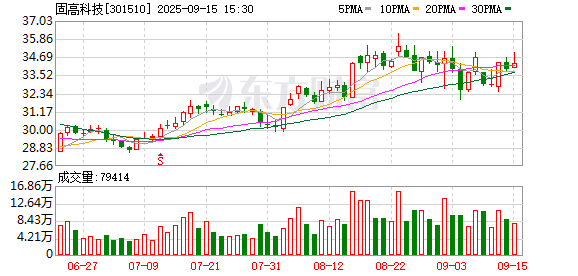
固高科技:公司目前在半导体/泛半导体领域的营收占比约14%
Zheng Quan Ri Bao· 2025-09-15 08:40
Core Insights - Company has been involved in the semiconductor and semi-semiconductor equipment sector for over a decade, indicating a long-term commitment to this industry [2] - The company has established a revenue share of approximately 14% from the semiconductor and semi-semiconductor field, showcasing its growing presence [2] - The company has successfully developed various back-end processing equipment, such as wire bonding, die bonding, dicing, and mounting, which have seen faster application deployment compared to front-end equipment [2] Industry Analysis - Semiconductor and semi-semiconductor equipment are characterized by high technical difficulty and entry barriers, making it a challenging sector [2] - The application deployment process in the industry shows a disparity between front-end and back-end equipment, with back-end equipment progressing more rapidly due to fewer certification and ecological entry barriers [2]
BCEIA 2025表界面分析论坛成功举办,共话表面分析前沿技术与研究进展
仪器信息网· 2025-09-13 03:57
摘要 : 9月11日,作为BCEIA 2025同期分论坛之一,表界面分析暨第十一届全国表面分析科学与技术研讨顺利召开,旨在为表面化学领域的专家学者、科研人 员及业界精英提供一个高水平的学术交流平台。 特别提示 微信机制调整,点击顶部"仪器信息网" → 右上方"…" → 设为 ★ 星标,否则很可能无法看到我们的推送。 仪 器 信 息 网 讯 2025 年 9 月 10 日 , 第 二 十 一 届 北 京 分 析 测 试 学 术 报 告 会 暨 展 览 会 ( The 21s t Beijing Conference & Exhibition on Ins trumental Anal y s i s,BCEIA 2025) 在北京·中国国际展览中心(顺义馆)顺利召开。 9 月 11 日 , 作 为 BCEIA 2025 同 期 分 论 坛 之 一 , 表 界 面 分 析 暨 第 十 一 届 全 国 表 面 分 析 科 学 与 技 术 研 讨 会 顺 利 召 开 , 本 届 学 术 报 告 会 为 期 1 天,旨在为表面化学领域的专家学者、科研人员及业界精英提供一个高水平的学术交流平台,共同探讨表面化学分析领域的 ...

上海万业企业股份有限公司
Shang Hai Zheng Quan Bao· 2025-08-28 23:35
Core Viewpoint - The company has revised its articles of association and is seeking shareholder approval for the changes, which aim to enhance corporate governance and align with updated regulations [1][3]. Summary by Sections Company Articles Revision - The revised articles of association for Shanghai Wanye Enterprise Co., Ltd. will be submitted for shareholder meeting approval, with the final content subject to market supervision department approval [1]. - The company’s board of directors has proposed to authorize management to handle the necessary registration and documentation related to the changes [1]. Management System Updates - The company has reviewed and updated several management systems to improve operational standards and governance structure, ensuring alignment with the revised articles of association and relevant laws [1]. - The updated management systems have been approved by the board and will take effect after shareholder approval [1]. Daily Related Transactions - The company’s board has approved an increase in the expected daily related transaction limits for 2025, which does not require shareholder meeting approval [4]. - The company anticipates a steady increase in production capacity and sales for its semiconductor materials, particularly bismuth metal deep processing and compound products, due to market demand and customer expansion [4]. - The company plans to enhance its procurement of raw materials, fuel, power, and processing services to support increased production capacity and mitigate supply chain risks [4]. Previous Related Transactions - The company previously estimated that its daily related transactions with the associated company, Xian Dao Technology Group, would not exceed 1,026.26 million yuan for 2025, aimed at supporting its bismuth business and subsidiaries [6]. - The transactions are designed to be fair and reasonable, ensuring no harm to the company or shareholders' interests, and maintaining the company's independence [6][7].

“AI信仰”受挫!英伟达(NVDA.US)指引显示增长放缓,美股狂欢迎来降温信号?
贝塔投资智库· 2025-08-28 04:13
Core Viewpoint - Nvidia's latest guidance indicates a slowdown in growth after two years of rapid expansion, raising concerns about the sustainability of AI investments [1][11]. Financial Performance - For the period ending July 27, Nvidia reported a revenue increase of 56%, reaching $46.7 billion, slightly above the average expectation of $46.2 billion [2]. - The adjusted earnings per share were $1.05, exceeding the analyst expectation of $1.01 [2]. - The data center segment generated $41.1 billion in sales, also showing a 56% year-over-year growth, while gaming-related revenue was $4.29 billion, surpassing the expected $3.8 billion [2]. Market Challenges - Nvidia faces challenges in the Chinese market due to intensified US-China competition, particularly regarding semiconductor technology [3]. - The company has not made any sales of its H20 AI chips to Chinese customers in the second quarter, and the US government's plans to take a 15% cut from sales to China remain unconfirmed [4][6]. - Analysts are uncertain about the potential revenue recovery in China, with predictions varying significantly [3][6]. AI Investment Trends - There are signs that the AI investment boom may be cooling, as large data center operators might reduce spending if short-term benefits from AI applications remain difficult to quantify [7]. - Nvidia's new Blackwell chips saw a 17% increase in sales compared to the first quarter, with the new product line generating $27 billion, accounting for 70% of data center revenue [7]. Company Positioning - Nvidia has transformed its GPU technology to run AI software, positioning itself as a leader in the AI chip market [8][11]. - The company is projected to achieve annual sales of $200 billion, potentially exceeding $300 billion by 2028, capturing about one-third of the total chip industry revenue [8][11]. Valuation Insights - Despite a 35% increase in stock price this year, Nvidia's price-to-earnings ratio is around 34, which is not considered excessively high for a tech company with strong earnings growth [12]. - The current P/E ratio is lower than many historical levels for Nvidia, which peaked at nearly 70 during the pandemic-driven demand surge [12]. Market Impact - Nvidia's cautious outlook has led to a decline in its stock price by approximately 3% in after-hours trading, affecting broader market sentiment [16]. - The company's performance is critical to the ongoing bullish trend in the US stock market, particularly in the context of AI infrastructure demand [14][16].
中芯国际申请半导体结构及其形成方法专利,降低了半导体结构中产生泄露电流的风险
Sou Hu Cai Jing· 2025-08-23 11:02
Core Insights - Semiconductor manufacturing company SMIC has applied for a patent titled "Semiconductor Structure and Its Formation Method," with publication number CN120529616A, filed on February 2024 [1] - The patent describes a semiconductor structure that includes a substrate with channel and source-drain regions, an insulating layer, a channel structure layer, a gate structure, and a source-drain doping layer [1] Company Overview - SMIC was established in 2000 and is located in Shanghai, primarily engaged in the manufacturing of computers, communications, and other electronic devices [1] - The company has a registered capital of 244 million USD [1] - SMIC has made investments in 4 companies, participated in 127 bidding projects, and holds 150 trademark records and 5000 patent records, along with 449 administrative licenses [1]

国际产业新闻早知道:关税不确定性影响各国经济,全球芯片行业面临重大调整
Chan Ye Xin Xi Wang· 2025-08-19 06:09
Group 1: Trade and Tariffs - China has filed a complaint with the WTO against Canada's import restrictions on steel and other products, accusing Canada of unilateralism and trade protectionism [4][5] - The U.S. Trade Representative's cancellation of a visit to India has raised concerns about the potential delay in tariff negotiations, particularly as new tariffs are set to take effect on August 27 [6][7][10] - Brazil's Finance Minister stated that tariff negotiations with the U.S. have reached a deadlock, with U.S. tariffs on Brazilian imports reaching as high as 50% [13][14] Group 2: Automotive Industry - Japan's automotive industry is facing severe impacts from U.S. tariffs, with exports to the U.S. declining significantly, particularly in June where exports dropped by 26.7% [66][67][69] - Toyota has reported a projected decrease in operating profit by 1.4 trillion yen due to U.S. tariffs, while Mazda has shifted to a loss in the U.S. market [69][70] - India is proposing to reduce the Goods and Services Tax on small cars from 28% to 18% to stimulate sales, coinciding with the upcoming festive shopping season [73][76][78] Group 3: Semiconductor Industry - Trump is considering imposing tariffs as high as 300% on semiconductors, which could create uncertainty in the tech industry [44][46] - A report indicates that China has surpassed South Korea in several semiconductor technologies, ranking second globally behind the U.S. [48][50] - SoftBank is set to invest $2 billion in Intel, becoming its fifth-largest shareholder, amid ongoing discussions about U.S. government investment in Intel [51][56] Group 4: Artificial Intelligence - Shanghai is promoting the development of AI consumer electronics, including AI computers and smartphones, to enhance the industry [28][29] - Meta is undergoing its fourth restructuring of its AI team in six months, aiming to enhance its capabilities in the competitive AI landscape [30][31][33] - OpenAI is considering selling $6 billion in stock, which could increase its valuation to $500 billion, reflecting rapid growth in user engagement and revenue [39][40] Group 5: Mining and Resources - Lindian Resources is seeking to raise AUD 80 million to develop its Kangankunde rare earth project in Malawi [97] - Australia’s West Cobar has discovered high-grade titanium ore, indicating significant development potential [98] - Tsingshan Holding Group plans to invest $800 million to double the production capacity of its steel plant in Zimbabwe [99][101]

“日本偷,美国抢,台积电保台能多长?”
Guan Cha Zhe Wang· 2025-08-07 02:01
Core Points - TSMC is facing a significant crisis due to a leak of its 2nm process technology, with a former employee allegedly obtaining and leaking confidential information to a Japanese semiconductor equipment giant [1][3] - The company is under increasing pressure from the U.S., with President Trump demanding TSMC invest $300 billion in the U.S. to secure better tariff terms for Taiwan [1][8] - The leak and tariff pressures highlight Taiwan's strategic vulnerabilities, raising concerns about the sustainability of its semiconductor dominance [1][5] Company Summary - TSMC plans to start mass production of 2nm chips by the end of this year, with major clients including Apple and Qualcomm [3] - The leak involved nine individuals, including both former and current employees, who allegedly used remote access to steal thousands of images of confidential technology [3][4] - TSMC has taken legal action against the involved parties and emphasized its commitment to protecting its technological advantages [4] Industry Summary - The incident has raised alarms about the potential impact on TSMC's competitive edge, as it may enable rivals to improve their yield rates [9] - The leak is seen as a significant threat to Taiwan's semiconductor technology, especially as Japan aims to regain its position in chip manufacturing with support from the U.S. [4][8] - The ongoing geopolitical tensions and the push for U.S. semiconductor independence could fundamentally alter TSMC's global operations and its role as a leading chip manufacturer [8][9]