国家战略

Search documents
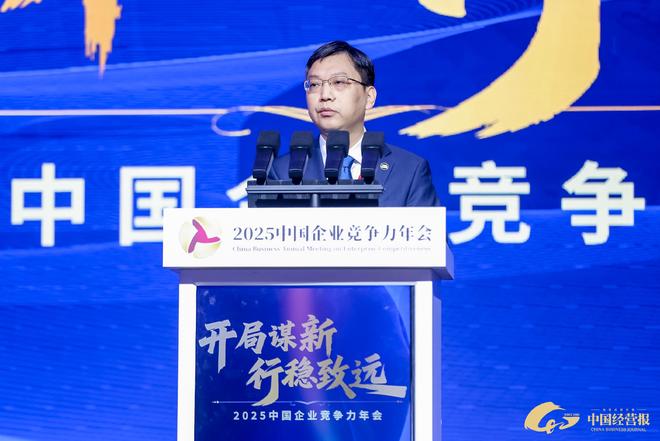
陈彦斌:企业竞争力是与国家战略同频共振、在高质量发展轨道上实现价值创造的能力
Zhong Guo Jing Ying Bao· 2025-12-09 08:39
Core Insights - The conference theme "Opening New Paths, Steady and Far-Reaching" emphasizes the need for companies to strategically plan and reshape their core competitiveness to seize new development opportunities while maintaining stability through continuous reform and innovation [2][3]. Group 1: Economic Environment and Strategic Positioning - The year 2025 marks a transitional period between the end of the 14th Five-Year Plan and the beginning of the 15th, with ongoing complexities and uncertainties in the economic environment [3]. - The 20th National Congress of the Communist Party of China highlighted four advantages of China: the advantages of the socialist system, a large-scale market, a complete industrial system, and abundant talent resources, which can help companies navigate external uncertainties [3][4]. Group 2: Competitiveness and Value Creation - The essence of competitiveness for Chinese enterprises in the new era is the ability to resonate with national strategies and create value on the path of high-quality development, integrating technological innovation, green development, social responsibility, and international perspectives [4]. - Companies are encouraged to leverage technological innovation to enhance productivity, build brands for market recognition, adopt green practices for future advantages, and foster resilience for sustainable development [4]. Group 3: Role of the Conference and Media - The "China Enterprise Competitiveness Annual Conference" has been held for over 20 years, serving as a platform for dialogue among policymakers, industry leaders, academia, and media, facilitating the exchange of insights and experiences [5][6]. - The conference aims to translate policy opportunities into innovative internal dynamics for companies, helping them thrive in the era of high-quality development [5].

充分发挥保险资金作为耐心资本的优势 国家金融监督管理总局调整保险公司相关业务风险因子
Zheng Quan Ri Bao· 2025-12-05 16:31
Core Viewpoint - The National Financial Regulatory Administration has issued a notice to adjust risk factors for insurance companies, aiming to enhance their ability to support the real economy and promote long-term capital investment [1][2]. Group 1: Adjustments to Risk Factors - The risk factor for stocks in the CSI 300 Index and the CSI Dividend Low Volatility 100 Index held for over three years has been reduced from 0.3 to 0.27 [1]. - The risk factor for ordinary shares listed on the Sci-Tech Innovation Board held for over two years has been lowered from 0.4 to 0.36 [1]. - The premium risk factor for export credit insurance and overseas investment insurance by the China Export & Credit Insurance Corporation has been decreased from 0.467 to 0.42, while the reserve risk factor has been adjusted from 0.605 to 0.545 [1]. Group 2: Impact on the Insurance Industry - The adjustments in risk factors are designed to cultivate patient capital and support technological innovation, thereby enhancing the insurance industry's service to the real economy [2]. - The notice encourages insurance companies to increase support for foreign trade enterprises and effectively serve national strategies [2]. Group 3: Internal Control and Management - Insurance companies are required to improve internal controls and accurately measure the holding period of stock investments, thereby enhancing their long-term capital investment management capabilities [3]. - The National Financial Regulatory Administration will guide insurance companies to implement the notice's requirements and improve their solvency management [3].
领悟一个“重”字 ——武汉“十四五”发展启示录①
Chang Jiang Ri Bao· 2025-12-01 06:45
Core Viewpoint - Wuhan is positioned as a key strategic hub in China's development, with a focus on high-quality growth and innovation, particularly in the context of the "14th Five-Year Plan" and the upcoming "15th Five-Year Plan" [2][4][10]. Group 1: Strategic Importance - Wuhan is entrusted with significant responsibilities in the national development framework, emphasizing its role in implementing major national strategies [4][6]. - The city aims to integrate its development with national needs, showcasing its capabilities in technology and innovation [7][10]. Group 2: Technological Innovation - Wuhan's Nine Peaks Mountain Laboratory is a key facility focusing on compound semiconductor research, operating 24/7 to meet national demands [4][5]. - The number of high-tech enterprises in Wuhan is projected to exceed 15,000 by 2024, with technology contract transaction volume surpassing 300 billion yuan [5][6]. Group 3: Regional Development - The Wuhan metropolitan area is expected to achieve an economic total of 3.6 trillion yuan in 2024, accounting for 29% of the Yangtze River Middle Reaches urban cluster [6][8]. - Collaborative development with surrounding cities is emphasized, with a focus on enhancing regional industrial layouts [5][6]. Group 4: Urban Governance and Quality of Life - Wuhan is exploring modern governance models, utilizing digital infrastructure to improve community services and emergency response systems [6][8]. - The city is implementing urban renewal projects that balance historical preservation with modern functionality, enhancing overall urban quality [11][12]. Group 5: Logistics and Connectivity - Wuhan has become a crucial logistics hub, with the establishment of the "China-Europe Railway Express" and improved transportation links reducing logistics costs by approximately 15% [9][10]. - The city is enhancing its role in domestic and international logistics, aiming to strengthen its position in the new development landscape [9][10].
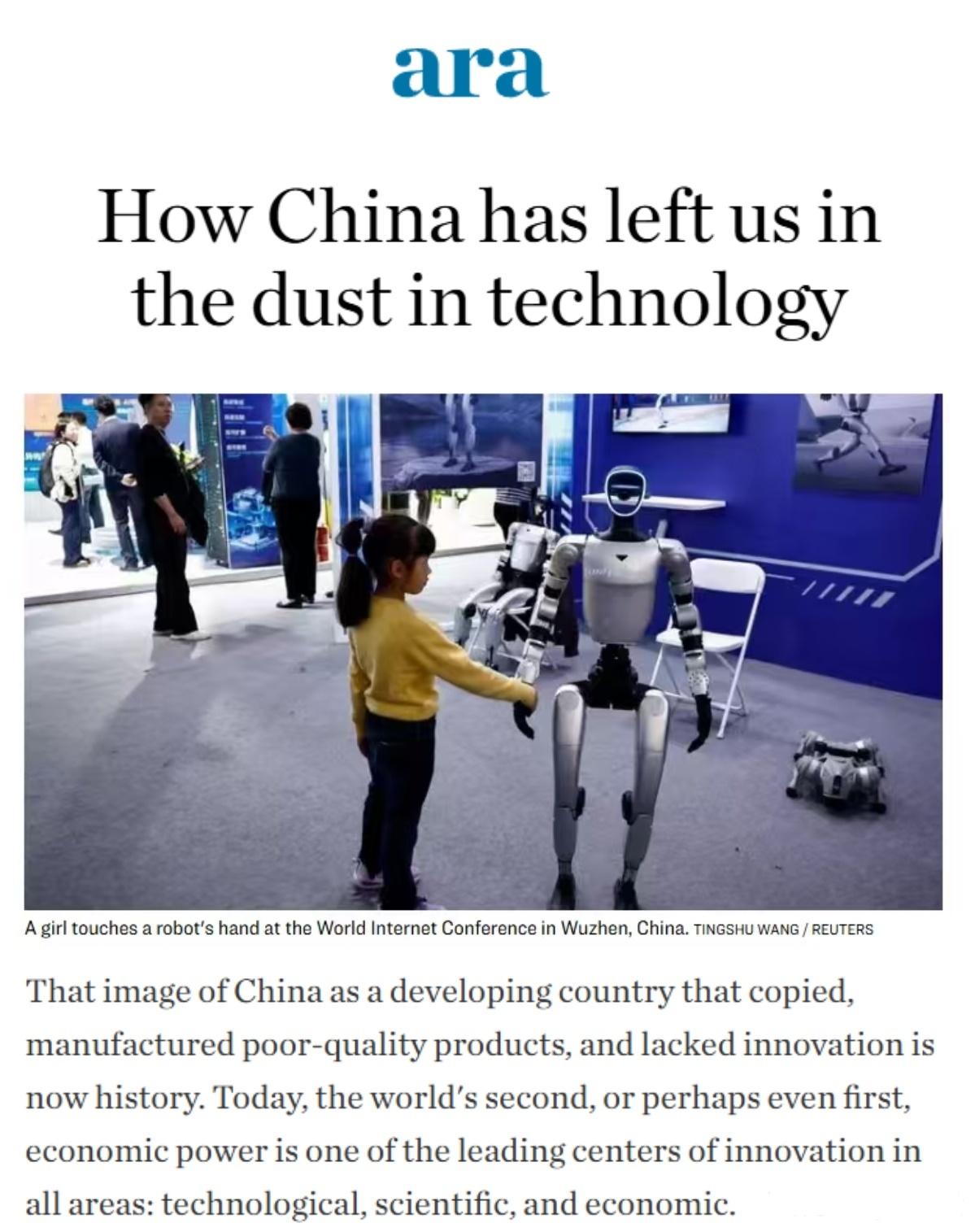
西班牙媒体:中国如何在科技领域大幅领先欧洲
Yang Shi Xin Wen Ke Hu Duan· 2025-11-24 01:05
Core Insights - China's digital transformation has made significant progress, with cash circulation becoming nearly invisible in daily life and physical bank cards fading from view [3][4] - The technological revolution is attributed to a carefully designed long-term national strategy aimed at ensuring a smooth transition, covering the entire process from R&D to manufacturing and procurement [3] - The strategy includes systematic energy planning, exemplified by the construction of large solar power stations in the Tibetan Plateau, which efficiently store and transmit clean energy over long distances [3] - This strategic focus also promotes factory automation to reduce manufacturing costs for electric vehicles, which are increasingly being exported globally [3] - Over the past decade, the number of car users in China has significantly increased, particularly among the expanding middle-income group that has largely skipped the gasoline vehicle phase to adopt electric vehicles directly [3] Industry Implications - The advancements in digitalization enhance convenience in daily life, service access, and personal development opportunities, showcasing significant advantages [3] - China's leadership in clean energy and AI training centers positions it at the forefront of global technological advancements [3] - The quiet streets in China, attributed to the widespread adoption of electric vehicles, surprise many European visitors, highlighting a cultural shift in transportation [3][4] - The ongoing transformations in China are expected to reshape the world and impact everyone's lives in the future [4]
融入大局天地宽 ——第八届进博会港澳台参展企业扫描
Jing Ji Ri Bao· 2025-11-15 22:42
Core Insights - The eighth China International Import Expo (CIIE) has significantly boosted global trade, with a record participation of 380 Hong Kong enterprises, 43 small and medium-sized enterprises from Macau, and 23 Taiwanese enterprises, showcasing both scale and quality [1] Group 1: Transformation of Hong Kong, Macau, and Taiwan Enterprises - Hong Kong, Macau, and Taiwan enterprises are evolving from merely selling products to creating ecosystems, reflecting their precise understanding of the mainland market's needs [2] - Companies like Shaiqu Technology have developed innovative products such as a translation assistant that generates 27 foreign languages in real-time, indicating a shift towards more sophisticated offerings [2] - The health consumption upgrade has opened vast opportunities for related industries, with companies like Little Master Holdings reporting over 100% sales growth compared to the previous year [2][3] Group 2: Regional Cooperation and Global Linkage - Macau's Flower Wine Factory has established a partnership with a Chongqing company, leveraging local production capabilities and brand advantages to expand into overseas markets [4] - As a key platform for Sino-Portuguese trade, Macau plays an irreplaceable role in facilitating economic exchanges between mainland China and Portuguese-speaking countries [4] - Companies like Gao Bo International Trade are transitioning from mere agents to hubs for resource integration and market expansion, supported by initiatives like the China-Portugal Fund [4] Group 3: Policy Support and Financial Services - The "Hong Kong: The Preferred Platform for Mainland Enterprises Going Global" promotion highlighted Hong Kong's strategic role in facilitating high-level foreign trade and investment cooperation [5] - Hong Kong's unique advantages in currency exchange and legal frameworks position it as a critical hub for offshore RMB business, providing financial and legal support for mainland enterprises [5][6] - Financial institutions like HSBC and Standard Chartered are focusing on solutions for small and medium-sized enterprises facing challenges in cross-border transactions and financing [7]
全国社保基金薛捷:我们可带动更多社会资本,投到需突破的领域
2 1 Shi Ji Jing Ji Bao Dao· 2025-11-12 10:52
Core Viewpoint - The National Social Security Fund's investment strategy focuses on supporting national strategies and industry layout through significant capital deployment in technology stocks [1][2]. Group 1 - The National Social Security Fund has a large scale that allows it to systematically support national strategies and conduct comprehensive industry layout [1]. - The investment approach aims to create a portfolio that diversifies risks while generating returns [2]. - The fund's scale enables it to play a leading role in the market, attracting more social capital into critical areas that require breakthroughs [2].
深夜重大!证监会批准铂钯期货,新能源金属定价权争夺战打响第一枪
Sou Hu Cai Jing· 2025-11-10 14:53
Core Viewpoint - The approval of platinum and palladium futures and options by the Guangzhou Futures Exchange marks a significant shift in China's control over pricing in the global market for these critical metals, which are essential for the green energy transition [1][3]. Group 1: Market Dynamics - China consumes over 20% of the world's platinum and palladium but has historically lacked pricing power, being subject to annual price fluctuations exceeding 20% [1][3]. - The volatility in prices is exacerbated by geopolitical tensions and shipping cost fluctuations, with platinum prices showing annual volatility over 20% and palladium's daily volatility reaching 1.58% [3]. - The introduction of futures contracts is expected to stabilize costs for domestic companies, allowing them to hedge against price fluctuations [3]. Group 2: Strategic Implications - The launch of futures is not just a financial innovation but also a strategic move aligned with national policies aimed at resource integration and balanced profit distribution across the supply chain [6]. - The 2025 policy document emphasizes controlling low-level capacity expansion and shifting from resource output to technology standard output, indicating a strategic pivot in the industry [6]. Group 3: Investment Opportunities - The approval of platinum and palladium futures has already led to significant gains in related sectors, with a notable 82% increase in the performance of ETFs tracking the new energy metals sector [8]. - Companies like Zijin Mining and others with core resource advantages have seen their stock prices double, reflecting strong market demand against a backdrop of supply constraints [8]. - The demand for aluminum in new energy vehicles is projected to increase by 30%, while the photovoltaic industry is expected to consume 4 million tons of aluminum by 2030, creating further investment opportunities [8]. Group 4: Industry Challenges - Despite the positive outlook, there are emerging risks, including potential price corrections due to shifts in global commodity cycles and demand fluctuations in downstream sectors like photovoltaics and electric vehicles [10]. - The industry is experiencing significant differentiation, with some sectors like electrolytic nickel seeing production increases while others like industrial silicon and refined cobalt face challenges due to capacity reductions and policy disruptions [11]. - The performance of companies within the sector is increasingly varied, with some firms reporting substantial profit increases while others struggle with cost pressures, suggesting that diversified investment strategies may be more prudent [11].

持续激发民间投资活力 促进民间投资高质量发展
Zhong Guo Fa Zhan Wang· 2025-11-10 10:45
Core Viewpoint - The private economy is a driving force for advancing Chinese-style modernization, and private enterprises are the most dynamic investment entities in China. The recent measures issued by the State Council aim to address the current challenges facing private investment and promote its high-quality development through 13 innovative and targeted actions [1][9]. Group 1: Policy Operationality - The measures expand the scope of private investment by removing entry barriers and optimizing the investment environment for fair competition. They ensure that support measures are practical and can be effectively implemented [2]. - Private capital is encouraged to participate in traditionally restricted sectors, with no upper limit on shareholding ratios for eligible projects, thus broadening the development space for private investment [2]. Group 2: Policy Continuity - The measures maintain a consistent macro policy framework that reduces uncertainty for private investment. They build on previous policies, such as reserving a portion of government procurement for small and medium-sized enterprises, which has been increased to 40% for projects over 4 million yuan [3]. Group 3: Timeliness and Adaptation - The measures respond to new situations and demands by adjusting policies dynamically. They include revisions to support private enterprises in public-private partnership (PPP) projects, ensuring fair selection of operators [4]. Group 4: Problem Orientation - The measures focus on addressing specific issues in private investment, particularly in investment and financing. They propose increasing central budget investments for eligible private projects and enhancing financial support through various tools [5][6]. Group 5: Reform Pathways - The measures clarify reform directions to lower barriers for private investment in traditional sectors like energy and railways. They prohibit unreasonable market entry conditions for private enterprises, thereby reducing transaction costs and enhancing competitiveness [7]. Group 6: Alignment with National Strategy - The measures align with national strategies to foster new productive forces, supporting private investment in emerging industries and facilitating the integration of the digital economy with traditional industries [8].
一个月内稀土问题必须有进展,普京下了死命令,并不是不信任中国
Sou Hu Cai Jing· 2025-11-05 12:31
Core Viewpoint - Russia is prioritizing the development of its rare earth resources, with a deadline set for December 1, indicating a strategic shift in response to geopolitical pressures and the need for self-sufficiency in critical materials [1][6][20] Resource Perspective - Russia is rich in natural resources, including oil, gas, and various metals, but has historically underdeveloped its rare earth sector despite having significant reserves of over 28 million tons [3][19] - The previous approach focused on oil and gas, viewing rare earths as a low priority due to high investment costs and slow returns [3][5] Geopolitical Context - The ongoing Ukraine conflict and Western sanctions have heightened the importance of domestic resource development, making rare earths a strategic necessity rather than an option [5][6] - The U.S. has expressed intentions to eliminate its dependence on rare earths within two years, prompting Russia to take urgent action [6][19] Military and Industrial Implications - Rare earths are seen as critical for military production capabilities, especially in a prolonged conflict scenario [9][11] - Russia's industrial base, while solid, has been hampered by Western technology restrictions, making the development of its rare earth capabilities essential for reducing reliance on foreign technology [11][12] Strategic Learning from China - Russia aims to emulate China's successful rare earth strategy, which includes comprehensive resource management, support for large-scale enterprises, and control over the entire supply chain [14][16] - The goal is to transition from merely exporting raw materials to developing a complete industrial ecosystem around rare earths [16][18] Challenges Ahead - The development of the rare earth sector is a long-term endeavor requiring substantial investment, policy support, and technological expertise, with a timeline of five to ten years for significant progress [18][19] - Russia must transform its strategic plans into actionable steps to avoid repeating past failures in large-scale initiatives [18][20]

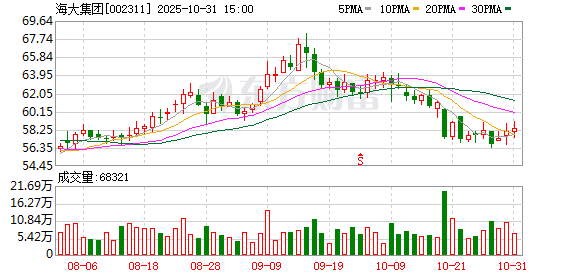
民生为基 双循环为脉 科创为核 海大集团:以产业出海书写国家战略民生答卷
Zheng Quan Shi Bao Wang· 2025-11-03 01:05
Core Insights - Food security is fundamental to people's livelihoods, and the integration of domestic and international cycles is crucial for development, with technological innovation being a key driver for national strength [2][3] Group 1: Company Strategy and Global Expansion - Haida Group has embedded its development deeply into national strategies, utilizing a "feed + seed + animal health" full industry chain approach to expand internationally, breaking foreign monopolies with self-developed seed sources [2][3] - The company has established a global presence in over 10 countries and regions since building its first overseas feed factory in Vietnam in 2011, aligning its growth with national "going out" strategies and the dual circulation framework [3][6] - Haida Group's model of "local factory, local hiring, local R&D" integrates advanced Chinese manufacturing with local resources, enhancing local employment and agricultural modernization [7] Group 2: Technological Innovation and Industry Leadership - The company has made significant strides in technological self-reliance, investing over a decade to transition from following to leading in technology, thereby strengthening national agricultural security [4][5] - Haida Group has developed multiple new shrimp varieties with independent intellectual property rights, addressing the long-standing reliance on imported seed sources and achieving international advanced levels in growth rate and disease resistance [4][5] Group 3: Contribution to National and Global Development - The company's global practices not only enhance its own growth but also build cooperative bridges between countries through industry empowerment and technology sharing, increasing China's influence in the global agricultural sector [8] - Haida Group's initiatives in Africa and Southeast Asia, such as technology training and industry forums, have helped local farmers improve yields and income, showcasing the effectiveness of Chinese agricultural technology [8] Group 4: Future Outlook - By 2030, Haida Group aims to establish three core overseas market regions and achieve 7.2 million tons of overseas feed sales, continuing to align with national strategic directions and focusing on technological innovation as a core driver [9]